


A Canadian winter writes its own specification. On the prairies, weeks at -30°C arrive most years, and stabling that would be unremarkable in a temperate climate becomes a daily management problem: waterers that freeze in the night shift, doors that ice at the latch, bedding dust that never leaves because the building is sealed shut. The search phrase “horse stables Canada” usually returns generic temperate advice; this guide is the brief behind the search — the same product category with three decisions re-run for deep cold: insulation, frost depth and ventilation.
This guide is for Canadian farm and equestrian center owners planning new stabling, and for the B2B buyers who supply them. DB HorseStable manufactures stabling systems for export across nine markets and specifies regionally: freeze-resistant structural options for the Polish market are rated to -10°C, and the Australian and Spanish specifications are built around 40°C UV exposure. The Canadian brief sits beyond both — which is why it deserves its own conversation rather than a warmed-over temperate catalog.
Key takeaways
- -30°C re-runs three decisions: how the envelope holds heat (insulation), how the ground moves (frost depth and post settings), and how the air turns over (ventilation) — a failure in any one dominates the other two.
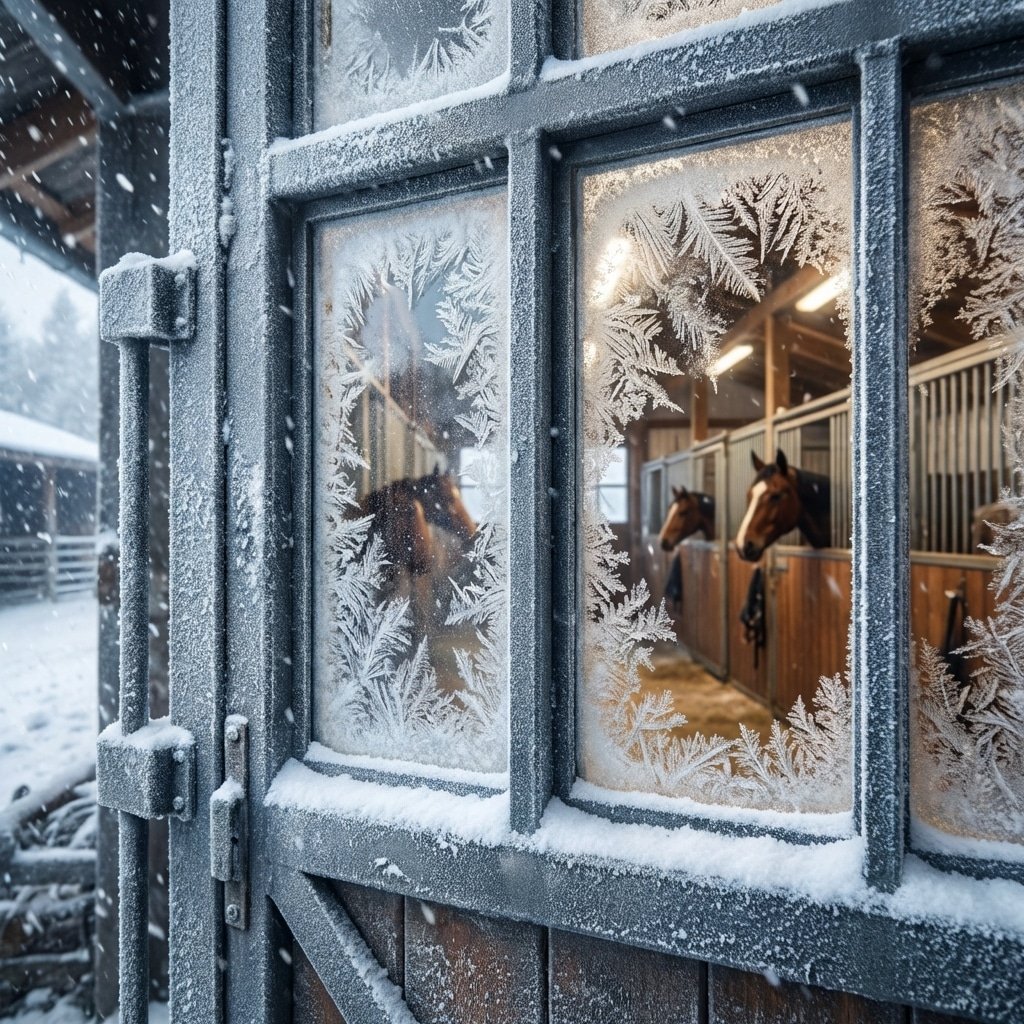
- Horses tolerate cold better than humidity: the deep-winter failure mode is usually trapped moisture and ammonia, not temperature — seal a barn for warmth and the respiratory problems arrive before the cold does.
- Footings belong below the frost line: whatever your region’s frost depth is, posts and foundations set above it are lifted by freeze-thaw within a few seasons — frost depth is a local number from your building authority, not an estimate.
- Freeze-resistant structural options exist: the Polish-market line is specified to -10°C; for -30°C sites, the conversation extends to envelope and heating decisions around the structure.
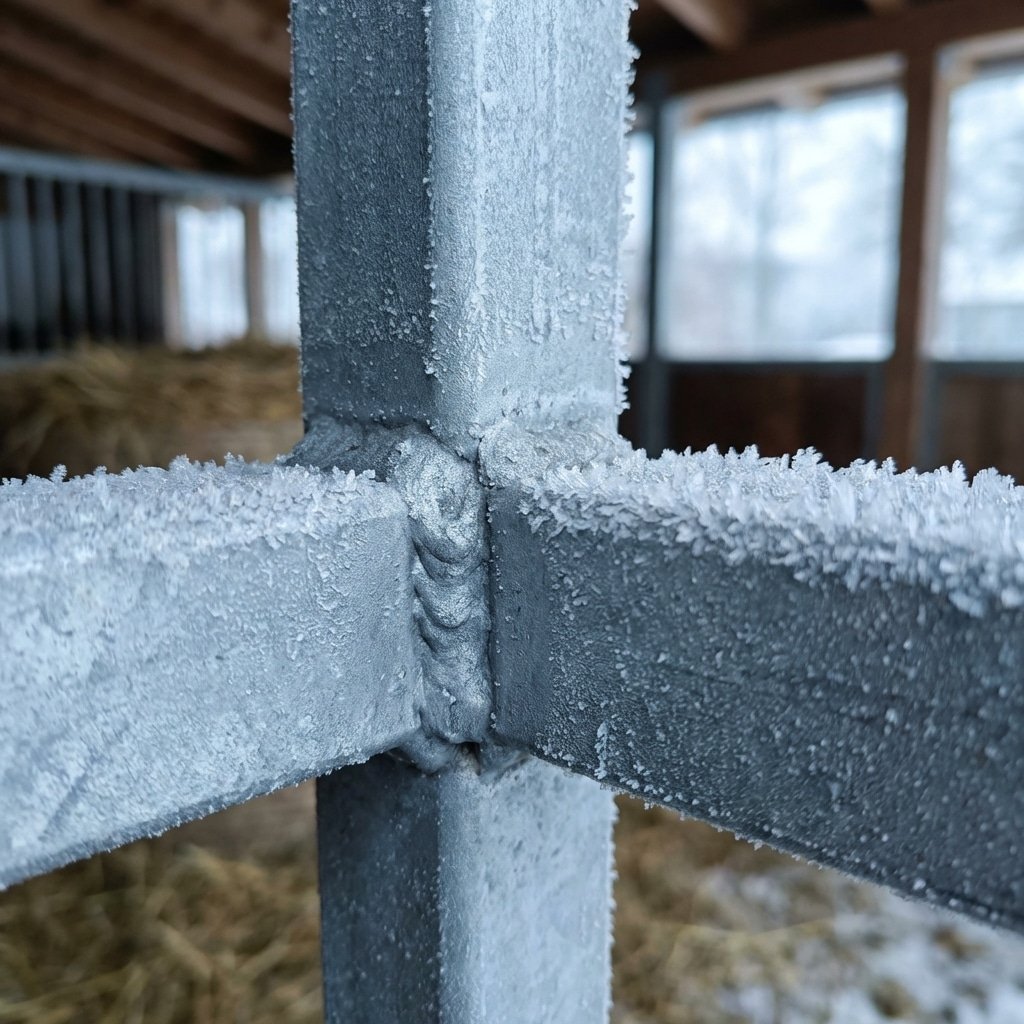
- Steel earns its keep in deep cold: hot-dip galvanized frames carry a 20-year rust-resistance service life through the freeze-thaw and condensation cycles that corrode lesser finishes at the post bases.
- Logistics favor early ordering: four-to-six-week global delivery on stabling systems — order against the building season, not after the first frost.
What -30°C Actually Changes
Horses are better winter animals than their owners assume. A dry horse with adequate forage handles serious cold by design — digestion is a furnace, and a winter coat is serious insulation. What horses do not handle is wet, drafts and poor air. That reframes the -30°C brief: the building is not primarily there to keep the horse warm; it is there to keep the horse dry, out of the wind, breathing clean air, and standing on footing that does not turn to ice. Warmth is what the building does for the water system, the tack and the humans — and those systems set most of the insulation requirements.
Deep cold also changes the physical ground rules. Sustained subzero temperatures drive frost deep into the soil, and frozen soil moves — expanding, contracting and gripping whatever is set in it. Every structural element that passes through the frost zone participates in that movement unless it is founded below it. And continental winter temperature swings cycle condensation onto every cold surface inside the building — winter is the corrosion season as much as the cold season.
Insulation: Envelope and the Thermal Plan
Insulation in a stable is an envelope decision, not a panel decision — the walls, roof, floor and water lines act as one system, and heat lost through the weakest element sets the performance of the whole. The planning method is zoning: the service core (wash bay, tack room, water and hydrant runs) is insulated and heated to protect plumbing and gear; the horse accommodation is insulated enough to buffer swings and stop condensation, but not sealed; the air path through the accommodation is planned rather than accidental. Precise R-values belong to the designer working with your local energy code — the buyer’s job is the zoning logic and the airtightness-where-it-counts discipline.
Two details dominate the deep-cold envelope in practice. First, the water strategy: from heated waterers to heat-traced lines to an insulated wet core, the barn’s relationship with water decides whether January runs on routine or on buckets. Second, the transition zones: doors and the areas just inside them are where warm interior air meets -30°C air, and unmanaged transitions mean ice at every threshold — latches that jam, hinges that shear, concrete that spalls. Doors that shed snow and hardware rated for the climate are line items worth arguing for at order time.
Insulate and heat for the plumbing and the people; buffer and ventilate for the horses. Reversing that order is the classic deep-winter design error.
Frost Depth and Structure Settings
Frost depth is the depth to which ground freezes in a design winter — a local figure your building authority publishes for your region, and the boundary that decides how every post, footing and slab in the stable is founded. Elements set above the frost line sit in soil that freezes and thaws; freezing soil clings to surfaces and expands as it freezes, jacking shallow footings upward season after season until gates no longer close and panel lines no longer run straight. The fix is old and reliable: found below the frost line, or engineer the element to ride the movement.
For modular and panel-based stabling, this translates into a specification conversation about post and panel bases. Freeze-resistant structural options exist in the product line — the Polish-market configuration is rated to -10°C — and the Canadian conversation extends from that starting point: deeper settings or engineered bases for the -30°C regions, with your local frost depth figure on the table during ordering rather than discovered during installation. The steel specification travels with it: hot-dip galvanized frames carry a 20-year rust-resistance service life through the freeze-thaw and condensation exposure that attacks lesser coatings at the ground line where frost does its structural work.
The Ventilation Balance
The deep-winter trap is warm and airtight. A sealed stable in January holds its heat and everything else with it: moisture from respiration and urine, ammonia from bedding, and the dust of a building that cannot be opened for months. Horses spend the season breathing that mix, and the respiratory cost arrives as reduced performance and vet bills. The air has to turn over even when opening everything to the prairie is unthinkable — the design question is how to exchange air without dumping heat or creating a draft at horse height.
The classic answers scale from simple to engineered. A high exit path — ridge or high-level vents — lets warm, moist air leave by buoyancy, pulling drier replacement air in low, away from the horses. Stall fronts and partitions with open upper sections keep air moving through the accommodation without training a stream on any one horse. And the envelope zoning does double duty: condensation on interior surfaces is managed by keeping those surfaces warm enough not to drip. Our guide on barn fire safety covers the electrical and hay-storage risks that sealed-season heating and indoor forage storage add — worth reading alongside this section, because both articles are about the same sealed-building season.
A practical rule for the balance: if the interior smells of ammonia at nose height, the ventilation plan has already failed, whatever the thermometer says. Frost patterns on the walls are the other free diagnostic — heavy frost at specific locations marks where warm moist air is meeting cold surfaces, which is both a condensation problem and a map of where the air is actually going.
Materials and the Winter Maintenance Cycle
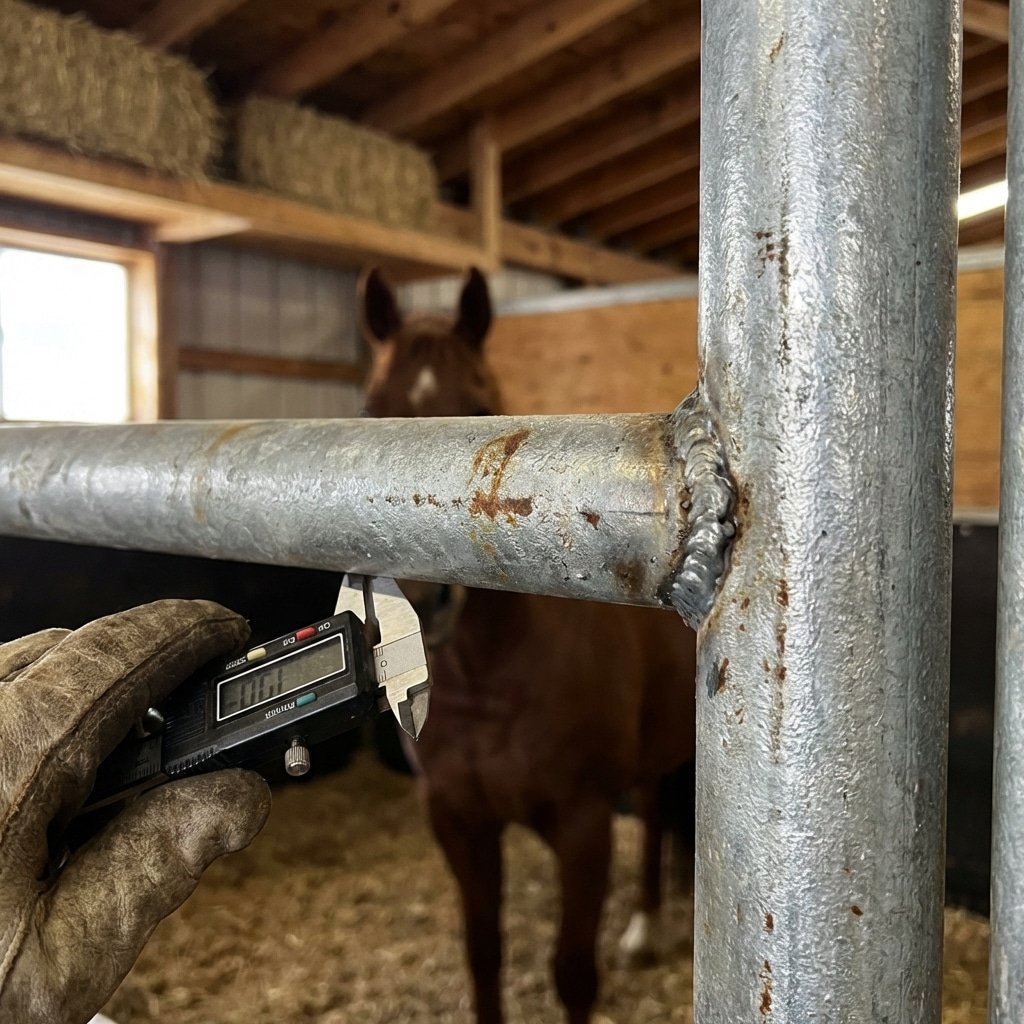
Winter is a corrosion accelerator. Freeze-thaw cycles, road salt tracked in by machinery, and condensation on every cold surface attack finishes in combination, and the point of attack is predictable: ground-line steel, fasteners, and the wet zones around waterers and wash areas. The material specification that survives a prairie winter is hot-dip galvanized structural steel — the zinc coating protects the welds and cut ends where coatings fail first — paired with hardware chosen for the climate rather than whatever shipped in the crate.
The maintenance cycle deserves the same planning honesty. Deep winter is not inspection season — whatever the stable needs, it needs before the ground freezes: drainage cleared and falling away from the building (spring melt is the second wet season), hardware freed and lubricated, and ventilation paths checked while the weather still allows work at height. Buyers specifying whole facilities can pull the drainage logic from our guide to stable drainage planning — the principles written for urine and wash water apply doubled to meltwater.
Frequently Asked Questions
Do horses need a heated barn at -30°C?
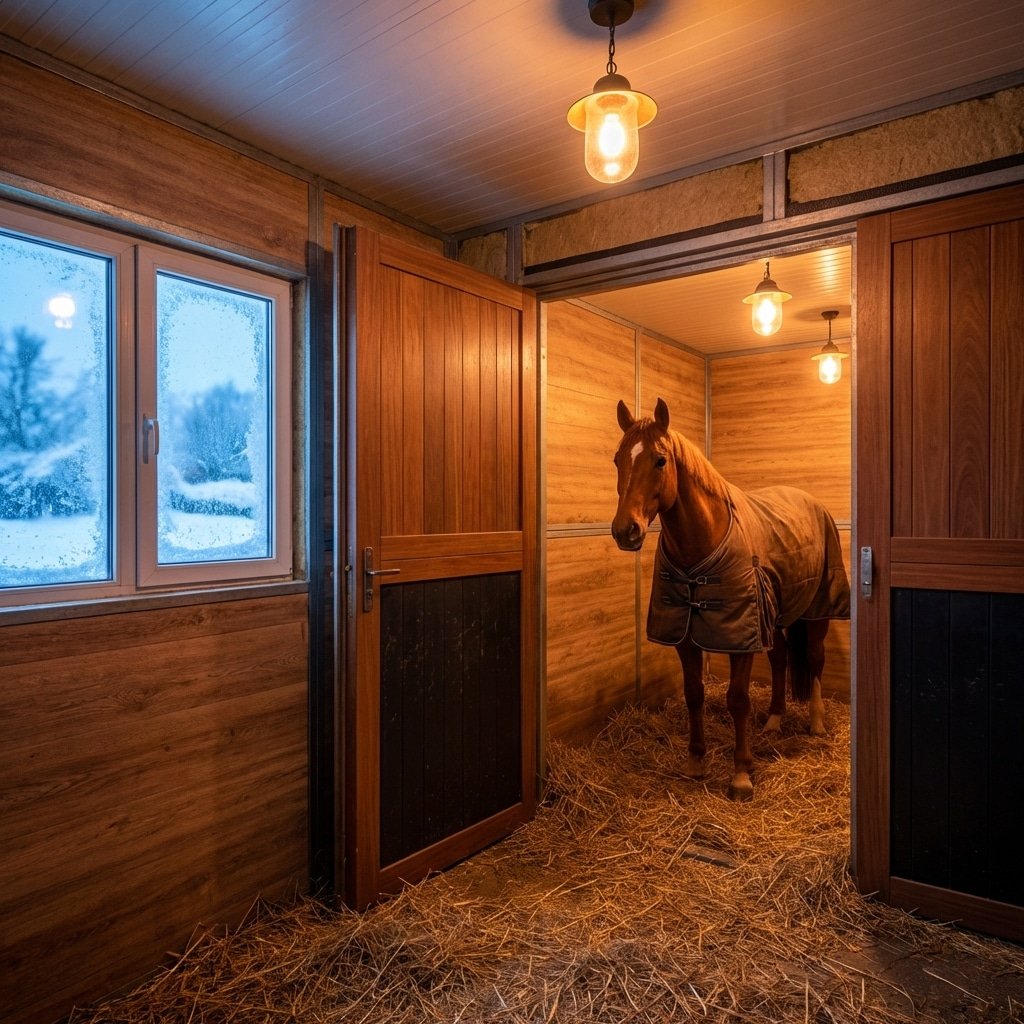
Most horses need dry, draft-free, well-ventilated accommodation more than heat — the heating priority is water systems, service areas and people. Sealing a barn for warmth usually creates respiratory problems before it solves thermal ones.
What frost depth should my stable footings be set below?
Your region’s published frost depth — a local figure from your building authority. Anything set above it rides the freeze-thaw and moves within a few seasons; the number is local, not a rule of thumb.
Are these stables rated for -30°C?
Freeze-resistant structural options are specified to -10°C for the Polish market; for -30°C sites the specification conversation extends to deeper settings or engineered bases plus envelope and heating decisions around the structure. Raise the site’s climate at ordering so the engineering happens before manufacture.
Why is winter the corrosion season?
Freeze-thaw, tracked salt and constant condensation on cold surfaces combine to attack finishes at ground line and in wet zones — which is why hot-dip galvanized steel, protected at the welds and cut ends, is the baseline spec with a 20-year rust-resistance service life.
How should Canadian buyers time an order?
Standard global delivery runs four to six weeks — order in late winter or spring so the build lands in the construction season, not against freeze-up. Orders of 20 sets or more come with a dedicated regional account manager to coordinate logistics.
Conclusion
Deep-cold stabling is a systems problem: an envelope that protects the water and the service core, foundations below the frost line, and an air path that keeps turning over when every instinct says seal the building. Horses handle the cold; buildings and plumbing do not — and the specification conversation, held early with your region’s frost data on the table, is what separates a January of routine from a January of buckets and ice.
Planning a Canadian project? Review the stabling systems range and open the specification conversation with your site’s winter data — freeze-resistant options, galvanized structures and regional logistics are all on the table from the first quote.


 English
  Spanish
  French
  Arabic
  German
0 Comments