


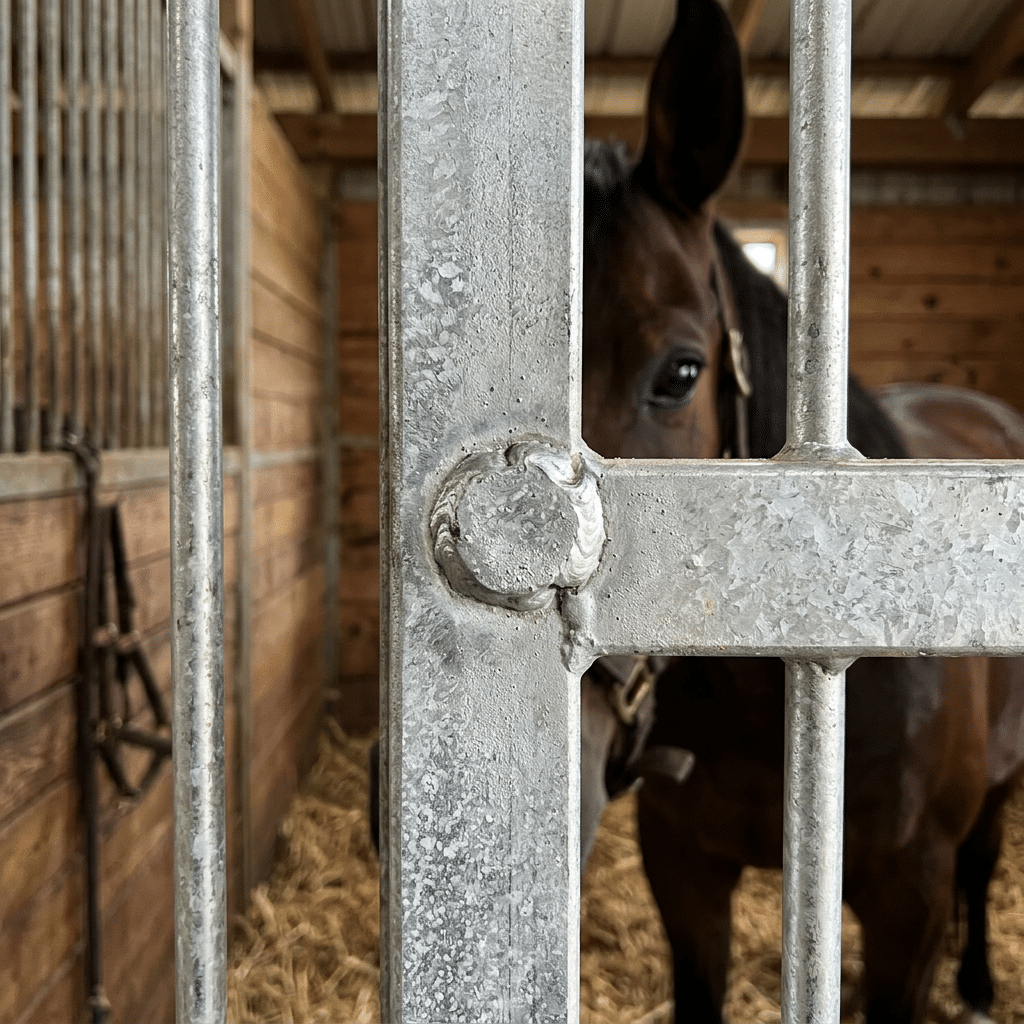
Accurate asset valuation for equestrian properties depends on separating fixed liabilities from movable assets. A permanent timber barn is a sunk cost, with appraisers consistently devaluing structures due to wood rot—a risk that directly lowers a farm’s market value and complicates financing.
This analysis contrasts fixed construction with modular systems engineered for value retention. We explain how rot-proof HDPE infill and hot-dip galvanized steel frames preserve capital, qualify for accelerated depreciation, and are treated as equipment, not just a building tied to the land.
The Sunk Cost of Permanent Timber Construction
The sunk cost of a permanent timber barn is the capital already spent on materials, custom framing, and labor that cannot be recovered. This past expenditure becomes irrelevant for future financial decisions, making modular steel systems a more flexible and valuable long-term asset.
Understanding Irrecoverable Capital in Wood Barns
When you build a traditional timber barn, the money spent on concrete foundations, site-specific framing, and specialized labor is gone for good. That capital is now permanently fixed to a single piece of land. You can’t pick it up and move it if your business needs change, and you can’t sell the structure separately from the property. Trying to modify or relocate it means demolition, resulting in a near-total loss of your initial investment. It becomes a fixed liability, not a flexible asset.
How Flat-Pack Steel Systems Retain Asset Value
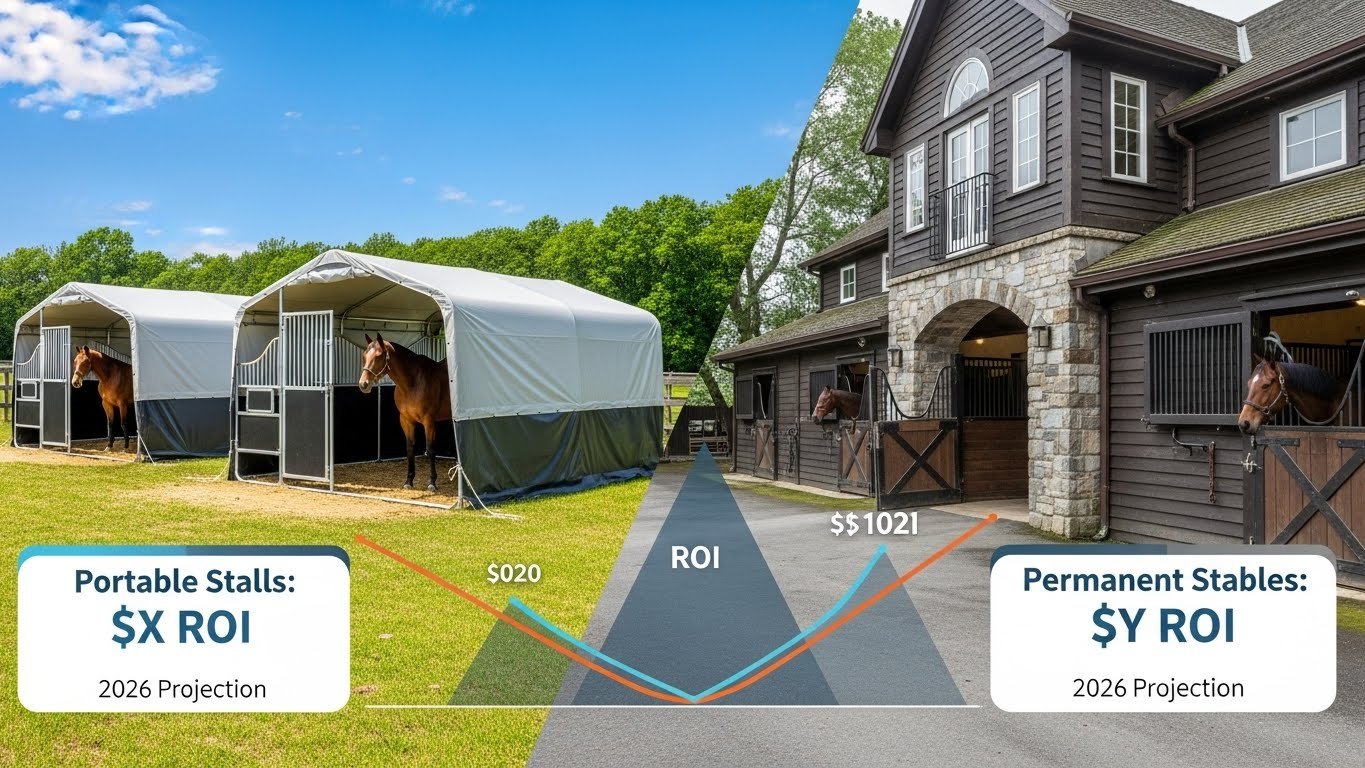
Modular steel systems are engineered to solve the sunk cost problem. They are designed from the ground up as movable assets that hold their value. Instead of being permanently tied to a property, the entire structure can be disassembled, packed, and either sold or reinstalled at a new location. This preserves the owner’s capital and provides operational flexibility that timber can’t match.
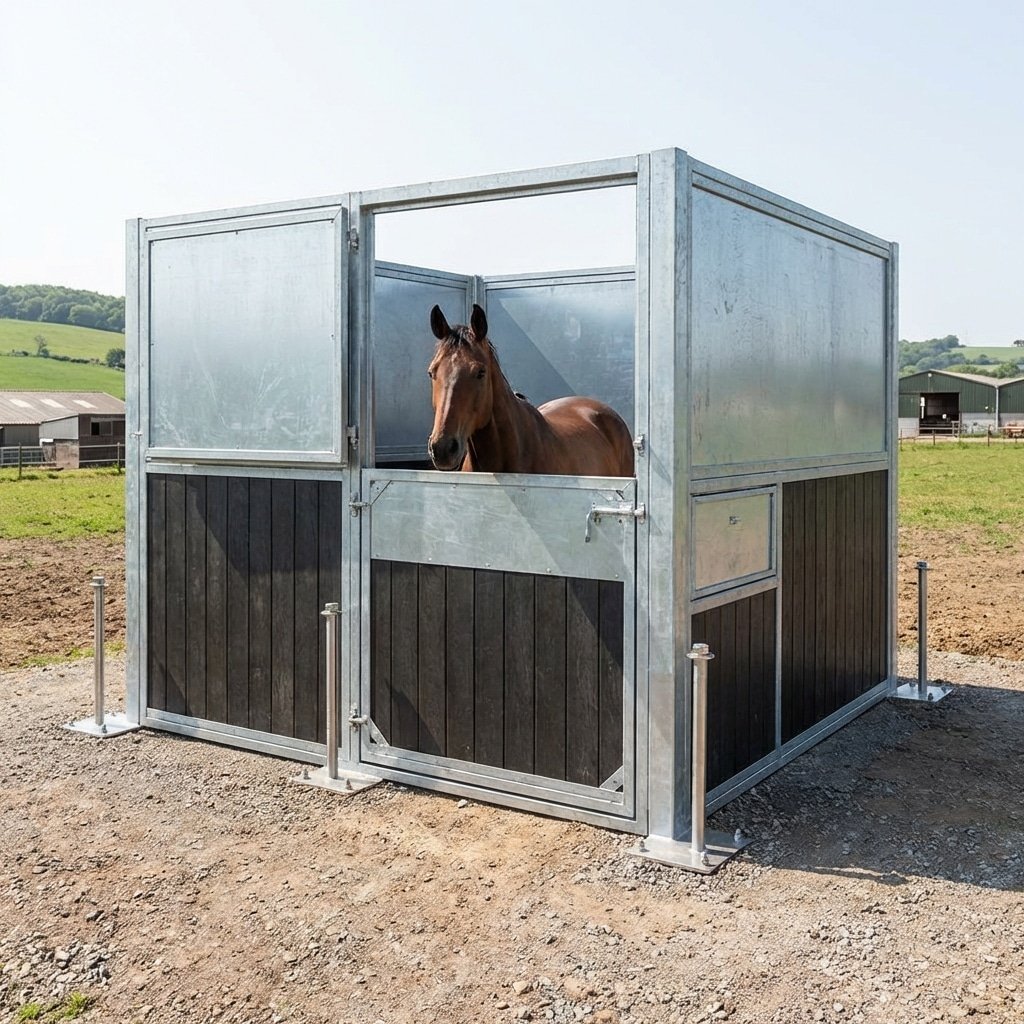
- Liquid Asset Design: The DB Stable Steel Pallet Flat-Pack system allows for complete disassembly. Every panel and component can be unbolted and stacked, preserving the initial investment. This turns the stable into equipment you own, not just a building tied to the land.
- Material Durability: Timber rots and degrades, losing value over time. Our systems use hot-dip galvanized steel frames and HDPE infill. These materials resist rot, corrosion, and impact, ensuring the asset maintains its structural integrity and market value for decades with zero maintenance.
Why Appraisers Devalue Rotting Wood Infrastructure
Appraisers devalue rotting wood because it indicates structural compromise and expensive repairs. This decay undermines a property’s integrity, signaling a direct financial risk to buyers and lenders.
Structural Compromise and Safety Hazards
When an appraiser finds rotting wood, they don’t just see a cosmetic issue; they see a fundame
ntal failure in the asset’s structural integrity. The presence of decay is a major red flag for deferred maintenance that leads to expensive, often non-negotiable, repairs. It directly impacts the property’s ability to secure financing and poses real-world risks.
- Rot weakens the core load-bearing components of a building—beams, posts, and floor joists. This compromises the entire structure, creating a risk of sagging floors or even collapse.
- Outdoor structures like decks, stairs, and porch supports are especially vulnerable. Compromised wood in these areas presents an immediate safety hazard and a significant liability for the property owner.
- Most loan programs, from FHA to conventional mortgages, have strict safety standards. Appraisers must flag significant rot because it violates these standards, often halting the financing process until repairs are made.
The Advantage of Rot-Proof Infill Materials
Building with materials that are immune to decay eliminates this entire category of risk from an asset’s valuation. Instead of creating a future liability, these materials preserve the property’s value by engineering out the potential for rot-related degradation from day one. This is a clear advantage appraisers can recognize.
- Zero-Maintenance HDPE: UV-stabilized High-Density Polyethylene infill is completely impervious to rot, mold, and moisture damage. It offers a permanent solution that will never need painting or replacement due to decay.
- High-Density Bamboo: Strand woven bamboo is engineered to be over three times harder than oak, with a Janka hardness rating above 3000 lbf. Its density makes it highly resistant to both rot and insect damage.
Selecting these modern infill materials prevents the root cause of wood-related devaluation. An appraiser evaluating a structure built with these components sees a stable, low-maintenance asset, not a project with hidden costs. This foresight directly supports a stronger, more defensible property valuation over the long term.
Custom Horse Stables Engineered for Any Climate
The Modular Advantage: Liquid Assets vs. Fixed Real Estate
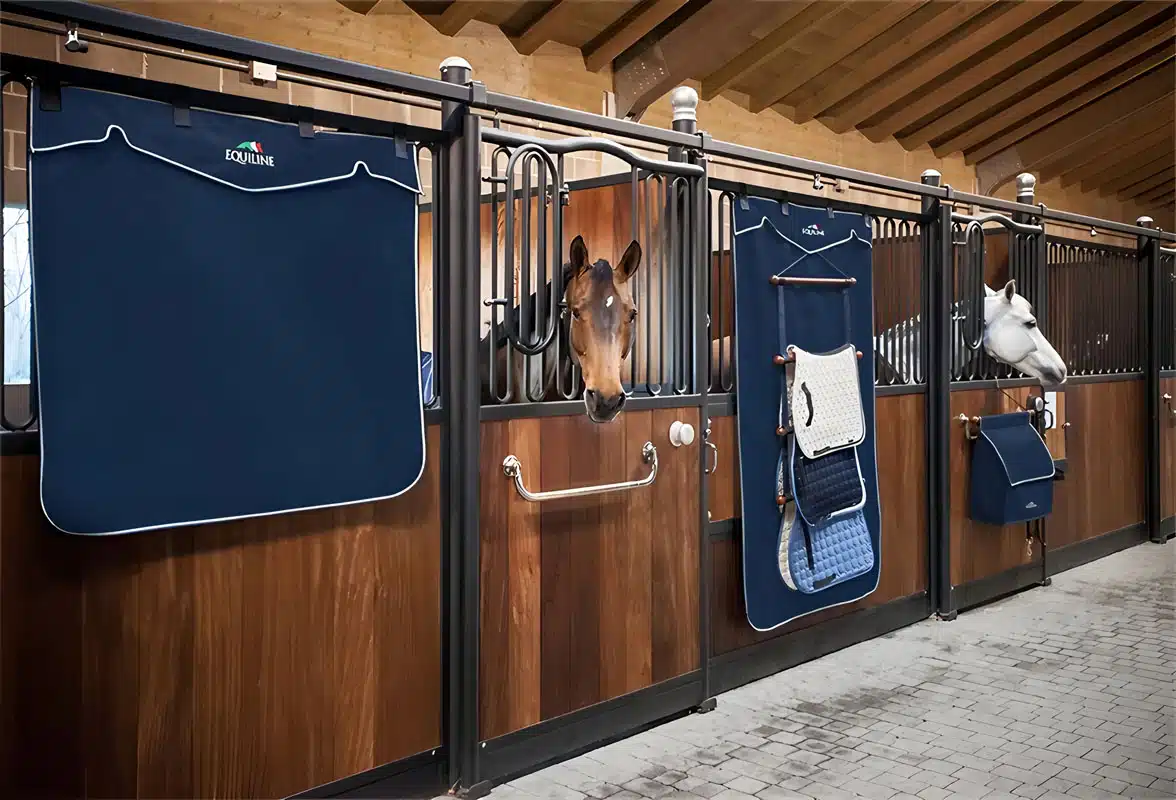
Modular stable systems act like liquid assets. Their flat-pack design cuts shipping costs and allows for easy relocation or resale, protecting capital unlike permanent, sunk-cost structures.
| Feature | Modular Stable Systems (Liquid Asset) | Traditional Fixed Barns (Fixed Real Estate) |
|---|---|---|
| Capital Deployment | Faster installation accelerates return on investment, reducing construction timelines by up to 30%. | Long construction cycles tie up capital for extended periods, delaying operational use and revenue. |
| Asset Mobility | Can be relocated, reconfigured, or resold. This flexibility prevents the investment from becoming a sunk cost tied to one location. | Permanent structures are irreversible capital investments. They cannot be moved, making them illiquid and land-dependent. |
| Depreciation | Often qualifies for accelerated depreciation schedules (e.g., 5-7 years), improving near-term cash flow. | Subject to long, 39-year depreciation schedules typical for fixed real estate, limiting tax benefits. |
| Logistics Cost | Efficient flat-pack systems dramatically lower per-unit freight, freeing up capital for inventory. | Requires on-site material delivery and construction, leading to high labor and transport costs. |
Understanding Asset Liquidity in Construction
Traditional construction locks your money into the ground. Once a barn is built, that capital is a sunk cost—it can’t be recovered or moved. Any decision to change or sell is burdened by the initial investment, regardless of the property’s current market value. This is the definition of an illiquid asset.
Modular systems break this cycle. Because they can be disassembled, moved, and resold, they retain value independent of the land. This mobility is a huge financial advantage. It also gives access to more favorable tax treatments. Instead of the slow 39-year depreciation of fixed real estate, modular assets often qualify for faster schedules, improving your cash flow from day one.
How Flat-Pack Logistics Turn Inventory into a Liquid Asset
For distributors, asset liquidity isn’t just about the final product—it starts with shipping. Bulky, pre-welded stable systems are a logistical nightmare, fitting only 12-15 sets into a 40HQ container. This ties up enormous amounts of capital in freight before the product even lands.
Our steel pallet flat-pack system solves this. We load 30 to 45 stable sets into a single 40HQ container, a 60%+ increase in efficiency. This isn’t just a minor improvement; it fundamentally changes the business model. It dramatically lowers the per-unit shipping cost, which directly protects your profit margins. Less money stuck in transit means more capital is available for stock, marketing, or other investments. Your inventory becomes a far more liquid and less risky asset.
Zero-Maintenance HDPE as a Selling Feature
HDPE infill eliminates the recurring labor and material costs of timber, preserving a stable’s long-term asset value for property owners and appraisers.
The Ongoing Costs of Traditional Timber Infill
Timber infill carries a significant financial drag that accumulates over the life of a stable. It demands constant upkeep to remain safe and presentable. This cycle of maintenance includes recurring expenses for paint, stains, or sealers just to protect the wood from moisture.
Beyond surface treatments, wood is vulnerable to structural failure. It rots, warps, and attracts insects, forcing owners into costly board replacements. Property appraisers recognize rotting wood as a major liability, signaling deferred maintenance that directly reduces a farm’s market value.
Horses themselves accelerate this decay. Chewing and kicking splinters the wood, creating immediate safety hazards that require constant inspection and repair. What seems like a traditional choice becomes a perpetual line item for labor and material
s.
The Value of UV-Stabilized & Impact-Absorbing HDPE
HDPE infill is engineered to solve the inherent flaws of timber. It provides a stable, one-time investment that protects both the animals and the property’s asset value. The material’s performance comes from specific, non-negotiable features:
- Impervious to Damage: We use 28mm-32mm thick HDPE planks that are completely resistant to moisture, rot, and insects. This durability eliminates the need for any painting, sealing, or chemical treatments for the life of the product.
- UV-Stabilized Material: The HDPE includes UV inhibitors to prevent the material from becoming brittle or degrading under constant sun exposure. This is a critical specification for performance in harsh climates like Australia.
- Impact-Absorbing Surface: The material is designed to flex under a horse’s kick and then return to its original shape. This prevents the planks from cracking or breaking like rigid materials and, more importantly, reduces the risk of injury to the horse.
B2B Tip: Supplying Appraisers with OEM Documentation
Provide appraisers with OEM docs like material certs and galvanizing reports. This shifts valuation from a visual guess to a fact-based assessment, proving quality and justifying higher value.
Establishing Provable Asset Value Beyond Visuals
An appraiser’s job is to assign a defensible value to an asset. When they look at a horse stable system, their assessment is often limited to a visual inspection. Is there rust? Does it look sturdy? This is a subjective guess at best.
Providing official OEM documentation completely changes the conversation. It moves the valuation from a subjective opinion to a data-backed analysis. You’re giving the appraiser verifiable proof of quality for a modular asset, separating it from generic or deteriorating fixed structures.
The paperwork justifies the asset’s condition and proves its long-term durability. These are key factors that directly support a higher valuation.
Key Documents: Material Specs and Galvanizing Reports
You need to provide specific, high-impact reports that address an appraiser’s core concerns: structural safety and longevity. We supply our B2B clients with the exact paperwork needed to build a strong case for asset value.
- Hot-Dip Galvanizing Certificate: Proves compliance with the **BS EN ISO 1461** standard. This isn’t just a claim of rust protection; it’s a certified process that guarantees long-term corrosion resistance.
- Steel Grade Material Report: Specifies the exact structural steel used, such as **Q235B** or the cold-climate **Q345B**. This report confirms the steel’s tensile strength and impact toughness.
- Zinc Coating Thickness Data: Provides a measurable number, showing an average coating of over **70-85 microns**. This specific thickness translates directly to a longer service life without rust.
Frequently Asked Questions
Do modular horse barns add value to a property?
Yes, a well-built modular barn can add value, particularly if it’s high quality and serves a clear purpose. Its value is often tied to its condition and relevance to the local market. Unlike permanent structures, a deteriorating modular barn can detract from a property’s appeal.
How is an equestrian property appraised?
Appraisers evaluate equestrian properties by assessing land, structures, and amenities. They use three main methods: the Sales Comparison Approach (comparing to similar sold properties), the Income Approach (for revenue-generating facilities), and the Cost Approach (calculating replacement cost minus depreciation).
Are modular horse stalls considered real estate or personal property?
Modular horse stalls are generally classified as personal property, not real estate. Because they are not permanently affixed to the land and are designed for mobility, they typically fall outside the building permit requirements for permanent structures and are treated as depreciable equipment.
What stable design is best for maximizing farm resale value?
The most valuable design for resale is one that offers flexibility. Multi-purpose structures that can be easily converted for other uses, such as a workshop or vehicle storage, appeal to a broader range of buyers and retain their value better than highly specialized, single-purpose equestrian facilities.
How is horse stable equipment depreciated for tax purposes?
In the US, stable equipment is depreciated using the Modified Accelerated Cost Recovery System (MACRS). Most farm machinery and equipment falls into a 5-year recovery period, allowing business owners to deduct the cost over time to offset income.
Final Thoughts
While traditional timber barns are a known quantity, the risk of rot creates a long-term liability that appraisers will devalue. Our BS EN ISO 1461 hot-dip galvanized steel and HDPE systems provide the verifiable, zero-maintenance asset quality needed to protect a property’s final valuation. This isn’t an expense; it’s capital preservation.
Your clients depend on a defensible asset value, and you need the documentation to prove it. Request our full OEM package with galvanizing reports and material certificates to review the specifications firsthand. Contact us to configure your first container load and see how our flat-pack logistics protect your margins.

 English
  Spanish
  French
  Arabic
  German
0 Comments