


Jammed barn doors are a primary source of post-installation complaints and warranty claims for stable outfitters. Standard exposed track systems inevitably clog with hay and dust, causing operational failures that damage a distributor’s reputation for supplying reliable, long-lasting hardware.
This analysis benchmarks exposed hardware against the enclosed, hidden track system standard. We examine how 304 stainless steel ball bearings and cast-proof bottom guides prevent debris buildup and impact damage, ensuring maintenance-free operation for your clients.
Why Barn Doors Become Impossible to Slide Over Time
Barn doors jam from a buildup of debris like hay and dust in the track, combined with roller wear. Small issues compound, causing friction and misalignments.
The Cumulative Effect of Debris and Hardware Wear
A sliding stable door doesn’t fail overnight. It fails gradually, as multiple small problems build on each other until the system seizes up. This slow degradation is the primary reason a door that once glided smoothly becomes a dead weight that’s nearly impossible to move.
The failure is a feedback loop. A little bit of hay in the track makes the door harder to pull. Forcing it puts extra stress on the rollers, causing them to wear unevenly. That uneven wear then puts more strain on the track, leading to minor bends or sags. Each problem makes the others worse.
- Debris Buildup: Dust, cobwebs, hay, and horse hair accumulate inside the track channel. This material compacts over time, creating a physical barrier that grinds against the rollers or stops them completely.
- Roller Failure: Constant use wears down the rollers. They can develop flat spots, crack, or become misaligned in their brackets. Instead of gliding, they start to wobble or drag, increasing friction dramatically.
- Track Damage: The metal track itself can bend from impacts or sag if its mounting points loosen. This creates an uneven path, forcing the rollers to fight against high and low spots, which eventually jams the door.
Why Exposed Tracks Worsen the Problem
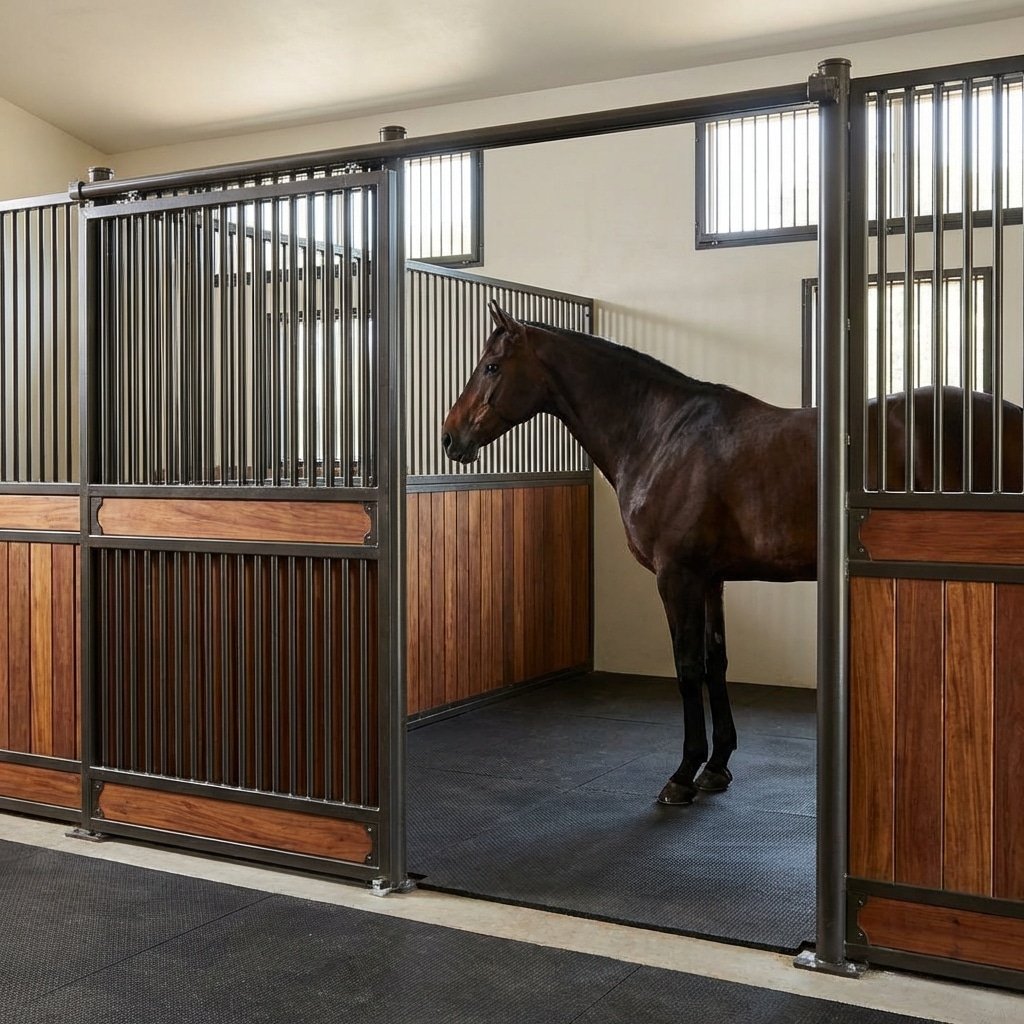
Most standard stable doors use a basic, top-mounted exposed roller system. This design is the root cause of many long-term issues because the open track acts like a shelf, perfectly positioned to catch all the dust and debris floating in a barn environment.
Without any protection, hay particles, feed dust, and hair fall directly onto the moving parts. This constant contamination is not just a nuisance; it’s a critical design flaw in an agricultural setting. This is a key operational failure that the hidden track system on our Professional Series stables is specifically engineered to prevent. By shielding the mechanism, you eliminate the primary entry point for the debris that eventually grinds the system to a halt.
The Flaw of Exposed Rollers: Dust, Hay, and Horse Hair
Exposed rollers collect airborne stable debris like dust and hay. This buildup clogs the track, creates friction, and causes jamming that leads to premature hardware failure.
How Airborne Debris Creates Friction and Failure
In any equestrian facility, the air is filled with dust, sm
all hay particles, and horse hair. Standard barn door hardware with an open, exposed track acts like a collection tray for this debris. These particles settle directly into the channel where the rollers are supposed to glide smoothly.
This accumulation isn’t harmless. It builds up into a dense, gritty layer that physically obstructs the rollers. The result is increased friction and resistance, which is why doors start to stick, drag, or jam completely. Trying to force a jammed door only makes things worse—it can damage the rollers, bend the track, and accelerate the complete failure of the system.
The Professional Series’ Hidden Track System
This is a known engineering problem, and it requires a specific design solution. The DB Stable Professional Series uses a hidden track system that physically shields the entire roller mechanism from the stable environment. The track and wheels are enclosed, preventing any debris from contaminating the sliding path.
By protecting the core components, the door maintains a smooth, low-resistance glide year after year. This design drastically reduces the need for constant track cleaning and extends the operational life of the hardware, which is critical for busy training centers and equestrian clubs that can’t afford operational downtime.
Engineered Horse Stables for Any Climate
The Self-Cleaning Mechanics of a Hidden Track System
A hidden track’s enclosed design shields rollers from barn debris like hay and dust. This passive protection prevents the jamming common in exposed systems, ensuring smooth operation without constant cleaning.
| Feature | Conventional Exposed Roller System | Hidden Track System |
|---|---|---|
| Debris Exposure | Open track acts as a shelf for hay, dust, and cobwebs, causing jams. | Enclosed housing physically blocks contaminants from reaching the mechanism. |
| Maintenance Frequency | Requires frequent cleaning to remove buildup and prevent sticking. | Minimal. The system is passively protected, removing a major failure point. |
| Component Wear | Rollers grind over debris, accelerating wear and causing flat spots. | Bearings operate in a clean environment, reducing friction and extending lifespan. |
| Operational Reliability | Degrades over time, becoming jerky and eventually impossible to slide. | Maintains smooth, quiet operation for years with virtually no intervention. |
How Concealed Design Prevents Debris Accumulation
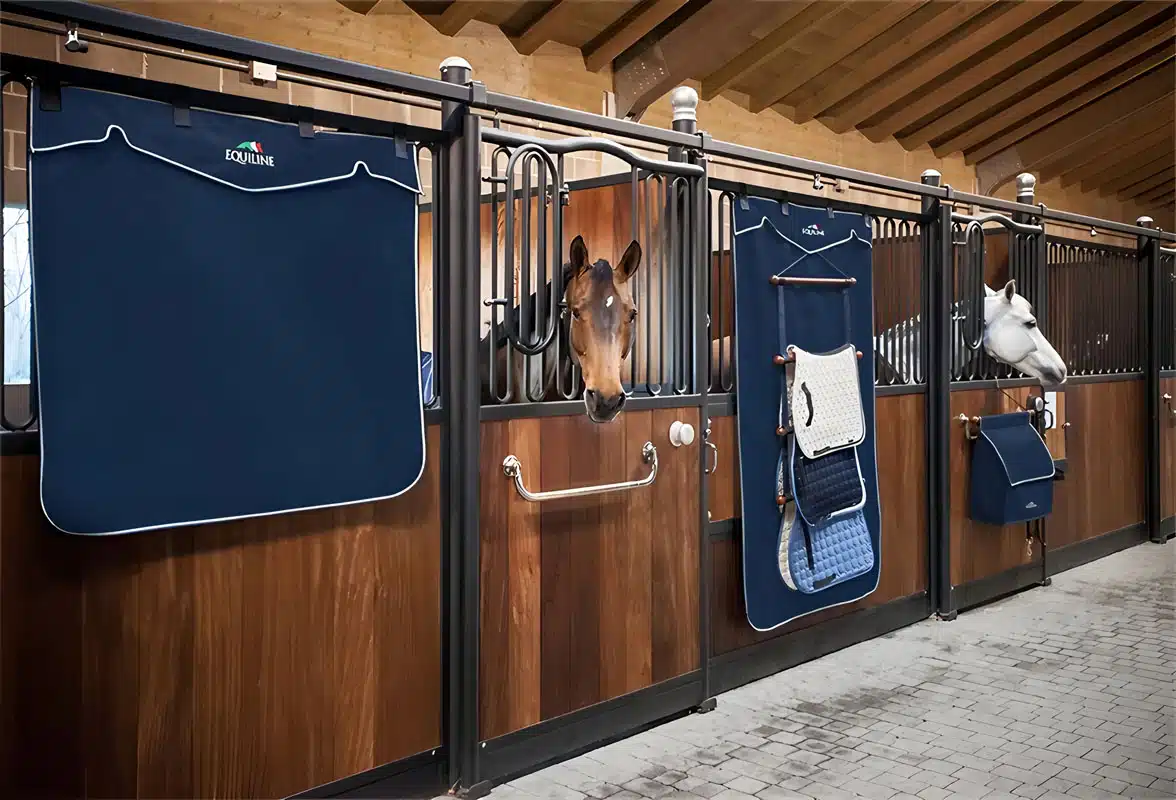
The primary “self-cleaning” feature of a hidden track system isn’t an active mechanism, but a result of its smart, enclosed design. The track and rollers are contained within a housing that shields them from the primary enemies of sliding doors in a stable: airborne hay, dust, and horse hair. This eliminates the main reason traditional exposed-roller doors jam and become impossible to move.
Any minor particles that might find their way inside are typically dislodged by gravity and the door’s own movement. Without a place for debris to settle and accumulate, the system maintains its smooth glide path over the long term. It’s not about actively cleaning, but about passively preventing the problem from ever starting.

The Function of Corrosion-Resistant Ball Bearings
The internal components are just as critical. These systems use smooth, sealed ball bearings instead of simple, exposed rollers. The sealed design reduces friction and gives debris no place to catch and build up. More importantly, the hardware and bearings are made from materials like 304 Stainless Steel.
This material choice is non-negotiable in a stable environment. It resists rust and corrosion caused by constant exposure to humidity, moisture, and ammonia. The bearings don’t degrade and seize up, ensuring the door glides effortlessly for years. This is a significant upgrade from standard steel rollers that inevitably corrode and fail.
Nylon Wheels vs. 304 Stainless Steel Ball Bearings
Nylon wheels are quiet and rust-proof but can deform under heavy loads. 304 stainless steel handles extreme weight but can be noisier and requires maintenance in coastal areas.
Operational Trade-Offs: Quiet Gliding vs. Heavy Load Capacity
Nylon wheels are known for their silent, smooth gliding. Their self-lubricating properties reduce friction, making for an effortless roll. This is a significant advantage in environments where noise reduction is a priority. Stainless steel, on the other hand, excels in raw strength. It’s built for high-load scenarios and can support extremely heavy stable doors without any risk of material failure or deformation over the long term.
A key risk with nylon is “flat-spotting.” If a very heavy door remains stationary for long periods, the point of contact on the nylon wheel can slightly deform. This creates a small flat spot, resulting in a bumpy or jerky roll when the door is next moved. With steel bearings, the primary tr
ade-off is noise. The metal-on-metal contact is naturally louder and can cause more wear on the track over time if the system isn’t properly maintained.
The DB Stable Standard: Why We Use 304 Stainless Steel Hardware
Our standard hardware kit includes anchor bolts, connectors, and screws made entirely from 304 stainless steel. We made this choice to prioritize structural integrity above all else. Every connection point must be able to withstand the significant and unpredictable forces common within a stable environment, from a horse leaning on a panel to the daily stresses of operation.
While the choice of roller material often depends on the specific door system and client needs, using 304 stainless steel for all fasteners is non-negotiable. It guarantees long-term resistance to corrosion and material fatigue, ensuring the entire stable structure remains secure for years.
Bottom Guides: Preventing the Dangerous “Kick-Out”
Bottom guides keep a sliding stall door aligned, preventing it from being kicked outward. A properly engineered “cast-proof” gap at the base stops a horse’s leg from getting trapped.
How Floor Guides Keep Doors Secure and Aligned
A sliding door hangs from the top track, but that system only controls forward and backward motion. The bottom guide is what handles lateral forces. Without it, any significant impact from a horse kicking or leaning against the door would cause the bottom to swing outward, potentially derailing the door and creating a dangerous opening.
- It stops the door from swinging out when kicked or pushed.
- It ensures the door stays perfectly aligned within its track for reliable, smooth operation.
- It serves as the critical anchor for the door’s entire lower edge, preventing warping and flexing.
The Importance of a Cast-Proof Bottom Gap
Simply guiding the door isn’t enough in a horse stable. The real safety engineering lies in the space between the bottom of the door and the floor. A horse that lies down to roll can easily get a leg or hoof trapped in a poorly designed gap. This is known as getting ‘cast’, and it’s a panic-inducing, high-injury event.
Our stable systems incorporate a specific “Cast-Proof Design.” We engineer a minimal bottom gap of approximately 50mm—just enough for smooth sliding over bedding but too small for a hoof to get wedged underneath. This detail moves beyond simple door function and addresses a critical animal welfare issue, preventing one of the most dangerous types of stall injuries.
Frequently Asked Questions
Why is my stable door difficult to slide?
Difficulty in sliding is often caused by dirt, hay, or hair building up in the track, which obstructs the rollers. Misaligned rails or worn-out components can also be the cause. Regular cleaning of the track usually resolves the issue.
What is the best way to lubricate a sliding stable door?
Use a silicone-based or Teflon-based spray. These lubricate effectively without attracting the dust and debris that oil-based lubricants do. Always clean the track thoroughly before applying anything.
What is the difference between an exposed roller and a hidden track system?
Exposed tracks are a visual feature common in rustic designs but can easily clog with debris. Hidden track systems, like the one used in the Professional Series, conceal the rollers, protecting them from contamination for smoother, more reliable operation.
How can I prevent my stable door from coming off the track?
The best prevention is regular maintenance. Keep the track clean, ensure all brackets are tight, and use a bottom guide. DB Stable systems include anti-derailment features and robust guides to avoid this problem.
Are plastic wheels strong enough for heavy stable doors?
While common, plastic or nylon wheels can deform under the weight of heavy doors, especially those with bamboo infill. 304 Stainless Steel ball-bearing rollers offer much better durability and a smoother slide over the long term.
Final Thoughts
While standard exposed rollers offer a lower initial price, they create a cycle of maintenance and failure. Our Professional Series’ hidden track system, built with 304 Stainless Steel hardware, is engineered to eliminate the debris buildup that leads to jamming and warranty claims. This is how you protect your brand’s reputation for reliability.
Verify the engineering for yourself. We recommend a trial order to test the smooth glide and robust construction of our hidden track system firsthand. Contact our team to get a quote and discuss OEM options for your market.

 English
  Spanish
  French
  Arabic
  German
0 Comments