


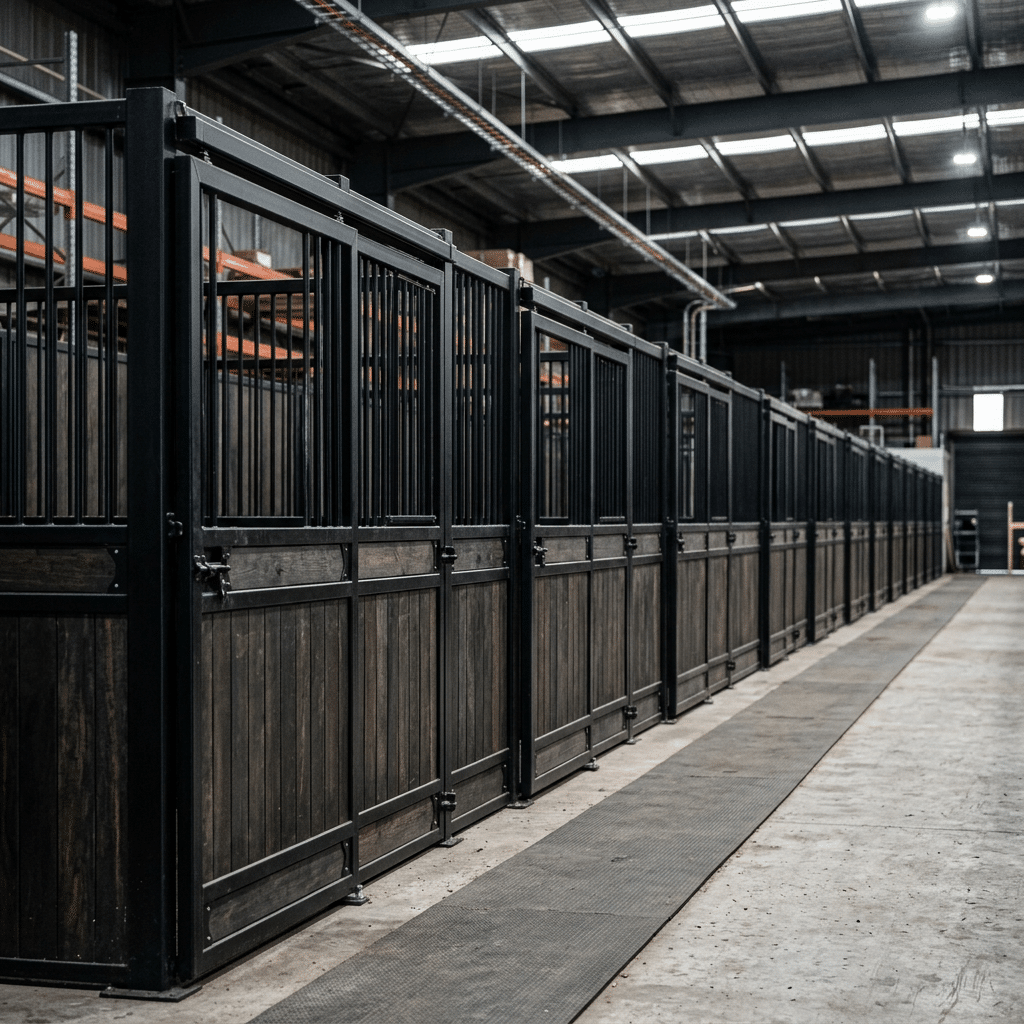
Flood recovery success is determined by material choices made long before the storm. When saltwater or standing water hits, traditional wood stalls swell and rot, while common steel corrodes at the welds. This material failure turns a recoverable event into a structural write-off, forcing a complete and costly demolition.
This analysis details a recovery protocol built on superior materials. We document how High-Density Polyethylene (HDPE) with near-zero water absorption and steel hot-dip galvanized after fabrication to ISO 1461 standards survive submersion. These specifications enable a simple pressure wash cleanup, not a total rebuild.
The Aftermath of Coastal Floods and Hurricanes
Coastal weather events leave behind immediate structural damage and long-term corrosion. Recovery requires a sober assessment of what’s salvageable and a commitment to rebuilding with truly resilient materials.
Evaluating Structural Damage and Debris Fields
The first walk-through after a storm is a brutal inventory of damage. You’re looking for bent steel panels, twisted fenc
ing, and compromised support posts that can no longer carry their intended load. The ground is often littered with debris, from building materials to uprooted trees, making the entire area a hazard.
Before any cleanup begins, a serious structural assessment is mandatory. This isn’t just about what looks bad; it’s about determining what is a total loss versus what can be safely repaired. This evaluation dictates the entire recovery plan, separating the structures that need complete demolition from the foundations you can build upon.
The Hidden Threat of Saltwater Corrosion on Steel
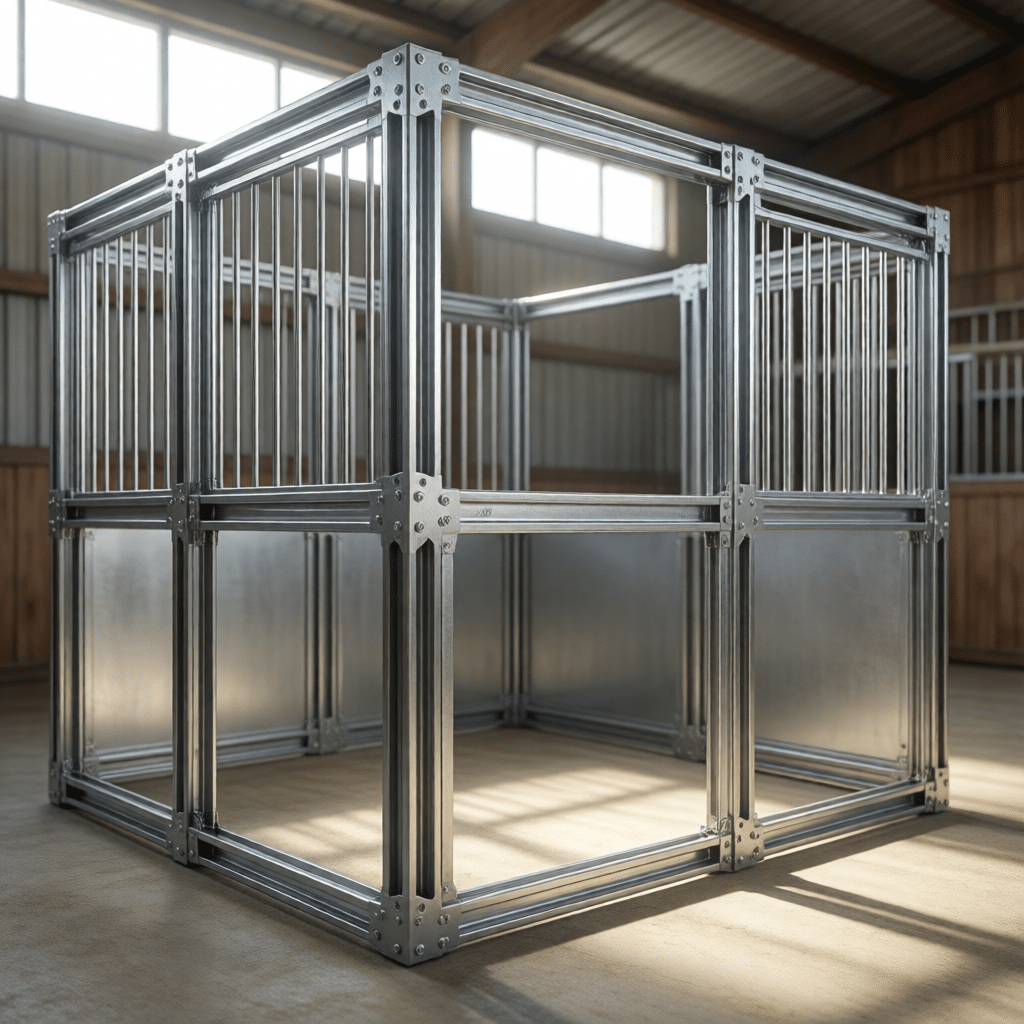
Saltwater from a storm surge is a death sentence for standard steel structures. It’s not surface rust that appears over years; it’s an aggressive corrosion that eats away at the metal, weakening it from the inside out. Welds are particularly vulnerable, and once the process starts, the structural integrity is compromised for good.
This is a non-negotiable factor in coastal markets like Australia, where high salt spray protection is the baseline. Any structure that isn’t properly protected will fail. This is why using pre-galvanized tubes welded together is a common but fatal shortcut. The heat from welding burns off the zinc at the joints, creating an entry point for rust. The only reliable method is hot-dip galvanizing the entire structure *after* fabrication, ensuring a thick zinc coating of over 70 microns that conforms to ISO 1461 standards. Without it, you’re just building for the next storm to tear down.
Wood Swell and Mold: Why Traditional Stalls Must be Demolished
Floodwater causes wood to swell, creating a breeding ground for mold and decay fungi. This internal rot permanently destroys the wood’s structural integrity, making demolition the only safe option.
The Irreversible Damage of Wood Swell and Fungal Decay
When wood stalls are saturated by floodwater, the lumber swells. Once the moisture content climbs above 20%, it creates the perfect environment for fungal growth to take hold. This isn’t just a surface issue; it’s a deep structural problem.
Decay fungi attack the cellulose fibers that give wood its strength. These microorganisms effectively eat the structural core of beams, posts, and partitions from the inside out. This permanently compromises the load-bearing capacity of the stall components.
Unlike surface mold that can sometimes be cleaned, this internal decay causes a permanent loss of strength. Applying surface treatments or bleach does nothing to restore the compromised wood fibers. The damage is done, and it’s not reversible.
Modern Materials: The Mold and Rot Resistance of Bamboo
The vulnerability of traditional wood has led to engineered alternatives designed for high-moisture environments. DB Stable, for instance, uses high-density strand woven bamboo for its infill planks, a material specifically engineered to be mold and rot-resistant.
This material has a Janka hardness rating over 3000 lbf, making it three times harder than traditional oak. Its dense, non-porous structure doesn’t absorb water or provide the nutrients that decay fungi need to survive. It simply does not support fungal growth.
Using an engineered material like this provides a structurally sound and long-lasting solution. It eliminates the risk of swelling and decay that makes traditional wood stalls a liability after flooding.
Invest in Horse Stables Built to Last.

The 0% Absorption Rate of HDPE in Standing Water
High-Density Polyethylene (HDPE) has a water absorption rate of less than 0.01%. After a flood, it will not swell, warp, or rot, eliminating replacement costs.
When a stable floods, the choice of infill material determines whether recovery is a simple clean-up or a total demolition. Wood absorbs water, swells, and becomes a breeding ground for mold, often requiring a complete tear-out. High-Density Polyethylene (HDPE) is engineered to prevent this exact scenario.

Material Science: Why HDPE Repels Water
HDPE’s resistance to water isn’t a coating; it’s fundamental to its molecular structure. The material is made of non-polar molecules, which create a natural and permanent barrier against moisture. Standardized testing under ASTM D570 confirms this, showing a water absorption rate of less than 0.01% over a 24-hour period. This property gives the material complete dimensional stability. Even when fully submerged for extended periods, HDPE planks will not swell, warp, or buckle, maintaining the structural integrity of the stable wall.
The Advantage of Zero-Maintenance HDPE Infill
DB Stable uses 28mm-32mm thick, UV-stabilized HDPE planks for exactly this reason. Because the material is impervious to water, recovery after a flood becomes incredibly straightforward. There is no rot, mold, or structural degradation to worry about. The infill planks can simply be cleaned and are immediately ready for use. This ‘Zero Maintenance’ characteristic means stable owners avoid the significant cost and downtime associated with replacing waterlogged wooden panels.
How Hot-Dip Galvanization Survives Saltwater Immersion
Hot-dip galvanized steel survives saltwater because its zinc coating forms a physical barrier of zinc carbonate. The thickness of this coating, specified by ISO 1461, determines its lifespan.
The Protective Barrier Formed by Zinc
When hot-dip galvanized steel is immersed in saltwater, the zinc coating doesn’t just sit there. It reacts with minerals naturally present in the water to form a protective scale. This layer is primarily made of zinc carbonate, a compound that is both dense and insoluble.
This barrier creates a physical shield, effectively sealing the steel from direct contact with corrosive agents like oxygen and salt chlorides. By blocking these elements, the scale dramatically slows the corrosion rate and extends the life of the structure.
Why Coating Thickness (ISO 1461) is the Deciding Factor
The performance of this protective barrier isn’t just about chemistry; it’s a measurable engineering specification. The lifespan of galvanized steel in a marine environment is a direct function of its zinc coating thickness. More zinc
means a longer service life before the underlying steel is exposed.
DB Stable’s manufacturing process conforms to BS EN ISO 1461, an international standard that dictates minimum coating thicknesses. This ensures an average zinc coating greater than 70 microns on all tubing. We apply this coating *after* all welding and fabrication is complete, providing a seamless layer of protection. This substantial thickness provides the sacrificial material needed to endure the demanding conditions simulated in ASTM B117 salt spray tests, offering real-world resilience against salt spray and immersion.
The Pressure Wash Recovery Protocol
Post-flood recovery uses high-pressure washing and disinfection. Our systems are built for this; their hot-dip galvanized steel and non-porous HDPE infill withstand aggressive cleaning without damage.
After a flood, structures must be aggressively cleaned to remove contaminants before they can be safely used again. This process, known as the pressure wash recovery protocol, involves high-pressure water blasting followed by chemical disinfection. It’s a harsh procedure that destroys materials like wood, which absorb water and harbor mold. DB Stable systems are engineered to endure this exact scenario, ensuring a full recovery without needing replacement.
| Protocol Stage / Material Feature | Details & Rationale |
|---|---|
| Aggressive Cleaning | High-pressure water is used to blast away sediment, debris, and biological contaminants from all surfaces after initial water extraction. |
| Disinfection | After washing, a disinfectant solution is applied to kill any remaining mold, microbes, or pathogens, preventing future growth. |
| Hot-Dip Galvanized Steel Frame | Our framework is galvanized to ISO 1461 standards. The thick zinc coating provides a robust barrier that resists abrasion from power washing and prevents rust. |
| Non-Porous HDPE Infill | HDPE has a near-zero water absorption rate. It can be completely sanitized without the risk of swelling, rotting, or retaining contaminants like wood does. |
| 304 Stainless Steel Hardware | All connection points and fasteners are 304 Stainless Steel, ensuring they do not fail from corrosion after intense exposure to water and chemicals. |
Frequently Asked Questions
What are the primary risks to horse stalls after a flood?
Floods introduce significant risks, including structural damage to barn pillars and foundations from water and debris. Wooden components are highly susceptible to rot and mold. For horses, standing in contaminated water can lead to health issues like thrush, and flooded pastures may contain soilborne pathogens.
Can traditional wooden horse stalls be saved after flooding?
Yes, but it requires immediate and thorough action. The wood needs weeks to dry completely to prevent rot. The process involves removing all debris, pressure washing with a detergent or bleach solution, and using fans to manage mold growth. Any structurally compromised wood must be replaced.
Does HDPE absorb water or get damaged in a flood?
No, HDPE is completely waterproof. Its non-porous structure results in virtually zero water absorption. Unlike wood, HDPE will not swell, rot, or delaminate when submerged, making it an ideal material for structures in flood-prone areas.
Will a hot-dip galvanized steel frame rust in floodwater?
Generally, no. Hot-dip galvanized steel is highly resistant to temporary flooding. Rust can occur if corrosive water, especially saltwater, remains stagnant on the surface for extended periods. Rinsing the frame with fresh water after the flood and ensuring good drainage prevents corrosion.
What are the first steps for barn recovery after a major storm?
Safety is the top priority. First, turn off all electrical power and assess for structural hazards like downed power lines before entering. Once the area is safe, focus on clearing major debris and repairing damaged fences to secure your animals. Afterward, you can begin the process of washing and sanitizing the stalls.
Final Thoughts
Rebuilding with wood or pre-galvanized tube is a short-term fix that guarantees a long-term failure in the next storm. Our ISO 1461 hot-dip galvanizing and zero-absorption HDPE isn’t just a feature; it’s a structural insurance policy. This level of engineering protects your investment and a dealer’s reputation from costly replacement cycles.
The difference between our system and a standard stall is clear on a spec sheet, but it’s undeniable in your hands. We recommend a trial order of 3-5 stables to confirm the build quality and material finish for yourself. Contact our engineers to specify a container load for your market or discuss OEM requirements.

 English
  Spanish
  French
  Arabic
  German
0 Comments