
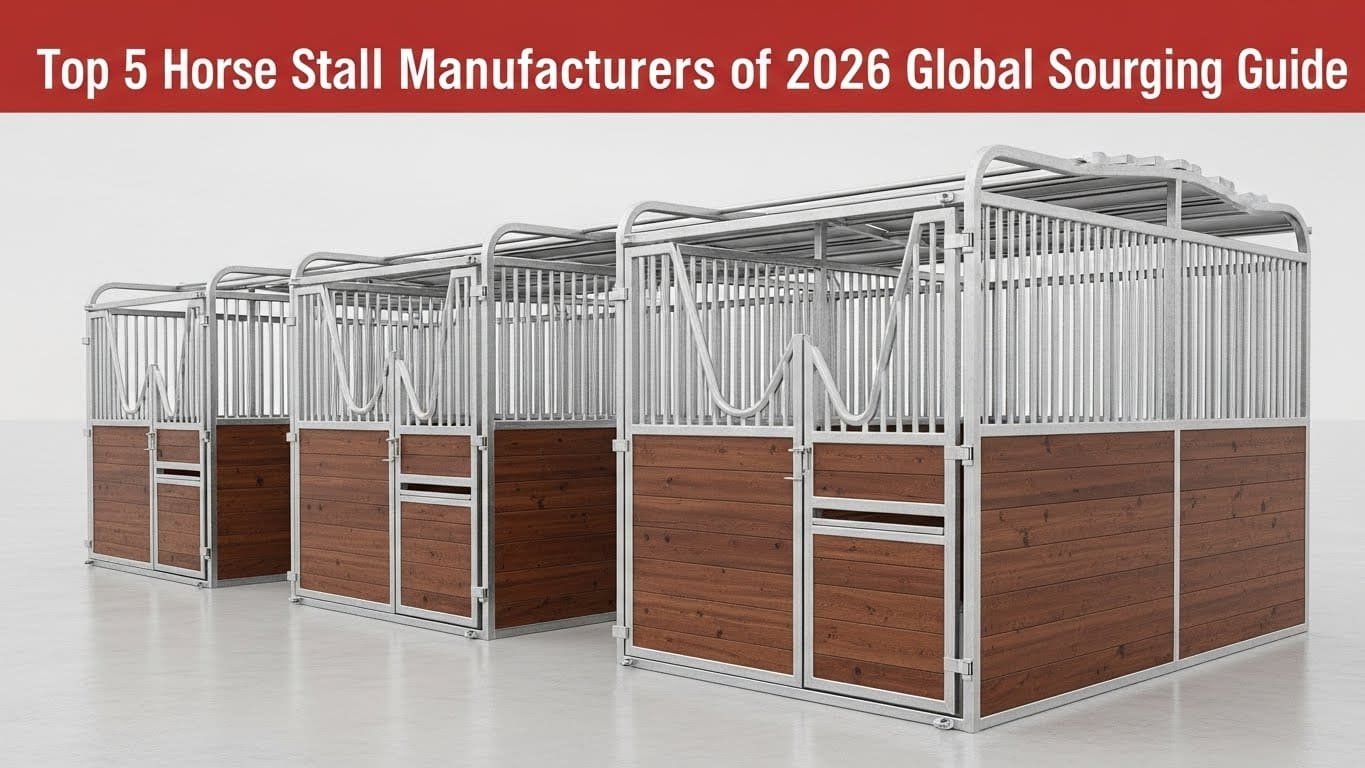
Der Einkauf von Pferdeboxen bei einem ungeeigneten Hersteller stellt eine direkte Gefahr für die Gewinnspannen der Händler dar. Sperrige, vollständig verschweißte Boxen lassen sich nur ineffizient transportieren, sodass oft nur 12 Sets pro Container verladen werden können, was die Frachtkosten pro Einheit in die Höhe treibt. Dieses logistische Versäumnis kann die Rentabilität zunichte machen, noch bevor ein einziger Verkauf getätigt wurde.
Diese Analyse dient als Vergleichsmaßstab führende Fabriken nicht nur auf die Produktqualität, wie beispielsweise die Verzinkungsnormen nach ISO 1461, sondern auch auf den entscheidenden Faktor der logistischen Gestaltung. Wir prüfen, welche Lieferanten effiziente Flat-Pack-Systeme einsetzen, mit denen 30 bis 45 Sets pro Container verladen werden können, wodurch Ihre Margen direkt vor Versand Volatilität.
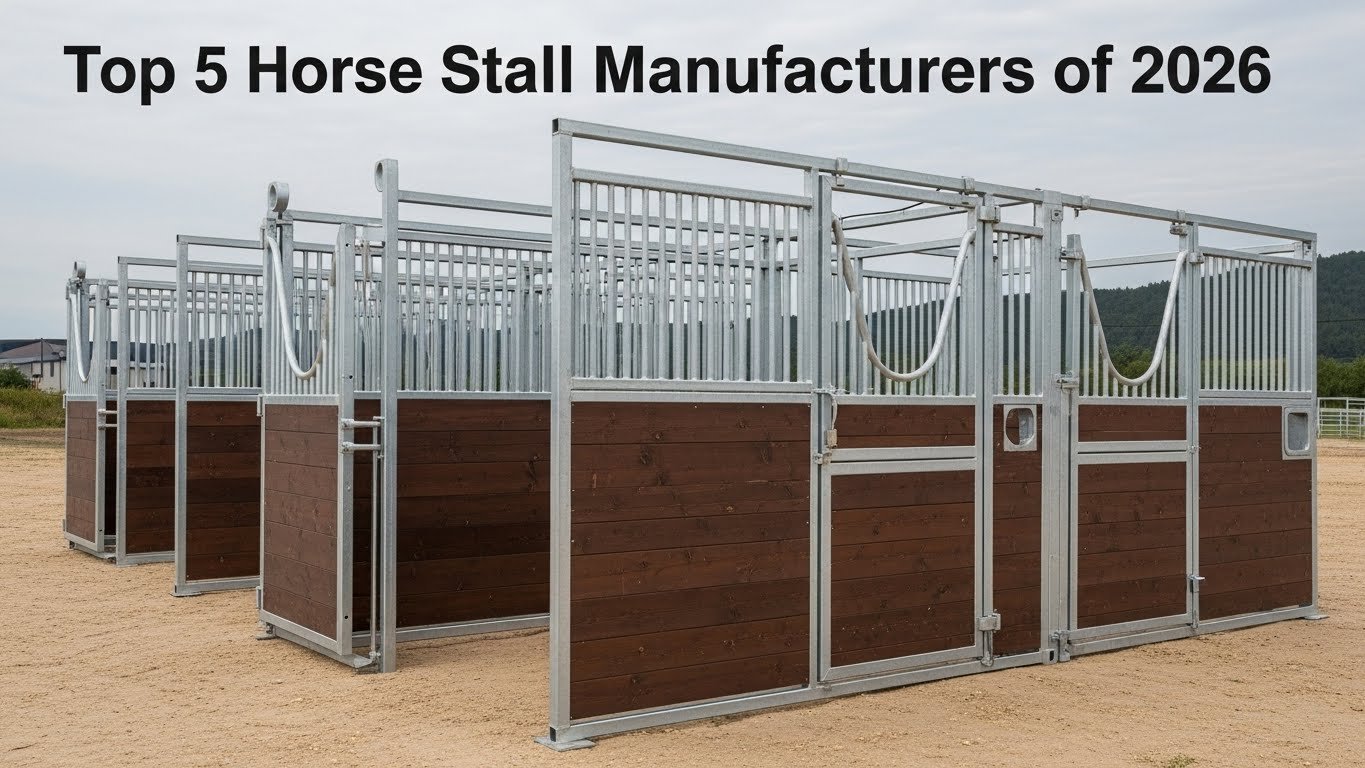
Worauf sollten Sie bei einem globalen Hersteller achten?
Bevorzugen Sie Hersteller mit nachgewiesenen Zertifizierungen wie ISO 9001. Auch deren Produktdesign muss Ihre Gewinnmargen sichern, indem es die Frachtkosten senkt. Kosten bei effizienter Selbstbausysteme.
Geprüfte Qualitäts- und Materialstandards
Verlassen Sie sich nicht auf Marketingversprechen. Nachprüfbare Zertifizierungen durch unabhängige Dritte sind der Maßstab für Qualität. Jeder seriöse Hersteller sollte Nachweise über sein Qualitätsmanagement, seine Materialbeschaffung und seine Beschichtungsverfahren vorlegen können. Ist dies nicht der Fall, ist das ein deutliches Warnsignal.
- Werkszertifizierungen: Ein gültiges ISO 9001-Zertifikat belegt, dass das Werk ein einheitliches Qualitätsmanagementsystem anwendet.
- Normen für die Feuerverzinkung: Das Werk muss hinsichtlich der Feuerverzinkung die Norm BS EN ISO 1461 erfüllen. Das bedeutet einen durchschnittlichen Verzinkung von über 70–85 Mikrometer, je nach Stahlstärke. Alles, was darunter liegt, hält nicht lange.
- Stahlsorten: Fragen Sie nach dem Material Einzelheiten. Q235B-Stahl ist ein gängiger Standard, aber für kalte Klimazonen, Q345B ist aufgrund seiner hervorragenden Kaltzähigkeit erforderlich, um Risse durch Rückschläge im Winter zu verhindern.
Logistische Effizienz und Gewinnsicherung
Die Bauweise des Produkts wirkt sich direkt auf Ihre Versandkosten aus. Herkömmliche, vollständig verschweißte Ställe sind sperrig und teuer im Versand, sodass oft nur 12 bis 15 Sets in einen 40HQ-Container passen. Dies schmälert die Margen der Händler, noch bevor das Produkt überhaupt angekommen ist.
Ein kluger Hersteller plant mit Blick auf die Logistik. Mit einem Flat-Pack-System lassen sich 30 bis 45 Sets in denselben Container verladen, wodurch Händler über 60 % an Frachtkosten einsparen. Das ist kein nebensächliches Detail, sondern ein entscheidender Faktor für die Rentabilität. Bestehen Sie außerdem auf einer sicheren Verpackung wie beispielsweise Stahlpaletten. Eine lose Verladung ist für das Werk zwar kostengünstiger, birgt jedoch das Risiko von Produktschäden und verursacht am Bestimmungsort erhebliche Probleme beim Entladen.
Welche sind die führenden Marken in den USA und Australien?
Australier Stallmarken setzen häufig auf feuerverzinkten Stahl aus der Region. US-amerikanische Hersteller setzen auf vielfältige Designs und modulare Systeme, um den Anforderungen eines vielseitigen Marktes gerecht zu werden.
| Merkmal | Australischer Markt | US-Markt |
|---|---|---|
| Marktfokus | Beständigkeit gegen starke UV-Strahlung und Salznebel. | Ästhetische Vielseitigkeit und modulare Systeme. |
| Gängige Materialien | Feuerverzinkt Australischer Stahl, recycelte Kunststoffe. | Galvalume, Aluminium und Spezial-PVC Platten. |
| Die wichtigsten Akteure | DoWell Equine, Anvil Enterprises, AusBuilt Rural. | Cashmans, System Equine, Duramax-PVC-Paneele. |
Führende Hersteller auf dem australischen Markt
Australische Lieferanten legen Wert auf Widerstandsfähigkeit, wobei viele von ihnen auf robuste, aus der Region stammende Materialien setzen. für die klimatischen Bedingungen ausgelegt. Das Feuerverzinken ist ein gängiges Verfahren zum Schutz von zum Schutz vor Korrosion in Küstengebieten.
- DoWell Equine: Ein in Sydney ansässiger Hersteller, der australischen Stahl mit Feuerverzinkung verwendet und recycelte Produkte anbietet Füllung aus Kunststoffplatten Optionen.
- Anvil Enterprises: Dieser in Goulburn (NSW) ansässige Distributor hat sich auf individuell anpassbare Produkte spezialisiert entwickelt und bietet eine Auswahl an Materialien an for different needs.
- AusBuilt Rural: Offers a selection of standard panels, including mesh fronts, pipe fronts, and solid dividing walls for various barn layouts.
Notable Brands in the US Market
The US market values versatility and aesthetics, leading to a wide array of materials and highly configurable stall systems. Modulare Entwürfe that allow for easy expansion or reconfiguration are popular.
- Cashmans: A supplier offering stall systems made from aluminum, galvalume, and various modular components for custom setups.
- System Equine: Known for its Freedom Stall Series, which provides highly customizable options to fit specific barn dimensions and styles.
- Duramax PVC Panels: A specialized provider focusing on PVC-based panels that are engineered for high moisture and mold resistance, an alternative to traditional wood or steel.
Why Choose a Factory-Direct OEM Like DB Stable?
Sourcing factory-direct provides ISO 9001 quality control and a flat-pack system that loads 60%+ more stables per container, directly protecting distributor profit margins.
Direct Sourcing for Quality Control and Value
Working directly with an OEM/ODM manufacturer bypasses trading company markups, giving you better value. You get direct access to the source factory and its engineering team, ensuring your project specifications are met precisely. Verifiable certifications like ISO 9001 provide a tangible layer of production oversight, not just a promise.
Protecting Distributor Profits with Smart Logistics
Shipping costs can destroy margins. Fully-welded stables are bulky, and you can only fit about 12-15 sets in a 40HQ container. Our Steel Pallet Flat-Pack system solves this problem. We can load 30 to 45 stable sets into the same container, a 60%+ increase in loading efficiency that directly cuts your per-unit freight costs. This is the core of our ‘Profit Protection’ strategy for B2B partners.
Invest in Stables Engineered to Last Decades
Does Your Supplier Meet ISO 1461 Galvanizing Standards?
ISO 1461 specifies the minimum zinc coating thickness required for rust prevention on steel. Für Pferdeställe, this standard is the baseline for frame durability.
Understanding Minimum Zinc Coating Thickness
ISO 1461 isn’t a vague quality promise; it’s a specific, measurable standard for rust prevention. The required thickness of the protective zinc layer is directly tied to the thickness of the steel being coated.
- Steel >6mm thick: Requires an average coating of 85 microns (μm).
- Steel 3mm to 6mm thick: Requires an average coating of 70 microns (μm).
Meeting these minimums is non-negotiable for creating a continuous zinc barrier that stops corrosion for decades, not just a few seasons.
Verifying the ‘Hot-Dip After Fabrication’ Process
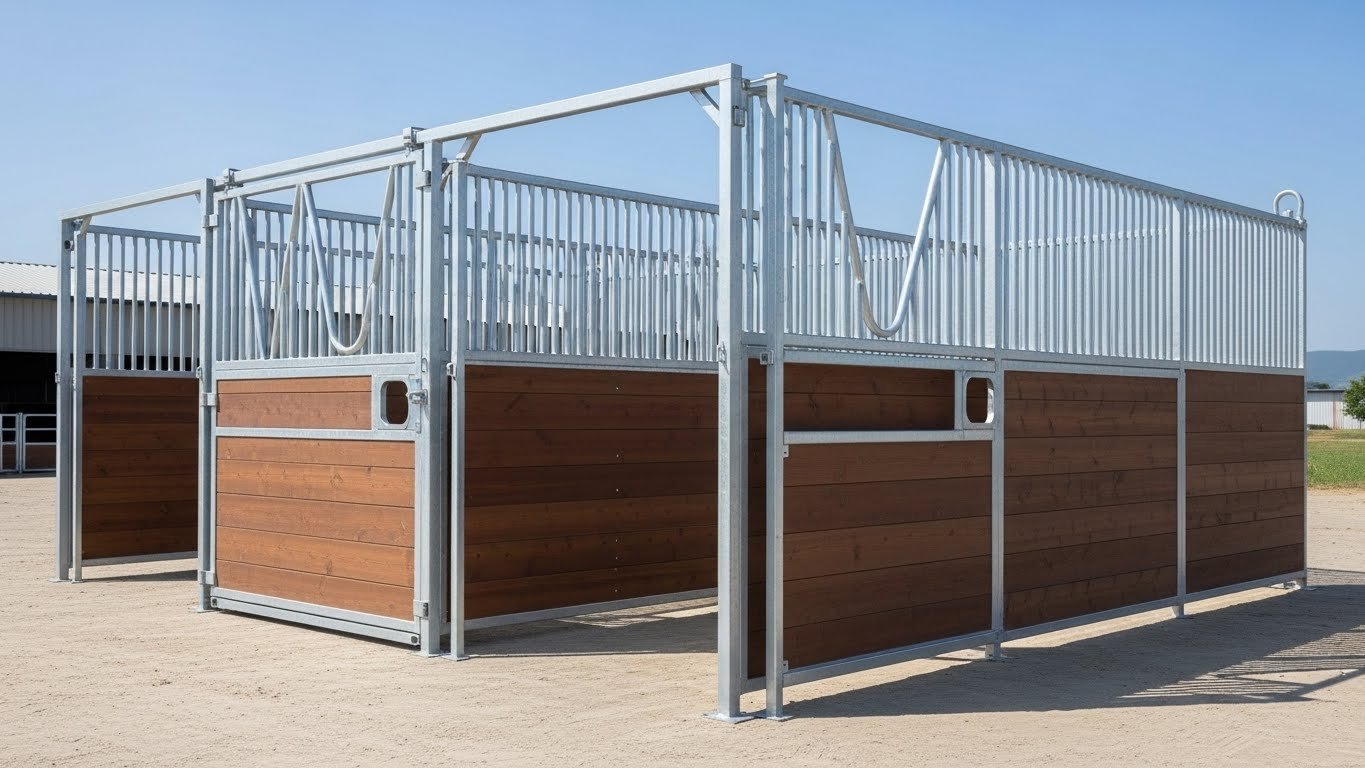
The standard alone isn’t enough. The process matters. We use Hot-Dip Galvanization After Fabrication, which means we weld the entire stabiles Paneel first and then dip it into molten zinc. This fully coats every weld, corner, and cut edge—the exact spots where rust typically starts.
Our galvanizing specifications directly meet the ISO 1461 requirements:
- Tubing (3-6mm steel): Receives an average coating over 70 microns.
- Heavier structural parts (>6mm steel): Receive an average coating over 85 microns.
This ensures that every component of our stables meets the correct tier of the standard for long-term structural integrity.
How Do You Choose the Right Partner?
A partner’s logistics are as important as their product. An efficient flat-pack system loads 30-45 stable sets per container, cutting freight costs by over 60%.
| Bewertungsfaktor | Typical Welded Design | Smart Flat-Pack System |
|---|---|---|
| Container Capacity (40HQ) | 12–15 Sätze | 30–45 Sätze |
| Freight Cost Per Unit | Hoch | Reduced by 60%+ |
| Impact on Distributor Profit | Margin Erosion | Margin Protection |
Assessing Production Capacity and Lead Times
Beyond the product specs, you need to verify a manufacturer’s operational reliability. Can they scale with your business? A credible factory should be transparent about their production schedule and order flexibility.
- Production Lead Time: Expect a 35-45 day lead time. This isn’t a delay; it’s the necessary time to properly schedule and execute hot-dip galvanizing after fabrication for maximum rust protection.
- Minimum Order Quantities (MOQ): A good partner offers tiered options, from a 3-5 stable trial order (LCL) up to a full 40HQ container for established distributors.
- Quality Systems: Ask for their ISO 9001 certification. It’s the baseline indicator of a stable, documented quality management process.
Analyzing the Efficiency of Flat-Pack Systems
How a manufacturer packs your order directly impacts your profitability. Bulky, fully welded stables are a logistical nightmare and a waste of money. The most critical factor for any overseas distributor is loading density. A partner that has engineered a smart flat-pack system on steel pallets is thinking about your bottom line, not just their production line. This high-density loading is what protects your profit margin from unpredictable shipping costs.
Abschließende Überlegungen
While pre-galvanized stalls seem cheaper, the savings disappear after the first rust claim. Insisting on Hot-Dip Galvanization After Fabrication (to ISO 1461) is the only way to protect your brand’s reputation. Smart logistics with a flat-pack system directly protects your profit margin before the product even lands.
The next step is to verify the engineering yourself. We recommend a small trial order to test the material quality and assembly fitment firsthand. Contact our B2B team to get a quote and discuss your private label requirements.
Häufig gestellte Fragen
What are the quality and material standards for top horse stall brands?
The baseline for quality frames is 14-gauge (2.0mm) structural steel. The critical difference is the rust protection. Leading B2B manufacturers use hot-dip galvanization *after fabrication* to the ISO 1461 standard, achieving a zinc coating over 70-85 microns. This provides a 15-20 year lifespan. While some brands still use wood, modern infill options like high-density polyethylene (HDPE) or strand-woven Bambus offer zero maintenance and higher durability.
How can our business verify a manufacturer’s ISO certification?
First, check that the issuing organization is accredited by a global authority like the International Accreditation Forum (IAF). Review the certificate for a unique number and expiration date. Then, contact the issuing body directly using that certificate number to confirm it is current and valid for the claimed scope of work, such as “Quality Management” for ISO 9001.
What is the typical Minimum Order Quantity (MOQ) when buying factory-direct?
MOQ is structured by logistics. For B2B source factories, a typical trial order is 3-5 stable sets, which can ship via LCL (Less than Container Load). A standard project order is a full 20GP container holding about 10-15 sets. Full-scale distributor orders usually require a 40HQ container, which can fit 30-45 sets depending on the packaging design.
Can a factory produce our company’s private label or custom stall design?
Yes, true source factories operate on a B2B OEM/ODM model, meaning they specialize in manufacturing custom or private label designs. You need to provide the factory with technical drawings and specifications. Their engineering team will then confirm if the design meets their production capabilities and Sicherheitsstandards before providing a quote.
Do horse stall manufacturers offer regional exclusivity for distributors?
Exclusivity is a core part of B2B partnership negotiations and is never public information. To secure an exclusive territory for a product line, you must negotiate directly with the manufacturer’s sales or distribution management team. These agreements are based on sales volume commitments, marketing investment, and market potential.


 German
 English
 Spanish
 French
 Arabic
0 Kommentare