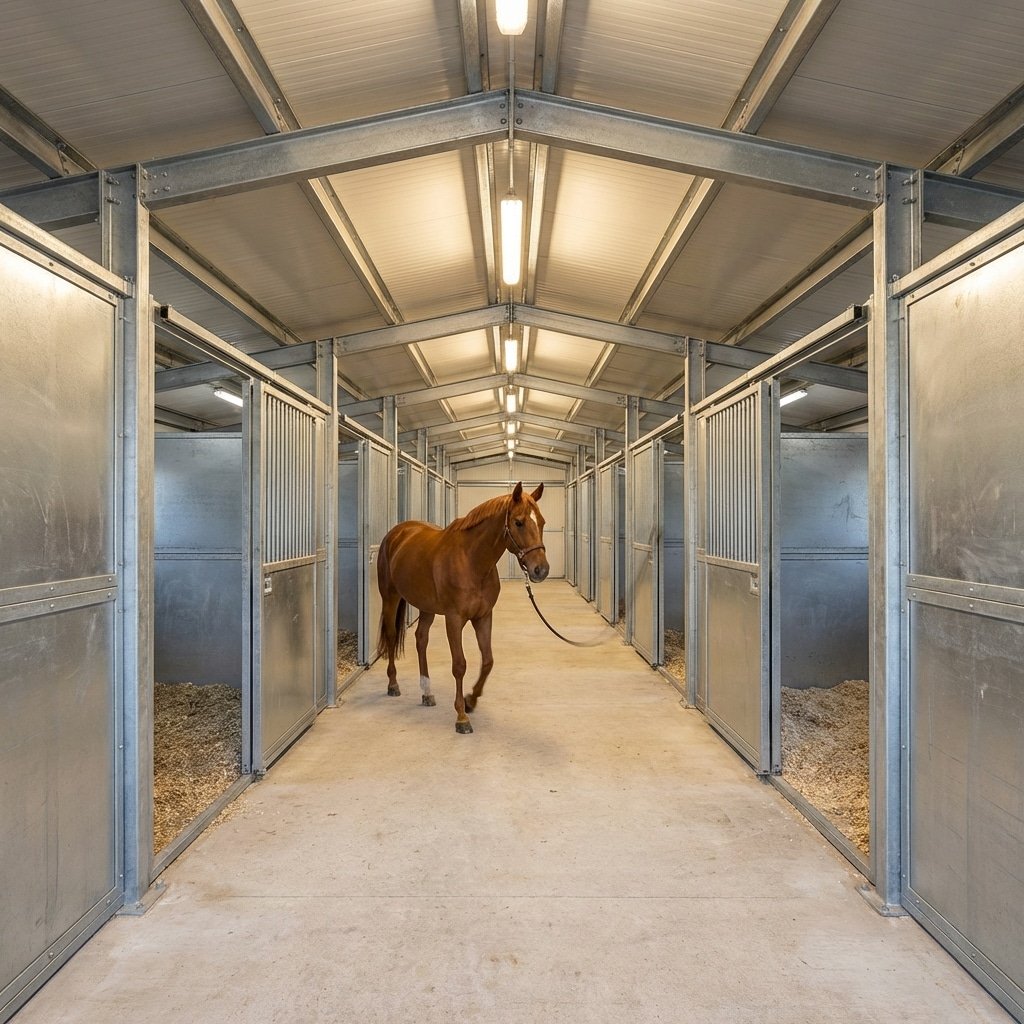
Stable aisle width is the dimension that decides whether your barn works or merely stands. Too narrow, and every feed run becomes a negotiation with the horse opposite; too wide, and you have paid for floor, roofing and lighting volume that serves no purpose. Between...
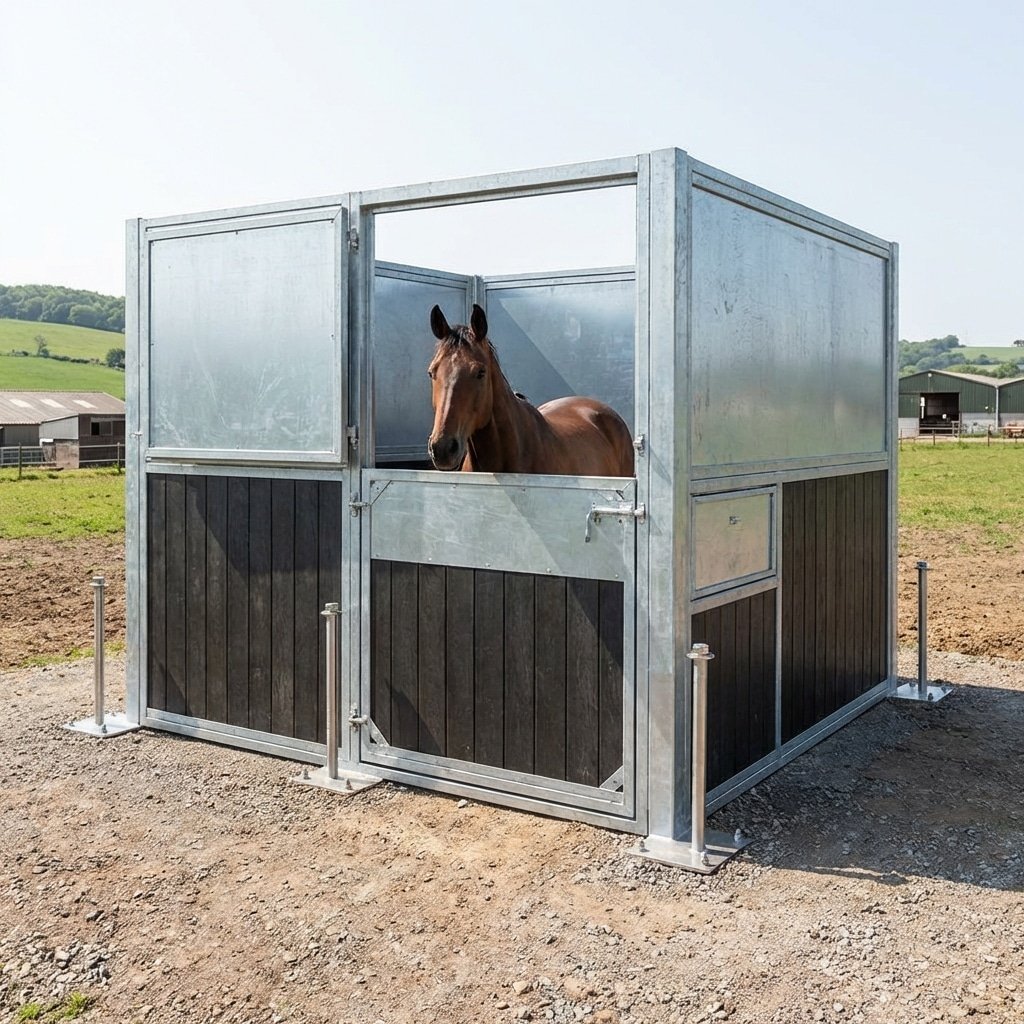
Portable vs permanent horse stalls is a total-cost question, not a purchase-price question. The permanent barn wins the first invoice line and loses the next decade: foundation work, fixed services, timber maintenance and zero relocation value. The portable system...
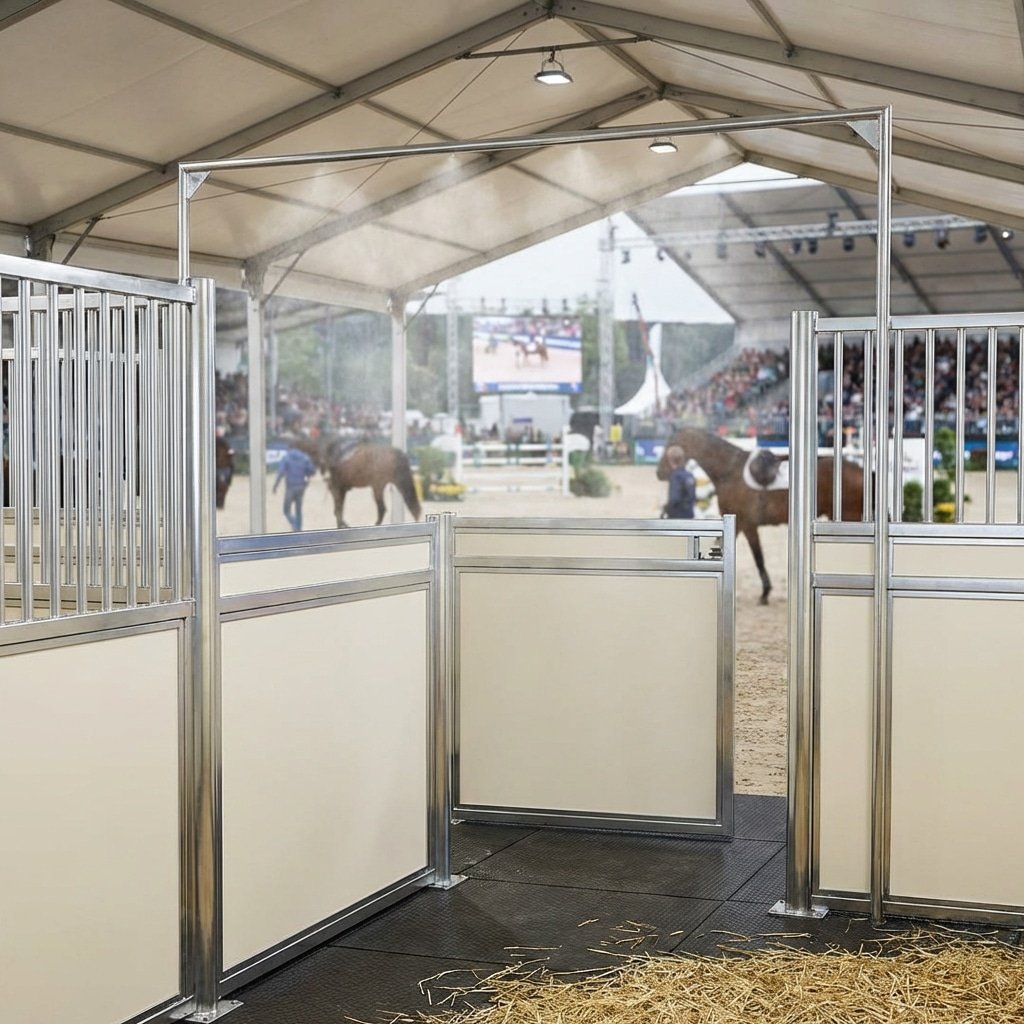
Portable horse stalls at a showground are bought twice: once as steel and panels, and again as a slot in a venue’s schedule. The second purchase is the question nobody puts in writing: how fast a crew gets a bank standing on turf that turns to mud, and how fast...
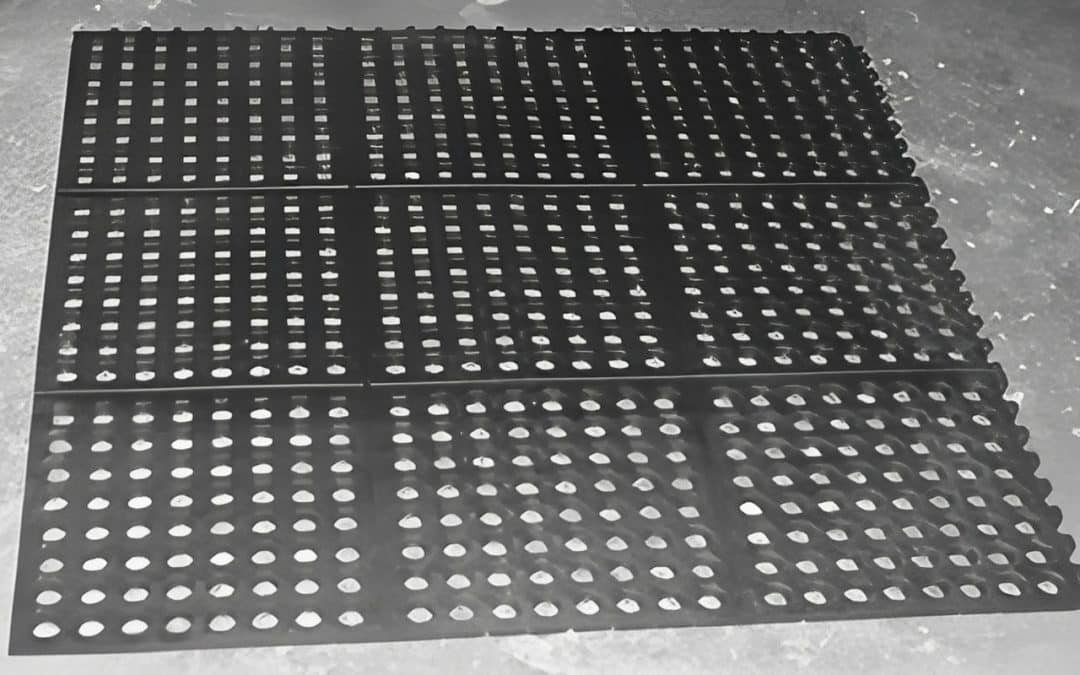
Rubber stable mats come in two formats, and the choice between them is not about quality — interlocking and sheet mats are both available in heavy, non-slip grades suitable for stalls and arenas. The choice is about geometry: how the floor assembles, how many seams it...
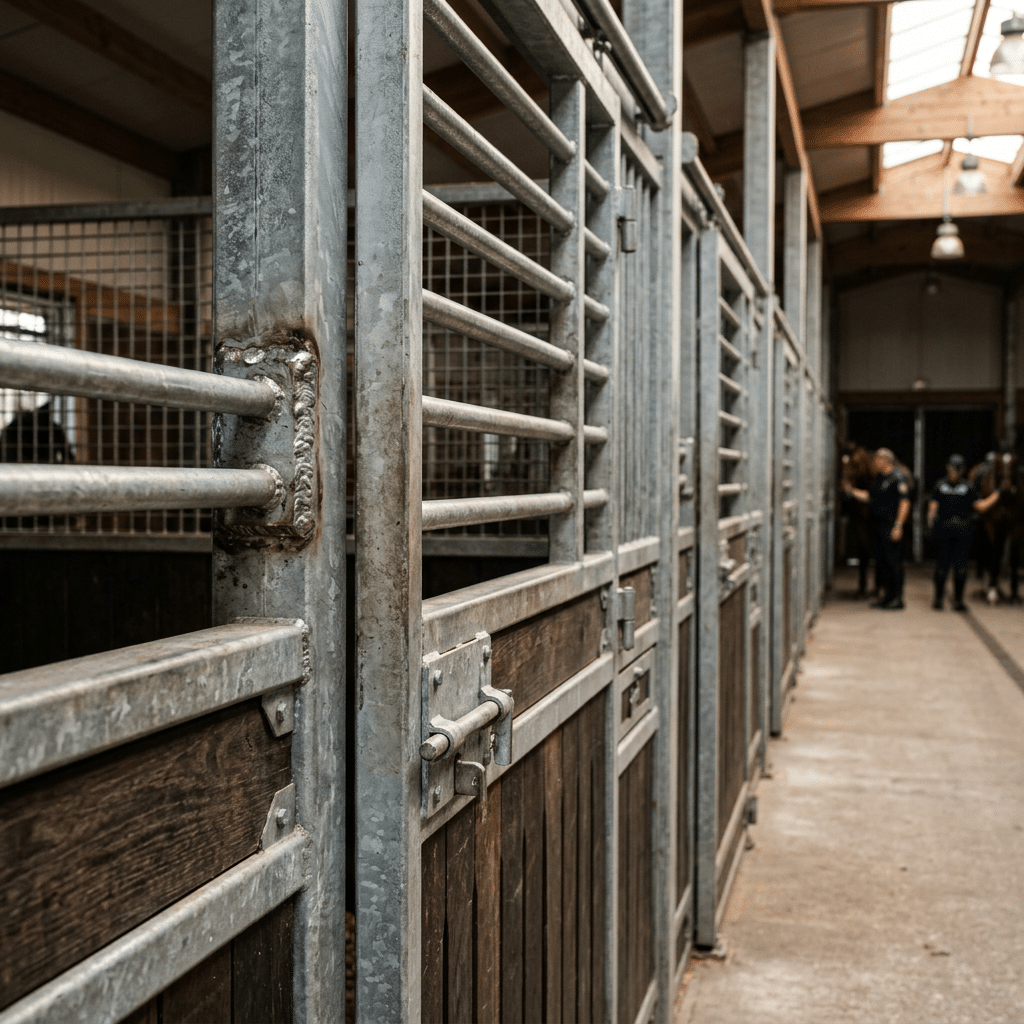
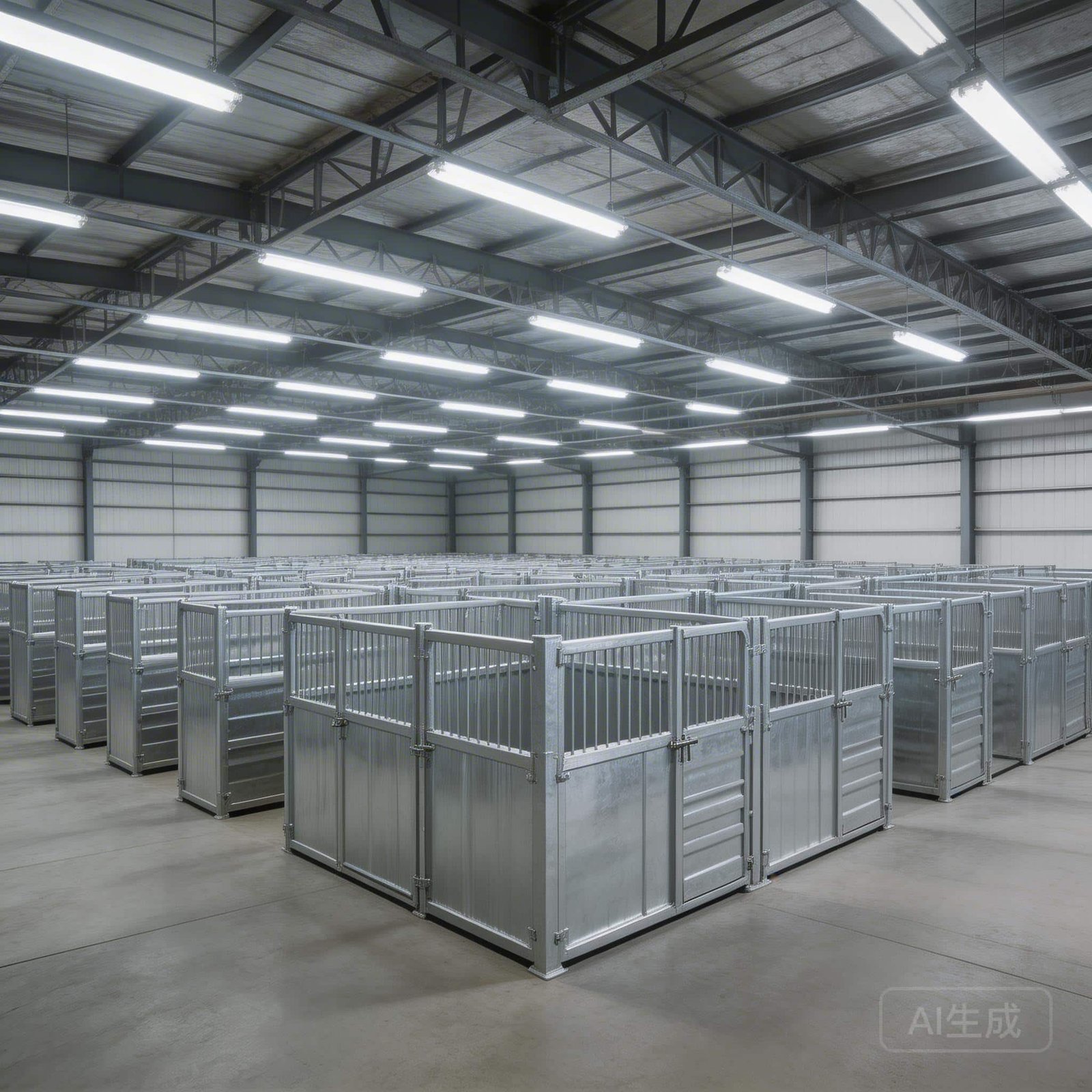
Indoor horse stall systems live or die by the plan that precedes them. The stall itself is the visible product — galvanized steel frames, your choice of bamboo, HDPE or pine lining, doors and grilles in a modular system — but what makes an indoor facility work is the...
Most horse stable lighting is designed for the person holding the pitchfork, not the horse in the stall. The result shows up as behavior: horses that hesitate at a bright doorway, spook at the aisle’s shift from shadow to glare, or pace under a fixture buzzing...



 German
  English
  Spanish
  French
  Arabic