


A horse walker arrives on site in two parts: the visible ring, and the drive path that turns it — hub, arm, carriage and the wheel that puts power into the track. Yards inspect the ring on delivery day because it is the visible part. Walker drive wheel alignment is the item that decides whether the ring still turns smoothly months later, and it is almost never on the acceptance sheet.
Published facts about this equipment are thin: an Italian motor in the drive, steel hot-dip galvanized with a stated 20-year rust-resistance figure, and a claimed 500-plus sets a month. Ring diameter, track radius, wheel count, speed and torque are not published here, so an acceptance check is written against the supplier’s documents rather than a rule of thumb.
Key Takeaways
- Alignment is a chain: hub to arm, arm to carriage, carriage to track. A fault in any link shows as rhythm, not a break.
- Documents arrive before the truck. Dimension drawing, motor and gearbox data, coating spec, and the fixing loads for the base.
- Check joints for step, not just gap. A lipped joint is what a wheel rides over and what wearing starts from.
- Run empty before loaded. A no-load cycle exposes a mis-set drive wheel without a horse in the ring.
- Every number comes from the supplier. No diameter, speed, torque or wheel specification is published here, so ask for tolerances in writing.
What has to line up on a horse walker
Follow the load. The horse pushes through the rail, the rail through the arm, the arm through the hub, and the hub through a drive wheel onto a track bolted to a base. Each interface is where a small error becomes a large one once the machine turns under load. Ring concentricity, column plumb and even contact between every loaded wheel and the rail are three separate checks, not one.
A mis-set wheel rarely announces itself. It shows as a periodic knock each time the carriage passes a joint, which is why an empty run tells a yard more than a static measurement. Where the drive sits changes the checks too: a ground-level motor driving through the hub is a different inspection from a carriage that carries its own motor, and the model delivered decides what belongs on your sheet.

Base interface is the fourth link, and buyers inherit it rather than inspect it. Whether load reaches the ground through a shoe, a sleeve or a bolted base plate is a question the delivery drawing has to answer; this site publishes no anchor loads or foundation detail, so that drawing is requested, not assumed.
The paperwork that arrives before the delivery
Four documents make an acceptance check possible; without them the yard signs against somebody’s memory, which tends to leave a bad alignment as the operator’s cost.
| Document | What it settles | What to check on arrival |
|---|---|---|
| Dimension drawing of the ring and hub | Diameter, arm length, joint positions, stated tolerance | That a tolerance is printed on it. |
| Motor and gearbox data for the drive unit | Rating plate, speed range, protection class | That the delivered plate matches the sheet. |
| Coating specification for the steelwork | Hot-dip process, the 20-year rust-resistance statement | Whether a coating thickness is stated at all. |
| Fixing and base-load detail | How the ring transfers load into the ground | That your slab matches what it assumes. |
Quality management sits behind an ISO 9001 system, and a CE claim should arrive with the declaration behind it rather than a logo on a brochure. Certificate numbers are not published here, so ask for them in writing; horse walkers, Italian motors and roof options is where the drive and cover choices are laid out.
The acceptance sequence, in order
Work from fixed geometry toward moving parts, and do not let a supplier compress this into one walk-around.
- 1 — Ring geometry. Measure the diameter across the ring at several evenly spaced points and compare with the drawing. The spread between readings is the finding; the drawing says whether it is allowed.
- 2 — Track joints. Run a straightedge over every joint and feel for a step. A gap can close as the steel warms, so the drawing tolerance decides what counts; a lipped joint is what a drive wheel hammers and where a worn flat starts.
- 3 — Hub and arm. Check the column is plumb both ways, the arm turns freely, and the hub fixings match the torque figure in the manual, re-checking at the interval the manual states.
- 4 — Wheel contact. Ask how many wheels carry load by design, then confirm each touches the rail with the same pressure. A feeler card that slides under one wheel and binds under another is your evidence.
- 5 — No-load run. One full empty cycle at each speed the controller offers, listening for a knock that repeats once per revolution, which points at a joint or a wheel.
- 6 — Loaded run. Only after stages one to five are signed. Keep the emergency stop reachable before a horse enters; the walker safety checklist covers that, not this section.
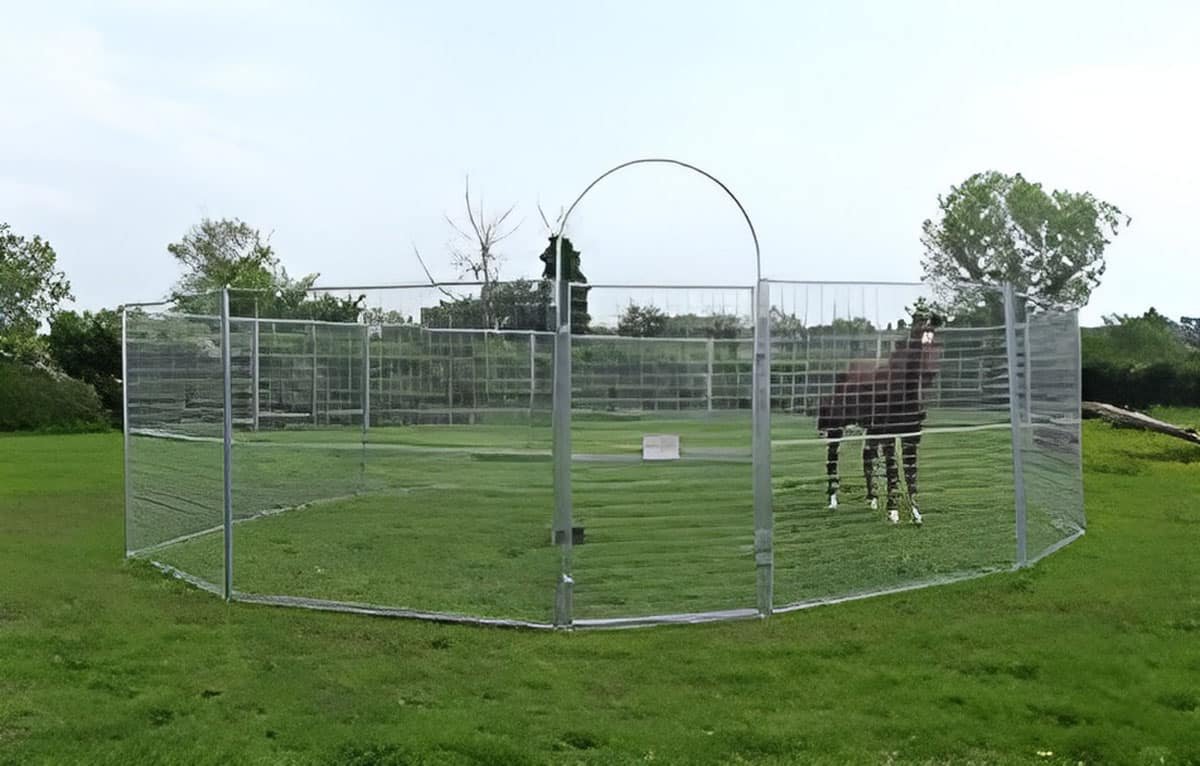
Two conditions knock a ring out of alignment while it is still new: a base prepared to a different assumption than the machine, and sections laid rather than set. Both show in stages two and four if somebody is looking, and both are usually cheaper to fix before the balance is paid.
Writing the handover so the fix actually happens
A punch list is easier to act on when it is dated, photographed and signed by both sides, each item tied to a line on the drawing. Trade terms, payment stages and retention are not published here, so they are agreed in writing before the order rather than argued at the gate.
Replacement parts are the second half of that conversation. The stated capacity of 500-plus sets a month is a stabling measure, so ask what it means for a carriage, wheel or arm on your ring and whether those parts are held or made to order. Published minimums cover stable sets and fence panels, not walkers.
Delivery speed matters when an arena is out of service: global orders run inside 4-6 weeks, with Sydney and Warsaw hubs the express route at 1-2 weeks. A dedicated regional account manager is stated for orders above 20 stable sets, covering customization and logistics advice — put the punch list in front of that contact, and ask whether the same threshold applies to a walker. The lunging pen and horse walker line shows the configurations when an acceptance sheet becomes a second unit.
Häufig gestellte Fragen
What is walker drive wheel alignment, in practice?
It is the condition that every load-carrying wheel meets the track at the same height and pressure around a ring that is true to its drawing. Where a wheel rides high, that wheel and the rail typically wear faster than they should.
Who should run the acceptance check — the supplier or the yard?
Both, on the same day, on one sheet. The fitter knows what the machine should do; the yard owns it afterward. Two dated signatures make it easier to have a finding handled under warranty, and warranty terms are not published here.
How do I know a track joint is out of tolerance?
Compare what you measure with the tolerance printed on the supplier’s drawing. That is why the drawing is requested before delivery: this site publishes no joint tolerance, so a field judgment has nothing to stand on without it.
Does a roof change the acceptance checks?
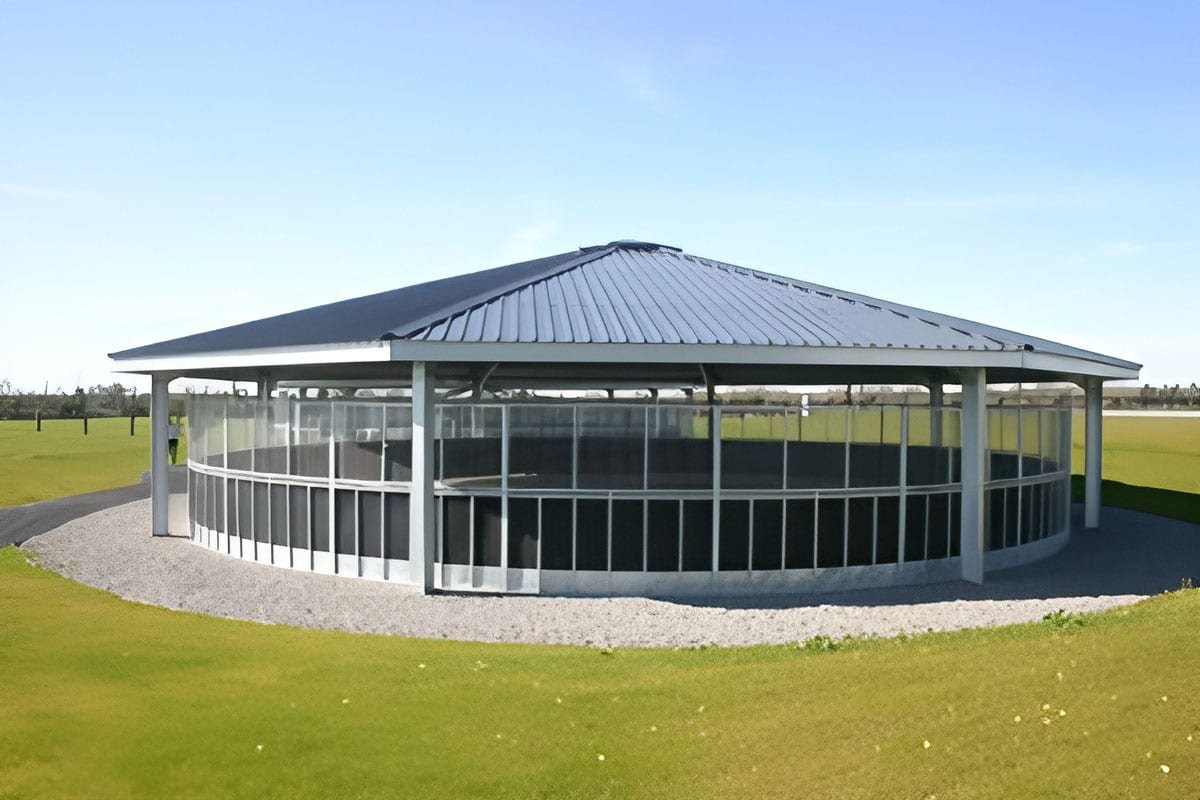
It adds a few: post plumb, rainwater paths off the track, and condensation dripping onto the drive rather than away from it. Cover and sizing sit with the machine configuration, so treat them as one inspection sheet.
What documents should arrive with a horse walker?
A dimension drawing with tolerances, motor and gearbox data with the rating plate, the coating specification, the base and fixing loads, and the declarations behind any certification claim. A manual that states torque figures closes the list.
Schlussfolgerung
Alignment is not one measurement but a chain, and a delivery that checks the ring without checking the drive path has verified the cheaper half of the machine. Geometry, joints, hub, wheel contact, an empty run and a loaded run catch faults while they are still somebody else’s cost.
Ask for the drawing and its tolerance before the machine ships, sign one dated sheet on delivery day, and record what was measured rather than what was expected.

 German
 English
 Spanish
 French
 Arabic
0 Kommentare