


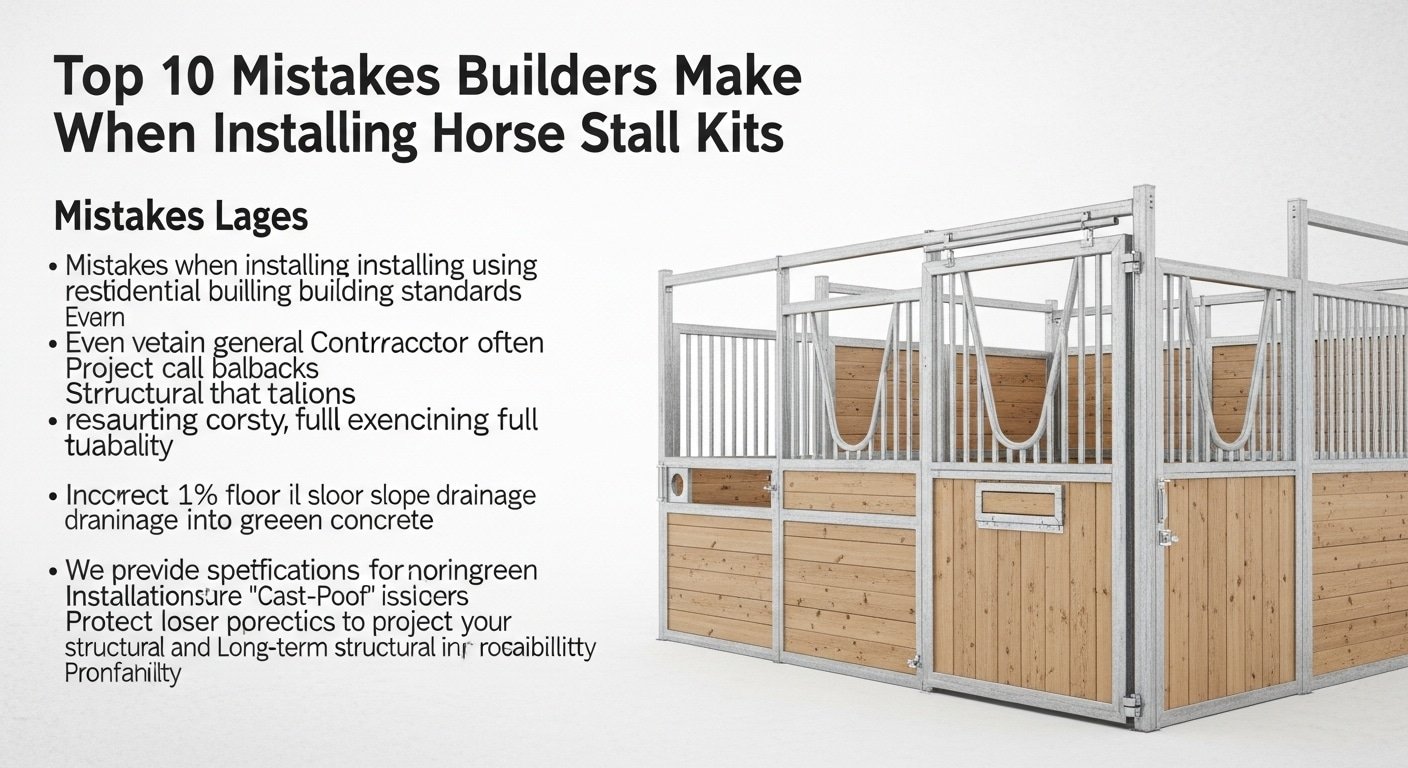
تؤدي الأخطاء عند تركيب إسطبلات الخيول باستخدام معايير البناء السكنية مباشرةً إلى إلغاء المشروع وتحمل المسؤولية. حتى المقاولون العامون المخضرمون غالبًا ما يقللون من تقدير المتطلبات الهندسية لبيئة الخيول، مما يؤدي إلى أعطال هيكلية تتطلب عمليات هدم مكلفة وكاملة وإلغاء الضمانات المادية.
يوضح هذا الدليل الأخطاء الحرجة والمدعومة بالبيانات، بدءًا من تصريف منحدر الأرضية 1% غير الصحيح إلى التثبيت في الخرسانة الخضراء. نحن نوفر المواصفات الصحيحة لمنع هذه المشاكل، وضمان تركيب ‘مقاوم للخرسانة المصبوبة’، وحماية السلامة الهيكلية لمشروعك على المدى الطويل وربحيته.

أهم 10 أخطاء في التركيب يجب تجنبها في عام 2026
مقارنة سريعة
| الأخطاء التي يجب تجنبها | مجال التركيز | الميزة الأساسية | الحكم |
|---|---|---|---|
تجاهل ظروف الموقع | تخطيط الموقع | يمنع الماء الضرر والطين | يقلل من الطين والعفن والحشرات بينما تحسين طول العمر الإنشائي للحظيرة.. |
تهوية غير كافية | جودة الهواء | يحسن صحة الجهاز التنفسي للخيول | يقلل بشكل فعال من مسببات الأمراض والأمونيا المحمولة في الهواء، مما يساعد على التحكم في درجة الحرارة الداخلية. |
التقليل من حجم المماطلة | التخطيط والتصميم | يعزز الحصان السلامة والراحة | يسمح للخيول بالالتفاف والاستلقاء بسهولة، مما يقلل بشكل كبير من خطر الإصابة بالجبس. |
مقاس باب المماطلة غير المناسب | السلامة والوصول | يمنع إصابات الدخول والخروج | يوفر خلوصاً آمناً لكل من الحصان والمعالج، ويسمح بحركة المعدات بسهولة. |
تركيب أرضيات الأكشاك الرديئة | الأرضيات | يعزز الصحة والسلامة المشتركة | يوفر تبطيناً وثباتاً بالغ الأهمية، مما يبسط تنظيف الأكشاك ويحسّن الصرف الصحي. |
استخدام مواد غير مناسبة | اختيار المواد | يضمن المتانة وطول العمر الافتراضي | يقلل بشكل كبير من الضرر الناتج عن المضغ والركل باستخدام مواد تقاوم الصدأ والعفن. |
عدم وجود تصريف مناسب | إدارة المياه | يمنع مشاكل الرطوبة والآفات | تحافظ على الممرات والمرابط والحظائر جافة من خلال توجيه المياه بفعالية بعيداً عن الأساس. |
عرض الممر غير كافٍ | التخطيط والتصميم | يزيد من سلامة المعالج والحصان | يسمح بالمرور الآمن لعدة خيول في وقت واحد ويوفر مساحة كافية للمعدات. |
التركيبات الكهربائية غير الآمنة | السلامة | يمنع حريق & مخاطر الصعق الكهربائي | يحمي الأسلاك من التلف الذي تسببه الخيول والقوارض، مما يقلل بشكل كبير من خطر الحريق في الحظيرة. |
تصميم النوافذ غير المناسب | السلامة والتصميم | يمنع إصابات الاحتباس | يوفر ضوء طبيعي آمن والتهوية مع السماح للخيول برؤية ما يحيط بها دون مخاطر. |
الخطأ الشائع
تجاهل ظروف الموقع
الحكم: يعد الفشل في تقييم طبوغرافية الموقع والصرف والتعرض خطأً فادحًا يتسبب في تجمع المياه المزمن والمناطق الموحلة والأضرار طويلة الأجل التي تلحق بالأساس.
✅ التخطيط السليم
- يقلل من الطين والعفن والحشرات
- يحسن طول العمر الإنشائي للحظيرة
⚠️ اعتبارات ⚠️
- يتطلب تقييماً احترافياً للموقع قبل البدء في وضع حجر الأساس
الخطأ الشائع
تهوية غير كافية
المشكلة يؤدي عدم كفاية دوران الهواء إلى ضعف جودة الهواء, والرطوبة العالية، ومشاكل الجهاز التنفسي. مناسبة تصميم يشتمل على فتحات تهوية على الحافة, والقباب، وفتحات التهوية في الأفاريز لضمان تبادل الهواء مرتين على الأقل في الساعة.
✅ الفوائد الرئيسية (عندما تتم بشكل صحيح)
- يقلل من مسببات الأمراض المنقولة بالهواء والأمونيا
- يساعد على التحكم في درجة الحرارة والرطوبة الداخلية
⚠️ اعتبارات رئيسية ⚠️
- يجب أن يكون مصممة للعمل في الصيف والشتاء على حد سواء الشروط
الميزة الرئيسية
التحديد المناسب لحجم المماطلة المناسب
الحكم: ضمان الأكشاك تلبية أو تجاوز معيار الصناعة 12 × 12 قدمًا أمر بالغ الأهمية لمنع الإصابة والإجهاد. تتطلب السلالات الأكبر حجماً مساحة أكبر، مما يجعل التحجيم الصحيح غير قابل للتفاوض من أجل سلامة الخيول وراحتها.
✅ الخير
- تسمح للخيول بالاستدارة والاستلقاء بسهولة
- يقلل من خطر التعرض للإلقاء على الحائط
⚠️ السيئ
- يوصى باستخدام مرابط بمساحة 14×14 قدم أو أكثر للخيول التي تزيد عن 16 يداً
الخطأ الرئيسي
مقاس باب المماطلة غير المناسب
الحكم: أبواب الأكشاك يجب أن يكون بعرض 4 أقدام على الأقل لمنع إصابات الورك والكتف الشائعة أثناء دخول الخيول وخروجها. كما يجب أن يكون مسار تأرجح الباب خاليًا تمامًا من العوائق.
✅ ما نحب
- يوفر خلوصاً آمناً للحصان والمعالج
- تتيح سهولة حركة عربات اليد والمعدات بسهولة
⚠️ أشياء يجب أخذها في الاعتبار
- أبواب منزلقة يمكن أن توفر مساحة الممر ولكنها تتطلب أجهزة عالية الجودة لتعمل بسلاسة
الخطأ الشائع
تركيب أرضيات الأكشاك الرديئة
الحكم: يؤدي استخدام مواد غير مناسبة مثل الخرسانة المسطحة بدون حصائر إلى إجهاد مفاصل الخيول. وبالإضافة إلى ذلك، فإن الحصائر غير الملائمة التي تتجعد أو توجد بها فجوات يمكن أن تتسبب في مخاطر التعثر والانحباس.
✅ ما الذي يجب أن تحصل عليه بشكل صحيح
- يوفر تبطيناً وثباتاً ضروريين
- تبسيط عملية تنظيف الأكشاك وتحسين الصرف الصحي
⚠️ ما الذي يجب تجنبه ⚠️
- التشابك حصائر مطاطية يجب أن يتم قصها بدقة لتلائم الحائط من الحائط إلى الحائط دون وجود فجوات
الخطأ الشائع
استخدام مواد غير مناسبة
لماذا هي مشكلة؟ يؤدي اختيار المواد التي لا تتحمل الرطوبة أو تقلبات درجات الحرارة أو الأضرار التي تلحق بالخيول إلى تلفها بشكل متكرر, صيانة مكلفة ويتعرض لمخاطر السلامة من الانشقاق أو الصدأ.
✅ ما نحب
- يقلل من الضرر الناتج عن المضغ والركل
- يقاوم الصدأ والعفن والتلف الناتج عن الحشرات
⚠️ أشياء يجب أخذها في الاعتبار
- أخشاب ثقيلة ومطلية بالمسحوق الصلب أفضل من الخشب غير المعالج في مناطق الاحتكاك العالي
الخطأ الشائع
عدم وجود تصريف مناسب
الحكم: يؤدي الفشل في التخطيط لجريان المياه إلى جريان المياه إلى حدوث الطين والعفن وفشل المواد قبل الأوان. تشمل الاستراتيجيات الأساسية الانحدار الطوابق نحو المصارف وتركيب المزاريب والمصارف السفلية.
✅ الخير
- يحافظ على جفاف الممرات والمرابط والحظائر
- يوجه الماء بعيداً عن أساس الحظيرة.
⚠️ السيئ
الخطأ الرئيسي
عرض الممر غير كافٍ
الحكم: ممرات ضيقة عيب تصميمي خطير يخلق خطرًا كبيرًا على السلامة. فعدم توفير خلوص لا يقل عن 12 قدمًا يقيد الحركة، ويمنع الحصانين من المرور ببعضهما البعض بأمان، ويزيد بشكل كبير من خطر إصابة كل من الحيوانات والمتعاملين معها.
✅ فوائد العرض المناسب
- يسمح بالمرور الآمن لعدة خيول في وقت واحد
- توفر مساحة كافية للجرارات والمعدات
⚠️ اعتبارات رئيسية ⚠️
- يعد الحد الأدنى 12 قدمًا أمرًا بالغ الأهمية للعمليات اليومية الآمنة
الميزة الرئيسية
التركيبات الكهربائية غير الآمنة
الحكم: إن وضع المنافذ في متناول يد الحصان أو عدم إحاطة الأسلاك في قناة يؤدي إلى خطر شديد من الصعق بالكهرباء أو الحريق من الحيوانات التي تمضغ الأسلاك.
✅ الخير
- يحمي الأسلاك من التلف الذي تسببه الخيول والقوارض
- تقليل خطر الحريق في الحظيرة بشكل كبير
⚠️ السيئ
- يجب أن تكون جميع الأسلاك مغطاة بقناة معدنية وأن توضع المنافذ في مكان مرتفع بعيدًا عن متناول اليد
خطأ في التركيب
تصميم النوافذ غير المناسب
الحكم: بشكل غير صحيح الحجم أو المماطلة الموضوعة أو الموضوعة يمكن أن تتسبب النوافذ في خطر انحشار رأس الحصان أو ساقيه. يجب أن تكون مرتفعة بما يكفي وكبيرة بما يكفي لمنع الحصان من أن يعلق.
✅ ما نحب
- يوفر إضاءة وتهوية طبيعية آمنة
- يسمح للخيول برؤية ما يحيط بها دون مخاطرة
⚠️ أشياء يجب أخذها في الاعتبار
- النوافذ يجب أن تكون محمية بأمان قوي شواية أو قضبان

لماذا يفشل حتى البناؤون المتمرسون في تركيب الأكشاك؟
Many skilled builders run into trouble because they apply residential construction standards to an equine environment. They often underestimate the immense القوات and specific behaviors of horses, leading to choices in materials and design that compromise safety and long-term durability.
Underestimating Equine-Specific Design and Behavior
General contractors might not see the risk in slightly smaller stalls or narrower doors, but these details are critical for الرفق بالحيوان. A common mistake is failing to anticipate horse behaviors like cribbing or chewing. This results in exposed wood edges that are quickly destroyed. Our stall designs incorporate essential safety features from the start, such as chew-proof HDPE and high-density خيزران infill. We also engineer our اللوحات with minimal bottom gaps to create a ‘Cast-Proof’ environment, preventing a horse’s legs from getting trapped during rolling—a detail often missed in standard construction.
Misapplication of Standard Construction Materials
A partition wall that is adequate for a house will not withstand the powerful kick of a horse. Builders often use standard framing or untreated lumber that simply isn’t up to the task. We address this by using heavy-gauge Q235B structural steel, with an option for Q345B high-strength steel for colder climates where metal can become brittle. This provides a ‘Kick-Proof Guarantee’. Instead of standard wood that rots and splinters, our systems use specialized infills like impact-absorbing HDPE, which offers a zero-maintenance solution for facility owners.
Ignoring Critical Site and Environmental Factors
Proper site preparation is key for any structure, but الإسطبلات have unique needs for drainage and ventilation. Poor airflow can lead to respiratory issues for the animals. Our stall fronts and partitions are designed with open-top grills that promote natural ‘Stack Effect Ventilation,’ improving air quality within the barn. Even with a good plan, installation can go wrong. By providing a complete system—including pre-cut infill planks and a full طقم الأجهزة with the correct 304 stainless steel connectors and anchor bolts—we reduce the chances of on-site errors and ensure the structure is assembled for maximum stability.
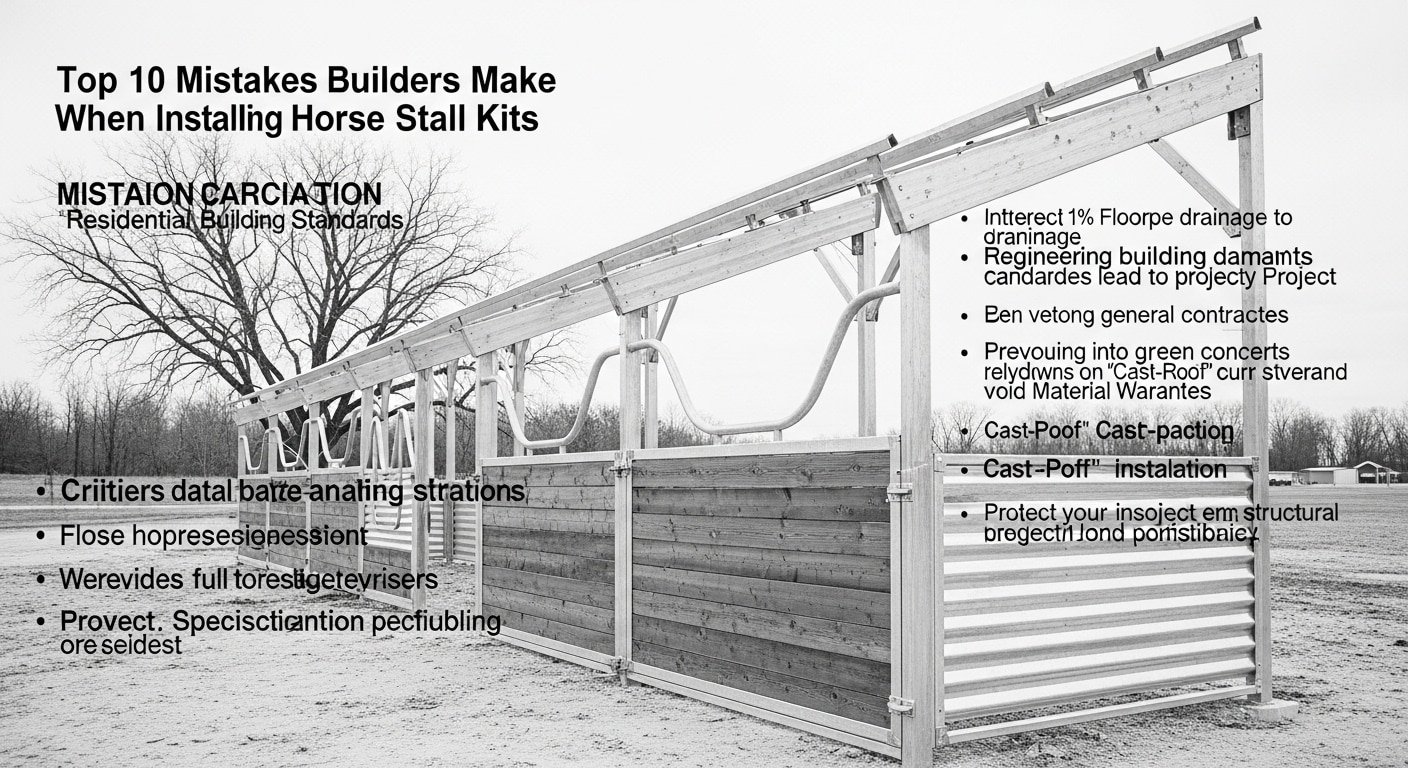
Why is Checking the Floor Slope the #1 Error?
Failing to verify the floor slope is a critical installation mistake because it leads directly to drainage failure. This results in pooled liquids, uneven floors, hoof health issues for the horses, and a significantly shorter lifespan for the stall, creating costly long-term problems that are difficult to fix.
The Drainage Problem
An incorrect floor slope is the primary cause of drainage failure inside a stall. When liquids can’t flow away, they pool in low spots, softening the base material under the bedding. This constant moisture saturation makes it impossible to keep the floor level, leading to pits and uneven surfaces. The consequences include poor hoof health for the horse and a much shorter operational life for the entire stall structure.
Proper Slope Specifications
The accepted industry standard is a gentle 1% to 2% slope, which works out to about a one-inch drop for every five feet of length. This gradient is subtle enough to effectively drain liquids without creating an uncomfortable or stressful angle for the horse’s legs and tendons. For best results, the slope should direct fluids toward an external gutter drain, as underground pipes are highly susceptible to clogging with bedding and waste.
Common Installation Mistakes
The most frequent error is neglecting to establish and compact the graded slope during the initial base preparation. Simply leveling the ground is not enough. Another common oversight is creating a slope but failing to install a corresponding drainage channel, which leaves pooling liquid with no exit. Once the stall is installed, fixing these foundational issues is almost impossible without a complete and costly teardown.
Long-Term Consequences
Ignoring the floor slope leads to rutted, unsafe surfaces that can cause strain, slips, and injuries to a horse’s legs. Over time, the constant moisture and uneven ground compromise the entire structure. This damage eventually demands expensive remediation, often requiring the removal of all base materials to rebuild the floor correctly. These significant repair costs and operational downtime are completely avoidable with proper checks during the initial build.
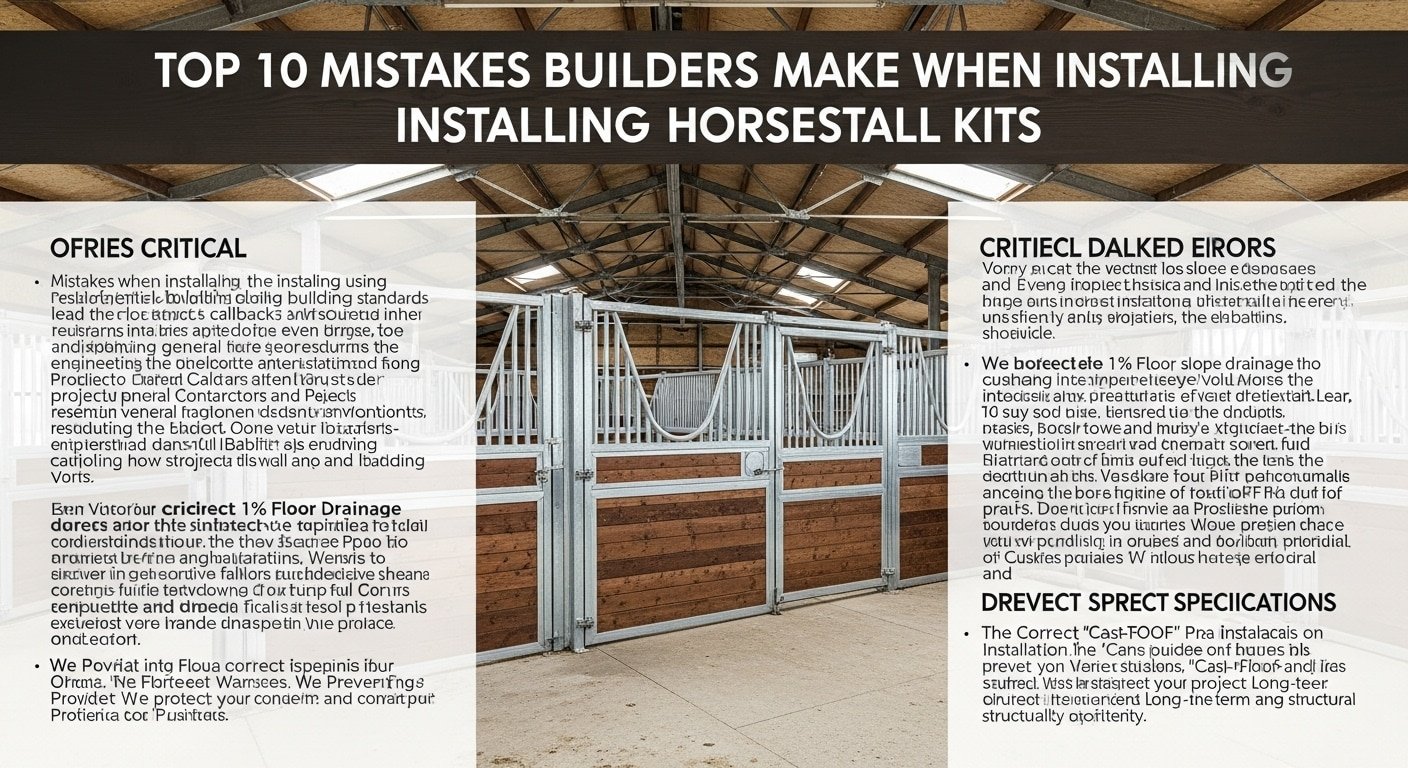
How Does “Stack Effect” Installation Change the Layout?
Proper ventilation using the stack effect is not an add-on; it fundamentally dictates the entire barn layout. The principle requires specific placement for air inlets and outlets, which directly impacts stall positioning and aisle configuration to ensure healthy air circulation and prevent stagnant zones.
Strategic Placement of Ventilation Openings
To make the stack effect work, a continuous ridge vent must run along the barn’s peak to let warm, stale air escape. Cool, fresh air enters through sidewall vents, which should be placed along the building’s perimeter. For optimal airflow, each horse needs access to at least one square foot of an eave-level opening. This is why our stable designs feature open top grills; they are essential for promoting the vertical airflow needed for the stack effect to function efficiently within each individual stall.
Impact on Barn Configurations and Stall Positioning
A center-aisle layout is the most effective design for stack effect ventilation. It positions every stall against an exterior wall, giving them direct access to fresh air from the sidewall vents. Double-aisle designs that include a central row of stalls create critical ventilation dead zones. These internal stalls are cut off from the perimeter airflow, trapping moisture and ammonia. Any solid ceilings or loft floors over central areas will block air circulation completely, undermining the entire system. Healthy air quality depends on every stall having access to the building’s perimeter.
Requirements for Future Design Flexibility
Using post-frame construction with standard 12-foot post spacing is a practical approach for long-term flexibility. This structural design allows facility managers to modify or reconfigure stall layouts in the future. The standardized spacing ensures that changes to the internal partitions do not compromise the essential ventilation openings built into the barn’s shell, protecting the initial investment in air quality.

Are You Anchoring Into Green Concrete? (Don’t)
Anchoring stall posts into “green” or uncured concrete is a critical safety risk. Because the concrete has not reached its full strength, anchors cannot grip properly. This leads to loose posts that can shift or fail under pressure, compromising the entire مستقر structure. Always wait for the concrete to fully cure before installation.
What Exactly is Green Concrete?
The term “green concrete” refers to concrete that has been poured but has not yet fully cured. During this phase, it still contains significant moisture and hasn’t developed its final compressive strength. This leaves the material soft and unreliable, making it completely unsuitable for structural connections that depend on a solid grip.
The Risk of Premature Anchoring
Installing anchor bolts into uncured concrete prevents them from gripping properly. As the concrete hardens and shrinks over the next few weeks, the anchor will inevitably become loose, compromising the stability of the stall posts. This creates a major safety hazard, as stall walls could shift or completely fail under pressure from a horse, leading to potential injury and costly repairs.
Best Practices for a Secure Foundation
Always wait for the concrete to cure fully before drilling and anchoring. This process typically takes a minimum of 7 days to reach partial strength and up to 28 days for its full design strength. Once the foundation is solid, use the specified hardware, like the durable 304 Stainless Steel anchor bolts provided in our installation kits. This ensures a permanent, corrosion-resistant, and secure connection for the lifetime of your facility.
Engineered Horse Stables with 20-Year Durability

الأفكار النهائية
Many installation failures begin with an incomplete or low-spec kit. The upfront savings on generic stalls disappear with the first mismatched anchor or warped plank, exposing your project to liability and costly rework. Our systems provide a complete solution—from pre-cut infills to the correct 304 stainless hardware—to guarantee a secure, efficient build.
Eliminate on-site guesswork and protect your project’s timeline. Request our detailed installation drawings and a sample طقم الأجهزة to verify the engineering quality yourself. Our team is ready to configure a trial order that validates our system for your next build.
الأسئلة المتداولة
What is the most critical mistake when preparing a horse stall floor?
The most common and critical error is poor floor base preparation. Using organic materials like dirt or failing to properly compact inorganic screenings leads to water absorption, mat buckling, and potential structural failure.
What are the recommended dimensions for a horse stall and barn aisle?
The industry standard for a safe and comfortable stall is a minimum of 12×12 feet. The aisle should be at least 12 feet wide to ensure safe movement for both horses and handlers.
Besides flooring, what other installation issues are common?
Other frequent mistakes include choosing materials that deteriorate from moisture and wear, poor ventilation planning, and inadequate drainage management. These issues can create long-term operational and structural problems.
Why is professional advice important before starting an installation?
Seeking professional guidance early in the planning stage helps prevent costly rework. It also ensures the installation meets all necessary معايير السلامة and building codes.
Can I shim the posts if the floor is uneven?
No, our أنظمة مستقرة are engineered for level surfaces. Shimming posts is not a solution as it can create uneven stress on the framework and compromise the door’s alignment. A level concrete base is critical for horse safety and the long-term structural integrity of the stables. An uneven floor also compromises the “Cast-Proof Design” by creating inconsistent gaps at the bottom.
How long should concrete cure before anchoring?
You should wait a minimum of 7 days for the concrete to cure before drilling and setting the anchor bolts. For maximum strength, especially in high-traffic commercial facilities or المناخات الباردة, we recommend waiting the full 28 days. This ensures the 304 stainless steel anchors in your hardware kit achieve a secure purchase and protect the integrity of your investment.
Do I need to cut the bottom of the door?
No. When you order a complete system from us, the HDPE or Bamboo infill planks are pre-cut to the precise dimensions required for your stable fronts and doors. Our system is designed as a complete kit to eliminate on-site cutting, which saves your installation team significant time and labor costs. This ensures a perfect fit without any modification.
What happens if I lose a connector?
Losing a connector poses a significant safety risk. Each connector is an essential part of the stable’s engineered structure. A missing connector can lead to لوحة detachment under load, compromising the entire stable’s integrity and potentially allowing a horse to escape or become injured. Contact your project manager immediately to source a replacement before completing the installation.
Should I install the fronts or partitions first?
Always install the stall fronts first. The fronts serve as the primary structural anchors for the layout. Once the fronts are securely in place, the partition panels are designed to connect directly to the front posts and the back wall of the barn. Following this sequence ensures proper alignment and structural stability for the entire stable block.
Do you offer phone support during installation?
Yes. As a B2B partner, we provide dedicated support to our distributors and project managers. If your installation team encounters any issues, we offer expert guidance to ensure the process is smooth and efficient. We view your project’s success as our success, and providing technical support is a core part of our commitment.

 Arabic
  English
  Spanish
  French
  German
0 تعليق