

Portable vs permanent horse stalls is a total-cost question, not a purchase-price question. The permanent barn wins the first invoice line and loses the next decade: foundation work, fixed services, timber maintenance and zero relocation value. The portable system starts with a factory order and a freight bill, and spends the same five years doing almost nothing but standing there. Which side of that trade ends up cheaper depends on what the facility actually does with its stabling — and a five-year window is long enough to find out honestly.
DB HorseStable manufactures stabling systems in Anping for export to nine markets — Australia, New Zealand, the US, the UK, Germany, France, Denmark, Spain and Poland — with hot-dip galvanized steel frames rated for 20 years of rust protection and monthly capacity above 500 sets. This guide builds the five-year comparison as a framework with the factory’s real numbers where they exist, and honest placeholders where your local costs belong. No invented figures — the numbers that matter in this comparison are mostly yours.
Key Takeaways
- Over five years the cost race is decided by maintenance, relocation and configuration changes — the purchase price gap is spent in year one, and the five years that follow decide whether either side earns it back.
- Hot-dip galvanized steel carries a 20-year rust protection rating, which outlasts multiple five-year windows; timber elements in permanent builds typically demand recurring treatment within that same span.
- Portable systems ship in 4-6 weeks globally, or 1-2 weeks from the Sydney and Warsaw regional warehouses, and reconfigure by adding or relocating modules.
- Volume pricing scales in steps of 5-15% on bulk orders, and orders above 20 sets include a dedicated regional account manager.
- The minimum order is 10 stable sets — a threshold that fits buying groups as well as single facilities.
Year One: Purchase, Freight and Installation
The permanent build starts before the stalls exist: site preparation, a slab or strip footings, drainage and fixed services. Those costs are local, they are real, and they belong in the comparison even though no supplier quotes them. The stall hardware itself — panels, fronts, partitions — can in fact be sourced from the same factories either way, but the permanent installation typically fixes them to the structure, which converts equipment into real estate.
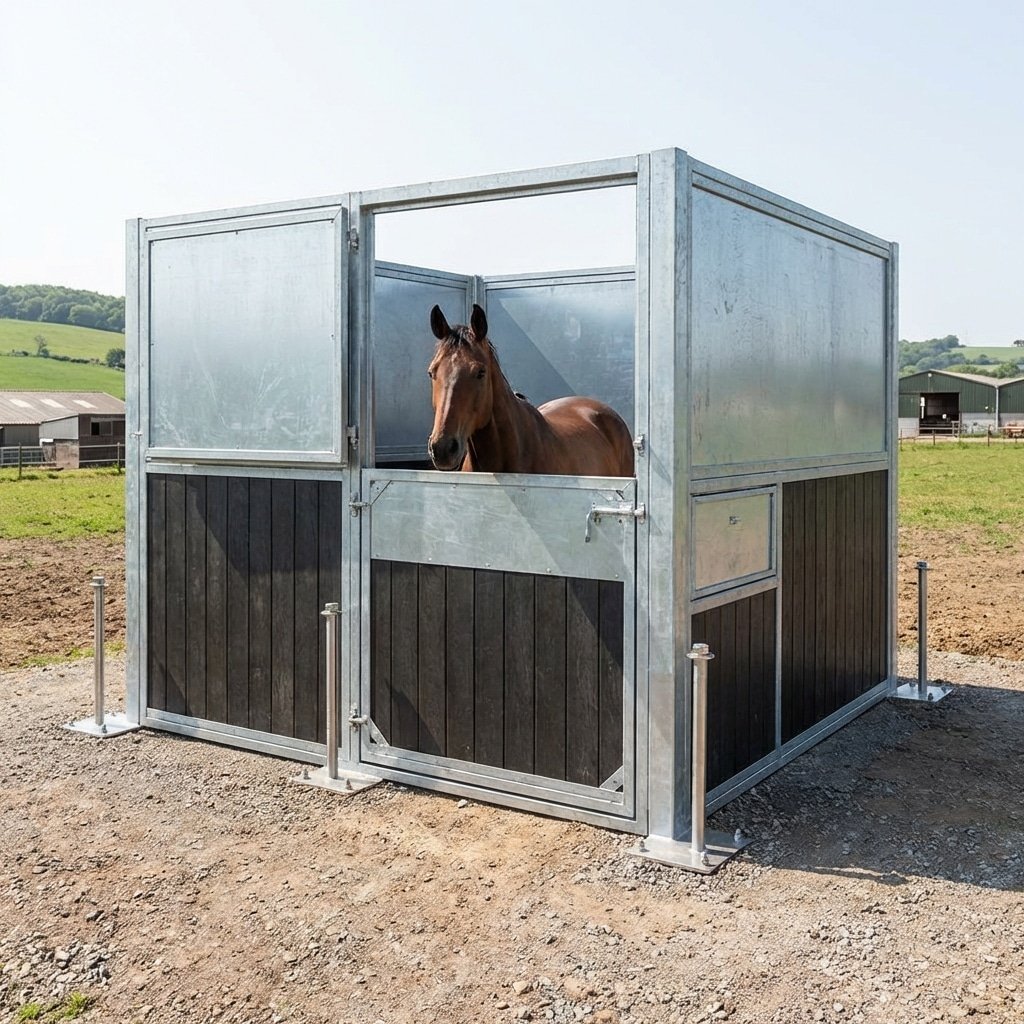
The portable route replaces site works with logistics and assembly. A modular system ships flat and assembles on prepared ground, then extends row by row using the panel-and-gate configuration the facility chooses. Freight is the variable buyers forget to compare properly: a factory order from Anping to any of DB HorseStable’s nine core markets runs 4-6 weeks, and facilities near a regional warehouse — Sydney or Warsaw — can draw expedited stock in 1-2 weeks. Get the freight and import lines quoted against your actual port, not estimated from someone else’s container, because that single line decides how much of the permanent build’s cost advantage survives year one.
Years One to Five: The Maintenance Ledger
Maintenance is where the five-year comparison stops being theoretical. The galvanized steel frame carries a 20-year rust protection rating — outside the five-year window entirely, and outside the second one too. What the frame asks for inside five years is inspection, not treatment: check joints, check any transport scratches that reach bare steel, keep moving parts moving. The infill choice sets the rest of the schedule. HDPE and bamboo liners resist moisture and chewing without periodic coating; timber liners, where specified for warmth or appearance, bring the timber maintenance schedule with them — cleaning, checking for chew damage, and eventually board replacement.
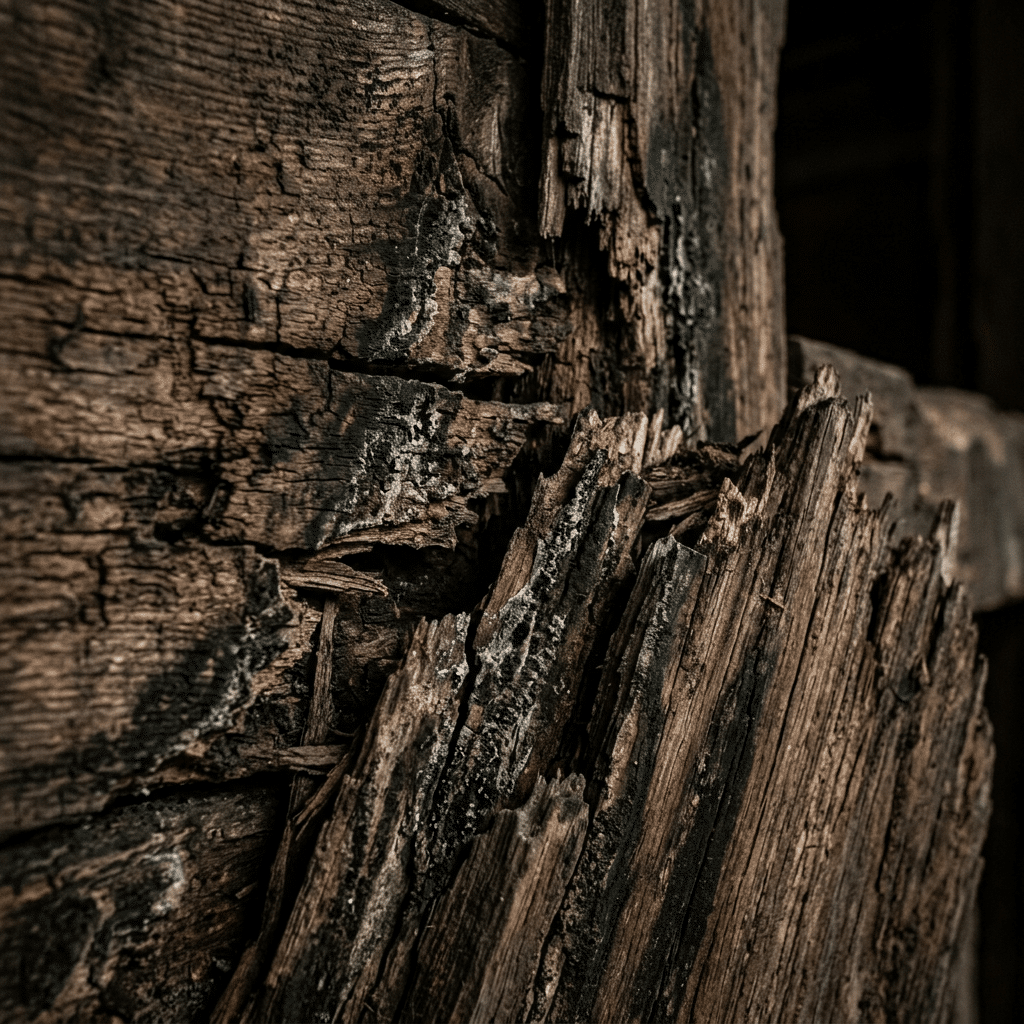
The permanent timber build runs the opposite ledger. Timber in a stable environment — moisture from washing, urine, bedding and humidity, plus horses that chew — degrades on a repeating cycle of treatment and repair, and a five-year window is likely to contain at least one round of it. The photograph below is the end state of that cycle: splintered, discolored boards that started life as sound lumber. A facility comparing quotes should price that cycle honestly: treatment products, labor hours, and the replacement boards themselves, multiplied by the number of years the build stands.
Relocation and Reconfiguration Value
Five years is exactly the horizon on which facilities change: leases end, training operations grow into new disciplines, event contracts move, and land gets repurposed. A permanent build has one answer to every one of those events — leave it behind or demolish it. Its residual value is the building’s value, decided by the property market. A portable system’s residual value is the equipment’s value: modules that can be trucked to the next site, reconfigured into a different row layout, or resold into a market that runs the same system.
Reconfiguration deserves its own line in the comparison because it recurs. Adding stalls to a modular row means ordering more panels and gates from the same factory — the row layout guide on this site covers the configurations. Adding stalls to a permanent barn means construction: consent, builders, dust, and downtime. If the five-year plan contains any change to stall count, that single event can outweigh the entire purchase-price difference — which is why the framework below asks about it before anything else.
Scaling, Pricing Steps and the 20-Set Threshold
The factory’s commercial structure shapes the portable side of the ledger. Orders start at 10 sets — a minimum sized for a single facility or a small buying group. Bulk orders earn tiered discounts of 5-15%, so a facility planning a phased build should price both phases as one volume conversation rather than two separate orders. Above 20 sets, the order includes a dedicated regional account manager who handles customization and logistics planning — a service layer that permanent-build contractors price as project management.
| Five-year cost item | Portable system | Permanent build |
|---|---|---|
| Site works before day one | Prepared, level ground; no foundations | Footings, slab, drainage, fixed services |
| Frame protection over the window | Hot-dip galvanized steel, 20-year rust rating | Depends on structural material specified |
| Recurring treatment inside five years | Inspection and scratch repair; HDPE/bamboo liners need no coating | Timber treatment and board replacement cycles |
| Adding stalls in year three | More panels and gates from the same factory | Consent, contractor works, downtime |
| Residual value at year five | Equipment: relocate or resell the modules | Real estate: decided by the property |
| Volume economics | 10-set minimum; 5-15% bulk discounts; account manager above 20 sets | Contractor quotations; project management billed separately |
One more line that belongs in the honest version of this table: financing and accounting treatment. Portable equipment and fixed buildings are treated differently by tax systems, and the rules differ by country — the nine markets this factory serves each have their own framework. That is a question for your accountant, stated as a question, because a wrong assumption here can be worth more than the entire freight bill.
The Decision Framework
Four questions resolve most cases. Will the facility’s stall count or location change within five years — if yes, the portable side of the ledger starts ahead. Does the site already have services and structures a permanent build can use — if yes, the permanent build’s year-one cost falls sharply. Who performs maintenance, and at what labor cost — high internal labor costs widen the timber maintenance gap. And is the stabling a long-term property investment or an operating asset — property investment logic favors the permanent build, operating logic favors the modules.
Our position is blunt: a facility that cannot promise its own location five years out has no business pouring footings. The permanent barn earns its place when the land, the use and the ownership are all fixed — and in that case, buy the permanent build and specify galvanized steel framing inside it. Everything between those two cases is arithmetic, and the framework above is the arithmetic.
الأسئلة المتداولة
Is a portable stall system cheaper than a permanent barn over five years?
It depends on what changes. If the facility relocates, expands or reconfigures within the window, the portable system’s flexibility usually decides the comparison. If the site, use and ownership are fixed for the long term, the permanent build can win on durability and property value. The framework in this guide runs the arithmetic for your case.
How long does delivery take for a factory order?
Global production and shipping run 4-6 weeks. Facilities served by the Sydney or Warsaw regional warehouses can draw expedited stock in 1-2 weeks, subject to availability at the time of order.
What maintenance does a galvanized steel stall system need?
Inside a five-year window: inspection, not treatment. The hot-dip galvanized frame carries a 20-year rust protection rating, so the schedule is checking joints, treating any scratch that reaches bare steel, and servicing moving parts. Liner choice sets the rest — HDPE and bamboo liners need no coating, timber liners bring a timber schedule.
Can several small facilities order together to reach the volume discounts?
Yes. The 10-set minimum applies to the order, and bulk tiers of 5-15% scale with volume, so a buying group that consolidates its requirements into one order prices better than its members would separately. Orders above 20 sets add a dedicated regional account manager for customization and logistics planning.
الخاتمة
The portable vs permanent comparison over five years is a maintenance ledger plus a flexibility option plus a residual value question. The galvanized steel system carries a 20-year rust rating and a five-year maintenance schedule of inspections; the timber build carries treatment cycles that recur inside the window. Volume economics — 10-set minimums, 5-15% bulk tiers, account management above 20 sets — belong to the factory order, and relocation value belongs to the modules.
If the framework points your facility toward the portable side, review the horse stable systems on the product pages and price your configuration with the freight and import lines quoted to your own port — the MOQ and tiered pricing guide explains how the volume conversation works.

 Arabic
  English
  Spanish
  French
  German
0 تعليق