

Stable aisle width is the dimension that decides whether your barn works or merely stands. Too narrow, and every feed run becomes a negotiation with the horse opposite; too wide, and you have paid for floor, roofing and lighting volume that serves no purpose. Between those two failures sits a planning exercise that starts not with a rulebook but with your own equipment list: what must pass down that aisle, how often, and alongside what.
This guide works through that exercise for stable owners and builders planning indoor rows. The framing comes from the manufacturing side: DB HorseStable builds indoor and portable stabling with adjustable module sizes, so aisle width is a design decision the buyer controls rather than a fixed dimension the factory imposes. No universal dimensions are quoted here: the width is derived from your own operation, and planning judgments are labeled as such.
Key Takeaways
- There is no single universal aisle width: the right dimension comes from your equipment list — tractor, feed cart, wheelbarrow, handler and horse — plus the passing maneuvers your daily routine actually requires.
- Plan for the widest routine object plus clearance, not the average one: the day a tractor with its trailer or an evacuation needs the aisle is the day the width earns its cost.
- Module sizes in this stabling line are adjustable, so aisle width can be set at design time rather than accepted from a catalog page.
- Aisle surfaces belong in the same plan: rubber matting for footing and drainage layout both interact with how the aisle is used.
- Orders above 20 stable sets come with a dedicated regional account manager — use that resource to pressure-test the layout before production.
Why There Is No Universal Number
Search for stable aisle width and you will find single figures quoted with confidence. Treat them with caution. Aisle requirements genuinely differ between a private two-stall barn, a training yard where horses pass handlers daily, and a commercial boarding operation where machinery works the aisle on schedule. A number that fits one of those will either waste space or create a pinch point in another. The defensible approach is to derive your width from your own traffic — which is exactly what a manufacturer with adjustable module sizes allows you to do.
Our position is blunt: any supplier who tells you there is one correct aisle width for all barns is selling a catalog, not a design. The stabling systems in this product line — indoor, portable and temporary configurations with multiple lining options — are dimensioned to the project, and the aisle is part of that dimensioning, not a leftover between whatever the modules happened to be.
The Traffic Audit: What Actually Uses Your Aisle
List everything that will move down the aisle in a normal week, then measure the widest and the longest. A typical list covers four categories: people on foot, wheelbarrows and feed carts, horses in hand, and machinery — from a compact tractor with implements to the trucks that deliver bedding. Each entry imposes a different requirement. A wheelbarrow needs passage; a horse and handler need passage plus reaction space; a tractor needs passage plus clearance for whatever it is towing or lifting.
Then audit the maneuvers, not just the objects. The two that decide width are passing and turning. If a handler leading a horse must be able to pass a wheelbarrow coming the other way, the aisle needs both widths plus a working margin — a horse crowded mid-pass is how aisle pinch points cause injuries. If machinery must turn into a cross-aisle or a stall row, the turning geometry of the actual machine, with its actual trailer, sets the requirement. Write down the three worst cases from your own routine; those cases, not the daily average, should set the dimension.
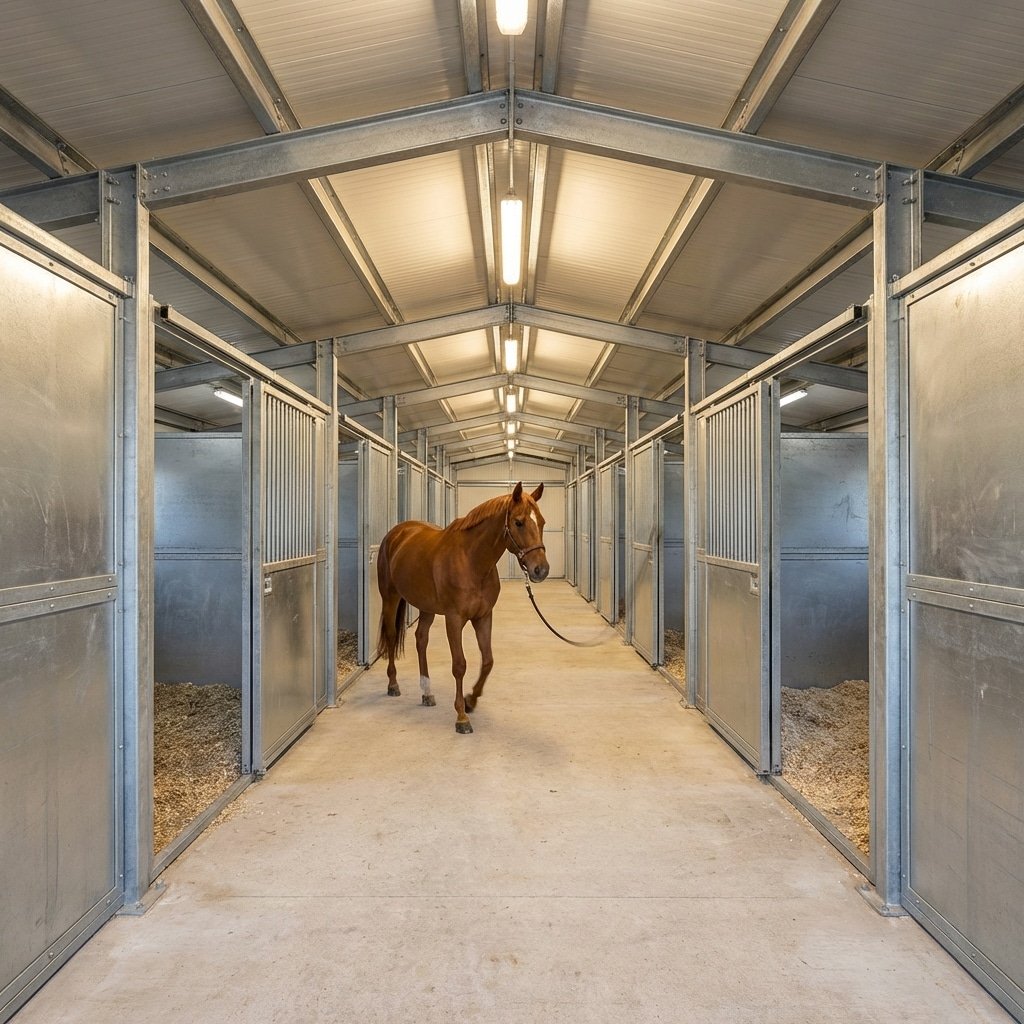
Aisle Width in the Row Layout
Aisle width cannot be planned in isolation from the row layout, because the two trade against each other inside the same building envelope: wider aisles mean fewer stalls per foot of barn, and more stalls mean a tighter center. The row layout guide we published covers how indoor stall rows are organized for utility runs and daily workflow — work through it with your aisle dimension open beside it, and check that the two decisions are made together rather than one after the other.
The trade also has a safety edge. In an emergency — a horse down in a stall, a fire crew needing access — the aisle is the working space, and pinch points that merely annoy a wheelbarrow become serious when a handler needs room to work fast with a panicked animal. That is the argument for choosing the wider option whenever the traffic audit leaves you between two dimensions, and it is a stronger argument than the per-foot saving of the narrower one.
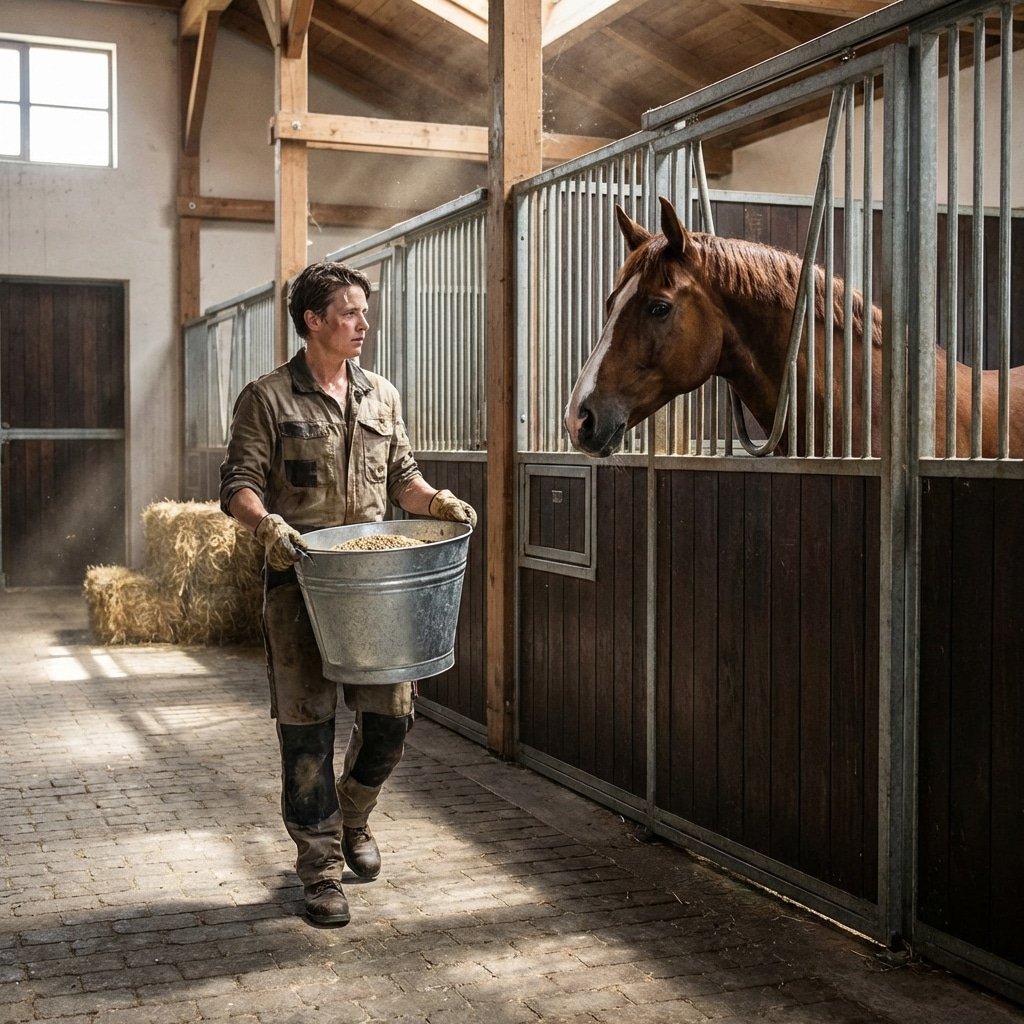
Surface, Drainage and Services in the Aisle
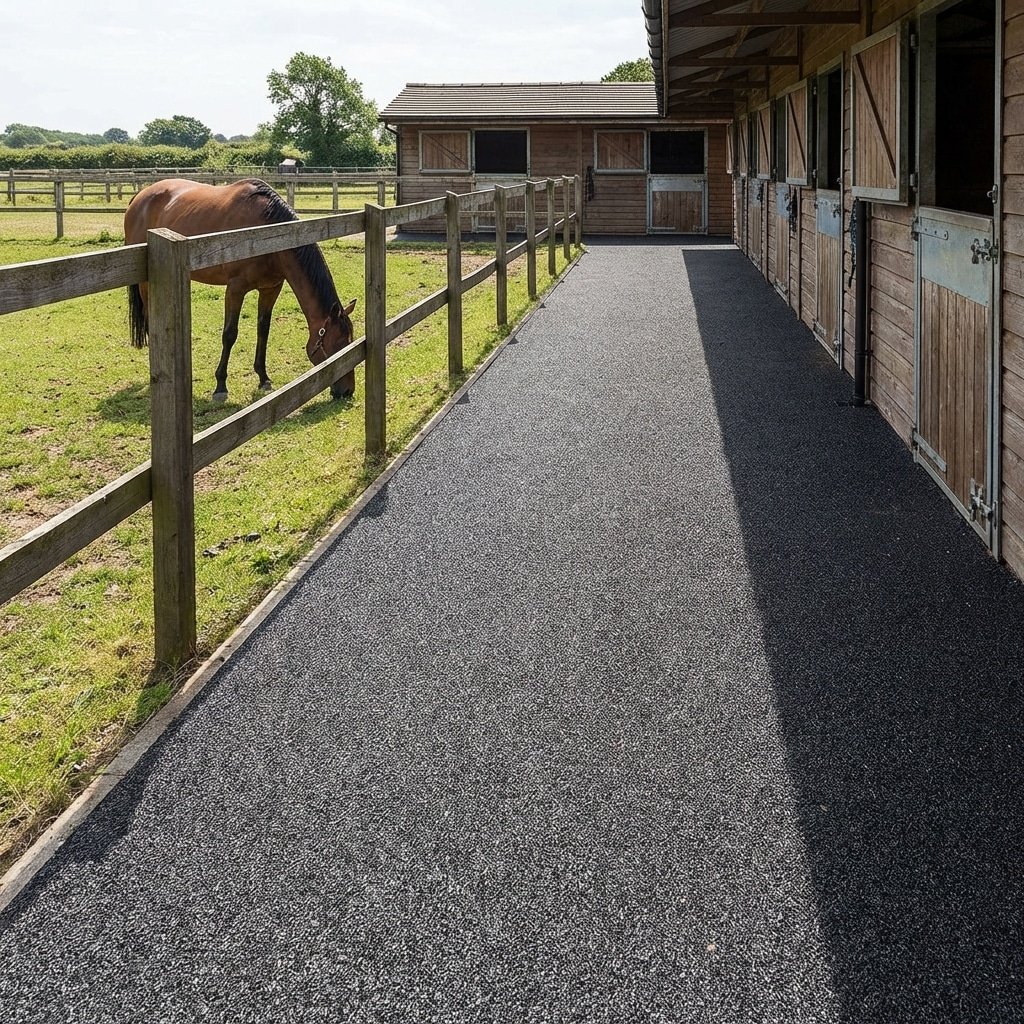
The aisle floor is part of the width plan. Heavy-duty anti-slip rubber matting — stocked in this product line for both stable and arena use — changes how the surface behaves under hoof, wheel and boot, and the mat layout offered at quotation affects how the aisle drains and how easily sections lift for cleaning. The flooring decision interacts with the drainage plan too: the grading under and along the aisle determines whether water leaves the building or pools where the traffic runs, a failure mode covered in our stable drainage planning guide.
Services are the last layer. Lighting positions, water points, feed storage doors and tack access all live along the aisle walls, and each one claims a slice of the clear width when opened or occupied. Mark them on the plan before fixing the dimension: an aisle measured empty and then lined with an open tack room door and a filled water trough is narrower than the drawing says. When the plan is ready, the customization options on the customization page and the indoor row layout guide are the two references to hand your supplier — and orders above 20 stable sets include a dedicated regional account manager whose job includes exactly this pressure-testing.
الأسئلة المتداولة
What is the standard stable aisle width?
There is no single standard width that fits every yard. The defensible dimension comes from your own traffic audit: the widest routine object, the passing and turning maneuvers your daily work requires, plus clearance margins for safety.
Should the aisle be wide enough for a tractor?
If machinery will routinely work the aisle, yes — and plan for the machine with its trailer or implement attached, turning geometry included. If machinery access is occasional, a designated wider cross-aisle may serve better than widening the whole run.
Can aisle width be customized in manufactured stabling?
Yes. Stabling systems in this line are built with adjustable module sizes, so the aisle dimension is set at design time to the project layout rather than fixed by a catalog configuration.
What surface should a stable aisle have?
Heavy-duty anti-slip rubber matting is the working choice for footing under hoof, wheel and boot, with the layout options offered at quotation trading drainability against lift-and-clean convenience. Grade the aisle for drainage as part of the same plan.
الخاتمة
Aisle width is not a standard to look up — it is a derivation from your own traffic audit: objects, maneuvers, safety margins, then surfaces and services layered onto the plan. Done in that order, with adjustable module sizes doing the accommodating, the aisle becomes the part of the barn that makes everything else work.
Before committing the layout, walk your three worst-case maneuvers on paper and give the plan to your supplier for comment. A stable built around a dimension you can defend is a stable you will not be remodeling anytime soon.

 Arabic
  English
  Spanish
  French
  German
0 تعليق