Jump cups and pins are two of the small parts on a horse jump that get ordered wrong most often. A yard replaces a knocked cup, buys one that looks identical, and finds the new one sits higher on the standard than the one it replaced. The jump leans. The pole rolls at...
A lunging arena surface takes more concentrated abuse per square foot than almost any other working area on a training yard. The horse repeats the same circle around the same wall, and the footing records that pattern as a ring of wear a riding arena only develops...
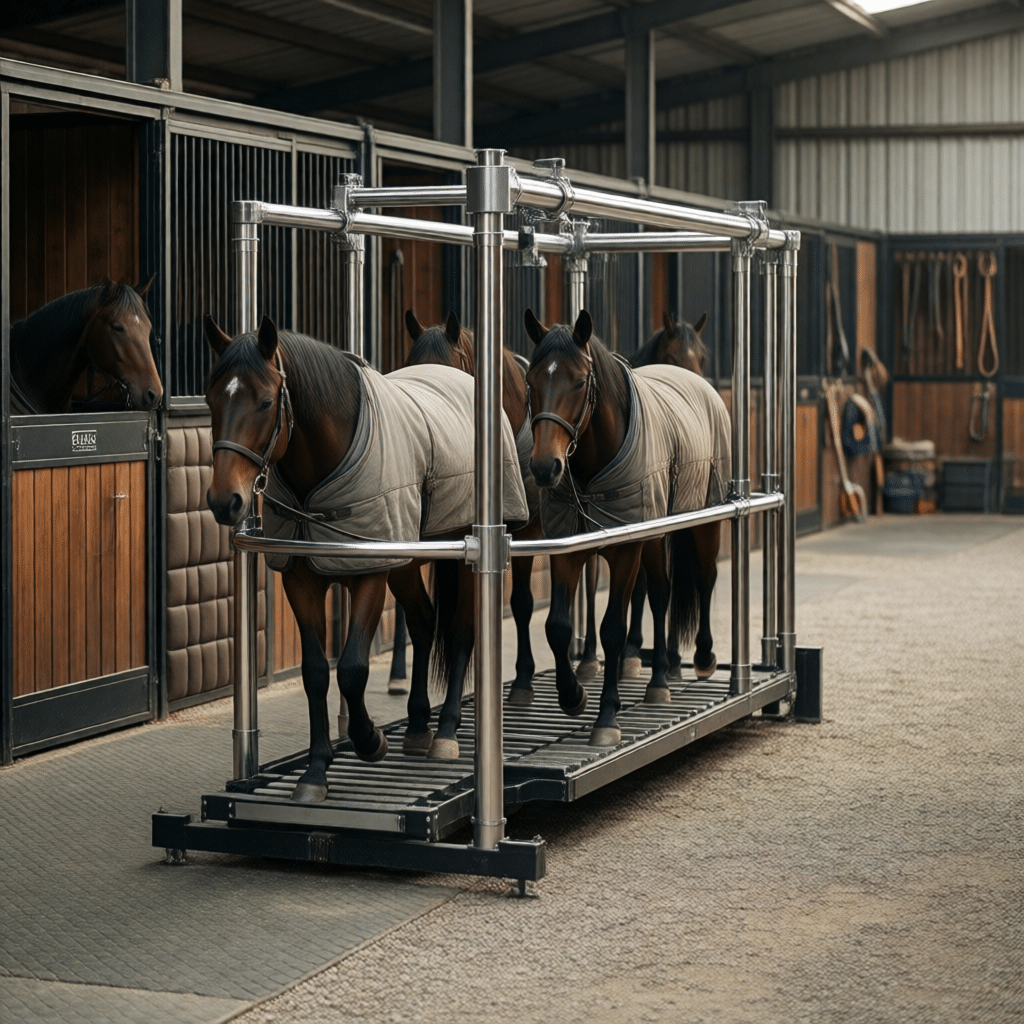
Search for a horse walker cost and you will find two kinds of pages: catalogs with prices that exclude the variables that decide the price, and blog posts that quote numbers for machines they have never shipped. The honest answer is that a horse walker is priced the...
Horse walker safety is usually settled before the machine arrives — by the specification, not a dramatic failure. Whether the stop’s behavior is written down, whether each gate carries a stated interlock, and whether the speed range has a method behind it decide...
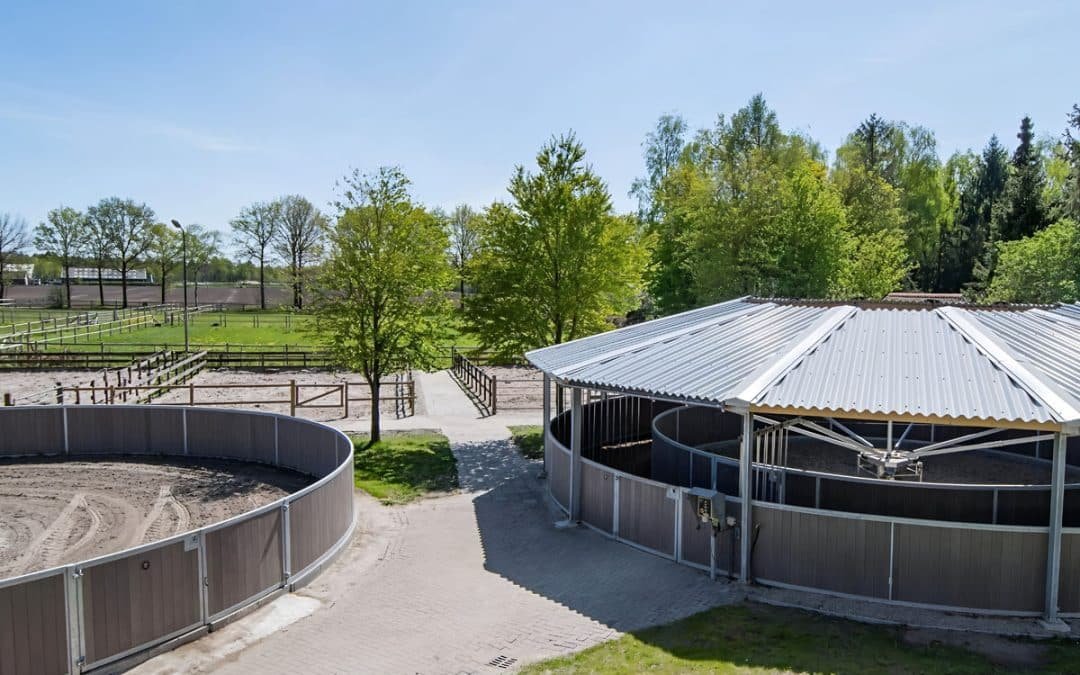
Buy a circular training enclosure and the catalog gives you two names for what looks like the same product: the lunging pen and the round pen. They are not the same tool. The difference sits in three decisions — the diameter of the circle, the height of the wall, and...
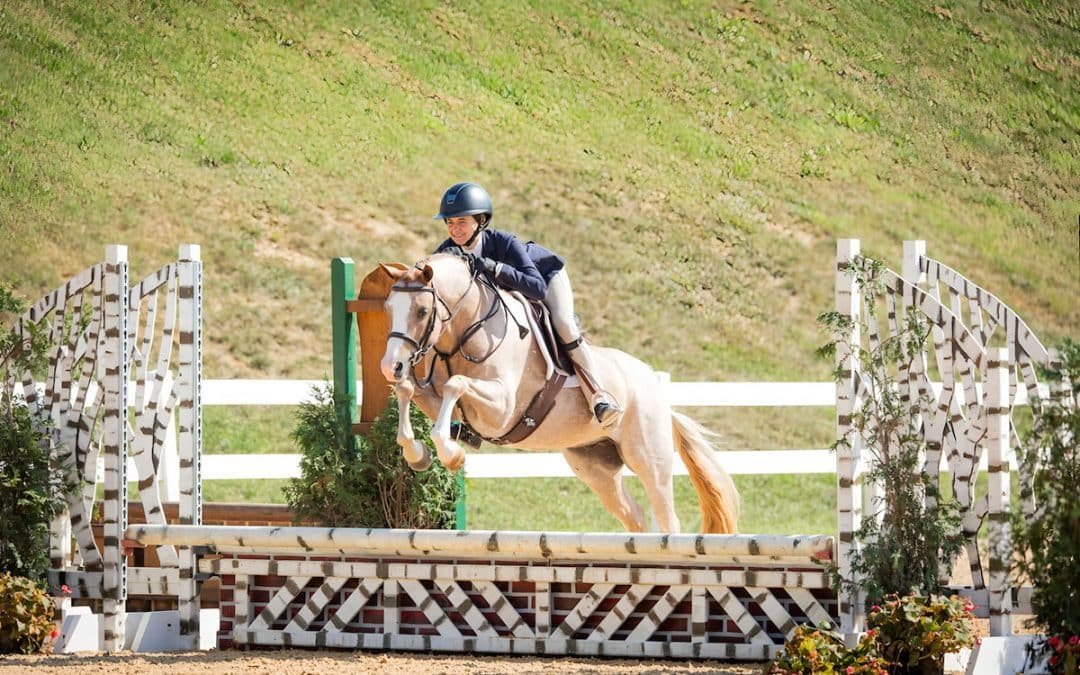
Every training facility that hosts competitors eventually faces the same equipment question: what does “FEI standard” actually require of a jump, and is the equipment in the catalog built to it? The label gets attached loosely — to any painted rail on two...

 Spanish
 English
 French
 Arabic
 German