


Search for a horse walker cost and you will find two kinds of pages: catalogs with prices that exclude the variables that decide the price, and blog posts that quote numbers for machines they have never shipped. The honest answer is that a horse walker is priced the way commercial equipment is priced — by configuration, by volume, and by destination — and the useful question is not “what does a horse walker cost” but “what exactly am I being quoted, and how do I make three quotes comparable”. That question has a complete answer, and this guide is it.
DB HorseStable builds horse walkers with Italian motors as part of its training equipment line, exporting to facilities across nine markets with CE-certified manufacture and 4-6 week global delivery. This guide breaks the price into its real components, shows which components buyers routinely leave out of their comparison, and gives you the specification sheet that turns a quote request into a comparable quotation — without inventing a single number.
Key Takeaways
- A walker price is the sum of six variables: drive system, diameter, cover, surface preparation, installation and freight — quotes that differ usually differ on which variables they include, not on hardware quality alone.
- The drive is the component that runs every day; matched against it are diameter (which sets steel tonnage) and the roof option, which together can move a quote more than the motor choice.
- Factory orders ship globally in 4-6 weeks; the Sydney and Warsaw regional warehouses hold expedited stock at 1-2 weeks where available.
- CE-certified manufacture and ISO 9001 quality systems apply to the training equipment line — ask for the certification scope in writing with any quote.
- The comparable quote is built on a written configuration sheet: diameter, horse count, drive type, cover, speed control, installation method and destination port.
Why Nobody Publishes the Price
A horse walker is configured equipment, not a shelf product. Two facilities ordering “a horse walker” in the same month can be ordering different diameters for different horse counts, one with a roof and one without, one shipped to a European port and one to an Australian one, one installed by the buyer’s contractor and one commissioned with the shipment. A published price for that product would be a fiction with a number attached, and a buyer who anchors on it ends up comparing quotes that include different halves of the machine.
The B2B market’s answer to this is the configuration quotation, and it works — provided the buyer sends the same configuration to every supplier. The rest of this guide is about building that configuration so the quotes that come back are actually the same product. The sizing and motor background in the horse walker guide on this site covers how diameter and roof options interact with training use; this page stays on the money.
The Six Components of a Horse Walker Price
The drive system. The motor and its controls are the mechanical heart of the walker, and the Italian motor option is the factory’s designated drive line. What the drive price buys is durability under daily use and the control system’s behavior — how smoothly the machine starts, how the speed is set, and how the machine is stopped. When comparing drive options across suppliers, compare the control functionality and the warranty terms in writing, not the country of origin label.
The diameter and horse count. The fence circle’s diameter sets the steel tonnage of panels and the number of walk stations, so it is the single biggest structural line in the quote. Diameter is not a free choice — it follows from the horses that will use the walker and the training program, which is why the sizing guide deserves a read before the quote request. Horse count multiplies the station hardware and constrains the minimum practical diameter.
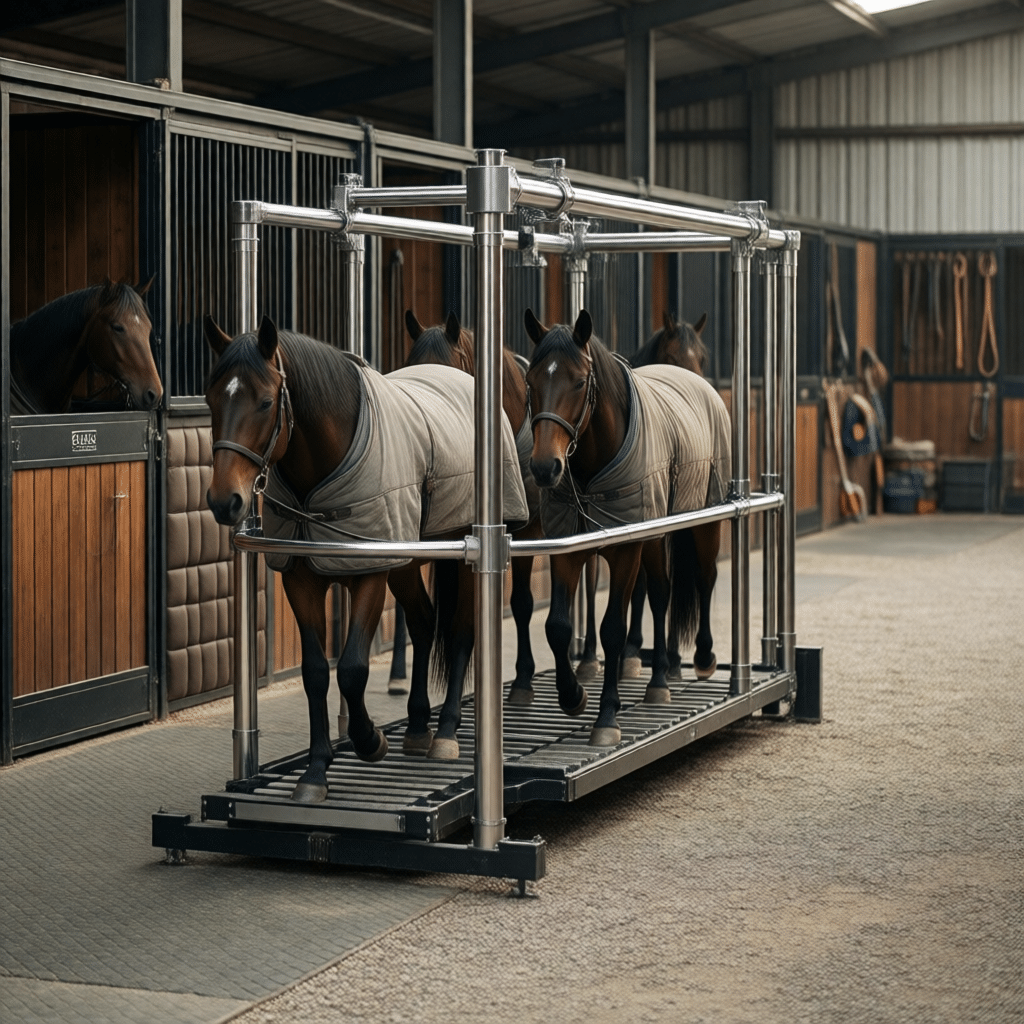
The cover. A roof over the walker adds steel, engineering and installation work, and in the total price it can move the number more than the motor choice does. It also changes the machine’s use pattern — covered walkers run through weather, which changes the footing and maintenance conversation. Decide the cover question on the training calendar, then let the price follow the decision.
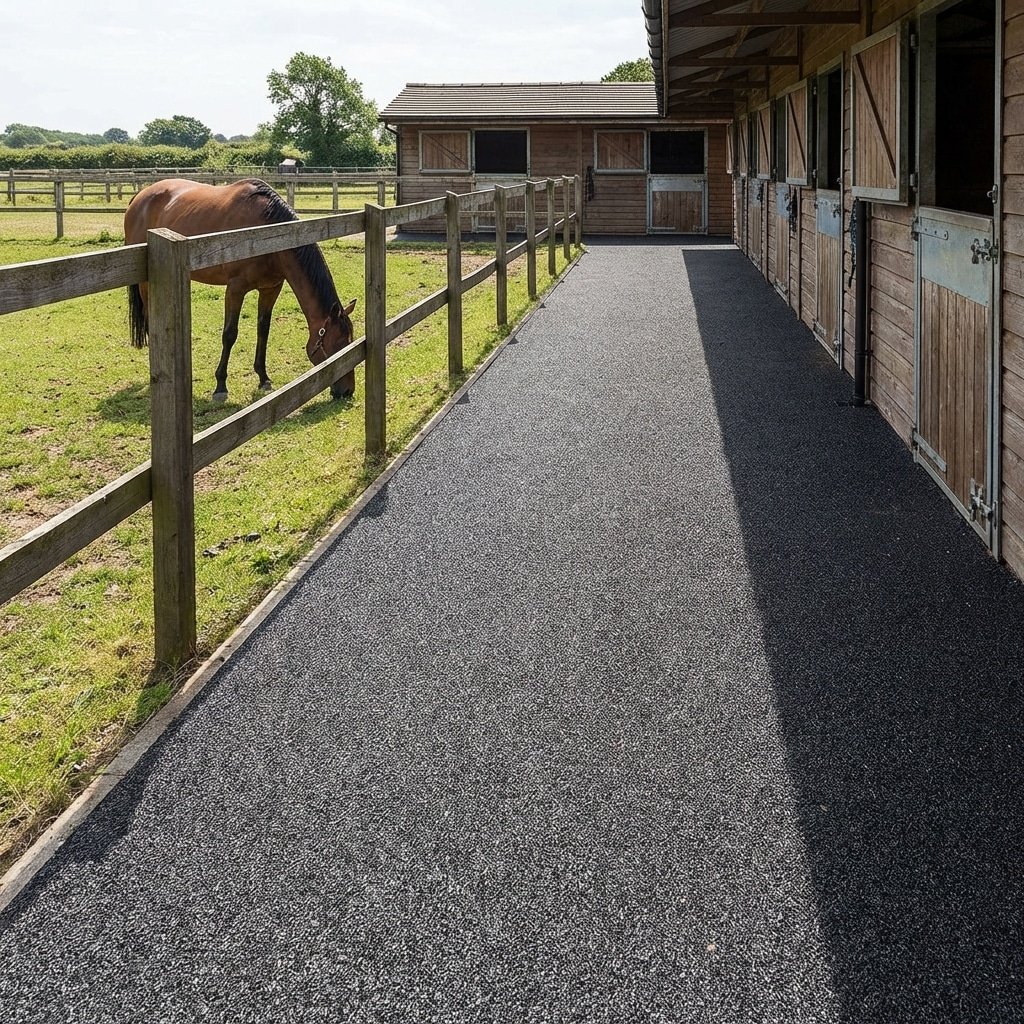
Surface preparation and footing. The walker needs a level, drained circle with a walking surface suited to the climate and the horses. That work is local, it is real, and it is absent from nearly every price comparison buyers attempt. Get it quoted by your own contractor and add it to both sides of any supplier comparison.
Installation and commissioning. From flat-packed panels and a drive unit to a turning machine: the work is assembly, anchoring and commissioning. Some buyers self-install with the drawings; some want commissioning support. The difference between those two choices is a real line in the budget, and it needs to appear identically in every quote you compare.
Freight and import. Sea freight from the factory runs 4-6 weeks globally; the Sydney and Warsaw regional warehouses shorten that to 1-2 weeks for expedited stock where available. Freight, port charges and import handling belong in the comparison at your actual destination — an estimate from a different port contaminates the whole exercise.
The Configuration Sheet That Makes Quotes Comparable
Send the same sheet to every supplier, and the quotes that come back are comparable. Leave one line vague, and the supplier fills it with the assumption that flatters their number. The sheet has eight lines.
| Line | What to specify | Why it moves the price |
|---|---|---|
| Diámetro | Exact internal diameter in meters | Sets steel tonnage — the biggest structural line |
| Horse count | Number of walk stations | Multiplies station hardware; constrains minimum diameter |
| Drive | Motor type and control functions required | The drive is the daily-running component; Italian motor option available |
| Cover | Roofed or open | Adds steel and engineering; can outweigh the motor choice |
| Surface finish | Hot-dip galvanized, or coated finish specified | Corrosion protection is the lifespan line — galvanized steel carries a 20-year rust rating |
| Instalación | Self-install with drawings, or commissioning support | Changes both the price and who owns start-up problems |
| Destination | Port and delivery terms | Freight and import charges; 4-6 weeks by sea, 1-2 weeks from regional stock |
| Documentación | CE scope, ISO 9001 coverage, warranty terms — in writing | Priced-in compliance versus paper claims; verify before comparing |
The last line is the one buyers skip and regret. A supplier whose quote includes documented CE scope and a written warranty has priced that compliance into the number; a supplier without it has not. Comparing the two numbers as if they were the same product is the most common error in this market, and the sheet prevents it.
After Purchase: Power, Maintenance and Safety Checks
The purchase price is the first number, not the only one. A walker consumes electricity on a daily schedule, its footing needs renewal on a cycle set by climate and use, and its safety systems need a checking routine — the horse walker safety checklist on this site is the operating document for that last part. Build those three lines into the budget before signing, at whatever rates apply at your facility, and the horse walker cost question is answered completely: configured price, installed cost, and running cost, each in its own column.
The neighboring equipment decision belongs in the same conversation. A lunging pen covers a different part of the training program at a different price point, and the lunging pens comparison guide on this site lays out where each machine earns its place. Facilities that buy both usually specify them together, because one freight and one installation visit price better than two.
Preguntas frecuentes
Why won’t suppliers just publish horse walker prices?
Because the product is configured, not fixed. Diameter, horse count, cover, installation and destination all change the number, and a published price would exclude variables that decide it. The comparable alternative is the eight-line configuration sheet in this guide, sent identically to every supplier.
What makes one walker quote higher than another for the same machine?
Usually inclusions, not hardware. One quote may carry a roof, commissioning support, documented CE scope and a written warranty; another may exclude all four. Normalize the quotes against the configuration sheet before concluding anything about quality.
How long does delivery take?
Global factory orders run 4-6 weeks including sea freight. The Sydney and Warsaw regional warehouses hold expedited stock that ships in 1-2 weeks where available — worth checking if your timeline is tight.
Does the Italian motor justify its price?
The drive runs every day, so it is the right place to spend — but justify it with written control functionality and warranty terms rather than the origin label. And check the other big lines first: diameter, steel tonnage and the roof option can each move the quote more than the motor choice.
Conclusión
A horse walker price is six components and a documentation scope, and the market’s honest answer is the configuration quotation. Build the eight-line sheet — diameter, horse count, drive, cover, finish, installation, destination, documentation — send it identically to every supplier, and add your local lines for footing and power. The quotes that come back will finally be comparable, and the number you sign will be the number you budgeted.
When you are ready to request that quotation, start from the horse walker product page — and read the sizing and motor guide first so the diameter and cover lines on your sheet are decisions rather than guesses.

 Spanish
  English
  French
  Arabic
  German
0 comentarios