


Blog
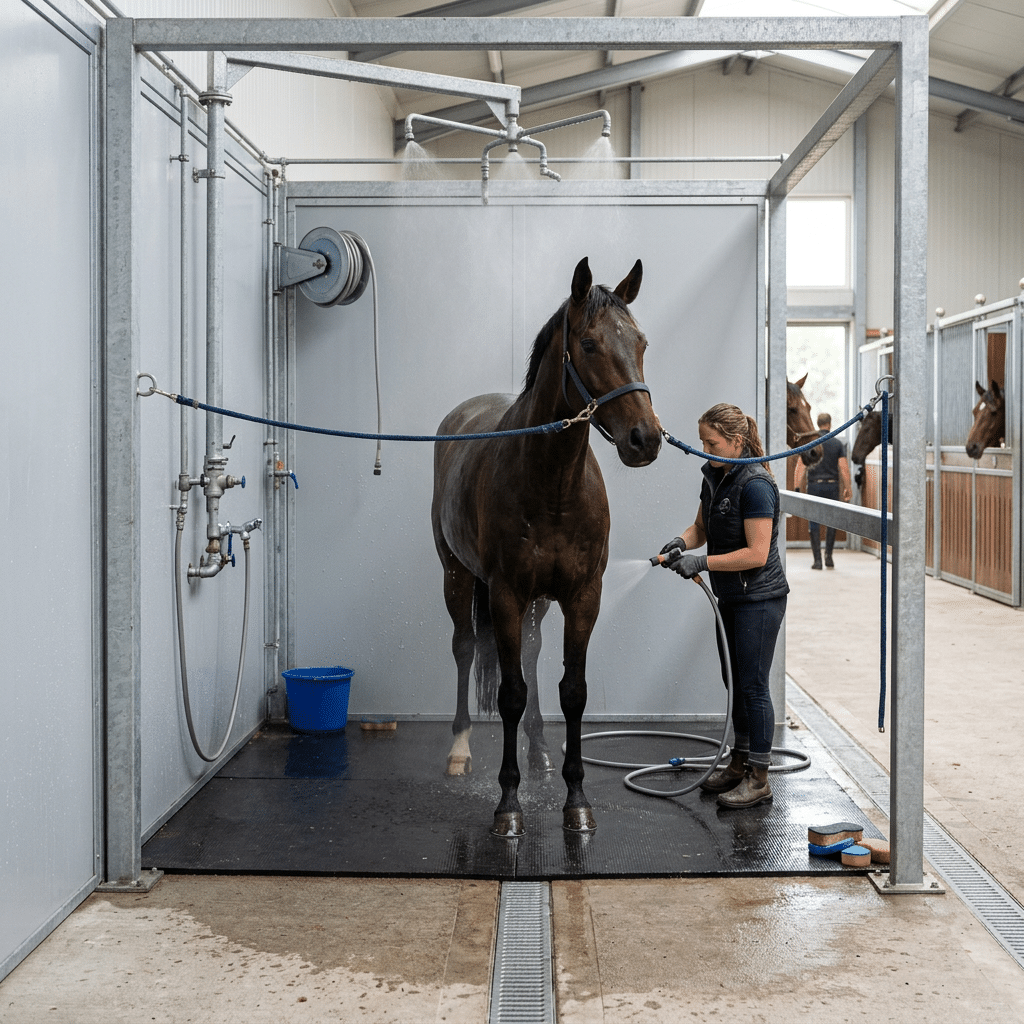
Ag Exemption vs. Permanent Structures: Avoiding Permitting Nightmares
The complexity of Building Permits for agricultural structures creates a significant risk of project delays and budget overruns. Misclassifying a modular system as a permanent building can trigger costly requirements for engineer-sealed plans, directly eroding...
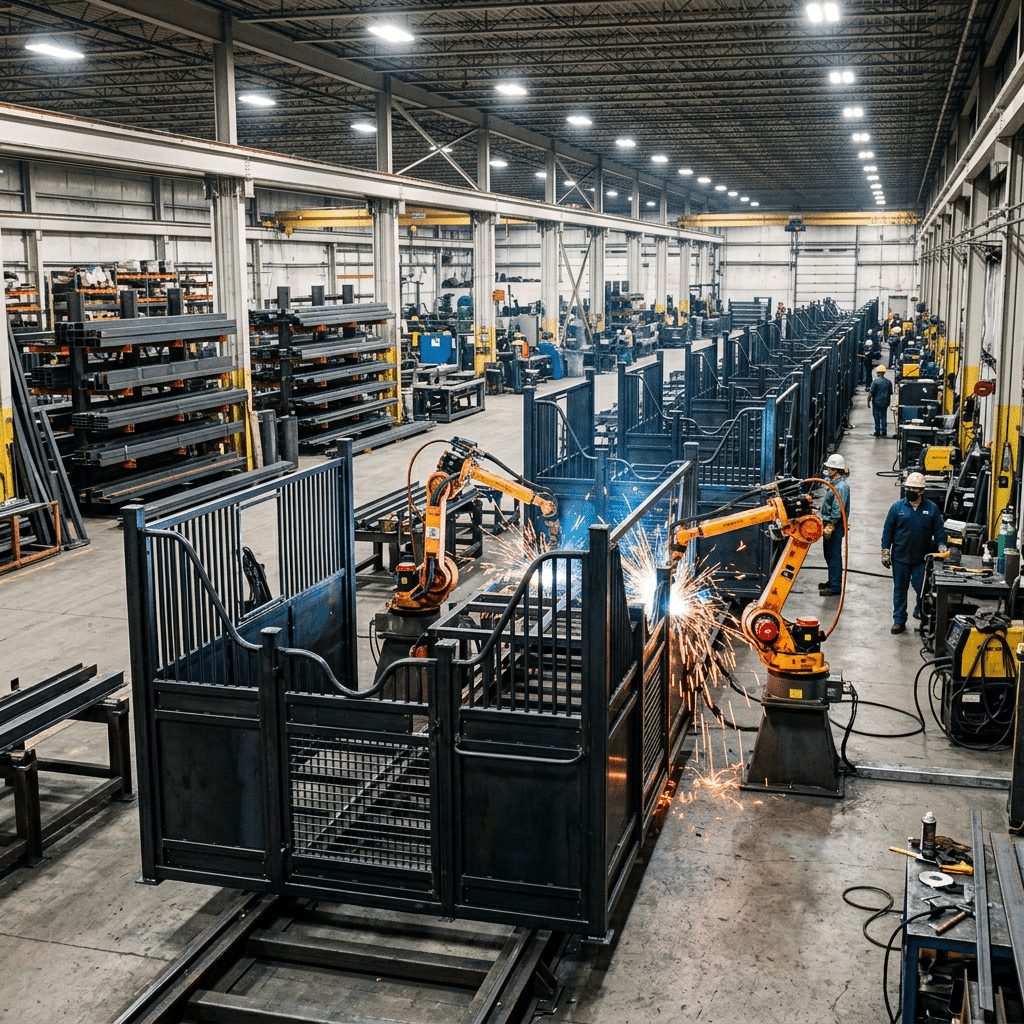
Demystifying Steel Certifications: CE Marking and DIN Standards for Stables
Failure to understand DIN/CE Steel Standards is a direct threat to any EU stable importer’s bottom line. Sourcing structural steelwork without mandatory EN 1090 certification leads to rejected shipments, project-killing delays, and significant financial...
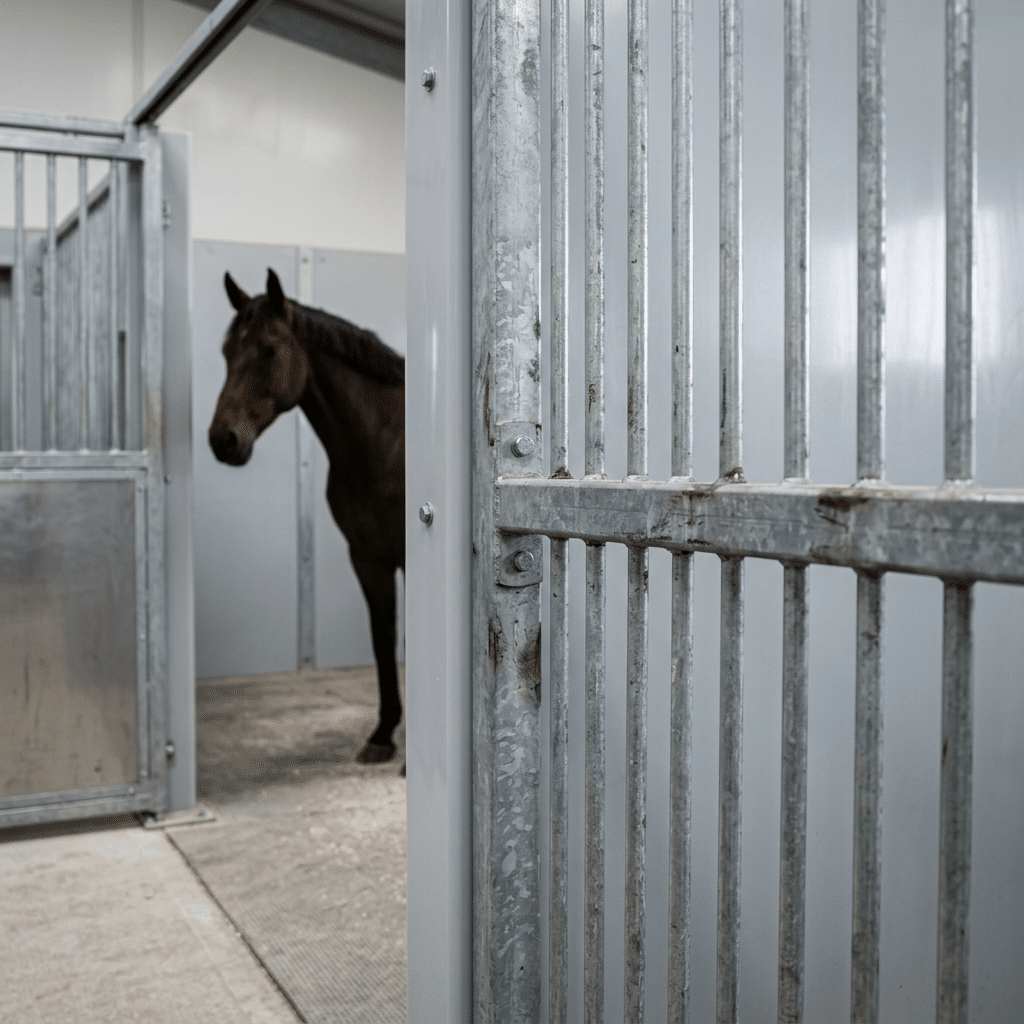
Toxic Barns: The Hidden Dangers of Cheap Paints and Plastics
Evaluating toxicity & chewing risks is a primary liability for any equestrian facility sourcing new stalls. Unverified powder coatings and plastics can expose horses to lead, cadmium, or phthalates, creating significant financial risk from vet bills and premature...
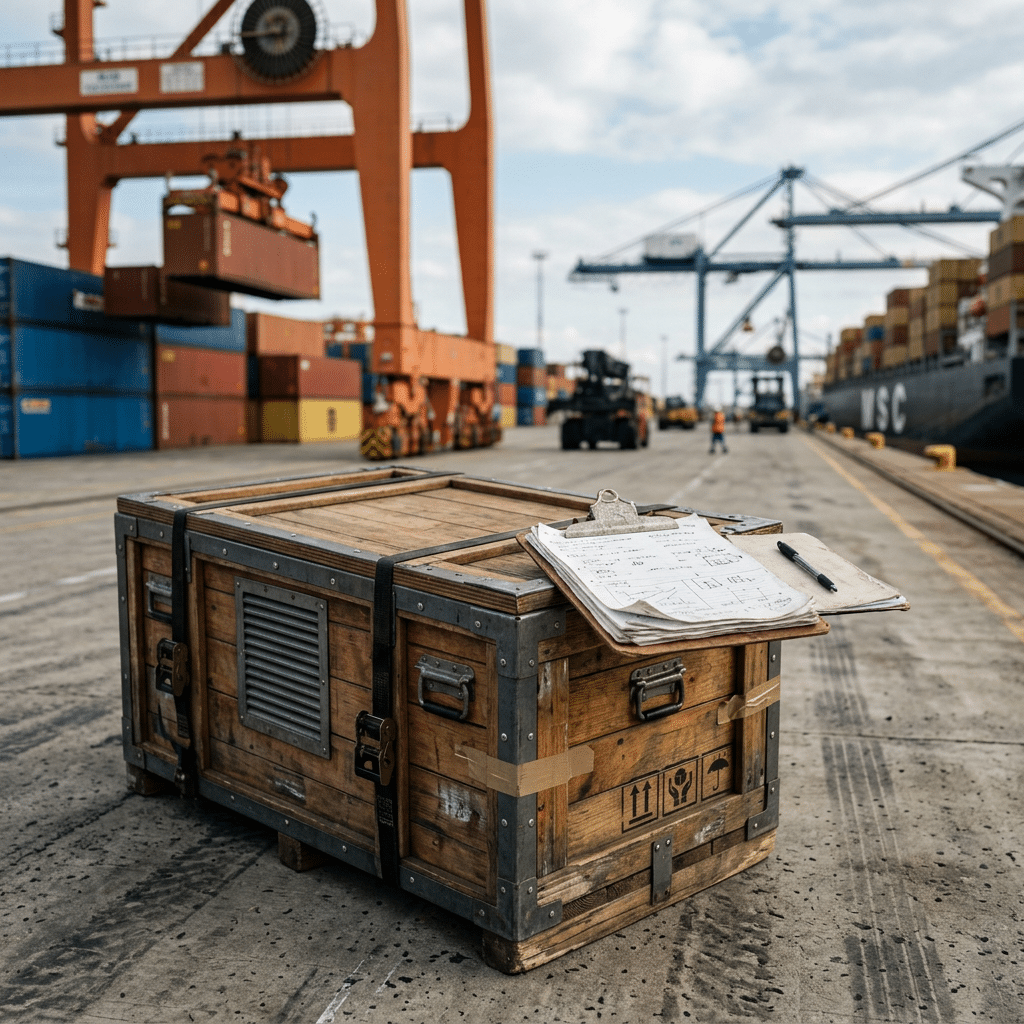
Protecting Your Stable Designs: NDA and OEM Manufacturing in China
Effective IP & White Labeling is the only defense against unauthorized ‘ghost shifts,’ where a partner factory uses your tooling to produce competing products. This single failure point can erase your market position and cripple profit margins before...
Navigating Steel Anti-Dumping Tariffs: Sourcing Stables Smartly
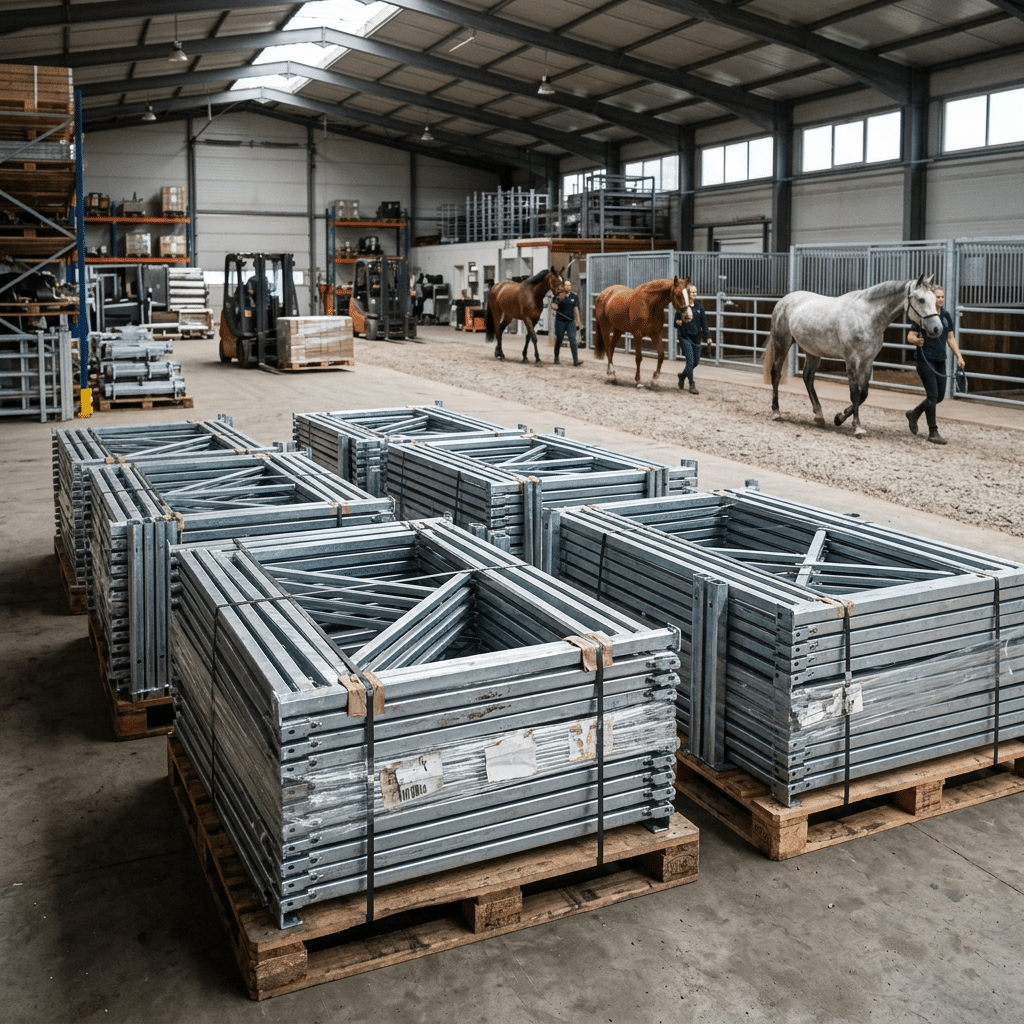
Managing anti-dumping duties remains the primary challenge when importing steel horse stables, where a simple customs error can destroy profitability. A misclassification can subject a shipment to punitive tariffs under Section 232, instantly erasing margins and...
Commercial Liability: How Stall Engineering Prevents Farm Lawsuits
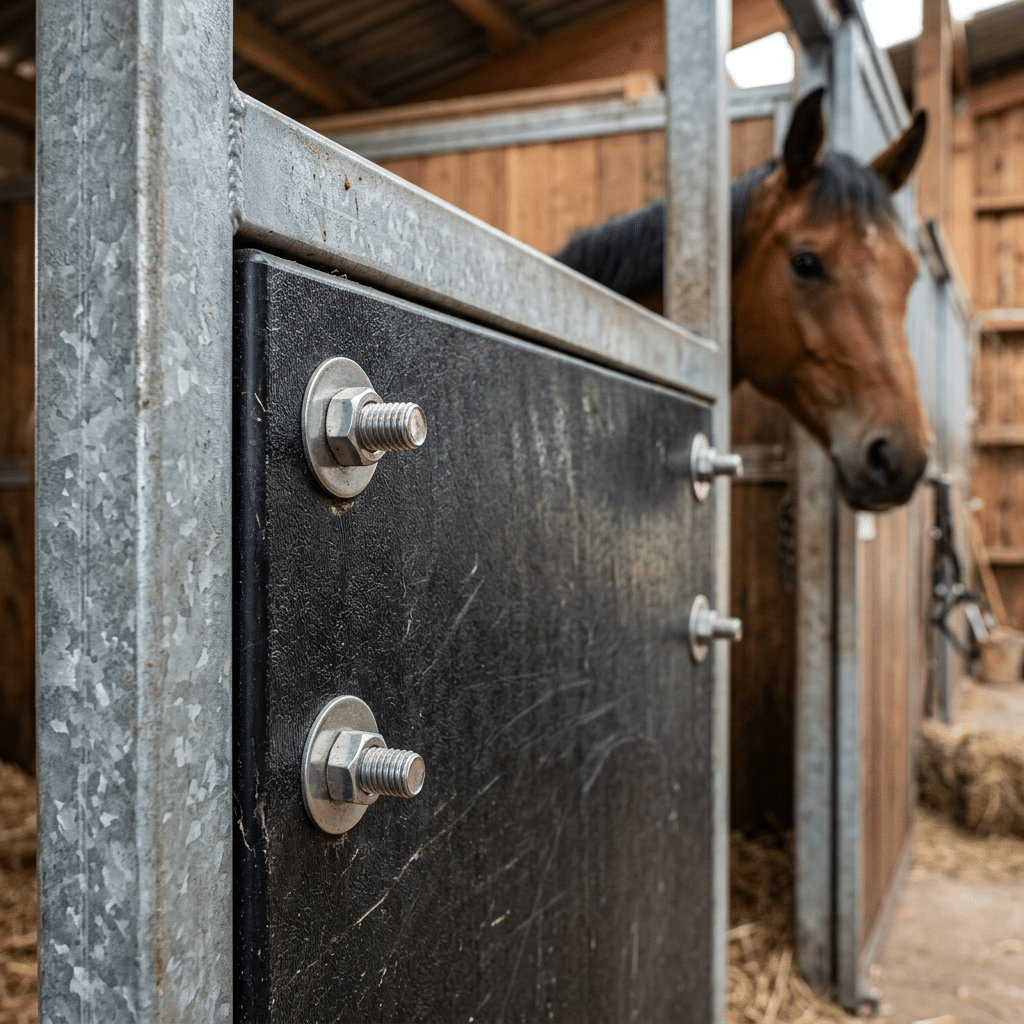
Your liability insurance premiums directly reflect your facility’s documented risk profile. A single horse injury resulting from a weak stall partition can trigger a negligence lawsuit with six-figure penalties, making proof of reasonable care your only...
The Wooden Crate Trap: Why We Only Ship on Steel Pallets
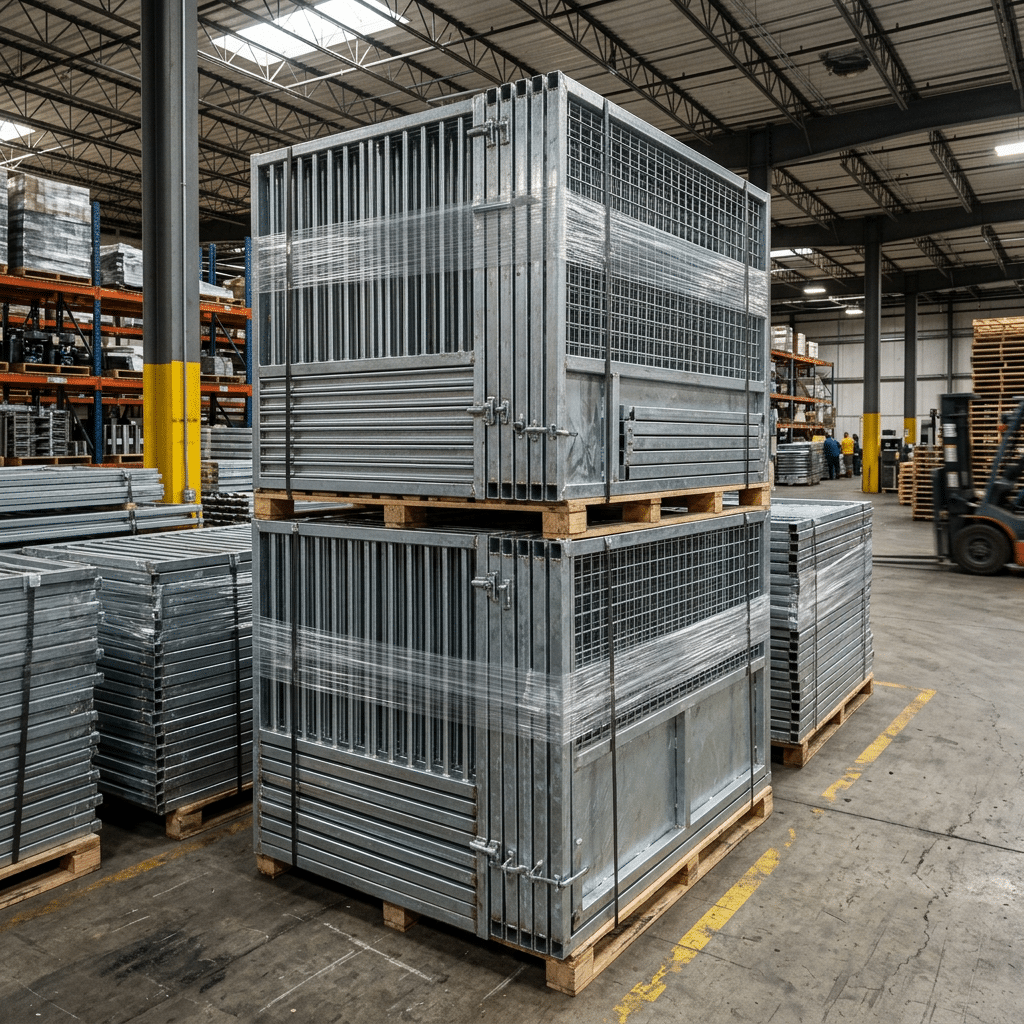
Non-compliant packaging remains a leading driver of expenses for steel product importers. When shippers rely on standard wood crates, they expose themselves to quarantine delays and fumigation fees alongside the significant risk of structural failure under weight....
Lowering Commercial Barn Insurance: How Steel Stalls Cut Your Premiums
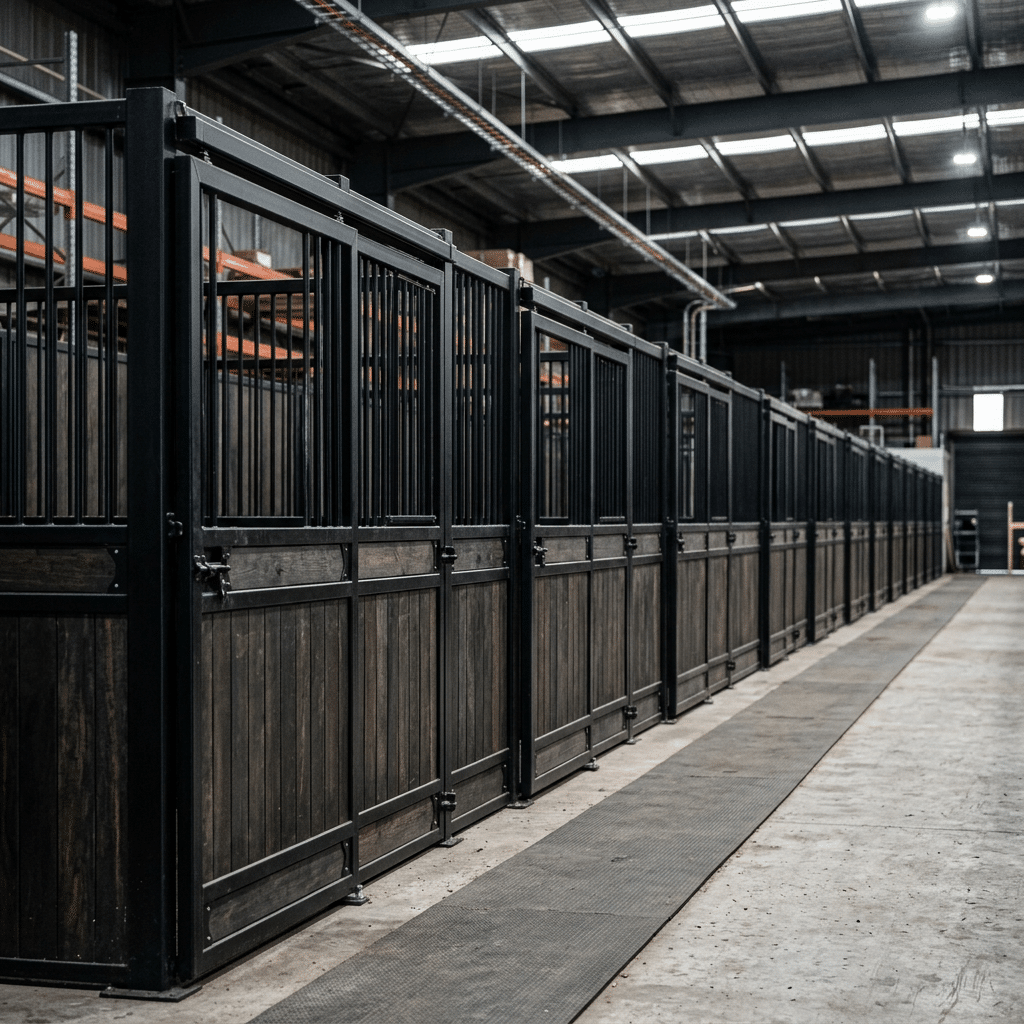
Commercial insurance premiums for equestrian facilities are driven by two primary risks: catastrophic fire spread and high-cost veterinary claims. A barn built with traditional combustible materials is automatically classified as a high-risk asset, leading to...
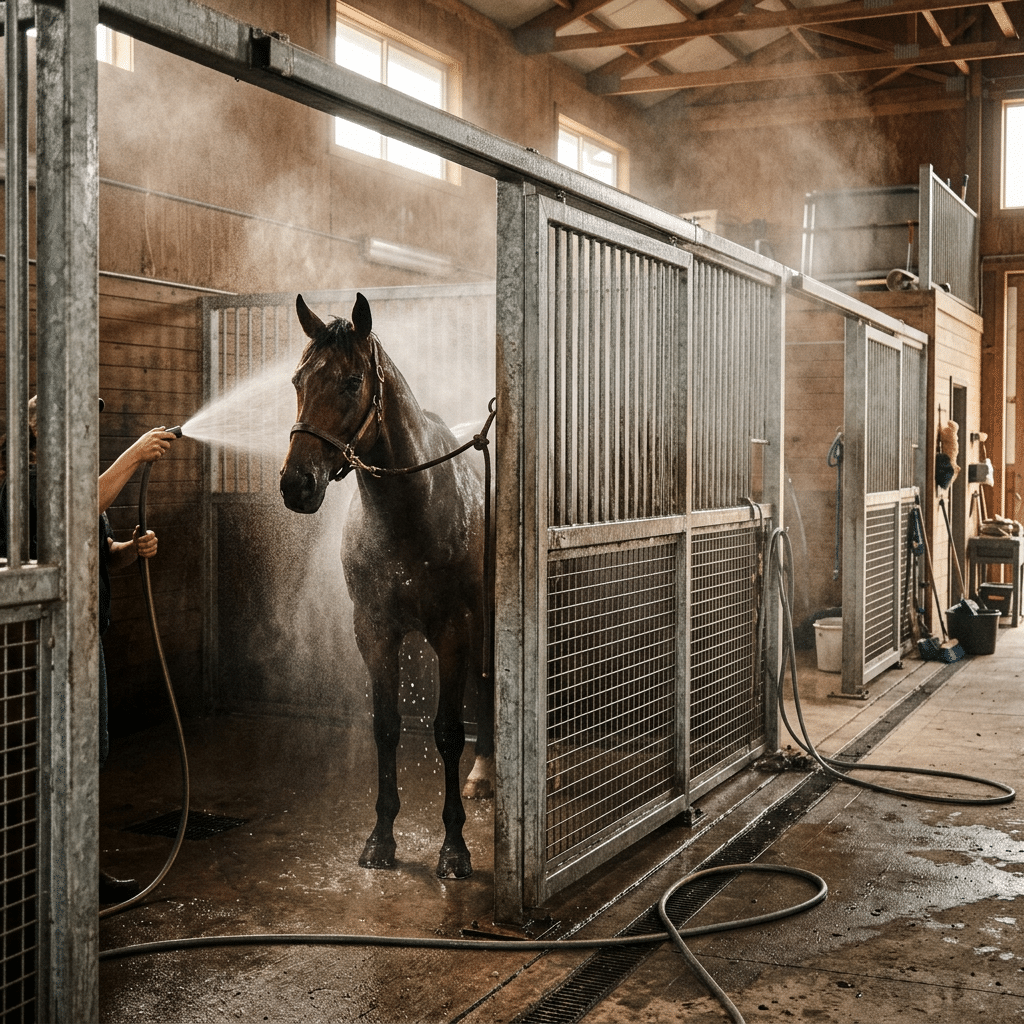
How to Fix the “Never-Ending” Ammonia Smell in Horse Stalls
The persistent ammonia smell in horse stalls is a direct indicator of urine absorption into porous flooring and walls. This trapped moisture not only fuels bacteria but also causes structural rot and corrosion, leading to costly repairs and compromising the long-term...
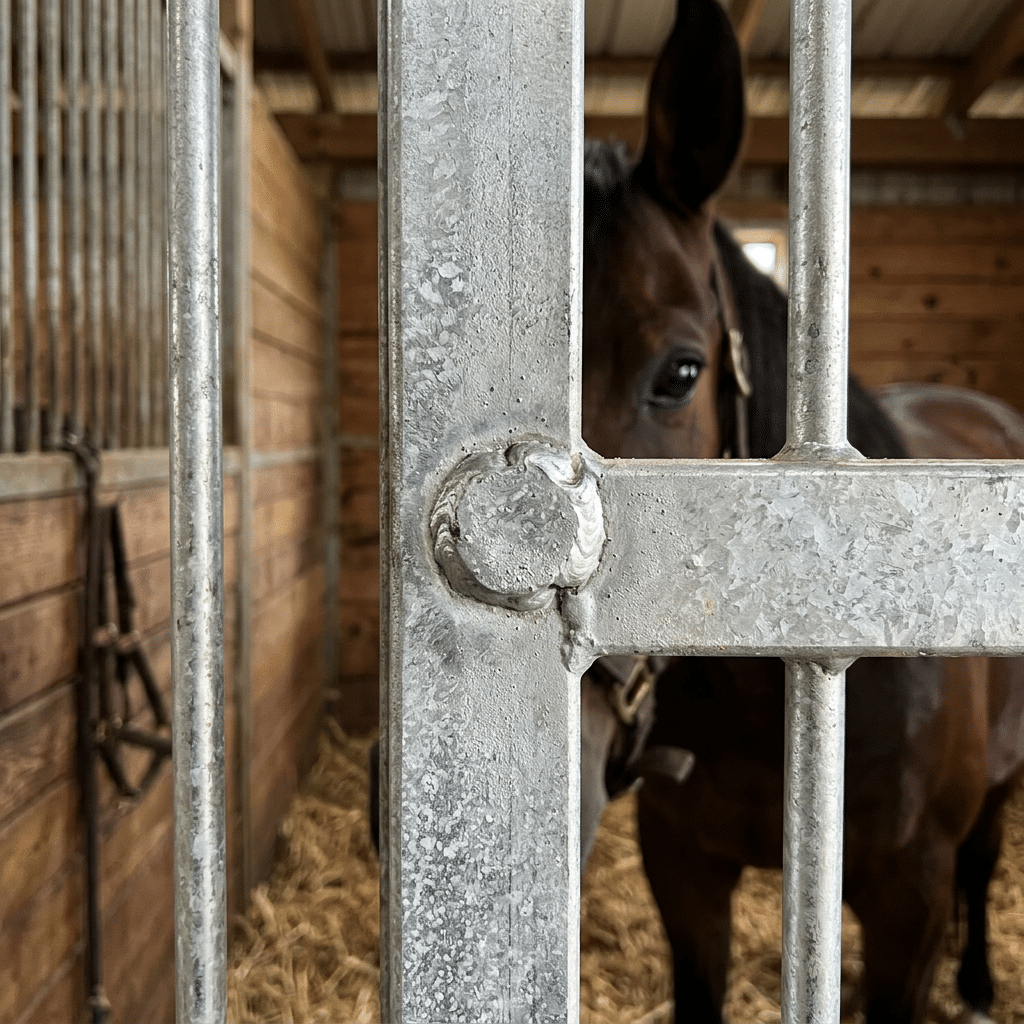
Property Appraisal: How Modular Stables Increase Equestrian Real Estate Value
Accurate asset valuation for equestrian properties depends on separating fixed liabilities from movable assets. A permanent timber barn is a sunk cost, with appraisers consistently devaluing structures due to wood rot—a risk that directly lowers a farm’s market...
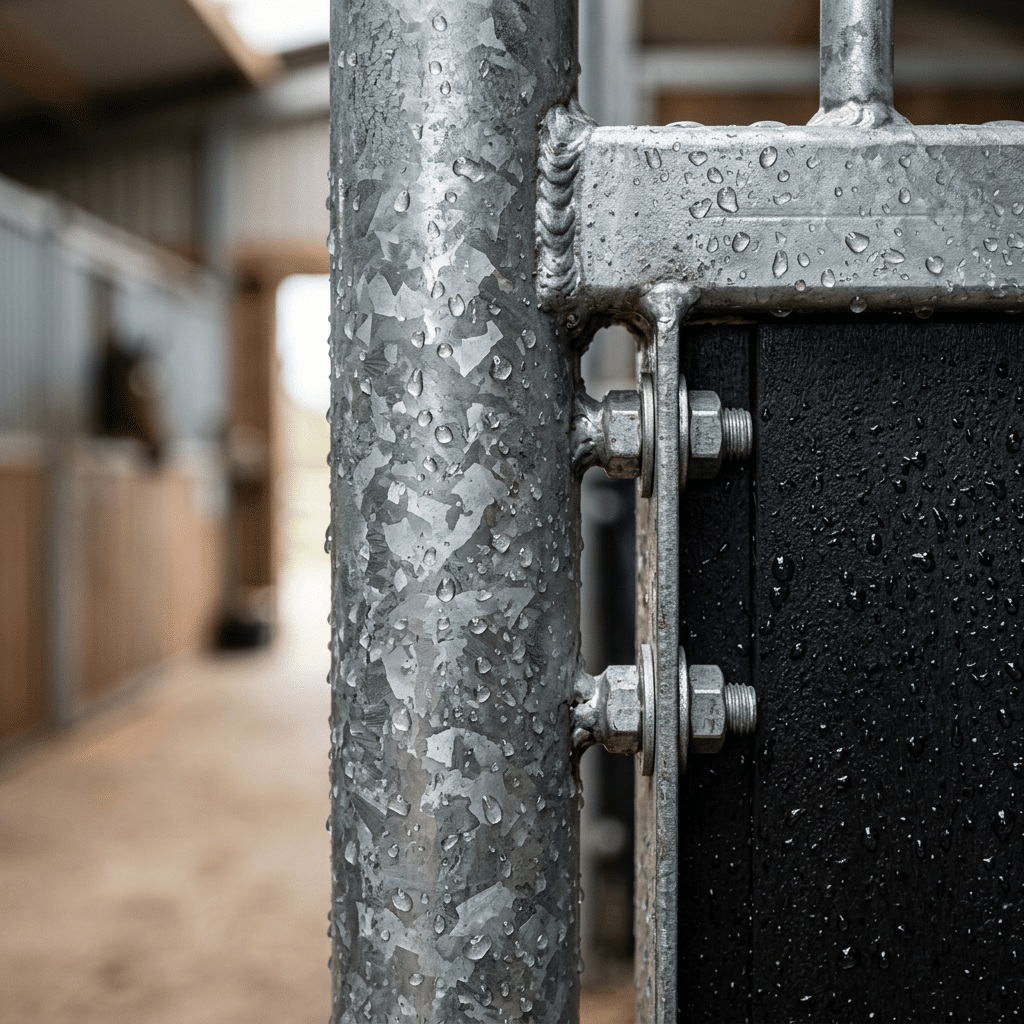
Stall Weaving & Pawing: Hardware Solutions for Anxious Horses
Confinement stress leads to destructive behaviors like pawing and weaving that cause cumulative damage to standard horse stalls. These repetitive impacts create material fatigue, resulting in bent bars and broken welds that become a recurring maintenance cost and a...
Disaster Recovery: Surviving Barn Flooding with HDPE and Hot-Dip Zinc
Flood recovery success is determined by material choices made long before the storm. When saltwater or standing water hits, traditional wood stalls swell and rot, while common steel corrodes at the welds. This material failure turns a recoverable event into a...
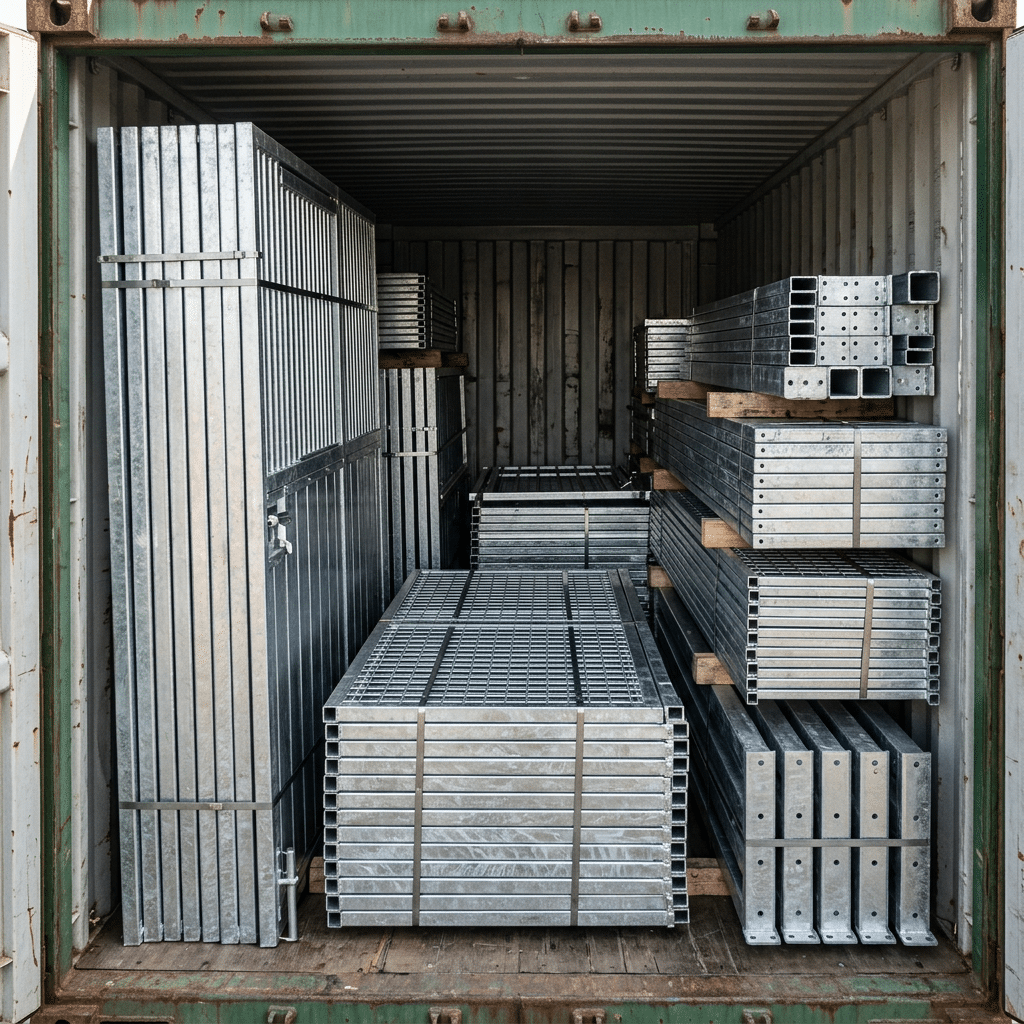
Fixing Jammed Sliding Barn Doors: Exposed Wheels vs. Hidden Tracks
Jammed barn doors are a primary source of post-installation complaints and warranty claims for stable outfitters. Standard exposed track systems inevitably clog with hay and dust, causing operational failures that damage a distributor’s reputation for supplying...
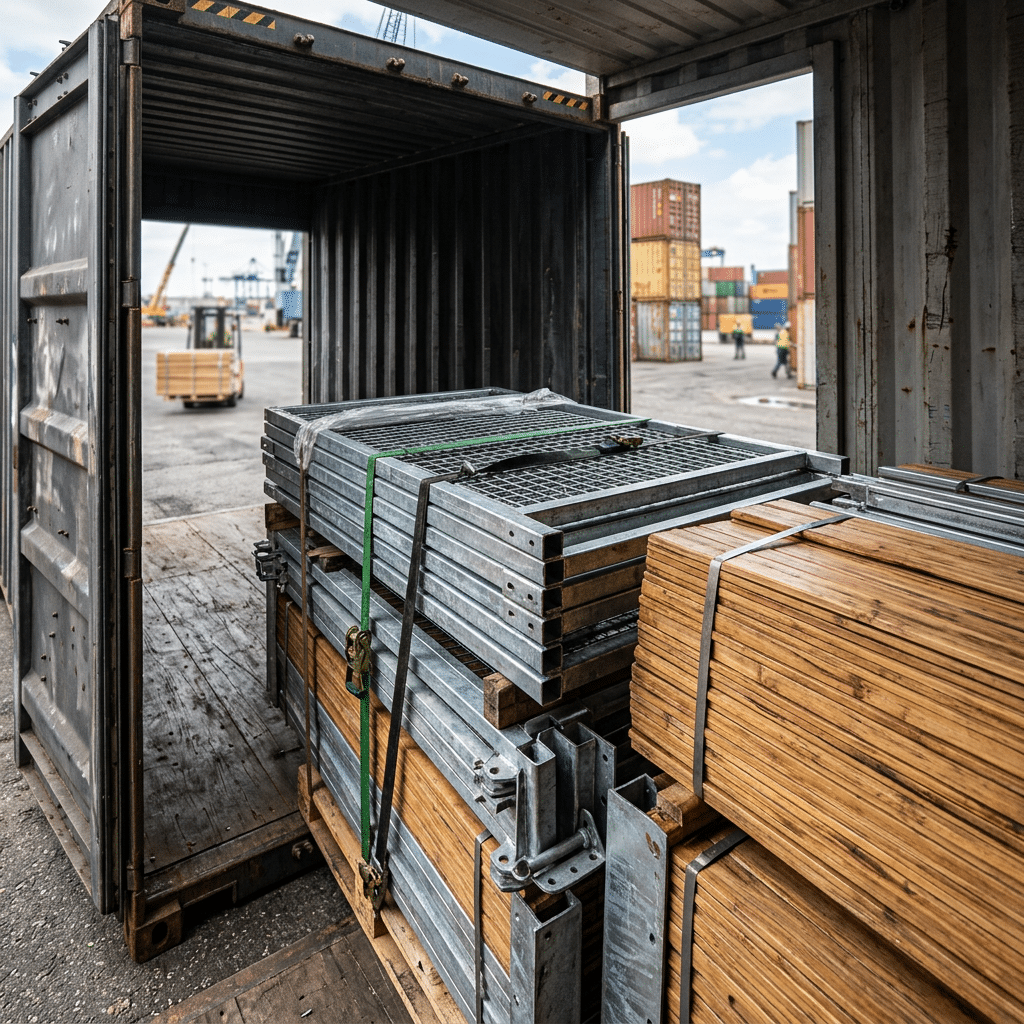
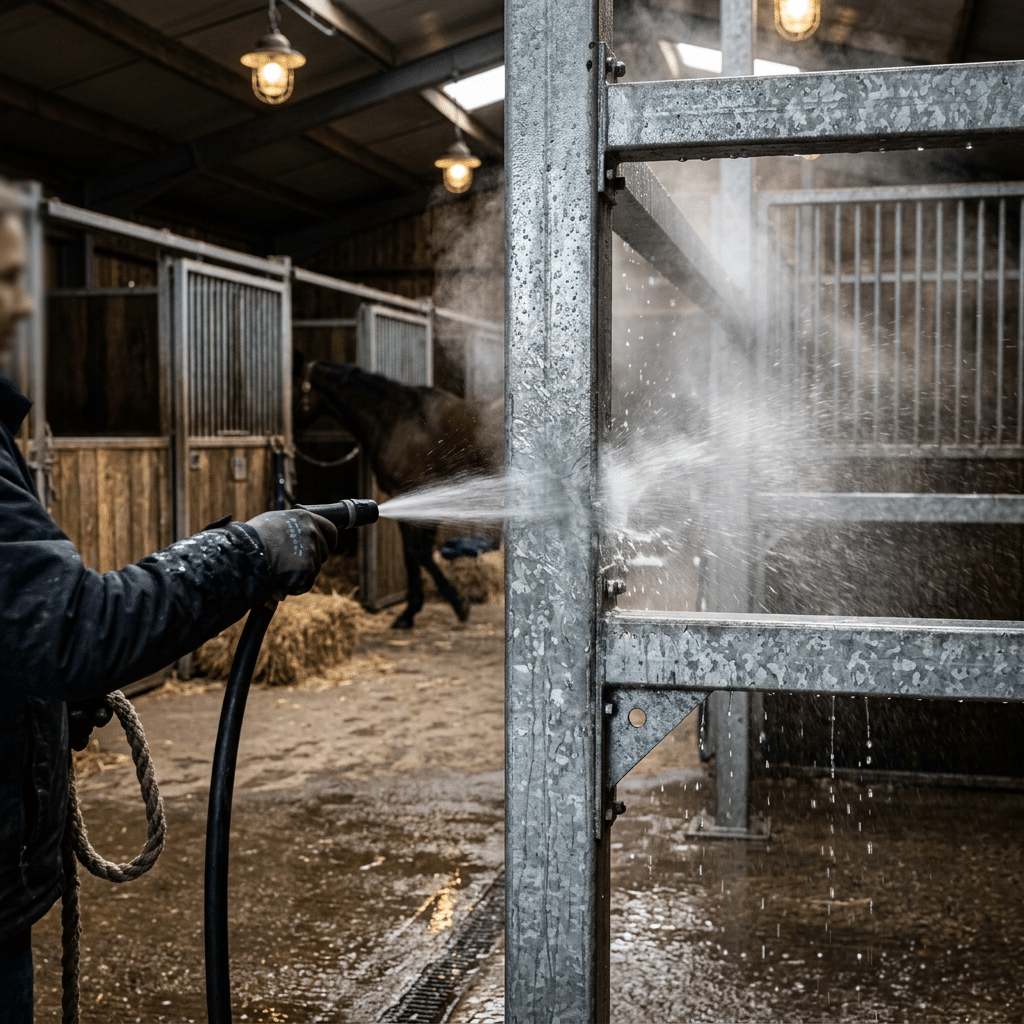
The Annual Pressure Wash: How to Sanitize Stables Without Causing Rust
The annual pressure washing of stables shouldn’t trigger immediate rust, yet many operators see it bloom on welds. This defect isn’t a maintenance issue; it’s a manufacturing shortcut using pre-galvanized steel that directly leads to warranty claims...
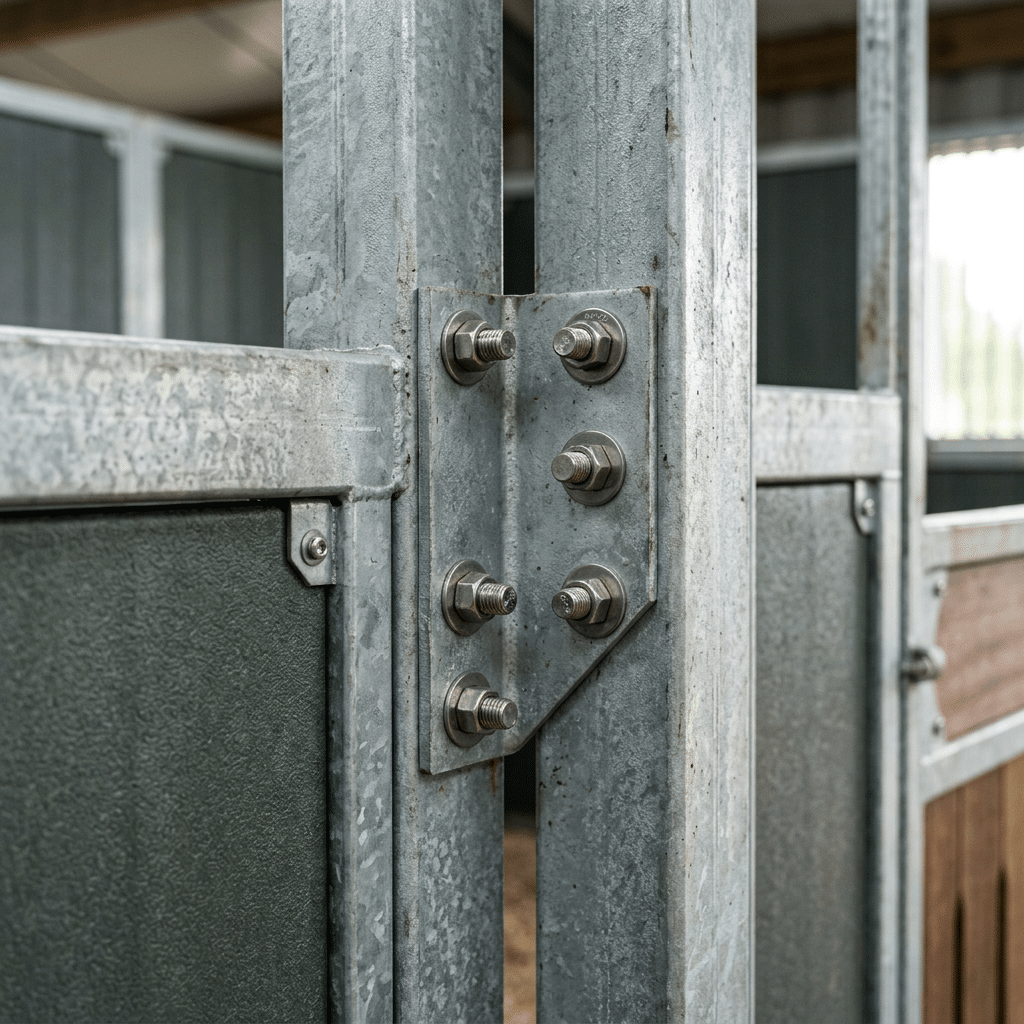
Eliminating Splinter Colic: The Hidden Danger of Chewed Pine Boards
Splinter colic is a preventable emergency directly linked to cheap pine boards in horse stalls. This single material choice can escalate a simple chewing habit into a $10,000 surgical procedure, a catastrophic cost that often exceeds standard insurance limits and...
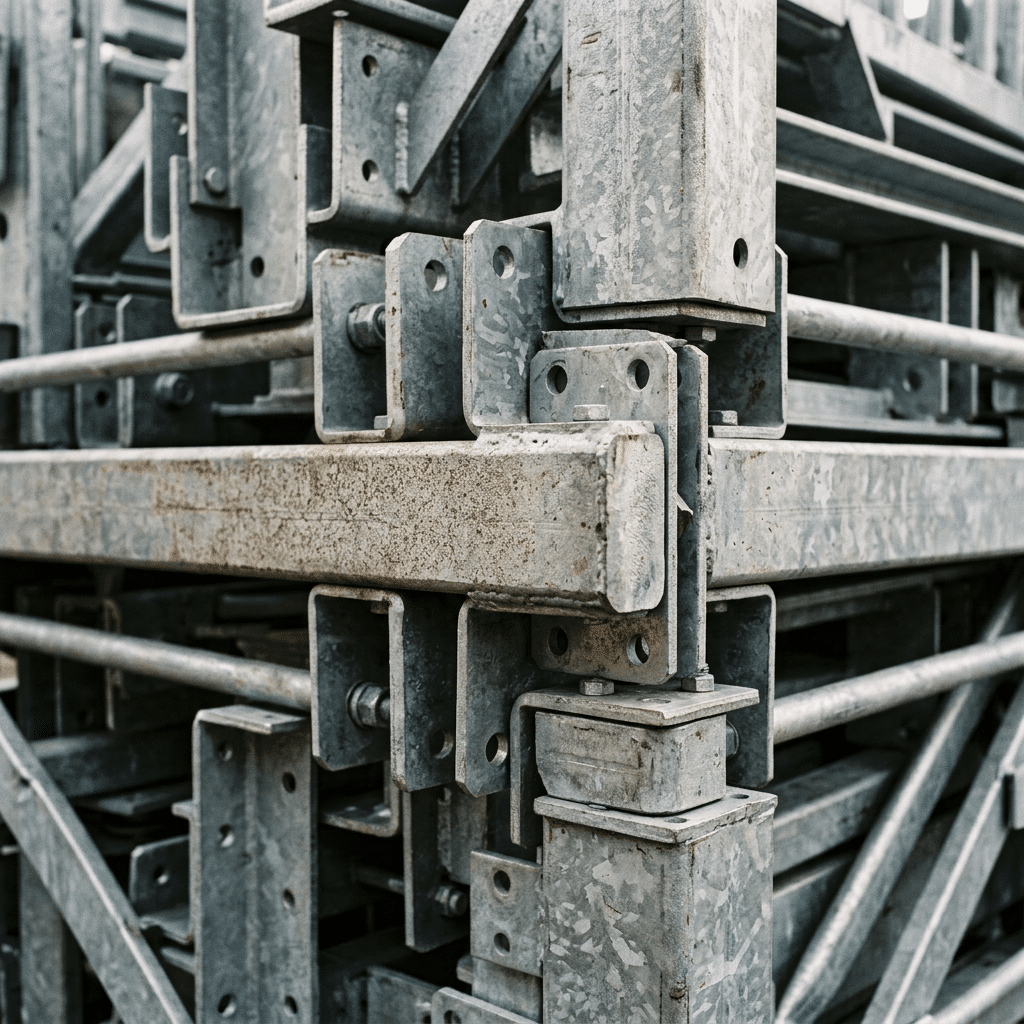
Horse Stall Fans: Do You Really Need Them Running 24/7?
The reliance on stall fans for airflow is a critical liability issue for barn builders and facility managers. Standard fans create a severe fire hazard from dust-clogged motors and circulate airborne particles that damage equine respiratory health. This approach turns...
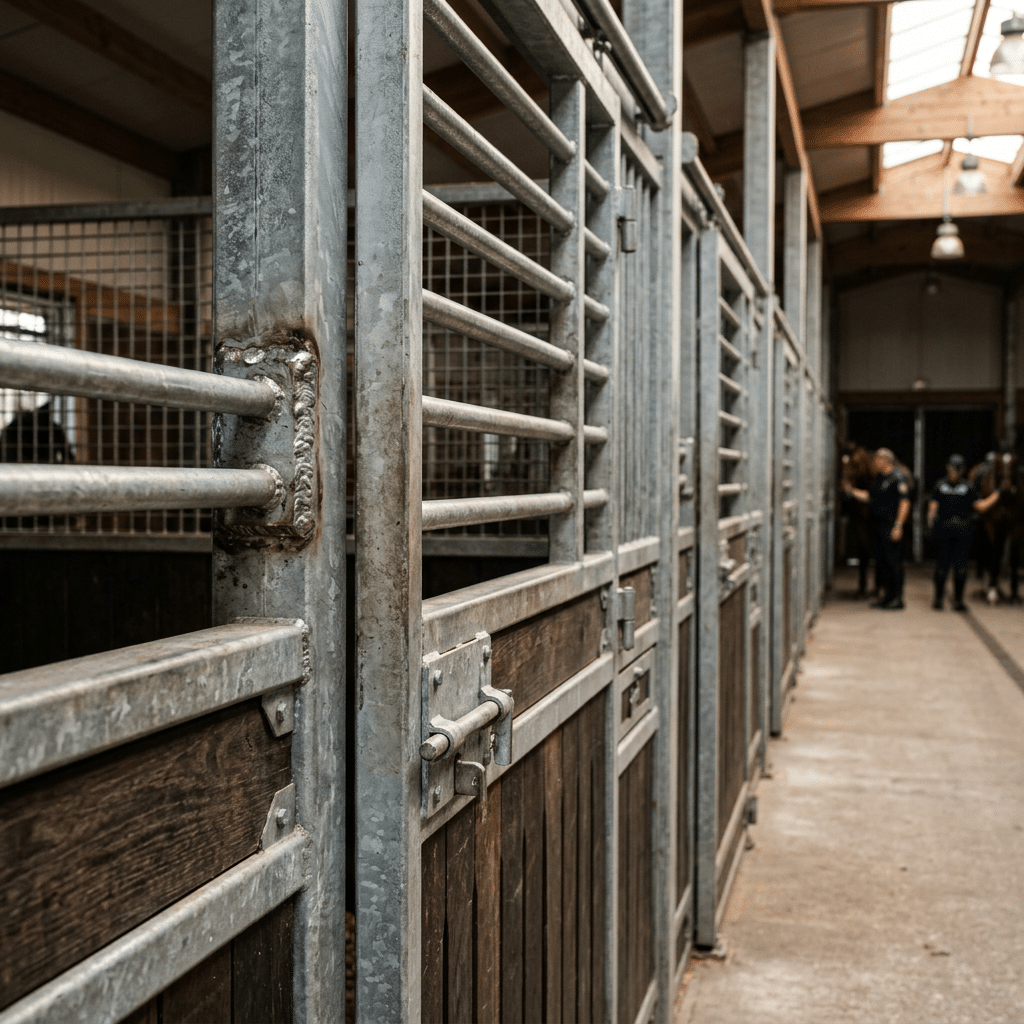
Shaving 30 Minutes Off Mucking: Aisle Clearance and Tractor Workflow
Real mucking efficiency isn’t about a better wheelbarrow; it’s about eliminating it entirely. Barn designs that fail to accommodate tractor workflow lock in decades of high labor costs and staff turnover, directly reducing a facility’s long-term...
Pesadilla invernal: cómo evitar que se congelen los bebederos automáticos a -20 °C
Preventing frozen auto waterers addresses only one part of winter risk; the greater danger is catastrophic structural failure when standard materials turn brittle at -20°C. A single kick against a frozen Q235B steel post can cause a brittle fracture, creating a direct...
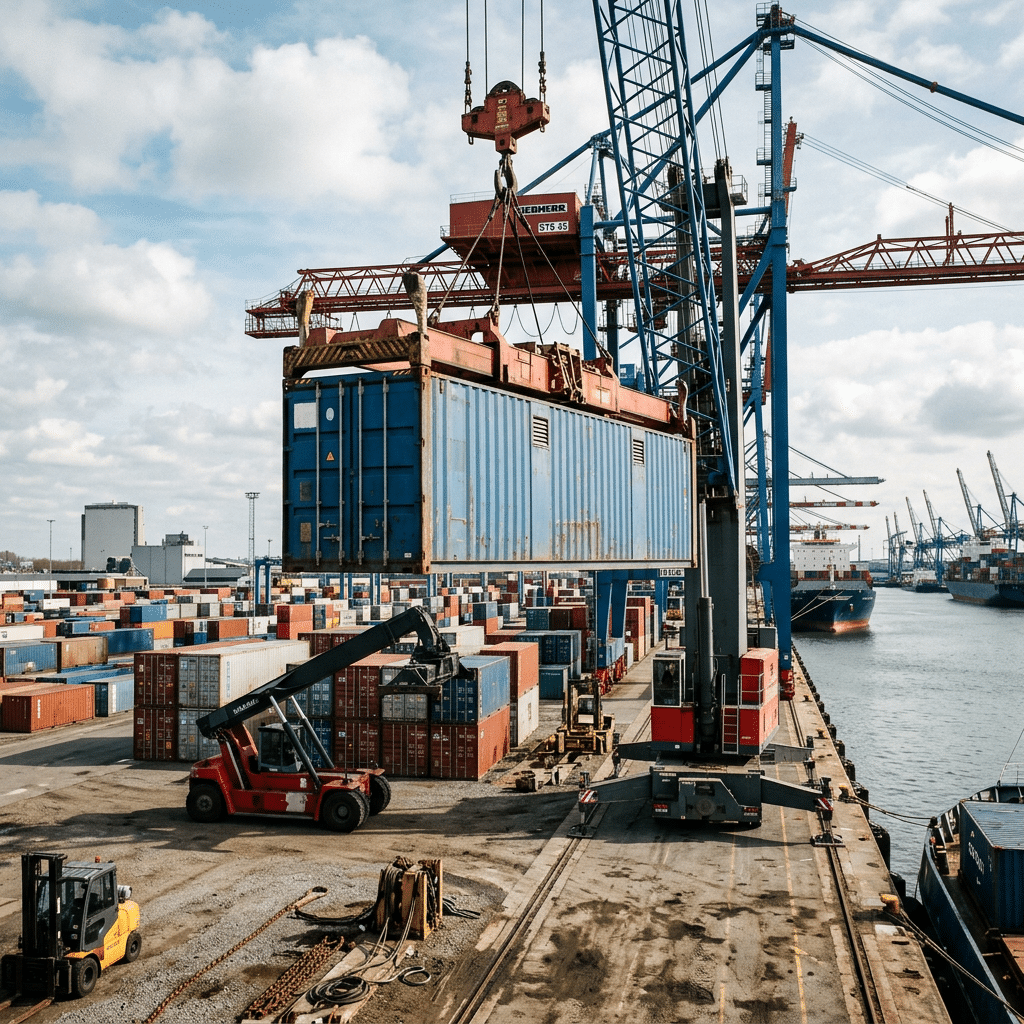
The Cast Horse Emergency: Why 50mm Bottom Gaps Save Lives
A Cast Horse Emergency is a direct result of failed stable engineering, not random chance. Stalls built with bottom gaps larger than 50mm create a documented lethal trap, exposing facility owners and equipment distributors to significant liability. When a...
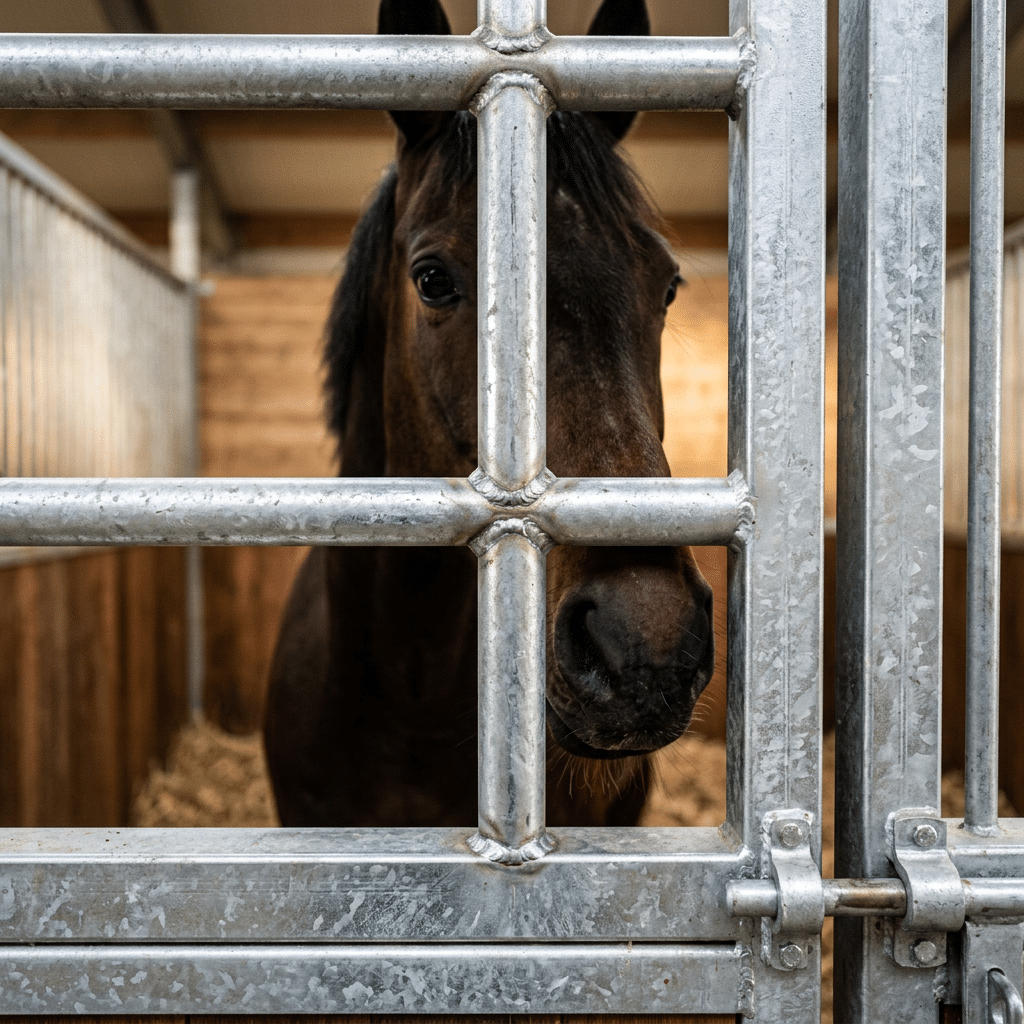
“I Can’t Open the Door”: The Labor Cost of Rusted Barn Hardware
Rusted fasteners are the single most common point of failure in stable systems, turning a $2 hardware choice into a $100 emergency labor bill. The corrosive mix of ammonia and moisture guarantees standard zinc-plated bolts will seize, leading to predictable and costly...
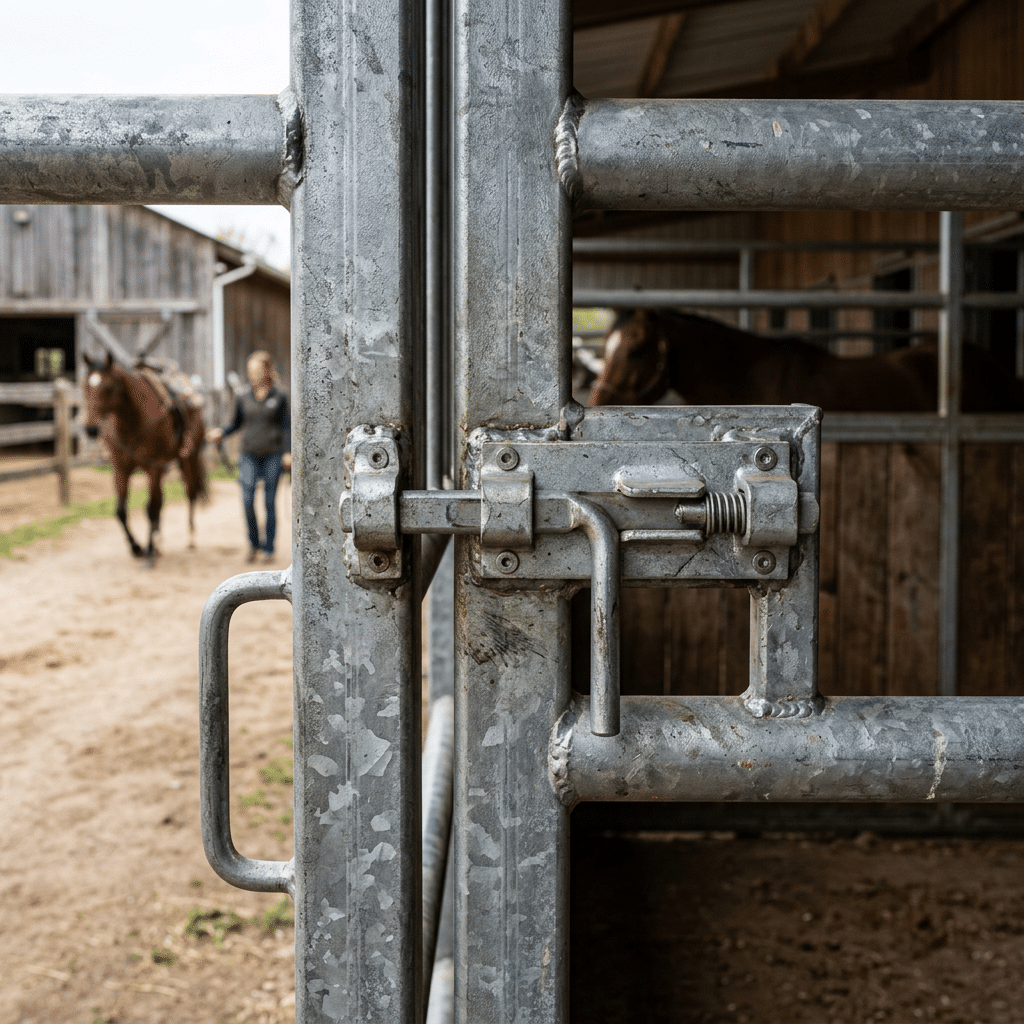
Top 5 Custom Stall Front Manufacturers for Barn Renovations (2026)
Sourcing custom stall fronts is the primary defense against installation failure in older barn renovations. Forcing a standard-sized front into a settled timber structure requires on-site welding, a step that destroys the factory rust protection, guarantees premature...
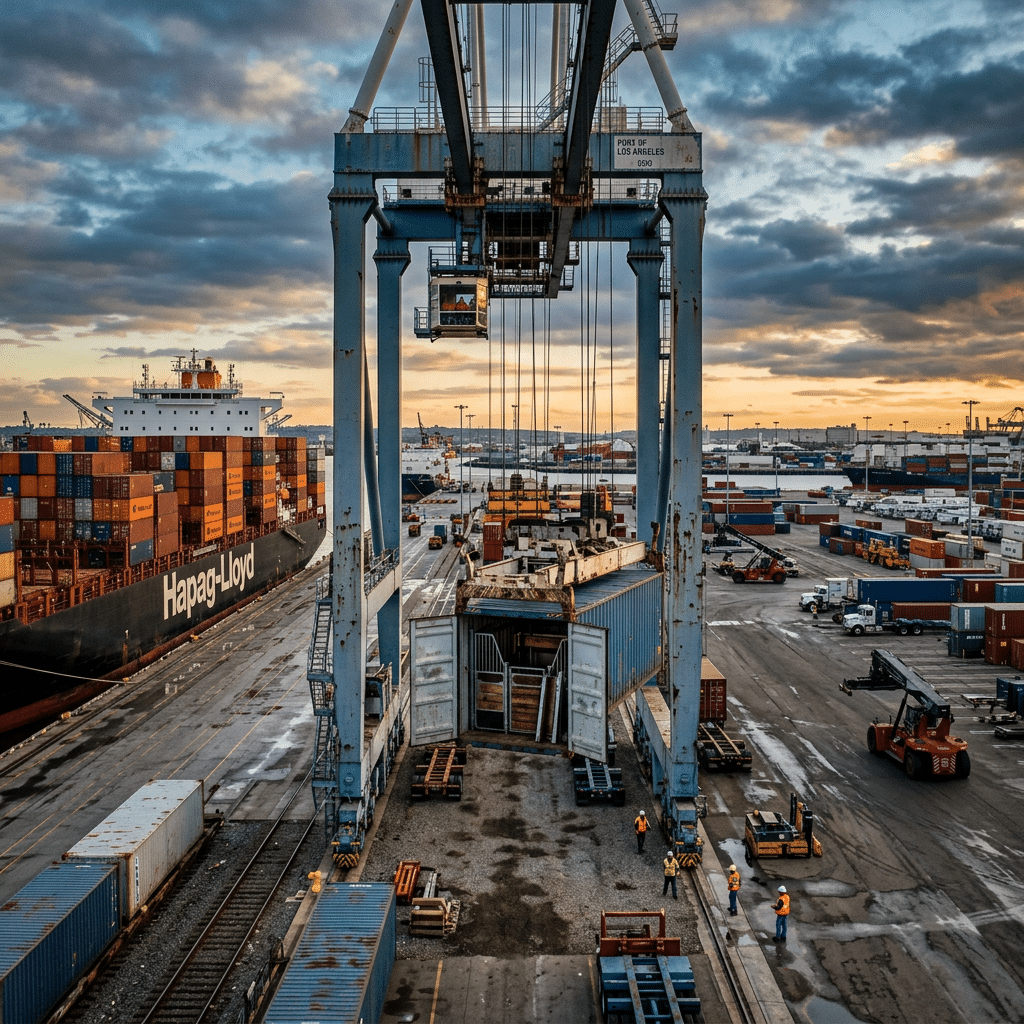
Best Prefabricated Indoor Horse Stall Kits (No Welding Required)
Sourcing Prefab Stall Kits involves a critical choice between high freight costs and unpredictable on-site labor. Fully welded systems can cut container capacity by over 60%, while kits requiring field welding transfer safety liabilities and hidden expenses to the...
Top Heavy-Duty Stall Manufacturers for Stallions and Draft Horses
Sourcing proper Stallion Stables requires looking past unregulated “heavy duty” marketing to prevent catastrophic failures. Stalls built with inadequate steel gauge create significant liability risks from animal injury and expensive structural...
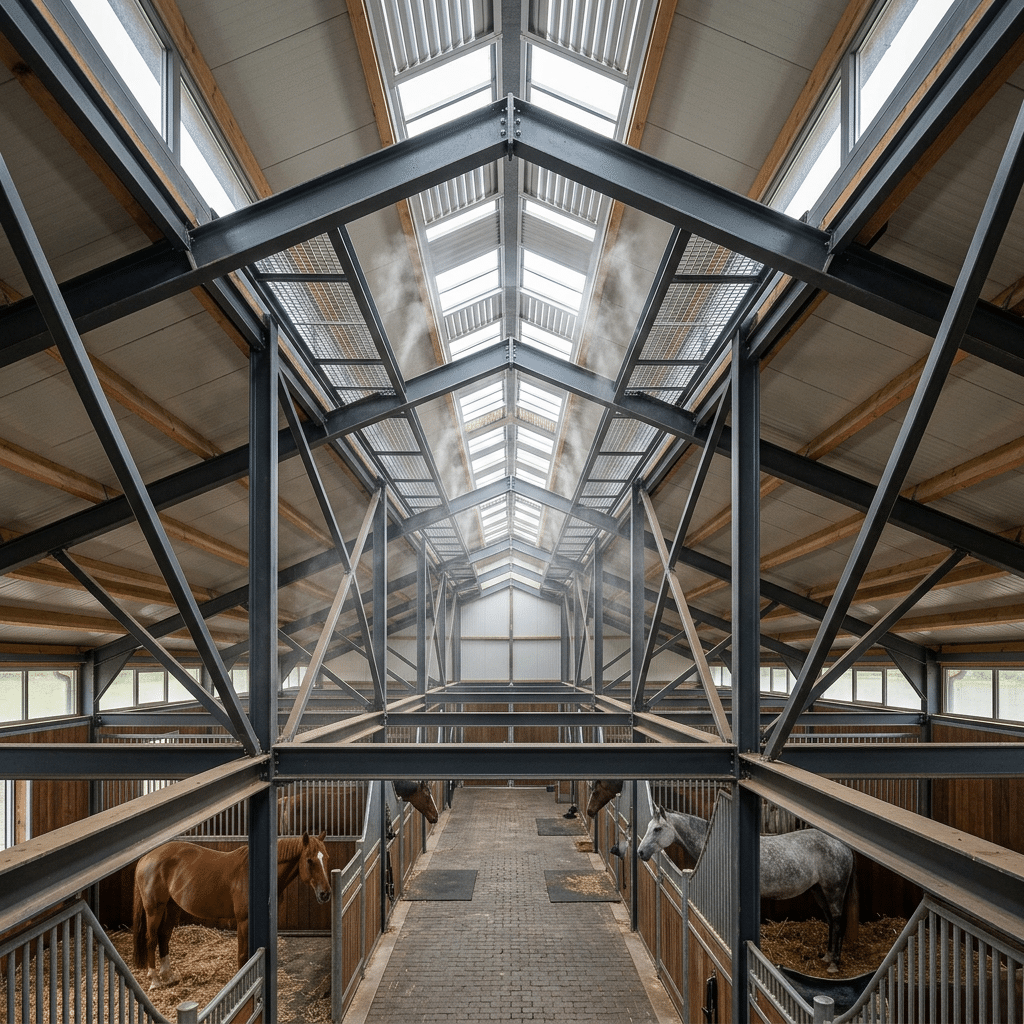
Best Waterproof Stable Manufacturers for Wash Bays & Vet Clinics
Sourcing true Waterproof Vet Stalls is the primary defense against biosecurity failures and premature structural rot. Specifying porous materials creates unacceptable patient safety risks, exposing clinical facilities to costly liability and reputational damage from...
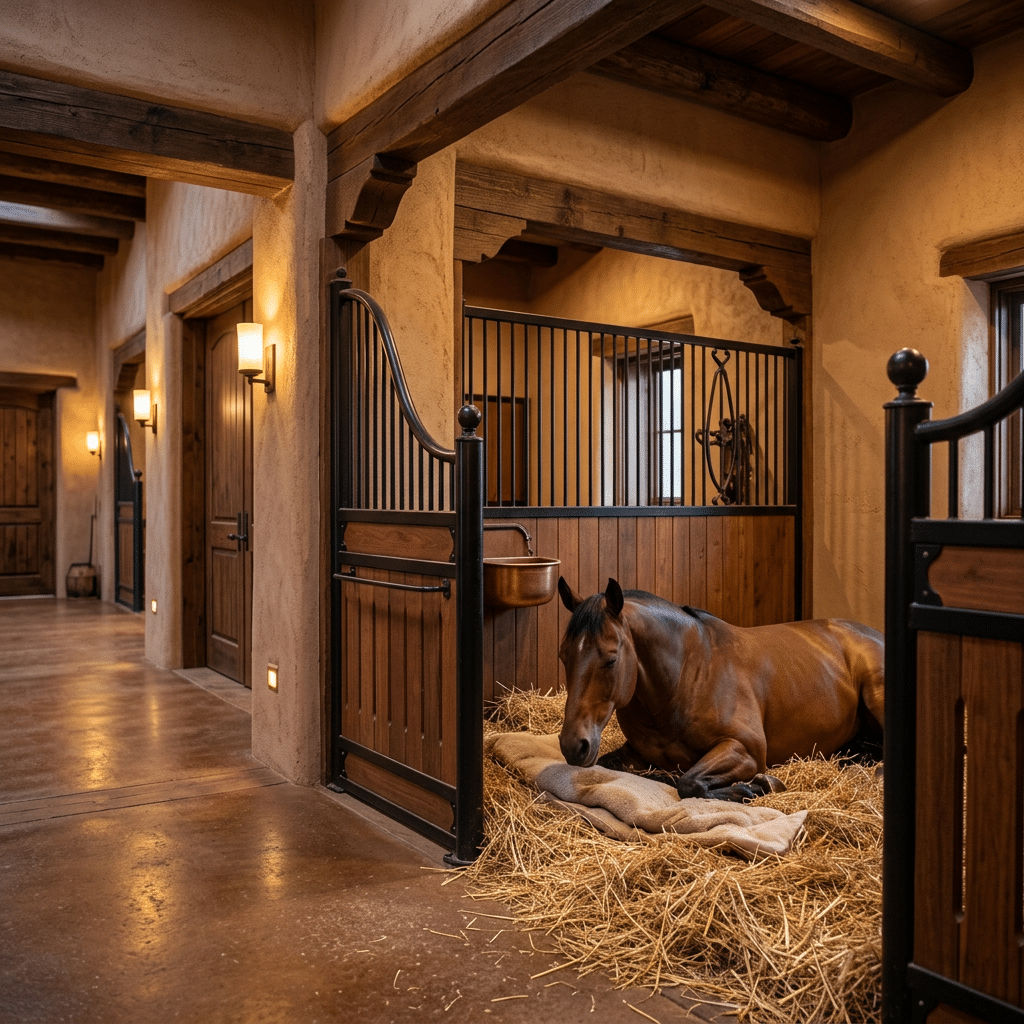
Leading Sustainable Stable Manufacturers Using Bamboo Infill
Finding reliable Bamboo Stable Suppliers is critical to avoiding project failures tied to inferior materials. Specifying low-density bamboo that fails durability tests leads to costly warranty claims and damages professional reputations, especially on projects...
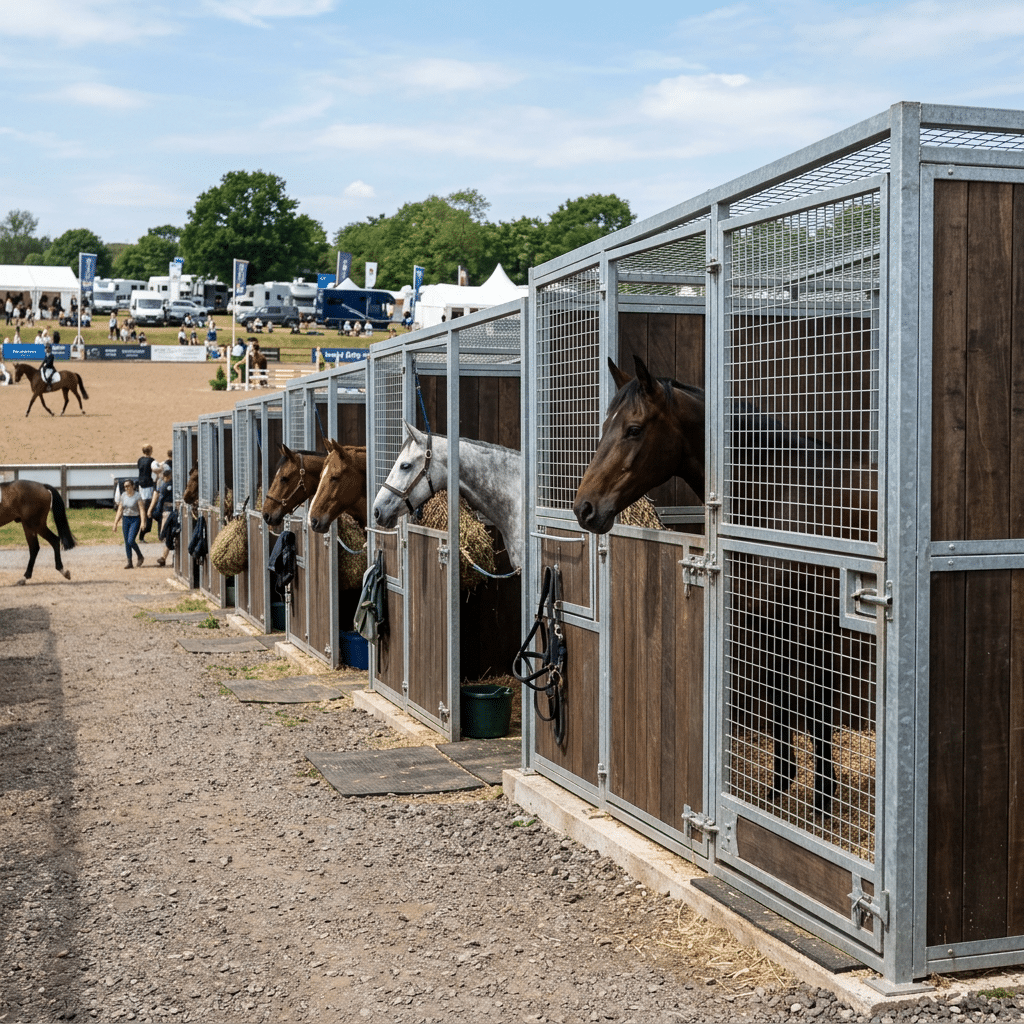
Top ISO 1461 Certified Galvanized Stable Factories in Asia
Sourcing true Hot-Dip Galvanized stables is a critical defense against the warranty claims that follow pre-galvanized product failures. Cheaper alternatives that weld pre-coated tubes burn off protection at every joint, hiding the inevitable rust points under a thin...
Top White-Label (OEM) Stable Factories for Global Distributors
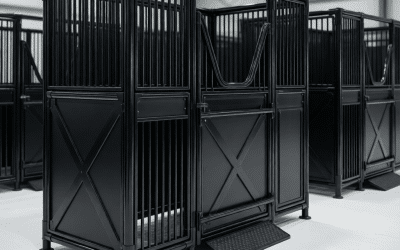
Finding a true White-Label (B2B) partner is the primary defense against the two biggest threats to distributor profit: logistics costs and warranty claims. Sourcing fully-welded stables can inflate freight expenses by over 60%, while inferior galvanization inevitably...
Best Alternatives to Expensive European “Royal” Barn Manufacturers
Sourcing luxury “Royal” stalls without the high European price tag is a direct challenge to distributor profit margins. Many alternatives fail by cutting corners on corrosion protection, leading to peeling finishes and costly warranty claims that damage...
Top Horse Stall Flooring Suppliers: Buying Mats with Your Stables
Sourcing from the right Rubber Mat Providers is critical to avoid freight costs that destroy distributor margins. Shipping dense mats as a standalone product is a major financial risk, with volatile maritime rates and hidden surcharges often adding over 60% to the...
Plunger Latches vs. Gravity Latches: Defeating the Equine Escape Artist
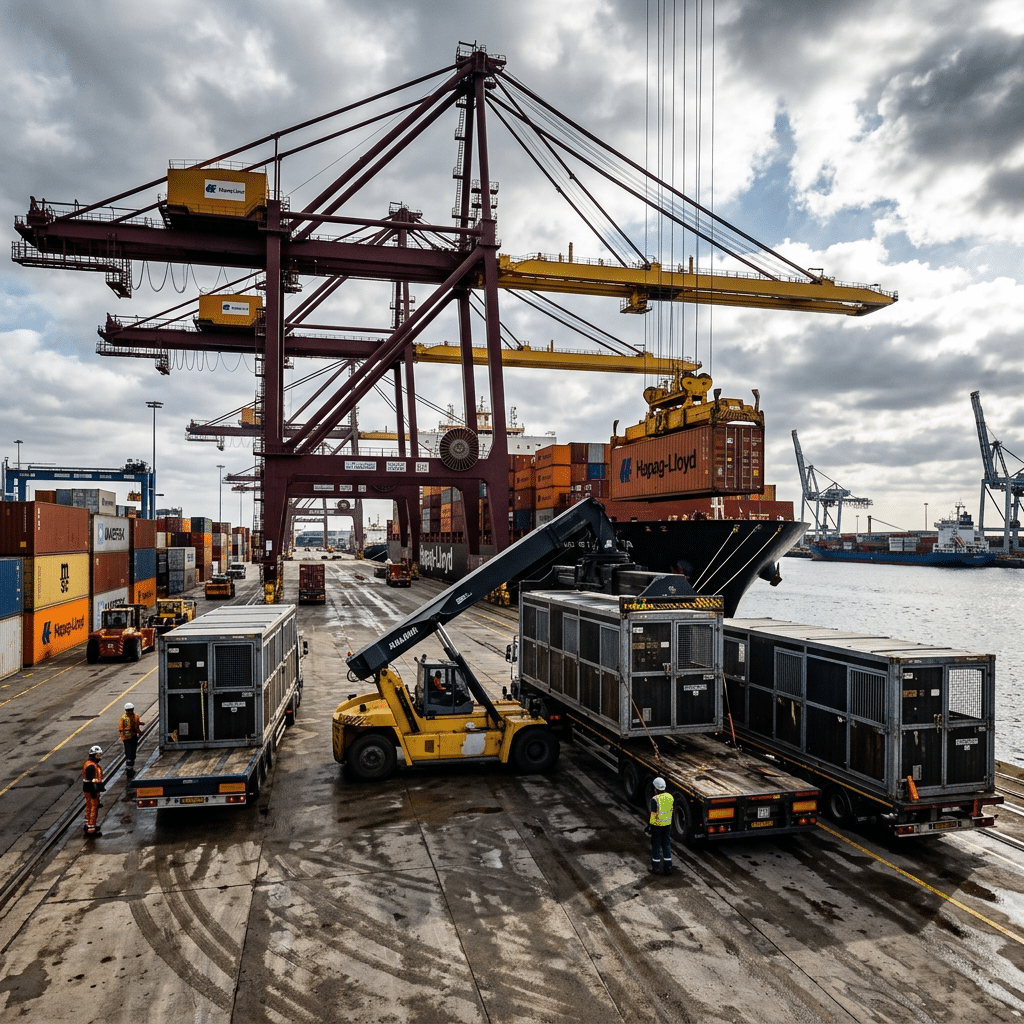
Stable latches are a critical failure point that directly impacts both liability and operational safety. Choosing a simple gravity latch over a secure plunger system might seem cost-effective, but it exposes a facility to risks ranging from animal injury claims to...
The EHV-1 Lockdown: Disinfecting Your Barn Without Destroying It
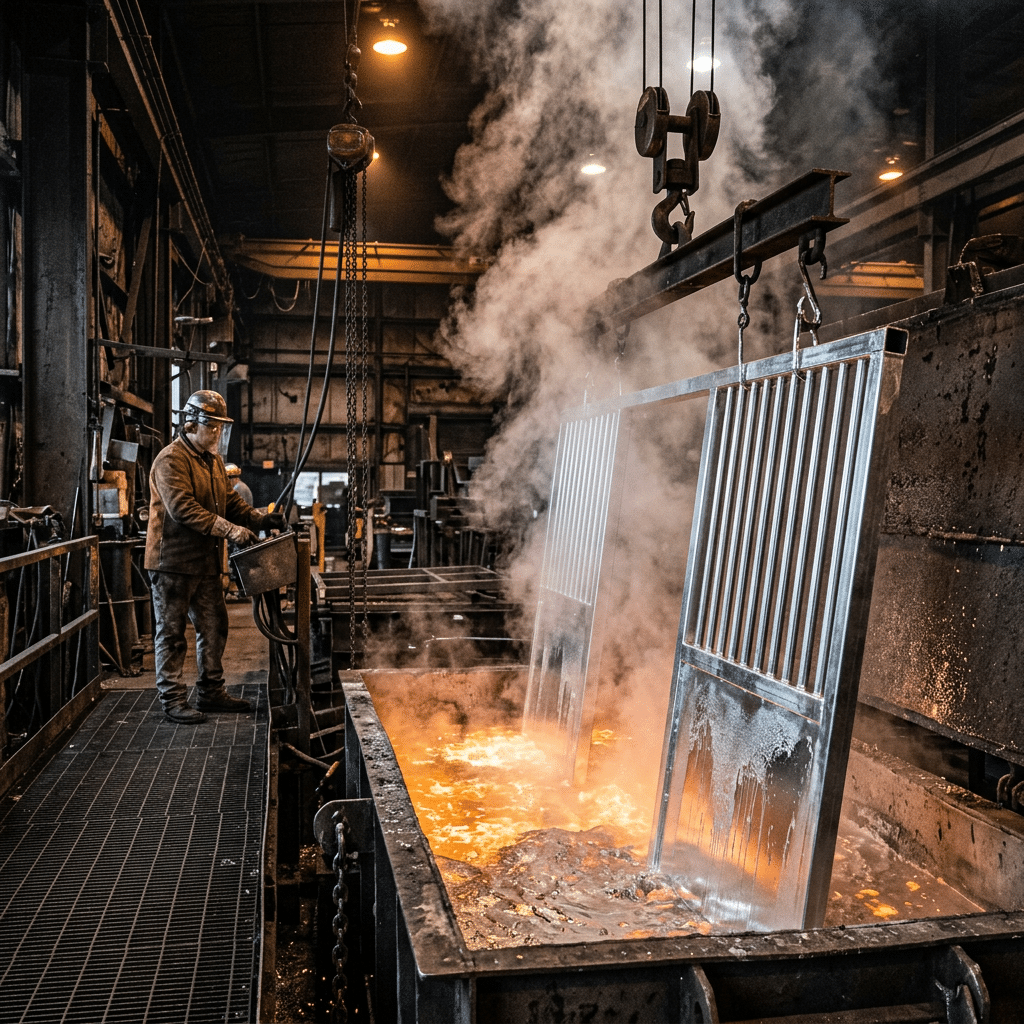
A disease outbreak triggers aggressive disinfection protocols that often destroy the barn itself. Chemical agents degrade porous wood and corrode unprotected steel, forcing expensive replacements and creating a constant biosecurity risk. This cycle of damage...
The 10-Year Barn Maintenance Plan: What Actually Needs Fixing?
A documented maintenance schedule is the only operational defense against preventable structural failures in an equestrian facility. Small oversights, such as ignoring bolt relaxation or track debris, accumulate over time, leading to expensive emergency repairs and...
Box Track vs. Tubular Track for Sliding Stable Doors: Which Lasts Longer?
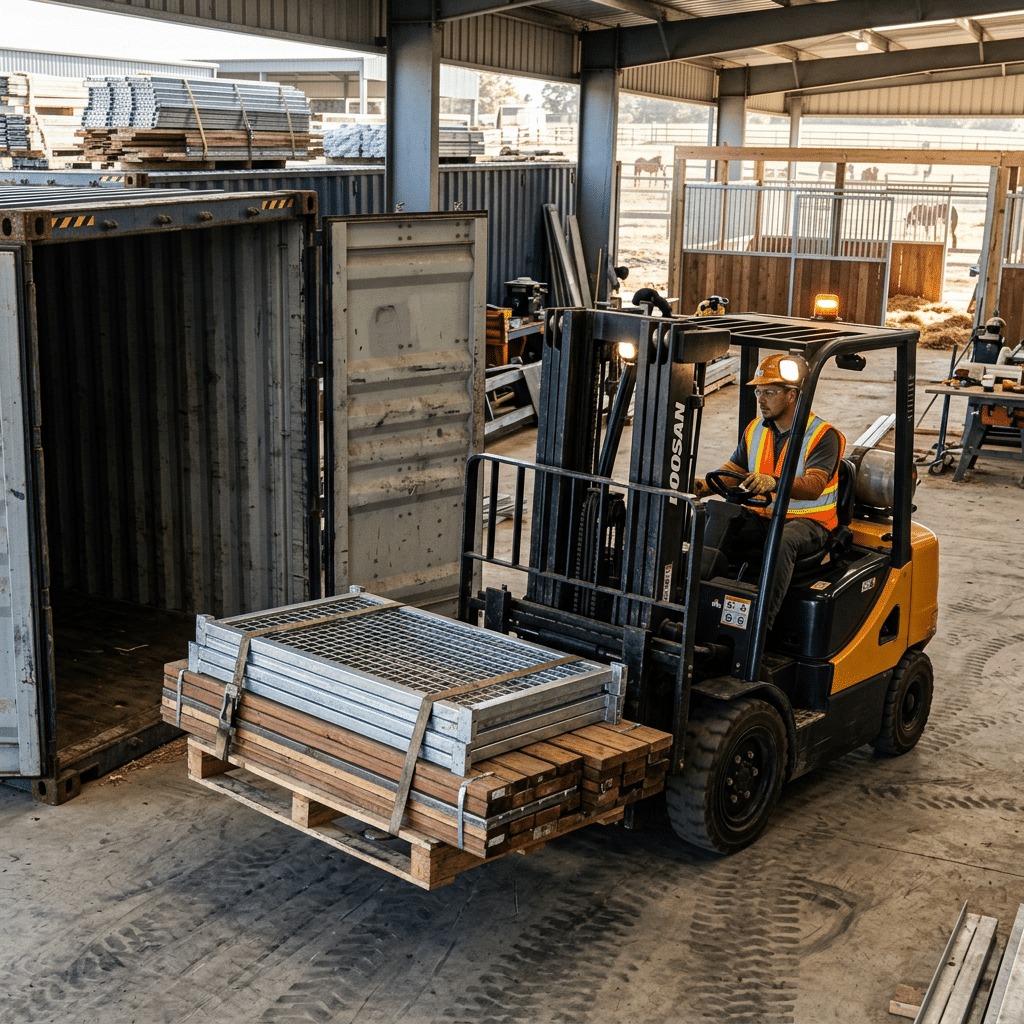
Selecting the correct door tracks is the primary defense against operational failure in equestrian facilities. Standard tubular tracks are a known liability, jamming with hay and debris. This leads directly to high maintenance costs and animal safety risks, eroding...
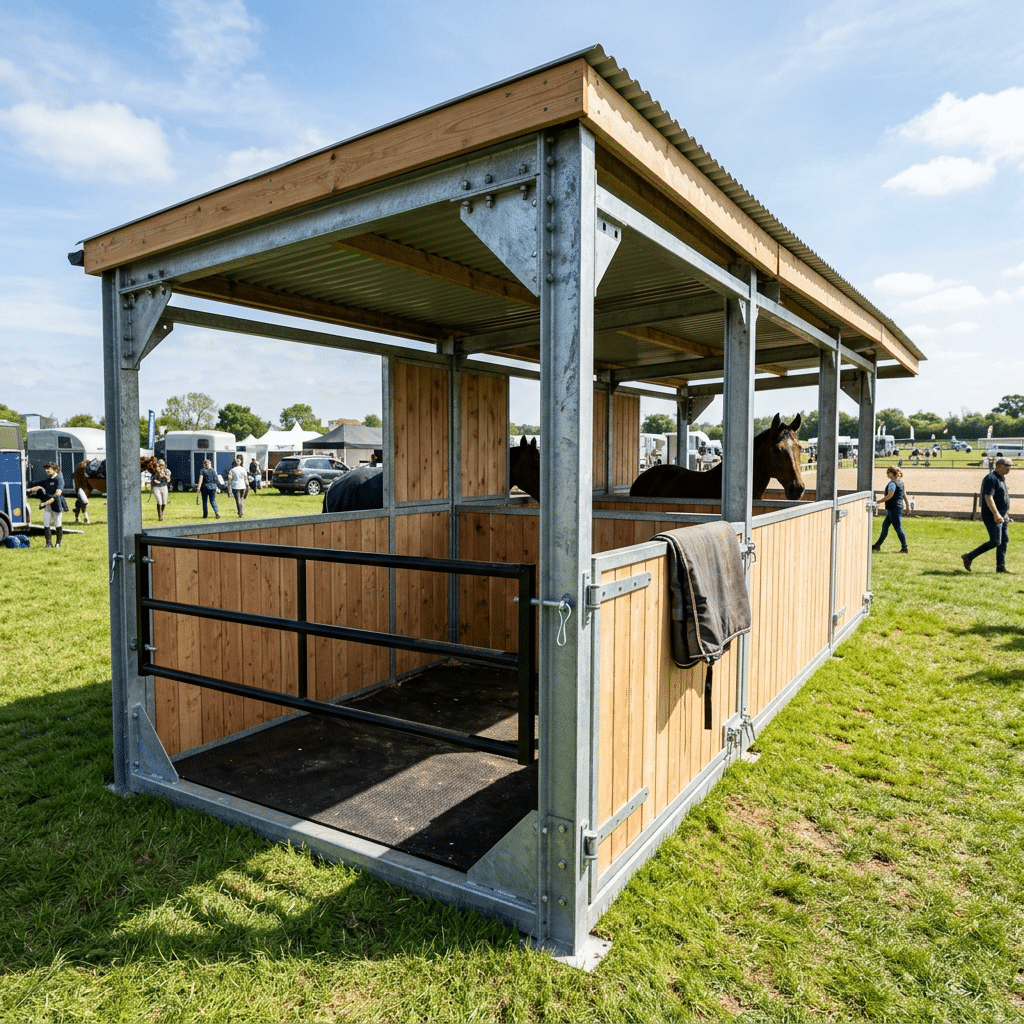
Tractor Accidents: How to Replace a Broken Stable Board in 5 Minutes
Board replacement in a fully welded stable frame is a costly, destructive process. It requires cutting the structural steel, which voids the factory’s rust protection and creates hours of labor for a repair that permanently weakens the asset and invites...
28mm vs. 38mm Bamboo Stable Boards: Do You Really Need the Upgrade?
Choosing the wrong infill thickness is a direct route to plank failure and costly warranty claims. Specifying a standard 28mm board for a large Warmblood doesn’t just risk animal injury—it creates a significant liability for the installer and the facility. This...
Retrofitting DB Stables: Upgrading from Economy to Royal Over Time
An Upgrading Series without standardized engineering is a long-term financial risk. Many stable systems use inconsistent bolt patterns, locking owners into an obsolete product line where future repairs or facelifts require a complete teardown. This turns a simple...
V-Drop Doors vs. Swinging Yoke Shutters: Maximizing Aisle Space
Sourcing the correct stall windows is critical for preventing liability claims from aisle obstructions. Traditional swing-out shutters are a known hazard in busy barns, creating chokepoints that risk injury to staff and horses. For distributors, selling this outdated...
B2B Trust: How DB Handles International Warranty Claims and Spare Parts
Handling Global Warranty Claims effectively is the key difference between a supply partner and a factory that goes silent after payment. When a component fails, importers are often left absorbing replacement costs and facing project delays that damage their local...
Square (RHS) vs. Round Stable Posts: Aesthetics vs. Safety
Selecting the right post shapes for a stable project is a critical decision that directly impacts animal safety and project liability. An unradiused square corner, a common feature in lower-cost options, is a latent design flaw that can lead to laceration injuries,...
The Equine Respiratory Audit: Diagnosing Poor Airflow in Your Barn
Airflow audits reveal the direct link between stagnant stall air and chronic respiratory conditions like heaves. A persistent cough or a visible heave line is not just a health issue; it is a clear symptom of poor facility design, frequently caused by solid partitions...
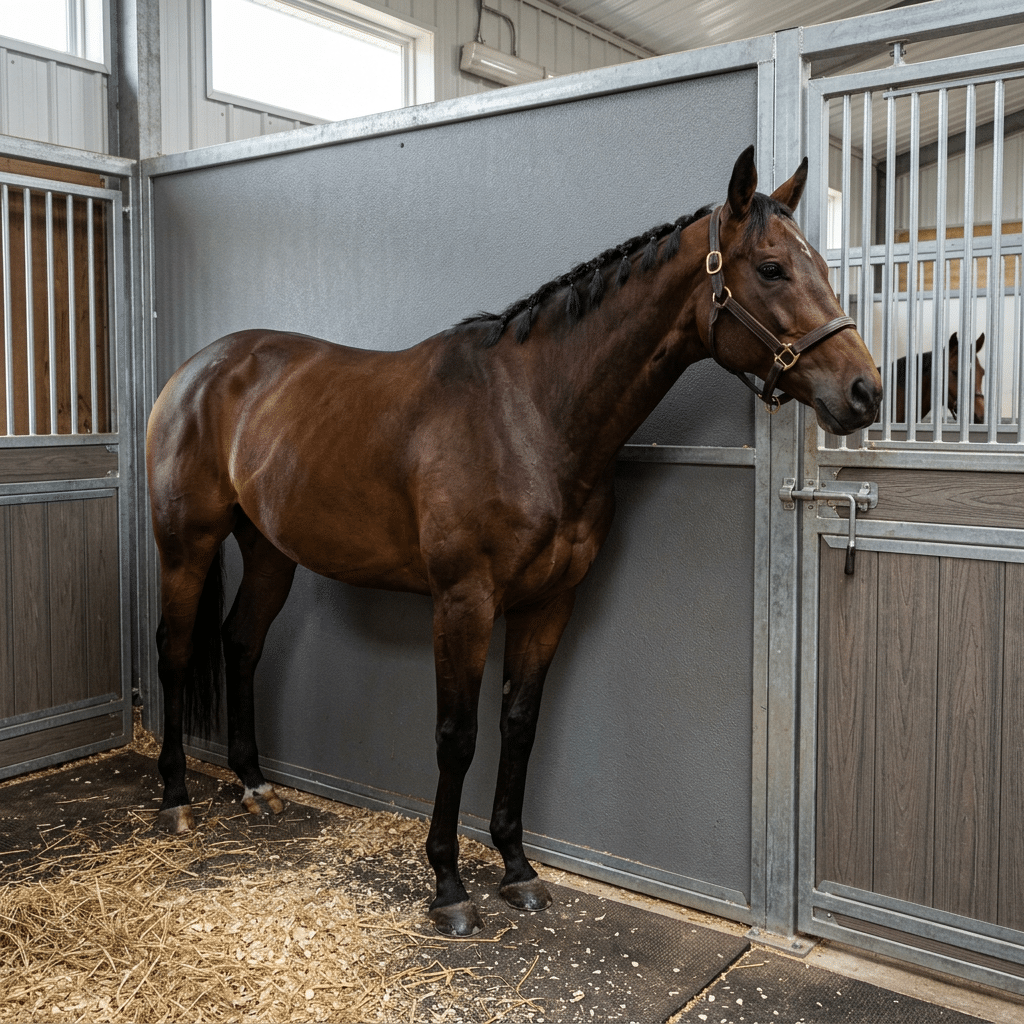
Pintura húmeda vs. Recubrimiento en polvo vs. Acabado doble (The Royal Standard)
Selecting the correct paint finishes for steel horse stalls directly impacts long-term maintenance costs and asset value. A standard coating often fails within three years from kicks or moisture exposure, locking facility owners into a cycle of sanding and repainting...
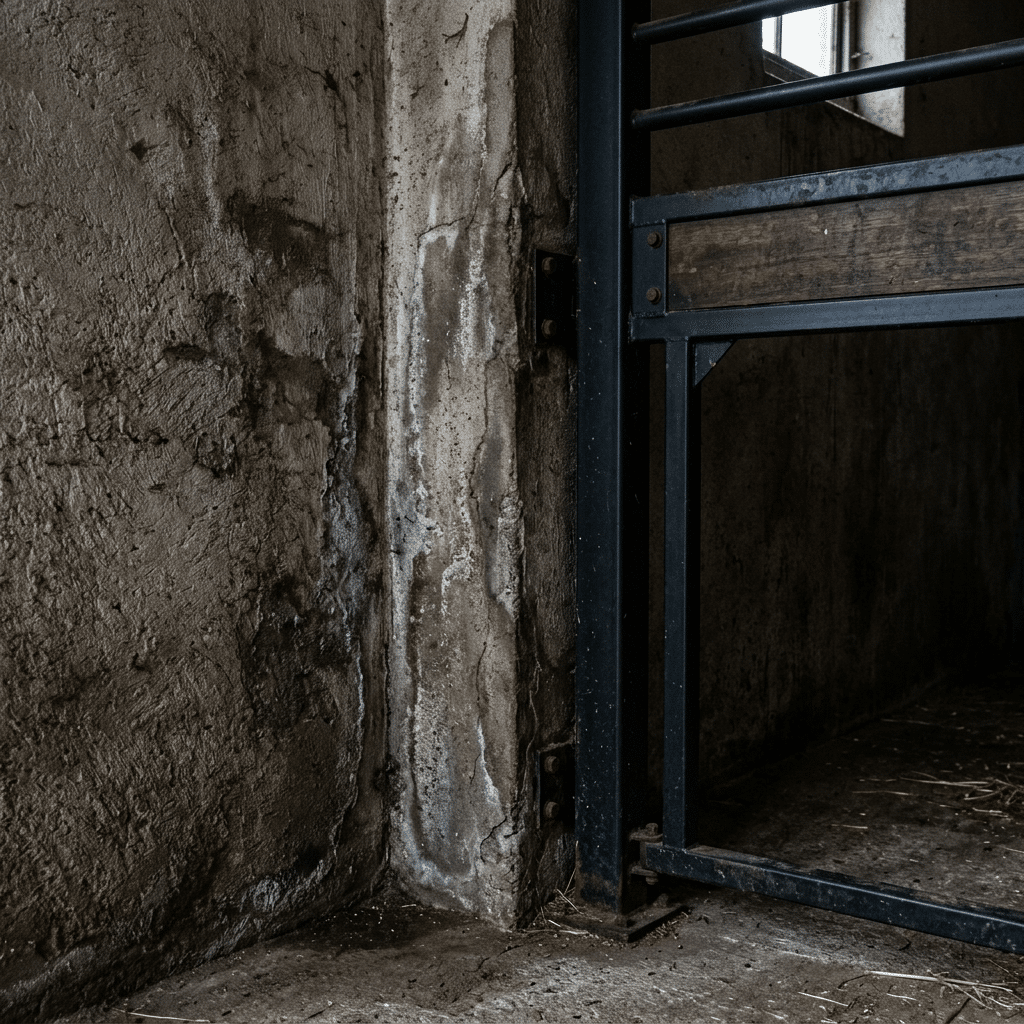
El final de la vida útil: Por qué los establos modulares de acero son el activo ecológico definitivo
The debate over scrapping vs reusing a structure defines its true lifetime cost and ESG rating. A traditional timber barn often becomes a demolition liability, costing thousands while creating hazardous waste risks from treated wood. This turns a sunk cost into a...
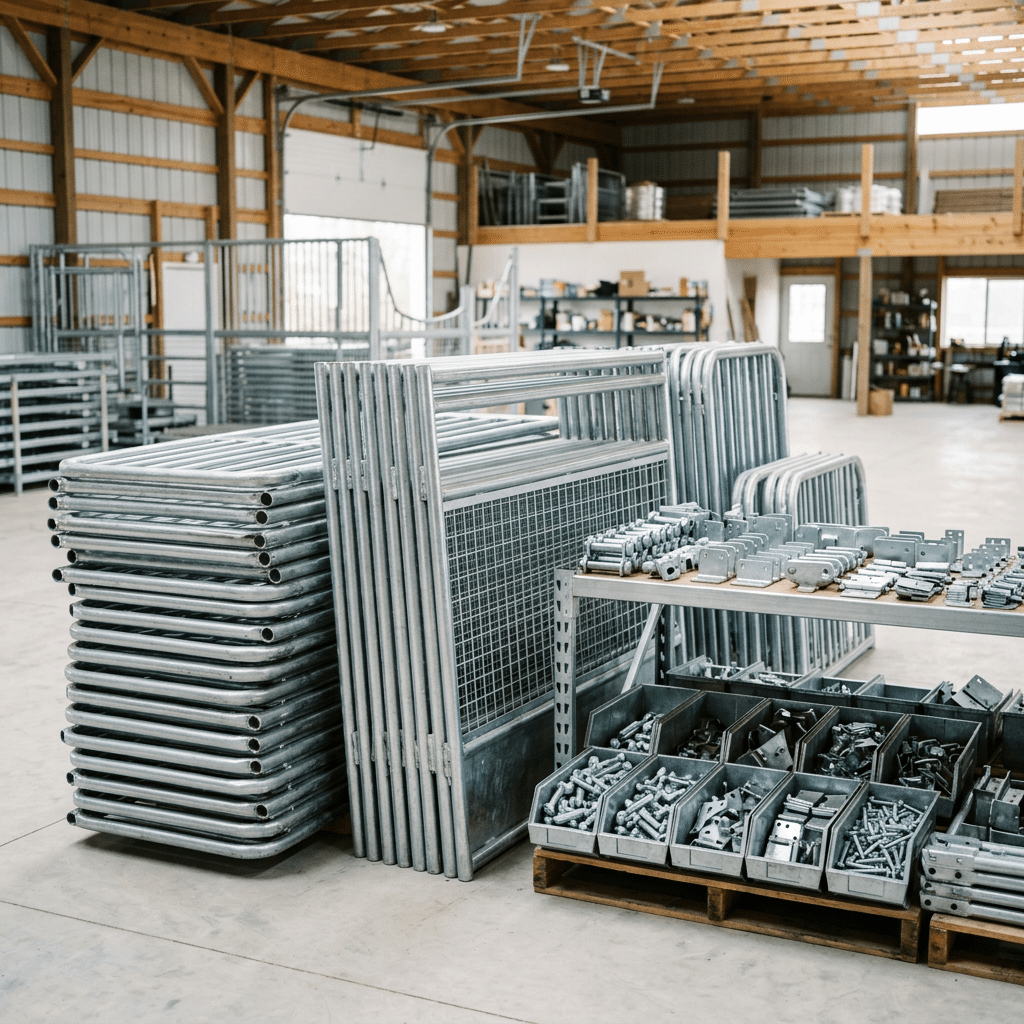
Comederos esquineros de plástico frente a comederos giratorios de aluminio
Sourcing the right feeders directly impacts operational costs and animal safety. While cheap plastic corner troughs offer a low initial expense, they often crack under impact, driving repeat purchases and creating ingestion hazards. This replacement cycle erodes...
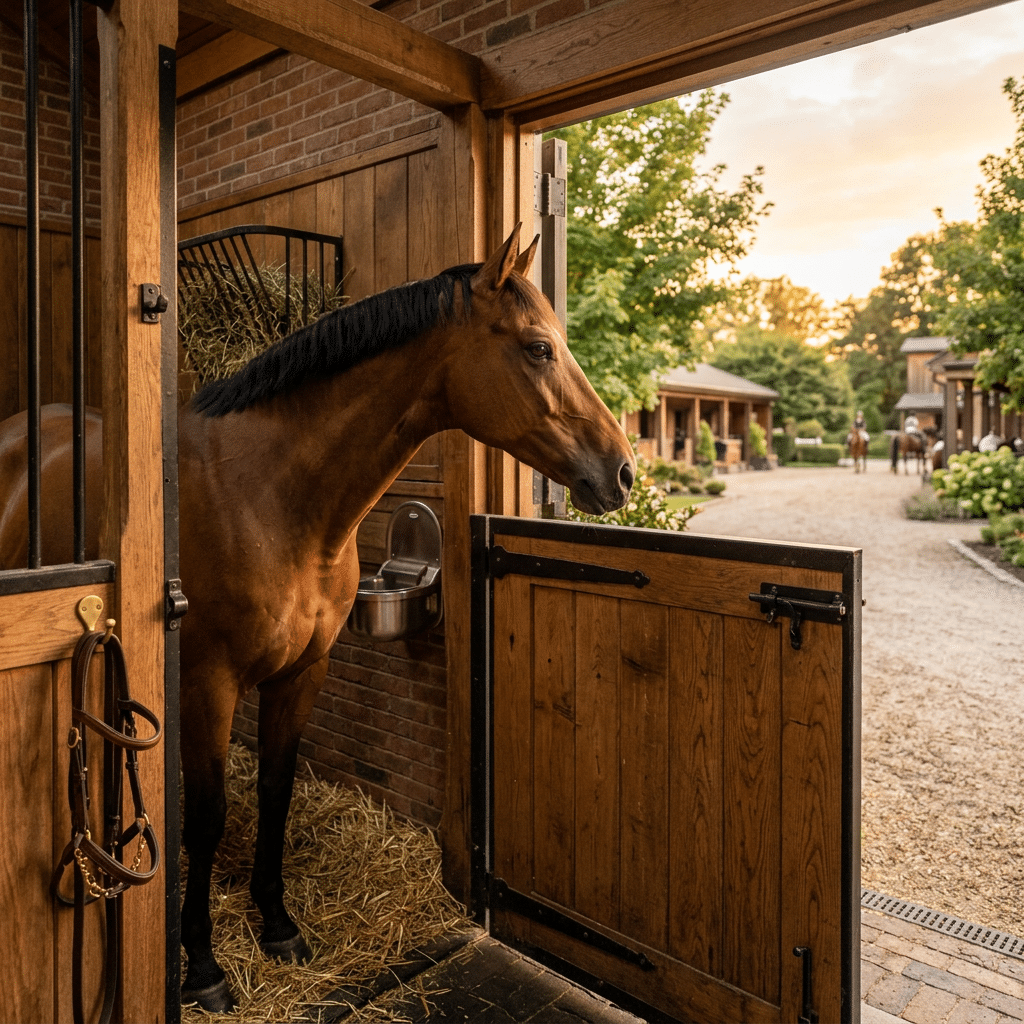
Marcos totalmente soldados frente a uniones atornilladas modulares
The type of connections used in a stable system directly dictates freight cost and scalability. Traditional fully welded frames appear robust but are a logistical liability, often limiting container loads to just 12-15 sets. This inefficient use of space inflates...
Tapas de pared galvanizadas frente a bordes desnudos: Defendiendo la “Zona de Masticación”
Effective Wall Protection directly impacts your maintenance budget by eliminating the constant cost of replacing chewed stall boards. Exposed lumber edges create a ‘chew zone’ that guarantees costly repairs and devalues your facility, turning a manageable...
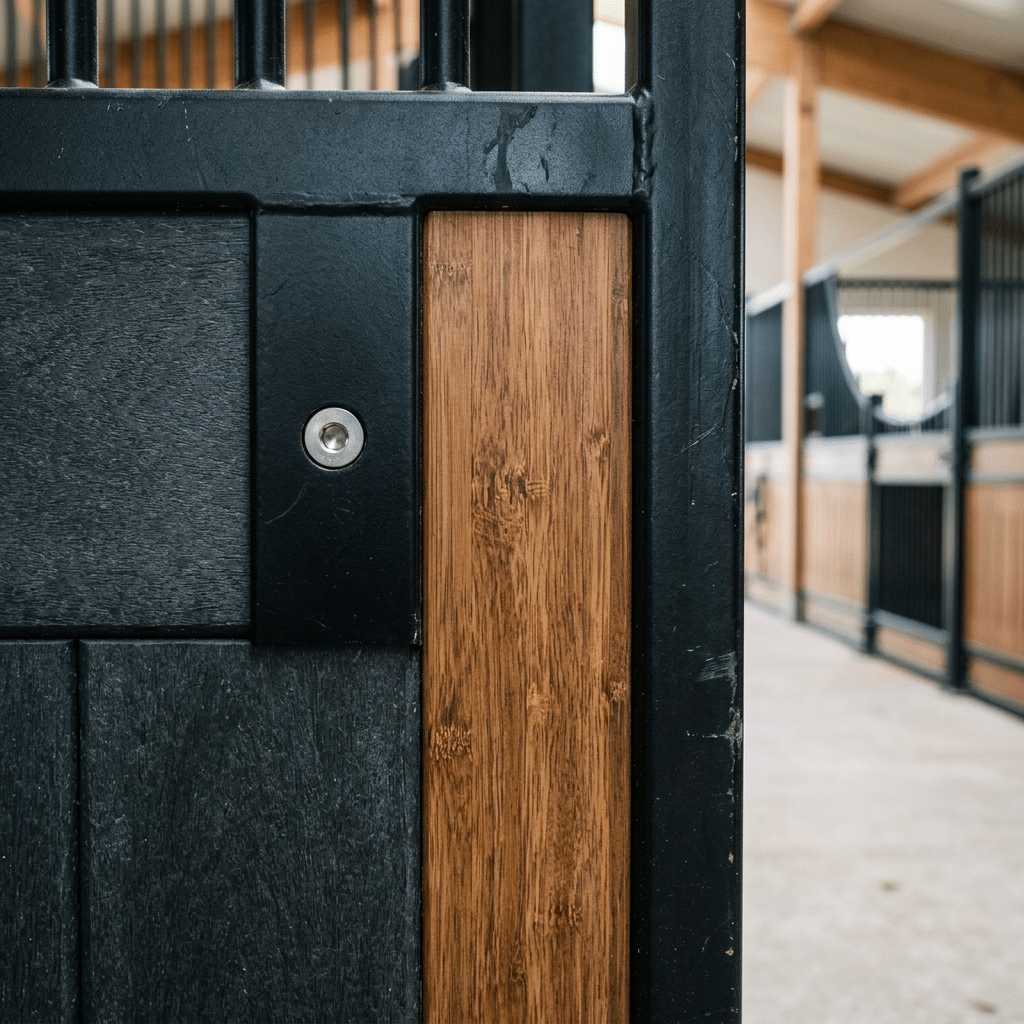
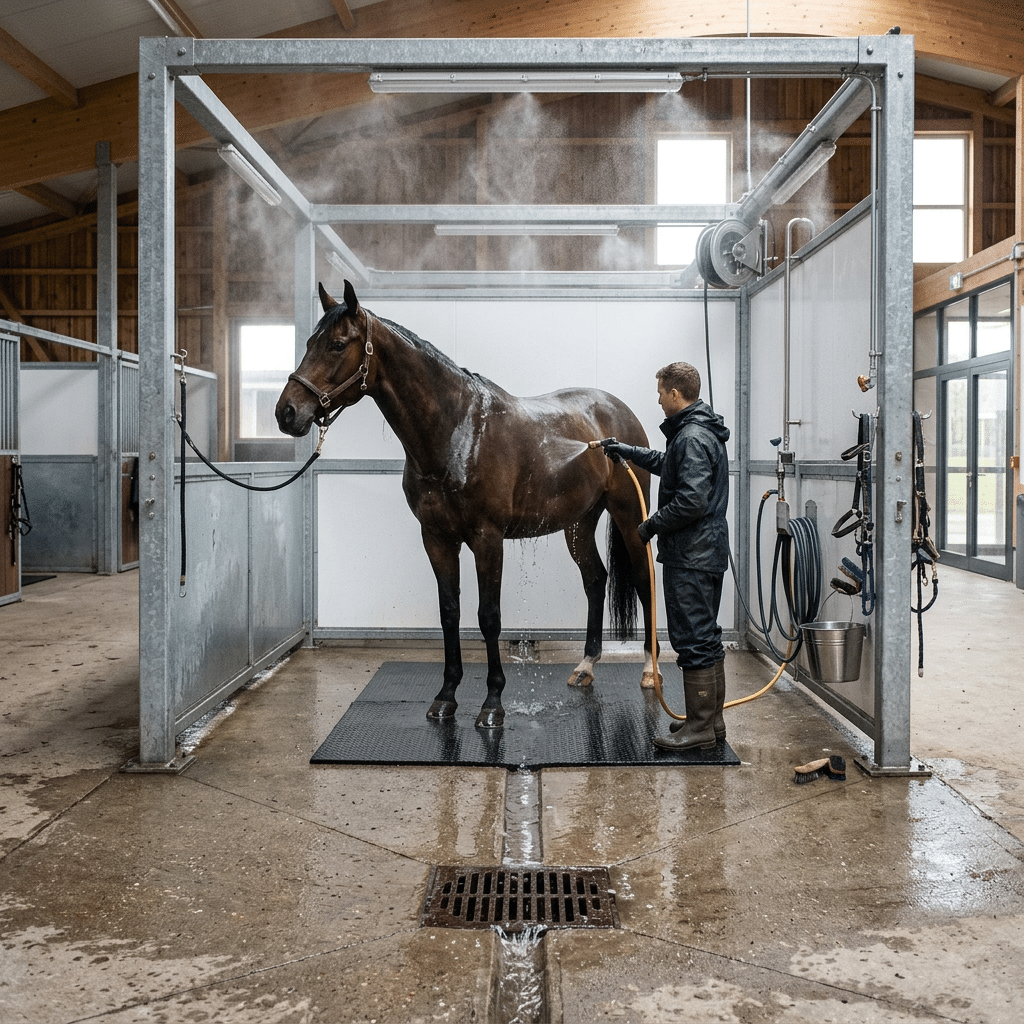
Wash Bay Walls: HDPE Boards vs. Rubber Mats vs. Concrete
Wash Bay Walls constructed with common materials like rubber mats or concrete create a hidden liability. Trapped moisture behind these surfaces inevitably leads to structural rot and mold, turning a seemingly low-cost project into an expensive long-term failure that...
Designing Draft Horse Stalls: Why Standard 12x12s Fail Clydesdales
Draft Horse Stalls require engineering that goes far beyond standard dimensions. Specifying weak frames or thin infill for animals over 2,000 lbs is a direct liability risk. One powerful kick can trigger structural failure, leading to costly warranty claims and...
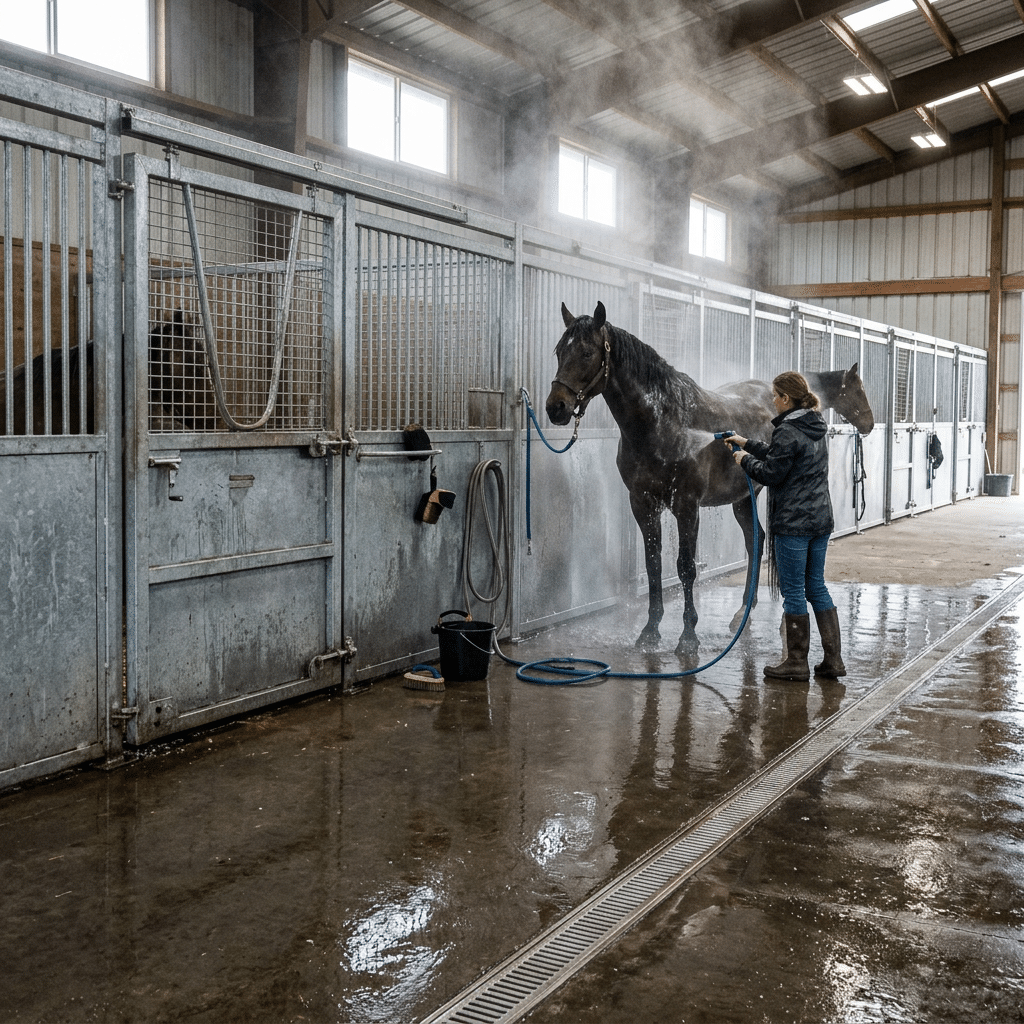
Racehorse Barn Design: Medical-Grade Safety for Million-Dollar Athletes
Sourcing the correct Racehorse Stables is a primary defense against asset devaluation and biosecurity failure. Common designs that utilize porous concrete or pre-galvanized steel often create sanitation hazards, leading to bacterial growth and rust contamination that...
Warmblood Stables: Height Clearances and High-Performance Design
Correct Warmblood Dimensions are critical, but they are irrelevant if the materials fail, leading to expensive repairs and safety liabilities. Stables using pre-galvanized steel or porous wood infill cannot withstand the impact and moisture generated by...
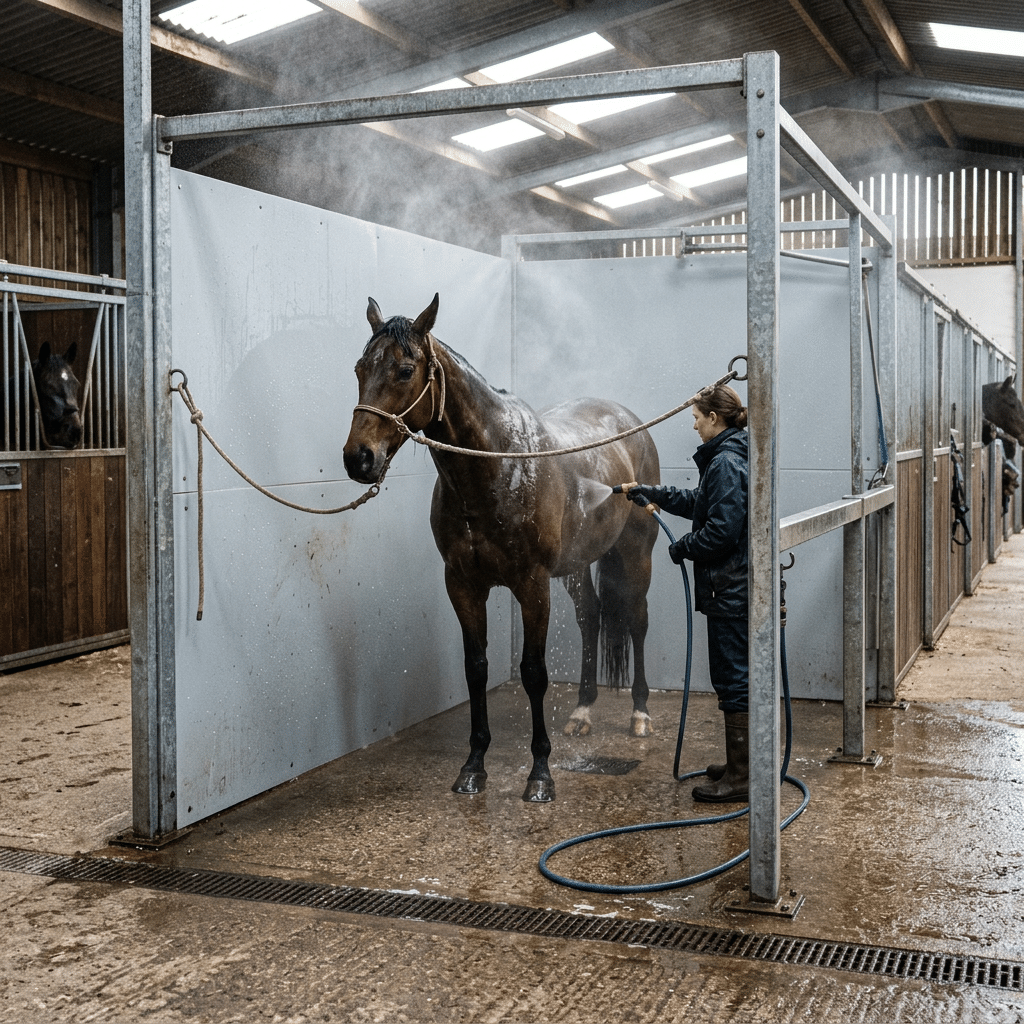
The Ultimate Foaling Stall: Removable Partitions and Foal-Safe Clearances
Foaling stalls built with incorrect clearances or porous materials directly threaten the viability of a newborn. A seemingly minor design flaw, like an improper bottom gap, can lead to a cast foal, resulting in catastrophic veterinary bills and the potential loss of a...
 Spanish
  English
  French
  Arabic
  German