



UV resistant PVC horse fencing sold into Australia and Spain comes with two numbers attached: a 15-year lifespan claim and a 40°C heat tolerance rating. Both are supplier performance claims, not physical constants — and a fence that lasts a decade versus one that chalks out early usually comes down to what is in the compound and what you got in writing. DB HorseStable, an equestrian infrastructure manufacturer and exporter in Anping, China since 2013, publishes the 15-year figure and specs heat-stable material for these two markets.
The uncomfortable part of the trade: “UV-resistant” appears on spec sheets from every manufacturer, including ones whose compound fades gray and goes brittle in a few harsh summers. The phrase costs nothing to print; the stabilizer package inside the PVC is what costs money. Wherever a number matters, require it in writing.
Key Takeaways
- A 15-year lifespan is a supplier claim — get it on the quote or PO, with scope: color fade, impact strength, brittleness.
- “UV-resistant” means nothing without disclosure — ask what stabilizer package the compound carries.
- 40°C markets punish cheap PVC three ways: UV breakdown, daily thermal cycling, changed impact behavior in heat.
- Galvanized steel is the alternative in the same line — a 20-year anti-rust claim, winning where impact beats sunlight.
- Order parameters: MOQ 50 panels, tiered discounts 5–15%, 4–6 week global lead time, 1–2 weeks from Sydney warehousing; verify ISO 9001 and CE.
What the 15-Year Lifespan and 40°C Rating Mean as Purchase Specs
A lifespan claim becomes a purchase specification the moment you treat it like one. DB HorseStable states a 15-year lifespan for its UV-resistant PVC fencing, with material specified to withstand 40°C heat for Australia and Spain. Read both as claims to be converted into contract language — three written items.
- The claim on the quote or PO. Not in an email thread, not on a brochure — on the document that governs the order.
- Scope. “15-year lifespan” can mean structural integrity, color hold, or both. Ask whether it covers fade, impact strength, and embrittlement.
- UV stabilizer package disclosure. Ask the supplier to describe the stabilization system and back it with test documentation — a manufacturer with a real compound program answers without drama.
The 40°C rating is the same: a commitment that the formulation was selected for sustained heat plus strong solar exposure. A quote that never mentions UV-stabilized material is telling you something. And if a supplier will not write a claim down, plan as though it does not exist.
What UV-Resistant PVC Horse Fencing Must Survive at 40°C
You do not need a chemistry degree to buy well, but know what the sun does to the fence. Three mechanisms do most of the damage.
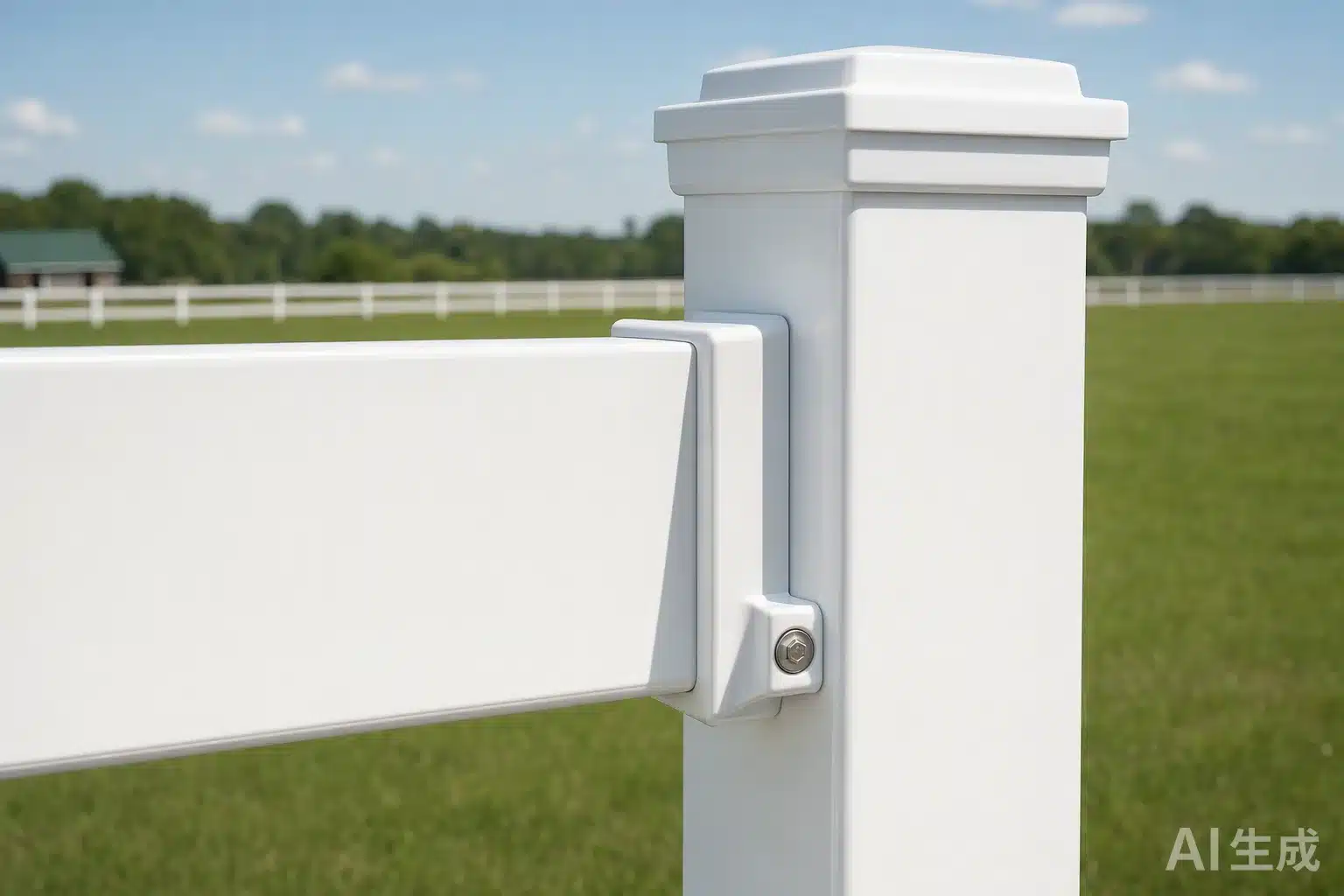
UV-driven degradation comes first. Ultraviolet radiation gradually breaks down polymer chains at the surface of unprotected PVC — visibly, a pale powdery film (chalking), then color fade. A proper stabilizer package slows this dramatically; minimal stabilization fails far sooner. The stabilizer is invisible on a finished panel, which is why the disclosure question matters.
Thermal cycling works daily. Fence surfaces in inland Australia and much of Spain run extremely hot by day and cool sharply overnight; that expansion-contraction cycle stresses joints and post connections year after year. Systems engineered for hot markets account for it; temperate-market systems may not.
Heat changes how the fence takes a hit. PVC behaves differently under sustained heat than at 20°C, and an embrittled rail fails differently than a sound one when struck. By the time UV damage shows as chalking, the toughness that makes PVC horse-safe may already be going. No universal number of hours or years applies — buy on documented claims, not assumptions.
PVC vs. Galvanized Steel Fencing: Which One Wins in the Heat
DB HorseStable runs two fencing lines here: UV-resistant PVC with its 15-year claim, and hot-dip galvanized steel horse fencing with a 20-year anti-rust claim. They fail differently — match the material to the site’s threat profile. Both sit in the same fence panel line.
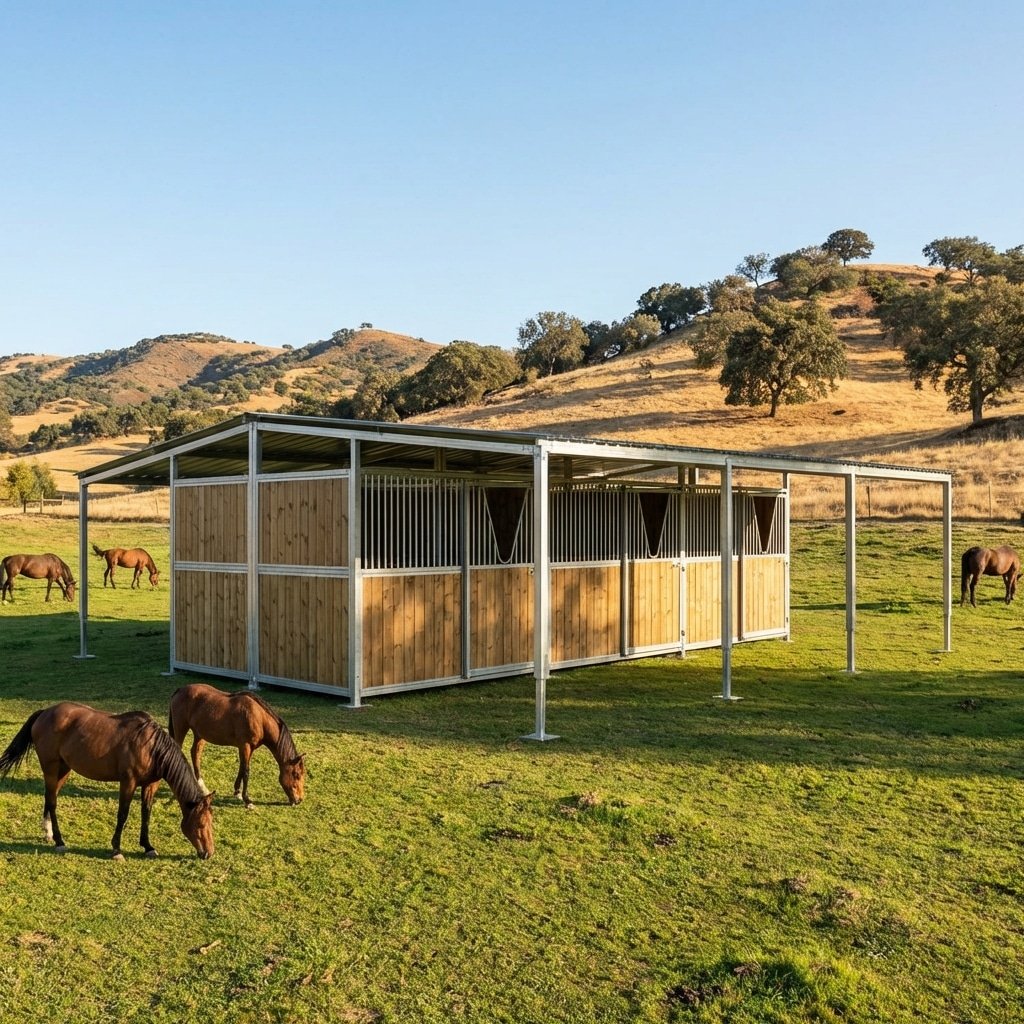
PVC wins where sun and horse contact dominate: no rust, no repainting, no hot metal edges to burn horse or handler, and a clean look for arenas and boarding yards where appearance sells. With a written 15-year claim, it is defensible wherever impact loads stay moderate.
Galvanized steel wins where impact is the primary threat — boundaries, aggressive horses, any line likely to be hit at speed. For Australian and Spanish buyers, the split is simple: PVC for arenas and visible perimeter; galvanized steel for high-impact paddock divisions. If budget forces one material across a crash-prone property, steel is the safer default — one catastrophic rail failure costs a vet bill that dwarfs the fencing.
Verification Checklist: Holding a Supplier to Its Claims
Use this during quoting, whoever the supplier is: take the claim, demand it in writing, and know the red flag.
| Supplier Claim | What to Demand in Writing | Red Flag |
|---|---|---|
| 15-year lifespan (PVC) | The number on the quote or PO, with scope: color fade, impact strength, brittleness | “15 years” appears only in brochures; the PO stays silent |
| Withstands 40°C heat | Confirmation the ordered line uses the heat-stable formulation | Same SKU and compound quoted for every climate |
| UV-resistant material | Description of the UV stabilizer package, with test documentation | Supplier cannot describe the stabilization system, or calls the question unusual |
| Color held long-term | Whether color retention sits inside or outside the lifespan claim | Answers shift between “aesthetic” and “structural” depending on who you ask |
| ISO 9001 / CE certified | Which certifications apply to the line ordered, with documentation | Certifications claimed verbally, nothing supplied in writing |
One habit ties the table together: ask in writing, expect the answer in writing. Verbal reassurance does not survive a warranty conversation five years later; a line on the PO does.
Installation Choices That Protect the Lifespan Claim
A 15-year material claim can die in a 3-year installation. Two factors dominate.
Post spacing. Get a recommended post spacing in writing. Wider spacing to cut post count trades material cost for load, and sag or joint stress over 15 years is the slow failure that gets blamed on material instead of layout. Anyone who says “spacing is up to you” has transferred the engineering to your side of the table.
Arena fencing and wind. Wind resistance is a recognized consideration in arena perimeter design — exposed sites catch wind that sheltered paddocks never see, and long continuous runs behave differently in gusts than segmented ones. Ask about bracing, closer post spacing, or segmented runs for exposed locations. Planning a full arena? The arena fencing guide goes deeper. Beyond wind: solid footings, correct post depth, and fasteners that let rails move with thermal expansion.
Order Parameters: MOQ, Lead Times, and Sydney Warehousing
The commercial mechanics for this line are fixed and knowable in advance.
- Minimum order: 50 fence panels (stable systems run on a separate 10-set minimum).
- Volume discounts: tiered 5% to 15% by order size — worth pricing two or three quantities, since the tier step changes per-panel math.
- Lead time: 4–6 weeks for global delivery from order confirmation.
- Expedited option: Sydney regional warehousing cuts Australian delivery to 1–2 weeks. The Australia market pages cover regional planning in more detail.
- Account management: orders above 20 units include a dedicated regional account manager for customization and logistics support.
- Quality base: ISO 9001 and CE for the line, plus alignment with BHS (UK), ASPCA (US), and EU Directive 98/58/EC by market.
For dealers, the 50-panel entry point with discounts reaching 15% makes a stocking order financeable, and the Sydney option lets an Australian dealer promise replacement panels without airfreight. Ask your account manager to quote tiers against annual volume — the structure rewards consolidation.
Frequently Asked Questions
How long does PVC horse fencing really last in Australia or Spain?
It depends almost entirely on the UV stabilizer package. DB HorseStable states 15 years for its UV-resistant PVC fencing, but any supplier’s number is a claim — get it on your quote or PO before you rely on it.
What should the 15-year lifespan claim cover?
Ask whether it covers color fade, impact strength, and embrittlement — the three ways UV and heat kill PVC fencing. A claim covering only appearance is a different purchase from one covering structural performance.
Is PVC or galvanized steel fencing better for a 40°C climate?
PVC suits arenas and client-facing areas — no rust, no hot metal edges, and a 15-year claim when properly UV-stabilized. Galvanized steel, with its 20-year anti-rust claim, suits high-impact paddocks where horses hit the fence at speed.
What is the minimum order and lead time for PVC horse fencing?
The fencing line starts at 50 panels, with tiered discounts from 5% to 15%. Global lead time runs 4–6 weeks; Sydney warehousing cuts Australian delivery to 1–2 weeks.
Conclusion
A 15-year lifespan claim and a 40°C rating are worth only what you can enforce: the claim in writing on the quote or PO, its scope defined across fade, impact strength, and brittleness, and the stabilizer package disclosed rather than implied. Buy that way and PVC is a sound choice for Australian and Spanish arenas. Skip it and you are gambling a horse’s safety on a phrase that cost nothing to print.
Before your next order, run the checklist against your current supplier’s paperwork — then compare what DB HorseStable puts in writing, from the 15-year claim to the tiered pricing and the Sydney option, against what you have been offered elsewhere.

 English
  Spanish
  French
  Arabic
  German
0 Comments