


The steel gauge scam is the oldest trick in stable manufacturing: quote the order on a written wall thickness, ship a thinner one, and let the difference hide inside a painted, welded stall front where nobody measures. A frame built half a millimeter lighter than specified still looks identical on delivery day — and sags or racks differently three years into daily horse traffic. The scam survives because most buyers verify everything except the number that carries the structure.
This guide closes that gap: why thin steel costs you more than the discount saved, and how to turn delivery day into the moment the scam gets caught — measured, documented and actionable. It is part of a discipline this manufacturer builds in the open — the stable line runs CNC machining and automated 360° welding, with published educational content on exactly these industry traps. Our guide to reading steel gauge specs before you sign a purchase order names the scam and shows the measuring tools; this companion piece builds them into a delivery-day protocol that holds up when a dispute starts.
Key Takeaways
- The scam is a paper-versus-steel gap: the purchase order says one wall thickness, the delivered frame is another, and the difference hides inside finished components where it carries your horses’ weight.
- Verification is cheap and fast: calipers and an ultrasonic gauge (both covered in the steel gauge guide), mill test documents on file, and documented readings at the dock close the gap the scam needs to survive.
- Sample orders exist for exactly this: order the sample, measure the steel, then let the bulk order follow — the same sequence serious buyers use before any large commitment.
- Half a millimeter is not a rounding error at stable scale: across a full row of stall fronts, a systematic thinning is a real fraction of the order’s steel content and a structural downgrade sold at full price.
- Ask for the manufacturing story, not just the number: CNC machining and automated 360° welding are traceable processes; vague answers about “standard gauge” are a flag.
- Use your own leverage: MOQ in this line is 10 stable sets, with 5-15% tiered volume discounts and 4-6 week global delivery — a buyer at that scale is entitled to delivery verification, not just delivery.
What the Steel Gauge Scam Actually Is
Stable steel is specified by tube size and wall thickness — the wall thickness is the gauge, and it is what turns a frame from furniture into horse-rated structure. The scam is simple substitution: quote a competitive price against a written thickness, then manufacture or source a thinner wall and keep the difference as margin. Because the finished front is painted, welded and assembled, the wall is invisible without measuring — and across hundreds of meters of frame on a multi-stall project, a systematic half-millimeter is real money. The full anatomy — the patterns the substitution takes and the answers that expose them — is set out in the steel gauge guide; what matters here is what happens after the container lands.
There are honest versions of confusion, and knowing them keeps the accusation fair. Genuine mills work within tolerance bands, a small sample of tubes runs naturally thin, and honest mistakes get corrected. The scam is a pattern, not a single reading: components reading consistently below the specified wall, no mill paperwork behind the spec, and a supplier who changes the subject when you ask to measure. Educating buyers to catch that pattern is part of how this manufacturer positions itself — its “Pre-Galvanized Lie” education on coating claims runs on the same logic.
What Thin Steel Really Costs a Stable Project
A stable is a working structure, not a display. Stall fronts take leaning horses, kicked doors, the push of a handler swinging a full wheelbarrow through the gap, and — at the welds and joints — the repeated flex of daily use. Wall thickness is what the structure spends to resist all of that. Thinner walls flex more for the same load, fatigue faster at welds, and rack more at joints, and none of that shows in week one. It shows in year three as a door that no longer sits square, a front that has taken a permanent set, and a row of stalls aging visibly faster than the barn around them.
The warranty math is worse than the structural math. A supplier willing to shave steel is rarely eager to honor claims about it, so the buyer pays full structural price, absorbs the shortened life, and owns the argument about why. The honest answer is to buy where the story is verifiable: production you can ask about — this line is built on CNC machining and automated 360° welding, processes that repeat within tolerance — and a supplier whose answer to a measuring request is cooperation, not a new brochure.
Verifying Wall Thickness on Delivery Day
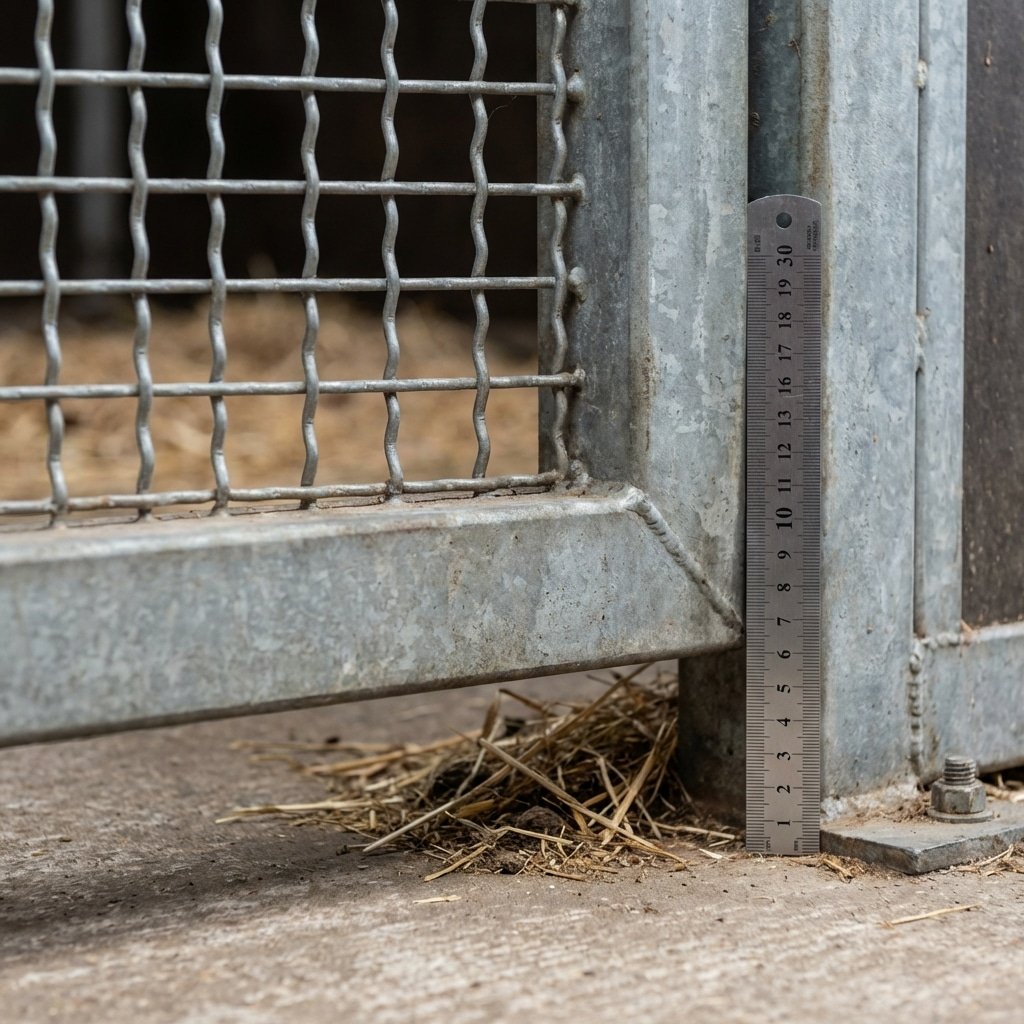
The measuring side is deliberately short here, because the steel gauge guide covers the two tools in detail: calipers on exposed tube ends and unwelded edges, and a small ultrasonic gauge that reads the wall through paint on finished faces. What the protocol adds is everything around the measurements. Read the wall, not the outside diameter — the outside dimension can be correct while the wall is thin. And when the pattern across the shipment reads thin, the response ladder matters more than any single reading: document the readings at the dock, raise them against the mill test paperwork before signing, and hold the balance of payment until the discrepancy is resolved. A supplier who was honest about the steel resolves it in a day; a supplier who was not has just been caught at the cheapest possible moment.
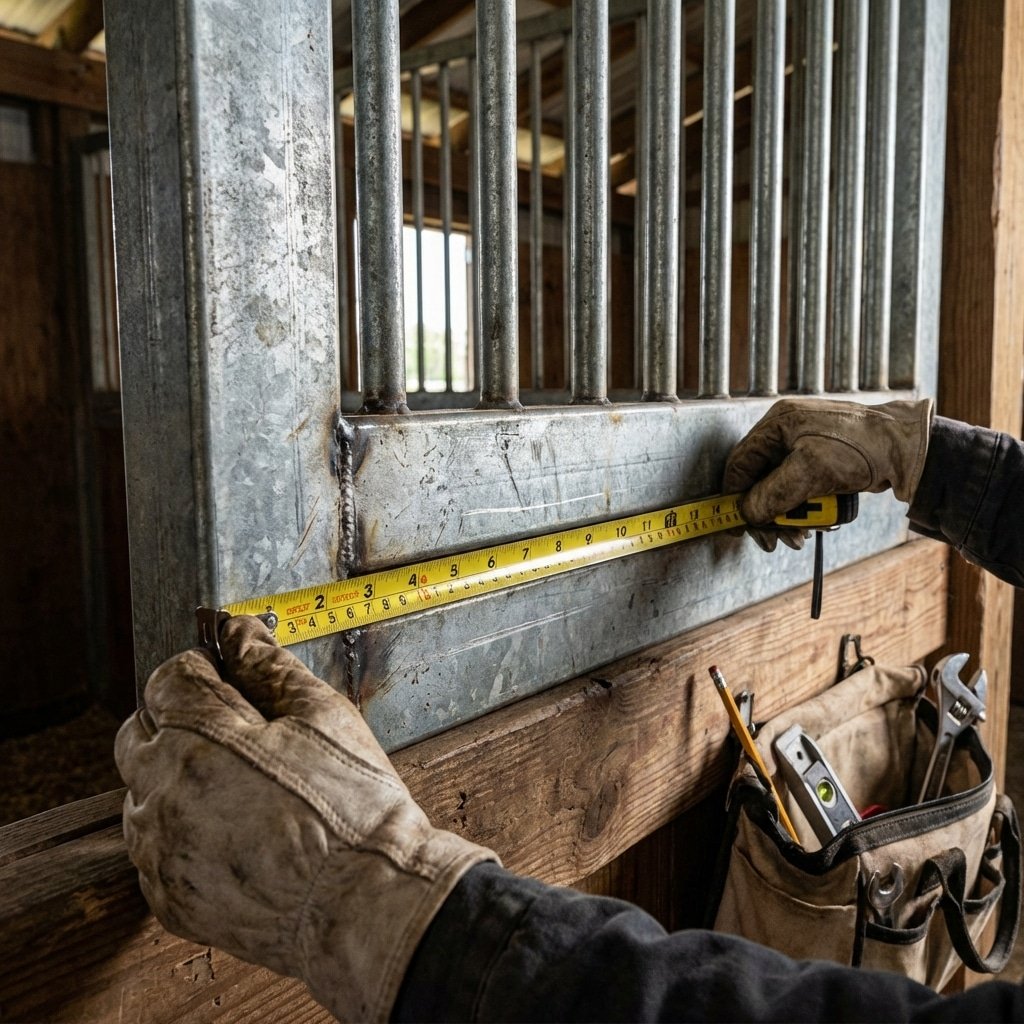
Where you measure matters as much as how. Sample across the delivery — different frames, different stall positions, different bundles — because the pattern is the evidence. And verify at receiving, in front of the logistics chain, so any shortfall attaches to the shipment rather than to the weeks after installation: in practice a signed-off delivery can make a later claim harder to press, while a reading taken at the dock keeps the shortfall tied to the shipment.
The Paper Trail: Mill Tests and Purchase Orders
Measurement is the floor; paperwork is the ceiling. A purchase order that specifies the wall thickness in writing, per component, turns the delivery check from an opinion into a contract position. Ask the supplier for mill test documentation on the steel entering your order — traceable material is a normal request at wholesale scale, and the reaction tells you as much as the document. This line serves trade buyers from an MOQ of 10 stable sets upward, with 5-15% tiered discounts and 4-6 week global lead times, and orders of 20 sets or more carry a dedicated regional account manager; buyers at that scale are not asking for favors when they ask for material traceability.
The sample route makes the whole system cheap. Order a sample stall or front first, measure its steel, and only then commit the bulk order — a sequencing buyers can agree case by case with the factory, the subject of our guide to sample orders before bulk purchase. A supplier who passes the sample and the dock check has earned the next order at full scale.
A Buyer’s Protocol That Ends the Conversation
- Write wall thickness into the order, per component. Tube size alone is not a steel specification; the wall is the number the scam lives on, so it belongs on the purchase order in ink.
- Ask for mill test documentation when the order is placed. The request is standard at wholesale scale — treat the reaction as data.
- Order a sample and measure it. One measured stall front before the bulk order removes most of the scam’s room to operate.
- Verify at the dock, across the delivery. Calipers on exposed faces, an ultrasonic gauge through paint, a dozen deliberate readings — taken before signing.
- Buy from processes you can ask about. CNC machining and automated 360° welding are repeatable, traceable production.
- Read the pattern, not the single reading. One thin tube is a tolerance conversation; a delivery of consistently thin tubes is a contract conversation.
Frequently Asked Questions
How do I check steel wall thickness on a delivered stall?
Take a dozen readings across different frames and bundles at the dock, before you sign — the pattern across the delivery is the evidence. The steel gauge guide covers the tools themselves.
What is the steel gauge scam in stable manufacturing?
A supplier quotes against a written wall thickness, then ships thinner-walled steel — the difference hides inside painted, welded components and is profitable at project scale. It survives because buyers verify everything except the wall.
Is a half-millimeter difference in wall thickness really a problem?
At stable scale, yes: across a full row of stall fronts a systematic half-millimeter is a real fraction of the order’s steel, and thinner walls flex more, fatigue faster at welds and rack sooner at joints — costs that surface years after delivery day.
Should I order a sample stall before a bulk order?
Yes — order the sample, measure its steel, then commit the bulk order. It is a cheap way to check wall thickness before scale multiplies a shortfall, and a sequence buyers can agree case by case with the factory.
What should a purchase order specify besides tube size?
Wall thickness per component, in writing, plus mill test documentation for the steel entering the order. The wall is the number the gauge scam targets, so it is the number the contract must hold.
Conclusion
The steel gauge scam dies the moment buyers measure. Write the wall thickness into the order, ask for the mill paperwork, verify a sample, and read a dozen caliper readings at the dock — a protocol that costs an hour and removes the only hiding place thin steel has ever had.
Read the specification side first in our guide to steel gauge specs and purchase orders, then bring the calipers to delivery. The stabling line behind it — from an MOQ of 10 sets with global 4-6 week delivery — is on the horse stable products page, built on CNC machining and automated 360° welding that answers questions instead of dodging them.



 English
 Spanish
 French
 Arabic
 German
0 Comments