


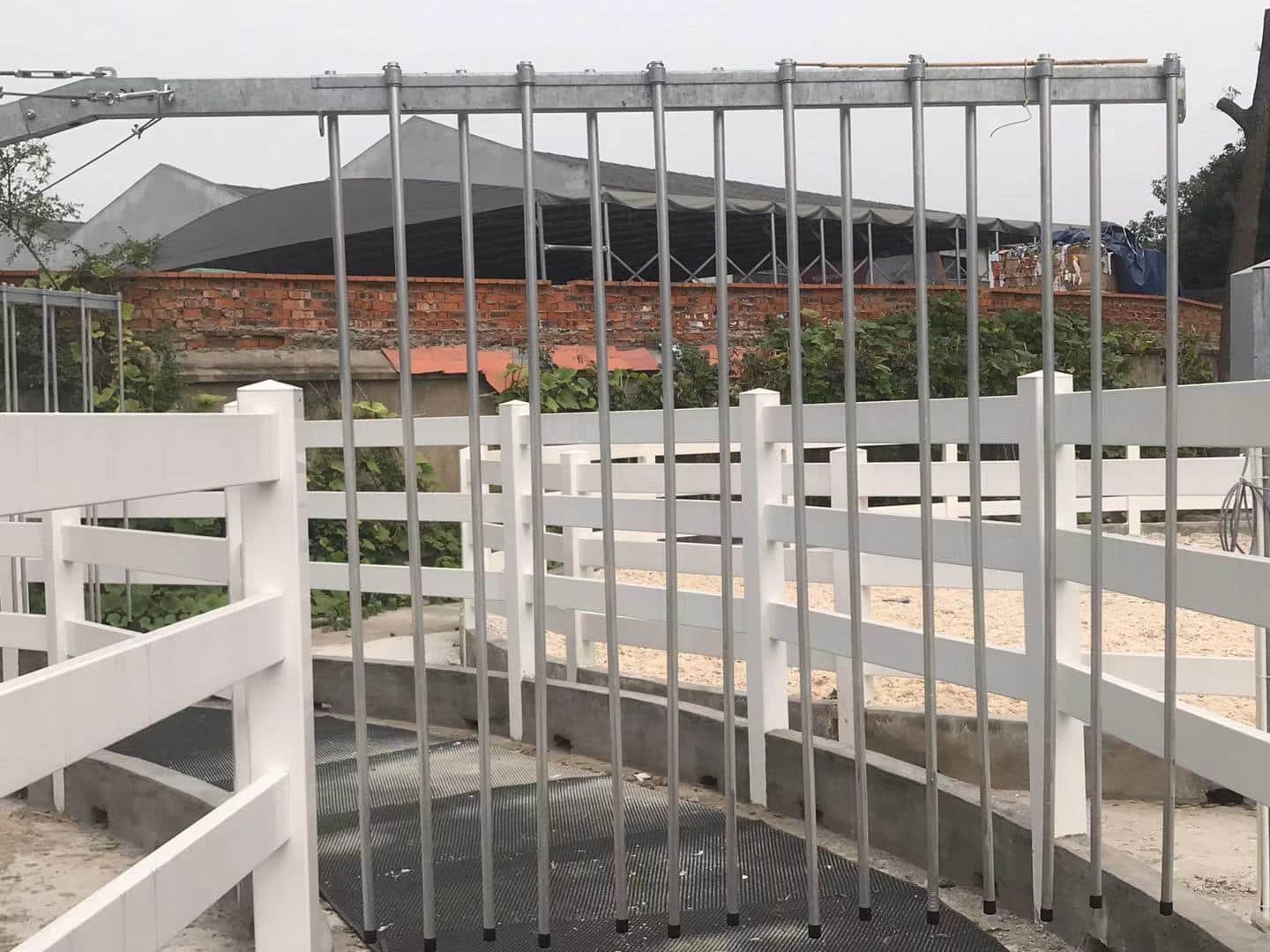
Horse walker safety is usually settled before the machine arrives — by the specification, not a dramatic failure. Whether the stop’s behavior is written down, whether each gate carries a stated interlock, and whether the speed range has a method behind it decide more than any catalog photo. Safe installations come from converting adjectives into testable claims before the deposit clears.
DB HorseStable builds horse walkers with Italian motors for farms, training centers and venues in nine markets. The drive package is a traceable specification — what a safety conversation needs. Below is the checklist: what to demand in writing and how to verify on site.
Key Takeaways
- Safety is a document problem first: a claim that never reaches the quotation cannot be tested on arrival.
- Ask what the stop does: device locations, drive behavior when the circuit opens, restart behavior.
- Gate interlocks need a schedule: every opening named, with its protection and test method.
- A speed range without a measurement method is a marketing number.
- Commission with a witnessed test: the signed record is what insurers want.
- Requirements vary by market: confirm electrical, machinery and welfare rules locally.
Emergency Stop: Turn a Yes Into a Written Function
“Does it have an emergency stop?” is the wrong question. Ask any supplier of a professional-grade walker and the answer is yes. The questions that produce usable data are about behavior, and they belong in the RFQ.
- Where are the actuating devices? Ask for a location list tied to your configuration: the handler’s standing position, the loading area, any mid-track access point.
- What does the command do to the drive? The supplier should state what happens to the arm when the circuit opens, and how the machine comes to rest under your load. Stopping behavior is a measured claim; “fast” is not one.
- What happens after a stop? Most designs require a deliberate reset before the arm can move again, so a restored supply does not restart a loaded machine. Get that stated, then test it.
- What is supplied for the environment? Outdoor, wash-down and coastal sites put different demands on enclosures and devices.
Hold one boundary firm: an emergency stop is a last-resort device, not a routine brake. A supplier who treats it as the everyday way to end a session is showing you a control-design gap. The same discipline that catches an inflated steel gauge catches a safety feature described in adjectives.
Gate Interlocks: Ask for the Gate Schedule
An interlock prevents the arm starting, or removes motion, when an opening is not secured. On a walker the openings are the gates: the loading point, the handler’s entry, any side access around the circle. Note the vocabulary, because the two products get confused in specifications: a lunging pen is a fenced circle where a handler works one horse from the middle, with no drive and nothing to interlock.
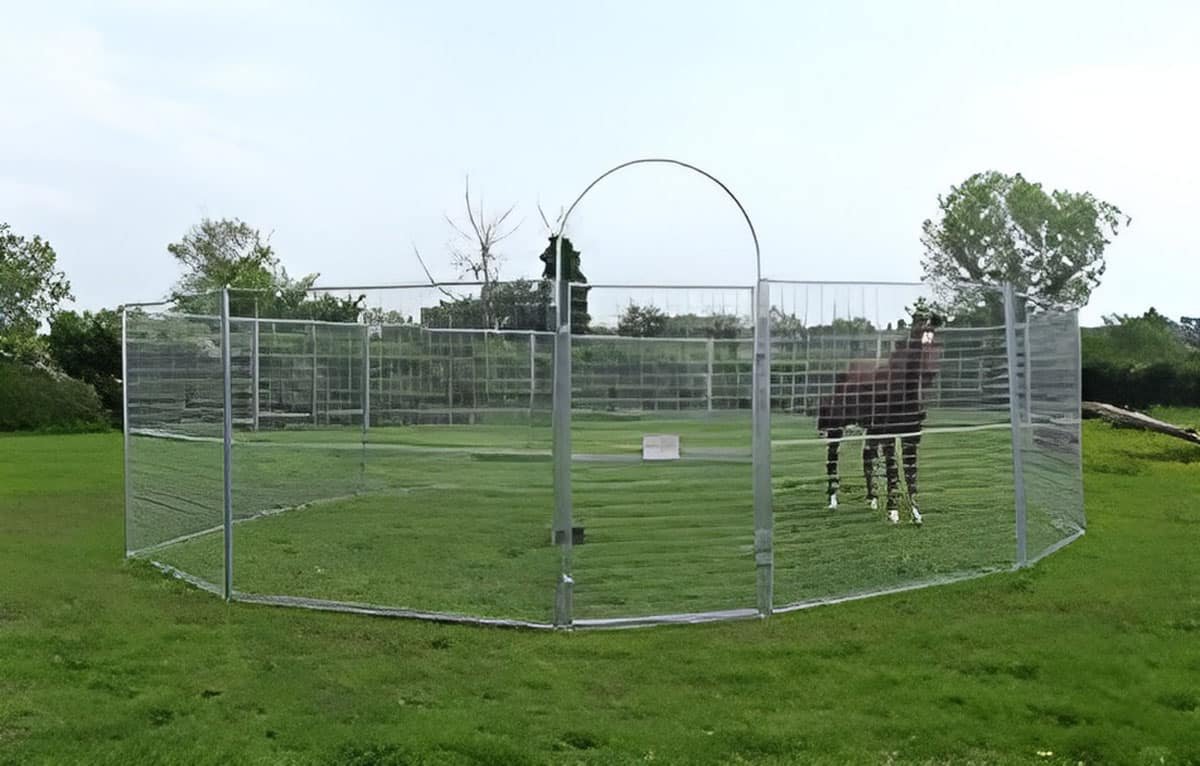
The question most RFQs skip is which gates are covered. Ask for a gate schedule naming every opening and the protection fitted to each. A supplier who produces one has designed the machine; one who answers “the gates are safe” has not engaged with the question. For each line, get four written answers: what the device does (prevent a start, stop motion, or both), whether it acts at every speed or only at rest, whether maintenance can bypass it, and how the test is recorded.
Interlock arrangements typically vary with configuration and market, so the requirement that applies to your installation is a local question. Confirm it with the inspector or authority that governs your site.
Speed Settings: The Range Is Only Half the Answer
Ask for the stated speed range of your configuration and the method behind it: how it was measured, at what load, and what the operator sees on the control. A range measured on an empty arm may not describe the machine with horses on it. Then ask about control behavior, where the horses feel the difference. Does the arm ramp up smoothly instead of jerking at the start? A startled horse can swing, rear or refuse the walker, so start quality is a safety property, not a comfort feature. Does the set pace hold under load?
There is no universal safe speed: pace depends on the animal, the session and the surface, so the supplier states the range and your trainer chooses inside it. Anyone quoting one number for every yard is guessing. The low end matters most — rehabilitation and cool-down work lives there.
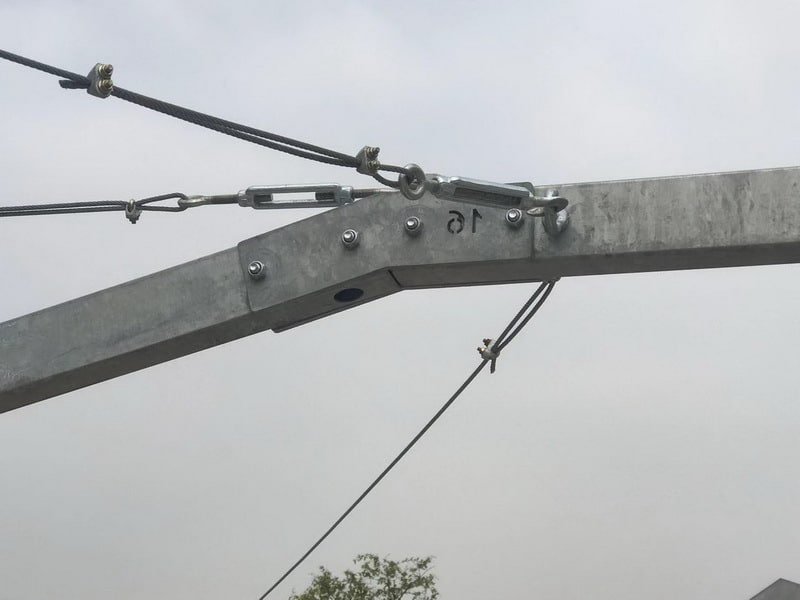
The Italian motor at the center of the drive is the traceable part of this conversation. Request the make, model and rating-plate data, plus the documentation that travels with the machine, so the drive and its controls can be identified and serviced years after installation. The companion guide covers how motor, roof and sizing decisions fit together.
The Horse Walker Safety Checklist: Item, Written Evidence, Site Verification
The whole list fits on one page. Put it in the RFQ and let the gaps in the answers do the filtering.
| Checklist item | Written evidence to demand | Site verification |
|---|---|---|
| Emergency stop devices | Location list and stop-function description for your configuration | Operate each device from the handler’s normal position |
| Behavior after a stop | Reset and restart logic, including response to power loss | Confirm the arm stays stopped when supply returns |
| Gate interlocks | Gate schedule: every opening and the protection fitted | Open each gate once running, once at rest |
| Speed range and start ramp | Stated range, how it was measured, soft-start description | Time revolutions under your usual load; watch the horses at the start |
| Drive package | Motor make, model and rating-plate data | Photograph the plate for the acceptance record |
| Records and commissioning | Manual language, wiring diagram, parts list, witnessed test form | Check the pack on delivery; sign before releasing the balance |
Two rows carry more weight than the rest. The reset row is almost free to test and catches the most expensive assumption on the list — that a machine which stopped will stay stopped. The records row decides whether a fault at six in the morning costs a day or a week.
Commissioning and the Record You Keep
Commissioning is where a specification becomes a machine. Walk the circle with the installer and operate every stop device from where a handler actually stands. Open every gate on the schedule, running and idle. Then write the results on a sheet both sides sign — insurers, inspectors and the manager who inherits the machine all ask for it.
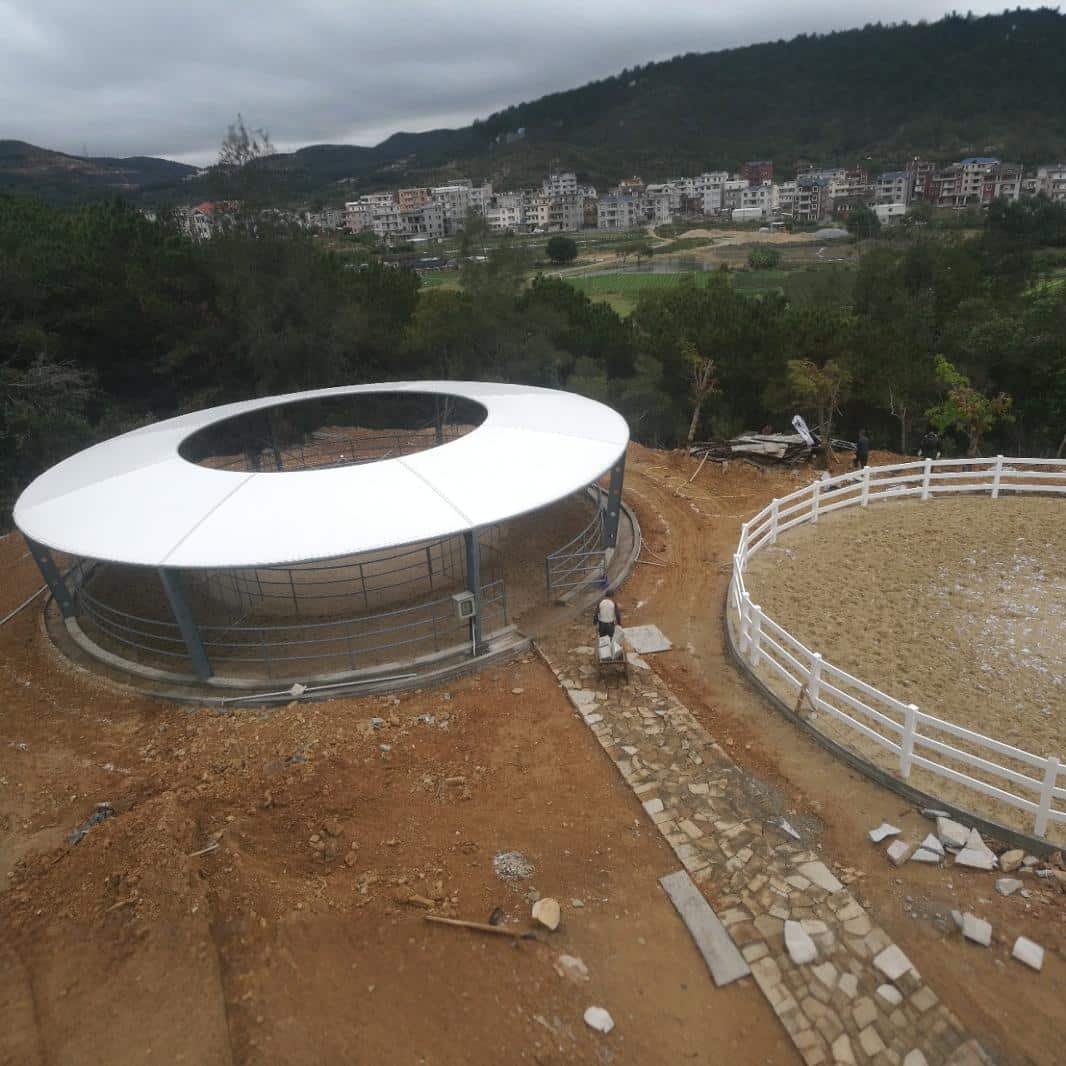
Ask what re-test interval the manufacturer’s documentation gives and whose rules govern it; intervals typically differ by machine and market, and neither a brochure nor an article is the authority. Repeat the walk after any repair, gate change or control work, because protection disappears quietly at exactly those moments. On orders of 20 sets or more, DB HorseStable assigns a dedicated regional account manager for customization and logistics advice.
What Certificates Do Not Settle
DB HorseStable products carry CE certification and the factory operates under ISO 9001. Both belong in your file; neither answers the question you have. A CE mark records what the supplier declares for a product, not how it behaves on your layout with your staff.
The regulatory frame around the horse is welfare, not machinery. EU Directive 98/58/EC, which our compliance references cover, sets general minimum welfare standards for kept animals — space, movement and care — and is not a specification for drive controls or gates. Competition venues add a layer: showgrounds and training centers, particularly in Germany where FEI-compliant training design is a common starting point, weigh competition rules alongside equipment. Confirm the electrical, machinery and welfare requirements for your site with the relevant authority or a local safety professional; they differ across markets.
How the Order Travels
Walkers sit in the training equipment line and are quoted per configuration, usually alongside a stabling or fencing order. The volume mechanics: orders start at 10 stall sets or 50 fence panels, batch discounts run 5-15%, and global lead time is 4-6 weeks, with 1-2 week expedited delivery from the Sydney and Warsaw regional warehouses. Build consistency matters on an arm that carries load. The Anping plant runs CNC machining and automated 360° welding at a stated capacity above 500 stall sets a month, and DB HorseStable has manufactured there since 2013. Hot-dip galvanized steel carries a stated 20-year rust-resistance expectation outdoors. The full horse walker and lunging pen line is specified here.
Frequently Asked Questions
What safety devices should a horse walker have?
Typically stop devices reachable from the handler’s position, gate protection that prevents a start or halts motion, and a speed control with a stated range. Which apply depends on your configuration and market, so get the list in writing and check it locally.
How do you test a gate interlock?
With the arm moving, and again at rest, open each protected gate and confirm the machine stops or refuses to start. Record every result on the commissioning sheet and repeat after any repair or control work.
What is the correct speed setting for a horse walker?
There is no single correct speed. Pace depends on the horse, the session and the surface, so ask for the stated range of your configuration and how it was measured, then set the work from your trainer’s judgment.
Does an emergency stop replace normal braking?
No. It is a last-resort device, while routine stopping is a control function. If a supplier describes it as the normal way to end a session, treat that as an open control-design question before you order.
Is a CE mark enough to prove a walker is safe for my yard?
Not on its own. The mark records the supplier’s declaration for that product; it says nothing about your layout, staff or climate. Collect the documentation for your configuration, then confirm what applies locally.
Conclusion
Three items decide most of what a walker’s safety file should contain: the stop function and what happens after it, the gates and what protects each one, and the speed range with the method behind it. Written answers let you compare suppliers; a witnessed test turns them into evidence.
Anything a supplier will not put in writing is a question you will be asking on site, with horses on the arm. Take the table into your next RFQ, and if the walker is part of a wider build, order it with the stabling so one specification owner answers for the project.

 English
  Spanish
  French
  Arabic
  German
0 Comments