
A stall liner specification usually travels as three words: HDPE, black, chew-resistant. Those words tell a buyer what the panel is called. They do not tell a buyer what is inside it, which is the whole virgin vs recycled HDPE question. Two panels can match on color, on thickness and on price and still carry different resin — one molded from virgin polymer, one from ground-up scrap, one from a blend with filler added to hold weight and cost down.
That gap costs the most at bulk order, when one decision lands on thirty or forty stalls at once. This manufacturer lists HDPE as one of three published liner options, alongside bamboo and pine, and publishes ISO 9001 and CE at company level with no certificate numbers stated. Nothing published here gives a resin share, a filler figure, or a chew or impact test result for liner panels. The useful information comes from your questions, in writing, before the deposit clears.
Key Takeaways
- “HDPE” is a family name, not a grade. Virgin polymer, sorted recovered material and reprocessed regrind can all sit behind that word on a quote.
- The published record stops short. Liner choices (bamboo, HDPE, pine) and company certificates are stated; no resin share, filler figure or panel test result is.
- Ask for a per-lot declaration, not a brochure. A datasheet describes a range. A lot statement says what shipped in your order, and claims turn on the second.
- Grade arrives as behavior, not as a label. Chalking color, a fuzzy chew face, whitened cut edges and panels standing out of square are what an unspecified filled mix does over one season.
- Keep the material answer in the commercial file. Published terms are 10 stall sets or 50 fence panels, 4-6 weeks globally, 1-2 weeks expedited from Sydney and Warsaw.
- Ask what is not tested. “Not tested to a chew or impact standard” is a usable sentence. Silence is not.
What a line of HDPE on a quote actually tells you
High-density polyethylene is a material family, and the family holds wide variation inside it. A sheet molded from virgin resin and a sheet molded from sorted recovered material can pass the same visual check on a showroom wall. A third sheet, loaded with mineral filler to add heft at lower cost, can beat both on price per panel and lose on the long-term behavior a yard actually pays for. The acronym is honest. It is simply not an answer.
Buyers already know this pattern from steel. The trap this site writes about openly is the steel gauge claim that does not survive delivery: a number quoted, a different wall shipped, no paper trail to compare them. Unstated resin content is the same failure mode in a different coat.
Watch for a quieter version of the same move. The durability figures published on this site belong to other products — 20 years of rust resistance on hot-dip galvanized steel, 15 years of life on UV-resistant PVC. Neither is a statement about HDPE liner panels.
The four questions that belong in writing
Send four sentences to every supplier on a liner shortlist, and keep replies as email text rather than a call summary. The test is not whether an answer sounds good. It is whether it names a number, a document, or a refusal.
| Ask this | A usable answer | A weak answer |
|---|---|---|
| Is the resin virgin, recycled or a blend, and at what share? | A share per layer, or a plain “we do not state a share” | “100% premium virgin material” with no document behind it |
| Is any mineral filler added, and how much by weight? | A named compound, or “no filler in this line” | A panel weight offered instead of a share |
| What is UV-stabilized — the whole sheet or one skin? | A stated layer structure, or “cap layer only” | “Suitable for indoor and outdoor use” |
| Which tests exist for this panel, and which do not? | Named reports, or “not tested to a chew or impact standard” | ISO 9001 offered as if it were a product test |
The fourth question saves the most money. ISO 9001 describes how a manufacturer manages its process; CE marks conformity for goods placed in a European market. Both sit at company level here, with no certificate numbers published, and neither says how a plastic sheet behaves when a horse works a corner for a season. Why anyone chooses plastic over timber at all is covered in HDPE stall infill benefits; this article keeps to what plastic, proven how.
Where resin grade shows up on the yard
Undisclosed recycled content and heavy filler do not announce themselves at handover. They arrive over one or two seasons, in four places a yard can walk up and look at. The surface chalks to a dull grey in sun instead of holding its color. The chew face goes fuzzy and opens at the edges rather than tearing cleanly. Cut edges and drilled corners whiten or crumb when a fitting is added. Sheets that lay flat on the pallet stand slightly out of square once fastened rigidly at two points.
The position worth holding: on a project of twenty or more stalls, a written resin declaration is worth more than a sample tile. A tile tells you how one sheet looks on your desk in March. A declaration tells you what the plant was allowed to feed the press in August, when nobody from your side is watching — and it gives a warranty claim a document to point at.
Climate changes that arithmetic. This site states its regional differences plainly: UV resistance and 40°C heat exposure for Australia and Spain, drainage and BHS-aligned design for the UK and New Zealand, frost-tolerant structures for -10°C Polish winters. A liner that is adequate in a shaded English yard can be the first item to fail under Spanish sun, and the resin package is one likely place to look. Ask which climate statement applies to the market the panels are shipping to, not to the range as a whole.
Fitting the answers into your order file
Material answers do not stay material once a purchase is moving. Orders start at 10 stall sets or 50 fence panels; volume discounts are stated as a 5%-15% band with no per-tier thresholds given in the published terms (confirm those with the supplier); delivery runs 4-6 weeks globally, with 1-2 weeks expedited from the Sydney and Warsaw warehouses. Capacity is stated as 500+ sets a month from CNC machining and automated 360-degree welding, at a manufacturer established in 2013 and based in Anping, and orders of 20 sets or more draw a named regional account manager.
Read those as a buyer reads them. A discount band with unpublished thresholds means the resin question is also a price question, and the cheapest protection for a discount is a specification you can point back to. A 1-2 week expedited window from a regional warehouse means panels may ship from a different lot than the one you specified, so ask for the declaration per lot rather than per product line.
Two records usually go missing. The first is an as-specified sheet: stall configuration (indoor, portable or temporary, with adjustable sizes on the horse stable systems line), liner material per line item, and the hardware that attaches it. The second is a change log naming who agreed each mid-production substitution. Where a substitution is not written down, it is not a documented change of specification — it risks being treated later as a defect you accepted.
Frequently Asked Questions
Does recycled HDPE mean a bad stall liner?
No. Sorted, consistently sourced recycled resin can perform well, and plenty of durable plastic products are made from it. The problem is not recycled content — it is content nobody will state. Buy the declared material, whatever it is.
How would a supplier prove virgin resin if I ask?
With paper: a resin declaration naming the grade or supplier, a per-lot statement, and a purchase or compound record behind it. Any answer that stops at a verbal assurance may mean the record does not exist, or is not being shared.
Do the 20-year and 15-year figures cover HDPE panels?
They do not. The published 20-year rust-resistance figure belongs to hot-dip galvanized steel and the 15-year life figure to UV-resistant PVC. Ask separately what, if anything, is stated for a plastic liner.
Can I judge grade from color and gloss in a photo?
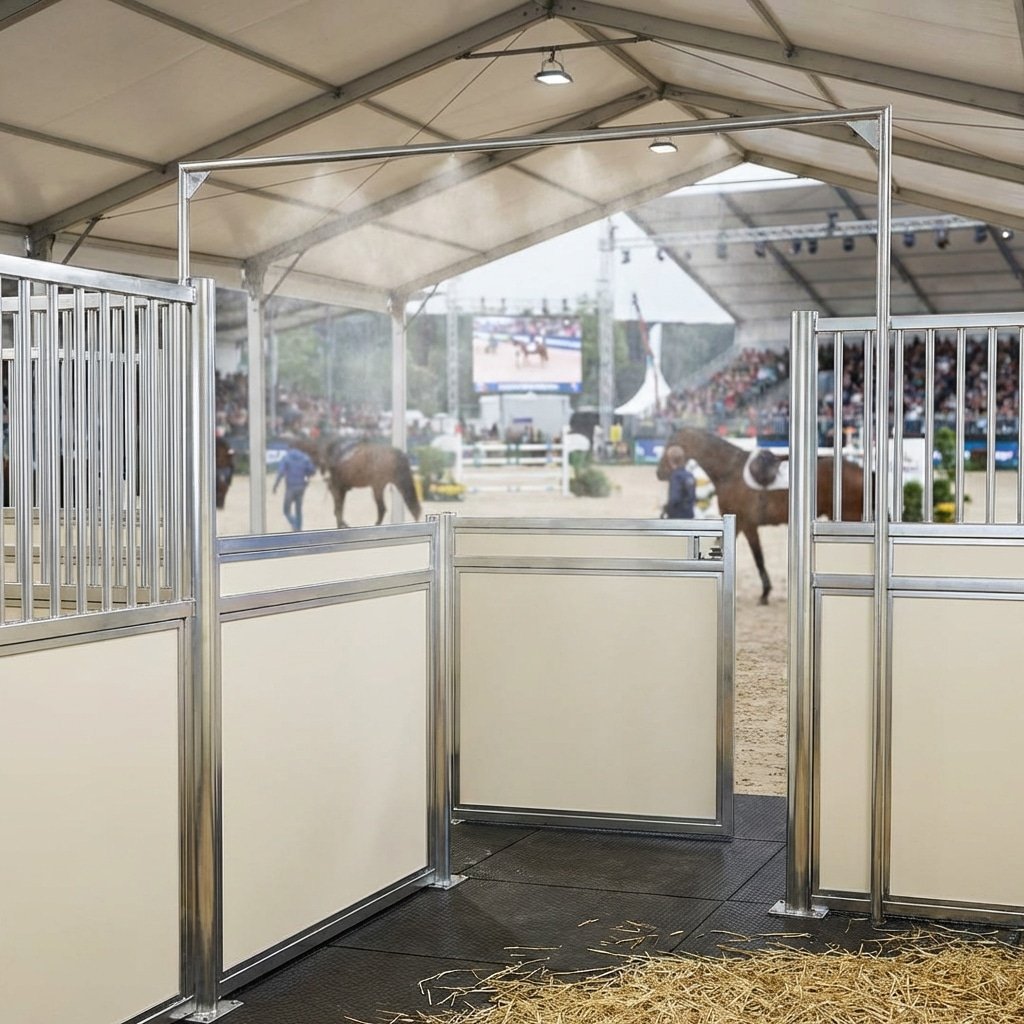
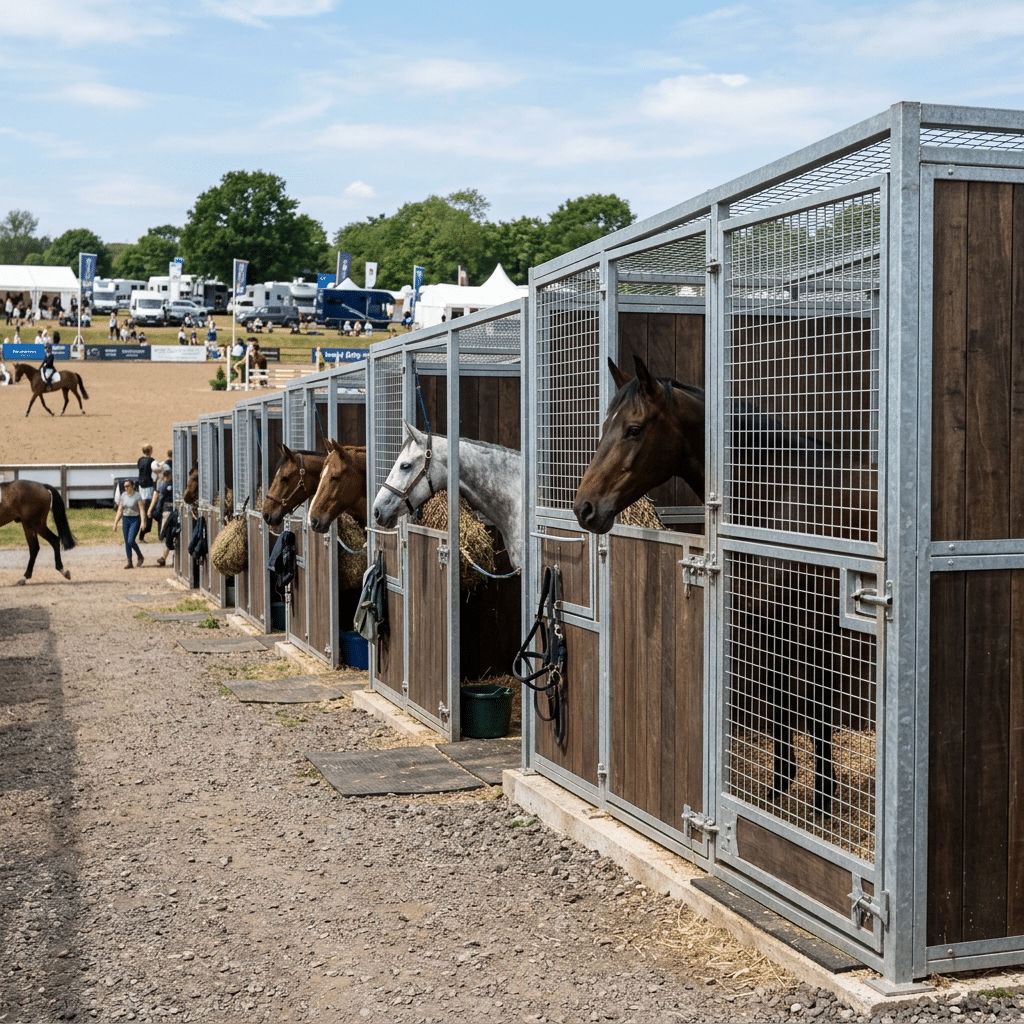
No. Pigment and surface finish can hide resin history almost entirely, which is why photographs on this page show panel construction and context only. Grade is a paper question, never a picture question.
Conclusion
Virgin versus recycled HDPE is not a debate about plastics. It is a question about documentation, and a bulk order is the only moment it is cheap to ask. Four sentences in writing — resin share, filler, what is stabilized, which tests exist — tell a buyer more than any showroom panel.
Collect those answers before the deposit, tie them to a lot number, and keep them beside the delivery terms. Then compare what three suppliers were willing to put on paper.


 English
 Spanish
 French
 Arabic
 German
0 Comments