


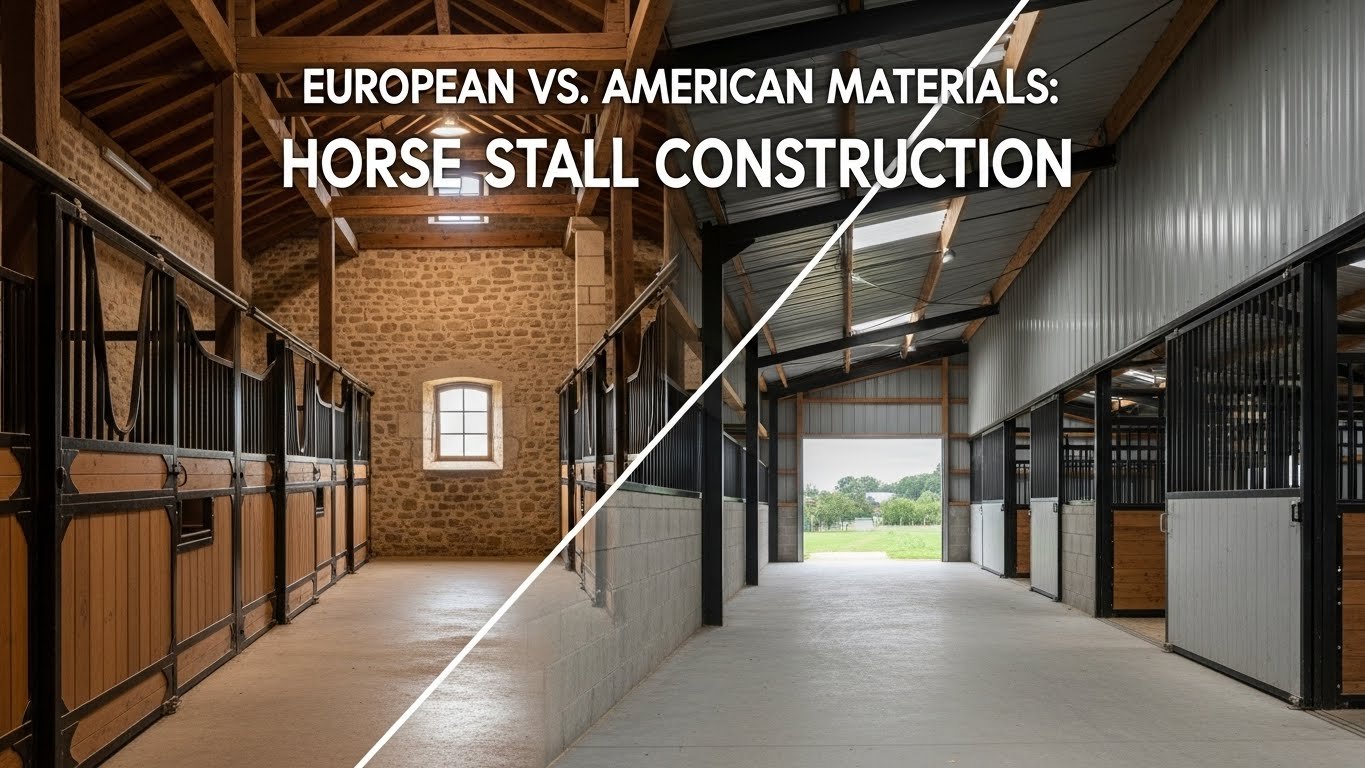
EU Directive 98/58/EC, adopted by the Council on 20 July 1998, lays down general minimum standards for the protection of animals kept for farming purposes across the European Union. It is short on numbers and long on obligations: member states must ensure that animals and holdings are inspected, and animals must be kept in conditions that meet their physiological and behavioral needs. For anyone buying stables for a facility in Germany, France, Denmark, Spain or Poland, the EU Directive 98/58/EC horse welfare framework lands on your procurement file as a verification problem.
This guide translates the Directive’s general obligations into a horse welfare verification checklist for stable buyers in Europe: what the Directive actually requires, what it deliberately leaves to national law, and which documents and design evidence to demand from a stable manufacturer before signing. The starting position is simple — ask for the evidence, from every supplier, every time.
Key Takeaways
- The Directive is general by design: adopted 20 July 1998, it sets minimum standards for the protection of animals kept for farming purposes — conditions meeting physiological and behavioral needs, verified through member-state inspections.
- It does not prescribe stable dimensions: no EU-mandated stall size, bar spacing or ventilation rate comes from 98/58/EC; specific numbers, where they exist, come from national law and assurance schemes.
- Coverage of horses can vary: how the Directive applies to sport and leisure horses may depend on how the horses are kept and on the member state — confirm with your national authority.
- Verification focuses on hardware: airflow through the stall, dry flooring and drainage, safe contact surfaces, and materials that survive the facility’s climate.
- Documents to demand: ISO 9001 certification, CE marking where applicable, and a written statement of alignment with the Directive’s welfare principles — current copies with the quotation, not marketing claims.
- Supplier frame: stabling systems start at a 10-set MOQ, ship globally in 4-6 weeks, and orders above 20 sets include a dedicated regional account manager.
What EU Directive 98/58/EC Horse Welfare Rules Actually Say
The Council adopted the Directive on 20 July 1998 to establish general minimum standards for the protection of animals kept for farming purposes. Its core is an obligations framework rather than a rulebook: those who keep animals must do so in conditions that meet the animals’ physiological and behavioral needs, and member states must ensure inspections of animals and the holdings that keep them. The detail — how those general duties become measurable requirements — is filled in at national level.
How horses fit depends on context. The Directive speaks to animals kept for farming purposes, and member states implement it through their own law — so the obligations that reach a sport horse yard, a breeding operation and a racing facility can differ. The professional move is not to guess: for a specific facility in a specific country, confirm with the national authority how the Directive’s requirements apply to horses kept the way yours are kept.
What the framework gives a buyer is a vocabulary. “Physiological needs” points at air quality, dry resting surfaces and thermal conditions. “Behavioral needs” points at visibility, social contact and freedom of movement. Every piece of stable hardware you buy either serves one of those needs or it does not — and that mapping, described below, is what turns a general directive into a procurement checklist.
What the Directive Does Not Say
The Directive does not prescribe stall dimensions, bar spacings, ventilation rates or any other measurement for horse stables. Anyone quoting a metric stable size “required by 98/58/EC” is misquoting it. Where numbers do bind a project, they come from national transpositions, building codes, welfare assurance schemes, or lending and insurance conditions — not from this Directive.
For a buyer, that cuts two ways. It is liberating, because no EU dimension table overrides your layout program. It is also a warning: when a supplier states “compliant with EU Directive 98/58/EC,” that is a statement about design philosophy — housing that supports the animal’s physiological and behavioral needs — not a measurement certificate with pass marks. The verification work stays with you, which is exactly why the checklist below exists.
Where Welfare Obligations Meet Stable Hardware
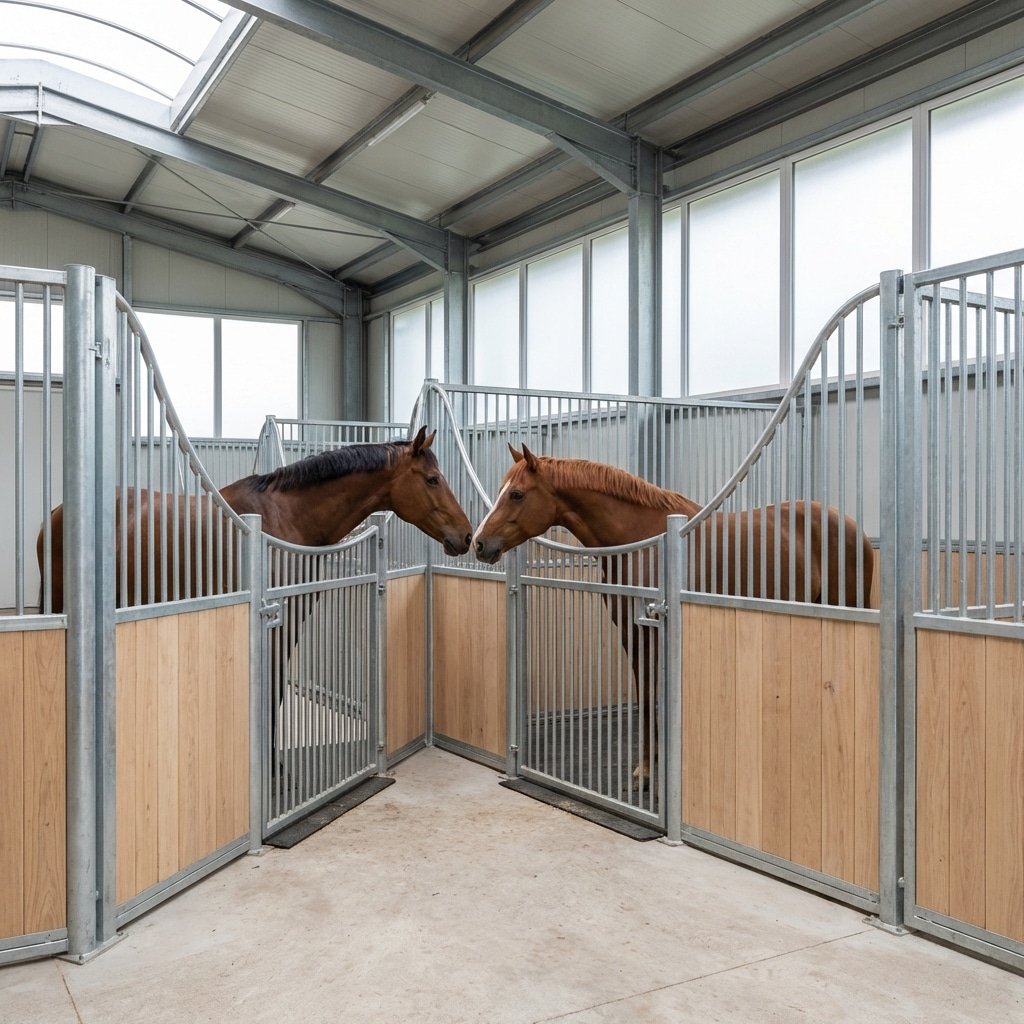
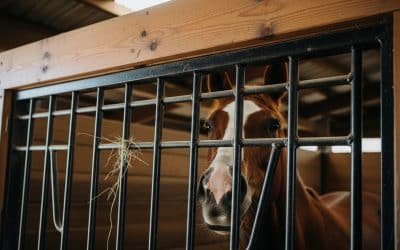
Air quality is the first place welfare obligations become steelwork. A stall that seals tight against the aisle trades warmth for ammonia, and ammonia at bedding level is a physiological problem for the horse and a respiratory problem for the staff. Barred or grilled upper sections — on stall fronts and on Dutch doors — keep air moving while the horse stays contained, and they pair with barn windows to give air a path across the stall row rather than stopping at the door.
The resting surface is the second. A dry bed is a welfare outcome built from drainage design and flooring choice: a layout that moves urine out of the stall, and a floor surface that does not hold it. Our stable drainage planning guide covers the slope and layout side in detail — the welfare point is simply that wet bedding is where a general “physiological needs” obligation fails in practice, long before anything visible happens.
The third place is contact and safety. Behavioral needs include sightlines and social contact; the hardware answer is visibility through barred uppers rather than solid walls, without exposing the horse to injury — dressed welds, no protruding fasteners, and bar spacing appropriate to the animals housed. Materials carry welfare weight too: hot-dip galvanized steel, which the factory rates at 20 years of rust protection as a stated claim, keeps surfaces sound for the life of the installation, and regional builds differ on purpose — drainage-first, BHS-aligned designs for Britain and New Zealand, frost-resistant structures for Polish winters to -10°C, heat-hardened materials for Australian and Spanish summers around 40°C.

The Supplier Verification Checklist
Run every candidate supplier against the same list, in writing, before the order is confirmed:
- Ventilation evidence: how the stall system supports airflow — barred or grilled upper sections, window placement, and the cross-ventilation path across the stall row.
- Drainage and flooring: how urine leaves the stall, which flooring the system pairs with, and the surface specifications in writing.
- Contact surfaces: bar joints welded and dressed, fasteners flush, and grill or bar spacing stated for the animals you house.
- Materials and durability: hot-dip galvanized after fabrication rather than pre-galvanized sheet, and infill options — bamboo, HDPE, pine — documented per product.
- Regional fit: the climate variant relevant to the facility’s country, from heat-hardened to frost-resistant specifications.
- Manufacturing evidence: ISO 9001 quality management, CE marking where applicable, and the production capability behind the order — CNC machining and automated 360° welding at a capacity of 500-plus stabling sets a month.
Welfare verification does not stop at the stall front. A barn that meets the animal’s needs and burns down fails the animal completely — pair this checklist with our barn fire safety checklist covering electrical systems, hay storage and escape routes, and you have the two halves of a defensible welfare file.
Documents to Request Before You Sign
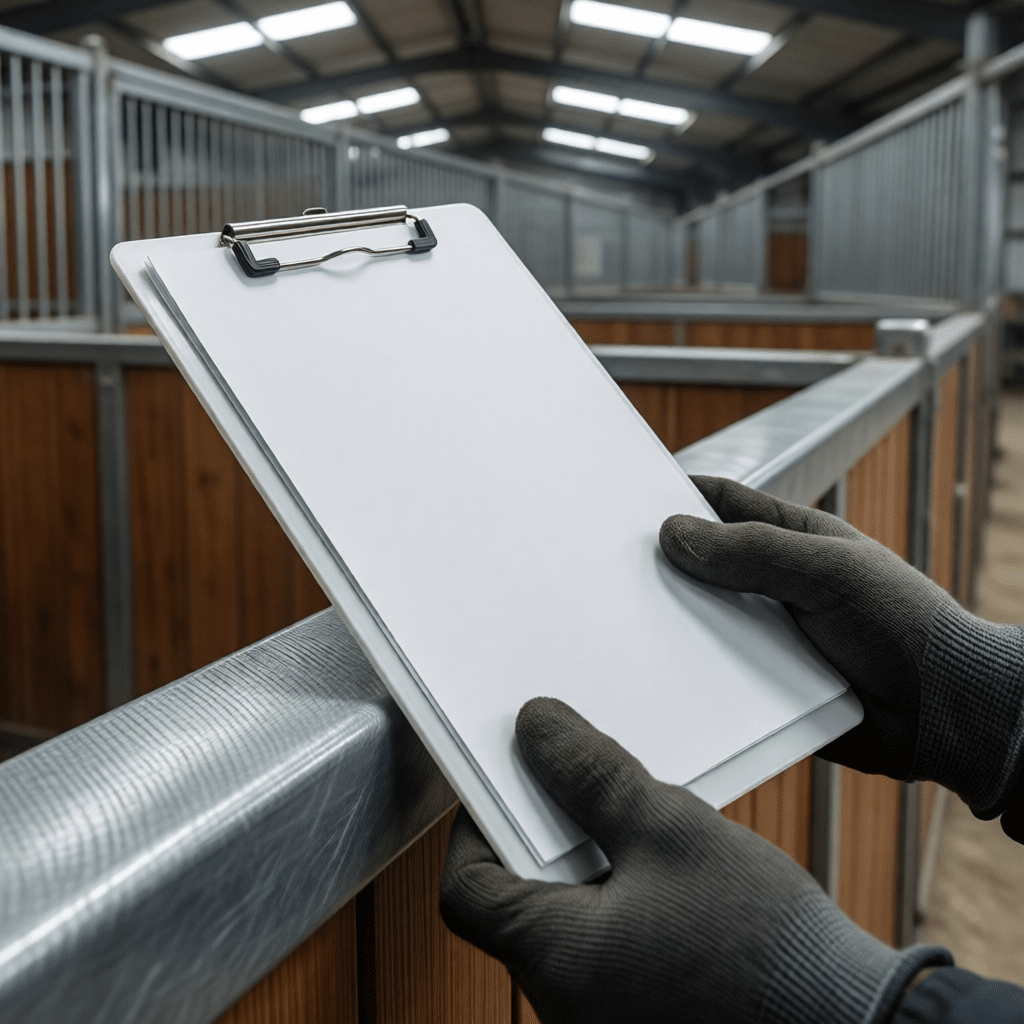
The file you assemble is short and standard: the supplier’s current ISO 9001 certificate, the CE declaration for the products where it applies, and a written statement of how the stabling system’s design aligns with the welfare principles of EU Directive 98/58/EC — ventilation, dry resting surfaces, safe contact and visibility. Ask for current documents with the quotation. Certificates and compliance statements have scope and validity; numbers quoted from memory in a sales email do not.
Then connect the documents to the order. Stabling systems start at a 10-set MOQ, batch discounts run 5-15% by volume, and global lead time is 4-6 weeks — with 1-2 week expedited shipping from the Sydney and Warsaw regional warehouses where that applies. Orders above 20 sets include a dedicated regional account manager, and that manager is the right person to carry your verification questions through customization, documentation and delivery in one thread.
Häufig gestellte Fragen
Does EU Directive 98/58/EC set minimum stall sizes for horses?
No. The Directive sets general minimum standards for the protection of animals kept for farming purposes and leaves measurements to national law. Where stall dimensions are mandated for your project, they come from national rules or assurance schemes, not from 98/58/EC.
Does the Directive apply to sport and leisure horses?
It can depend on how the horses are kept and on the member state implementing it. Confirm the position for your facility with your national authority rather than relying on a supplier’s blanket claim.
What proof of compliance should a stable supplier provide?
Current ISO 9001 certification, CE marking where applicable, and a written statement of how the design aligns with the Directive’s welfare principles — plus the design evidence behind it: ventilation approach, drainage, contact surfaces and materials.
Does the Directive require farms to be inspected?
Yes — member states must ensure inspections of animals and holdings, and the inspection schedule is set at national level. For your facility, that is one more reason the welfare file described above should exist on paper before an inspector asks.
Schlussfolgerung
EU Directive 98/58/EC gives European stable buyers a general welfare framework, not a measurement table — conditions that meet physiological and behavioral needs, verified through inspections, with the detail filled in nationally. Translated into procurement, that means verifying ventilation, drainage, contact surfaces and materials against every supplier, and collecting ISO 9001, CE and welfare-alignment documents with the quotation.
Run the checklist above against your shortlist before you sign, and confirm the national requirements that apply to your facility with the relevant authority. The stabling systems page is the right place to start assembling the design half of your welfare file.

 German
  English
  Spanish
  French
  Arabic
0 Kommentare