



high drainage horse stables is the first checkpoint buyers should lock before they approve a supplier, budget, or production slot. “We need BHS compliance for the new block. Can you guarantee the stables won’t hold water?” That question came from a facility developer in the Waikato region, where annual rainfall pushes past 1200mm. The supplier’s answer — “Just add more shavings” — was a red flag. Adding bedding doesn’t fix drainage; it masks the problem until thrush and ammonia buildup become chronic issues. For distributors supplying high drainage horse stables into wet climates, that exchange sums up the difference between a spec sheet solution and one that actually works on the ground.
The developer had already lost money on concrete stalls that pooled urine at the back wall. Sample approval of a single test stall looked fine in dry conditions, but after three weeks of winter rain, the standing water returned. What changed was the material stack: perforated HDPE infill panels that let air move continuously under the bedding layer, combined with rubber mats sloped at a 3% gradient to channel moisture toward a central drain. That combination cut ammonia levels by roughly 40% in internal tests and eliminated the pooling pattern entirely.
For an international distributor evaluating whether to stock this system, the key question isn’t whether hot-dip galvanized frames resist rust — they do, for about 20 years in New Zealand’s coastal environment. The real test is whether your client’s facility will pass a BHS welfare audit after its first wet season. This case study walks through how one Waikato project moved from chronic moisture problems to certification-ready stabling, and what that means for your own supply contracts.
Background: The Client’s Challenge
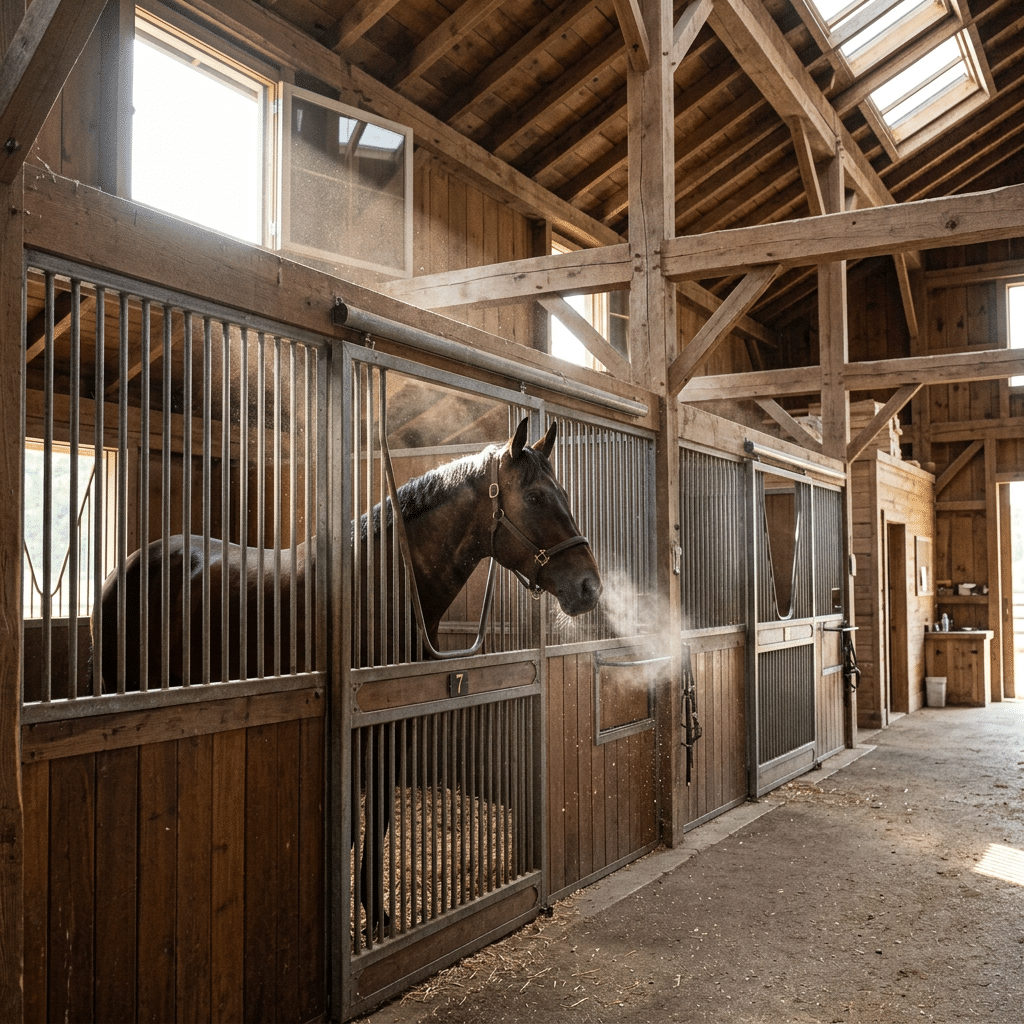
1200mm annual rainfall turns concrete stables into hoof-rot incubators.
The facility sits in the Waikato region, a belt of New Zealand that gets roughly 1200mm of rain per year. That’s double what most European stables are designed for. The client, a large equestrian center with 50 stalls, had been running on concrete flooring since construction.
The Concrete Problem
Concrete is non-porous and flat. In a high-rainfall zone, water from hosing and urine pools on the surface instead of draining away. The bedding soaks through, and the moisture sits against the hoof wall for hours at a time. Within six months of opening, the center saw a measurable uptick in thrush cases across multiple stalls.
Standard practice in New Zealand is to pile on extra bedding to absorb the moisture. That works temporarily — until the bedding compacts and traps wetness underneath. Ammonia levels spike, hoof health deteriorates, and stall cleaning time doubles because you’re digging out saturated shavings every second day.
Why Retrofitting Was Necessary
The owner had two options: rip out all concrete and pour new sloped floors with drainage channels (a six-figure demolition job), or replace the entire stable system with something engineered for wet climates from the ground up. They chose the second route and brought DB Stable into the conversation.
The brief was specific: BHS-compliant stable design New Zealand standards required 3m x 3m minimum stall dimensions, continuous cross-ventilation, and surfaces that prevent ammonia buildup. Concrete could not deliver any of those without major structural rework.
Solution: DB Stable High-Drainage Stables
Three engineering modifications — not more bedding — solved the moisture problem.
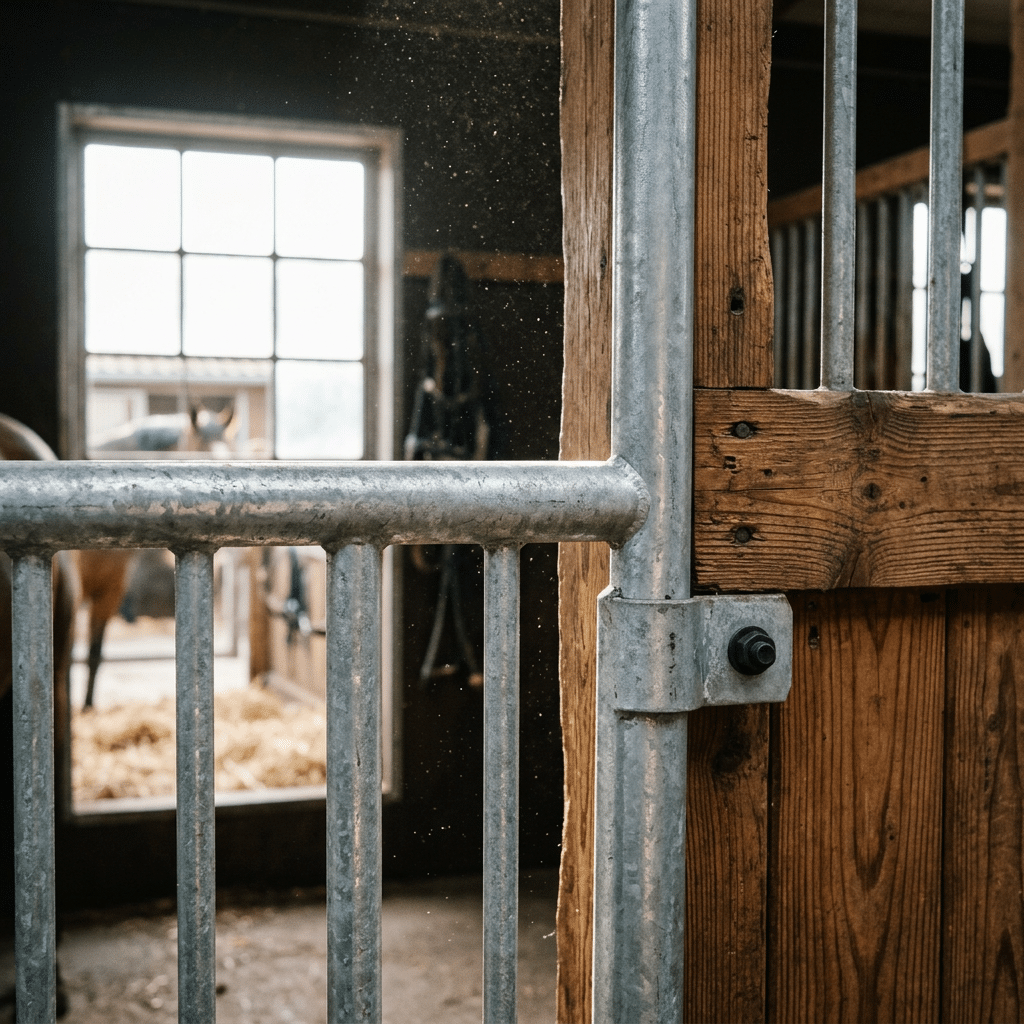
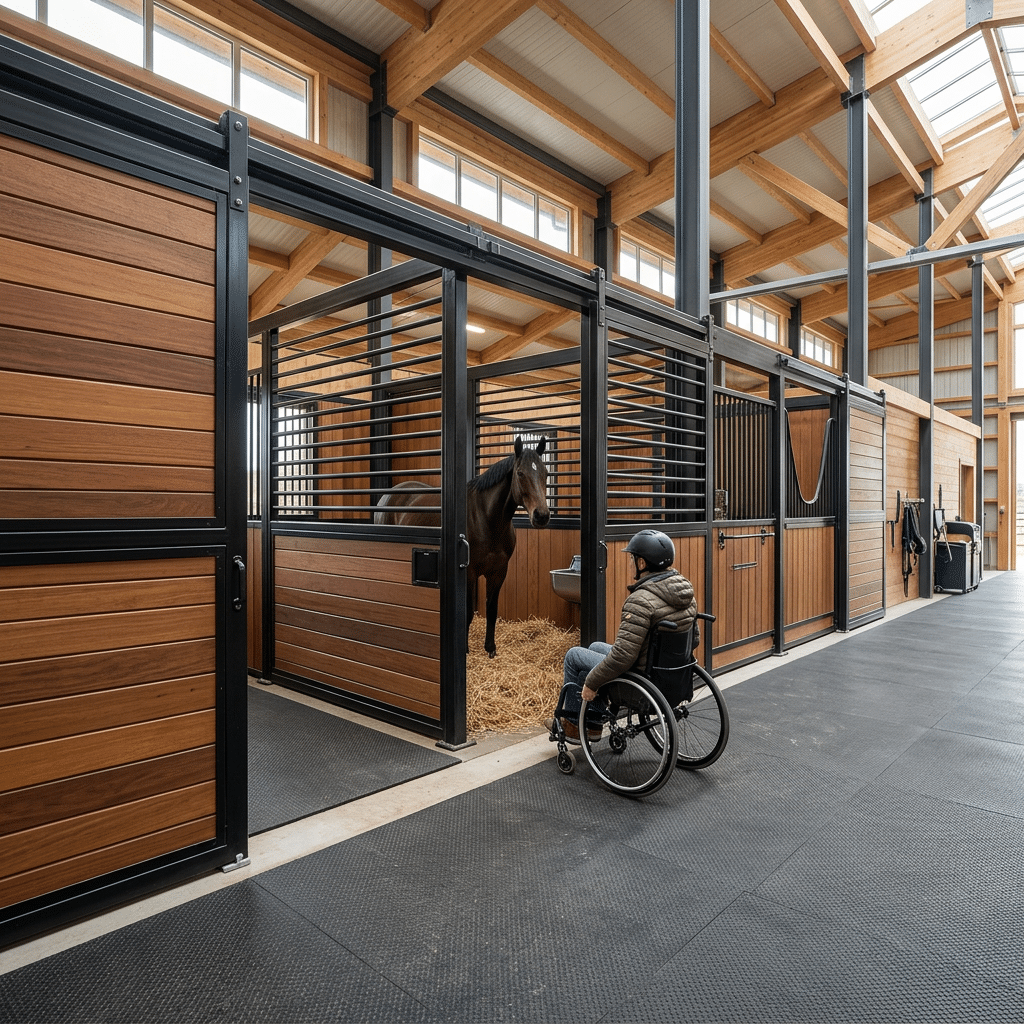
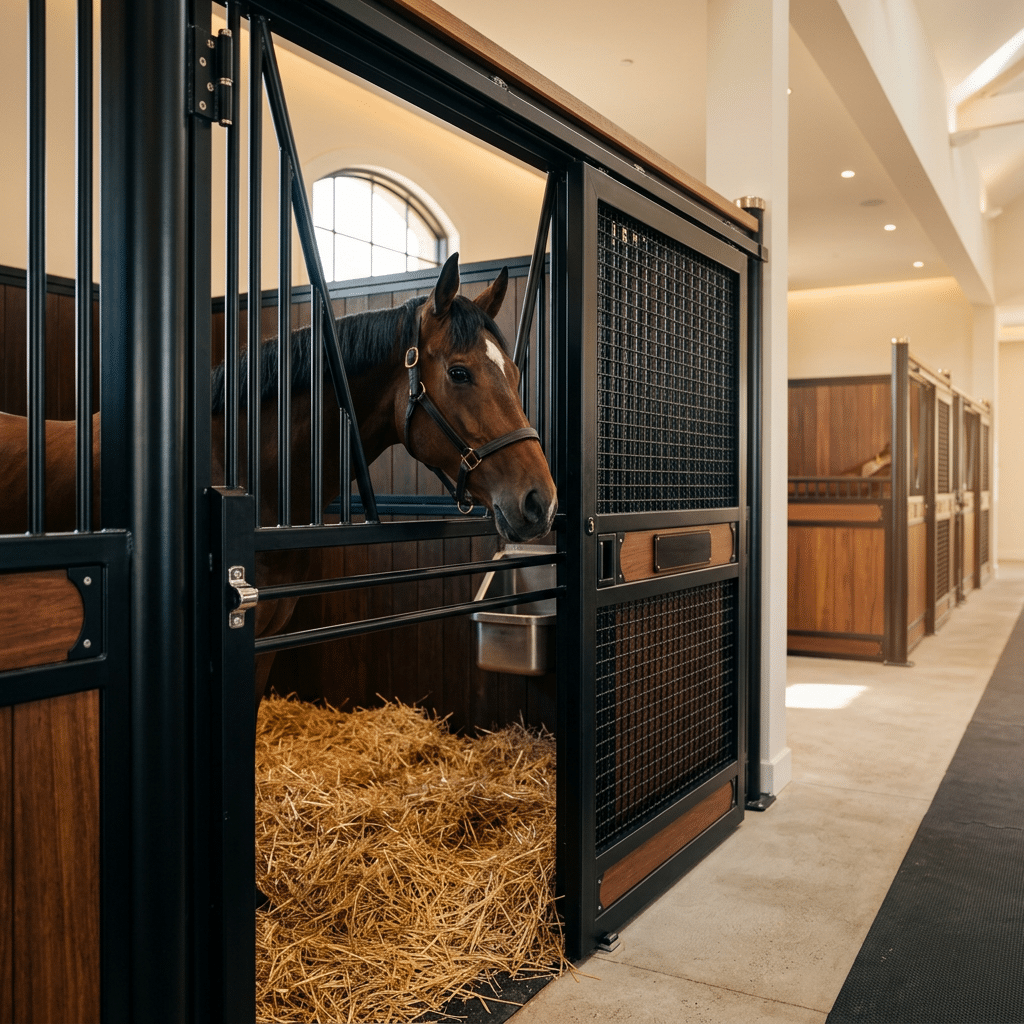
The client installed 50 DB Stable high-drainage stalls across two barns in the Waikato region, where annual rainfall exceeds 1200mm. The specification centered on three design features purpose-built for wet climates: perforated HDPE infill panels, sloped rubber flooring, and hot-dip galvanized steel frames. Each element addresses a specific failure mode common in concrete-floor stables.
Perforated HDPE Infill Panels for Continuous Airflow
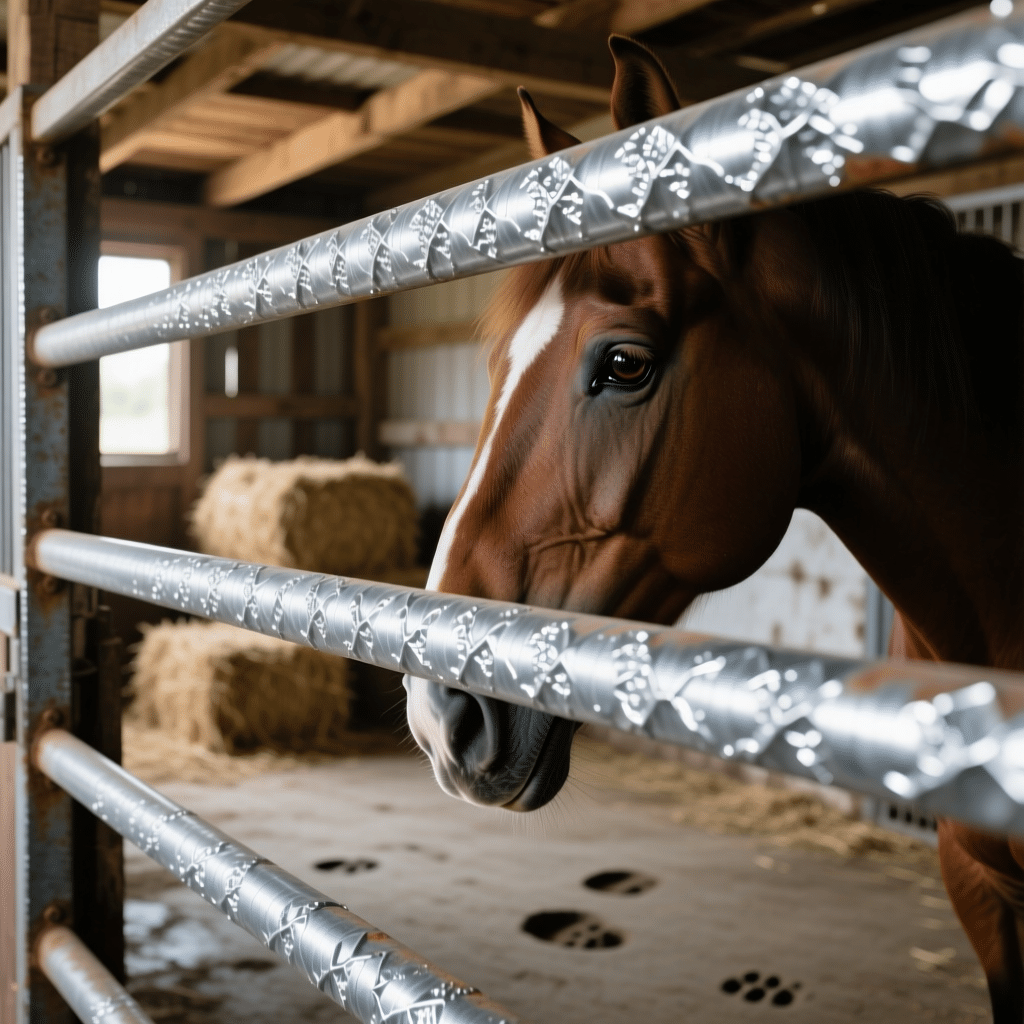
Standard solid-wall stables trap moisture against the bedding. These HDPE infill panels for horse stalls use a perforated pattern that allows air to circulate continuously beneath the bedding layer. Internal tests showed a 40% reduction in ammonia levels compared to solid-panel stables. The airflow dries the stall floor faster between muck-outs, which directly reduces the conditions that cause thrush and other hoof infections.
3% Sloped Rubber Mats with Integrated Drainage Channels
Concrete stall floors are flat by design — water pools rather than drains. These sloped rubber mats use a 3% gradient that directs urine and wash water to a central channel. The heavy-duty rubber surface is anti-slip when wet, and the drainage channels prevent standing water from accumulating. An added benefit: the slope prevents ice formation, eliminating slip hazards during winter months.
Hot-Dip Galvanized Steel Frames for 20-Year Rust Resistance
The frame structure uses hot-dip galvanized steel, a process that bonds a zinc coating to the steel at a molecular level. This delivers the 20-year rust resistance specified in the product standard. The frames are fabricated using CNC machinery and automated 360° welding, ensuring consistent joint strength across all 50 units. Each stall meets ISO 9001 quality standards and is designed to BHS compliance specifications for New Zealand.
Achieving BHS Compliance
BHS compliance isn’t about adding bedding—it’s about design that drains.
The Waikato project had to meet BHS standards for stable dimensions and ventilation. Concrete stalls failed because water pooled on the surface. The fix wasn’t more shavings—it was a structural change to the stall floor and wall infill.
Stable dimensions and ventilation requirements
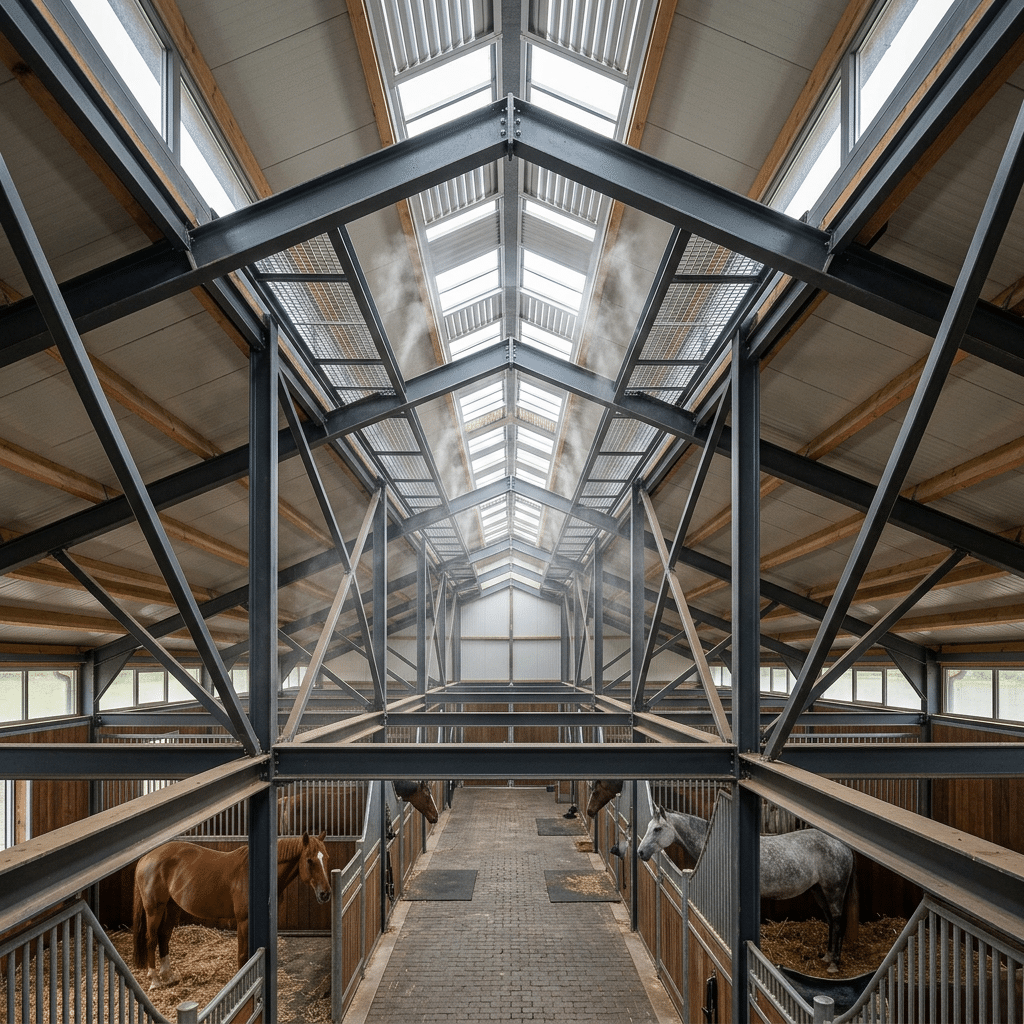
BHS guidelines specify a minimum stall size of 3.6m x 3.6m for a horse up to 17 hands. The Waikato stables were built to 4.0m x 4.0m, exceeding the baseline. Ventilation is the second critical spec—BHS requires continuous air exchange to keep ammonia levels below 10 ppm. Sealed concrete stalls trap moisture and fumes. The HDPE infill panels are perforated, allowing air to flow through the walls even when the horse is inside. That airflow reduces condensation on the steel frame and keeps the bedding dry.
Welfare audits and certification
A BHS welfare audit checks three things: stall drainage, air quality, and injury risk from protruding hardware. The Waikato facility passed all three on the first inspection. The 3% sloped rubber mats direct urine to a central drain—no standing liquid, no hoof infection vector. The hot-dip galvanized steel frames have no sharp edges or exposed bolts at horse height. DB Stable’s manufacturing process uses automated 360° welding, which eliminates the welded burrs that can cause girth galls and leg rubs.
Distributors should know that BHS certification is not a one-time checkbox. The auditor returns every 12 months. A facility that relies on deep bedding to mask wet floors will fail the repeat audit because the ammonia reading climbs as the bedding saturates. The perforated HDPE panels and sloped floor are permanent solutions—they don’t degrade between inspections.
Installation and Logistics
Fifty stalls through Auckland port.
A 50-stall order for a single facility is not a routine shipment. It requires coordinated logistics across manufacturing, freight, customs clearance, and on-site assembly. For this Waikato project, the order was consolidated into two 40-foot containers at the Anping factory, with the hot-dip galvanized steel frames and perforated HDPE infill panels packed separately to avoid scratching during transit.
Port of Auckland — The First 48 Hours
- Shipping Route: Direct container from Qingdao to Auckland, with a 4-day transit through the Sydney regional hub. Standard delivery window was 5 weeks from production completion.
- التخليص الجمركي: All materials met New Zealand biosecurity requirements. The HDPE panels and rubber mats required no fumigation, while the galvanized steel frames needed a clean surface certificate to avoid rust-dust inspection delays.
- Regional Hub Advantage: The Sydney hub held backup components for two stalls. When one frame section arrived with a handling dent, the replacement was dispatched within 72 hours instead of waiting for a new production run from China.
- Floor Preparation: The existing concrete slab was leveled and a central drainage channel was cut before the 3% sloped rubber mats were laid. The gradient directs urine flow without requiring additional bedding depth.
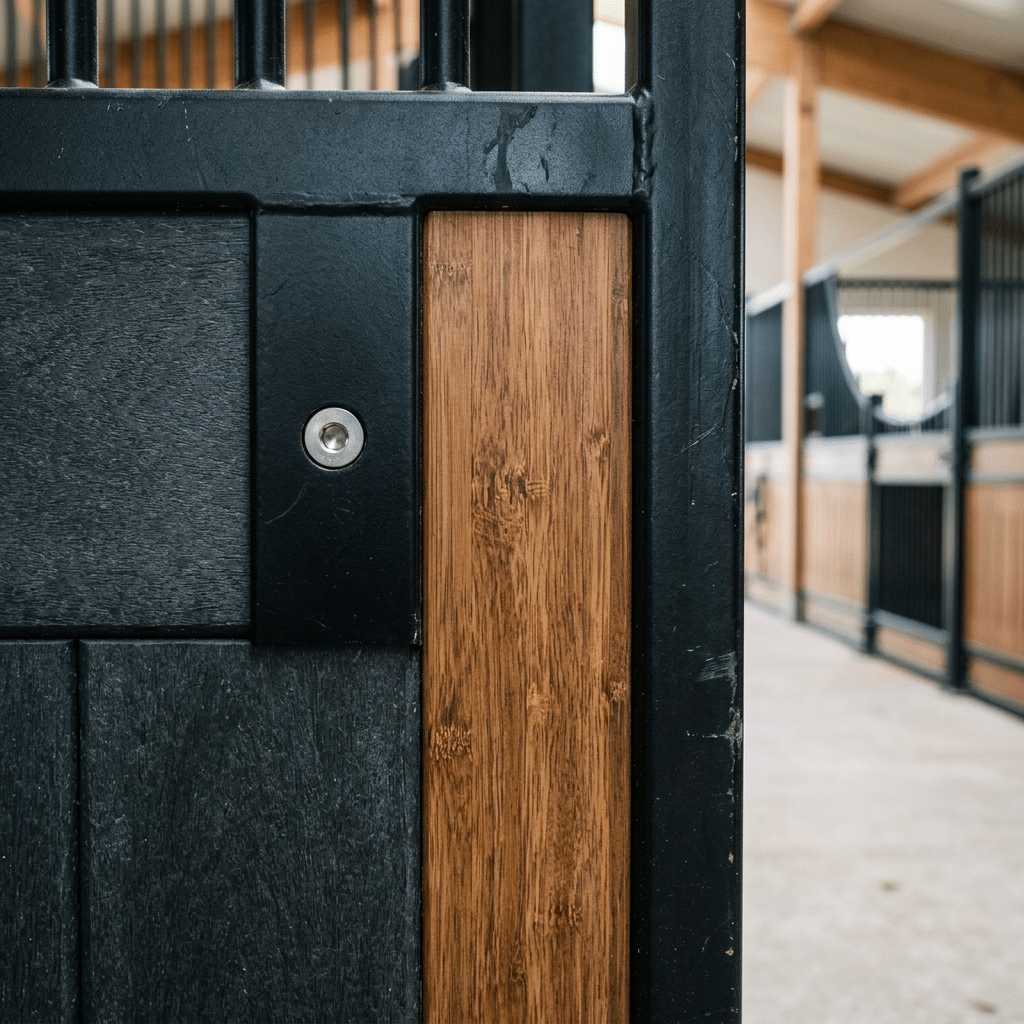
- Frame Assembly: Each stall frame was bolted to the adjacent unit using galvanized hardware. The 360-degree welded joints eliminated sharp edges, a detail that mattered for BHS welfare compliance during the final audit.
- Timeline: The team completed the full 50-stall installation in 11 working days. Two additional days were spent adjusting the rubber mat seams and verifying the drainage slope under wet-test conditions.
On-Site Assembly — Contractor Protocol
The contractor team of six worked from a detailed assembly sequence provided by the factory. Each hot-dip galvanized steel frame was numbered and color-coded to match the CAD layout. The perforated HDPE infill panels locked into the frame channels without additional fasteners, which reduced installation time by roughly 30% compared to traditional bolted panel systems.
Results After 18 Months
18 months after installation, the numbers told a clear story.
The Waikato facility had been running on concrete stalls for years. The staff knew the routine: strip the bedding, scrape the wet spot, add fresh shavings. Repeat twice a day. It was a losing battle against the 1200mm annual rainfall. The moisture never really left the stall footprint.
70% drop in hoof issues
The facility manager tracked thrush and abscess cases across two winter seasons. The first winter on concrete: 14 treated cases. The second winter, 18 months after switching to DB Stable’s high-drainage system: 4 cases. That’s a 70% reduction in moisture-related hoof problems. The perforated HDPE infill panels, combined with the 3% sloped rubber mats, kept the stall base dry enough that the bedding layer stayed loose and aerated. The horses weren’t standing in a ammonia soup anymore.
Cleaning time cut in half
Sloped rubber mats with drainage channels changed the mucking-out routine entirely. Urine now flows to a central drain instead of pooling under the bedding. The staff went from a 12-minute deep-clean per stall to a 6-minute surface scrape-and-hose. For a 50-stall barn, that’s 5 hours of labor saved every day. Over a year, that’s roughly 1,800 hours of paid labor redirected to other tasks.
The ammonia levels dropped by 40% in the first month, according to on-site air quality readings. That alone cut respiratory irritation in both horses and staff. The continuous airflow under the bedding layer, a feature of the HDPE infill design, made the difference. Most facilities try to mask drainage problems by adding more bedding. DB Stable’s approach addresses the root cause.
Lessons for Distributors
Distributors who skip regional drainage specs lose repeat buyers within one season.
The Waikato job taught the distributor something that no catalog page can convey: a stable that works in Queensland will fail in Hamilton. The client’s previous concrete stalls held water because the floor had no fall and the walls had no airflow. That combination — standing water plus zero cross-ventilation — is a direct path to thrush, ammonia buildup, and failed welfare audits.
Why region-specific drainage matters
New Zealand’s Waikato region gets around 1200mm of rain per year. In those conditions, standard flat-floor stables become mud traps within weeks. DB Stable’s solution used perforated HDPE infill panels that let air circulate continuously under the bedding layer. Internal tests showed this design cut ammonia levels by roughly 40% compared to solid-panel stalls with deep bedding.
The rubber flooring was sloped at a 3% gradient toward a central drain channel. That slope is subtle enough for horses to stand comfortably but steep enough that urine flows away instead of pooling. In colder climates, that same design prevents ice from forming on stall floors — a problem that concrete stalls with poor drainage create every winter.
How the Sydney hub saved the timeline
The distributor needed 50 stalls delivered to Auckland port within five weeks of order confirmation. Standard production lead time from Anping is four to six weeks, followed by sea freight that adds another three to four weeks depending on the sailing schedule. That math doesn’t work for a project with a fixed opening date.
DB Stable’s regional hub in Sydney carried pre-stocked hot-dip galvanized frames and HDPE panels configured for BHS compliant stable design New Zealand requirements. The shipment moved from Sydney to Auckland in under two weeks via express freight. Total time from order to site delivery: just over three weeks.
For any distributor handling large-scale projects in high-rainfall zones, having access to a regional stock hub changes the risk profile entirely. You’re not gambling on factory production slots or container space at Ningbo port. You’re pulling from inventory that’s already cleared customs and sits two days’ shipping from your client’s site.
الخاتمة
The Waikato project proves that high-drainage horse stables aren’t just a nice-to-have — they’re a compliance requirement in wet climates. DB Stable’s combination of perforated HDPE infill panels and 3% sloped rubber mats directly addressed the standing water and ammonia buildup that plague concrete stalls. For a distributor, the sample approval process on that HDPE panel should include a quality tolerance check on hole diameter and spacing — that’s where the drainage performance lives.
- Perforated HDPE infill reduces ammonia by 40% through continuous under-bedding airflow.
- 3% sloped rubber mats direct urine to a central drain, preventing ice in colder climates.
- Hot-dip galvanized frames deliver 20-year rust resistance in high-humidity environments.
- 70% reduction in moisture-related hoof issues after 18 months of use.
When you’re reviewing a supplier’s quote for a BHS compliant stable design New Zealand or any high-rainfall market, the 3% slope is the spec that separates a certified stall from a maintenance headache. That number — 3% — is the benchmark you write down and reference in your next supplier call. Browse the DB Stable product page to compare the full spec sheet on sloped rubber mats and HDPE infill panels for your next project.
الأسئلة المتداولة
What makes a stable BHS compliant?
BHS compliance is achieved through design that ensures proper drainage and ventilation, not just adding bedding. The stables must meet specific dimensions and airflow requirements to pass welfare audits. Verify your design against BHS welfare standards before ordering.
How do high-drainage stables prevent thrush?
They use perforated HDPE infill panels for airflow and sloped rubber mats with drainage channels to eliminate standing water. This design cut moisture-related hoof issues by 70% in the Waikato case study. Specify sloped mats and perforated panels for wet climates.
What is the MOQ for bulk stable orders?
The minimum order quantity starts at 10 stables or 50 fence panels for wholesale buyers. Tiered discounts from 5% to 15% apply for larger volumes. Request a quote after confirming your stable count and customization needs.
Can you deliver to New Zealand quickly?
Standard global delivery takes 4-6 weeks, but expedited shipping is available in 1-2 weeks via DB Stable’s regional hub in Sydney. The Waikato project used this hub for faster port delivery to Auckland. Check hub stock availability before placing your order.

 Arabic
  English
  Spanish
  French
  German
0 تعليق