

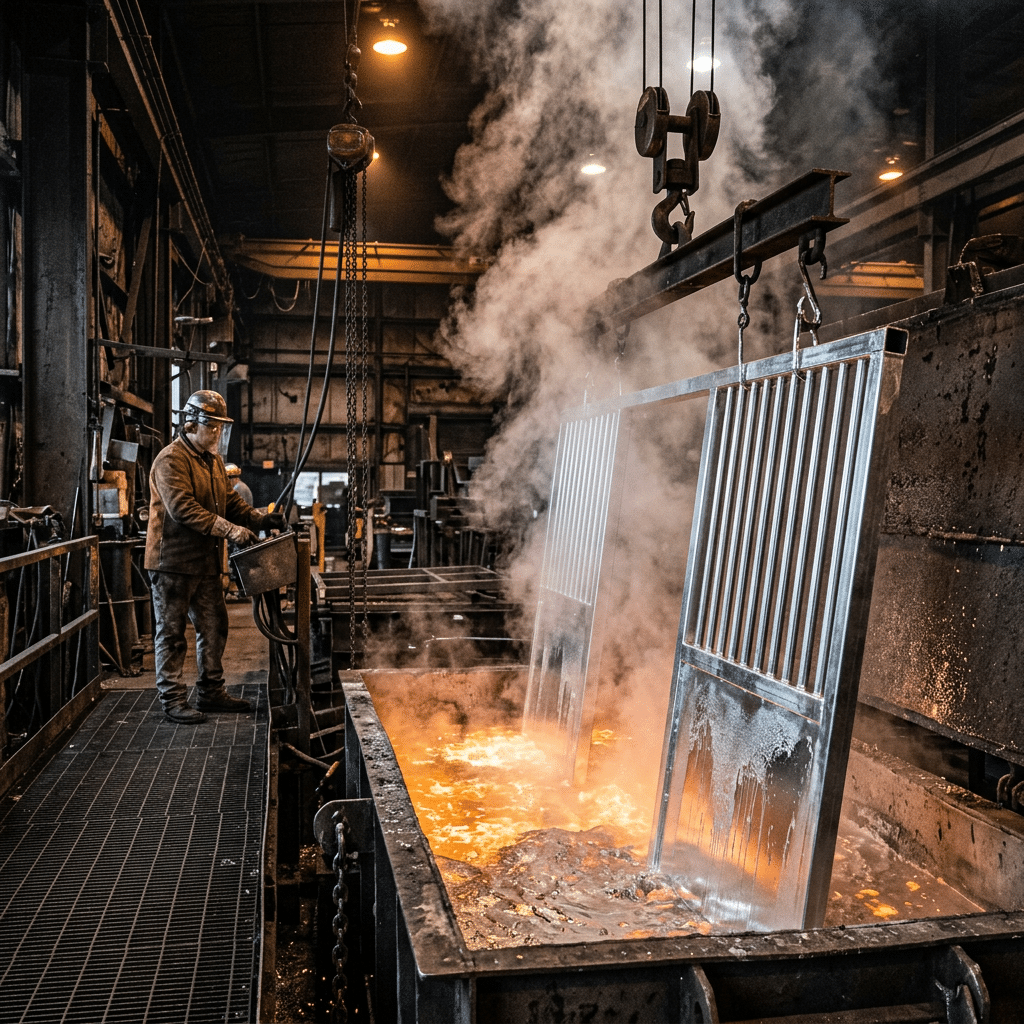
This import guide for horse stables for sale confronts the single biggest threat to distributor profitability: freight costs. Sourcing traditional, fully-welded stables is a critical error, as loading only 12-15 sets into a 40HQ container destroys margins before the product ever reaches the customer.
This analysis benchmarks suppliers against the non-negotiable BS EN ISO 1461 galvanizing standard. We evaluate manufacturers based on their steel pallet flat-pack systems, which protect profits by loading 30 to 45 stable sets per container and cutting freight costs by over 60%.
What Should You Look for in a Global Manufacturer?
Focus on verifiable quality and compliance. Look for certifications like ISO 9001 and industry-specific standards like ISO 1461. These credentials prove a supplier meets rigorous safety and production standards.
Verifying Quality Standards and Technical Expertise
Before partnering with any manufacturer, you need to verify their credentials. Confirm they hold relevant certifications like ISO 9001, which shows they have a repeatable quality management system. Dig into their technical knowledge of materials and fabrication processes; this expertise directly impacts how long the product lasts. You also need to evaluate their production capacity. Make sure they can handle your current order volume and scale up for future growth without cutting corners on quality.
The Role of ISO 9001 and ISO 1461 Certifications
Certifications aren’t just paperwork; they are proof of a disciplined process. Our ISO 9001 certification means every production stage follows a strict, documented quality system. For rust protection, we follow BS EN ISO 1461 for all hot-dip galvanizing. This standard guarantees a zinc coating thickness of over 70 microns on our steel tubing, delivering real-world corrosion resistance. These standards are fundamental to our commitment to engineering safety and building products that last.
Who Are the Leading US and Australian Brands?
The US market is led by established custom builders, while Australian brands prioritize engineered steel and advanced coatings to withstand harsh environmental conditions.
The horse stall market isn’t monolithic. Different regions have produced leaders with distinct priorities. In Australia, the focus is on material science and durability against the elements. In the US, the market is defined by long-standing, family-owned manufacturers specializing in custom craftsmanship.
Australian Market Leaders
Australian manufacturers build for longevity, using hot-dipped galvanized steel and advanced alloys as a baseline to combat corrosion. Their systems are typically modular and prefabricated, designed for resilience and low maintenance.
| الشركة المصنعة | الموقع | Key Differentiator |
|---|---|---|
| Guerilla Steel | Queensland | Focus on total cost of ownership with a prefabricated Duragal® alloy system built for a 25+ year service life. |
| DoWell Equine | New South Wales | European-inspired designs with a focus on safety and sustainable infill options like recycled plastic or hardwood. |
| Equistall Premium | National | Proven track record, having built the stables for the Sydney 2000 Olympics. Known for easy-assemble kits. |
| Solutions Stables | Australia-wide | Commitment to using 100% Australian materials, specializing in portable stable systems with certified Formply panels. |
United States Market Leaders
The major US brands are often defined by decades of experience in custom fabrication. They emphasize bespoke designs, high-quality welding, and close collaboration with clients, builders, and architects to deliver tailored solutions.
| الشركة المصنعة | الموقع | Key Differentiator |
|---|---|---|
| Lucas Equine Equipment | Kentucky | Market leader for over 40 years, specializing in high-end, custom-made stall components and barn doors. |
| Classic Equine Equipment | Missouri | 30+ years of experience in custom-engineered stalls with a strong emphasis on safety and durability. |
| J&E Grill Manufacturing | Wisconsin | Over 35 years in business, offering both prefabricated and fully custom stall doors in wood and steel. |
| American Stalls | فيرجينيا | Founded in 2006, focuses on handcrafted, powder-coated steel systems for major equestrian facilities. |
Engineer Stables for Decades of Performance

Why Choose a Factory-Direct OEM Like DB Stable?
Direct OEM sourcing provides control over critical standards like Hot-Dip Galvanization after fabrication. Our flat-pack system also loads up to 45 sets per container, saving distributors over 60% on freight.
Gain Direct Control Over Quality and Costs
When you partner with a source factory, you get direct oversight of the manufacturing process. This means you can verify that critical standards, like our strict adherence to BS EN ISO 1461 for Hot-Dip Galvanizing *after* fabrication, are met on every order. There are no middlemen obscuring the production details. By sourcing our own Q235B steel and streamlining production, we provide competitive pricing without compromising the structural integrity required for large-scale projects and distribution.
Profit Protection Through Smart Logistics
Freight costs can destroy a distributor’s margins. Traditional, fully-welded stables are bulky and inefficient to ship; a 40HQ container might only hold 12-15 sets. We engineered a steel pallet flat-pack system specifically to solve this problem. Our system allows us to safely load 30 to 45 stable sets into a single 40HQ container. This efficiency directly protects your profitability by cutting per-unit shipping costs by more than 60%.
Does Your Supplier Meet ISO 1461 Galvanizing Standards?
ISO 1461 demands specific zinc coating thicknesses, typically 70-85μm, and strict surface quality rules to guarantee long-term corrosion protection after fabrication.
Key Benchmarks of the ISO 1461 Standard
The ISO 1461 standard isn’t a suggestion; it’s a set of non-negotiable requirements for hot-dip galvanized coatings on fabricated steel. It sets clear, measurable benchmarks that separate a professionally protected product from one destined to fail prematurely.
- Minimum Coating Thickness: The standard links zinc coating thickness directly to steel thickness. For example, structural steel between 3mm and 6mm thick must have a minimum average coating of 70 microns (μm). Thicker steel requires more protection.
- Surface Finish Quality: A compliant coating must be continuous and free of defects like blisters, sharp points, or uncoated areas. These flaws compromise the protective barrier and are grounds for rejection under the standard.
- Repair Procedures: The standard provides strict rules for fixing small, uncoated spots that may occur during handling. It limits the size and number of allowable touch-ups to ensure the repair doesn’t create a new weak point.
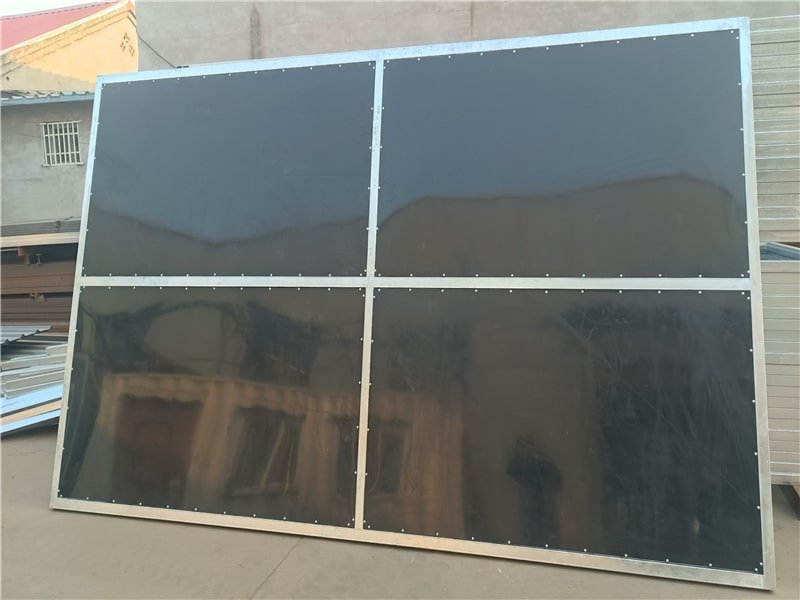
Verifying Compliance with Our Coating Data
We don’t just claim compliance; our production process is built around exceeding the ISO 1461 requirements. This ensures every component, including welds and cut edges, receives full protection. Our data confirms it.
- Process Integrity: We exclusively use a ‘Hot-Dip Galvanization After Fabrication’ process. We build the entire stable panel first, then dip it. This is the only method that fully protects vulnerable welds from rust.
- Heavy Structural Parts: For steel components thicker than 6mm, our average coating thickness is greater than 85 microns (μm), surpassing the standard.
- Steel Tubing Framework: The 3-6mm steel tubing used for frames consistently achieves an average coating thickness that exceeds the 70-micron (μm) requirement.
How Do You Choose the Right Partner?
Choosing the right manufacturing partner means looking beyond price. Focus on shared long-term goals, verifiable quality standards like ISO 9001, and logistics that protect your profits.
Aligning on Goals and Operational Values
A successful partnership is built on more than just purchase orders. You need to find a manufacturer whose long-term vision for growth matches your own. If you’re aiming to scale, your partner must have the capacity and ambition to scale with you, not just fulfill the current order.
Pay attention to how they communicate and solve problems. A reliable partner doesn’t just ship boxes; they offer solutions when challenges arise. Trust is the foundation of this relationship. Look for a clear track record of delivering measurable results and a transparent process you can verify. If they can’t show you how they operate, they aren’t the right fit.

Verifying Manufacturing Standards and Logistics Support
Technical qualifications are non-negotiable. The manufacturer must have proven quality management systems in place, backed by certifications like ISO 9001. For products exposed to the elements, you need to confirm adherence to specific technical standards. For example, any steel structure should be hot-dip galvanized to ISO 1461 to guarantee genuine, long-term rust protection.
Finally, analyze their logistics model. A cheap product with expensive shipping kills your margin. A smart partner designs for “Profit Protection.” Look for logistics solutions like a flat-pack system. This approach can fit up to 45 stable sets in a single 40HQ container, drastically cutting your freight cost per unit compared to the 12-15 sets from a traditional supplier.
الأسئلة المتداولة
What is a Minimum Order Quantity (MOQ) and is it negotiable?
A Minimum Order Quantity is the smallest number of units our factory produces in a single run to cover fixed costs. We structure our MOQs to support different business needs: Trial Orders start at 3-5 stables, Project Orders fill a 20GP container (10-15 sets), and Distributor Orders fill a 40HQ container (30-40 sets). We often discuss terms with long-term partners building a consistent supply chain.
Can you manufacture a horse stable based on my private label design?
Yes. As an OEM/ODM manufacturer, our core business is producing horse stable systems based on your specific designs and brand requirements. We work with your specifications to build products for your private label, giving you full control over the final product.
Do you offer exclusive distribution agreements for a specific country or region?
We evaluate requests for exclusive distribution agreements based on the specific market and partnership potential. This arrangement grants a single distributor sole rights to sell our products within a defined territory. Contact us to discuss opportunities for your region.
How do you verify your factory’s quality certifications like ISO 9001?
All our certifications, including ISO 9001 for Quality Management and ISO 1461 for Hot-Dip Galvanizing, are fully verifiable. We provide the official certificate with its unique number and issuing body details. Our B2B clients can contact the issuing body directly to validate our credentials at any time.
What is your process for handling any quality defects?
Our quality control starts with prevention. We use certified Q235B and Q345B steel and ensure every component is hot-dip galvanized after fabrication per ISO 1461. In the rare event of a defect, we have a clear replacement process. Every installation kit also includes a cold galvanizing spray for any minor scratches that happen during assembly.
الأفكار النهائية
While pre-galvanized options seem cheaper, they leave critical welds unprotected and exposed to rust. Adhering to the ISO 1461 standard of hot-dip galvanizing after fabrication is the only way to safeguard your inventory and brand reputation. This is how you eliminate warranty claims and build long-term market trust.
Verify our engineering firsthand. A small trial order lets you test our coating thickness and system fitment before committing to a full container. Contact our team to discuss your private label requirements and get a quote.

 Arabic
  English
  Spanish
  French
  German
0 تعليق