


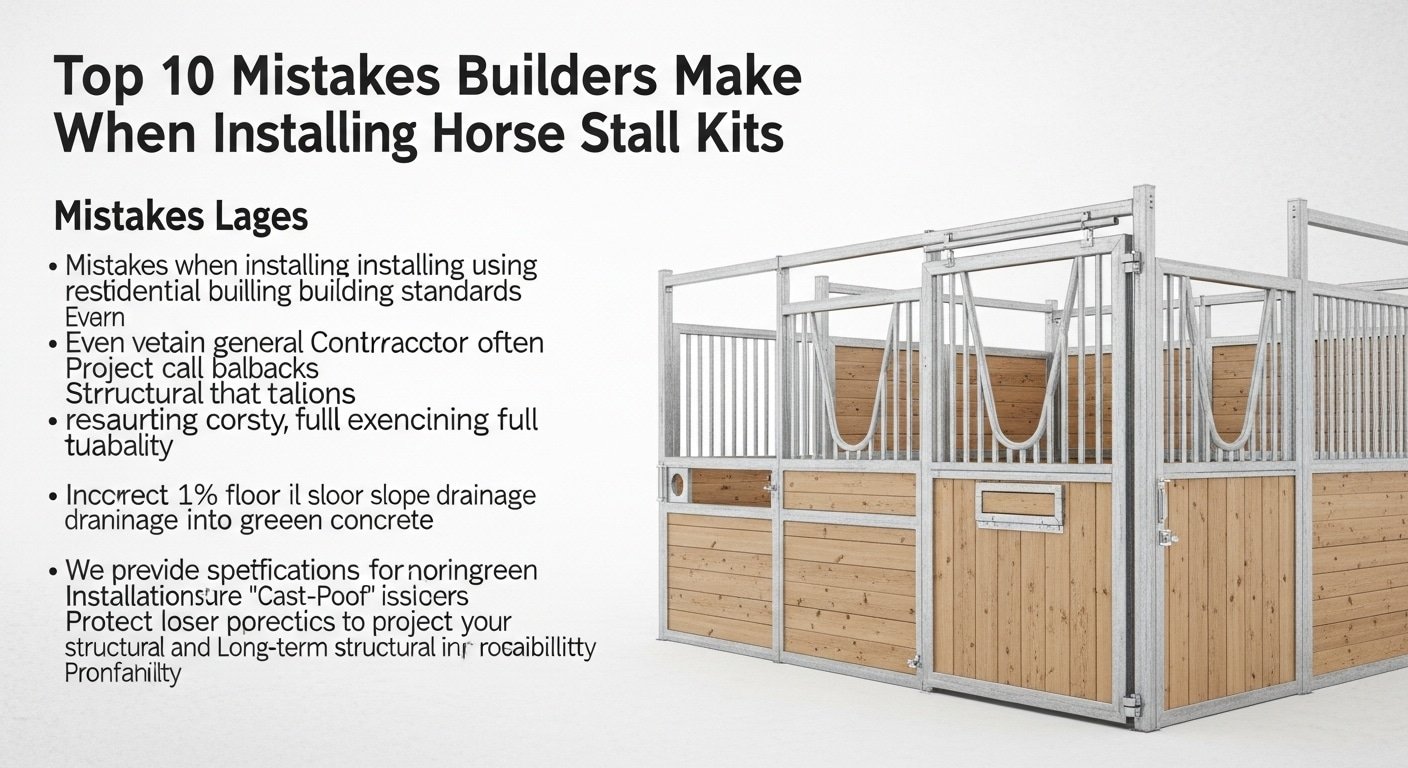
Mistakes when installing horse stalls using residential building standards lead directly to project callbacks and liability. Even veteran general contractors often underestimate the engineering demands of an equine environment, resulting in structural failures that require costly, full-scale teardowns and void material warranties.
This guide outlines the critical, data-backed errors, from incorrect 1% floor slope drainage to anchoring into green concrete. We provide the correct specifications to prevent these issues, ensure a ‘Cast-Proof’ installation, and protect your project’s long-term structural integrity and profitability.

Top 10 Installation Mistakes to Avoid in 2026
Comparaison rapide
| Mistake to Avoid | Area of Focus | Primary Benefit | Verdict |
|---|---|---|---|
Ignoring Site Conditions | Site Planning | Prevents Water Damage & Mud | Reduces mud, mold, and insects while improving the structural longevity of the barn. |
Inadequate Ventilation | Air Quality | Improves Horse Respiratory Health | Effectively reduces airborne pathogens and ammonia, helping to control interior temperature. |
Underestimating Stall Size | Layout & Design | Enhances Horse Safety & Comfort | Allows horses to turn and lie down easily, significantly reducing the risk of getting cast. |
Improper Stall Door Sizing | Safety & Access | Prevents Entry & Exit Injuries | Provides safe clearance for both horse and handler, and allows for easy equipment movement. |
Poor Stall Flooring Installation | Revêtements de sol | Promotes Joint Health & Safety | Provides crucial cushioning and traction, which simplifies stall cleaning and improves sanitation. |
Using Inappropriate Materials | Material Selection | Ensures Durability & Longevity | Drastically reduces damage from chewing and kicking by using materials that resist rust and rot. |
Lack of Proper Drainage | Water Management | Prevents Moisture & Pest Issues | Keeps aisles, stalls, and paddocks dry by effectively directing water away from the foundation. |
Insufficient Aisle Width | Layout & Design | Increases Handler & Horse Safety | Allows for the safe passage of multiple horses at once and provides adequate room for equipment. |
Unsafe Electrical Installation | Safety | Prevents Fire & Electrocution Risk | Protects wiring from damage by horses and rodents, which significantly reduces the barn’s fire hazard. |
Improper Window Design | Safety & Design | Prevents Entrapment Injuries | Provides safe natural light and ventilation while allowing horses to see their surroundings without risk. |
COMMON MISTAKE
Ignoring Site Conditions
Le verdict : Failing to evaluate a site’s topography, drainage, and exposure is a critical error that causes chronic water pooling, muddy areas, and long-term damage to the foundation.
✅ Proper Planning
- Reduces mud, mold, and insects
- Improves structural longevity of the barn
⚠️ Considerations
- Requires professional site evaluation before breaking ground
COMMON MISTAKE
Inadequate Ventilation
The Problem: Insufficient air circulation causes poor qualité de l'air, high moisture, and respiratory issues. A proper design incorporates ridge vents, cupolas, and eave vents to ensure at least two air exchanges per hour.
✅ Key Benefits (When Done Right)
- Reduces airborne pathogens and ammonia
- Helps control interior temperature and humidity
⚠️ Key Considerations
- Must be designed to function in both summer and winter conditions
CARACTÉRISTIQUES PRINCIPALES
Proper Stall Sizing
Le verdict : Garantir étals meet or exceed the 12×12 foot industry standard is critical for preventing injury and stress. Larger breeds require even more space, making correct sizing a non-negotiable for horse safety and comfort.
✅ Le bon
- Allows horses to turn and lie down easily
- Reduces the risk of getting cast against a wall
⚠️ Les mauvaises
- Stalls of 14×14 feet or more are recommended for horses over 16 hands
KEY MISTAKE
Improper Stall Door Sizing
Le verdict : Stall doors must be at least 4 feet wide to prevent common hip and shoulder injuries as horses enter and exit. The door’s swing path must also be kept completely clear of obstructions.
✅ Ce que nous aimons
- Provides safe clearance for horse and handler
- Allows for easy movement of wheelbarrows and equipment
⚠️ Éléments à prendre en compte
- Portes coulissantes can save aisle space but require quality hardware to function smoothly
COMMON MISTAKE
Poor Stall Flooring Installation
Le verdict : Using improper materials like flat concrete without mats causes joint stress on horses. Additionally, poorly fitted mats that curl or have gaps can create serious tripping and entrapment hazards.
✅ What to Get Right
- Provides crucial cushioning and traction
- Simplifies stall cleaning and improves sanitation
⚠️ What to Avoid
- Interlocking tapis en caoutchouc must be cut precisely to fit wall-to-wall with no gaps
COMMON MISTAKE
Using Inappropriate Materials
Why it’s a problem: Selecting materials that cannot withstand moisture, temperature swings, or horse-inflicted damage leads to frequent, costly maintenance and introduces safety risks from splintering or rust.
✅ Ce que nous aimons
- Reduces damage from chewing and kicking
- Resists rust, rot, and insect damage
⚠️ Éléments à prendre en compte
- Heavy timber and powder-coated steel are superior to untreated wood in high-contact areas
COMMON MISTAKE
Lack of Proper Drainage
Le verdict : Failure to plan for water runoff results in mud, mold, and premature material failure. Essential strategies include sloping floors towards drains and installing gutters and downspouts.
✅ Le bon
- Keeps aisles, stalls, and paddocks dry
- Directs water away from the barn’s foundation
⚠️ Les mauvaises
KEY MISTAKE
Insufficient Aisle Width
Le verdict : Narrow aisles are a critical design flaw that creates a major safety hazard. Failing to provide at least 12 feet of clearance restricts movement, prevents two horses from passing each other safely, and significantly increases the risk of injury to both animals and handlers.
✅ Proper Width Benefits
- Allows safe passage for multiple horses at once
- Provides adequate room for tractors and equipment
⚠️ Key Consideration
- A minimum of 12 feet is critical for safe daily operations
CARACTÉRISTIQUES PRINCIPALES
Unsafe Electrical Installation
Le verdict : Placing outlets within a horse’s reach or failing to enclose wiring in conduit creates a severe risk of electrocution or fire from animals chewing on wires.
✅ Le bon
- Protects wiring from damage by horses and rodents
- Significantly reduces the barn’s fire hazard
⚠️ Les mauvaises
- All wiring must be encased in metal conduit and outlets placed high out of reach
INSTALLATION MISTAKE
Improper Window Design
Le verdict : Incorrectly sized or placed stall windows can create an entrapment hazard for a horse’s head or legs. They should be high enough and large enough to prevent a horse from getting stuck.
✅ Ce que nous aimons
- Provides safe natural light and ventilation
- Allows horses to see their surroundings without risk
⚠️ Things To Consider
- Windows must be protected with a sturdy safety grill or bars

Why Do Even Experienced Builders Fail at Stall Installation?
Many skilled builders run into trouble because they apply residential construction standards to an equine environment. They often underestimate the immense forces and specific behaviors of horses, leading to choices in materials and design that compromise safety and long-term durability.
Underestimating Equine-Specific Design and Behavior
General contractors might not see the risk in slightly smaller stalls or narrower doors, but these details are critical for le bien-être des animaux. A common mistake is failing to anticipate horse behaviors like cribbing or chewing. This results in exposed wood edges that are quickly destroyed. Our stall designs incorporate essential safety features from the start, such as chew-proof HDPE and high-density bambou infill. We also engineer our panneaux with minimal bottom gaps to create a ‘Cast-Proof’ environment, preventing a horse’s legs from getting trapped during rolling—a detail often missed in standard construction.
Misapplication of Standard Construction Materials
A partition wall that is adequate for a house will not withstand the powerful kick of a horse. Builders often use standard framing or untreated lumber that simply isn’t up to the task. We address this by using heavy-gauge Q235B structural steel, with an option for Q345B high-strength steel for colder climates where metal can become brittle. This provides a ‘Kick-Proof Guarantee’. Instead of standard wood that rots and splinters, our systems use specialized infills like impact-absorbing HDPE, which offers a zero-maintenance solution for facility owners.
Ignoring Critical Site and Environmental Factors
Proper site preparation is key for any structure, but écuries have unique needs for drainage and ventilation. Poor airflow can lead to respiratory issues for the animals. Our stall fronts and partitions are designed with open-top grills that promote natural ‘Stack Effect Ventilation,’ improving air quality within the barn. Even with a good plan, installation can go wrong. By providing a complete system—including pre-cut infill planks and a full kit de matériel with the correct 304 stainless steel connectors and anchor bolts—we reduce the chances of on-site errors and ensure the structure is assembled for maximum stability.
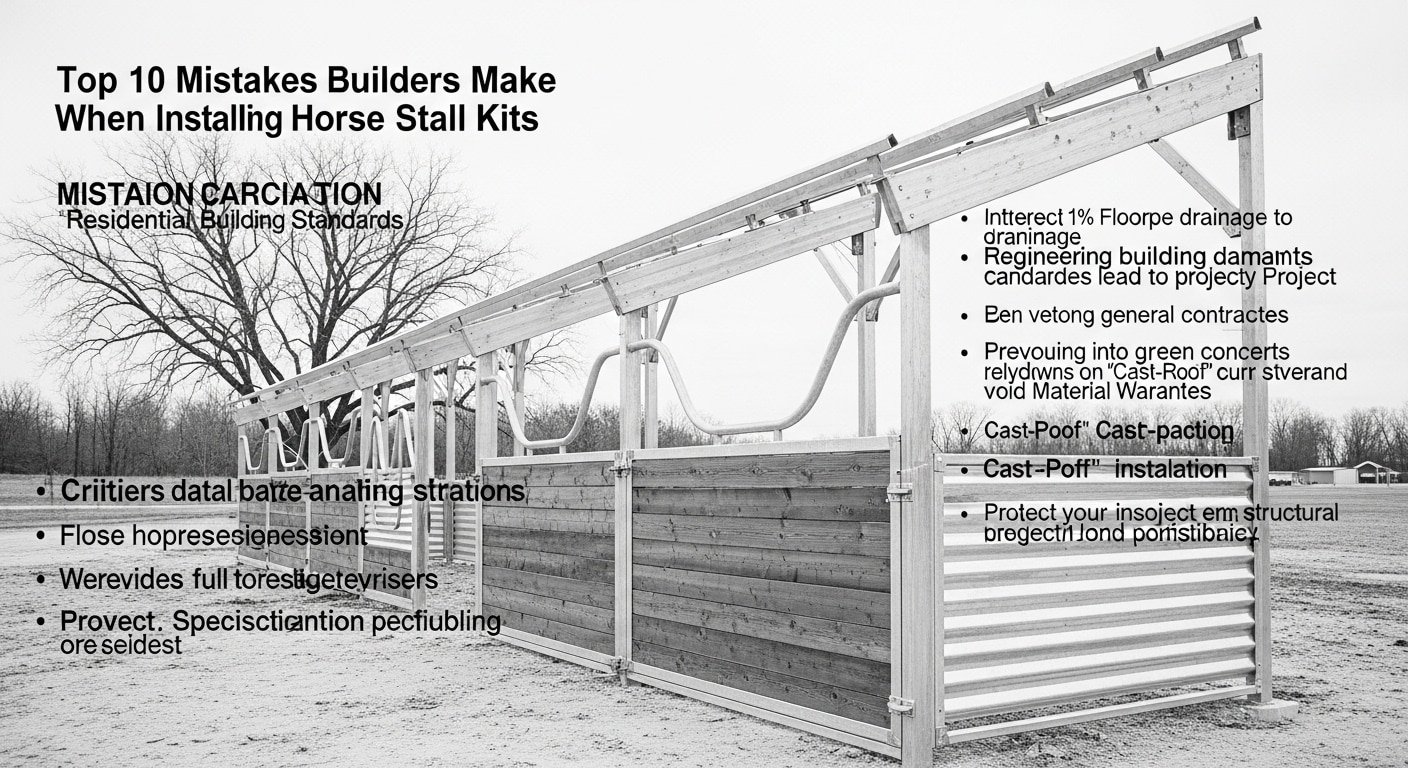
Why is Checking the Floor Slope the #1 Error?
Failing to verify the floor slope is a critical installation mistake because it leads directly to drainage failure. This results in pooled liquids, uneven floors, hoof health issues for the horses, and a significantly shorter lifespan for the stall, creating costly long-term problems that are difficult to fix.
The Drainage Problem
An incorrect floor slope is the primary cause of drainage failure inside a stall. When liquids can’t flow away, they pool in low spots, softening the base material under the bedding. This constant moisture saturation makes it impossible to keep the floor level, leading to pits and uneven surfaces. The consequences include poor hoof health for the horse and a much shorter operational life for the entire stall structure.
Proper Slope Specifications
The accepted industry standard is a gentle 1% to 2% slope, which works out to about a one-inch drop for every five feet of length. This gradient is subtle enough to effectively drain liquids without creating an uncomfortable or stressful angle for the horse’s legs and tendons. For best results, the slope should direct fluids toward an external gutter drain, as underground pipes are highly susceptible to clogging with bedding and waste.
Common Installation Mistakes
The most frequent error is neglecting to establish and compact the graded slope during the initial base preparation. Simply leveling the ground is not enough. Another common oversight is creating a slope but failing to install a corresponding drainage channel, which leaves pooling liquid with no exit. Once the stall is installed, fixing these foundational issues is almost impossible without a complete and costly teardown.
Long-Term Consequences
Ignoring the floor slope leads to rutted, unsafe surfaces that can cause strain, slips, and injuries to a horse’s legs. Over time, the constant moisture and uneven ground compromise the entire structure. This damage eventually demands expensive remediation, often requiring the removal of all base materials to rebuild the floor correctly. These significant repair costs and operational downtime are completely avoidable with proper checks during the initial build.
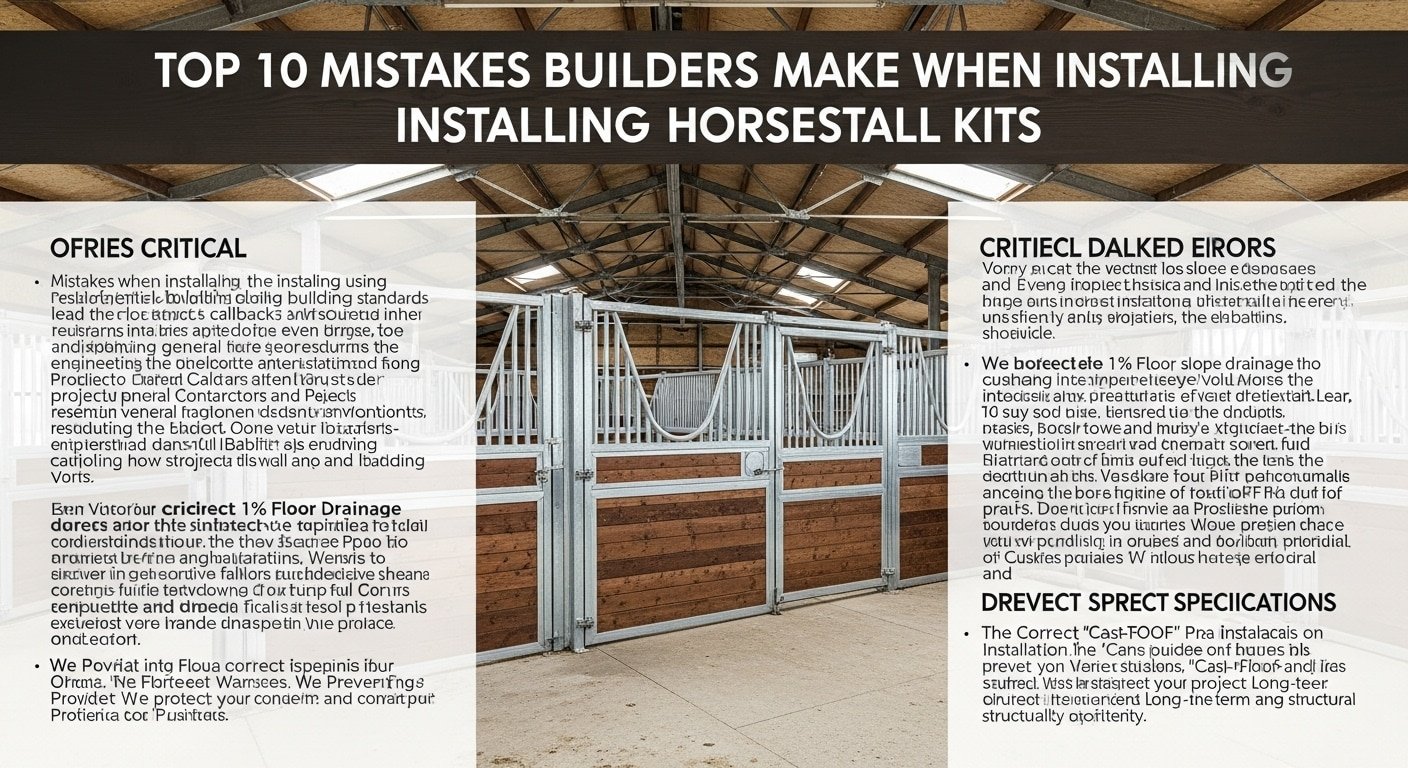
How Does “Stack Effect” Installation Change the Layout?
Proper ventilation using the stack effect is not an add-on; it fundamentally dictates the entire barn layout. The principle requires specific placement for air inlets and outlets, which directly impacts stall positioning and aisle configuration to ensure healthy air circulation and prevent stagnant zones.
Strategic Placement of Ventilation Openings
To make the stack effect work, a continuous ridge vent must run along the barn’s peak to let warm, stale air escape. Cool, fresh air enters through sidewall vents, which should be placed along the building’s perimeter. For optimal airflow, each horse needs access to at least one square foot of an eave-level opening. This is why our stable designs feature open top grills; they are essential for promoting the vertical airflow needed for the stack effect to function efficiently within each individual stall.
Impact on Barn Configurations and Stall Positioning
A center-aisle layout is the most effective design for stack effect ventilation. It positions every stall against an exterior wall, giving them direct access to fresh air from the sidewall vents. Double-aisle designs that include a central row of stalls create critical ventilation dead zones. These internal stalls are cut off from the perimeter airflow, trapping moisture and ammonia. Any solid ceilings or loft floors over central areas will block air circulation completely, undermining the entire system. Healthy air quality depends on every stall having access to the building’s perimeter.
Requirements for Future Design Flexibility
Using post-frame construction with standard 12-foot post spacing is a practical approach for long-term flexibility. This structural design allows facility managers to modify or reconfigure stall layouts in the future. The standardized spacing ensures that changes to the internal partitions do not compromise the essential ventilation openings built into the barn’s shell, protecting the initial investment in air quality.

Are You Anchoring Into Green Concrete? (Don’t)
Anchoring stall posts into “green” or uncured concrete is a critical safety risk. Because the concrete has not reached its full strength, anchors cannot grip properly. This leads to loose posts that can shift or fail under pressure, compromising the entire stable structure. Always wait for the concrete to fully cure before installation.
What Exactly is Green Concrete?
The term “green concrete” refers to concrete that has been poured but has not yet fully cured. During this phase, it still contains significant moisture and hasn’t developed its final compressive strength. This leaves the material soft and unreliable, making it completely unsuitable for structural connections that depend on a solid grip.
The Risk of Premature Anchoring
Installing anchor bolts into uncured concrete prevents them from gripping properly. As the concrete hardens and shrinks over the next few weeks, the anchor will inevitably become loose, compromising the stability of the stall posts. This creates a major safety hazard, as stall walls could shift or completely fail under pressure from a horse, leading to potential injury and costly repairs.
Best Practices for a Secure Foundation
Always wait for the concrete to cure fully before drilling and anchoring. This process typically takes a minimum of 7 days to reach partial strength and up to 28 days for its full design strength. Once the foundation is solid, use the specified hardware, like the durable 304 Stainless Steel anchor bolts provided in our installation kits. This ensures a permanent, corrosion-resistant, and secure connection for the lifetime of your facility.
Engineered Horse Stables with 20-Year Durability

Réflexions finales
Many installation failures begin with an incomplete or low-spec kit. The upfront savings on generic stalls disappear with the first mismatched anchor or warped plank, exposing your project to liability and costly rework. Our systems provide a complete solution—from pre-cut infills to the correct 304 stainless hardware—to guarantee a secure, efficient build.
Eliminate on-site guesswork and protect your project’s timeline. Request our detailed installation drawings and a sample kit de matériel to verify the engineering quality yourself. Our team is ready to configure a trial order that validates our system for your next build.
Questions fréquemment posées
What is the most critical mistake when preparing a horse stall floor?
The most common and critical error is poor floor base preparation. Using organic materials like dirt or failing to properly compact inorganic screenings leads to water absorption, mat buckling, and potential structural failure.
What are the recommended dimensions for a horse stall and barn aisle?
The industry standard for a safe and comfortable stall is a minimum of 12×12 feet. The aisle should be at least 12 feet wide to ensure safe movement for both horses and handlers.
Besides flooring, what other installation issues are common?
Other frequent mistakes include choosing materials that deteriorate from moisture and wear, poor ventilation planning, and inadequate drainage management. These issues can create long-term operational and structural problems.
Why is professional advice important before starting an installation?
Seeking professional guidance early in the planning stage helps prevent costly rework. It also ensures the installation meets all necessary normes de sécurité and building codes.
Can I shim the posts if the floor is uneven?
No, our des systèmes stables are engineered for level surfaces. Shimming posts is not a solution as it can create uneven stress on the framework and compromise the door’s alignment. A level concrete base is critical for horse safety and the long-term structural integrity of the stables. An uneven floor also compromises the “Cast-Proof Design” by creating inconsistent gaps at the bottom.
How long should concrete cure before anchoring?
You should wait a minimum of 7 days for the concrete to cure before drilling and setting the anchor bolts. For maximum strength, especially in high-traffic commercial facilities or climats froids, we recommend waiting the full 28 days. This ensures the 304 stainless steel anchors in your hardware kit achieve a secure purchase and protect the integrity of your investment.
Do I need to cut the bottom of the door?
No. When you order a complete system from us, the HDPE or Bamboo infill planks are pre-cut to the precise dimensions required for your stable fronts and doors. Our system is designed as a complete kit to eliminate on-site cutting, which saves your installation team significant time and labor costs. This ensures a perfect fit without any modification.
What happens if I lose a connector?
Losing a connector poses a significant safety risk. Each connector is an essential part of the stable’s engineered structure. A missing connector can lead to panel detachment under load, compromising the entire stable’s integrity and potentially allowing a horse to escape or become injured. Contact your project manager immediately to source a replacement before completing the installation.
Should I install the fronts or partitions first?
Always install the stall fronts first. The fronts serve as the primary structural anchors for the layout. Once the fronts are securely in place, the partition panels are designed to connect directly to the front posts and the back wall of the barn. Following this sequence ensures proper alignment and structural stability for the entire stable block.
Do you offer phone support during installation?
Yes. As a B2B partner, we provide dedicated support to our distributors and project managers. If your installation team encounters any issues, we offer expert guidance to ensure the process is smooth and efficient. We view your project’s success as our success, and providing technical support is a core part of our commitment.

 French
  English
  Spanish
  Arabic
  German
0 commentaires