


Building in high-humidity zones requires material specifications that prevent costly callbacks and warranty claims. Standard painted steel and untreated wood fail rapidly in tropical and coastal climates, forcing annual repairs that erode a builder’s margins and professional reputation.
This analysis benchmarks materials against the BS EN ISO 1461 hot-dip galvanizing standard. We examine steel frames with a verified 70-micron zinc coating and non-porous HDPE infill to define a clear, zero-maintenance specification for long-term structural integrity.
El microclima de una zona de lavado: calor, agua y estiércol
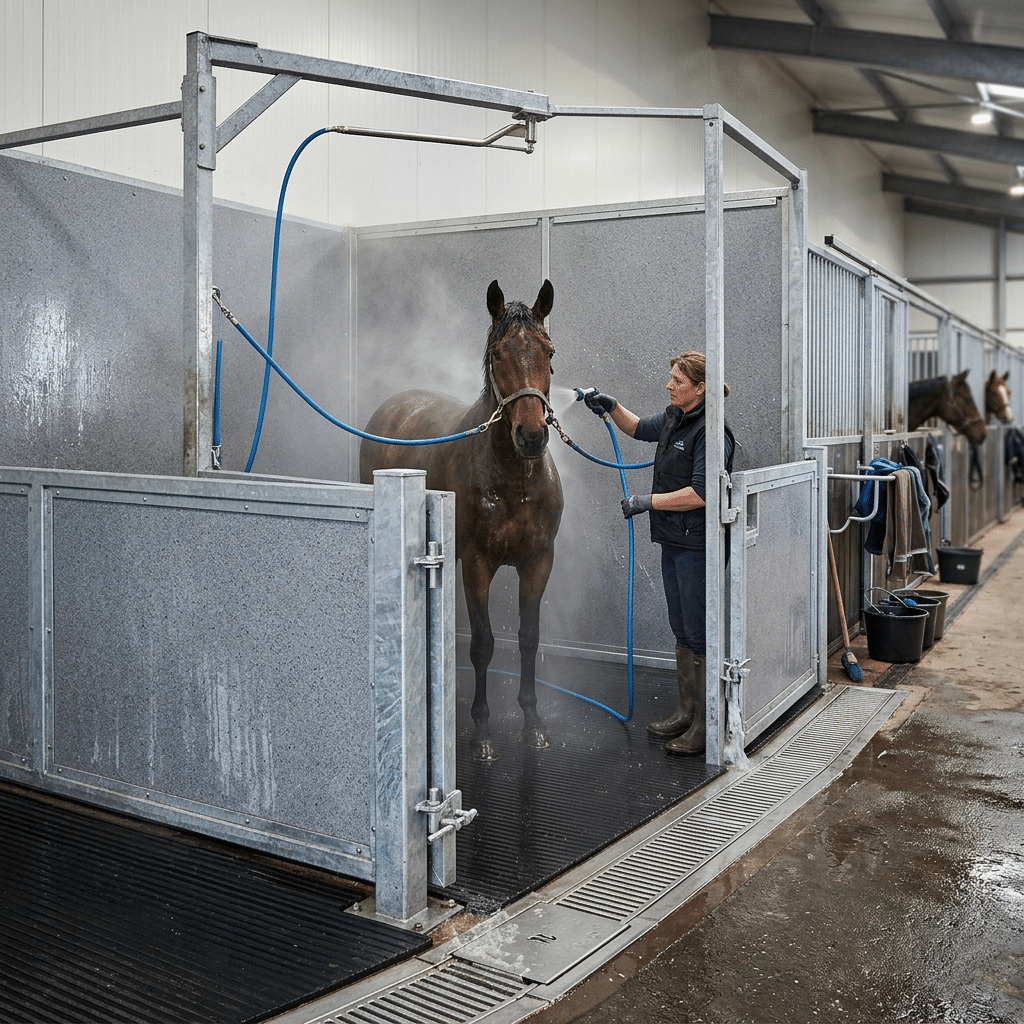
A wash bay’s micro-climate combines heat, water, and manure into a highly corrosive environment. This mix accelerates microbial growth and rapidly degrades unprotected steel and wood.
The Corrosive Impact of Organic Waste and Constant Moisture
The warm, humid conditions in a horse wash bay act as an incubator. The heat significantly accelerates the growth of bacteria and other microbes found in manure, turning the area into a biologically active zone. When this is combined with constant water exposure, the mix of moisture and organic waste creates a chemical soup that is highly corrosive. This environment aggressively attacks building materials, causing unprotected steel to rust and wood to rot in a fraction of its normal lifespan.
Material Specs for a High-Moisture Environment
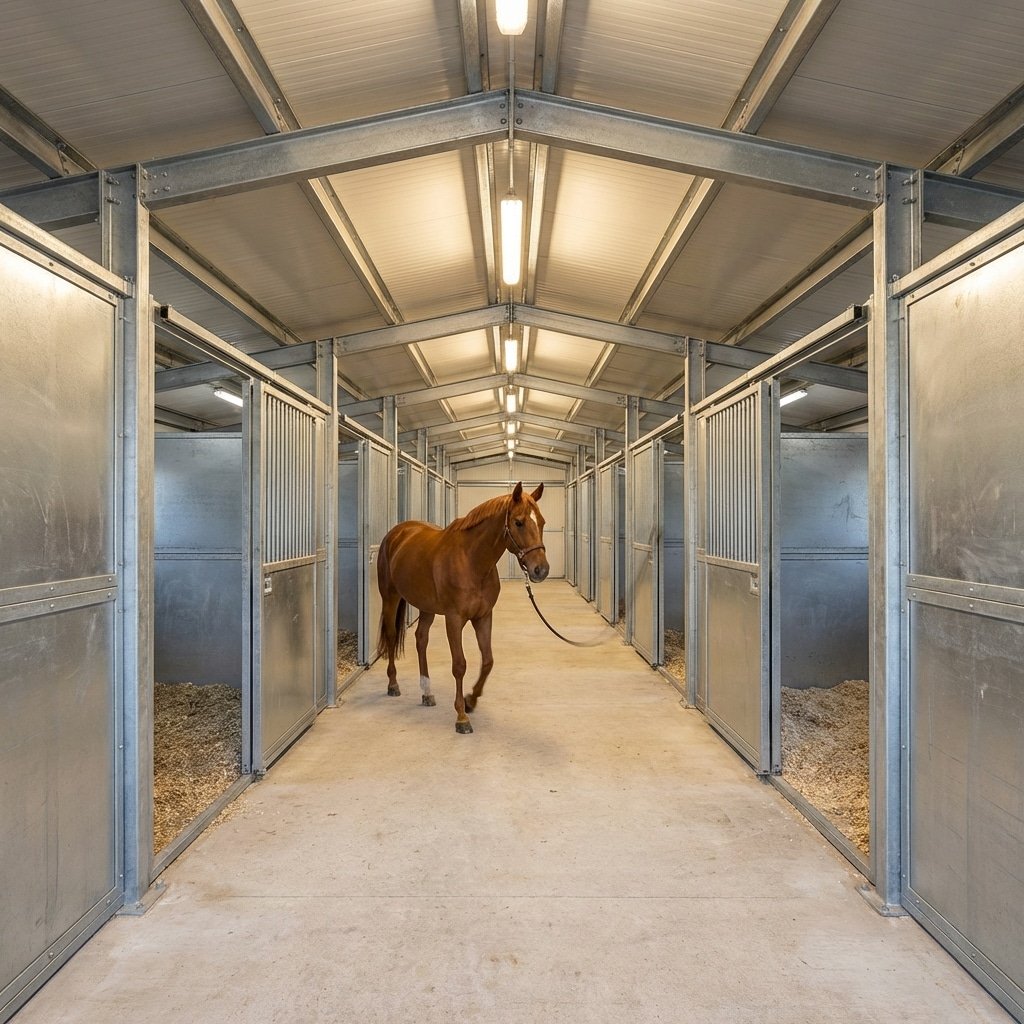
Standard materials fail quickly in a wash bay. To ensure longevity, the steel frame requires a specific treatment: hot-dip galvanization after fabrication. This process coats the entire welded structure in a thick layer of zinc, averaging over 70 microns, which provides a complete barrier against rust. For infill panels, porous materials like wood are unsuitable because they absorb water and harbor bacteria. The correct specification is zero-maintenance HDPE (High-Density Polyethylene). Its non-porous surface cannot absorb moisture, making it impossible for bacteria to take hold and ensuring a hygienic, durable wall that withstands constant washing.
Paredes de hormigón: porosidad, agrietamiento y dificultad para limpiarlas
Porous concrete walls absorb moisture, leading to salt deposits and cracking. Aggressive cleaning methods only worsen the damage, making it a high-maintenance choice for humid equine facilities.
How Porosity Leads to Structural Failure
Concrete seems solid, but it’s full of microscopic pores
. In a humid stable, moisture constantly travels through these channels, carrying soluble salts from the ground or the block itself. When the water evaporates on the wall’s surface, it leaves behind damaging white crystalline deposits known as efflorescence.
Many stable owners try to fix this with muriatic acid or sandblasting. This is a critical mistake. These aggressive methods erode the concrete’s surface, which actually increases its porosity. You’re not just cleaning the wall; you’re weakening it and accelerating the decay cycle.
Recurring salt deposits are a clear signal of a persistent problem. It means water is continuously penetrating the structure. This isn’t just a surface stain you can paint over—it’s a sign of a fundamental material failure.
The Solution: Zero-Maintenance HDPE Infill
The modern engineering solution is to replace concrete with a material that solves these problems at their core. We use 28mm-32mm thick High-Density Polyethylene (HDPE) infill. HDPE is a solid, non-porous material. It physically cannot absorb moisture, so it gives bacteria nowhere to hide and stops salt migration completely.
Concrete is brittle; a powerful kick can cause it to crack or shatter. HDPE is engineered to absorb impact. It flexes under force and returns to its original shape, which enhances horse safety and eliminates the constant need for wall repairs.
Cleaning HDPE surfaces is effortless and doesn’t require harsh chemicals or abrasive tools. A simple wipe-down or hose-off is sufficient. This is what we mean by a ‘Zero Maintenance’ material—it lets stable managers focus on the horses, not on constant facility upkeep.
Invest in Stables that Outlast the Elements

Alfombrillas de goma en las paredes: un foco de moho y hongos
Rubber mats on walls trap moisture, creating a stagnant, unventilated space where mold thrives. This damages walls and air quality. Plank systems are the correct solution.
How Wall Installations Create Stagnant Microclimates
While rubber itself resists mold, slapping a solid mat onto a wall creates a serious problem. Moisture from condensation and humidity gets trapped between the mat and the wall surface. On a floor, gravity and drainage channels can pull water away. A vertical wall has no such advantage.
This lack of airflow creates a sealed, stagnant microclimate. It’s dark, damp, and unventilated—the perfect breeding ground for mold and mildew. The very product intended to protect the wall ends up promoting its decay and compromising air quality.
The Advantage of Non-Porous HDPE Infill
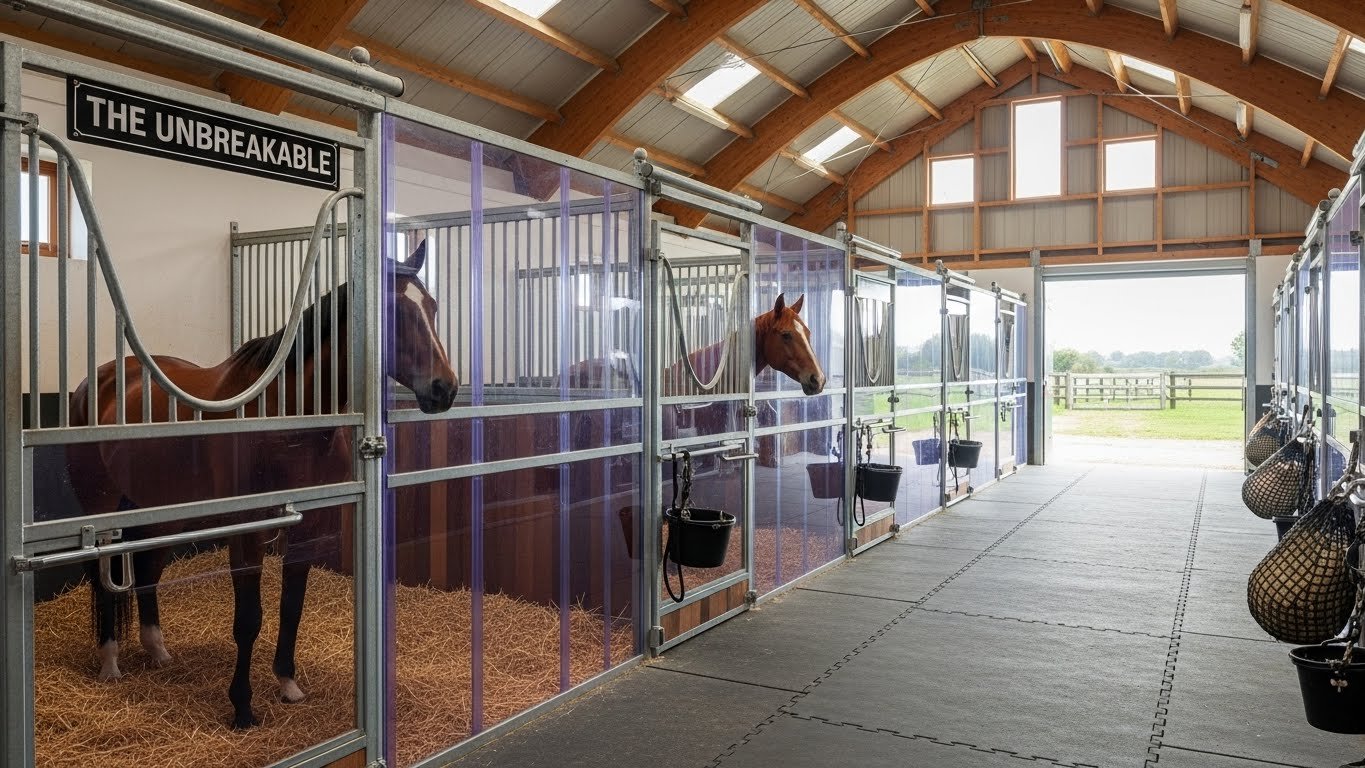
The engineered solution avoids trapping moisture altogether. DB Stable systems utilize 28mm-32mm UV-stabilized HDPE infill planks. This material is completely non-porous, meaning it cannot absorb or hold moisture. Unlike a solid mat sealed to a wall, a plank system allows for natural air circulation between the boards and behind the wall structure.
This design prevents condensation from getting trapped and becoming stagnant. It delivers a ‘Zero Maintenance’ wall that is inherently resistant to the mold and rot common in high-humidity zones like wash bays or stables in wet climates.
Plástico HDPE: 100%, hidrofóbico y apto para lavado a presión
HDPE is a non-porous plastic that repels water, preventing rot and mold. It withstands power-washing and chemicals, making it a true zero-maintenance solution for hygienic stables.
| Característica | DB Stable HDPE Infill | Traditional Wood |
|---|---|---|
| Absorción de agua | Effectively zero. Non-porous surface. | High. Porous material swells, warps, and cracks. |
| Mantenimiento | None. No sealing, staining, or painting required. | tyle=”padding: 12px; border: 1px solid #e0e0e0;”>Requires regular sealing or painting to delay rot. |
| Cleaning Method | High-pressure washing with disinfectants. | Gentle washing; power-washing damages the wood. |
| Resistance to Rot/Mold | Excellent. Does not support organic growth. | Poor. Traps moisture, creating ideal conditions for mold. |
Why HDPE’s Non-Porous Surface Repels Moisture
High-Density Polyethylene (HDPE) is fundamentally hydrophobic—it repels water at a molecular level. Unlike wood or concrete, which are porous and act like sponges, HDPE has an exceptionally low water absorption rate. This means moisture, urine, and cleaning solutions stay on the surface instead of seeping into the material. As a result, the boards don’t swell, warp, rot, or degrade over time, even in constantly damp stable environments.
This non-porous nature is critical for animal health. It actively resists the growth of mold, mildew, and bacteria that thrive in the damp, dark crevices of porous materials. By eliminating the substrate where these pathogens grow, HDPE helps maintain a healthier, more hygienic space for the animals without any special coatings or treatments.
The “Zero Maintenance” Advantage of Power-Washable Infill
The “Zero Maintenance” claim isn’t just a marketing term; it’s a direct result of HDPE’s material science. Our standard 28mm-32mm HDPE infill boards are UV-stabilized and engineered to withstand repeated high-pressure washing cycles. You can clean the stalls aggressively without worrying about chipping paint, splintering wood, or degrading the material’s surface.
The material also has high chemical resistance. This allows barn managers to use strong disinfectants needed for a truly sanitized stall. The board’s structural integrity is not compromised by these cleaning agents, ensuring a long service life with minimal upkeep. This durability is what makes HDPE the practical choice for busy, professional equestrian facilities.
Estructuras de acero HDG: Resistiendo en la zona de salpicaduras
Hot-dip galvanized steel survives splash zones with a thick, bonded zinc barrier. Applied after fabrication, this coating sacrificially protects steel from the wet-dry cycles that destroy painted frames.
Understanding the Aggressive Wet-Dry Cycle
The “splash zone” is far more corrosive than constant submersion. This environment combines oxygen-rich air with repeated wetting and drying, creating the perfect storm for rust. Each time the steel dries, corrosive salts and chemicals concentrate on the surface, attacking the finish.
When the surface gets wet again, it washes away the zinc’s protective patina, forcing the coating to re-form. This constant cycle accelerates wear and is the primary reason why thin coatings or simple paint fail so quickly in wash-down areas or coastal settings.
The 85-Micron Barrier: A Defense in Depth
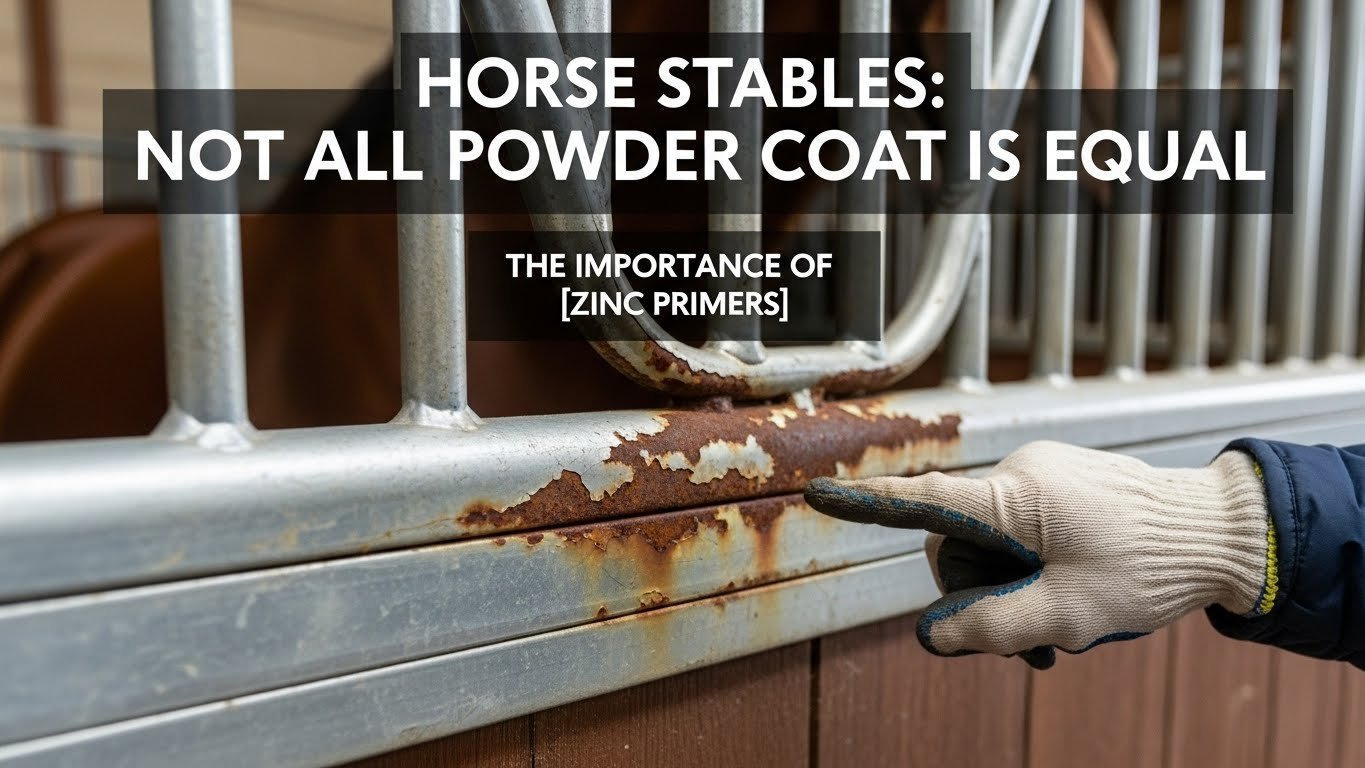
We counter this by hot-dip galvanizing the entire steel frame *after* all cutting, welding, and fabrication is finished. This process adheres to the BS EN ISO 1461 standard, ensuring a complete, metallurgically bonded barrier with no weak points at welds or edges.
This method achieves an average zinc coating thickness greater than 85 microns on structural parts and over 70 microns on tubing. This isn’t a light-duty finish; it’s a substantial sacrificial layer engineered to withstand years of aggressive splash zone exposure and provide real-world longevity.
Preguntas frecuentes
What are the best materials for stable walls in humid or coastal areas?
Materials that are waterproof, durable, and easy to maintain are best for high-humidity environments. High-Density Polyethylene (HDPE) panels are an excellent choice because they are 100% waterproof and do not absorb moisture, which prevents rot, mold, and mildew. In contrast, materials like untreated wood should be avoided as they absorb moisture, leading to rot and warping. Similarly, plain metal panels can rust and dent easily.
How do you properly waterproof a horse wash bay?
Effective waterproofing for a wash bay involves focusing on walls, drainage, and flooring. For walls, use waterproof panels like Fiberglass Reinforced Plastic (FRP) or HDPE, ensuring all seams are sealed with silicone. Proper drainage is also critical; an indoor drain or an outdoor trench filled with gravel prevents water from pooling. Finally, use thick, non-slip rubber mats for flooring to ensure safety and prevent water from seeping into the subfloor.
Can rubber mats be installed on stable walls for protection?
Yes, installing rubber mats on stable walls is a common and effective practice. They serve a dual purpose: protecting the wall structure from kicks and moisture, and protecting the horse from injury. The non-porous surface of vulcanized rubber is easy to clean and does not harbor bacteria, making it an ideal solution for maintaining hygiene in damp stable environments.
Reflexiones finales
While painted steel offers a lower upfront cost, specifying Hot-Dip Galvanization after fabrication is the only way to safeguard your reputation against rust complaints. This engineering standard protects your margins by eliminating costly warranty claims and callbacks.
Don’t guess on quality—verify it. We recommend a trial order of 3-5 sets to test our flat-pack system and finish firsthand. Contact our engineering team to configure a system for your specific market.

 Spanish
  English
  French
  Arabic
  German
0 comentarios