
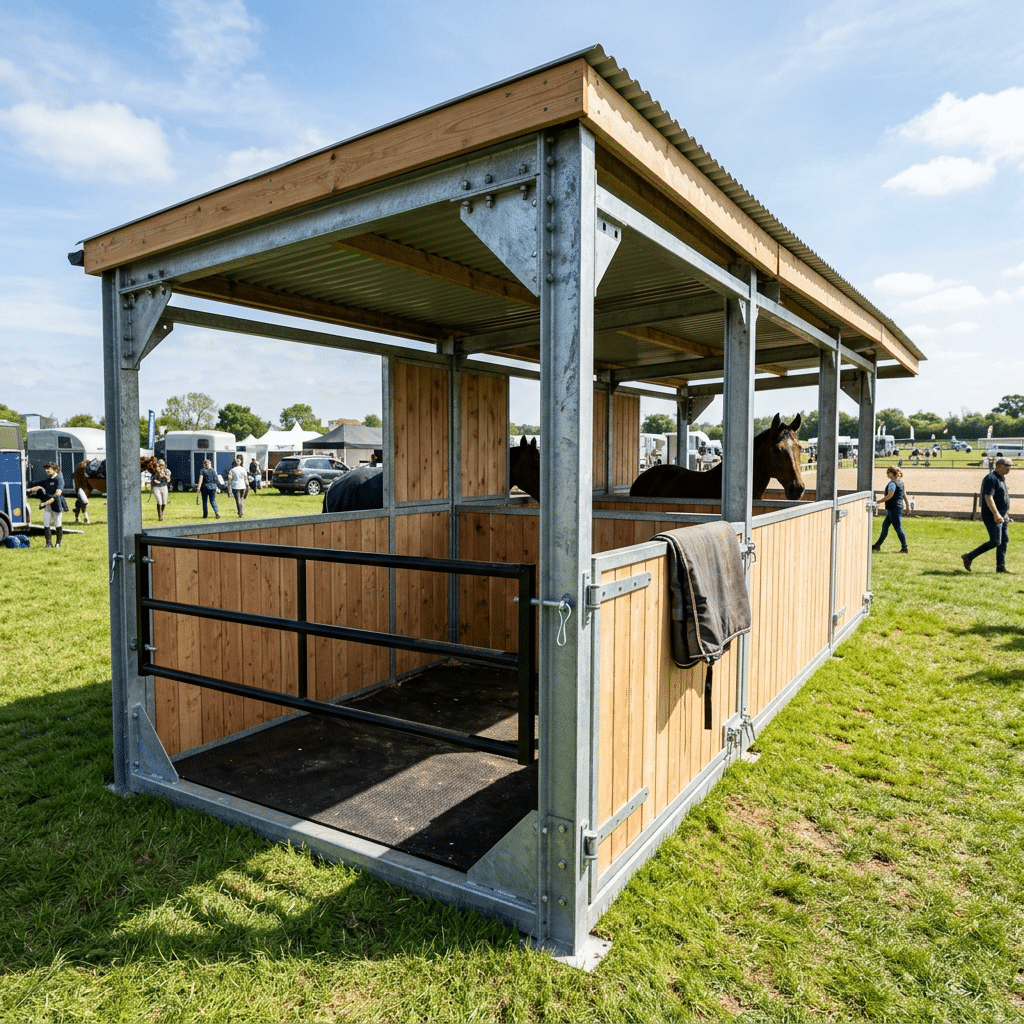
Stalls for Arabian & Social Breeds must be engineered for high-energy behavior and corrosive waste, not just simple containment. Standard solutions using porous concrete or trapping moisture with rubber mats directly lead to structural failure and hidden mold, creating severe financial risks from facility repairs and compromised animal health.
This analysis evaluates stall materials based on long-term performance data. We examine non-porous infills like HDPE and high-density bamboo for hygiene and impact resistance, alongside the structural longevity provided by Hot-Dip Galvanization After Fabrication, which is essential for preventing corrosion in high-humidity environments.
El microclima de una zona de lavado: calor, agua y estiércol
A wash bay’s constant humidity and corrosive waste demand robust materials. Hot-dip galvanized steel and waterproof infills like HDPE are essential to prevent rust, rot, and structural failure.
The Challenge of High Humidity and Corrosive Waste
A horse wash bay is a uniquely aggressive environment for building materials. Constant spraying and rinsing create a high-humidity atmosphere that actively promotes rust on any unprotected steel. Manure and urine compound the problem by introducing ammonia and other acidic compounds. These chemicals don’t just sit on the surface; they corrode metal and cause porous materials like wood to quickly rot and degrade.
Engineering Against Corrosion and Moisture Damage
We address these conditions with specific material choices. Our standard process is Hot-Dip Galvanization After Fabrication, which coats the entire steel structure in a protective zinc layer exceeding 70 microns. This provides durable, long-term protection against rust caused by constant water exposure. For infill panels, we use non-porous materials like HDPE. It’s a zero-maintenance option that cannot absorb moisture, so it won’t swell, rot, or break down when exposed to water and animal waste.
Paredes de hormigón: porosidad, agrietamiento y dificultad para limpiarlas
Concrete walls absorb waste, leading to stubborn stains and difficult cleaning. Non-porous HDPE and high-density bamboo offer a far more hygienic and low-maintenance solution for stables.
The Problem with Porous Concrete in Stables
Concrete’s fundamental weakness in a stable is its porous str
ucture. It acts like a hard sponge, soaking up water, salts, and equine waste. This absorption leads to deep-set stains and persistent odors that can’t just be washed off the surface because they are embedded within the material itself.
As this trapped moisture migrates back to the surface, it leaves behind white, chalky salt deposits called efflorescence. These recurring deposits are notoriously difficult to remove permanently and signal a constant moisture problem within the wall.
Trying to clean these walls creates another problem. You either have to use harsh acidic chemicals or abrasive methods like sandblasting. Both methods can damage the concrete’s surface, which ironically increases its porosity and makes it even more susceptible to staining and moisture absorption over time.
HDPE and Bamboo: The Non-Porous Infill Solution
Our HDPE infill is a direct solution to this problem. As a completely non-porous material, it offers a ‘Zero Maintenance’ surface. Waste and moisture can’t penetrate it, so cleaning is as simple as wiping or hosing it down without any long-term degradation.
For a more traditional look with modern performance, our high-density strand woven bamboo is an excellent alternative. It is naturally mold-resistant and incredibly durable—in fact, it’s three times harder than oak. This makes it tough enough to resist damage from kicks and chewing.
Both of these materials are also impact-absorbing. Unlike a hard concrete wall that can cause injury, our infill options provide a safer and more forgiving environment for the horses inside the stall.
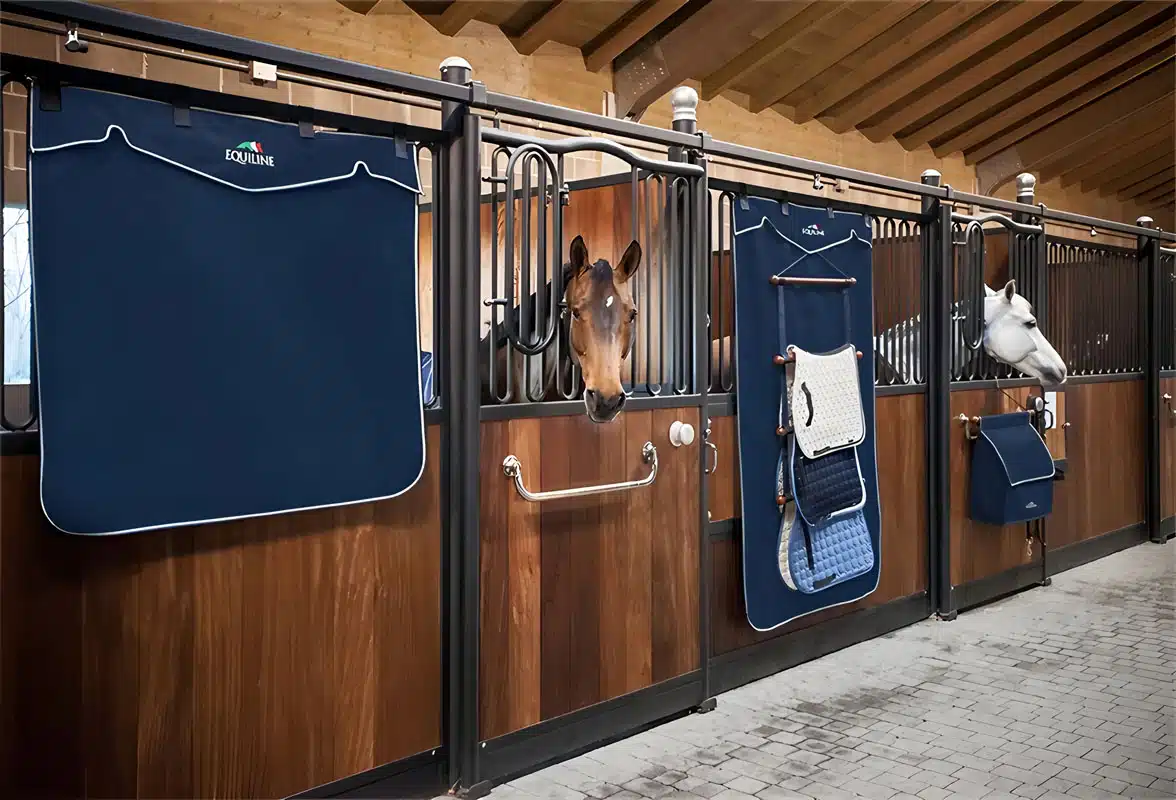
Engineered Horse Stables for Any Climate
Alfombrillas de goma en las paredes: un foco de moho y hongos
Rubber mats on walls trap moisture and condensation. The lack of airflow creates a perfect breeding ground for mold, risking a horse’s respiratory health.
Using rubber mats for stall walls seems like a durable, protective solution, but it creates a serious, hidden problem. While the rubber itself can resist mold, the way it’s installed invites it. The mat seals against the wall, trapping moisture and creating a micro-environment where mold and mildew thrive unseen.
Cómo la humedad acumulada crea un caldo de cultivo
Rubber mats are non-porous. They don’t allow the wall behind them to breathe or dry out. Any condensation, humidity, or moisture that gets behind the mat is stuck there. This dark, damp, and stagnant space is the ideal incubator for mold spores. The problem often grows for months or years before anyone notices, by which time it’s a major health hazard and remediation project.
High-Density Bamboo: A Mold-Resistant Infill
A properly engineered stall system uses materials that manage moisture, not trap it. Our stable systems are built with a high-density bamboo infill that inherently resists mold and rot, eliminating the risks associated with non-breathable wall coverings.
- Especificaciones del material: We use 28mm-38mm thick, high-density strand-woven bamboo planks.
- Mold Resistance: The material is naturally resistant to decay and does not create the moisture-trapping effect seen with rubber.
- Superior Durability: With a Janka Hardness over 3000 lbf, it offers excellent impact resistance and safety without creating a hidden health hazard for the animals.
Plástico HDPE: 100%, hidrofóbico y apto para lavado a presión
HDPE is a non-porous plastic that repels moisture, preventing rot and bacteria. It can be power-washed clean, delivering a genuinely zero-maintenance and hygienic stall environment.
| Material Characteristic | Practical Outcome in the Stable |
|---|---|
| Hydrophobic Surface | Prevents absorption of urine and moisture. This eliminates the risk of rot, mold, and warping that destroys wood infills. |
|
Non-Porous Nature | Provides no place for bacteria or germs to hide. Disinfection is simple because contaminants stay on the surface, unable to soak in. |
| Material Integrity | Allows for aggressive cleaning with power washers without degrading, chipping, or compromising the material’s structure. |
| Standard Thickness (28-32mm) | Engineered for superior impact absorption, easily handling kicks from horses without cracking or failing. |
| UV-Stabilized Formula | Includes UV inhibitors to resist sun damage. This prevents the plastic from becoming brittle or faded, a critical feature for demanding markets like Australia. |
Estructuras de acero HDG: Resistiendo en la zona de salpicaduras
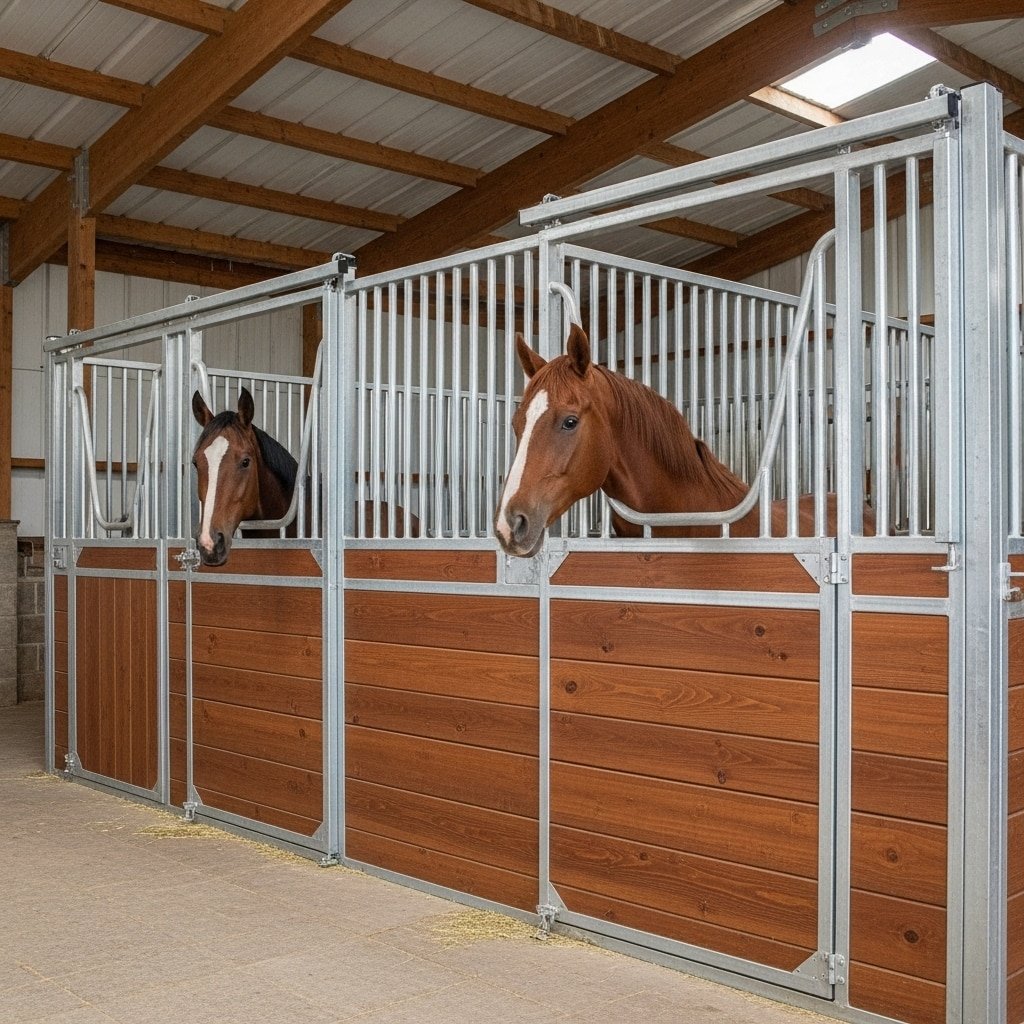
Standard galvanizing can fail in 2-3 years in coastal or chemical splash zones. The most effective defense is a duplex system, which adds a powder coat over galvanization.
Why the Splash Zone Accelerates Corrosion
Environments with constant salt-laden moisture, like coastal areas or agricultural wash bays, create a uniquely aggressive corrosion problem. The constant cycle of wetting and drying strips the protective zinc layer from galvanized steel far faster than simple submersion or dry air exposure. Chloride ions in sea spray or chemical runoff directly attack the zinc coating. In these harsh conditions, unprotected hot-dip galvanized steel can show signs of rust in as little as two or three years, making standard protection insufficient for long-term structural integrity.
The Duplex System: Powder Coating Over Galvanization
The most reliable solution for splash zone survival is a dual-protection or “duplex” system. This involves applying a durable powder coat layer over the hot-dip galvanized steel. The two layers work together to create a synergistic barrier that isolates the steel from the corrosive environment. This approach is not just a cosmetic upgrade; it’s a significant engineering enhancement.
- Engineered for Harsh Conditions: Our Royal Series stables feature this duplex system as the standard specification for maximum durability in demanding climates.
- Extended Service Life: This layered protection extends the frame’s lifespan by 1.5 to 2.3 times compared to using galvanization alone, dramatically reducing long-term maintenance costs.
- Certified Foundation: The base hot-dip galvanizing process still adheres strictly to the BS EN ISO 1461 standard, ensuring the foundational rust protection is sound before the powder coat is even applied.
Preguntas frecuentes
What are the best materials for horse wash rack walls?
The best materials are waterproof, durable, and easy to clean, such as fiberglass-reinforced panels (FRP), sealed concrete blocks, or high-density polyethylene (HDPE). These options effectively resist moisture and impact. Materials like untreated metal should be avoided as they can rust and create noise that may frighten horses.
Can you put rubber mats on barn walls?
Yes, specially designed rolled rubber mats are often used as wall liners. They provide excellent protection for both the horse and the wall structure from kicks and impacts, while also offering some insulation and being easy to maintain.
How do you waterproof a horse wash bay?
Waterproofing a wash bay involves three key areas. First, use waterproof wall materials like fiberglass or HDPE panels. Second, install non-slip flooring such as textured concrete or rubber mats over a sloped base. Third, implement an effective drainage system, like a subsurface trench or grate, to prevent water from pooling.
Is HDPE plastic suitable for molding?
Yes, HDPE is one of the most common plastics for molding. Its low melt temperature, high strength, and excellent resistance to impact and chemicals make it ideal for creating durable components like our zero-maintenance stall infill panels.
Which is better for wash stalls: concrete or plastic?
For wash stall flooring, properly textured and sloped concrete is often preferred for its superior drainage and traction. Rubber mats are typically used as a supplementary surface in regular stalls for cushioning. For the walls of a wash stall, dedicated waterproof panels like HDPE are the ideal choice for their durability and ease of cleaning.
Reflexiones finales
Choosing materials on upfront price guarantees future costs from rust, rot, and structural failure. We build to a non-negotiable standard using Hot-Dip Galvanization After Fabrication and non-porous infills. This protects your capital investment and your reputation as a provider of quality facilities.
A spec sheet cannot show weld penetration or material density; you must verify the engineering firsthand. Request a sample kit to test our ISO 1461 galvanized finish and infill durability. Our team is ready to configure a trial order or discuss your OEM specifications.

 Spanish
  English
  French
  Arabic
  German
0 comentarios