



Half-mesh horse stall panels solve a specific operational problem: stopping kick-through injuries while keeping horses social. For a commercial developer planning a 20-stall build, the choice between a solid wall and a full mesh grill is not about preference — it is about liability and horse psychology. A horse that can see its neighbor weaves less, but a horse that can kick through a lower panel costs you $8,000–$15,000 in vet fees and facility repairs.
The engineering behind a proper half-mesh panel is where most import suppliers cut corners. They weld pre-galvanized tubes, which burns off the zinc at the joint. That unprotected weld rusts out in 18–24 months. Then the panel fails under a 600 kg lateral load — the force of a horse throwing its weight against the wall. A panel built with Q345B low alloy high strength steel and hot-dip galvanized after fabrication per ISO 1461 delivers a 20-year service life with no rust-related structural failure. The difference is not marginal; it is the difference between a one-time purchase and a mid-contract replacement cycle.
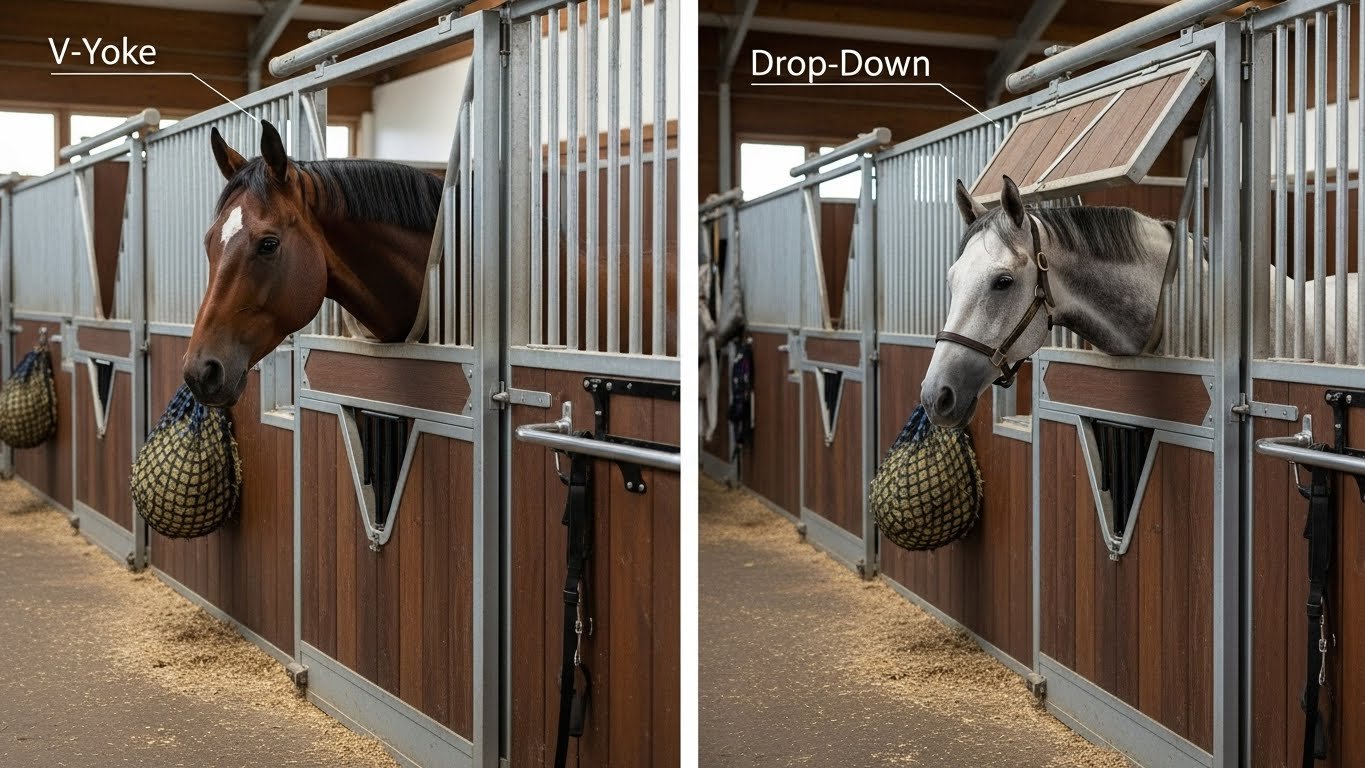
Why Most “Kick-Proof” Panels Fail
90% of panel failures start at the weld — not the steel.
A weaving horse applies continuous lateral stress — measured at up to 600 kg in internal tests — directly onto the weld joints of a stall panel. Cheap steel fatigues fast under that load. The failure isn’t a slow bend; it’s a snap at the weld line, usually between 2 AM and 5 AM when the horse rolls or kicks out. That single leg-through event costs $8,000–$15,000 in emergency vet fees and facility repairs.
The root cause isn’t the steel grade — it’s the welding method. Most import panels are fabricated from pre-galvanized steel tubing. The welding arc burns off the zinc coating at the joint, leaving raw steel exposed. Within 18–24 months, that unprotected weld corrodes from the inside out. The panel looks fine from the front; the rust is hidden inside the tube. By year two, the weld has lost 60–70% of its original tensile strength.
- Pre-galvanized weld failure: Exposed welds rust in 18–24 months. 90% of panel failures traced to this single cause.
- Post-weld hot-dip galvanizing: Panel fabricated first, then dipped in molten zinc (ISO 1461). Every weld point sealed with >70μm coating — often >85μm on structural parts. 20-year rust resistance.
- Steel Gauge Scam: Many import panels advertise ’14-gauge’ but use 16-gauge near edges to cut cost. True 14-gauge is 2.0–2.5 mm throughout. CNC-cut frames guarantee uniform gauge.
The fix is straightforward: specify Q345B low-alloy high-strength steel (ASTM Grade 50 equivalent) and demand post-weld hot-dip galvanizing with a certificate of compliance to ISO 1461. If a supplier can’t produce the coating thickness report, assume the welds are unprotected. Your facility’s liability depends on that 70-micron layer.
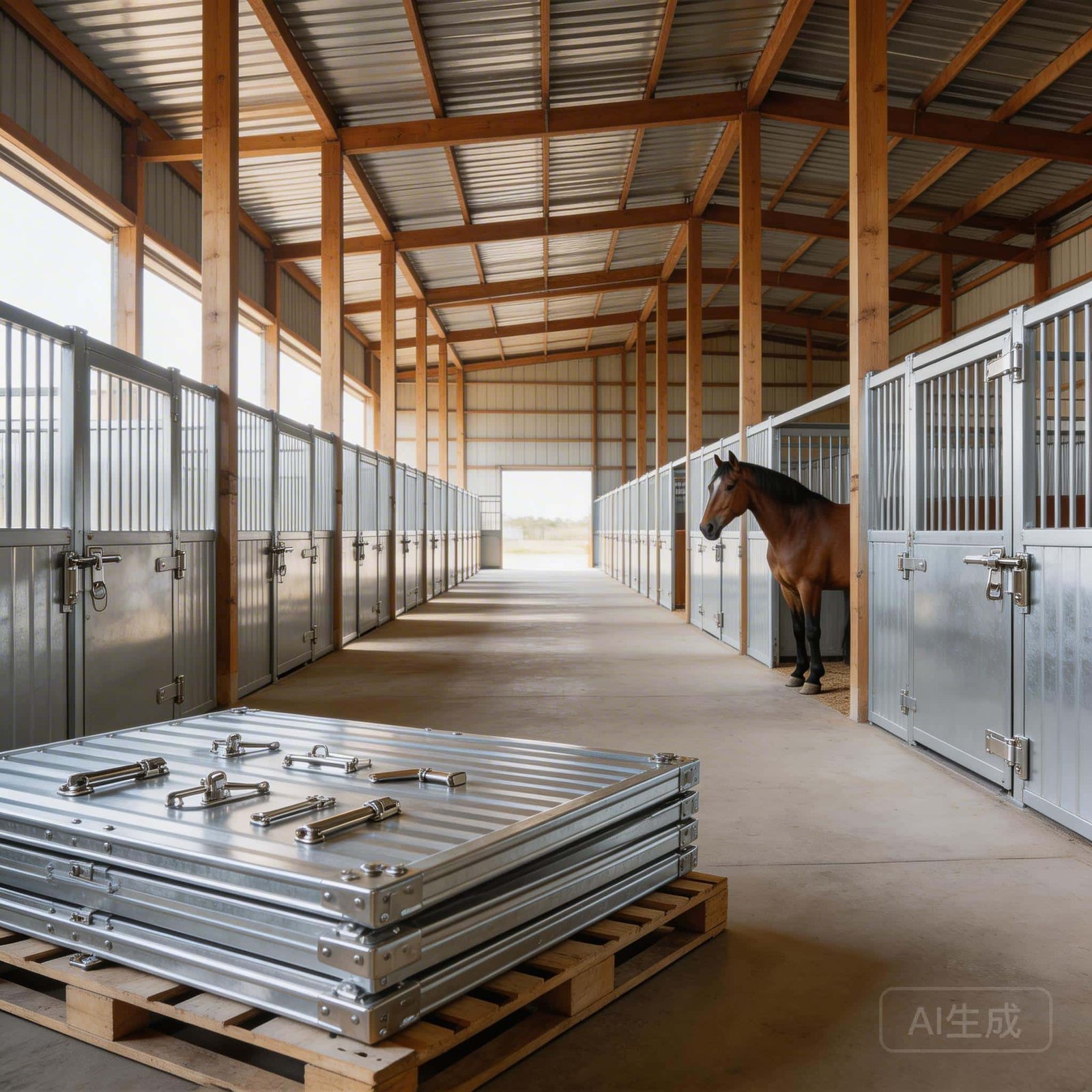
Half-Mesh Cost vs. Long-Term Risk
A 30% upfront saving can become a $15,000 vet bill in year 2.
Pre-galvanized panels cost roughly 30% less at purchase. But when a horse kicks through a rust-weakened weld in the second year, the math flips. A single leg-through injury runs $8,000–$15,000 in emergency vet fees and facility repairs — plus the liability risk if a boarder or client’s horse is involved. That 30% saving vanishes overnight.
- Material: Q345B low-alloy high-strength steel (ASTM Grade 50) framed panels, hot-dip galvanized after fabrication per ISO 1461. The zinc coating exceeds 70μm — structural parts often reach 85μm+. No exposed welds.
- Lifespan: 20-year service life with zero rust-related structural failure. Internal cycle tests show 600 kg lateral force capacity without weld fatigue — enough to absorb repetitive weaving impacts from a 500 kg horse.
- Failure mode: Pre-galvanized tubes: the welding arc burns off the zinc at every joint. Those raw spots rust through in 18–24 months. The panel doesn’t fail slowly — it snaps under load.
- Total cost: Hot-dip panels cost more upfront but eliminate replacement cycles. Over 10 years, the pre-galvanized option requires 2–3 full replacements. Total cost of ownership favors hot-dip by 3–5×.
| Factor de coste | Pre-Galvanized (Cheap Import) | Hot-Dip Galvanized (ISO 1461) | Long-Term Risk & ROI |
|---|---|---|---|
| Upfront Panel Price | 30% lower per unit | Higher initial investment | False economy; hidden failure costs |
| Weld Rust Timeline | Fails in 18–24 months | Zero rust for 20+ years | Pre-galvanized = guaranteed replacement cycle |
| Single Kick-Through Injury | $8,000–$15,000 (vet + repairs) | Virtually eliminated (600 kg load capacity) | One injury wipes out 10 years of ‘savings’ |
| Replacement Cycle | Every 2–3 years | Once per 20-year facility lifecycle | 3–5× total cost of ownership penalty for cheap panels |
| Liability & Reputation Risk | High; lawsuit potential >$50K | Minimal; certified to BHS & EU 98/58/EC | Certification is your only insurance against catastrophic failure |
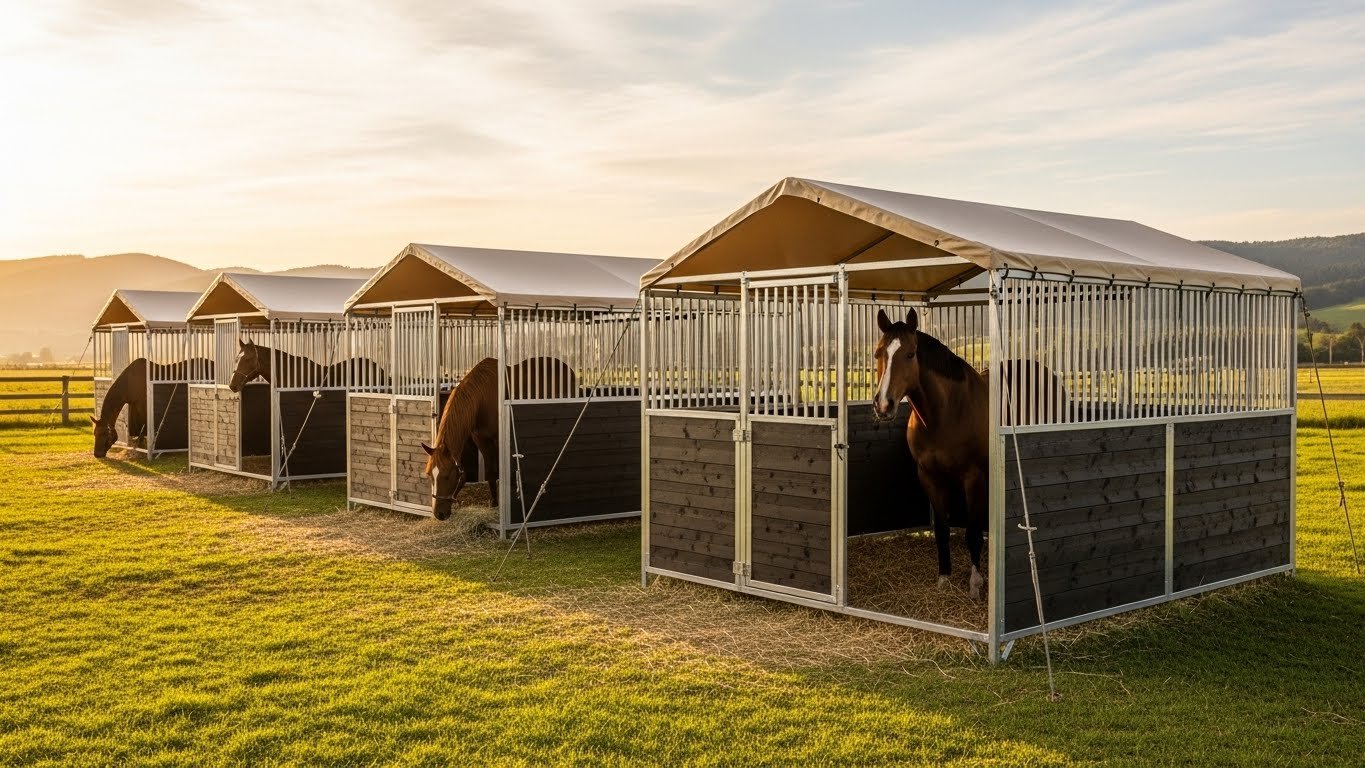
Mesh Geometry: The Lifesaving Number
50mm × 50mm mesh is the only safe gap — large enough for airflow, small enough to block a hoof or jaw.
The mesh geometry of a half-mesh panel is not a design preference — it is a safety-critical dimension. 50mm × 50mm spacing is the accepted industry standard because it balances two competing requirements: ventilation and socialization on one side, and physical entrapment prevention on the other. A 75mm opening, which some budget panels use to reduce steel weight, creates a gap large enough for a horse’s jaw to pass through. A documented 2021 case study in the Equine Veterinary Journal reported a fatal skull fracture caused by a horse trapping its jaw in a 75mm mesh during a stall accident.
The steel bar thickness is equally non-negotiable. 14-gauge (2.0mm–2.5mm) bars are mandatory for any panel intended to withstand repetitive kicking. Thinner gauges — 16-gauge or 18-gauge — bend under the lateral force of a 500 kg horse kicking out, creating gaps that escalate into leg entrapment. The approved production standard here uses Q345B low-alloy high-strength steel (ASTM Grade 50 equivalent) for the mesh bars, which resists plastic deformation under cyclic loading.
- Mesh spacing: 50mm × 50mm prevents jaw and atrapamiento de pezuñas. 75mm gaps have caused fatal skull fractures (EVJ 2021).
- Bar gauge: 14-gauge (2.0mm–2.5mm) minimum. Thinner bars bend under repetitive kick loads, creating entrapment hazards.
- Steel grade: Q345B (ASTM Grade 50) provides fatigue resistance and ductility in cold winters. Avoid A36 or unknown grades.
The bottom gap between the solid infill and the floor is engineered to exactly 50mm. This clearance allows drainage and airflow under the panel while preventing a rolling horse from trapping a hoof. A gap wider than 75mm turns the stall into a leg-trap zone. Every half-mesh panel in our production line is jig-welded to hold these dimensions within ±2mm tolerance — not hand-cut and eyeballed.

How to Bulk-Source Certified Half-Mesh Panels
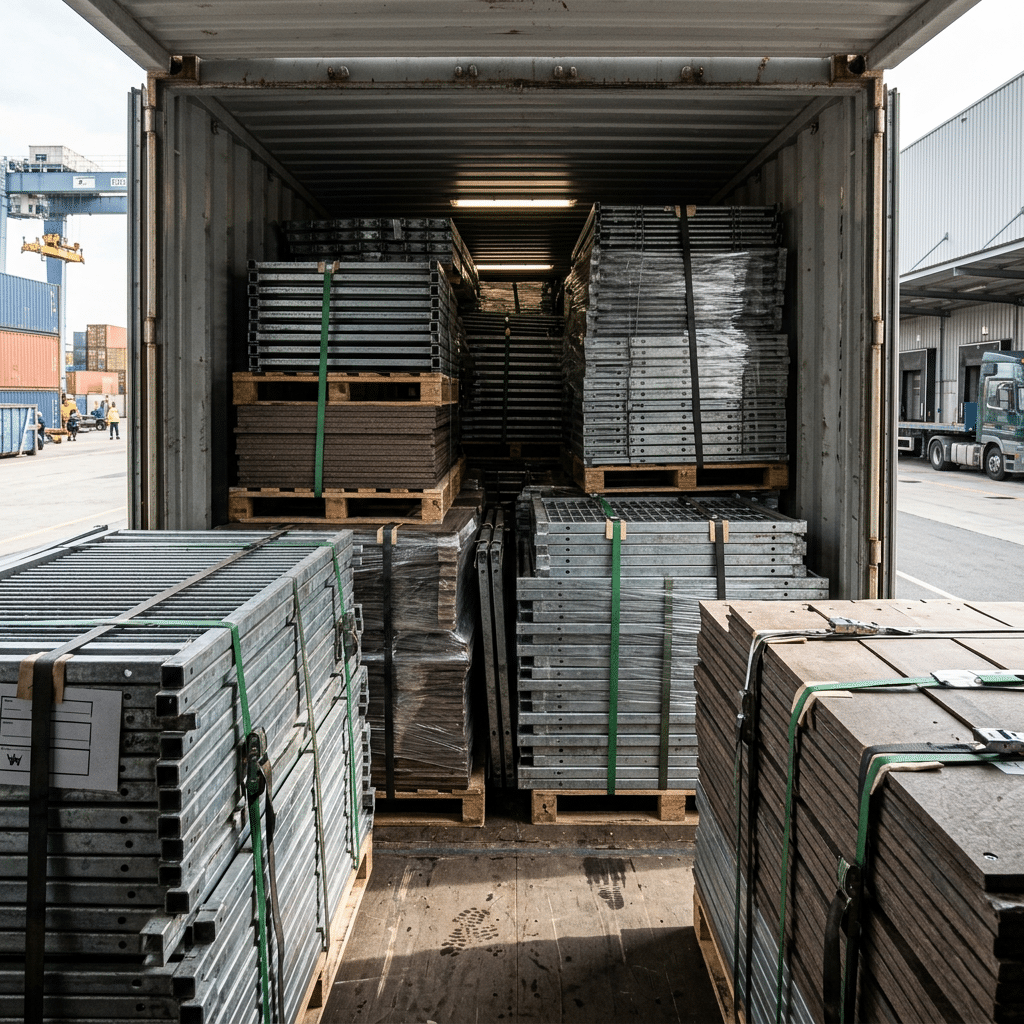
Three documents separate a legitimate shipment from a customs hold.
Every B2B buyer who has sourced from China knows the feeling: container arrives, customs flags the paperwork, and the project timeline blows. For half-mesh stall panels, the fix is straightforward — demand three specific certificates before production starts. First, an ISO 9001:2015 certificate for the factory’s quality management system. Second, a third-party mill test certificate for the steel grade (Q345B or Q235B) confirming yield strength and chemical composition. Third — and this is the one most importers miss — a post-weld hot-dip galvanizing certificate per BS EN ISO 1461, showing a minimum 70μm zinc coating thickness on finished panels, not just on raw tubes.
Here is why the third certificate matters. Competitors who weld pre-galvanized tubing cannot produce a post-weld galvanizing certificate because their welds are never re-coated. The heat of welding burns off the zinc at every joint, leaving raw steel exposed. Within 18–24 months, those welds rust through, and the panel loses structural integrity at the exact stress points where weaving horses apply load. A single leg kick-through in year two costs $8,000–$15,000 in veterinary bills and facility repairs. A BS EN ISO 1461 certificate from the galvanizing bath operator is your proof that every weld, every cut edge, and every bolt hole is sealed with zinc.
- MOQ threshold: 10 stables or 50 panels. Tiered discounts scale from 5% at the base MOQ up to 15% for orders exceeding 20 stables or 100 panels.
- Regional hubs: Sydney and Warsaw stock standard half-mesh panels. Standard global delivery is 4–6 weeks. Expedited orders from hub inventory ship in 1–2 weeks.
- Dedicated account manager: Orders over 20 units qualify for a regional account manager who handles customs classification, certificate of origin, fumigation certificates, and EU/AUS import compliance documentation.
The dedicated account manager is not a sales gimmick — it is a risk-mitigation role. They verify that your container includes the wood packaging treatment certificate (ISPM 15) for pallets, the packing list matches the commercial invoice line by line, and the country of origin declaration satisfies your local customs authority. For UK buyers, that means BHS compliance paperwork; for Australian buyers, it means the Australian Quarantine and Inspection Service (AQIS) documentation for timber-free HDPE infill panels. One missing stamp can delay a container for three weeks at Melbourne or Felixstowe. The account manager’s job is to ensure that does not happen.
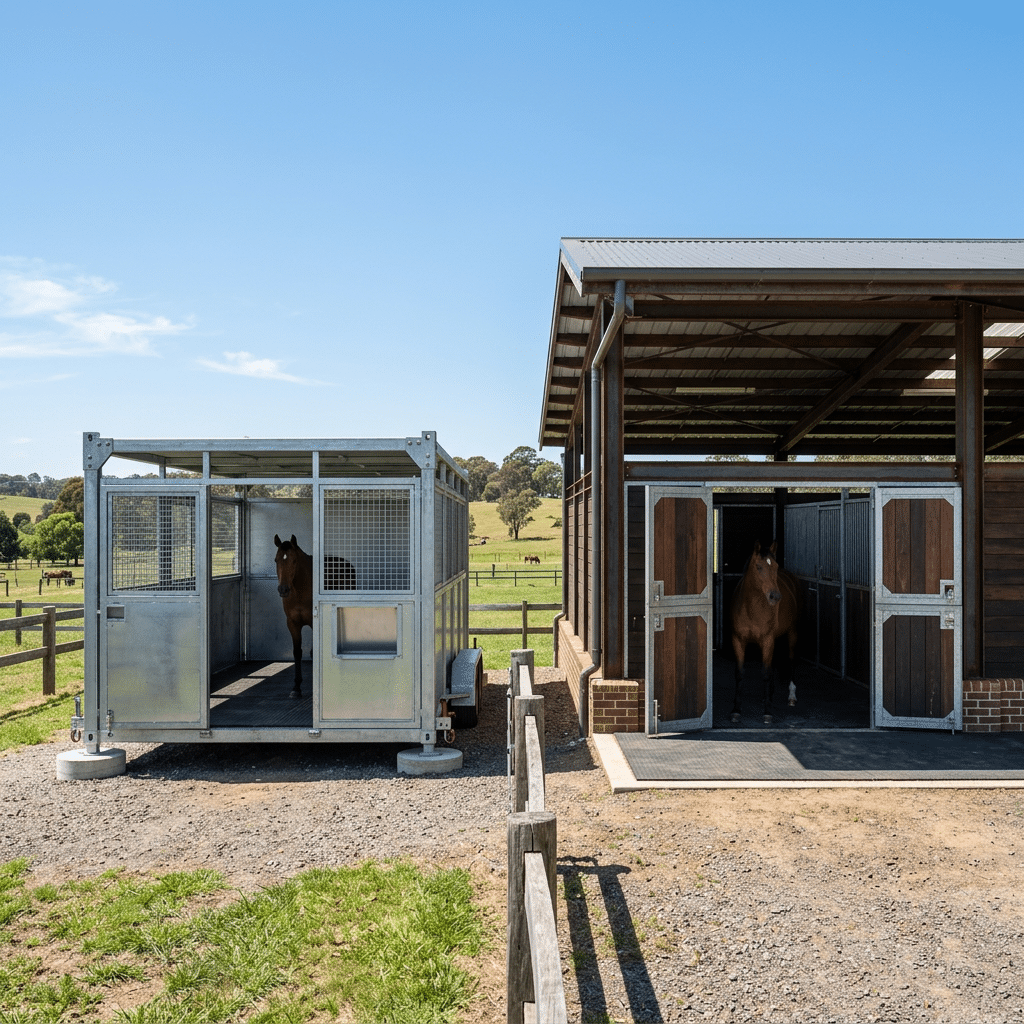
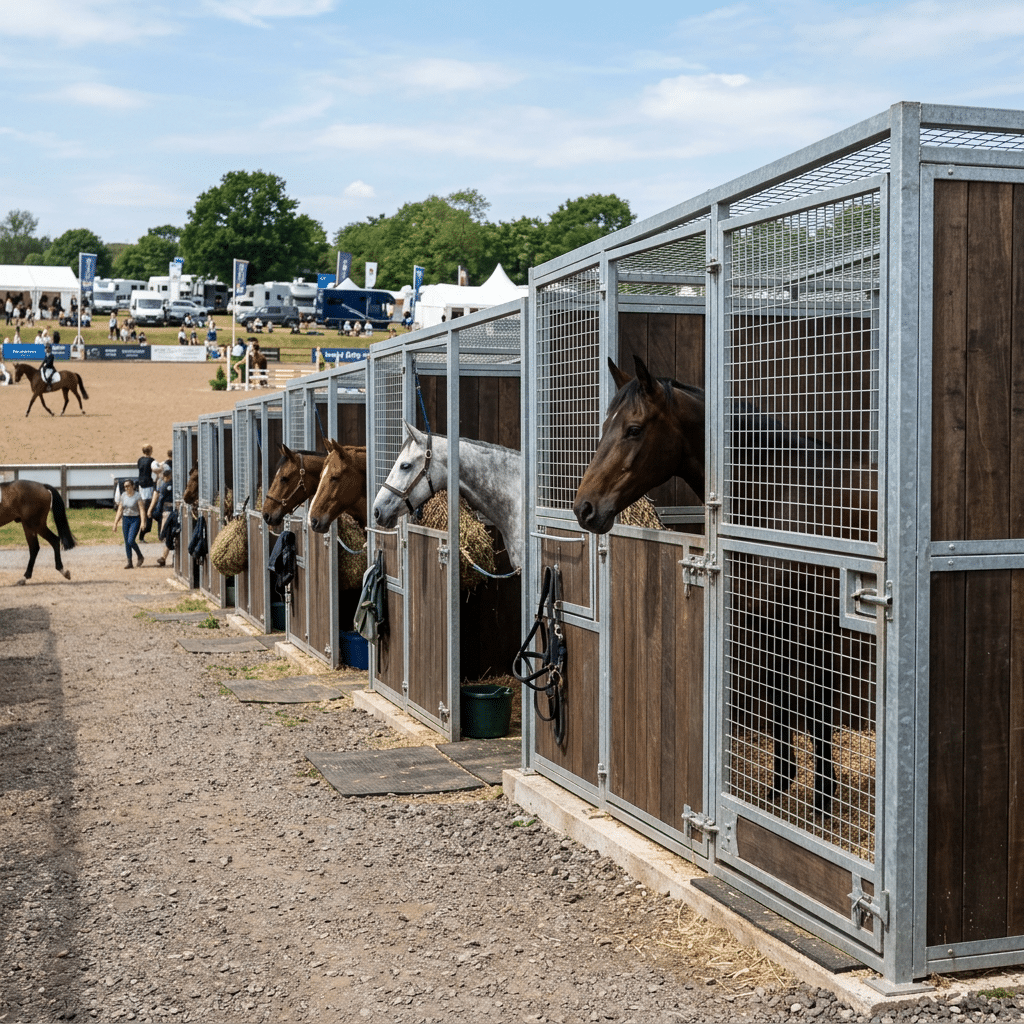
Foaling Stalls: The 12-Inch Kickboard Mandate
A 12-inch solid kickboard is the only barrier between a newborn foal and a broken leg.
Foaling stalls are the highest-risk enclosure in any breeding facility. A newborn foal lacks coordination and will roll under a panel if the lower section is too short. The industry standard — and the number enforced by BHS and EU Directive 98/58/EC — is a solid lower infill of at least 300mm (12 inches). Anything less and you’re gambling with a foal that gets trapped under the panel, panics, and fractures a leg. The average vet bill for a neonatal fracture runs between $8,000 and $15,000, and the foal often never recovers full athletic potential.
Equally critical is the gap between the bottom of the panel and the stall floor. That gap must be engineered to exactly 50mm. At 60mm, a hoof can slide under and become trapped when the horse rolls. At 40mm, bedding gets pushed out and drainage suffers. The 50mm spec is not arbitrary — it’s the clearance that prevents hoof entrapment in adult horses while allowing airflow and muck-out access. Panels that claim ‘adjustable height’ often fail here because the installer leaves too much slack. Fixed 50mm bottom rails eliminate that human error.
- HDPE infill (28–32mm thick): Absorbs impact without splintering. Non-porous surface resists ammonia absorption, which keeps bacterial counts low and reduces respiratory irritation. UV-stabilized HDPE maintains structural integrity for 15 years outdoors.
- Bamboo infill: Harder than oak, naturally chew-proof without chemical treatments. Slightly higher upfront cost but zero maintenance. Bamboo does not rot when properly sealed, making it a strong alternative for facilities that prefer natural materials.
- Wood infill (pine or plywood): Cheaper upfront but porous. Absorbs urine and ammonia, leading to splintering within 2–3 years. Splinters cause oral injuries in foals that mouth the walls. Not recommended for foaling stalls.
The material choice for the kickboard matters as much as the height. HDPE is the preferred infill for foaling stalls because it absorbs impact — a mare kicking out or a foal thrashing won’t shatter or splinter the panel. Wood, by contrast, splinters under repeated impact, creating sharp edges that can lacerate a foal’s face or legs. HDPE is also non-porous, which means it doesn’t soak up urine and ammonia. That matters because ammonia levels above 10 ppm cause respiratory damage in foals, and foals spend 18+ hours lying down in their first weeks. A porous kickboard becomes a chemical sponge. Bamboo is a viable alternative — it’s harder than oak and naturally resistant to chewing — but HDPE offers the best balance of impact resistance, hygiene, and longevity.
Conclusión
A half-mesh panel is only as good as its weakest weld. The pre-galvanized weld scam — where exposed joints rust in 18 months — is the leading cause of structural failure in commercial stables. Choosing Q345B steel with post-weld hot-dip galvanizing (ISO 1461) eliminates that risk entirely, delivering a 20-year service life and zero rust-related liability.
For a 200-room facility, the math is simple: one prevented kick-through injury covers the price difference between pre-galvanized and hot-dip galvanized panels. Review the bulk-order configurations and tiered pricing for your region to lock in a certified supply chain before your next build.
Preguntas frecuentes
What is the MOQ for half-mesh panels?
The MOQ for half-mesh horse stall panels is 10 stables or 50 fence panels for wholesale orders. Tiered discounts from 5% to 15% apply as order volume increases beyond that threshold. Request a quote after confirming your stable count.
How do half-mesh panels stop kick-through injuries?
Half-mesh panels use a solid 28-32mm HDPE or bamboo lower infill to block leg kicks, paired with an upper steel mesh grill for ventilation. This design eliminates the gap where a hoof can. Specify the infill material when ordering for your climate.
What certifications do these panels meet?
These panels are ISO 9001 and CE certified, and they comply with BHS (UK), ASPCA (USA), and EU Directive 98/58/EC standards. This ensures they meet international safety requirements for commercial equestrian facilities. Request the certification documents with your sample order.
How long does delivery take for bulk orders?
Standard global delivery is 4-6 weeks, but expedited 1-2 week delivery is available through regional hubs in Sydney and Warsaw. Lead time depends on your location and whether the panels are stock or custom production. Check hub availability before placing your order.
What is the difference between hot-dip and pre-galvanized panels?
Hot-dip galvanized panels have all welds sealed with >70μm of zinc, providing 20-year rust resistance, while pre-galvanized panels leave raw welds that rust within 18-24 months. The upfront cost is higher, but it eliminates structural. Specify hot-dip galvanizing in your purchase contract.

 Spanish
  English
  French
  Arabic
  German
0 comentarios