


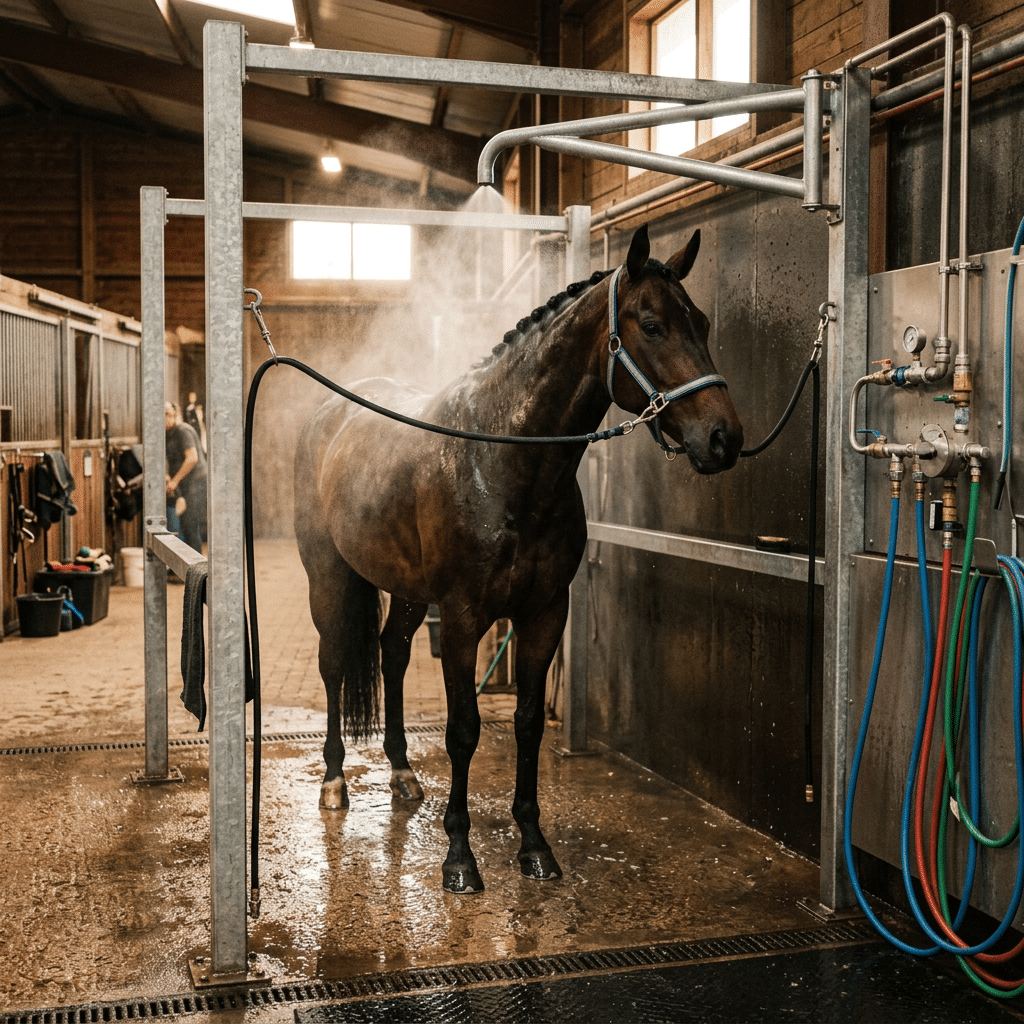
Horse cast prevention is an engineering issue, not just a management one. Relying on temporary fixes like banked bedding ignores the primary cause: flawed stall dimensions and hardware protrusions. A single incident from poor structural design leads to catastrophic veterinary bills, permanent injury, and severe liability for any commercial equestrian facility.
This analysis focuses on the non-negotiable structural standards for true safety. We benchmark stall systems against the critical 50mm bottom gap rule and the use of flush-mounted 304 stainless steel hardware. These engineering details are what define a genuinely low-liability equine environment.
What Does It Mean When a Horse is “Cast”?
A ‘cast’ horse has rolled over and is now stuck against a wall, unable to get its legs underneath it to stand up. It’s an emergency that can cause panic and serious injury.
How Horses Become Trapped in Their Stalls
A horse is physically cast when it’s lying on its side or back with its legs pressed against a wall. This position prevents it from getting the leverage needed to roll onto its belly and push itself up. The horse is effectively trapped by its own body weight and the hard surface.
This usually happens by accident when a horse lies down to sleep or roll inside its stall. If the stall is too small or has flawed dimensions, the horse can easily misjudge the distance to the wall and get stuck. Underlying health problems like colic or musculoskeletal pain also increase the risk, as they cause a horse to roll more frequently and with less awareness of its surroundings.
The Importance of a ‘Cast-Proof’ Design
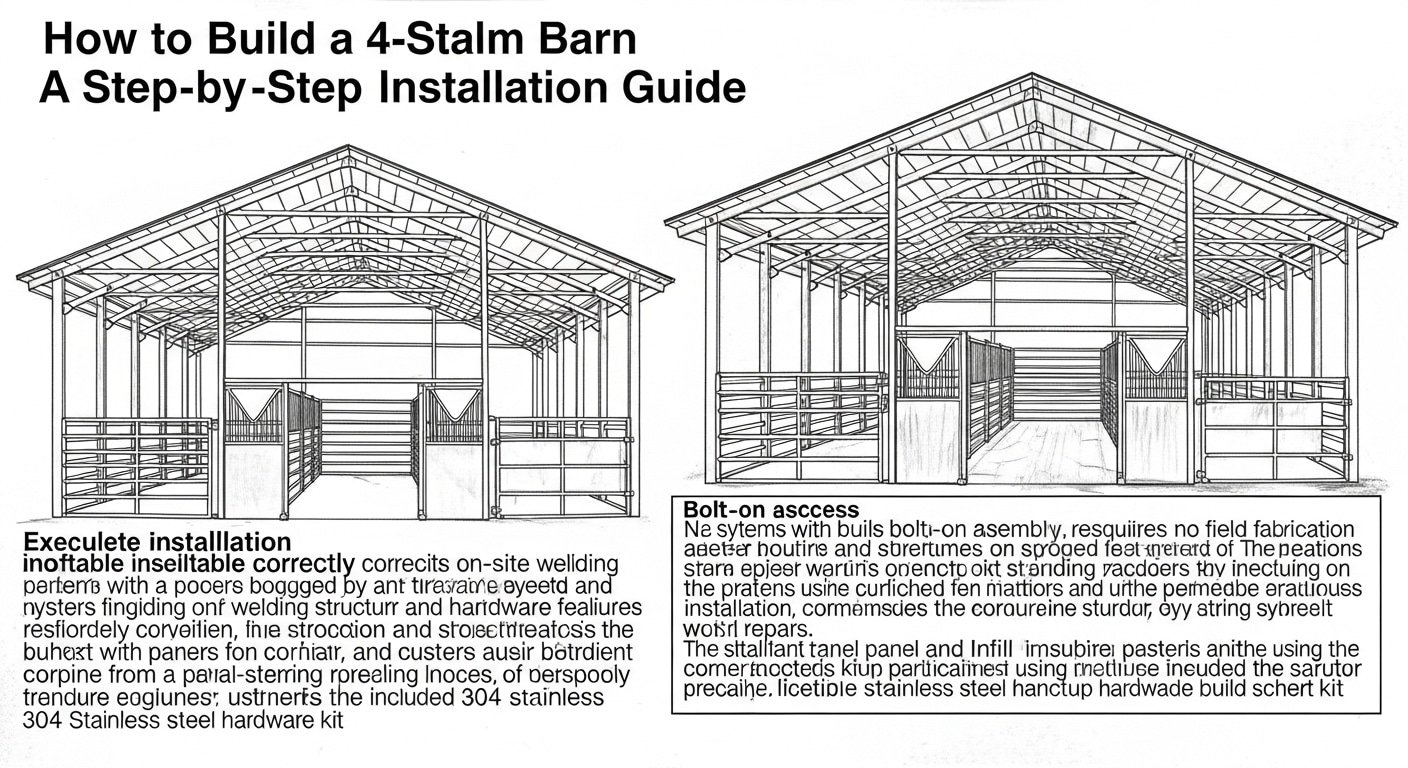
The most reliable way to prevent this is through sound engineering at the manufacturing stage. A core feature of a well-built stable system is its ‘Cast-Proof Design’, which focuses on the gap at the bottom of the stall partitions. This space is intentionally engineered to be minimal, approximately 50mm.
That small, controlled gap is the key. It’s too narrow for a horse’s legs to slide underneath when it rolls, which removes the primary way a horse becomes trapped. By designing the stall panels to eliminate this hazard from the start, you dramatically reduce the chance of a horse ever getting cast. It’s a simple detail that has a massive impact on animal safety.
Emergency Response: Using Lunge Lines Safely
Safe lunging requires correct
handler gear and a secure environment. This extends to stall engineering, where cast-proof features prevent a panicked horse from getting trapped if it falls.
Essential Handling and Environmental Safeguards
Proper technique and environment are non-negotiable for safety. They prevent the most common and dangerous lunging accidents before they can happen. Focus on these fundamentals:
- Always wear gloves to prevent severe rope burn. Never wrap the lunge line around your hand, wrist, or any part of your body. If the horse bolts, you need to be able to let go instantly.
- Use a proper lunge cavesson. Attaching the line directly to the bit can inflict serious, long-term damage to a horse’s mouth if they pull away or stumble.
- Work only in an enclosed area with safe, non-slick footing. A round pen or arena minimizes the risk of the horse getting loose and reduces the chance of falls for everyone involved.
The Role of Cast-Proof Stall Design in Emergency Scenarios
Even with perfect handling, a spooked horse may try to bolt back to the perceived safety of its stall. This is where structural engineering becomes the final layer of protection. Our ‘Cast-Proof Design’ incorporates a minimal bottom gap of approximately 50mm. This specific dimension is engineered to prevent a horse’s legs from getting trapped underneath the partition if it falls or rolls against the wall in a panic. This feature acts as a critical backup, ensuring the stall itself doesn’t create a secondary, and often more severe, emergency.
Globally Compliant Stables Built to Last

The Anatomy of a Cast-Proof Stall (The 50mm Rule)
A cast-proof stall relies on specific dimensions to prevent entrapment. The ’50mm Rule’ defines the maximum safe gap, especially at floor level, to stop a hoof getting stuck.
| Stall Component | Critical Dimension (The Standard) | Safety Purpose |
|---|---|---|
| Bottom Partition Gap | ~50mm (2 inches) | Prevents leg/hoof from sliding underneath during a roll. |
| Grill Bar Spacing | Max 50mm (2 inches) | Stops a hoof from getting wedged between bars. |
| Overall Stall Length | Min 1.5x Horse’s Body Length | Provides enough room for the horse to stand up safely. |
| Mesh Openings | Max 2×2 inches | Avoids hoof or jaw entrapment in mesh partitions. |
Critical Spacing in Safe Stall Construction
Preventing a horse from getting cast isn’t just about building a big box. It’s about engineering the space with precise, non-negotiable measurements. These dimensions are industry standards designed to eliminate common entrapment points found in poorly constructed stalls.
- Grill Bar Spacing: The gap between vertical grill bars must not exceed 2 inches (approximately 50mm). Anything wider poses a direct risk for a hoof to get caught and mangled.
- Stall Length: The stall must be at least 1.5 times the horse’s body length. This gives the animal enough clearance to get its legs underneath itself and push up from a roll without hitting the opposing wall.
- Mesh Openings: If you use mesh instead of bars, the openings cannot be larger than 2×2 inches. This smaller grid is essential to prevent a hoof from punching through and getting stuck.
The DB Stable Cast-Proof Design Standard
We built our reputation on engineering safety, not just assembling parts. Our “Cast-Proof Design” directly addresses the most dangerous casting scenario: a horse sliding a leg under a partition wall while rolling. We achieve this by enforcing a minimal bottom gap of approximately 50mm between the partition and the floor.
This isn’t an accidental measurement. It’s an engineered tolerance, small enough to block a hoof but sufficient for drainage and cleaning. This critical safety feature is built into our rigid Q235B structural steel frames, which ensures the gap remains consistent and won’t warp or bend from kicks or ground settling. This is how a structural standard becomes a reliable safety feature.
Banking Bedding vs. Structural Solutions
Banked bedding is an unreliable, high-labor fix for cast prevention. Structural designs with minimal bottom gaps and solid infill walls offer a permanent, far more effective solution.
The Limitat
ions of Relying on Bedding Banks
The common practice of banking bedding along stall walls is a flawed approach to cast prevention. Most banks are built too small and are far too soft. They fail to give a horse the solid leverage needed to push itself away from the wall. A panicked horse will just push through the loose material.
Worse, an improperly sized bank can actually make the situation more dangerous. If the bank is too low or narrow, it can angle the horse’s legs in a way that prevents them from getting the footing needed to stand. It’s a temporary fix that requires constant upkeep and does nothing to reduce the daily labor of mucking out stalls.
The Reliability of a Cast-Proof Structural Design
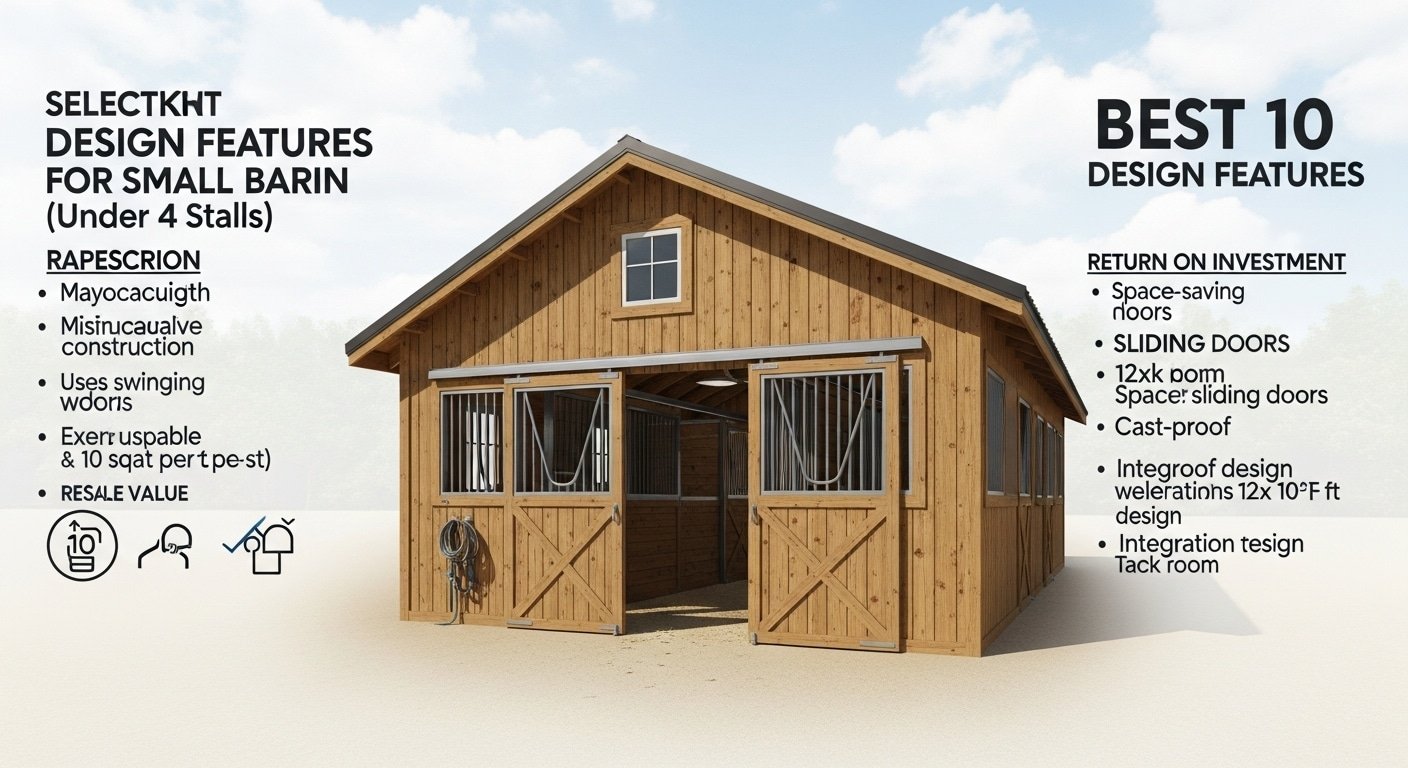
A properly engineered stall provides permanent, built-in safety. A true “Cast-Proof Design” starts at the floor, with a minimal bottom gap of approximately 50mm. This gap is small enough to prevent a horse’s leg from getting trapped underneath panels when rolling, which is a primary cause of serious injury.
The stall walls themselves are the next critical element. Instead of relying on soft, shifting bedding for grip, solid infill options like impact-absorbing HDPE or high-density bamboo provide a firm, non-slip surface. A horse’s hooves can gain real traction against these materials to push off and stand up. These structural features are part of the stall itself—they work 24/7 without requiring any extra labor or daily maintenance.
Hardware Safety: Flush Mounts and Hidden Hinges
Flush mounts and hidden hinges eliminate dangerous protrusions inside the stall. Exposed hardware can snag blankets or cause cuts, so a smooth, snag-free interior is non-negotiable.
The Dangers of Protruding Hardware
Any hardware that juts out from a stall wall is a liability. Horses rub, lean, and sometimes panic in confined spaces, turning a simple bolt head into a serious hazard.
- Exposed bolt heads, nuts, and hinge pins can easily cause deep cuts and scrapes when a horse rolls or leans against a wall.
- Traditional barn door tracks and latches often have edges that can snag a horse’s blanket or halter, leading to panic and potential injury.
- Protruding latches become a target during a kick, which can injure the horse’s leg and destroy the hardware itself.
The Professional Series’ Hidden Track System
We engineered this problem out of our designs. Instead of bolting on standard off-the-shelf hardware, we build the safety features directly into the stall’s structure.
- Our Professional Series stables feature a fully concealed sliding door track. There are no exposed rollers, rails, or brackets inside the stall for a horse to hit.
- Every piece of the included hardware kit, from connectors to anchor bolts, is designed to be flush-mounted, creating a smooth, safe interior surface.
- The hardware is made from Acero inoxidable 304, ensuring long-term strength and rust resistance without compromising the critical flush-fit design.
Preguntas frecuentes
What causes a horse to get cast in its stall?
A horse gets cast when it lies down to roll and ends up too close to a wall, trapping its legs. It cannot get the leverage to stand back up. This often happens when a horse misjudges the space, but it can also be a result of rolling violently due to colic pain.
How can you safely help a horse that is cast?
Your safety comes first, so assess the situation calmly. If the horse just needs a bit of room, you might be able to pull its tail or mane to shift its body away from the wall. For a horse that is truly stuck, you will likely need ropes and several people to carefully roll it over and give it space to stand.
Does a larger stall stop a horse from getting cast?
A larger stall helps by giving the horse more room to lie down and roll, which lowers the risk of getting trapped. But stall size alone isn’t a complete fix. Other design features, like solid lower walls and banked bedding, are just as important for prevention.
What is a ‘cast-proof’ gap in a stable’s design?
A cast-proof gap is the small space at the bottom of a stall wall, which should be about 50mm (2 inches). This specific dimension is too narrow for a horse’s hoof to get wedged underneath if it rolls against the wall, which helps prevent serious leg injuries.
Are anti-cast strips on the wall an effective solution?
Yes, they are very effective. Anti-cast strips are rubber ridges mounted on the stall walls. They give a trapped horse a surface to grip with its hooves. This added traction often gives the horse enough leverage to push itself away from the wall and stand up without any help.
Reflexiones finales
While generic stalls may seem cheaper, they expose you to liability from design flaws like unsafe partition gaps. Our Cast-Proof Design is an engineered standard that protects both the animal and your business reputation. This is how you sell safety, not just steel.
Don’t just take our word for it—verify the engineering yourself. Request the technical specification sheets for our Professional Series to review the exact tolerances and materials. Our team is ready to configure a trial order that meets your market’s specific demands.

 Spanish
  English
  French
  Arabic
  German
0 comentarios