


A Poland equestrian center gets built in the order the ground allows, not the order the drawings are drawn. Buyers plan around the shipping lane. The lane is the easy half. What governs the build is a short working season and a site crew who has never unpacked your system.
Work from what is published. Warsaw is a regional warehouse with a stated 1-2 week expedited window against 4-6 weeks to most markets, entry quantities are 10 stall systems or 50 fence panels, batch orders are quoted a 5%-15% range, the Polish market is positioned on frost-resistant structures rated to minus 10 degrees Celsius, hot-dip galvanized steel carries a stated 20-year rust-resistance figure, and the design briefs reference EU Directive 98/58/EC. Not published: a price, a container count, a member of your installation crew.
Key Takeaways
- Set the ground-work dates first, then back-schedule the order. A delivery that lands outside the working season becomes rent-free storage and a re-handling bill.
- Split the order by site constraint, not by discount. Chasing the top of the 5%-15% batch range in one lot is the wrong default in a short-season market.
- Stall frames precede everything because the slab, drainage and liner choice are decided under them; fence lines and gates can follow.
- Training equipment goes last. A horse walker, lunging pen or jump set needs a finished surface and a roof over it.
- Installation is not in the published scope. What you hand the crew decides whether a build runs on schedule; the dedicated account manager above 20 sets is the lever.
- Accept each batch before the next lands. Photographic evidence at receipt is worth more after a shortfall than any email chain.
What the calendar decides before your order does
In a market positioned around minus 10 degrees Celsius, the binding constraint is the weeks when concrete pours, drainage trenches and post holes are actually workable. Everything upstream of that is negotiable. Manufacturing time, ocean transit and customs are all fixed durations you can plan around; a wet October or a frozen January is not.
So the schedule is written backwards. Fix the date the ground crew can start, then subtract. The 4-6 week global lead time is the number you cannot miss. The Warsaw warehouse’s stated 1-2 week expedited window is the recovery tool — one that exists precisely because the stock is already in the region rather than on water.
Paperwork runs on the same calendar. Customs classification typically sits with the importer of record, alongside product documentation and whatever the local authority wants at handover — so confirm who is named on your entry documents. The manufacturer publishes ISO 9001 and CE, and its briefs reference EU Directive 98/58/EC on the welfare of animals kept for husbandry, which speaks to stall dimensions, lighting, air and freedom of movement as design intentions, not as a permit. Whether a given Polish facility falls under a particular rule, and how an inspector reads it, is a question for the county authority or a local advisor, and it should be asked before the first liner is ordered rather than after.
Splitting the order into batches a site can absorb
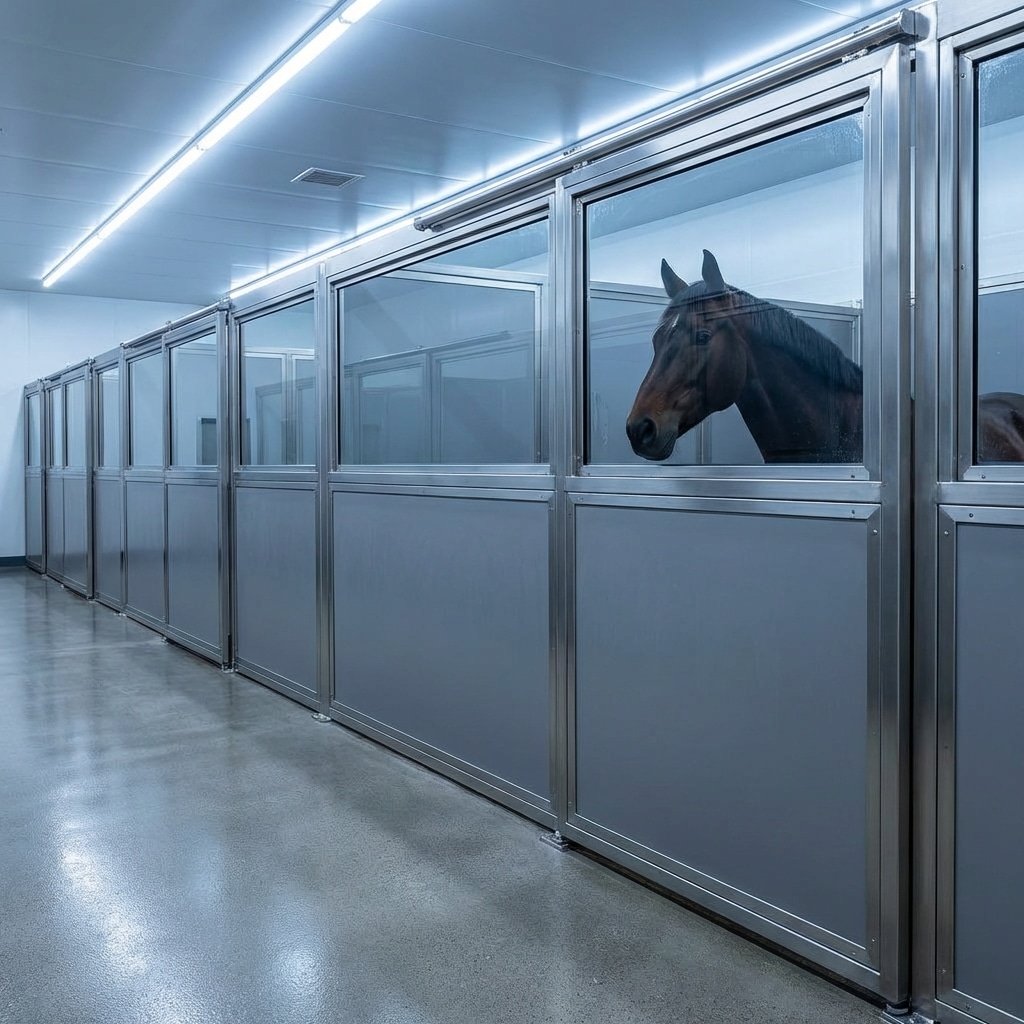
A single lot looks better on an invoice, which is exactly the trap. The quantity thresholds are per product family — 10 stall systems or 50 fence panels — so a mixed order can reach both without any one line being urgent. Split by when the site can use the goods.
| Lot | What lands | Why that position |
|---|---|---|
| 1 — Frame and lining | Stall systems, liner material (bamboo, HDPE or pine) | Slab edges, drainage falls and window openings are set around it |
| 2 — Openings | Ventilated stall windows, Dutch door sets and hardware | Fitted once walls are plumb, before finishes hide the fixings |
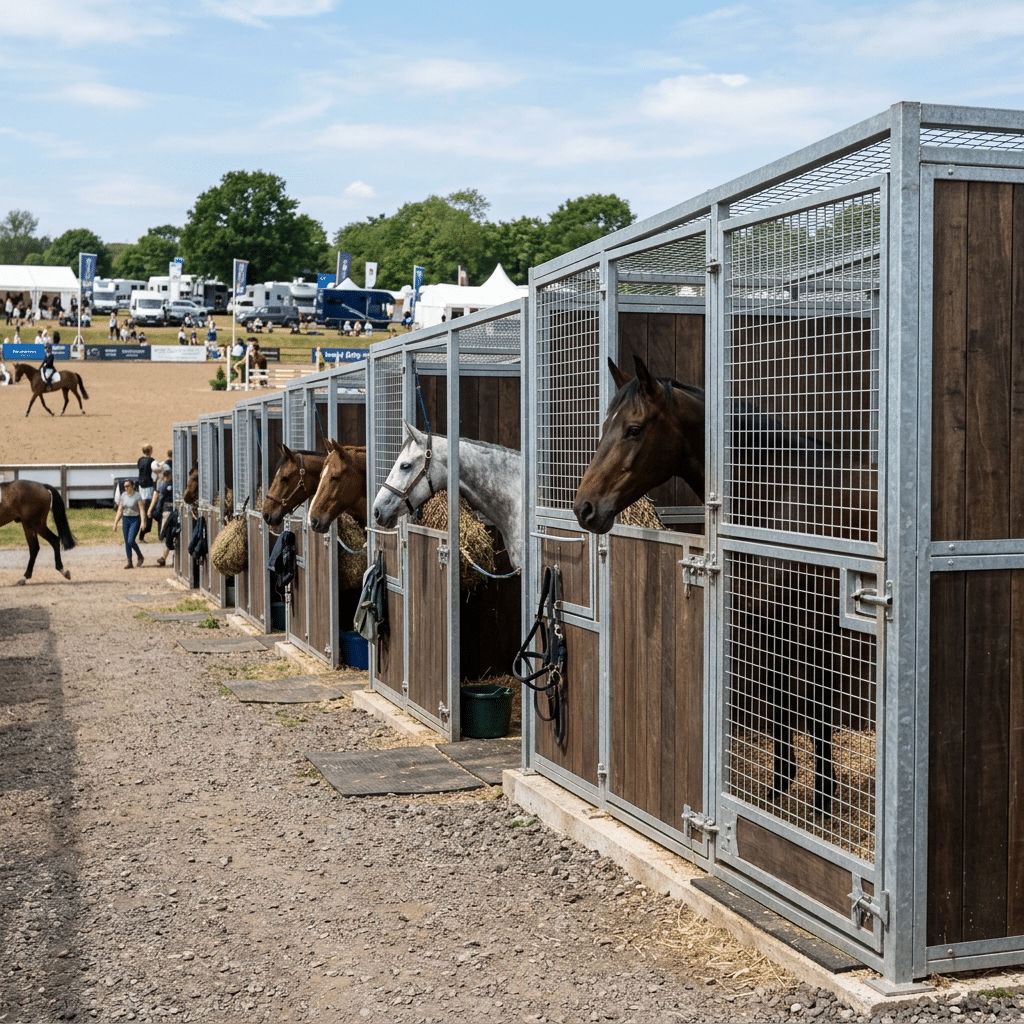
| 3 — Perimeter | Galvanized fence panels, gates | Needs the haul roads finished so panels are not damaged twice |
| 4 — Performance | Horse walker, lunging pen, jump sets, rubber matting | Requires a finished surface and a dry roof overhead |
Temporary housing is the one case where the order runs backwards, and it is worth deciding on purpose. If horses arrive before the barn does, our guide to temporary stalls for equestrian centers covers the layout and configuration side; this article stays on the permanent build sequence.
Handing the job to a crew that has never seen the system
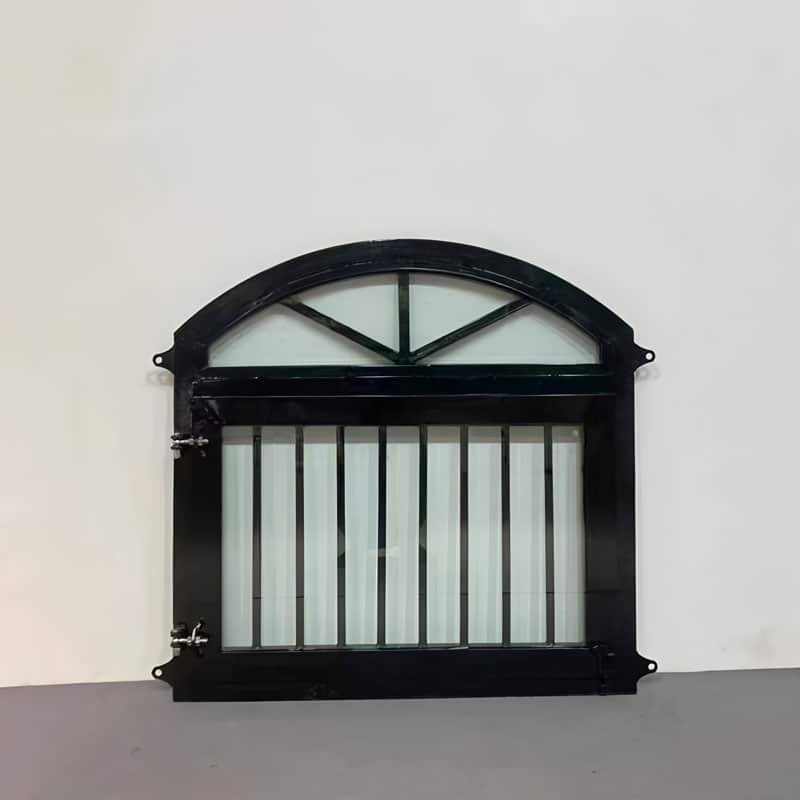
The published value-added service is customization and logistics consulting through a dedicated account manager above 20 sets; no installation team is listed. Establish who is holding the wrench before you build a schedule around them. If that is a local steel crew, they will work to what they are given. The failure mode is not competence; it is a drawing set that assumes knowledge the crew does not have.
Three things are worth settling in writing before the first crate is opened. First, the boundary of supply: who places and levels the frames, who pours or packs beneath them, who backfills around a post line. Second, the adjustment logic. Sizes are adjustable on these stall systems, which is a feature only if the crew is told which dimension is meant to move and within what tolerance the frame must stay square. Third, the fixing method per material — a bamboo, HDPE or pine liner takes fasteners differently, and a crew that drills the first one wrong will repeat it forty times.
Above 20 sets the manufacturer assigns a dedicated regional account manager covering customization and logistics questions. Use that role for the handover, not just the purchase order: ask for an assembly sequence sheet, a fastener and hardware list per stall, and one page of “what not to do” written for the installing crew. If your quantity sits under that threshold, buy the same documents anyway; the request costs an email.
The acceptance order, batch by batch
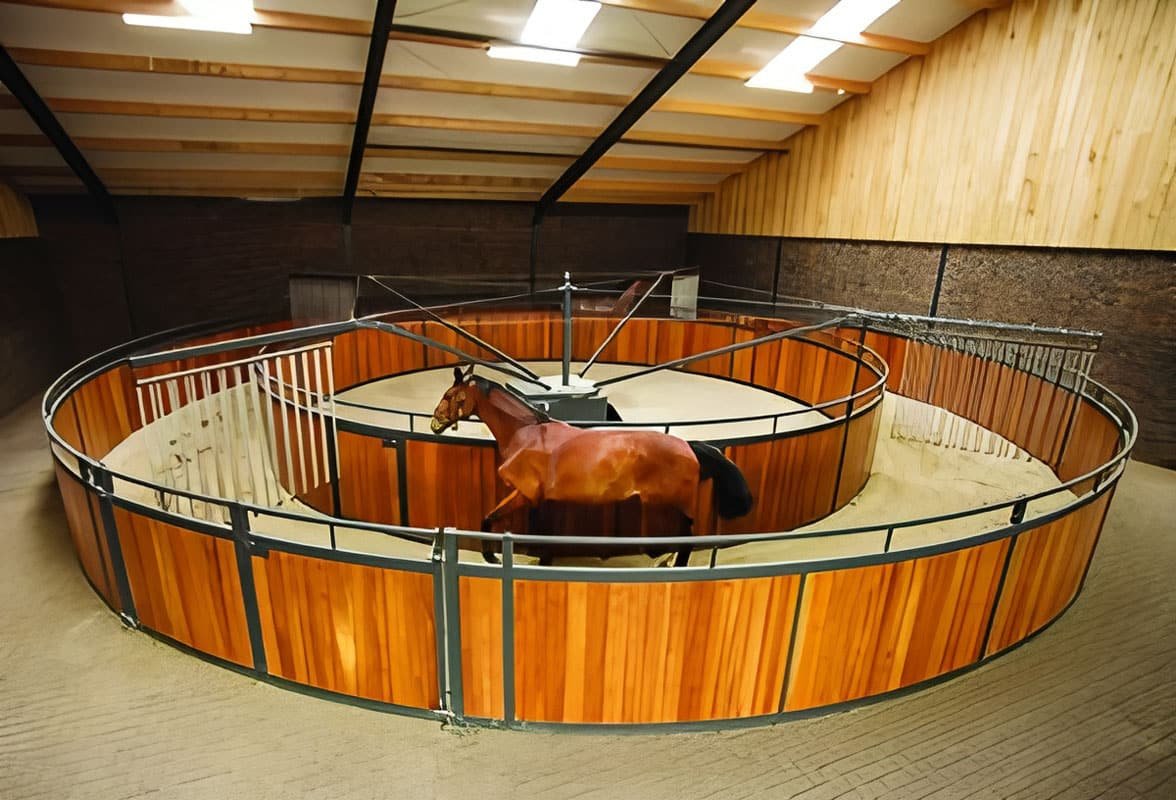
Close each lot before the next one is released. At receipt, count against the packing list, photograph the stack as it arrives, and check the coating you specified — hot-dip galvanized, not a pre-coated sheet that arrives with a cut edge showing bare metal. Then, if the units were specified pre-drilled, confirm hole positions line up with the frame drawing on two or three units rather than on the twentieth, with the crew watching.
For the fence line, acceptance is about the run rather than the parts: check panel centers against the drawing where the ground changes, check each gate opening against how horses actually move, and check that no hardware sits in a wet line. How a frozen season treats a post set too shallow is a separate subject on this site, worth reading before you dig, not after.
Sequence only pays off if it is priced into the plan, and the expedited lane is what makes a late change survivable. The Warsaw hub delivery breakdown covers which orders qualify, how the 1-2 week window is triggered and where expedited stock stops helping; read it alongside our Poland market page, which states the frost-resistant positioning these batches are built to.
Preguntas frecuentes
How early should a Polish project place its order?
Count back from the first date the ground is workable, then add the stated 4-6 weeks plus your customs clearance time. Keep the Warsaw 1-2 week lane in reserve for a correction rather than spending it on the first lot.
Can stalls and fencing go in a single shipment?
Yes, and the batch discount range is published as 5%-15%. Doing so anyway costs nothing if the site cannot absorb the goods, since a yard full of unassembled panels is still an open risk.
Does the manufacturer send an installation team to Poland?
Installation is not listed in the published scope, which covers customization and logistics consulting. Confirm who installs, then use the dedicated account manager assigned above 20 sets for the assembly sequence and fastener schedule.
What documents should an EU importer ask the factory for?
A written specification naming hot-dip galvanizing rather than pre-coated sheet, the ISO 9001 and CE status, and the order record with dates. Certificate numbers are not published, so request them and treat a vague reply as your answer.
Does the minus 10 degree rating decide what to order?
It decides what to ask. Frost-resistant positioning is stated for the Polish market, but ground conditions, anchoring depth and heating loads belong to your site engineer and local authority.
Conclusión
Sequence is the part of a Polish project a buyer controls and rarely plans. Frames, openings, perimeter, performance — each lot has a week when it is useful and a month when it is in the way, and the shipping lane only matters relative to those dates.
Write the batch split against your ground-work calendar before you ask for a discount, and send the installing crew the specification you signed. Start from the stabling and Poland pages, then price the lots separately.



 Spanish
 English
 French
 Arabic
 German
0 comentarios