


Securing ESG / Green Factories for equestrian developments is no longer optional; it is a strict regulatory safeguard against embodied carbon penalties. Developers utilizing traditional treated timber or inefficient welded logistics risk inflated freight costs and failed environmental audits.
We benchmark manufacturers against ISO 1461 Hot-Dip Galvanization standards and high-efficiency flat-pack logistics that reduce shipping emissions by over 60%. This report identifies partners capable of delivering Q235B recyclable frameworks and renewable bamboo infills for verified compliance.
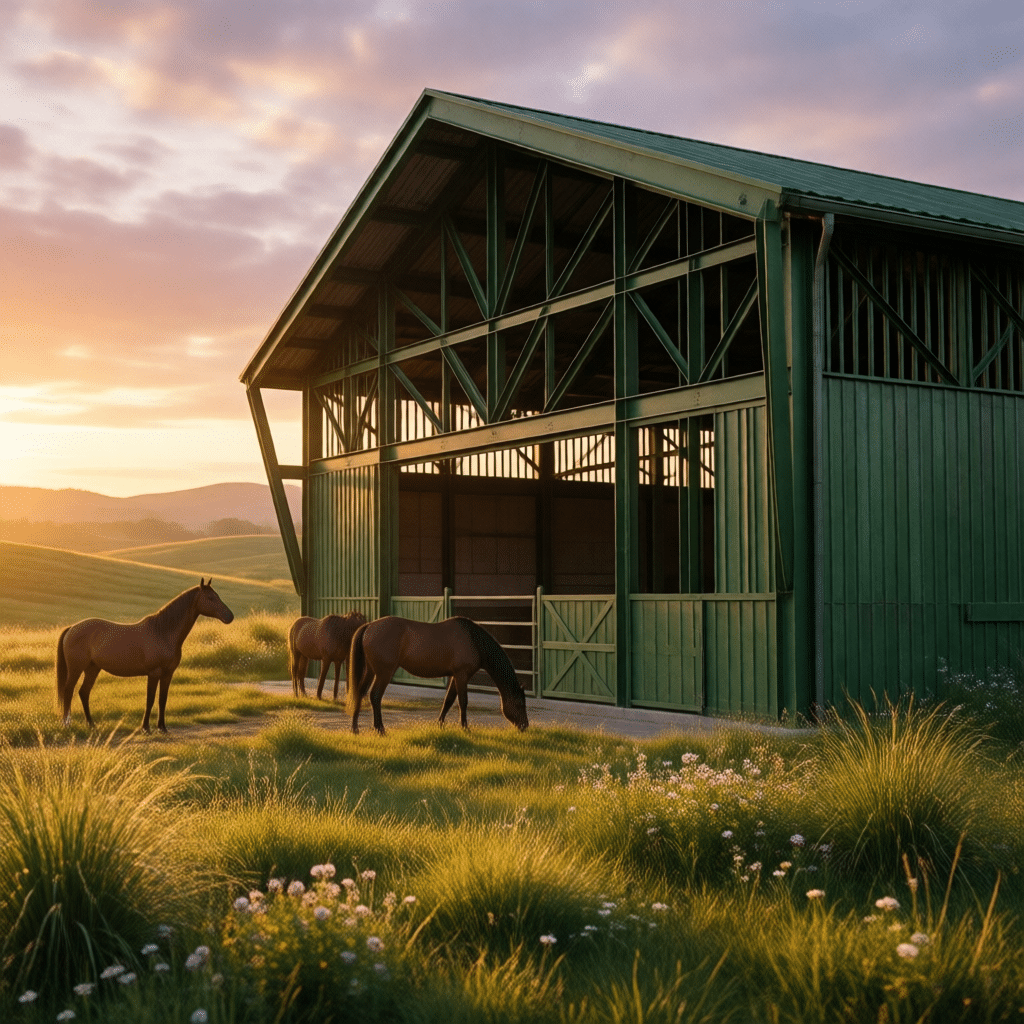
Las mejores fábricas adoptan materiales sostenibles
Modern manufacturing has evolved beyond simple assembly to embrace closed-loop systems and rigorous lifecycle management. By enforcing ISO 1461 galvanization standards and optimizing logistics through high-density flat-pack engineering, we significantly reduce carbon intensity while delivering structural longevity that outlasts disposable alternatives.
Enforcing Closed-Loop Manufacturing and ISO Standards
Leading facilities in 2026 have moved away from the “disposable” culture of pre-galvanized products. We prioritize strict adherence to ISO 1461 standards, utilizing a Galvanización en caliente después de la fabricación process. Unlike competitors who weld pre-galvanized tubes—leaving joints vulnerable to immediate rust—we submerge our fully welded Q235B and Q345B steel frames into molten zinc only after all fabrication is complete.
This method achieves a zinc coating exceeding 85 micras on structural parts, creating a metallurgical bond that provides a “Kick-Proof” barrier against corrosion. By ensuring our stable systems resist rust for decades rather than requiring replacement every few years, we drastically reduce the long-term material waste and environmental impact associated with lower-quality steel products.
Optimizing Supply Chains for Reduced Carbon Intensity
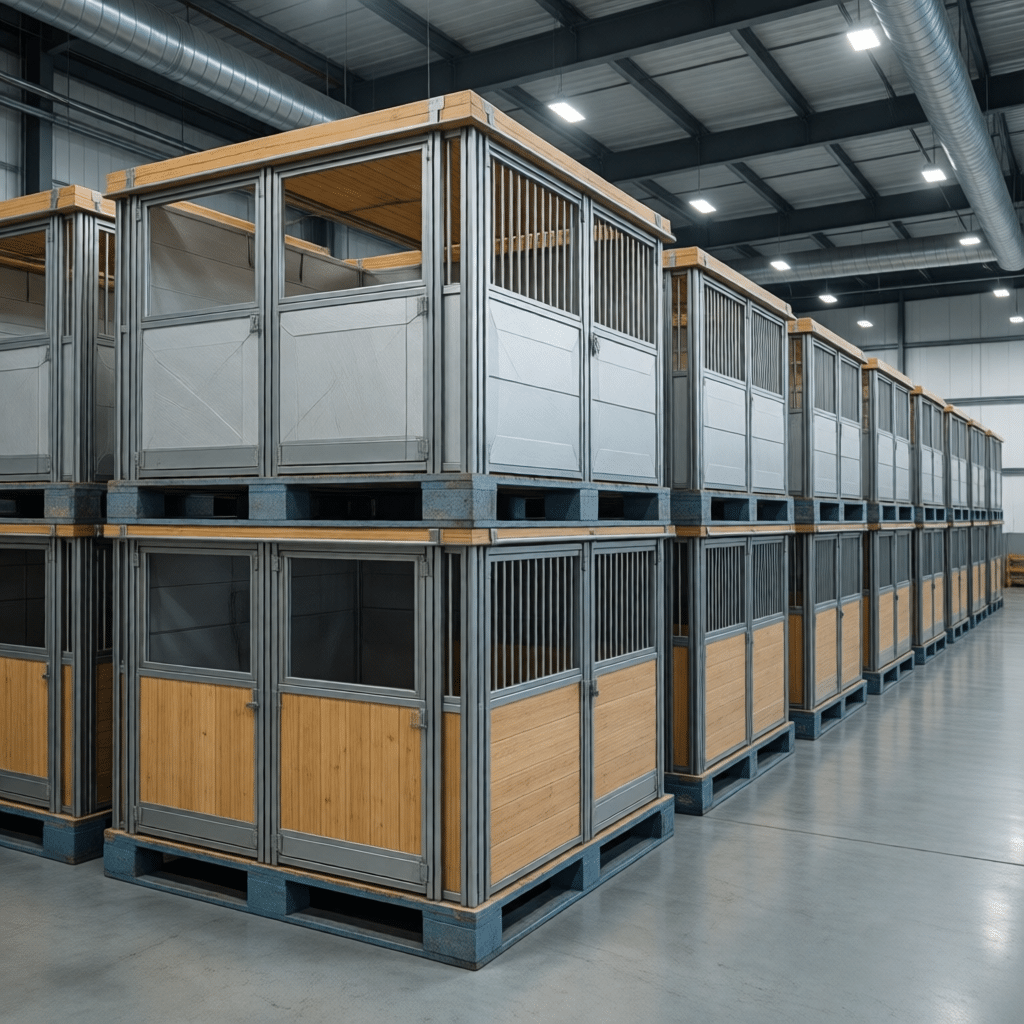
Sustainable production must also address logistics, where the practice of “shipping air” is no longer acceptable. We have engineered a Paleta de acero Sistema Flat-Pack that revolutionizes container loading efficiency. While traditional fully welded designs limit a 40HQ container to just 12–15 sets, our modular design allows us to ship 30 to 45 sets in the same space.
This logistics efficiency reduces fuel consumption and freight costs per unit by over 60%, directly protecting distributor profit margins while lowering the carbon footprint. Additionally, we integrate renewable resources such as high-density strand woven bamboo. With a Janka hardness exceeding 3000 lbf and a regeneration cycle of just 3–5 years, bamboo offers a superior, rot-resistant alternative to slow-growing hardwoods like Oak, aligning material performance with ecological responsibility.
| Manufacturing Metric | Traditional / Retail Standard | DB Sustainable Standard |
|---|---|---|
| Rust Protection | Pre-Galvanized (Welds rust quickly) | Hot-Dip After Fabrication (>85 microns) |
| Logistics Efficiency | 12-15 Sets per 40HQ | 30-45 Sets per 40HQ (Flat-Pack) |
| Grado de acero | Generic Thin Wall (<1.5mm) | Q235B/Q345B Structural (2.0mm+) |
| Infill Sustainability | Soft Pine or Uncertified Hardwood | Rapid Renewable Bamboo or Recyclable HDPE |
Premium Galvanized Stables Built For 20 Years
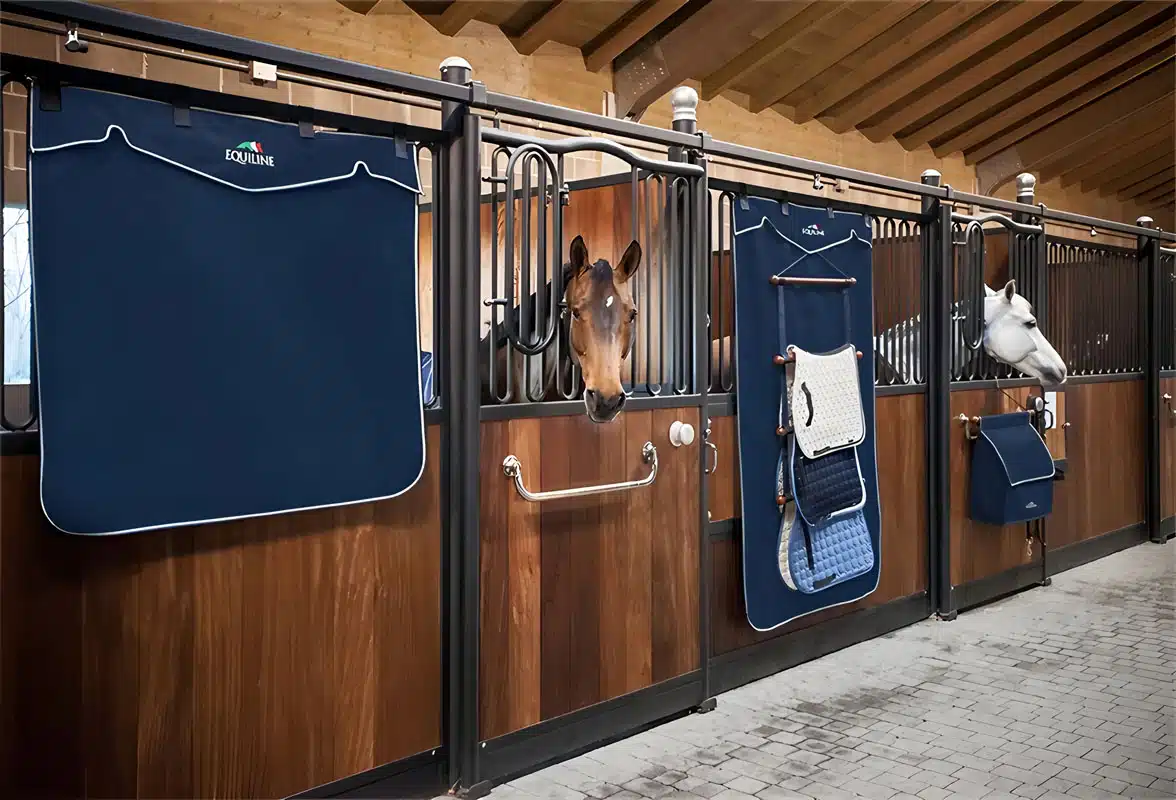
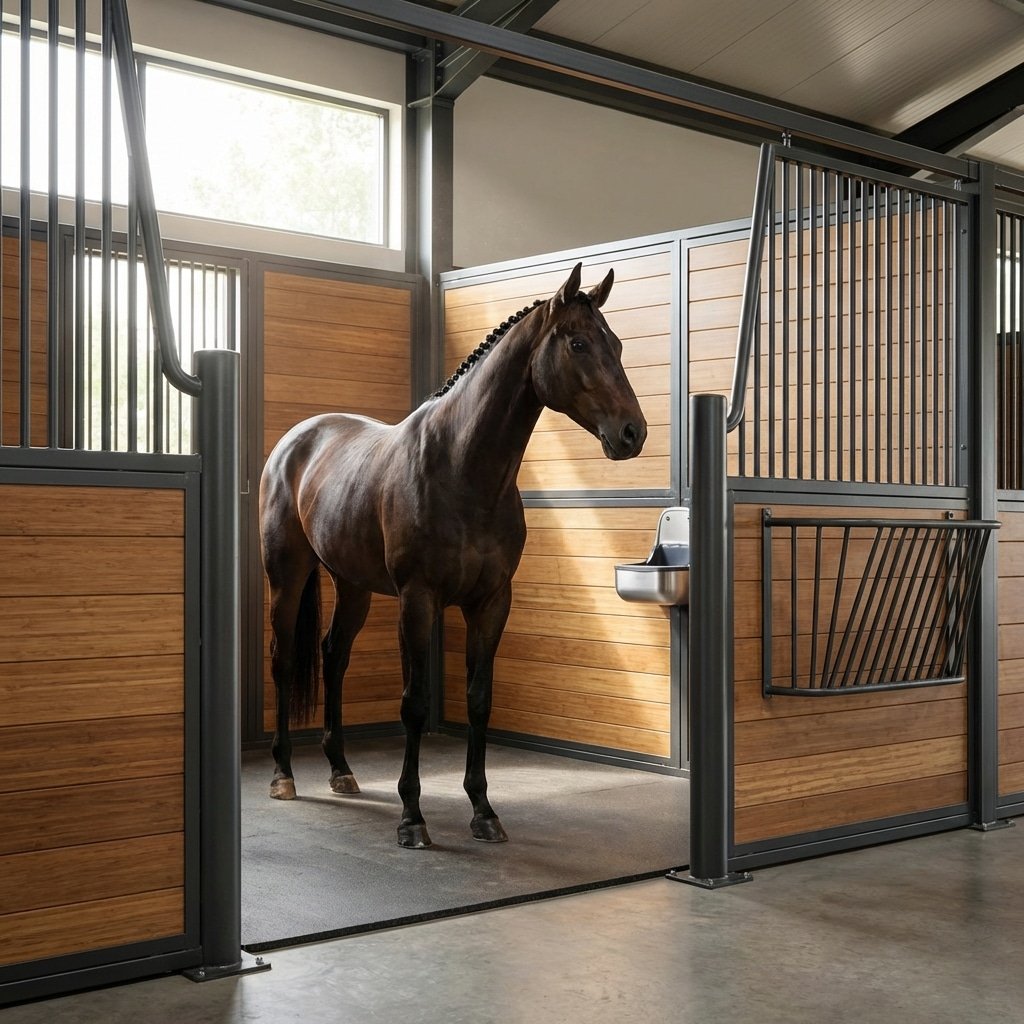
El auge de la gobernanza ambiental y social en la construcción
By 2026, ESG principles have shifted from optional marketing tactics to strict regulatory requirements in the construction sector. For equestrian facility developers, this mandates a pivot toward materials with traceable lifecycles, manufacturing processes that minimize waste, and designs that ensure long-term animal welfare. We align our engineering with these standards to protect both the environment and your project’s long-term viability.
Decarbonizing Supply Chains with Recyclable Materials
Regulatory mandates for embodied carbon limits are pushing developers to rethink material selection. We prioritize Q235B structural steel (and Q345B for cold climates) because it is 100% recyclable. Unlike chemically treated timber, which often ends up in landfills due to toxicity concerns, our steel framework can be reclaimed and repurposed indefinitely without losing structural integrity. This aligns your project with circular economy practices that investors and planning boards increasingly require.
Longevity is a critical component of sustainability. A product that requires replacement every five years carries a massive environmental cost. Our Galvanización en caliente después de la fabricación process (BS EN ISO 1461) ensures our stables resist rust and degradation for decades. By dipping the steel después de welding, we seal every joint and seam, preventing the corrosion that typically forces early replacement in painted or pre-galvanized alternatives.
For infill materials, we offer high-density bamboo as a rapidly renewable alternative to old-growth hardwoods. With a Janka hardness exceeding 3000 lbf, our strand-woven bamboo provides superior durability while acting as a carbon sink. This allows facility owners to achieve the aesthetic of wood without contributing to deforestation, satisfying both environmental goals and the high standards expected in premium equestrian designs.
Reducing Waste Through Offsite Manufacturing (OSM)
Traditional construction often generates significant on-site waste due to cutting, fitting, and errors. Our ISO 9001 certified factory production utilizes precision engineering to minimize scrap metal and material runoff. By fabricating components in a controlled environment, we ensure that resources are used efficiently before the product ever reaches your site. This “Zero Waste” approach at the manufacturing level significantly lowers the overall environmental footprint of the build.
Logistics play a massive role in a project’s carbon calculation. Shipping fully welded stalls is inefficient, often meaning you are paying to transport “air” inside a container. Our modular sistema de montaje en kit nos permite cargar 30-45 series into a single 40HQ container, compared to just 12-15 sets for welded competitors. This efficiency reduces the carbon emissions per unit by over 60%, while simultaneously protecting your profit margins from exorbitant freight costs.
Governance in construction refers to the adherence to safety and quality standards. Ad-hoc on-site builds often suffer from inconsistent quality, leading to safety liabilities. Our standardized offsite fabrication guarantees that every panel meets strict safety criteria, such as cast-proof bottom gaps (50mm) and kick-proof durability. This consistency simplifies compliance with animal welfare regulations and reduces liability risks for facility operators.
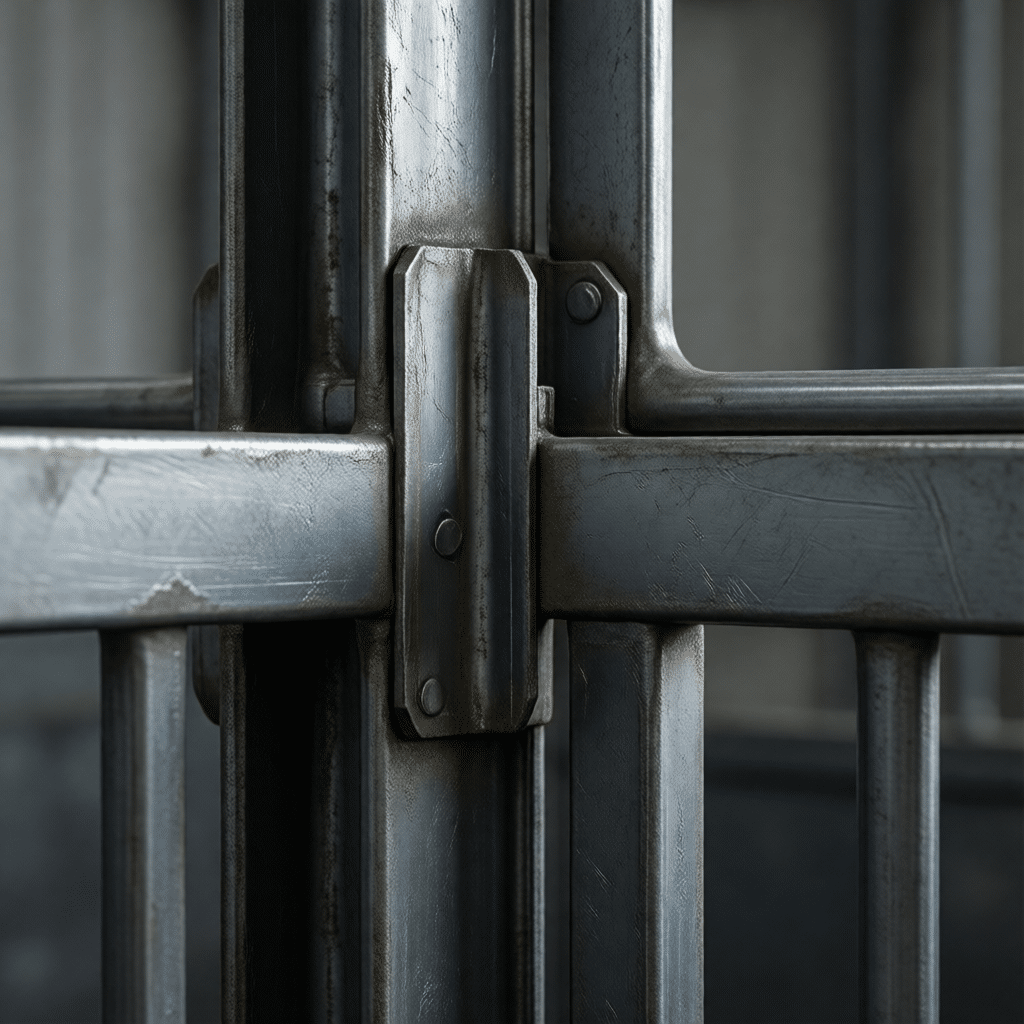
Alejarse de la madera antigua (roble/pino)
The shift from slow-growing hardwoods to sustainable alternatives is an engineering necessity for modern equine safety and environmental stewardship. By replacing traditional oak and pine with high-density bamboo and HDPE, we eliminate deforestation concerns while delivering stabling solutions that are stronger, rot-resistant, and free from the toxic chemical treatments often required to preserve softwood.
The Ecological Impact of Slow-Regenerating Hardwoods
Traditional stable construction has long relied on hardwoods like oak and pine, but the environmental cost of these materials has become difficult to justify in a modern manufacturing landscape. Oak trees require 30 to 50 years to reach maturity, creating a significant disparity between consumption rates and natural regeneration. Relying on old-growth forests for stabling materials disrupts established ecosystems and releases substantial carbon stored over centuries, directly conflicting with the ESG goals of many modern equestrian projects.
Furthermore, softwoods often require aggressive chemical treatments to resist rot and chewing, introducing potential toxicity into the horse’s immediate environment. As stewards of both animal welfare and global supply chains, we recognize that continuing to harvest scarce timber for high-wear applications like horse stalls is neither sustainable nor cost-effective for our B2B partners who demand longevity.
Adopting High-Density Bamboo and Engineered Alternatives
We prioritize Strand Woven Bamboo as our primary sustainable replacement because it offers superior durability compared to traditional wood without the ecological footprint. Bamboo is a grass that reaches maturity in just 3 to 5 years and regenerates from its own root system after harvesting, preventing soil erosion and eliminating the need for replanting. This rapid renewable cycle allows us to produce high-volume orders for large projects without depleting natural resources.
From a performance standpoint, our engineered bamboo is densified to achieve a Janka Hardness exceeding 3,000 lbf, making it three times harder than red oak. This density is critical for our “Kick-Proof Guarantee,” ensuring that partition panels withstand the impact of hooves without splintering or shattering. For clients seeking absolute “Zero Maintenance,” we also utilize UV-stabilized HDPE infills, which provide impact absorption and weather resistance that natural timber simply cannot match in wet or humid climates.
Bambú tejido en hebras: Un sumidero de carbono de alto rendimiento
Strand-woven bamboo represents a critical convergence of environmental stewardship and industrial performance. By utilizing a rapid-growth resource that regenerates without soil disruption, we deliver a stable infill material that actively sequesters carbon while providing the extreme density—exceeding that of Oak—required to withstand the impact of equine use.
Rapid Regeneration and Soil Preservation
Unlike traditional hardwoods that require decades to mature, the bamboo used in our stable systems reaches optimal harvest maturity in a swift 3-5 year cycle. This rapid growth velocity allows the plant to absorb atmospheric CO2 at a significantly higher rate than standard timber forests, making it a powerful tool for lowering the embodied carbon of your facility.
From a land management perspective, our harvesting method leaves the underground rhizome network completely intact. This approach prevents soil erosion and maintains the health of the ecosystem, ensuring continuous carbon storage in the root system without releasing it back into the atmosphere. Lifecycle analyses indicate that high-density strand-woven bamboo often achieves a negative carbon footprint, sequestering up to 0.674 kg of CO2 per kilogram of material.
Engineered Density for Equine Safety
To meet the rigorous demands of professional stables, our manufacturing process involves compressing shredded bamboo fibers under immense pressure to achieve a density between 900 and 1,200 kg/m³. By utilizing nearly 100% of the raw material, we reduce waste while creating a board that is structurally superior to natural timber.
This engineering results in boards with a Janka Hardness exceeding 3000 lbf, making them approximately three times harder than Oak. This “Kick-Proof” durability is essential for preventing fractures from hoof impact and resisting cribbing damage. We supply these boards in thicknesses ranging from 28mm to 38mm, combining extreme physical resilience with natural mold and rot resistance to significantly extend replacement cycles and protect your long-term investment.
Acero Q235B: La estructura reciclable 100%
Q235B structural steel functions as the sustainable backbone of our manufacturing process, providing a 100% recyclable material profile equivalent to ASTM A36 standards. This framework aligns with circular economy principles by allowing indefinite re-smelting without mechanical degradation, ensuring that our stables support both equine safety and long-term environmental stewardship.
Driving the Circular Economy in Construction
We utilize Q235B steel because it acts as a fully renewable resource within the global construction ecosystem. Unlike composite materials that often end up in landfills, our steel components support a closed-loop lifecycle. At the end of a stable’s long service life, the structural elements become raw material for future production, significantly lowering the overall carbon footprint associated with new material extraction.
Our pre-engineered manufacturing process further reduces environmental impact through precision fabrication. By cutting and welding standard 50mm x 50mm RHS profiles in our factory rather than on-site, we virtually eliminate construction waste. This approach aligns with strict ESG waste reduction protocols and ensures that distributors and large projects receive a clean, flat-packed product ready for immediate assembly.
Structural Integrity and Safety Standards
Safety remains our primary engineering constraint. Q235B steel provides the essential ductility required to absorb high-impact energy from horses without risking brittle fracture. To guarantee a true “Kick-Proof” barrier, we mandate a strict minimum wall thickness of 14-Gauge (2.0mm) for all tubing. This ensures that the framework withstands the daily rigors of equestrian use, far exceeding the durability of lighter gauge alternatives often found in the retail market.
To protect this structural core, every panel undergoes Hot-Dip Galvanization After Fabrication, conforming to BS EN ISO 1461 standards. This process submerges the fully welded door and frame into molten zinc, creating a metallurgical bond that seals the steel against ammonia, moisture, and rust. With average coating thicknesses exceeding 70 microns on tubing, we ensure the framework remains safe, intact, and aesthetically professional for decades.
Reflexiones finales
Adopting ISO 1461 hot-dip galvanized steel and renewable bamboo is a strategic asset protection move, not just a compliance check. Relying on pre-galvanized alternatives that rust within years destroys your maintenance budget and undermines your environmental credibility. We strictly utilize Q235B structural frameworks to ensure your facility meets 2026 ESG mandates without sacrificing the durability required for heavy equestrian use.
Validate our “Zero Waste” claims by auditing the logistics efficiency of our flat-pack system for your next development. We invite you to request a material sample kit to physically test the density of our strand-woven bamboo against traditional oak. Contact our engineering team today to configure a shipping plan that maximizes container yield and secures your project’s profit margins.
Preguntas frecuentes
¿Cómo construir un centro ecuestre que cumpla la ESG?
Building an ESG-compliant center starts with selecting materials that support circular economy models. We recommend using 100% recyclable hot-dip galvanized steel frameworks combined with renewable strand-woven bamboo infills. This approach minimizes construction waste, eliminates the need for toxic chemical preservatives found in treated lumber, and ensures the structure lasts decades to reduce lifecycle carbon footprints.
¿Es el bambú un material de construcción sostenible?
Yes, strand-woven bamboo is a high-yield carbon sink and a superior alternative to hardwoods. Our bamboo infill features a Janka hardness exceeding 3000 lbf, making it three times harder than oak. It is naturally resistant to mold and rot, providing a durable, renewable solution that reduces pressure on old-growth forests.
¿Impacto medioambiental de los graneros de acero frente a los de madera?
Steel barns offer a lower long-term environmental impact due to durability and recyclability. Unlike wood, which suffers from cribbing damage and rot requiring frequent replacement, our Q235B and Q345B steel components are hot-dip galvanized to ISO 1461 standards. This creates a maintenance-free structure that remains in service for generations, significantly lowering waste.
¿Certificaciones ecológicas para establos de caballos?
While specific ‘green’ labels for stables vary, buyers should look for manufacturers holding ISO 1461 certifications for galvanizing processes and ISO 9001 for quality management. These standards ensure that the production facilities minimize waste and that the products meet strict durability criteria, aligning with broader ESG and construction sustainability goals.
¿Fabricantes de establos ecológicos?
We prioritize sustainability not just in materials, but in logistics. By utilizing a specialized flat-pack steel pallet system, we fit 30-45 sets in a 40HQ container compared to only 12-15 sets for welded alternatives. This efficiency reduces shipping emissions by over 60%, making our supply chain one of the most eco-efficient in the industry.

 Spanish
  English
  French
  Arabic
  German
0 comentarios