


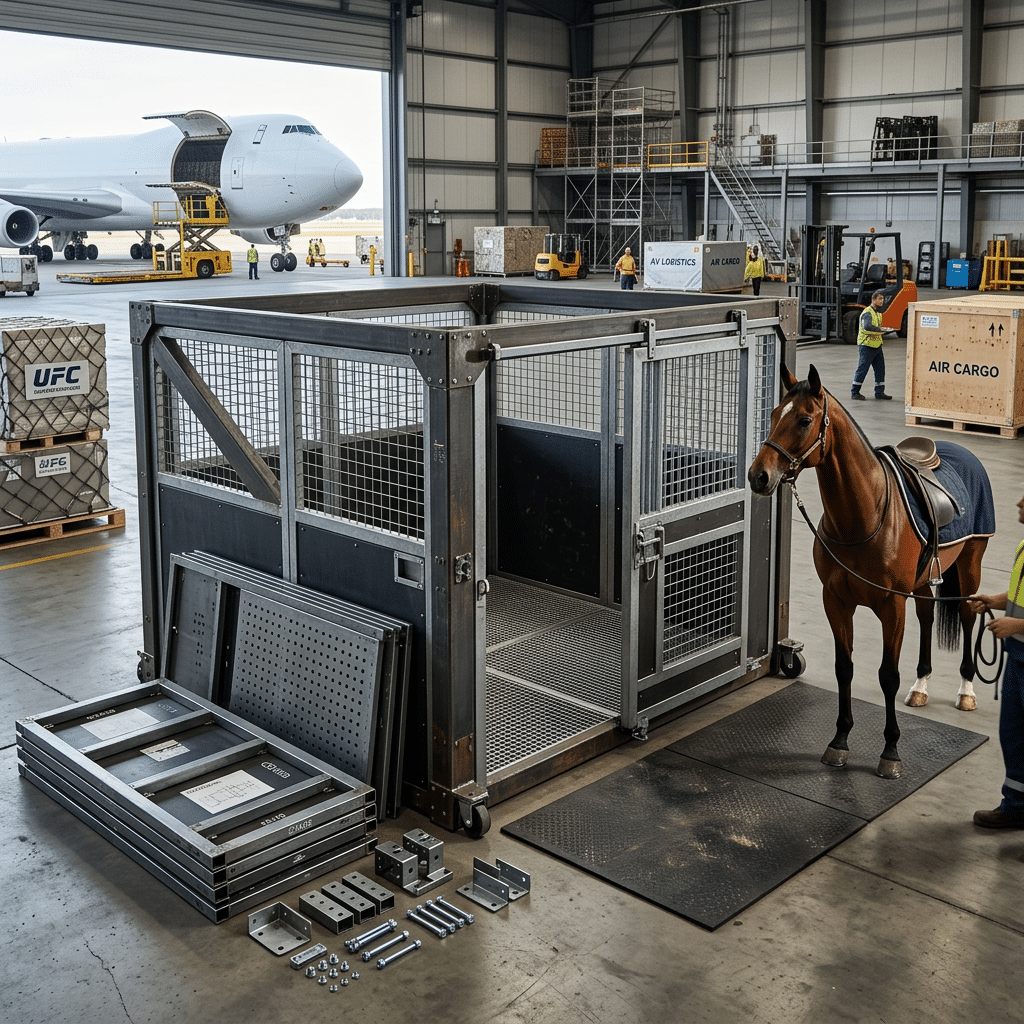
Strategic Alibaba Sourcing for horse stables determines whether your inventory lasts decades or rusts within months. Many verified listings are actually brokers selling pre-galvanized tubing that fails ASTM salt spray tests, ultimately destroying distributor margins through warranty claims and structural failures.
This audit benchmarks suppliers against the BS EN ISO 1461 standard for hot-dip galvanization after fabrication. We evaluate factories on their ability to verify 85-micron zinc coatings and utilize flat-pack logistics to maximize container loads, ensuring your landed cost remains competitive.
The Alibaba Trap: Brokers Disguised as Factories
Quick Comparison
| Seller Type | Location | Main Appeal | Verdict |
|---|---|---|---|
| Trading Companies | Alibaba Intermediary | Ability to source a wide variety of products from different factories | Significantly higher costs due to added profit margins |
| Freelance Agents | Alibaba Intermediary | Can potentially assist with navigating local language barriers | Often lack technical knowledge about the products offered |
| Online Marketers | Alibaba Intermediary | Listings often feature high-quality imagery and branding | Zero control over production standards or ethical compliance |
Trading Companies
Best for sourcing a wide variety of products with easier communication, but **beware of inflated costs** and hidden origins.
These entities operate as middlemen, procuring items from multiple factories to resell at a significant markup. They frequently present themselves as direct manufacturers, masking their actual status as third-party intermediaries in the supply chain.
Their primary advantage lies in superior English communication and the ability to aggregate diverse product lines. However, without ownership of production assets, buyers cannot conduct direct quality inspections or control manufacturing standards effectively.
📊 At a Glance:
- 📍 Location: Alibaba Intermediary
- 🏭 Core Strength: Resold Goods, Sourced Products
- 🌍 Key Markets: Global
Why We Picked Them:
| ✅ The Wins | ⚠️ Trade-offs |
|---|---|
|
|
Freelance Agents
Useful for initial language support, but **risky for production due to lack of technical ownership**.
Freelance agents are individuals who pose as direct suppliers while operating solely as brokers. They do not own manufacturing assets, instead earning commissions by connecting buyers with actual factories.
These agents allow for quick account setup, but they frequently lack deep technical understanding of the products. Communication is filtered through them, often resulting in critical delays and misunderstandings regarding specific customization needs.
📊 At a Glance:
- 📍 Location: Alibaba Intermediary
- 🏭 Core Strength: Brokerage Services, Connections
- 🌍 Key Markets: Global
Why We Picked Them:
| ✅ The Wins | ⚠️ Trade-offs |
|---|---|
|
|
Online Marketers
Best for **visual branding and speed**, but you pay a premium for resold goods with zero production control.
Online marketers operate by purchasing generic products in bulk, rebranding them, and listing them under their own company names. They effectively mask the original manufacturer, presenting themselves as the source without owning any physical production assets.
While their listings often feature polished, high-quality imagery and ready-to-ship inventory, these sellers lack proximity to the factory floor. This disconnect results in an inability to manage production standards or verify ethical compliance directly.
📊 At a Glance:
- 📍 Location: Alibaba Intermediary
- 🏭 Core Strength: White-labeled Goods, Rebranded Bulk Items
- 🌍 Key Markets: Global
Why We Picked Them:
| ✅ The Wins | ⚠️ Trade-offs |
|---|---|
|
|
Factory Direct Stables Built for Extreme Climates
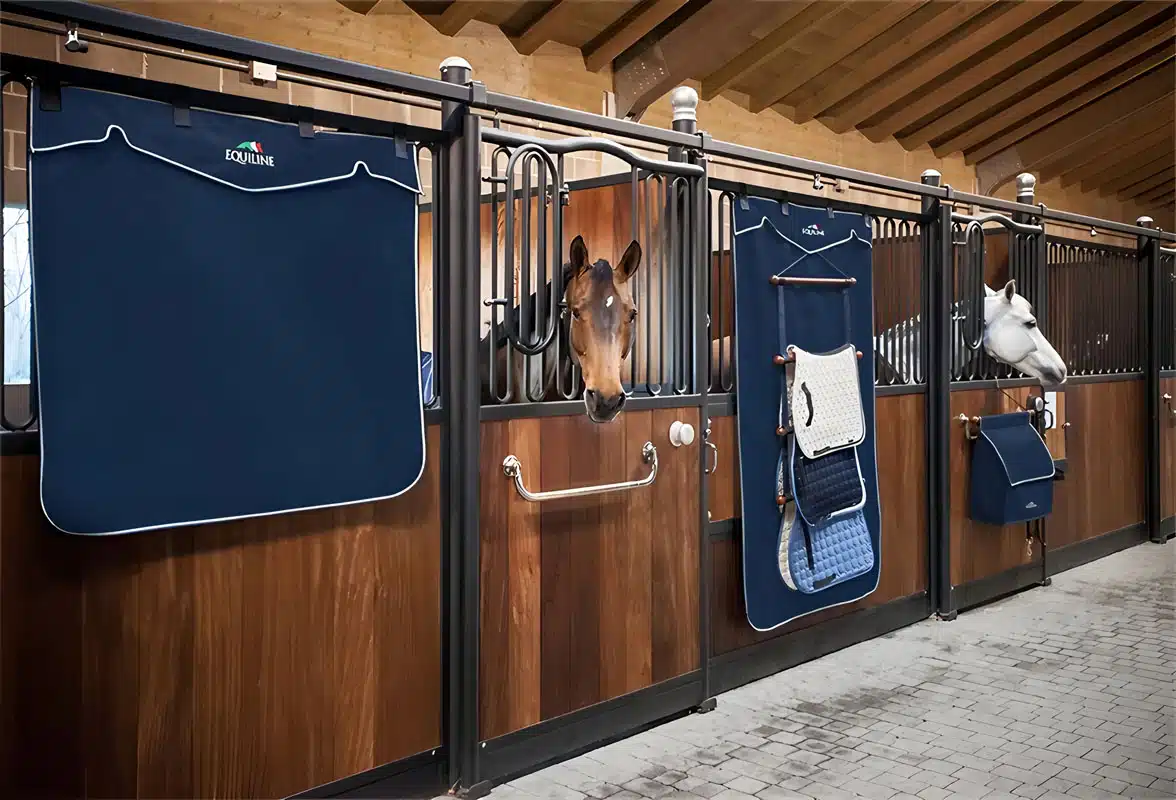
The Alibaba Trap: Brokers Disguised as Factories
Platforms like Alibaba often obscure the link between buyer and builder. Many “verified” suppliers function as trading desks rather than production floors, adding markup without adding value. True cost control and safety assurance—such as verifying our 85-micron zinc standard—require bypassing these intermediaries to work directly with the source factory.

The “Gold Supplier” Illusion: How Traders Fake Legitimacy
The “Gold Supplier” badge often misleads international buyers. This status primarily indicates a paid marketing membership rather than guaranteed manufacturing capability. We frequently encounter “verified” accounts that operate from commercial high-rises with just a few desks and a printer, yet they present themselves as large-scale manufacturers. These entities rely on stock photography of finished stalls but rarely show the raw reality of production.
A legitimate Source Factory like DB Stable operates from specific industrial zones equipped with heavy machinery. We process raw Q235B and Q345B structural steel and manage the complex, often messy hot-dip galvanizing baths required for ISO 1461 compliance. If a supplier cannot show you the sparks from the welding robot or the zinc kettle in real-time, you are likely negotiating with a middleman.
The Hidden Costs of Indirect Sourcing
Middlemen typically disguise a 30-40% markup as production costs. This hidden fee directly erodes the profit margins that Distributors and Large Projects rely on to maintain a sustainable business. Beyond financial cost, the technical risk is substantial. Traders often lack engineering knowledge, translating a request for “galvanized steel” into cheap “Pre-galvanized” (black tube welded) products. These inferior substitutes fail ASTM B117 salt spray tests and rust quickly.
Direct engagement with the factory is the only way to enforce critical quality metrics. When you work with us, you verify the 85-micron zinc coating thickness on structural parts and manage the strict 35-45 day production lead time required for proper hot-dip galvanization. We protect your logistics margins by maximizing container loads—fitting 30-45 sets in a 40HQ via our flat-pack system, compared to the 12-15 sets often shipped by inexperienced brokers.
The “Pre-Galvanized” Scam: Why Cheap Quotes Rust
The “Pre-Galvanized” method uses steel tubes coated with zinc before welding. When these tubes are cut and welded to build a stable, the heat burns off the zinc protection at the joints, leaving raw steel exposed to rust. In contrast, our “Hot-Dip After Fabrication” process dips the entire finished frame into molten zinc, sealing every weld and crevice with a coating significantly thicker than industry averages.
Pre-Galvanized Tubing vs. Hot-Dip After Fabrication
Many budget suppliers on Alibab
a cut costs by utilizing “Pre-Galvanized” tubes. These are mass-produced steel pipes that receive a thin layer of zinc at the steel mill before they are ever cut into stable components. While this manufacturing shortcut significantly reduces production time and cost, the zinc layer is often superficial and fails to withstand the ammonia and moisture found in active equestrian environments.
At DB Stable, we strictly adhere to **BS EN ISO 1461** standards. We fabricate our frames from raw **Q235B or Q345B black steel** first. Only after the welding and cleaning are complete do we submerge the entire structure into the zinc bath. This “Hot-Dip After Fabrication” process achieves a zinc coating average of **>85 microns** on structural parts. In contrast, pre-galvanized tubes often feature a much thinner layer that cannot provide the long-term defense required for professional facilities.

The Welding Vulnerability: How the Scam Works
The fundamental flaw with pre-galvanized stalls lies in the assembly process. When pre-coated tubes are welded together, the intense heat of the welding arc vaporizes the zinc coating at the joints. This leaves the steel underneath completely exposed and vulnerable, effectively burning away the protection exactly where the structure is weakest.
To hide this damage, suppliers often apply a coat of cheap silver spray paint over the burnt weld lines. While the product may look shiny and uniform upon delivery, this paint offers no chemical bond or true protection against stall acids. Corrosion inevitably starts at these welded joints within months. Our process eliminates this risk entirely by dipping the frame *after* all welding is complete, ensuring molten zinc penetrates and seals every joint, corner, and crevice.
How to Request a Live Video Audit of the Zinc Bath
To verify true “Hot-Dip After Fabrication” quality, schedule a live video call during weeks 3-4 of the production cycle. This audit confirms your frames are dipped whole into molten zinc—ensuring internal weld protection—rather than being constructed from pre-galvanized tubing or simply spray-painted silver by a middleman.
Scheduling the “Dip Day” Inspection
Authentic manufacturers operate on a standard 35-45 day production cycle because the hot-dip galvanizing process requires precise logistical scheduling with the treatment plant. You should request your video audit specifically for the third or fourth week of your order. This is the critical window where fabrication (welding) ends and the surface treatment begins. If a supplier claims your order is ready for shipment in under 15 days, they are likely selling you pre-galvanized tubing that will rust at the weld points, rather than adhering to the ISO 1461 immersion standard.
Brokers and trading companies often panic at this request. They typically lack access to the hazardous heavy industry zones where galvanizing occurs, or they are hiding the fact that their “factory” is a small welding shop using silver spray paint. You must demand to see the “black steel” (raw, unpainted welded frames) explicitly before they enter the tank. This visual step is the only way to confirm that the steel is being treated after fabrication, ensuring the zinc seals the welds and connections permanently.
Visual Verification Checklist on Camera
When the camera turns on, look immediately for the scale of the facility. A legitimate galvanizing plant features massive molten zinc tanks heated to approximately 450°C and industrial overhead cranes capable of lifting 500kg+ pallets. These are absent in standard welding workshops. If the video shows a small room with spray guns or powder coating booths but no large chemical tanks, you are not getting the hot-dip protection required for long-term stable durability.
Ask your contact to zoom in on the bath monitoring logs or the control panel. We maintain strict chemistry logs to verify zinc ion concentration levels and temperature stability, which ensures the coating achieves the required 70-85 micron thickness. Finally, watch a frame being dipped. You need to verify that the stall front enters the tank as a single, welded unit. This immersion allows the molten zinc to flow through the drain holes and coat the inside of the 14-gauge tubing, providing the internal rust protection that pre-galvanized systems completely lack.
DB’s Direct B2B Pricing vs. Alibaba Markups
By eliminating the 15-30% broker margins typical of general B2B marketplaces and utilizing our proprietary flat-pack logistics to triple container density, we allow distributors to invest in superior hot-dip galvanized materials while reducing total landed costs by over 60%.
The Hidden Costs Behind Marketplace Quotes
Sourcing through general B2B marketplaces often involves navigating a maze of intermediaries. Many listed “manufacturers” are actually trading companies or freelance agents who add a 15-30% margin to the factory price to cover platform membership fees and advertising costs. These brokers often lack the technical expertise to ensure strict adherence to safety standards, serving merely as a communication layer that dilutes accountability.
To maintain visually attra
ctive pricing despite these added markups, intermediaries frequently compromise on invisible specifications. We often see competitors substituting the industry-standard 14-gauge (2.0mm – 2.5mm) tubing with thinner 1.5mm walls or bypassing the critical ISO 1461 hot-dip galvanization process in favor of cheaper pre-galvanized (welded black tube) alternatives. While the initial FOB price may look competitive, the long-term cost in rust claims and structural failure destroys the distributor’s reputation and margin.
How DB Stable Reduces Total Landed Costs
As a direct OEM/ODM source factory, we strip away agent commissions to offer pricing based strictly on material grade—whether standard Q235B or cold-climate Q345B—and fabrication labor. However, our most significant contribution to your bottom line lies in our logistics engineering. Traditional fully welded stable fronts are notoriously expensive to ship, typically capping a 40HQ container at just 12-15 sets due to “shipping air.”
Our “Profit Protection” strategy relies on a specialized Flat-Pack System that allows us to load 30-45 sets into a single 40HQ container. This efficiency reduces ocean freight costs by over 60% per unit compared to welded alternatives. For our B2B partners, this means the budget usually wasted on shipping can be reinvested into higher quality specifications, such as genuine hot-dip galvanization after fabrication, ensuring a superior product lands in your warehouse at a competitive price.
Final Thoughts
Sourcing cheap pre-galvanized stalls offers short-term savings but guarantees long-term liability when exposed welds inevitably rust. By partnering directly with DB Stable, you secure ISO 1461 hot-dip protection (>85 microns) and leverage our flat-pack system to triple your container density. True market advantage comes from reducing landed costs through logistics engineering, not by compromising steel quality.
Verify our manufacturing reality by scheduling a live video audit to witness the zinc dipping process in real-time. We invite serious distributors to request a project quote based on actual material weight rather than inflated broker fees. Contact our engineering team today to secure your production slot and eliminate the middleman risk.
Frequently Asked Questions
Is it safe to buy horse stalls on Alibaba?
Buying through Alibaba carries risks if you do not verify the supplier type. Many listings are trading companies disguising themselves as manufacturers. While the platform offers payment security, we recommend strictly vetting the supplier’s production capabilities—specifically looking for raw steel processing and hot-dip galvanizing facilities—to ensure you are dealing with a source factory.
How to find a real factory on Alibaba?
Do not rely solely on “Gold Supplier” badges. The most effective method is to request a live video audit of the production floor. A real factory, like DB Stable, can show you the welding lines, raw material stock (Q235B/Q345B steel), and the galvanizing schedule. Trading companies will often refuse this request or show stock footage.
What is a pre-galvanized horse stall?
Pre-galvanized stalls are made from steel tubes that were galvanized before being cut and welded. This process leaves the weld joints exposed and vulnerable to rust immediately. We strictly avoid this method; instead, we use “Hot-Dip Galvanization After Fabrication,” where the entire welded door is dipped into molten zinc to ensure 100% coverage and internal protection.
How to verify ISO 1461 certification?
To verify true adherence to BS EN ISO 1461, ask for the galvanizing report relating to your specific batch. The report should show an average zinc coating thickness greater than 70 microns for tubing and 85 microns for structural parts. You can also request ASTM B117 Salt Spray Test results, which should show no red rust after 96 hours.
Alibaba Trade Assurance for steel products?
Trade Assurance protects your payment, but it only protects product quality if your contract specifications are precise. When drafting the order, you must explicitly state “Hot-Dip Galvanized After Fabrication” and specify steel grades (e.g., Q235B). If these details are vague, it becomes difficult to win a dispute if you receive inferior pre-galvanized goods.

 English
  Spanish
  French
  Arabic
  German
0 Comments