


The Prefab Kits vs Custom Built debate often overlooks a critical defect: on-site welding of pre-galvanized steel burns off the zinc coating. This common shortcut creates a guaranteed rust point at every joint, leading to premature structural failure and exposing distributors to significant liability risks.
This analysis benchmarks fabrication methods against the ISO 1461 Hot-Dip Galvanization standard. We evaluate the economic impact of steel thickness, rust protection processes, and flat-pack logistics to show how factory-direct kits protect both profit margins and animal safety.
5 Critical Red Flags to Watch For
Low prices often signal dangerous shortcuts. These red flags expose hidden compromises in steel thickness, rust protection, and supplier legitimacy that can endanger your animals.
| Red Flag | Why It’s a Problem for Stable Buyers |
|---|---|
| 1. The ‘Pre-Galvanized’ Scam | Black tubes are welded, burning off the zinc coating. This means welds rust from the inside out, leading to premature structural failure. |
| 2. Thin Steel & Weight Games | Tubing thinner than 14-gauge (2.0mm) can bend or break from a horse kick, creating sharp edges and a serious injury risk. |
| 3. Prices “Too Good to Be True” | The price directly reflects the materials. A cheap quote indicates skipped galvanizing steps, inferior steel, or a dangerously thin zinc coating. |
| 4. Refusal of Factory Verification | A legitimate factory has nothing to hide. Refusing a video call or third-party inspection means they are likely a trading company with no quality control. |
| 5. Unsafe Payment Demands | Demands for 100% upfront payment via wire transfer with no formal contract is a classic signal of a potential scam. |
1. The ‘Pre-Galvanized’ Scam
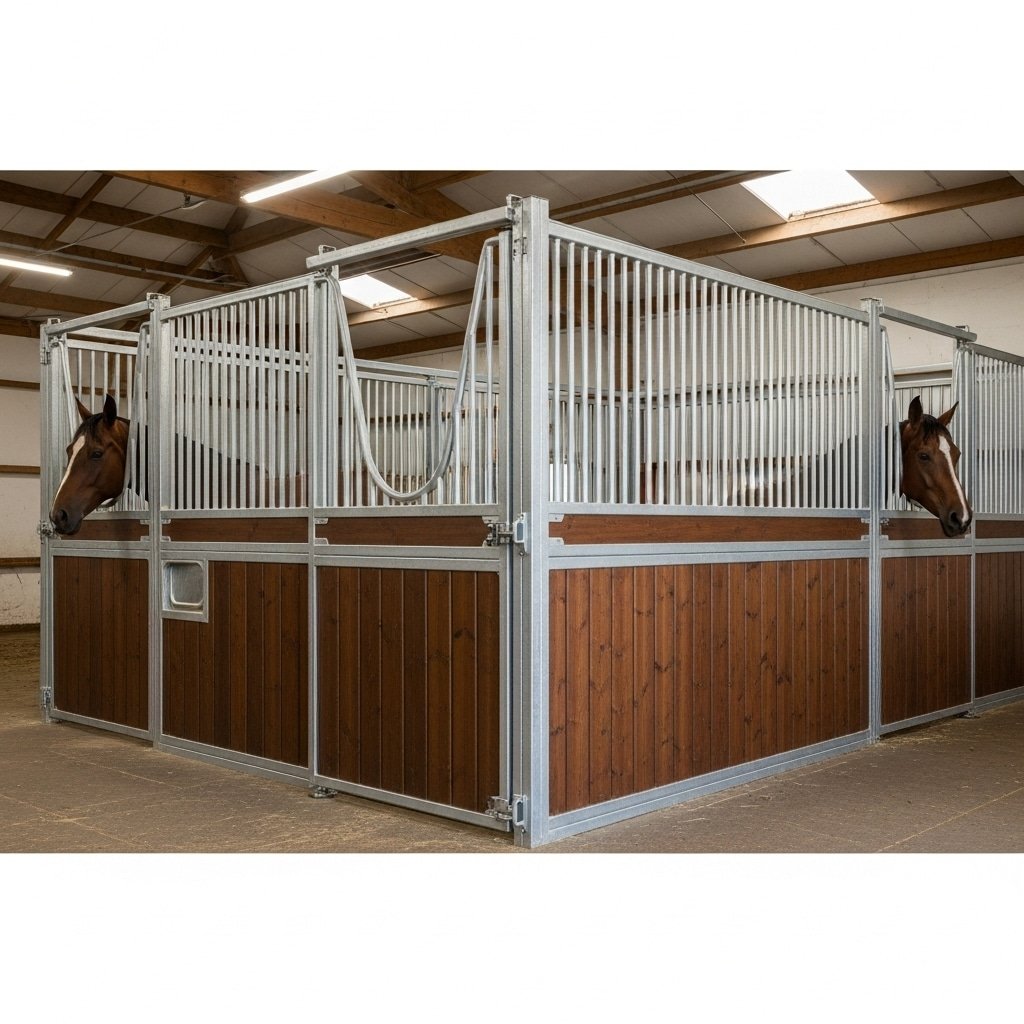
This is the most common and deceptive cost-cutting tactic. A supplier uses pre-galvanized tubes and welds them together. But the intense heat of welding completely burns off the zinc protection at every joint. The seller might touch it up with a cheap zinc spray paint, but the inside of the tube is left as raw, exposed steel. Moisture gets trapped, and the frame rusts from the inside out, collapsing without warning. True safety requires Hot-Dip Galvanization *After Fabrication*, where the fully welded panel is dipped in molten zinc. This process, conforming to ISO 1461, coats every surface, inside and out, creating a genuine barrier against rust.
2. Weight Discrepancies & Thin Steel
A stable’s frame is its skeleton. Some suppliers cut costs by using steel thinner than the industry-safe minimum of 14-gauge (2.0mm). This material is cheaper and lighter, but it cannot withstand the force of a horse’s kick. We strictly prohibit any tubing thinner than 2.0mm in our stable systems, using Q235B structural steel as standard. For colder climates where steel becomes more brittle, we use Q345B steel for its superior low-temperature impact toughness. A supplier who won’t specify the steel grade and wall thickness in writing is hiding a critical weakness.
3. Prices That Are ‘Too Good to Be True’
The final price is a direct result of the materials and processes used. A quality hot-dip galvanizing process that achieves a thick coating of over 70 microns costs money. High-grade Q235B or Q345B steel costs money. If you receive a quote that is dramatically lower than others, the supplier has removed these costs. They’re not giving you a deal; they’re selling you a product with a hidden defect that will only reveal itself through rapid rusting and structural failure a few years down the line.
4. Refusal of Factory Verification
In B2B sourcing, transparency is everything. A legitimate source factory will have no problem showing you their production line via video call, sharing their ISO 9001 quality management certificates, or welcoming a third-party inspector you hire. Hesitation or outright refusal to do so is a massive red flag. It usually means the “supplier” is just a middleman in an office, reselling products from a low-quality factory they have no control over. You lose all visibility into the materials and production standards.
5. Unsafe Payment Demands
Standard international trade terms involve a deposit (e.g., 30-50%) to begin production and a balance payment once the goods are complete and inspected, often before shipping. A supplier demanding 100% of the payment upfront via a non-reversible method like a direct T/T wire transfer, especially without a detailed, enforceable contract, is taking your money with zero accountability. This creates an unacceptable risk. Professional transactions are built on clear contracts and payment terms that protect both the buyer and the seller.
Frequently Asked Questions
Is it safe to send a wire transfer to a factory in China?
Yes, wire transfers (T/T) are a standard and secure method for B2B transactions. The key is to follow proper procedure. Always transfer funds to the company’s official registered business account, never a personal one. Make sure your purchase contract includes written payment instructions. While international and Chinese banks have compliance checks, these are normal and protect both parties in legitimate trade.
What is the difference between pre-galvanized and hot-dip galvanized steel?
Pre-galvanized steel gets its zinc coating before being cut and welded, which leaves the welds and cut edges exposed and prone to rust. We use a process called hot-dip galvanization after fabrication. This means we weld the entire stable panel first, then dip the completed structure into molten zinc. This process provides a much thicker coating (over 70 microns) that covers every single edge, corner, and weld for complete, long-term rust protection.
How can our team verify the steel thickness upon delivery?
The most accurate way to check steel thickness without damaging the finish is with a digital ultrasonic thickness gauge. This tool sends a sound wave through the steel to get a precise reading. A simpler option is a digital caliper on an accessible edge of a tube or post, where you should be confirming a 14-gauge (2.0mm – 2.5mm) wall thickness. We recommend taking measurements in a few different spots to confirm consistency.
Do we need our purchase contract to be in Chinese?
Having a bilingual contract in both English and Chinese is strongly recommended. It ensures that critical technical details, such as steel grades (Q235/Q345), infill materials, and quality standards, are perfectly clear to both your team and our factory. This prevents misunderstandings and makes the agreement much easier to enforce if any issues come up.
What are the most important things to look for when vetting a supplier online?
Focus on suppliers with a verified business history and transparent factory information. Always use a secure payment method like a wire transfer to a corporate account or a platform’s trade assurance service that holds your money until you approve the goods. For large projects, it is always a good practice to request product samples and arrange a third-party inspection before the final shipment leaves the port.
Engineer Stables That Outlast the Competition
Final Thoughts
The real cost of on-site welding or cheap ‘pre-galv’ imports is structural failure from rusted joints. Our Hot-Dip After Fabrication standard is the only process that guarantees ISO 1461 compliance. This protects your brand from warranty claims and builds long-term dealer trust.
Verify our engineering and material standards for yourself. We recommend a trial order to test the system’s fitment, finish, and assembly time. Contact our team to get a detailed quote and configure your first container load.

 English
  Spanish
  French
  Arabic
  German
0 Comments