


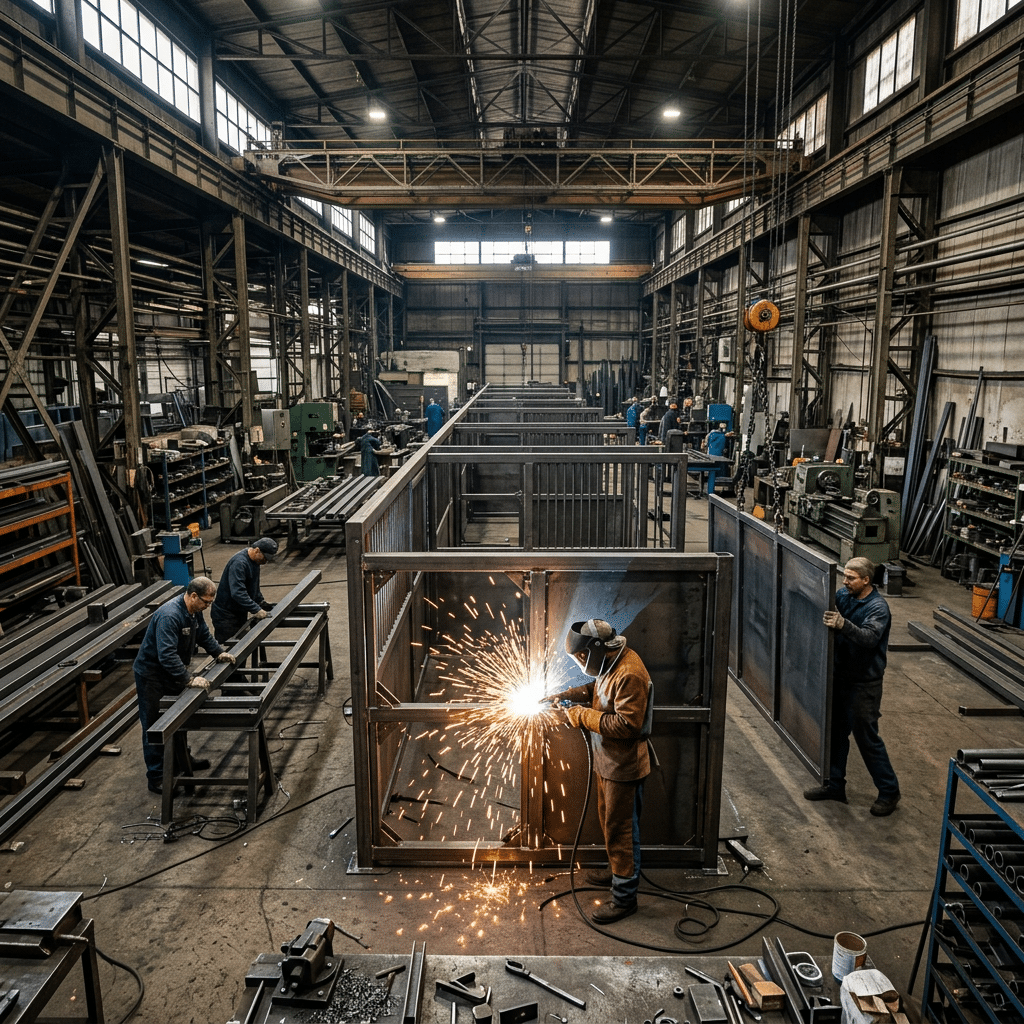
Sourcing the right Polo Club Stabling is critical for managing the high maintenance costs driven by humidity and high-volume horse traffic. Traditional timber infills quickly degrade in these conditions, leading to expensive replacement cycles and compromising the safety of valuable strings.
This analysis benchmarks stable systems on their material performance, specifically comparing zero-maintenance HDPE against wood. We evaluate frames built to the ISO 1461 galvanizing standard and assess the total project ROI, including the freight cost savings from flat-pack shipping.
The Rot Cycle in High-Humidity Environments
High humidity fuels a rot cycle affecting both stable materials and equine health. Using non-absorbent infills like high-density bamboo or HDPE is the most direct way to stop it.
Moisture’s Impact on Equine Health and Materials
Constant dampness creates ideal conditions for the bacteria *Dermatophilus congolensis*. When a horse’s skin remains wet for extended periods, this pathogen can cause painful rain rot infections, a persistent problem in humid climates.
Traditional timber infills only make the situation worse. Wood absorbs ambient moisture, causing it to swell and warp. This damp wood becomes a breeding ground for mold and rot, degrading air quality and compromising the structural integrity of the stable itself.
Solution: High-Density Bamboo and HDPE Infill
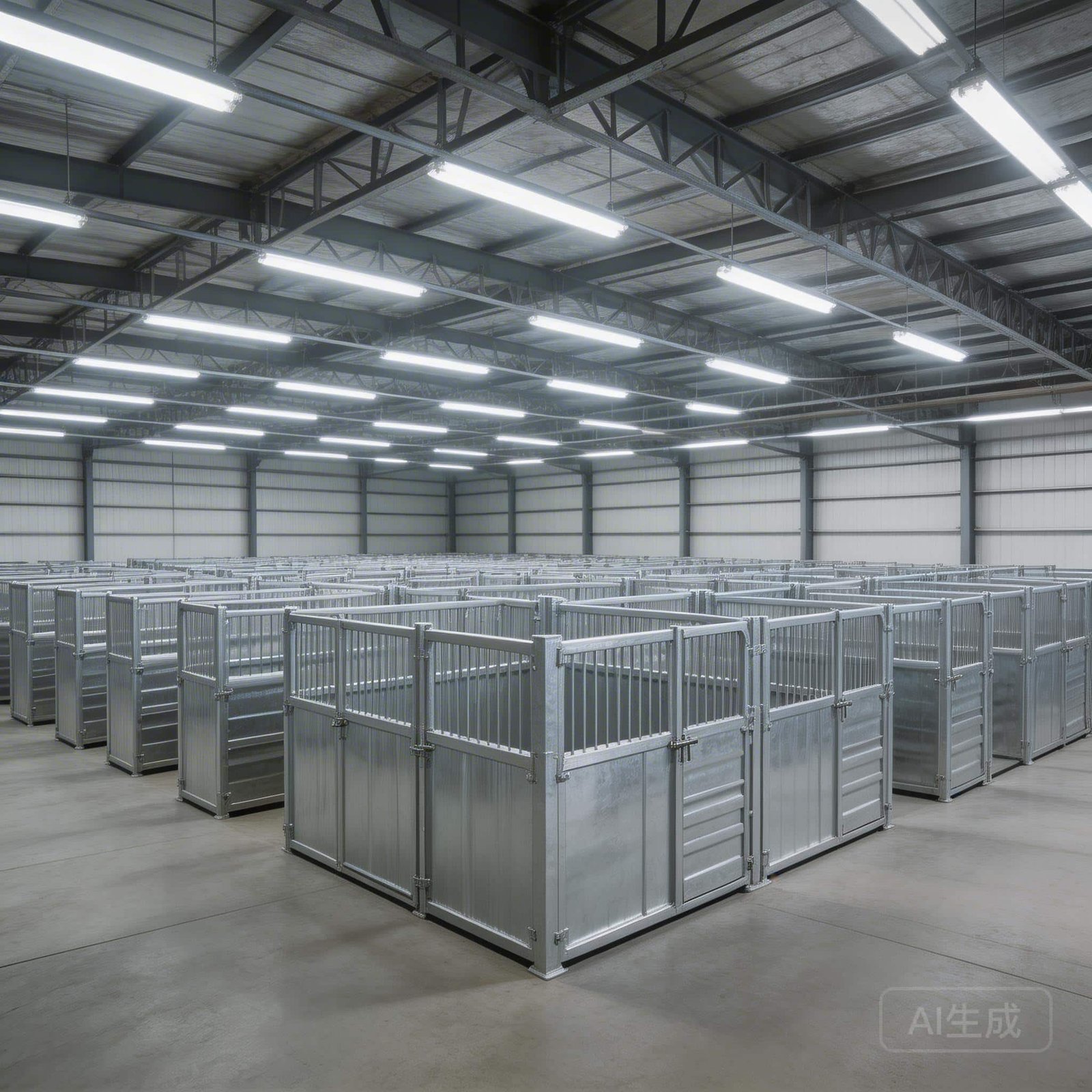
The most effective fix is to choose materials that don’t absorb water. Our high-density strand-woven bamboo is naturally resistant to mold and rot. With a Janka hardness over 3000 lbf, it is exceptionally durable and prevents the decay that destroys other woods in damp conditions.
For a zero-maintenance alternative, UV-stabilized HDPE infill provides a completely non-porous barrier. It’s impervious to moisture, which eliminates the conditions needed for bacterial growth and ensures a dry, hygienic internal environment for the stall.
Material Comparison for Tropical Climates
In humid climates, engineered materials like strand-woven bamboo and HDPE outperform treated pine by offering superior mold resistance and near-zero water absorption, eliminating common points of failure.
Choosing the right material for a tropical or high-humidity environment isn’t just about initial cost; it’s about long-term performance and avoiding the rot
cycle. Humidity above 60% accelerates mold growth, turning porous materials into liabilities. Below is a direct comparison of common materials used in equestrian and outdoor construction.
| Material | Water Absorption | Mold & Rot Resistance | Maintenance Level |
|---|---|---|---|
| Treated Pine | High (absorbs 18-22% by weight). The wood’s pores retain moisture, creating a substrate for fungal growth. | Poor. Even when treated, its high moisture retention makes it a prime candidate for mold and eventual rot without constant, sufficient ventilation. | High. Requires active maintenance and ideal conditions to prevent decay, making it a suboptimal choice for tropical climates. |
| Strand-Woven Bamboo | Extremely Low (0.4% over 24 hours). The high-density compression and thermal treatment make it nearly impervious to water ingress. | Excellent. The manufacturing process removes the starches and sugars that fungi feed on, providing strong natural resistance to rot and mold. | Low. This material is selected for its durability and resistance to degradation in humid environments, requiring no special upkeep. |
| HDPE (High-Density Polyethylene) | Virtually Zero (less than 0.01%). As a non-porous plastic, it is completely waterproof and does not absorb moisture. | Excellent. With no organic material and zero water absorption, HDPE does not support mold, mildew, or rot. | Zero. UV-stabilized HDPE will not swell, delaminate, or rot when exposed to constant moisture, making it a true “set-it-and-forget-it” solution. |
For B2B projects like large-scale stable construction, the data is clear. Treated wood introduces a long-term risk and maintenance cost that distributors and project managers cannot afford to ignore. Engineered infills like our high-density bamboo and zero-maintenance HDPE provide the reliability and performance needed to withstand tropical conditions year after year.
Global-Standard Stables Engineered for Any Climate.

Airflow Design to Prevent Tropical Fungal Infections
Proper airflow is the most effective non-chemical way to stop tropical fungal infections. It dries out bedding and surfaces by reducing humidity and eliminating stagnant, moist air.
Moisture Control as the Core Principle
In tropical climates, excess moisture is the single biggest driver for fungal growth. It turns stable surfaces and bedding into ideal breeding grounds for pathogens. An effective ventilation system directly counters this by lowering the ambient humidity and eliminating the stagnant, damp air pockets where fungi thrive.
Using Open Grills for Stack Effect Ventilation
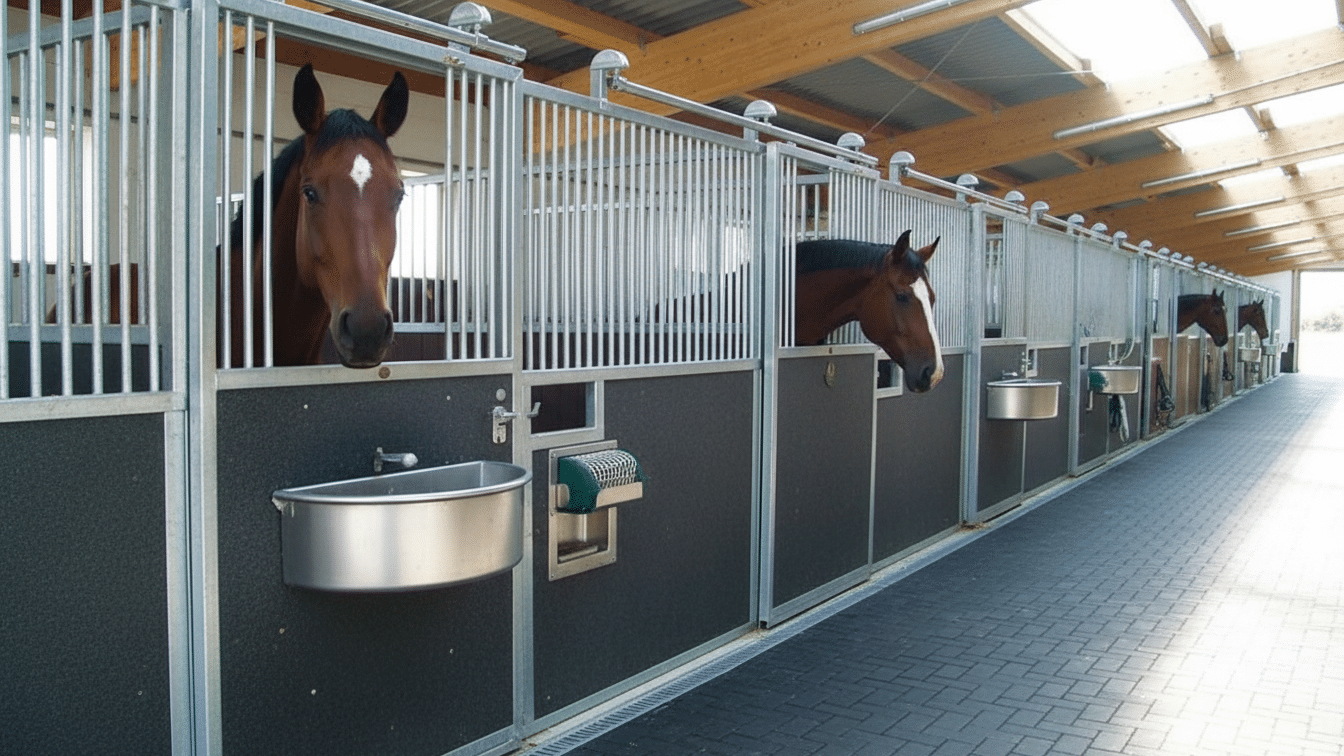
Our stable partitions feature open top grill designs engineered to promote natural ‘Stack Effect Ventilation’. This design isn’t just for looks. It creates a continuous airflow cycle where warm, moist air naturally rises and escapes through the top. As it leaves, cooler, drier air is pulled in from below, keeping the stall environment dry and fundamentally hostile to fungal growth.
Frequently Asked Questions
What are the best materials for stables in high-humidity or tropical climates?
For high-humidity environments, you need materials that resist moisture. Our HDPE (High-Density Polyethylene) infill panels are 100% waterproof, prevent mold growth, and require zero maintenance. For the framework, our Hot-Dip Galvanized coating conforms to ISO 1461, providing a thick zinc layer for long-term rust protection against damp and salty air.
Does the high-density bamboo infill rot or warp over time?
No. Our strand-woven bamboo boards are engineered to be rot-proof. They undergo a thermal treatment and high-pressure compression that removes the natural sugars, making them highly resistant to rot, mold, and insects. This process creates an incredibly dense and stable board that will not warp or swell with moisture changes.
How do your stall designs help with ventilation?
Our stable designs promote natural airflow through the “stack effect.” The open-grill design on the upper section of the fronts and partitions allows warm, stale air to rise and escape. This action pulls in cooler, fresh air from the aisle. This continuous circulation is essential for reducing humidity and ammonia levels, creating a healthier environment.
What makes the steel frame durable against rust?
Our durability comes from a “Hot-Dip Galvanization After Fabrication” process. We weld the entire steel frame from black steel first, then submerge the completed panel in molten zinc. This creates a thick, uniform protective coating (over 70 microns) that covers every surface, including the welds. This method provides superior and long-lasting protection against rust compared to using pre-galvanized tubing.
Are the stables safe for horses that kick or roll?
Yes, safety is a core part of our engineering. For cold climates, we offer Q345B steel, which has superior low-temperature toughness to prevent fractures from powerful kicks. Our HDPE infill is also designed to absorb impact. We also follow a “Cast-Proof Design” with minimal bottom gaps to prevent a horse’s legs from getting trapped when rolling.
Final Thoughts
Cheaper, pre-welded stables seem economical until freight costs erase your margin. Our flat-pack system and zero-maintenance HDPE infill protect project budgets from the start. This engineering standard prevents the rot and rust claims that damage a distributor’s reputation in humid climates.
Verify our engineering for yourself. We recommend a small trial order to confirm the fit, finish, and durability of our materials firsthand. Contact our team to get a detailed quote and a customized container-loading plan for your project.

 English
  Spanish
  French
  Arabic
  German
0 Comments