


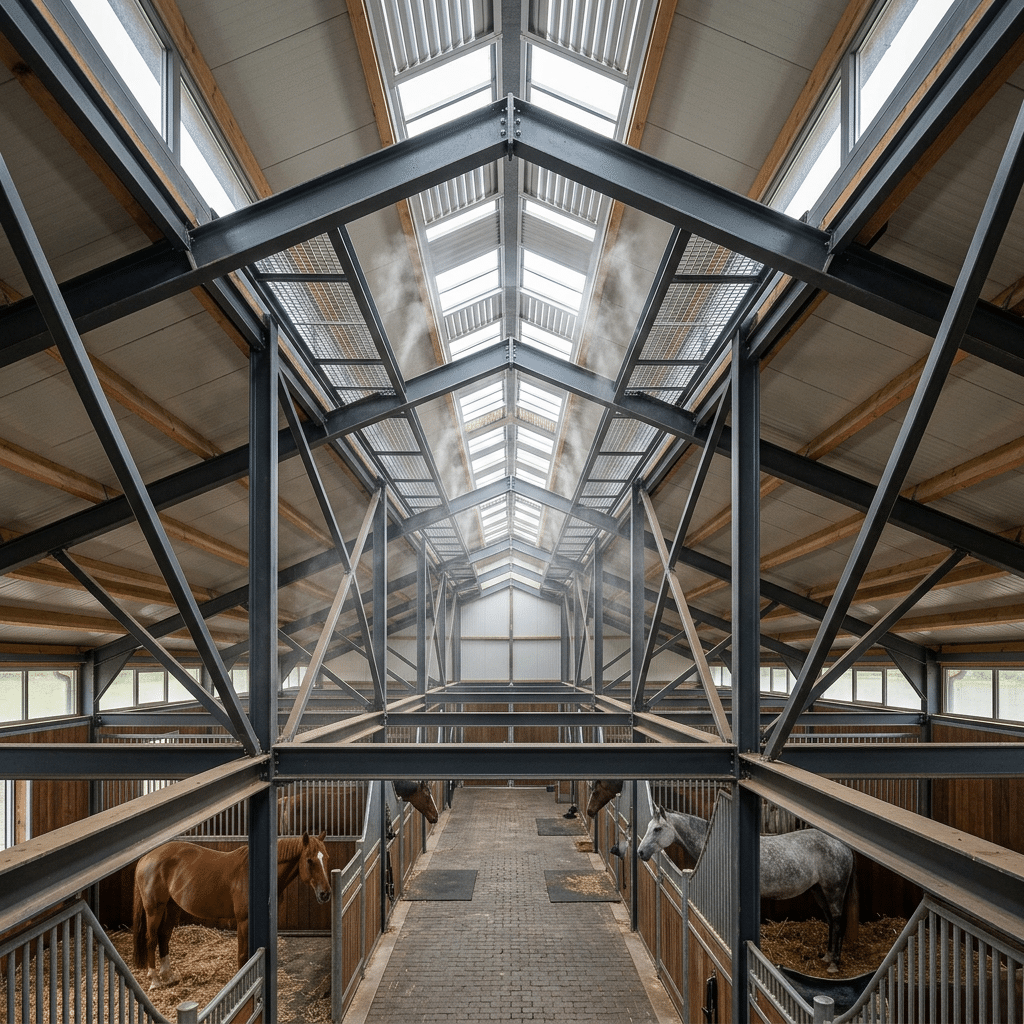
Deploying a Multi-Species Modular system is the only scalable way to house horses alongside goats or alpacas without risking entrapment lawsuits. Standard equine intervals trap smaller heads and hooves, turning a versatile barn into a liability nightmare that destroys operator margins.
This analysis benchmarks manufacturers against the Q345B impact standard and strict 50mm Cast-Proof spacing requirements. We identify factories utilizing Hot-Dip Galvanization After Fabrication to ensure your facility meets biosecurity protocols while minimizing long-term maintenance overhead.
The Challenge of Housing Mixed Livestock in One Barn
Quick Comparison
| Solution Focus | Best Application | Key Components | Verdict |
|---|---|---|---|
| Space Utilization and Flexibility | Multi-Species Facilities | Configurable Layouts, Variable Unit Sizes | Addresses wasted space in fixed-design barns by offering customizable units to optimize allocation for different species. |
| Species-Specific Housing Requirements | Veterinary & Research | Interchangeable Doors, Floors, Feeders | Overcomes incompatible environmental needs of diverse species using interchangeable components rather than separate buildings. |
| Sanitation and Waste Management | Bio-secure Environments | Slotted Panels, Removable Waste Pans | Mitigates cross-contamination and odor through slotted panel designs and materials capable of withstanding high-temperature washing. |
| Social and Behavioral Needs | Breeding & Training | Removable Dividers, Socialization Panels | Facilitates controlled socialization or necessary isolation using removable center dividers to manage interaction. |
| Facility Reconfiguration | Evolving Agribusinesses | Relocatable Kennels, Modular Walls | Allows operations to adapt to changing species mixes over time through modular designs that support easy disassembly and relocation. |
Space Utilization and Flexibility
Solves fixed-design inefficiencies by providing **customizable unit sizes** (18, 24, or 32 sq ft) for diverse species.
Fixed-design barns often suffer from wasted square footage when housing mixed livestock. This solution addresses that inefficiency by allowing precise space allocation based on the specific animal’s size and needs.
The system provides variable unit configurations to maximize density without compromising welfare. It creates a flexible environment where space is utilized intelligently rather than rigidly.
📊 At a Glance:
- 📍 Category: Spatial Efficiency
- 🏭 Core Feature: Configurable Layouts, Variable Unit Sizes
- 🌍 Ideal For: Multi-Species Facilities
Why We Picked It:
| ✅ The Wins | ⚠️ Trade-offs |
|---|---|
|
|
Species-Specific Housing Requirements
Solves incompatible environmental needs by utilizing interchangeable components rather than separate buildings.
This approach addresses the operational headache of housing diverse species like swine and sheep under one roof. It focuses on overcoming distinct environmental conflicts regarding ventilation and flooring requirements to ensure proper animal welfare.
Instead of static construction, the design relies on modular flexibility. Operators can swap doors, floors, and feeders to match specific biological needs without requiring major structural renovations or separate facilities.
📊 At a Glance:
- 📍 Location: Animal Welfare
- 🏭 Core Strength: Interchangeable Doors, Floors, Feeders
- 🌍 Key Markets: Veterinary & Research
Why We Picked Them:
| ✅ The Wins | ⚠️ Trade-offs |
|---|---|
|
|
Sanitation and Waste Management
**Mitigates cross-contamination** and odor issues through slotted panel designs that enhance airflow and allow high-temperature washing.
Managing hygiene across mixed species requires robust airflow and easy cleaning to prevent disease spread. This solution utilizes specialized slotted panels to significantly reduce odors and mitigate cross-contamination risks inherent in shared facilities.
The system relies on durable materials capable of withstanding high-temperature washing and autoclaving procedures. It integrates removable components to streamline waste removal in strict bio-secure environments.
📊 At a Glance:
- 📍 Focus: Hygiene & Health
- 🏭 Key Components: Slotted Panels, Removable Waste Pans
- 🌍 Ideal Environment: Bio-secure Environments
Why We Picked It:
| ✅ The Wins | ⚠️ Trade-offs |
|---|---|
|
|
Social and Behavioral Needs
Facilitates **controlled socialization** or necessary isolation using removable dividers to manage animal interaction.
This system addresses the complexity of mixed livestock housing by using removable center dividers and panels. It allows facility operators to manage the delicate balance between social interaction and the need for separation.
By controlling interaction between adjacent units, the design improves animal welfare and operational safety. It provides a flexible solution for managing diverse behavioral needs within a single facility footprint.
📊 At a Glance:
- 📍 Category: Behavioral Management
- 🏭 Key Components: Removable Dividers, Socialization Panels
- 🌍 Use Case: Breeding & Training
Why We Picked It:
| ✅ The Wins | ⚠️ Trade-offs |
|---|---|
|
|
Facility Reconfiguration
Modular designs enable **cost-effective relocation** and adaptation to changing species mixes.
Allows operations to adapt to changing species mixes over time through modular designs. This approach supports easy disassembly and relocation, eliminating the need for demolition or new construction.
Key components like relocatable kennels and modular walls provide necessary flexibility. This ensures facilities remain relevant for evolving agribusinesses without requiring major structural changes.
📊 At a Glance:
- 📍 Location: Operational Logistics
- 🏭 Core Strength: Relocatable Kennels, Modular Walls
- 🌍 Key Markets: Evolving Agribusinesses
Why We Picked Them:
| ✅ The Wins | ⚠️ Trade-offs |
|---|---|
|
|
Premium Galvanized Stables Built To Last
The Challenge of Housing Mixed Livestock in One Barn
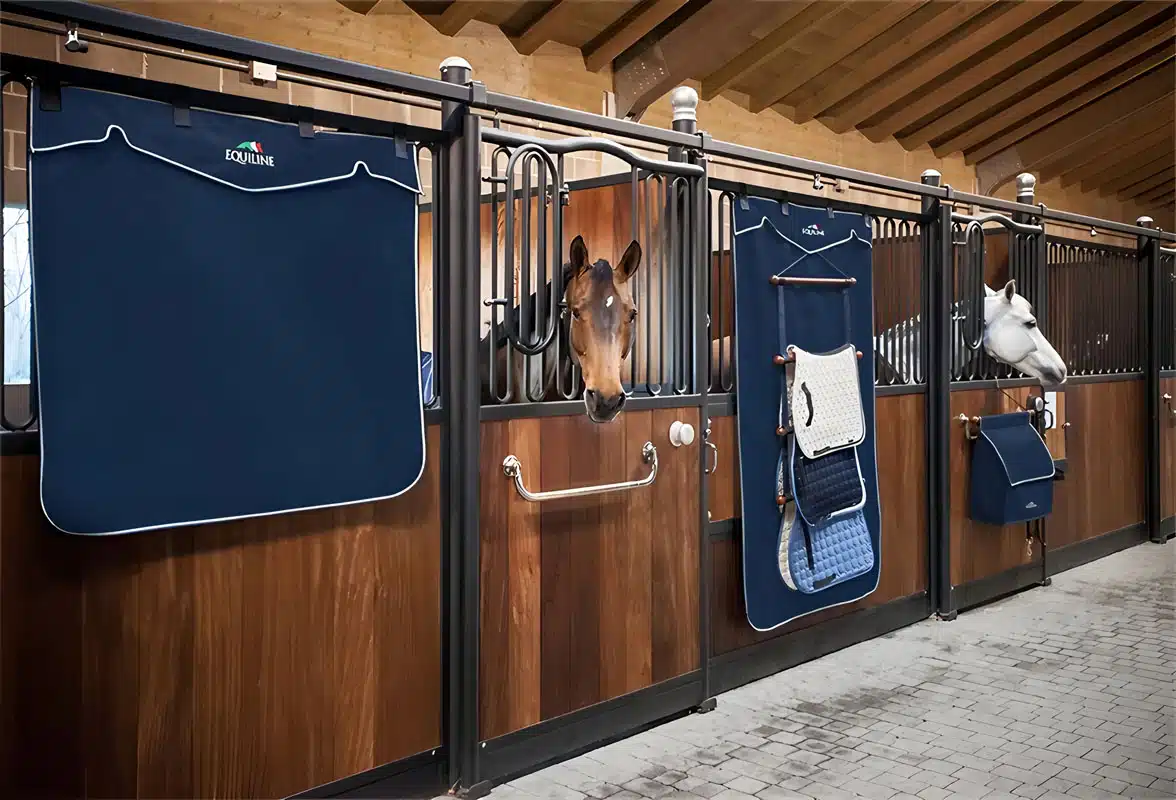
Housing horses alongside smaller livestock like alpacas or goats creates a logistical conflict: large equines require heavy-duty impact resistance, while smaller animals need tighter barrier spacing to prevent escape or entrapment. Our approach utilizes modular, hot-dip galvanized systems that allow facility managers to reconfigure stall dimensions and barrier densities, ensuring biosecurity and safety across diverse breeds without structural compromise.

Navigating Conflicting Space and Containment Needs
Designing a facility for mixed species often forces a compromise between structural integrity and containment security. Large equines demand the high tensile strength of Q345B Low Alloy High Strength Steel to withstand kick impacts without deformation. Conversely, smaller stock like alpacas or Shetland ponies require tighter tolerances to prevent heads or limbs from becoming trapped in standard bar spacing. Fixed barn designs typically fail here, leaving dangerous gaps or wasting valuable floor space on enclosures that cannot adapt to changing herd demographics.
We resolve this engineering dilemma through our modular flat-pack system. By utilizing a “Cast-Proof Design” with minimal bottom gaps (approximately 50mm), we ensure that even when smaller animals roll or lie down, they remain safe from entrapment. This versatility allows distributors and project managers to install a partition system that meets the “Kick-Proof Guarantee” for a warmblood today, yet remains secure enough to house smaller livestock next season without requiring a complete infrastructure overhaul.
Mitigating Sanitation and Cross-Contamination Risks
Mixed-species environments significantly accelerate corrosion and pathogen spread due to varying waste compositions and ammonia levels. Traditional materials, particularly porous wood or standard pre-galvanized tubing, act as bacterial reservoirs. Once the protective coating on pre-galvanized steel is scratched, red rust forms immediately, creating a breeding ground for bacteria that can facilitate cross-species disease transfer.
To maintain strict biosecurity, we manufacture exclusively using Hot-Dip Galvanization After Fabrication, certified to ISO 1461 standards. This process ensures that every weld and joint is fully coated in zinc (Avg. > 70 microns for tubing), allowing for aggressive chemical wash-downs between animal rotations without fear of rust. When paired with our “Zero Maintenance” HDPE infill planks, the facility gains a non-porous, sterile surface that supports high animal welfare standards while protecting the owner’s investment from premature degradation.
Safety Grills: Why Standard 3-Inch Gaps Trap Foals and Alpacas
Standard 3-inch (approx. 76mm) bar spacing creates a critical “danger zone” for foals and alpacas, allowing them to push their heads through but trapping their jawbones when they attempt to pull back. We mitigate this risk by engineering grills with a tighter 50mm spacing. This design prevents head and hoof entrapment for smaller species while maintaining the structural rigidity of our Q235B steel framework and preserving essential airflow.
The Mechanics of Head and Hoof Entrapment
Standard 3-inch (approximately 76mm) bar spacing works reliably for adult warmbloods,
but it creates a hazardous trap for species with smaller skull dimensions. Curious foals and alpacas often push their muzzles through these gaps to investigate their surroundings. While their wedge-shaped heads enter easily, their jawbones frequently catch on the bars when they attempt to pull back. This entrapment triggers an instinctual panic response, leading to severe neck trauma or fractures as the animal struggles to free itself.
The danger extends beyond head injuries. Slender legs can easily slide through wider openings when animals roll or kick. If a foal or alpaca attempts to stand while a leg is extended through the grill, they become pinned against the steel structure. We identify this specific gap width as the critical “danger zone” for mixed-species barns, necessitating a departure from traditional equine-only sizing to prevent these casting incidents.
Engineering Safer Boundaries with 50mm Spacing
Reducing bar spacing to 50mm (approx. 2 inches) creates a universal safety barrier that effectively blocks small heads while maintaining the vertical airflow of “Stack Effect Ventilation.” This modification allows a single stable to safely house diverse livestock, from heavy draft horses to delicate alpaca crias, without the need to swap panels or install temporary mesh.
To support this tighter configuration, our manufacturing process uses 14-gauge (2.0mm-2.5mm) Q235B structural steel tubing. This heavy-duty specification ensures the bars resist bending under impact, keeping gap tolerances consistent over the product’s lifetime. Additionally, our process of hot-dip galvanization after fabrication seals every weld joint. This ensures that the tighter metal profiles remain smooth and completely free of sharp burrs that could otherwise injure delicate noses.
Custom OEM Spacing: Specifying 2-Inch Grills for Small Heads
Standard 3-inch stable grills pose significant entrapment risks for foals and miniature breeds. We address this by recalibrating our OEM welding jigs to produce a denser 2-inch (50mm) grill matrix. This modification physically prevents head entry while maintaining essential airflow, protected by our Hot-Dip Galvanization After Fabrication process to ensure rust immunity even in these tighter spaces.
Reducing Entrapment Risks for Foals and Small Breeds
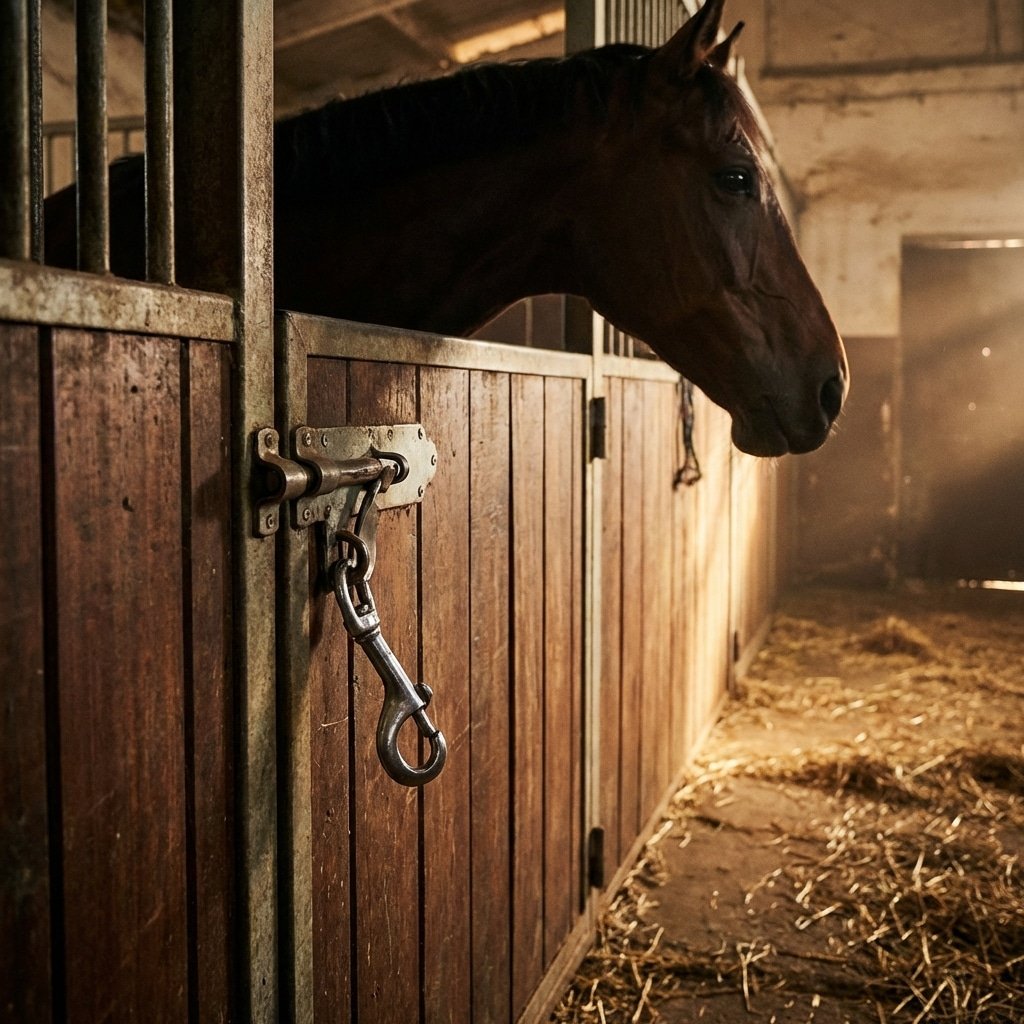
Standard equine stable grills typically utilize 3-inch (76mm) spacing. While this dimension is safe for adult horses, it creates a dangerous entrapment zone for smaller animals such as miniature horses, alpacas, or foals. Curious livestock with smaller skulls can often push their heads through these wider bars but struggle to pull back, causing panic and severe cervical injury.
Specifying a 2-inch (50mm) gap in your production order effectively blocks head entry. This tighter configuration eliminates the risk of stuck livestock while retaining the “Stack Effect Ventilation” necessary for respiratory health in mixed-species barns. By customizing the spacing at the factory level, distributors can offer a specialized safety solution for breeding farms without requiring customers to install aftermarket mesh retrofits.
OEM Fabrication Protocols for High-Density Grills
Manufacturing high-density grills requires specific adjustments to ensure structural integrity and longevity. As an OEM manufacturer, we do not rely on standard pre-fabricated mesh. Instead, we adjust our welding jigs to secure vertical tubes at strict 2-inch intervals. We utilize **14-Gauge (2.0mm)** Q235B structural steel to ensure the denser grill structure supports the added weight without sagging over time.
The most critical factor in tighter spacing is corrosion protection. Narrow 50mm gaps are difficult to paint or spray manually, making them prone to rust in traditional systems. Our **Hot-Dip Galvanization After Fabrication** process is essential here. By dipping the fully welded door into molten zinc, we ensure that even the tight crevices between bars receive a complete zinc coating averaging > 70 microns. This guarantees a “Lifetime” standard of rust protection that surface-treated alternatives cannot match.
DB’s V-Drop Doors: Adjustable Heights for Different Breeds
We engineer our V-drop stable doors with adjustable yoke depths and heavy-duty structural steel to safely accommodate specific breed heights while maximizing ventilation and durability against impact.
Customized V-Yoke Design for Varied Animal Heights
Our engineering team adjusts the V-drop depth during the CAD design phase to accommodate specific breed requirements, ranging from miniature horses to large warmbloods. By tailoring the opening size, we ensure that animals can comfortably socialize without the risk of entrapment or injury associated with standard, one-size-fits-all designs. This customization allows distributors to offer solutions that meet the precise needs of diverse equestrian facilities.
Safety remains our priority, which is why every V-opening features smooth, rounded edges. This detailing protects the animal’s
neck and throat latch during socialization and feeding, preventing abrasion and impact injuries. The design encourages natural behavior while maintaining the secure containment required in professional stable environments.
Beyond socialization, this V-yoke configuration actively promotes “Stack Effect Ventilation.” By increasing the open area at the front of the stable, we facilitate vertical airflow that draws heat and ammonia up and out of the stall. This results in superior air quality compared to fully enclosed door fronts, directly contributing to better respiratory health for the stabled animals.
Reinforced Material Standards for Mixed-Livestock Safety
We manufacture every V-drop door using Q235B Structural Steel or Q345B Low Alloy High Strength Steel to withstand impacts from different species. For clients in colder regions, the Q345B option offers superior low-temperature impact toughness, ensuring the steel does not become brittle or fracture if kicked during freezing conditions. This material selection underpins our “Kick-Proof Guarantee.”
To ensure longevity, the entire door undergoes hot-dip galvanization after fabrication, adhering strictly to BS EN ISO 1461 standards. Unlike competitors who weld pre-galvanized tubes—leaving joints vulnerable to rust—we dip the entire welded structure. This process coats the steel, including the welds, with an average zinc thickness exceeding 70 microns, ensuring the door remains rust-free even when exposed to constant animal contact and moisture.
Distributors can specify 14-gauge (2.0mm-2.5mm) tube thickness for the framework. We strictly prohibit the use of tubing thinner than 2.0mm to ensure the framework resists cribbing and kicking significantly better than standard aluminum options. This heavy-duty construction reduces maintenance claims and replacement costs for facility operators, protecting the long-term value of the installation.
Final Thoughts
Sourcing generic equine stalls for mixed-species facilities invites significant liability risks regarding small-animal entrapment and rapid corrosion. Investing in our 50mm spacing standard and Hot-Dip Galvanization After Fabrication protects your inventory against rust claims while ensuring universal safety for breeds ranging from foals to alpacas. This engineering flexibility allows you to service diverse agri-tourism and breeding clients without the overhead of stocking multiple product lines.
Don’t rely on specifications alone; verify our manufacturing quality directly. Request a “Safety Sample Kit” to inspect the 14-gauge steel thickness and smooth zinc finish firsthand before committing to a full container. Contact our engineering team today to configure a flexible trial order that meets your specific multi-species layout requirements.
Frequently Asked Questions
Can you keep alpacas in a horse stall?
Yes, but standard equine designs often require modification for safety. We recommend adjusting the vertical bar spacing to prevent head entrapment and lowering the door height for better visibility. Our modular panels allow us to fabricate these specific dimensions while retaining the durability of our hot-dip galvanized steel.
Safe bar spacing for miniature horses and goats?
Standard 3-inch (76mm) gaps are dangerous for small heads. We engineer custom safety grills with strict 2-inch (50mm) spacing for miniature breeds and goats. This prevents them from getting their heads stuck while maintaining proper ventilation and the structural integrity of our Q345B frames.
Best modular barns for multi-species farms?
For mixed livestock, we recommend our Economy or Professional Series with HDPE infill. The non-porous HDPE is easy to sanitize between different animals, and our flat-pack modular system allows you to easily reconfigure partitions to change stall sizes based on current occupancy needs.
How to customize stable grills?
As an OEM manufacturer, we fabricate grills to your exact requirements before the hot-dip galvanization process. Whether you need narrower spacing for safety or specific feed openings, we weld the black steel to your specs first, then dip the entire unit to ensure complete rust protection according to ISO 1461 standards.
Multi-purpose livestock stabling?
Our systems feature flexible connecting hardware that supports adaptable layouts. We use heavy-duty steel that withstands impact from larger stock, combined with “cast-proof” bottom designs safe for smaller animals. This versatility allows a single facility to safely house horses, cattle, or small ruminants as needed.

 English
  Spanish
  French
  Arabic
  German
0 Comments