


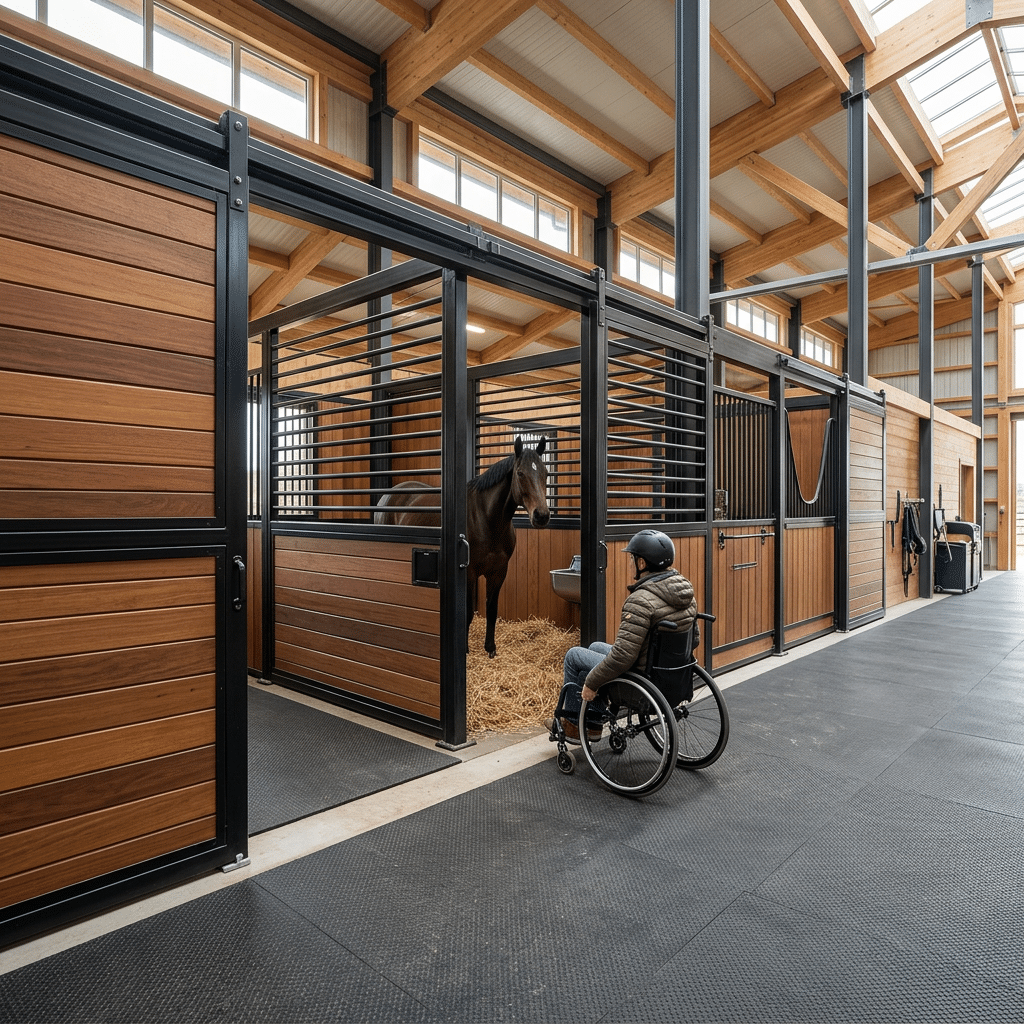
Sourcing European Luxury Barns without the associated “German markup” requires a focus on engineering over branding. For developers, paying a premium for an imported name directly erodes project margins. This cost is often tied to logistics and marketing, not the superior materials or construction that actually impact asset longevity.
This guide provides a manufacturing-level breakdown of the essential components. We analyze the “Dual Protection” finish—powder coat over hot-dip galvanized steel—and structural standards like BS EN ISO 1461 compliance. The goal is to equip you to source systems that deliver premium aesthetics and safety, directly from the factory.
The Ammonia Problem: Why Layout Dictates Lung Health
Ammonia from urine concentrates near the stall floor, where horses sleep. A stable’s ventilation design is the only effective way to dilute these corrosive fumes and protect lung health.
The Danger Zone: Ammonia Concentration at Floor Level
Ammonia is heavier than air. It settles and concentrates in the bedding right where it’s produced. Research show
s that levels can reach 80–450 ppm within 12 inches of the stall floor, blasting past the 50 ppm safety limit set for human workers. The air quality five feet up, where a person stands, might seem fine, but it’s a different story for the horse.
Horses are most exposed when they lie down to rest, inhaling the corrosive gas directly. This constant exposure causes serious respiratory damage, including bronchiolar and alveolar edema, and leaves them vulnerable to chronic inflammation.
Mitigating Risk with Stack Effect Ventilation
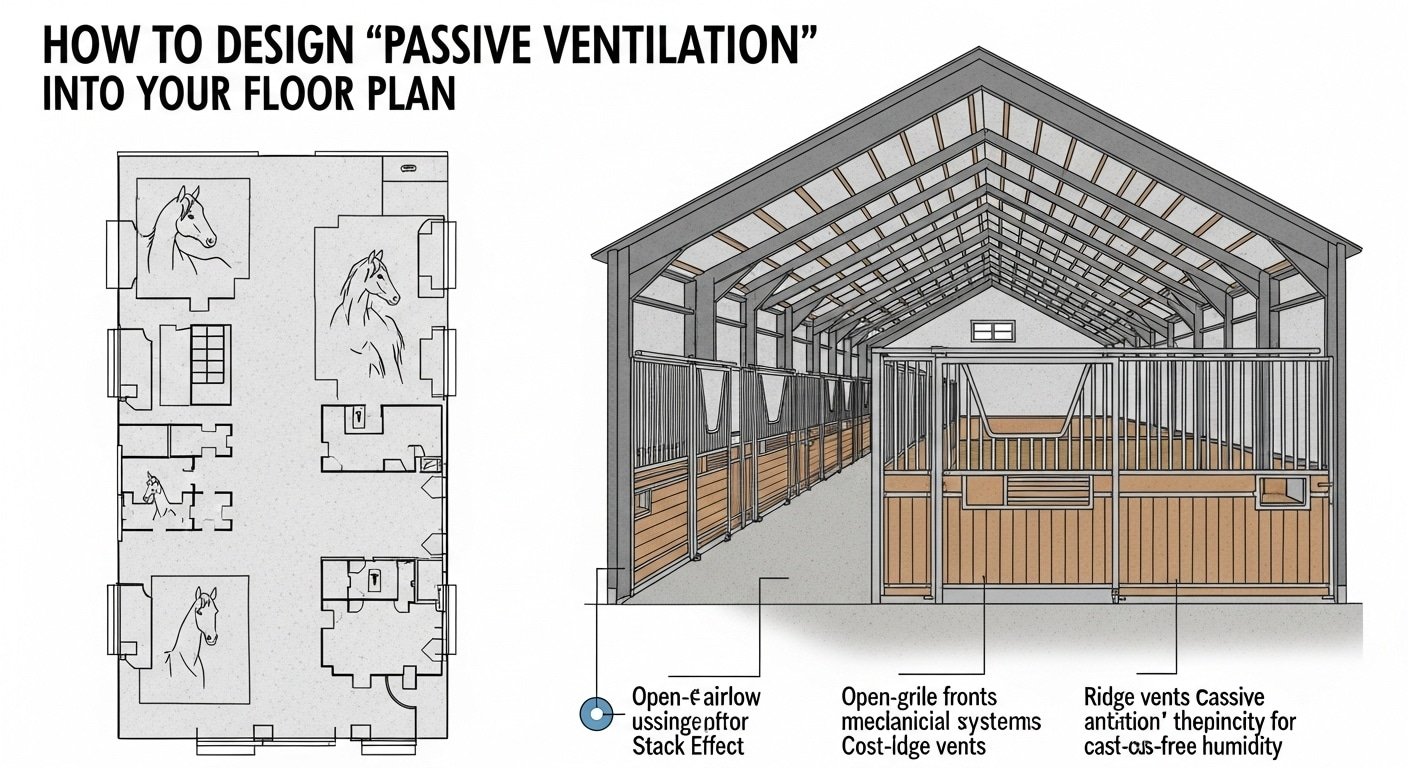
The most effective defense against ammonia buildup is smart design. Our stable fronts use an open-top grill design to create “Stack Effect Ventilation.” This process uses simple physics: warm, contaminated air from the horse’s breathing zone naturally rises and exits through the top of the stall front. Cooler, fresh air from the aisle is then pulled in at the bottom to replace it.
This continuous vertical airflow actively dilutes and exhausts ammonia fumes before they can cause long-term damage. We pair this ventilation feature with non-porous infills like our HDPE or high-density Bamboo. These materials don’t absorb urine, which simplifies cleaning and attacks the problem at the source by reducing the bacteria that produce ammonia in the first place.
Comparing Barn Layouts for Airflow
Barn layout isn’t just about space; it’s the primary engineering control for air quality. The right design actively manages ammonia, moisture, and heat to protect respiratory health.
The architectural footprint of a barn dictates its performance more than any other factor. How you arrange stalls, aisles, and openings directly controls air exchange rates, temperature, and contaminant levels. Different layouts excel in different climates and for different operational needs.
| Layout Type | Core Airflow Principle | Best Suited For | Key Design Consideration |
|---|---|---|---|
| Center Aisle | Contained Air Management | Cold or mixed climates needing weather protection. | Requires high ceilings with ridge and eave vents to prevent stale air from getting trapped. Aisle width of 14-16 ft improves circulation. |
| Shed Row (Inline) | Maximum Cross-Ventilation | Warm and temperate climates where constant air movement is a priority. | Offers less protection from driving wind and rain. Overhangs are critical for shade and partial weather shielding. |
| U-Shape (Courtyard) | Sheltered Air Circulation | Windy locations where a protected central micro-climate is beneficial. | Can create dead air spots in corners if not oriented correctly to prevailing winds. |
The Core Problem: Ammonia and Stagnant Air
Poor airflow isn’t just about comfort; it’s a direct threat to lung health. Ammonia from urine decomposition is heavier than air and concentrates near the floor. Research shows levels can hit 450 ppm within 12 inches of the floor, while being only 15 ppm in the aisle. OSHA’s safety limit for humans is 50 ppm. Since horses spend hours with their heads down or lying in bedding, their exposure is dangerously high in a poorly ventilated barn.
Key Ventilation Principles for Barn Design
Two natural forces drive airflow. A good design uses both.
- Stack Effect: This principle works without wind. Warmer, lighter air from horses and waste naturally rises. By providing high openings like ridge vents or cupolas, this stale air escapes, creating negative pressure that pulls cooler, fresh air in through lower openings like eave vents or windows.
- Cross-Ventilation: This is wind-driven. Aligning doors, windows, and open stall fronts across from each other creates a channel for air to move horizontally through the structure, flushing out contaminants and moisture efficiently.

How Components Support the Layout
Your barn’s layout is the master plan, but the stall components you choose either support or fight that plan. The details of the stall fronts and partitions are not just aesthetic; they are functional parts of the ventilation system.
Open-top grill designs on stall fronts are critical for horizontal air exchange between stalls and the main aisle, enabling effective cross-ventilation. This design also promotes the Stack Effect Ventilation, as it allows stale air to rise unobstructed from the stall towards roof vents. The materials also play a role. Non-porous surfaces like our UV-stabilized HDPE or high-density bamboo infill don’t absorb urine. This simplifies cleaning and reduces the source of ammonia, directly improving air quality.
Engineered Horse Stables for Global Durability

Designing for the “Stack Effect” Ventilation
Stack effect ventilation uses natural physics, where warm air rises and exits high, pulling fresh air in low. Our stable designs feature open top grills as the high-level exit point to drive this vertical airflow.
How Vertical Airflow Creates a Healthier Stable
The entire system works on a simple principle of physics: warm, moist air generated by a horse’s body heat and respiration is less dense than cool air, so it naturally rises towards the ceiling.
As this stale, warm air escapes through high-level openings, it creates a gentle pressure difference inside the stable. This pressure change actively draws cooler, fresher, and more oxygen-rich outdoor air in through lower openings, completing a continuous, silent circulation cycle.
The Function of Open Top Grills in Promoting Airflow
Our stable fronts are engineered with open top grills that serve as the ideal high-level outlet for this rising stale air. This design feature is not an aesthetic choice; it’s a core part of our system to ensure constant, passive air movement without relying on mechanical fans.
This continuous ventilation cycle is critical for equine respiratory health. It helps reduce the concent
ration of ammonia from urine and lowers humidity levels, creating a safer breathing zone for the horse, especially when they are lying down where harmful gases are most concentrated.
Frequently Asked Questions
What is the best layout for a horse barn?
The ideal layout depends on your operation, but most professionals choose either a center aisle or shed row design. A standard 12’x12′ stall works for most horses, but larger breeds need more space. Aisle width is also critical—12 feet is the minimum, but 14-16 feet is better for busy barns. Always build on elevated ground to ensure proper drainage away from the structure.
How wide should the center aisle of a horse barn be?
A 12-foot wide aisle is the minimum standard, allowing two horses to pass safely. For professional facilities with more traffic and equipment, a 14 to 16-foot aisle is the preferred width. The extra space significantly improves daily workflow, safety, and ventilation throughout the barn.
Does a U-shaped barn cost more than other layouts?
Not necessarily. The cost of a barn is driven more by its size, materials, and construction type (like pole vs. post & beam) than its shape. To know for sure, you would need to compare a U-shaped design against another layout using the exact same square footage and materials.
What is the best way to ventilate a horse stable?
Effective ventilation relies on natural airflow. The best designs use a combination of ridge vents at the roof’s peak and continuous openings at the eaves. This creates a chimney effect, pulling warm, moist air up and out without creating drafts directly on the horses. The goal is to achieve four to eight air changes per hour.
What is the best stall design for an aggressive or high-energy horse?
For aggressive or energetic horses, the focus should be on safety and space. Larger stalls, such as 12’x14′ or 12’x16′, help reduce stress. Stall walls should be at least 8 feet tall and reinforced with 4-foot high kick boards to prevent injury. For stallions, double-sized stalls and secure double-fencing for turnout areas are standard practice.
Final Thoughts
A premier barn’s value is judged on two things: animal welfare and long-term appearance. While cheaper options exist, our “Dual Protection” system—a powder coat over hot-dip galvanized steel—is the only way to prevent rust bleed at the welds and guarantee structural integrity. This engineering protects your investment and your reputation from costly failures.
The next step is to verify this quality for your project. Contact our team to discuss your layout and get a formal quote for a trial order or full container. We can ship a finished corner sample to your office for physical inspection.

 English
  Spanish
  French
  Arabic
  German
0 Comments