
A barn window is the most convenient entrance on the property that nobody thinks to secure. Doors get locks, tack rooms get hasps, gates get chains — and the window at the end of the aisle gets left latched open on a summer evening because the horses need the airflow. Barn window security is the discipline of closing that gap: grilles and glazing that hold, locks and latches that survive daily use, and a specification you can put in front of your insurer when a claim lands.
This guide is written for farm owners, equestrian center managers and dealers across the nine markets DB HorseStable serves — Australia, New Zealand, the United States, the United Kingdom, Germany, France, Denmark, Spain and Poland. Barn windows and Dutch doors are core components of the product line, sold alongside the stabling systems they ventilate, and manufactured in Anping with galvanized steel framing. The security logic below applies wherever the barn stands; the insurance specifics always come back to your own policy and region, because requirements genuinely vary.
Key Takeaways
- Barn windows are a working security boundary, not decoration: they ventilate the barn, give horses visibility, and provide the easiest unwatched access point on most facilities.
- Glazing choice sets the security floor. Tempered glass holds against impact and breaks safely if it does; open mesh and grille styles trade some weather closure for airflow and visibility — match the style to what sits behind the window.
- Hardware fails before panels do. Latches, hinges and lock receivers take the daily wear, so specify them like gate hardware, not like cabinet fittings.
- Treats are the classic barn-theft target: feed rooms, tack storage and supplement shelves behind an unsecured window are the usual loss points. Secure the windows that guard valuables first.
- Insurance requirements vary by insurer, region and barn use — photograph and list your window security hardware, then confirm what your own policy expects before you rely on it.
- Welfare and security pull in the same direction here: the same secured, well-ventilated windows that deter intruders also protect horses, which is why the product line builds both into one component system.
Why Windows Are the Weak Point in Barn Security
Walk the outside of any stable block and count the access points. Personnel doors are watched and locked. Sliding aisle doors are heavy and visible. The windows sit at the back of the barn, half-hidden by landscaping, sized for a person to climb through, and opened every day for ventilation. On a facility that runs lessons, boarding or events, the same windows are opened and closed by staff who do not all think like security officers. The result is predictable: the window nobody secured becomes the door the intruder uses.
The theft pattern in barns is consistent and unglamorous. Intruders want small, resalable items — saddlery, rugs, supplements, power tools from the feed room — and they want to be in and out in minutes. A barn whose windows open onto storage areas offers exactly that. The countermeasure is not to seal the barn up (the horses need the airflow), but to make the windows behind valuables genuinely resistant and the hardware genuinely loud to defeat.
Glazing and Grilles: Choosing the Right Window Style
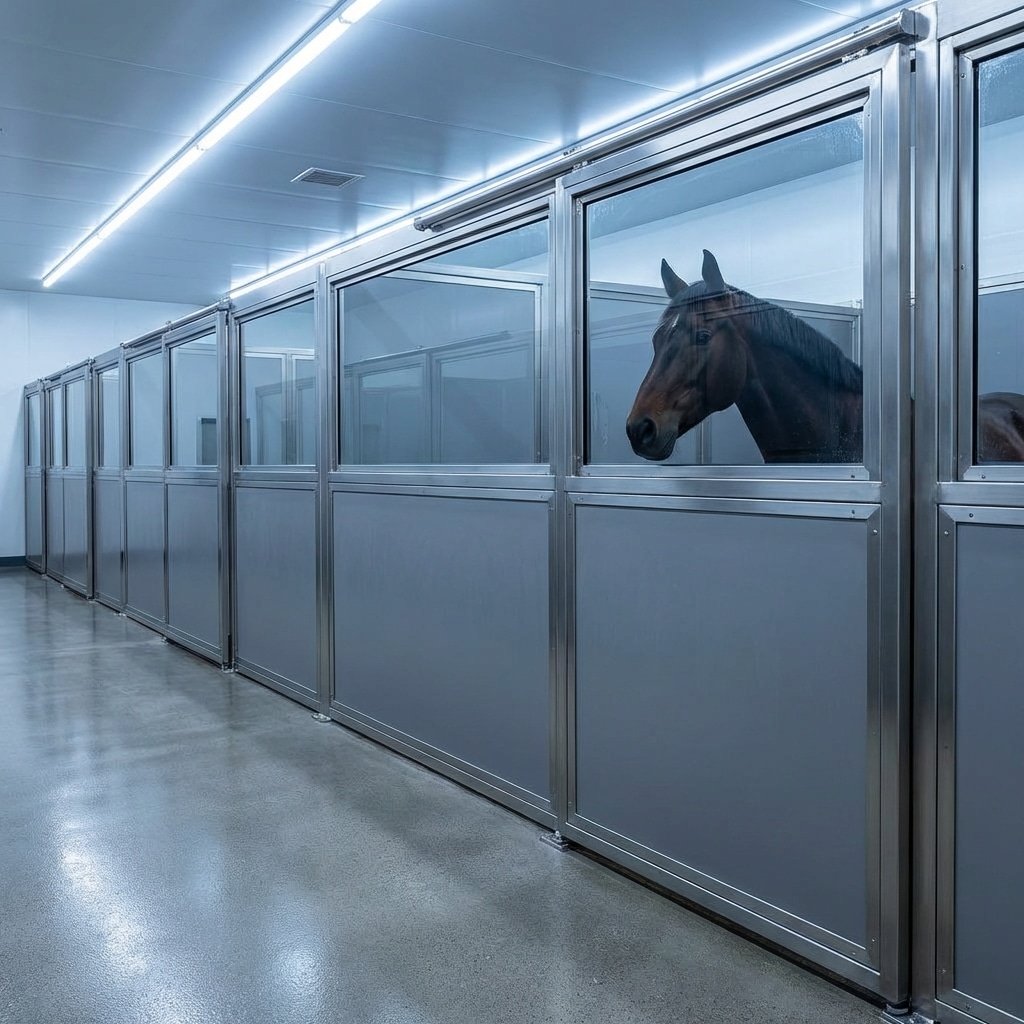
Barn window styles trade off closure, visibility and airflow, and the security question sits inside that triangle. Tempered glass gives you a real weather seal and a solid barrier: it resists impact far better than ordinary glazing and, if it does break, it shatters into blunt fragments rather than blades — a welfare decision as much as a security one. Tempered-glass options are standard in the barn window and Dutch door line, including the V-yoke and tempered-glass door styles sold for stall fronts, and our comparison of V-yoke versus tempered glass Dutch doors walks through the same trade-off for doors.
Open mesh and grille styles make the opposite trade. A barred or grilled window is far harder to breach quietly than glazing, gives horses full visibility of the yard, and never blocks airflow — which is why grille options appear throughout stable fronts and stall partitions. The honest read for security planning: glazing resists weather and quiet entry; grilles resist entry even when the glazing goes, at the cost of leaving the window permanently open to the elements. Many well-planned barns use both — glazed units on feed and tack walls, grille fronts on the stalls themselves.
Locks, Latches and Hardware That Survives the Barn
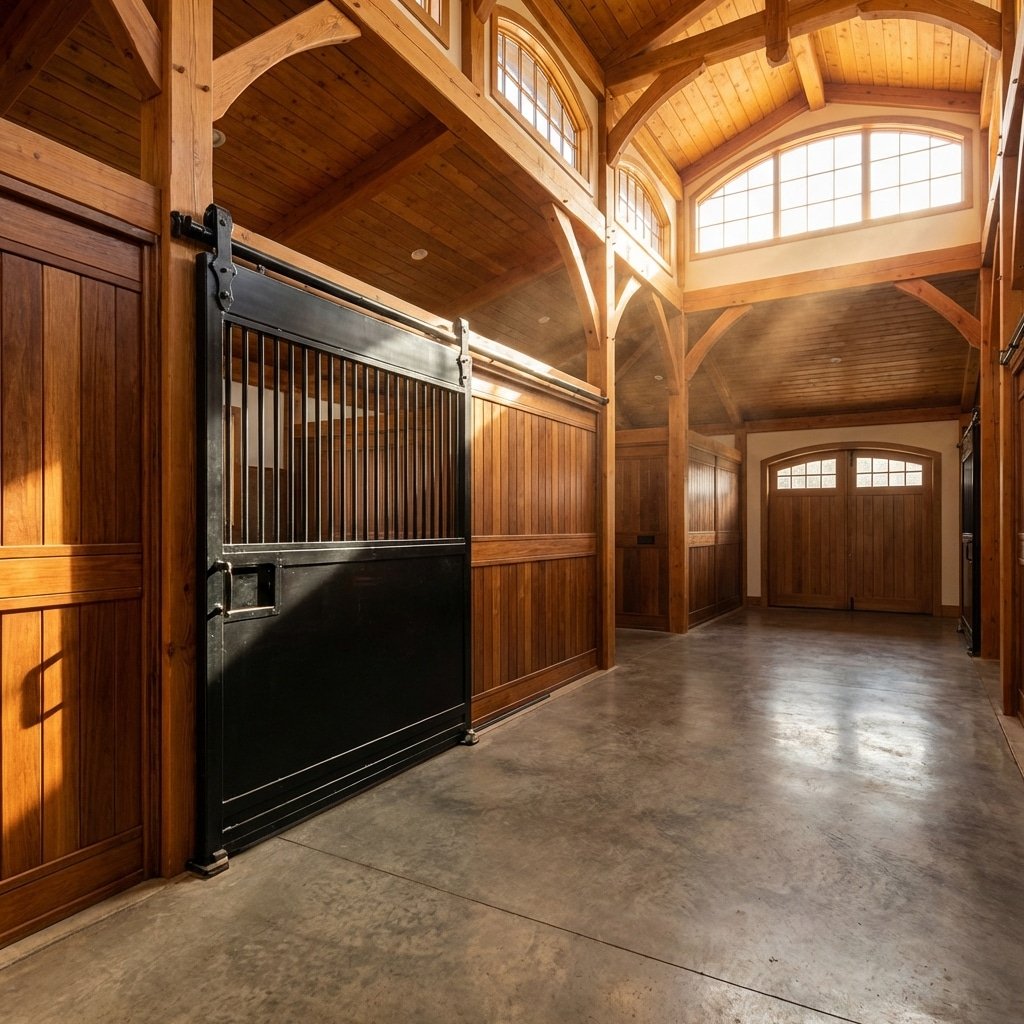
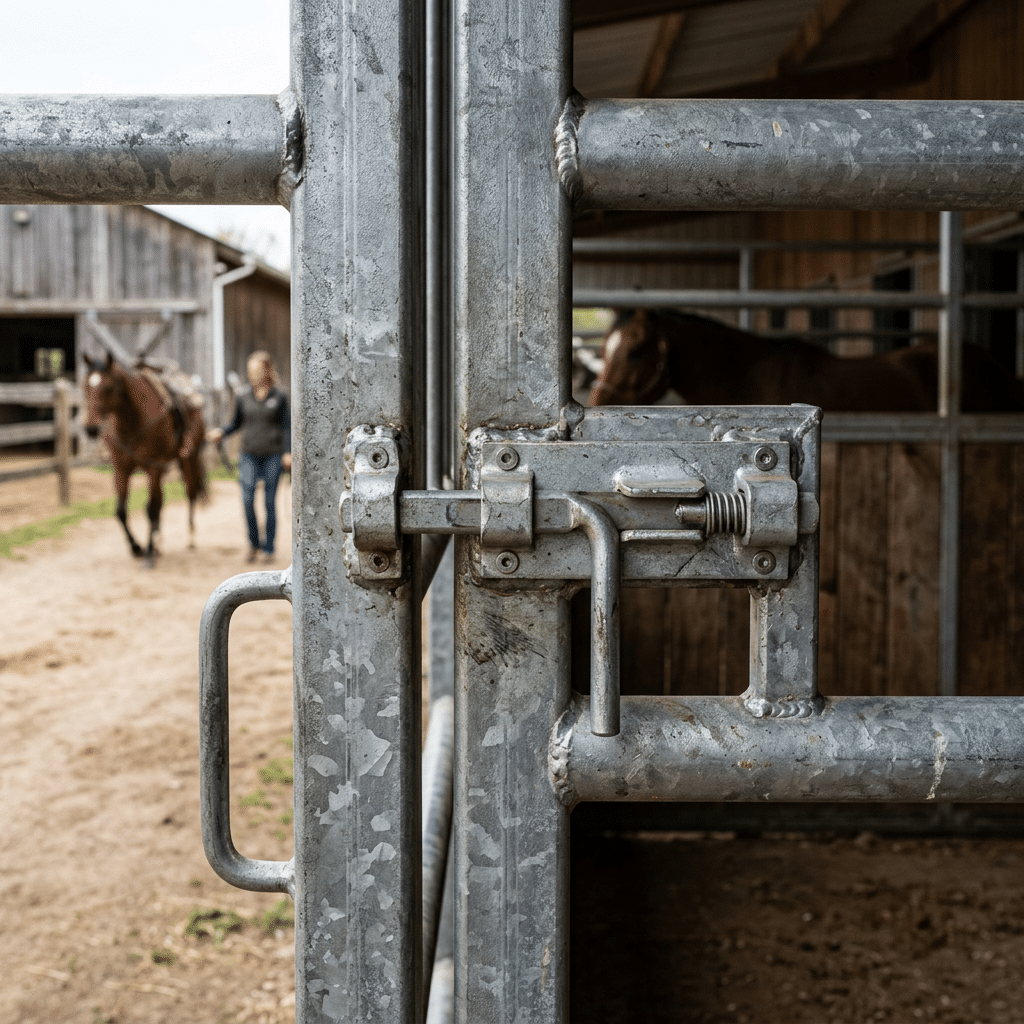
Hardware is where window security actually lives, because hardware is what fails first. A barn window latch is worked all day by people with their hands full, in dust, in humidity, sometimes by a shoulder when both hands carry feed buckets. Cabinet-grade latches loosen early in barn service; a proper latch is built like gate hardware, able to take pushing, leaning and weather year after year. The same logic governs Dutch door hardware in wet climates — our guide to Dutch door hardware for humid climates shows what corrosion-resistant specification looks like, and window hardware deserves the same standard.
For windows that guard something worth stealing, add a keyed or padlockable receiver rather than relying on the standard open-shut latch. The practical hierarchy: open-shut latches for interior and stall-side windows; positive latches with a lock receiver for perimeter windows; keyed locks on windows opening onto feed, tack and equipment storage. And whatever you fit, walk the line after installation and try to defeat it yourself — a latch that can be reached and flipped through an adjacent opening is decoration, not security.
Insurance: What to Document Before You Need It
Here is the part no supplier can decide for you: what your insurer requires varies by policy, region and how the barn is used, and the only reliable answer comes from your own insurance documents or broker. What a B2B buyer can do is make the barn easier to evidence to an insurer. Keep a simple photographic record of every window — style, glazing type, grille if fitted, lock hardware — dated at installation. List window hardware the way you list tack: what it is, where it sits, what it cost to install.
The record earns its keep twice. First, at claim time, it gives you a dated, factual basis for showing reasonable security measures instead of asserting them. Second, at renewal, it lets the broker answer the insurer’s security questions factually instead of optimistically. Facilities that run public events, lessons or visiting riders typically face stricter requirements than private farms — another reason to confirm the current requirements for your use case rather than inheriting a previous owner’s assumptions.
Specifying Window Security in a Barn Project
- Map what sits behind each window. Storage and tack walls get the serious hardware; stall-side windows need welfare-first styling with grilles and visibility. Security follows the valuables.
- Match the window style to the wall’s job. Tempered glass where weather closure matters, grille fronts where airflow and horse visibility matter, both where the budget allows.
- Specify hardware like gate hardware. Positive latches, lock receivers on perimeter units, corrosion-resistant fittings throughout — sized for daily barn use, not occasional house use.
- Plan the lock plan before the order, not after. Window and door components are ordered with the stable project, so the security level of each unit is a purchase-order line, not a retrofit.
- Keep the photographic record from day one. Style, glazing, locks, dated — one of the cheapest records you can keep for insurance purposes.
- Confirm the insurance expectations for your region and use case. Requirements vary; the barn’s compliance story starts with the policy, not the brochure.
Frequently Asked Questions
Do barn windows need security grilles?
Not every one. Prioritize windows opening onto feed, tack and equipment storage; stall-side windows usually serve visibility and welfare better with standard grille or mesh styling. Map the valuables, then secure the windows that guard them.
Is tempered glass good for barn windows?
Yes. Tempered glass resists impact far better than ordinary glazing and breaks into blunt fragments rather than sharp blades if it fails, which protects horses and people as well as the lock line. It is a standard option in the barn window and Dutch door line.
Will insurers require specific window locks?
It varies by policy, region and how the barn is used — event and public facilities usually face stricter expectations. Photograph your window hardware and confirm the current requirements with your own insurer or broker rather than assuming.
What gets stolen from horse barns most often?
Small, resalable items: saddlery, rugs, supplements and power tools. Intruders want minutes in and out, so the windows behind storage areas are the priority security points on most facilities.
How do I secure a barn window without blocking ventilation?
Use grille or mesh styling so the window stays open to airflow while remaining hard to climb through, or fit a lockable receiver so the glazed unit can be secured shut only at night. Ventilation and security are a specification choice, not a trade-off you have to lose.
Conclusion
Barn window security is three decisions made together: the right window style for what sits behind it, hardware built for daily barn work, and an insurance record that documents both. None of them requires sealing the barn — the same windows that ventilate the stalls can be made resistant, quietly, as part of the component order.
If you are specifying a full stable block, start with the barn window and door product line, match each unit to the wall it serves, and read our guide to window sizing and glazing placement before locking the layout — the security layer fits inside a well-planned lighting and ventilation design, not against it.

 English
 Spanish
 French
 Arabic
 German
0 Comments