
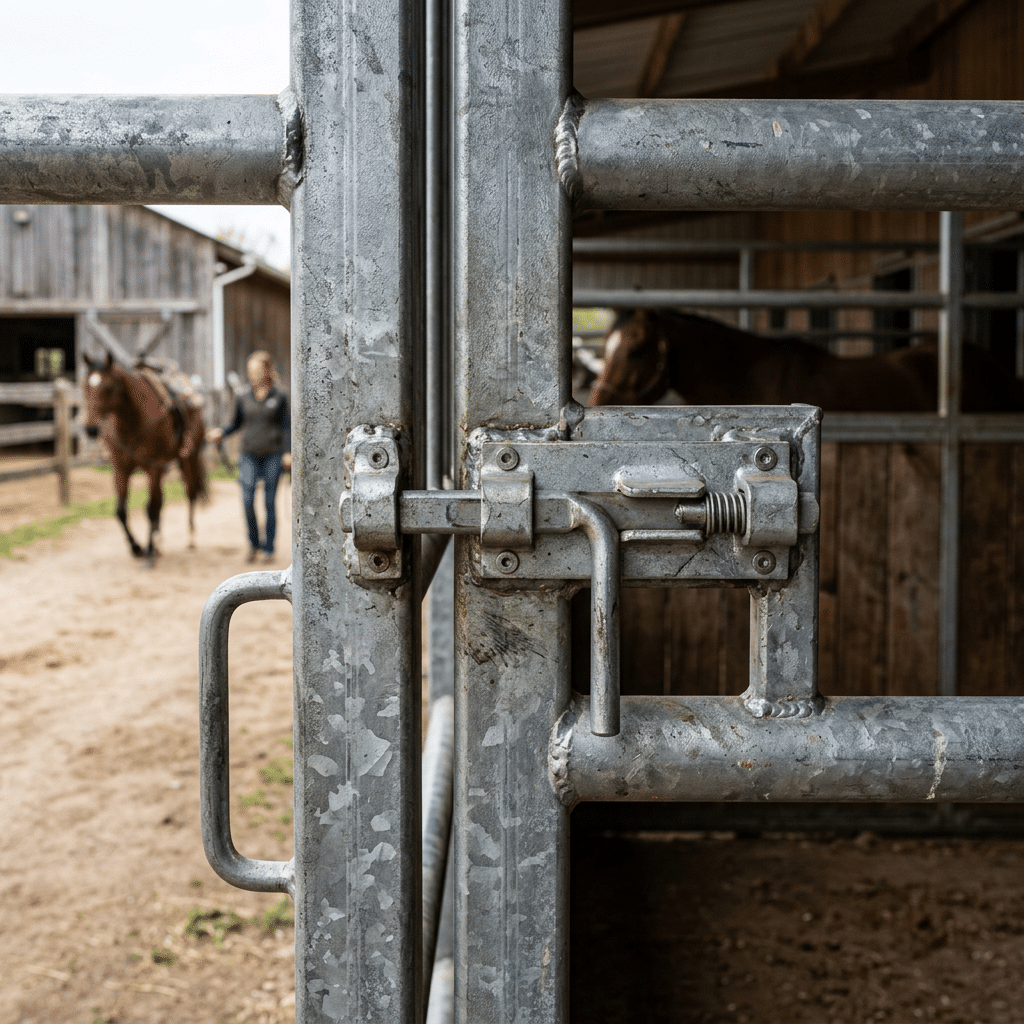
Vetting custom builders for an equestrian facility requires a focus on material engineering, not just project portfolios. A common and costly failure is accepting pre-galvanized steel, which corrodes at the welds, creating long-term structural risks and devaluing the entire investment.
This analysis provides a data-driven comparison of construction models. We benchmark turnkey services against a hybrid approach using non-negotiable standards like Hot-Dip Galvanization After Fabrication (ISO 1461) and proper Q235B structural steel to ensure project durability and safety.
Durable Horse Stables for Any Climate
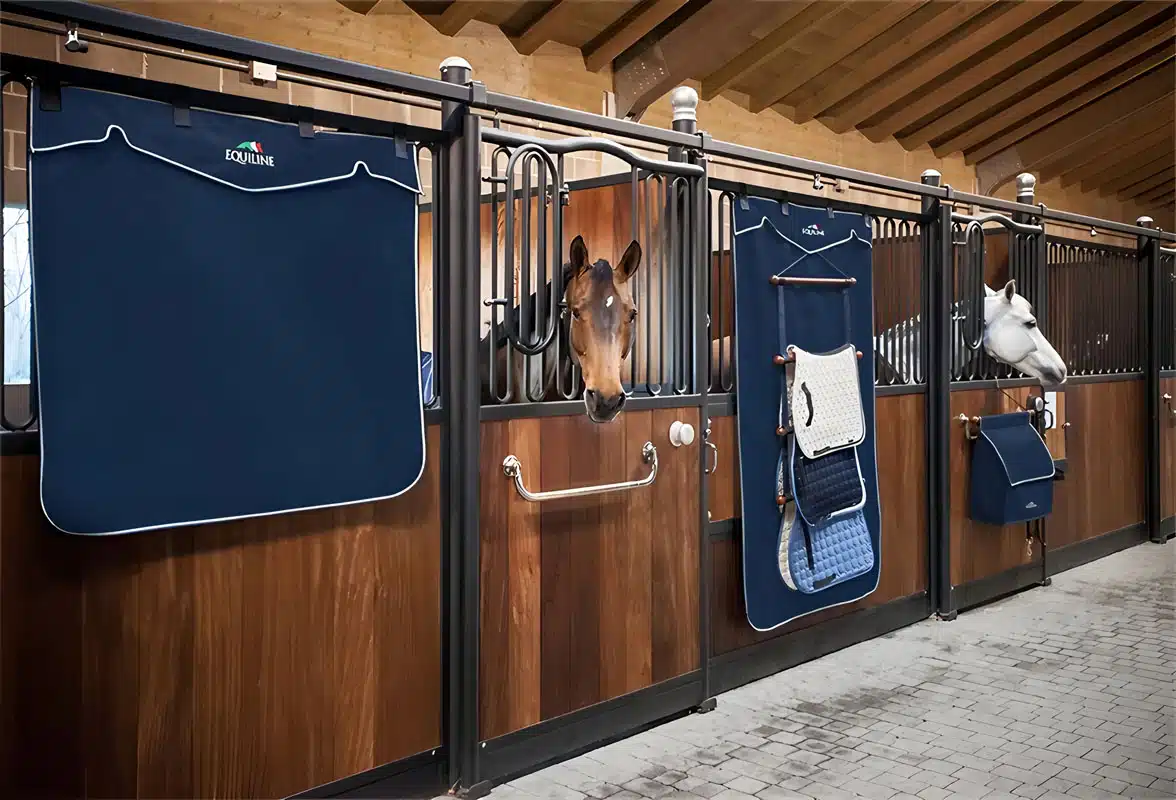
The “Turnkey” Builder: Pros and Cons (High Cost, Low Stress)
A turnkey builder manages your entire stable construction project for a fixed price, offering a predictable, low-stress experience. This all-inclusive service is ideal if you lack project management time, but it comes at a premium cost and offers less flexibility for mid-project design changes compared to managing the build yourself.
The ‘Pros’: A Hands-Off, Predictable Process
The primary advantage of a turnkey builder is having a single, accountable partner for the entire project. They manage every phase, from design and permitting to construction and final inspection, which removes the stress of coordinating different contractors.
These projects usually run on a fixed-price contract, giving you clear, predictable costs from the start. This financial certainty helps prevent budget overruns and unexpected fees. It’s an ideal solution for business owners who don’t have the time or construction expertise to manage a project day-to-day, as the builder handles all the logistics.
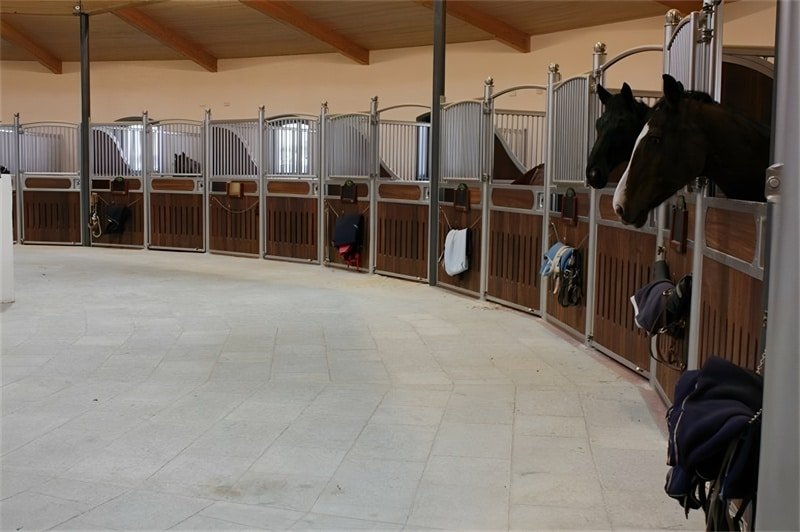
The ‘Cons’: Premium Costs and Less Flexibility
This level of convenience and project management comes at a premium. Because the turnkey builder absorbs all project risks, the total price is typically higher than managing the build yourself. It’s a trade-off between cost and convenience.
The fixed-price model also means less flexibility. Once a contract is signed and the design is finalized, making changes can be difficult and expensive. You may also have less direct control over specific material selections or the subcontractors hired for the job compared to a more hands-on approach.
The “Prefab Kit”: Pros and Cons (Low Cost, High Control)
Prefabricated stable kits offer a powerful balance for large projects, providing the cost savings and quality consistency of factory production while giving you control over design and materials. The trade-off is that they require detailed upfront planning and a capable on-site team for assembly.
Advantages: Cost Savings and Quality Control
Working with a source factory for prefab stable kits can significantly lower overall project costs. By minimizing on-site labor and material waste, you protect your budget. Our flat-pack shipping system is engineered for this purpose; we can load 30-45 stable sets into a single 40HQ container, drastically cutting freight expenses and protecting your profit margins.
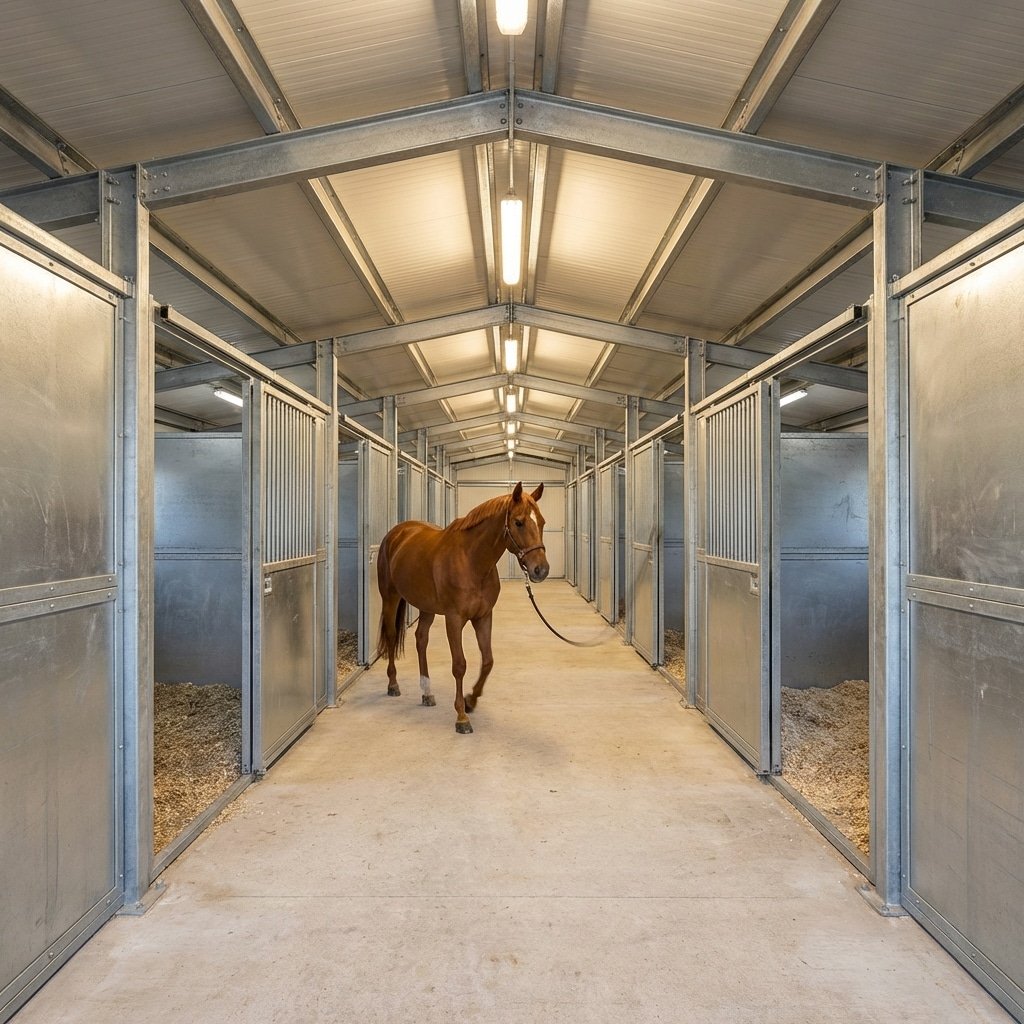
Manufacturing in a controlled ISO 9001-certified environment ensures a level of quality that’s nearly impossible to replicate with on-site fabrication. Critical processes like our hot-dip galvanization after fabrication, which meets ISO 1461 standards, provide a thick zinc coating for lifetime rust protection. This is a core part of our commitment to engineering durable, safe structures.
You also maintain complete control over the final product’s specifications. You can specify materials based on your climate, such as upgrading to Q345B steel for its superior impact toughness in cold regions. You can also choose between our infill options, like the zero-maintenance HDPE for durability or the high-density bamboo for a premium, classic look.
Considerations: Logistics and On-Site Assembly
The biggest consideration is that upfront planning is final. Once your design and material choices are locked in, they become difficult and expensive to change. Our 35-45 day production cycle, which includes scheduling time at the galvanizing plant, requires your layout to be confirmed before we begin manufacturing.
While our kits include precision-made components, the final build quality depends on your on-site assembly crew. We provide a complete system—including pre-cut infill planks and a full hardware kit with 304 stainless steel connectors and anchor bolts—but a skilled team is still needed to erect the structure and handle the finishing work.
Finally, shipping and handling require careful coordination. These are heavy, industrial components. To solve this, we package every order on steel pallet flat-packs. This method protects the parts during transit and ensures unloading at your property is safe and organized, preventing damage and making inventory checks simple.
Top Barn Building Companies in 2026
A definitive national list of top barn builders is impractical because construction is a highly regional service. The best builders are local experts familiar with your area’s climate, soil, and codes. Instead of searching for a national brand, the most effective approach is to vet local contractors based on their equestrian portfolio, material standards, and reputation.
Why National ‘Top’ Lists Are Impractical for Barns
Barn building is a specialized trade where local knowledge is critical. A builder who excels in the frosty conditions of the EU market may not have experience with the high UV and salt spray demands of coastal Australia. The best contractors are typically regional experts who understand local building codes, soil conditions, and weather patterns, ensuring the structure is safe and durable.
Furthermore, major construction industry rankings don’t track niche agricultural builders. They focus on large-scale commercial or residential contractors, not the specialists who build high-quality equestrian facilities. This means any “top” list you find online is likely incomplete or focused on a different type of construction altogether, making it unhelpful for your specific project.
Key Criteria for Vetting Local Barn Builders
When selecting a partner for your project, focus on these four areas to ensure a high-quality outcome and protect your investment.
Portfolio Review: Ask to see a portfolio of their completed equestrian facilities, not just generic pole barns. An experienced builder will have a track record of projects similar to yours and can provide references from other farm owners in your area. If possible, visit a completed project to inspect the quality of their work firsthand.
Material Standards: This is non-negotiable. Ask potential builders about their standard materials for the barn’s internal components. A quality-focused builder will use structural steel like Q235B (ASTM A36) and insist on proper rust protection. For horse stables, the lifetime standard is **Hot-Dip Galvanization After Fabrication**, which conforms to ISO 1461. This process protects every weld and cut from rust, unlike cheaper pre-galvanized tubing that corrodes at the welds.
Local Reputation: Check online reviews and speak with local farm owners or equestrian clubs. A builder’s reputation within the community is a strong indicator of their reliability, quality of work, and customer service. A good local reputation is earned through consistent, high-quality results.
Customization and Integration: The best builders adopt a flexible, hybrid approach. They can construct a high-quality barn shell while having the expertise to integrate specialized, pre-engineered components. This allows you to combine local construction knowledge with our factory-produced stable systems, which arrive flat-packed and ready for assembly. This method ensures your stalls have precision engineering, superior materials like our HDPE or high-density bamboo, and a Kick-Proof Guarantee, giving you the best of both worlds.
Hybrid Approach: Local Shell, Imported Internals
The hybrid construction model combines a locally-built barn shell to meet site-specific codes with our prefabricated stable systems for the interior. This strategy gives builders access to factory-grade quality and materials, like hot-dip galvanized steel, while dramatically reducing the need for skilled on-site labor like welding and fitting.
Combining Local Frameworks with Prefabricated Stall Systems
In this model, a local contractor handles the main barn structure—the foundation, roof, and exterior walls. This ensures the building meets all regional zoning laws and weather requirements. We then supply the complete interior system. Our horse stall fronts, partitions, and doors are manufactured in our ISO 9001 certified facility and shipped as a complete kit. These systems arrive in a flat-pack on steel pallets, including pre-cut HDPE or high-density Bamboo infill planks and a full set of 304 stainless steel hardware for assembly. This “Profit Protection” design maximizes container space and safeguards our distributors’ margins.
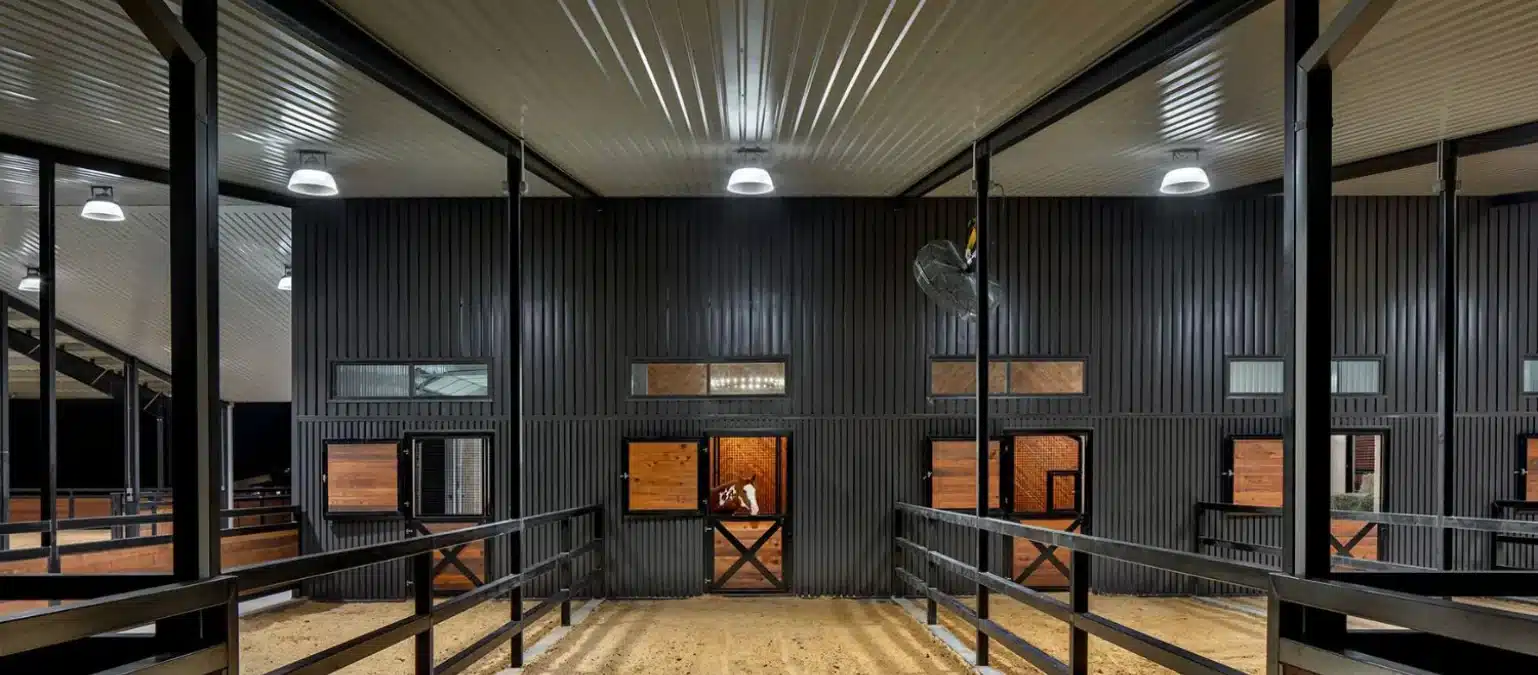
Key Benefits: Quality Control and Reduced On-Site Labor
This approach gives builders access to specialized manufacturing processes that are difficult and costly to replicate on-site. Our Hot-Dip After Fabrication process, conforming to ISO 1461, ensures a thick zinc coating for superior rust protection. By importing a complete system, you significantly reduce the need for skilled on-site labor for tasks like welding and custom fitting, which helps manage project timelines and control costs. It also provides access to higher-grade materials for greater safety. For clients in cold climates, we can supply stables made from impact-resistant Q345B steel to prevent brittle fractures from horse kicks—a level of material engineering not always available from local suppliers.
How to Be Your Own General Contractor
Acting as your own general contractor means taking full responsibility for the project’s success, from financial management and subcontractor scheduling to permit compliance and on-site problem-solving. It’s a complex, hands-on role that requires deep industry knowledge and rigorous organizational skills.
Core Competencies: More Than Just a Title
Stepping into the role of a general contractor goes far beyond a title; it demands a specific set of professional skills. First is a solid foundation in construction knowledge, including the ability to read blueprints, understand building codes, and manage the correct sequence of operations from groundwork to finishes. Next, you must excel at subcontractor management, which involves vetting, hiring, and scheduling a diverse team of trades—often 15 to 20 different specialists like electricians, plumbers, and concrete crews. Finally, financial discipline is non-negotiable. You become the project’s accountant, responsible for managing the budget, tracking all expenses, and processing payments to prevent costly overruns.
Key Responsibilities: From Paperwork to On-Site Problem Solving
The daily work of a general contractor involves navigating a wide range of critical tasks. You are solely responsible for securing all permits and scheduling inspections, ensuring the project complies with local regulations at every stage. A significant part of the job is supplier and materials coordination. This means sourcing everything from raw lumber to specialized systems. Choosing suppliers that offer efficient logistics, like our steel pallet flat-pack stable systems, can simplify scheduling, reduce on-site complexity, and protect your margins by maximizing container space. The final, and perhaps most crucial, responsibility is daily on-site supervision. You must be present to oversee work quality, resolve conflicts between trades, and ensure everyone is working safely and sticking to the schedule.
Abschließende Überlegungen
The choice between on-site fabrication and a factory system is a trade-off between upfront price and long-term risk. While cheaper pre-galvanized tubing saves money initially, it exposes your projects to premature rust and costly client callbacks. Specifying Hot-Dip Galvanization After Fabrication (to ISO 1461) is the only way to protect your reputation and ensure a lifetime structure.
The next step is to verify our engineering for yourself. We supply trial orders for builders and distributors to confirm our material standards and assembly precision firsthand. Contact us to get a detailed quote and discuss the specifications for your next container load.
Häufig gestellte Fragen
Cost to build a horse barn 2026?
Total barn costs depend on your location, materials, and labor for the main structure. We focus on manufacturing the internal stable systems, a key part of your project’s budget. As a B2B source factory, our key value is providing distributors and large projects with factory-direct pricing on our stable fronts and partitions. Our steel pallet flat-pack system significantly cuts shipping costs—fitting 30-45 sets in a 40HQ container—which protects your profit margins and helps you manage overall project expenses effectively.
Prefab horse barn kits vs custom?
Our system offers a powerful hybrid advantage. Your local builder handles the custom barn shell, and we supply the precision-engineered internal stalls. You get the quality and safety of a prefab kit—built with materials like Q235B structural steel and protected by Hot-Dip Galvanization After Fabrication (to ISO 1461 standards). This gives you custom-level durability and eliminates the high cost and variable quality of on-site welding, providing a predictable, high-value component for your build.
Best barn builders USA?
As a dedicated B2B manufacturer, we partner with many of the best barn builders and project distributors across North America. We supply them with our ISO 9001 certified internal stable systems. Our role is to perfect the components that ensure animal safety and durability—the stall fronts, partitions, and hardware—while professional builders construct the main barn shell. We would be happy to help connect you with one of our trusted distributor partners in your region.
DIY horse barn kits?
Absolutely. While a general contractor typically builds the main barn shell, our internal stable systems are designed for straightforward assembly. Each kit arrives on a steel pallet, flat-packed to protect your investment. The system includes pre-fabricated stable fronts, partitions, pre-cut infill planks (HDPE or Bamboo), and a complete hardware kit with 304 Stainless Steel bolts and connectors. An experienced individual or a small team can easily assemble our stalls, significantly saving on specialized labor costs.
Managing barn construction?
We help simplify project management by providing clear timelines and logistics for the internal stable components. Our standard production lead time is 35-45 days, which accounts for fabrication and proper scheduling with the hot-dip galvanizing plant to ensure lifetime rust protection. Our systems are delivered in steel pallet flat-packs, ensuring all parts arrive organized and undamaged. This predictability allows your general contractor to schedule the stall installation smoothly right after the main barn structure is completed.

 German
  English
  Spanish
  French
  Arabic
0 Kommentare