

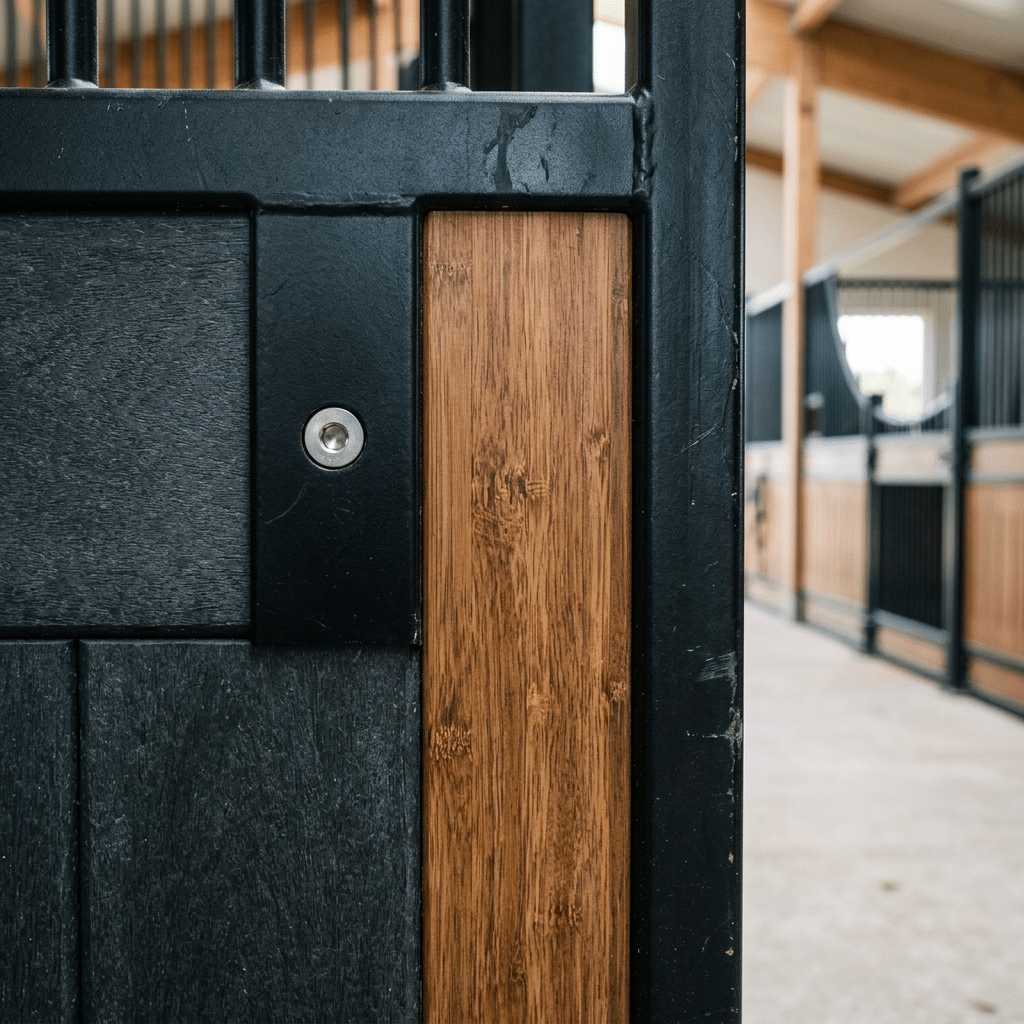
Wash Bay Walls constructed with common materials like rubber mats or concrete create a hidden liability. Trapped moisture behind these surfaces inevitably leads to structural rot and mold, turning a seemingly low-cost project into an expensive long-term failure that requires complete replacement.
This analysis evaluates materials on their ability to form a truly waterproof system. We benchmark the porosity of concrete and the moisture-trapping flaws of rubber mats against the zero-maintenance performance of non-porous HDPE panels and hot-dip galvanized steel frames.
Durable, Climate-Proof Stables for Global Facilities
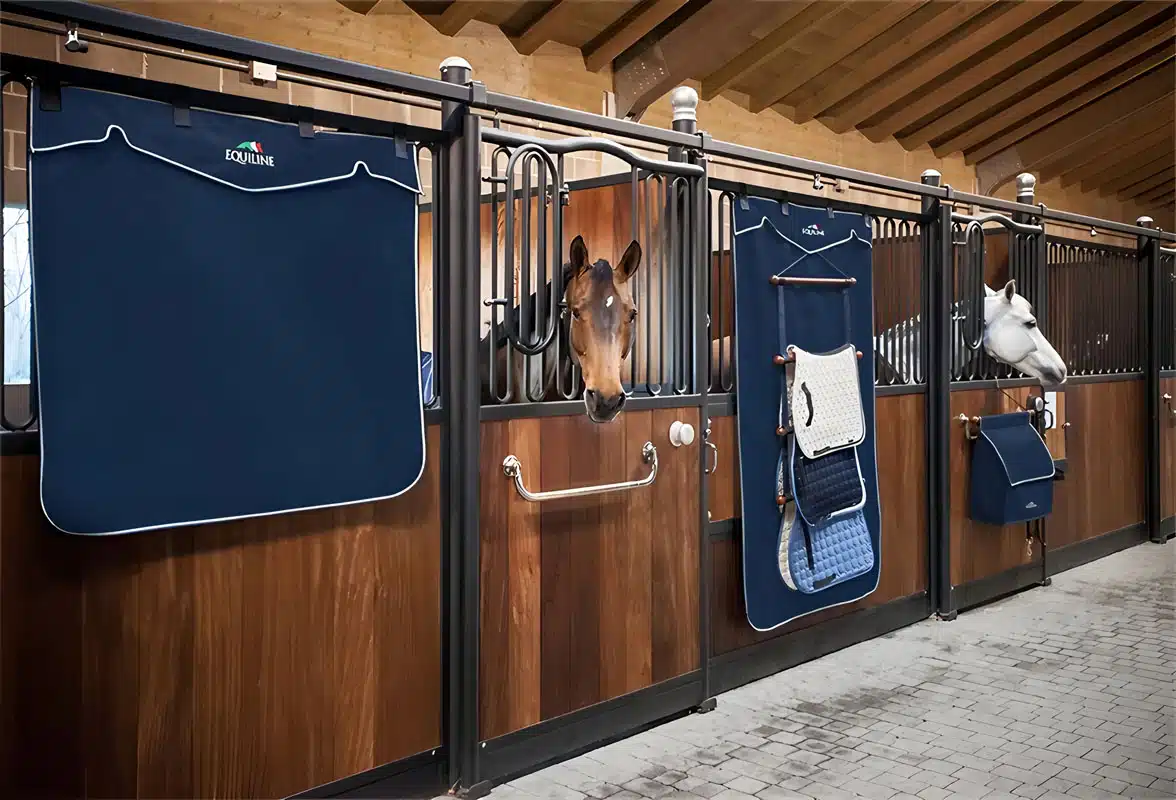
المناخ الجزئي لخليج الغسيل: الحرارة والماء والسماد
A wash bay creates an extremely corrosive environment where constant moisture and organic waste rapidly degrade standard building materials. To ensure long-term structural integrity and protect your investment, it’s critical to use systems engineered for these conditions, such as hot-dip galvanized steel frames and waterproof HDPE infill panels.
Constant Moisture and Corrosive Elements
The combination of high humidity, hot water spray, and corrosive compounds from manure and urine creates a relentless attack on facility components. Wood rots, and improperly protected steel quickly succumbs to rust. Our stable systems counter this by using Q235B structural steel that is hot-dip galvanized *after* fabrication. This process creates a thick, resilient zinc coating (>70 microns) conforming to ISO 1461 standards, which provides decades of protection. Paired with our 28mm thick, non-porous HDPE infill, the entire structure is impervious to water and chemicals, delivering a zero-maintenance solution for the most demanding wash bay environments.
Harnessing Biological Heat from Manure
Beyond material resilience, modern equestrian facilities can turn a waste product into a valuable asset. The heat generated during manure decomposition can be captured using hydronic systems. This thermal energy provides a sustainable, low-cost source for heating water used in the wash bay. By integrating waste management with energy recovery, facility owners can significantly reduce operational costs and improve the overall efficiency of their infrastructure.
الجدران الخرسانية: المسامية، والتشقق، وصعوبة التنظيف
Concrete’s sponge-like porosity makes it a high-risk choice for horse wash stalls. It absorbs moisture, manure acids, and cleaning chemicals, leading to internal cracking from temperature changes and creating a persistent breeding ground for mold.
How Porosity Leads to Structural Failure
At a microscopic level, concrete acts like a sponge. When you use a high-pressure hose, the wall doesn’t just
get wet—it absorbs water, pulling harsh detergents and corrosive manure acids deep into its structure. This constant saturation, combined with thermal cycling from hot water sprays and cool air, causes the concrete to expand and contract. This repeated stress is a primary driver for micro-cracks that weaken the entire wall from the inside out over time.
The Challenge of Sanitation and Maintenance
Once cracks appear, they create pathways for more moisture and become a breeding ground for mold and mildew. This makes maintaining a sanitary wash stall nearly impossible, posing a health risk to horses. Unlike concrete, our non-porous HDPE infill provides a “Zero Maintenance” surface. Contaminants and grime stay on the surface and can be washed away easily, preventing the long-term hygiene and safety problems that come with porous materials.
الحصائر المطاطية على الجدران: فخ العفن والعفن الفطري
Using rubber floor mats on wash bay walls creates a hidden mold problem. The mats trap moisture against the wall with no way to dry, leading to structural rot and mildew. The professional solution is to use 100% non-porous materials like HDPE, which shed water completely and prevent any mold growth from starting.
The Flaw of Using Flooring Material on Walls
Rubber floor mats are engineered for one purpose: drainage on a horizontal surface. Their perforations and channels allow water to pass through and away from the walking area. When you mount these same mats vertically on a wall, that function is completely lost. Instead, the mat traps moisture against the wall surface.
Pressing a mat against a wall creates thousands of tiny, unventilated pockets. These dark spaces capture steam, condensation, and splash-back from hosing down horses. Because there is no airflow, the trapped moisture cannot evaporate. This creates a permanently damp surface hidden from view, which is the perfect breeding ground for destructive mold and mildew.
Why Non-Porous Surfaces are the Solution
Mold requires a food source and moisture to grow. The dark, damp space behind a rubber mat provides both. Modern wash bays and stable walls solve this problem by using materials that are 100% hydrophobic, like the High-Density Polyethylene (HDPE) we use in our stable systems. Water simply sheets off these solid surfaces, leaving nowhere for mold to get a foothold.
Unlike rubber mats, a solid HDPE panel has no seams, pores, or pockets to trap water. It can be power-washed clean in seconds without risk of damage. This offers a true zero-maintenance surface that will not rot, warp, or degrade from constant exposure to moisture, protecting the structural integrity of your facility and ensuring a healthier environment.
بلاستيك HDPE: 100% مقاوم للماء وقابل للغسل الكهربائي
Our HDPE infill boards provide a completely waterproof and non-porous solution for stable walls, especially in high-moisture areas like wash bays. Because the material is 100% hydrophobic, it cannot absorb water, urine, or bacteria, which prevents mold and rot from ever taking hold. This makes it a true zero-maintenance option that can be aggressively power-washed without degrading, ensuring long-term hygiene and durability.
A Non-Porous Barrier Against Mold and Rot
Unlike traditional materials like wood or even sealed concrete, our HDPE planks are completely non-porous. This means they are physically incapable of absorbing moisture, urine, or bacteria from the wash bay environment. This hydrophobic quality eliminates the fundamental conditions needed for mold, mildew, and rot to develop, creating a healthier, more hygienic stall. It delivers a true zero-maintenance wall that never needs sealing or painting to protect its integrity.
Durability for High-Pressure Cleaning and Impact
The smooth, chemical-resistant surface of HDPE is built for the demands of a working facility. You can use high-pressure washers wit
h soaps and disinfectants without any risk of damaging the material. We engineer these boards at a substantial thickness of 28mm to 32mm, ensuring they absorb kicks and impacts from equipment and fulfill our kick-proof guarantee. Because dirt and grime don’t adhere well to the slick surface, cleaning becomes faster and requires less labor, protecting your operational efficiency.
إطارات HDG الفولاذية: النجاة من منطقة الرذاذ
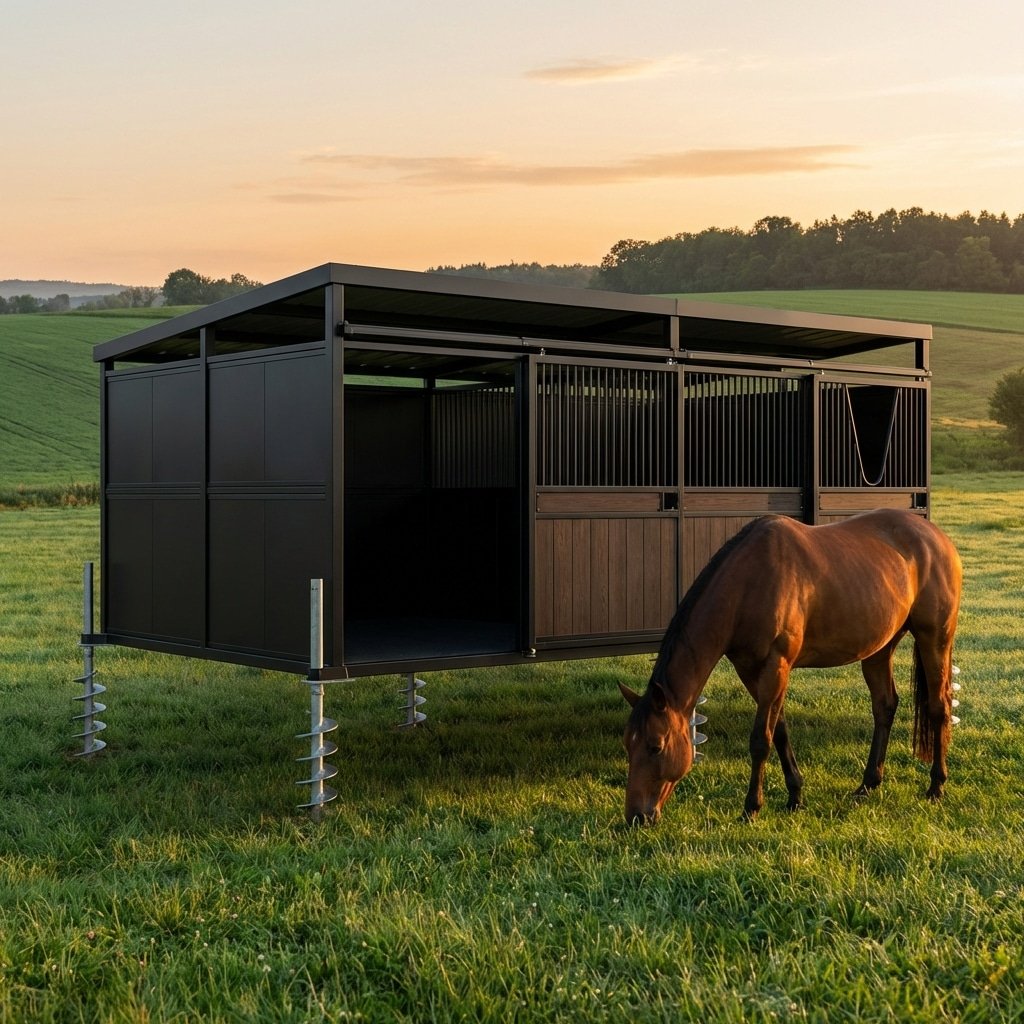
Our hot-dip galvanized steel frames are engineered to thrive in high-moisture areas like wash bays. By fully welding the frames *before* dipping them in molten zinc, we seal every joint against water intrusion. This process, combined with a thick zinc coating and 304 stainless steel hardware, creates a complete, long-lasting anti-rust system designed for constant exposure to water and chemicals.
The Advantage of Hot-Dip After Fabrication
Many manufacturers weld pre-galvanized tubes, leaving the welds and cut ends exposed to immediate rust. We take a different approach. Our process of hot-dip galvanization after fabrication means we build the entire steel frame first, then submerge the completed structure in molten zinc. This critical step completely seals every weld, corner, and connection, creating a seamless barrier against moisture. This method complies with the BS EN ISO 1461 standard, resulting in a metallurgically bonded zinc coating that guarantees protection in the demanding environment of a wash bay.
Coating Thickness and Hardware That Last
The zinc coating we achieve is exceptionally thick, averaging over 70 microns (μm) على الأنابيب و 85 microns (μm) on structural steel parts. This heavy layer provides decades of sacrificial protection and is tested to endure more than 96 hours in an ASTM B117 salt spray test without any red rust. We ensure there are no weak points in the system. All bolts, connectors, and assembly hardware are made from 304 stainless steel. Each kit also includes a cold galvanizing touch-up spray to repair any surface scratches from installation, maintaining a fully protected structure from day one.
الأفكار النهائية
While rubber mats or pre-galvanized frames seem cheaper upfront, they expose your projects to rot and premature rust. Our system—with non-porous HDPE infill and steel hot-dipped بعد fabrication—eliminates the risk of costly structural failures and warranty claims. Protecting your brand starts with materials engineered to last.
Don’t guess on material integrity—verify it for yourself. Request a sample kit to inspect our weld quality and ISO 1461-compliant galvanizing firsthand. Contact our engineering team to discuss OEM specifications and configure a trial order for your market.
الأسئلة المتداولة
What’s the best material for horse wash rack walls?
For a truly durable and hygienic wash bay, a non-porous and completely waterproof material is essential. We recommend our 28mm-32mm thick, UV-stabilized High-Density Polyethylene (HDPE) panels. They offer a zero-maintenance surface that won’t rot, mold, or degrade from chemical cleaners. This impact-absorbing material ensures a safe, easy-to-clean, and long-lasting wash bay, protecting your investment.
Can you put rubber mats on barn walls?
We advise against using rubber mats on walls, especially in wash bays. Mats can trap moisture against the underlying structure, which creates a prime environment for mold and rot. A solid, non-porous surface like our HDPE panels is a much safer and more hygienic solution. It creates a seamless barrier that prevents water intrusion and makes sanitizing simple.
How do you waterproof a horse wash bay?
Permanent waterproofing comes from using materials that are inherently impervious to water, not coatings that can fail. Our system achieves this by combining solid HDPE wall panels with a steel frame that is hot-dip galvanized after fabrication. This creates a completely sealed environment where water cannot penetrate or damage the core structure, ensuring decades of reliable service.
Does HDPE plastic support mold growth?
No, HDPE does not support mold or mildew. Its non-porous surface cannot absorb water, which is a necessary condition for mold to grow. This makes it an exceptionally safe and hygienic material for wet environments like wash stalls. You can power-wash the surface regularly without any risk of fostering bacterial or fungal growth, keeping animal welfare standards high.
Is concrete or plastic better for wash stalls?
Plastic offers far superior performance. Concrete is porous, can crack from temperature changes, and may harbor bacteria over time. Our solid HDPE panels, on the other hand, are 100% waterproof, easier to sanitize, and absorb impact from kicks. This provides a more durable, lower-maintenance, and more hygienic environment for your facility compared to concrete blocks or panels.

 Arabic
  English
  Spanish
  French
  German
0 تعليق