

A sliding horse stall door jamming fix often starts with a simple inspection of the bottom guide, yet most maintenance teams waste hours adjusting trolleys that aren’t the problem. At DB Stable, this error is seen repeatedly across large-scale training centers and breeding farms where downtime directly impacts operational efficiency.
The real culprit is almost always debris—dust, manure, and fine bedding fibers—accumulating in the flat-bottom U-channel. This mixture creates a sticky paste that binds the rollers, turning a 20-minute repair into a full track system replacement costing $200 to $500 per unit. We built our steel U-channel guides specifically to eliminate this friction point.

Why Your Horse Stall Door Jams: The Hidden Debris Trap
The bottom U-channel guide is a debris trap.
Veteran facility managers know that a sticking or derailing horse stall door is rarely a top-track failure. The root cause is almost always the bottom guide channel acting as a dirt scoop. In high-traffic barns, the floor is a mixture of wood shavings, hay, dust, and moisture. When a heavy stall door slides, the bottom roller or guide drags this mixture into the track, creating a sticky, abrasive paste that binds the mechanism.
Most standard sliding hardware uses a flat-bottom guide or an open roller guide. Industry data confirms that debris builds up on rolling door guides, causing slow corrosive impacts and eventual jamming. Cheap imports ignore this vulnerability, leading to endless maintenance calls. The fix isn’t a lubricant; it’s a geometry change that prevents dirt from entering the system in the first place.
- Debris Composition: Fiber from rubber mats, hay, and dust mix with stall moisture to form a hard, sticky paste that binds rollers.
- Mechanism Failure: Debris accumulation jams the roller or binds the door, causing derailment and requiring costly track replacements ($200-$500).
- The Real Fix: Replace flat guides with a steel U-channel cap or a self-cleaning track design that drops debris through an open bottom.
A standard U-channel guide replacement costs less than $15 per unit and takes about 20 minutes to install. This is a fraction of the cost of replacing a full track system. By installing a steel U-channel guide, you avoid the corrosion issues associated with roller guides, which degrade rapidly when exposed to the abrasive barn environment. This is a permanent hardware upgrade, not a temporary patch.
For a zero-maintenance solution, consider a self-cleaning overhead track. This design reduces debris-related jams by up to 90% compared to standard flat-bottom tracks. The open bottom allows debris to fall through rather than accumulate. Combined with Delrin trolley wheels, which have a lifespan of 20+ years compared to 5-7 years for nylon, this setup eliminates the need for constant adjustments.
Do not use WD-40 to lubricate a sliding glass door or horse stall door. It is a solvent and water displacer, not a lubricant. It will attract dust and dirt, accelerating the jamming process. Instead, use a dry lubricant like lithium grease or PTFE spray. Lithium grease reduces the friction coefficient by 40% without attracting debris, ensuring smooth operation even in humid or freezing conditions.
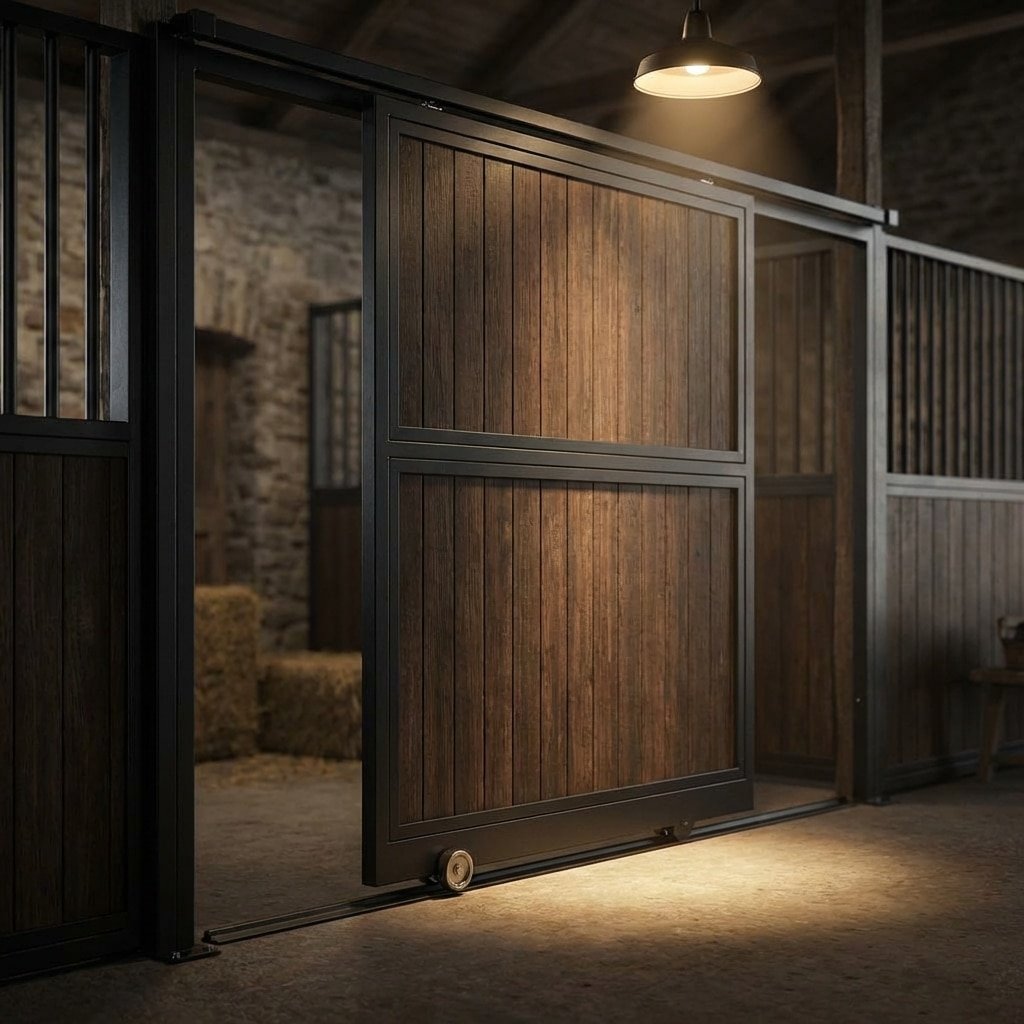
Trolley vs. Track: Which Component Is Failing?
The jam is caused by the bottom U-channel acting as a dirt scoop, not a failing trolley.
When a heavy horse stall door starts sticking, the instinct is to blame the overhead trolley. That is a costly mistake. The real culprit is almost always the bottom guide. Standard flat-bottom channels act as a lint trap, mixing wood shavings, fine dust, and moisture into a hardened abrasive paste. This paste creates enough friction to bind the door or force the trolley wheel up and over the track edge, causing a derailment.
Replacing a full track system costs between $200 and $500 per unit. Upgrading the bottom guide is a $15 fix that takes 20 minutes. The difference lies in the geometry of the guide and the material of the trolley wheel. Cheap imports use standard nylon rollers that degrade rapidly when dragged through debris. Premium hardware utilizes a steel U-channel paired with hard Delrin trolleys.
- Trolley Wheel Material: Standard nylon trolleys degrade in 5-7 years when exposed to barn dust. Hard Delrin trolleys offer a 20+ year lifespan because the material is harder than the track and resists abrasion.
- Bottom Guide Geometry: Flat-bottom tracks trap debris, increasing the friction coefficient and causing the door to stick. A steel U-channel guide directs the roller into a protected pocket, keeping the contact point away from the worst of the floor debris.
- Corrosion Vulnerability: Roller-style bottom guides corrode quickly because debris holds moisture against the metal. A steel U-channel is easier to clean and allows water to drain, preventing the slow corrosive impact that ruins door paint.
Most maintenance manuals suggest using WD-40 to fix a sticking door. This is a catastrophic error. WD-40 is a solvent and water displacer, not a long-term lubricant. It dissolves existing grease and then attracts dust, creating a thick black sludge that accelerates jamming. Use a dry lubricant like lithium grease or PTFE powder instead. These reduce the friction coefficient by up to 40% without acting as a magnet for dirt.
To permanently solve the issue, you must move beyond simple cleaning. Replace the worn nylon rollers with Delrin trolleys to stop premature wear. Install a steel U-channel bottom guide to protect the door path from debris accumulation. For maximum efficiency, consider a self-cleaning overhead track design, which reduces debris-related jams by up to 90% compared to standard flat-bottom tracks.
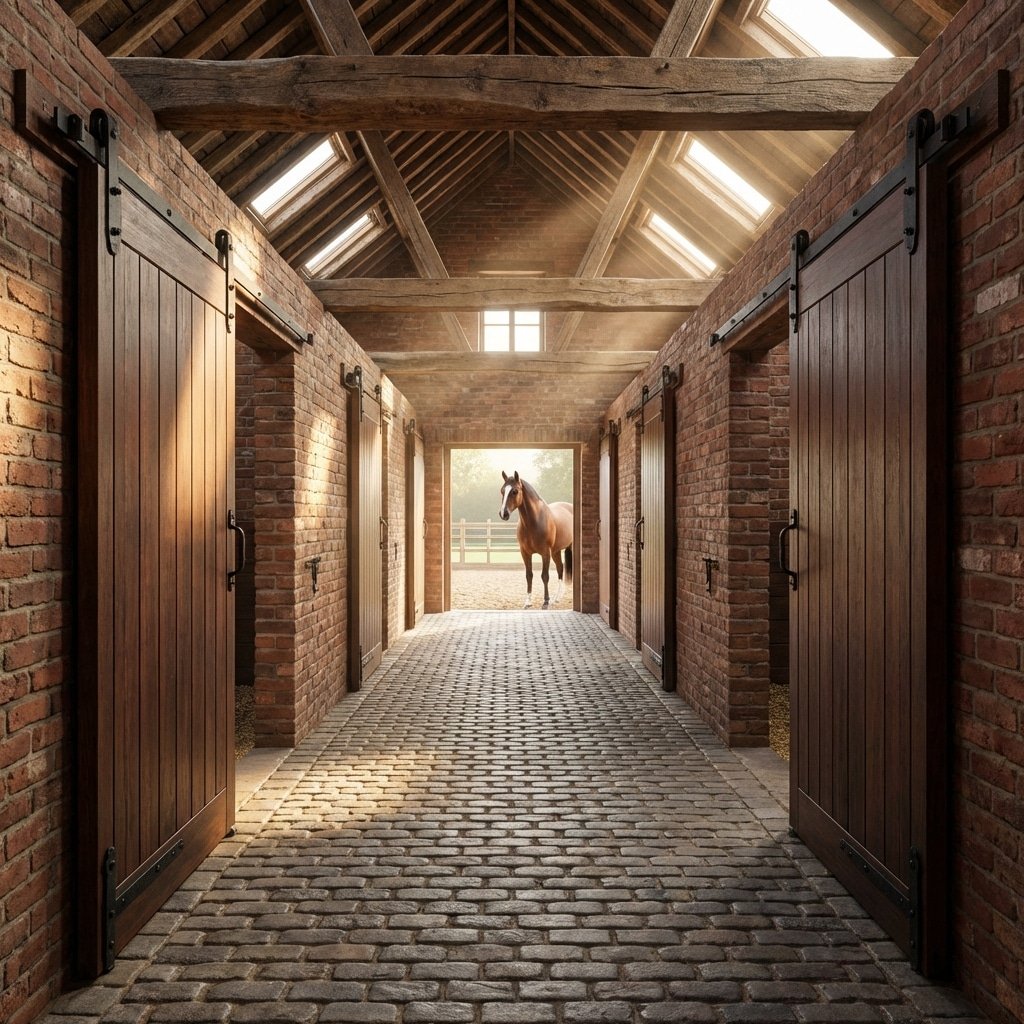
U-Channel Cap vs. Self-Cleaning Track: The Only Real Fix
Stop treating horse stall doors like house doors.
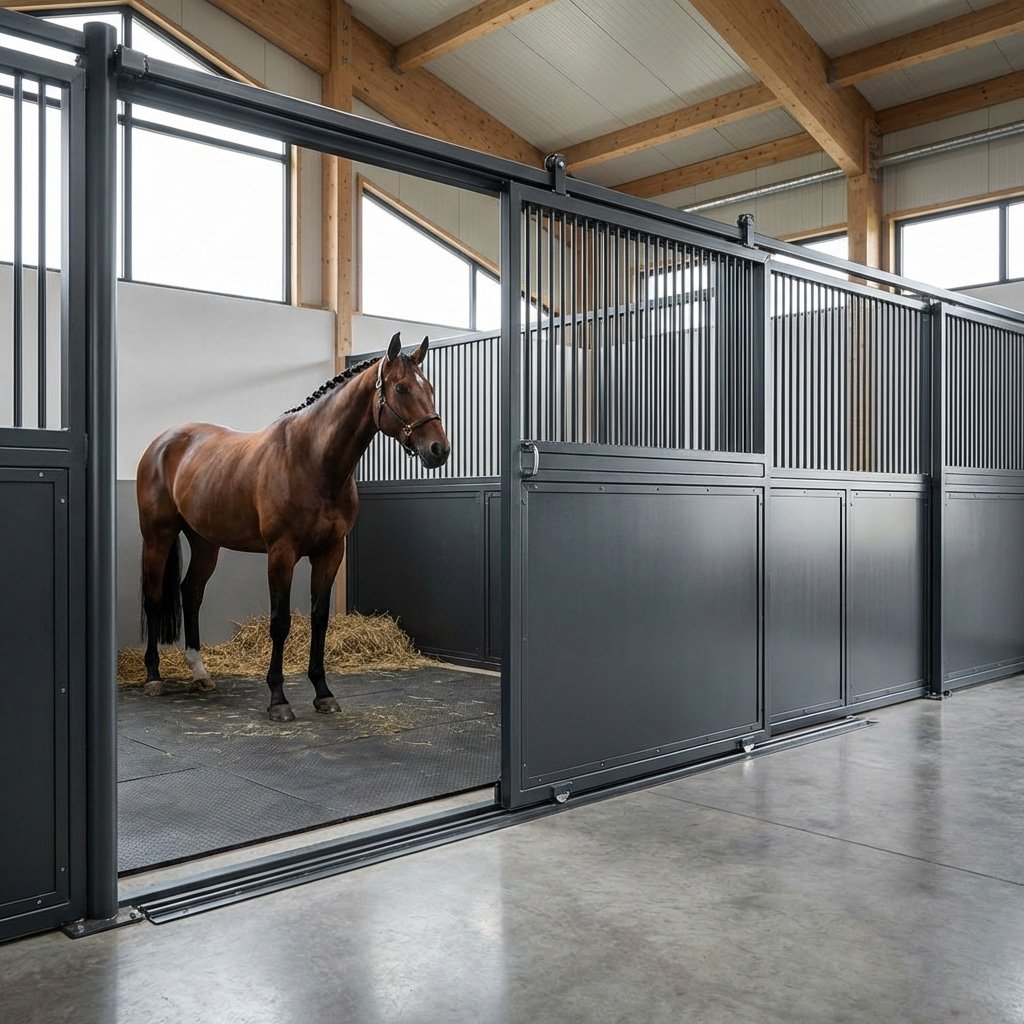
The U-channel cap is the most accessible immediate fix for a jamming door. Standard tracks feature a flat bottom that acts as a dirt scoop. As you sweep bedding, dust, and manure, it packs into the track and turns into a sticky paste. This buildup physically blocks the trolley wheels, forcing the door to derail. Replacing a flat track with a steel U-channel cap costs under $15 per unit and takes 20 minutes to install. It creates a curved, enclosed surface that prevents debris from settling. While you still need to clean it occasionally, the friction is drastically reduced compared to a flat profile. This is the baseline requirement for any professional equestrian facility.
A self-cleaning track design is the definitive engineering solution for high-traffic barns. Competitors like American Stalls pioneered this approach by utilizing an open-bottom track profile. Instead of trapping debris, the open design allows dust, shavings, and moisture to fall straight through to the floor. Internal data indicates that a self-cleaning track design reduces debris-related jams by up to 90% compared to standard flat-bottom tracks. For facility managers in climates with extreme humidity or heavy dust, this passive drainage is the only way to guarantee zero-maintenance operation. It completely removes the variable of human error in track cleaning.
The no-floor track system takes debris elimination a step further by removing the bottom guide entirely. Instead of relying on a physical channel to keep the door aligned, these systems use a specialized overhead trolley setup that locks the door vertically. Without a bottom track, there is literally nowhere for debris to accumulate and cause a jam. This design is highly effective in high-impact areas like breeding farms or large training centers. However, it requires precise installation and robust overhead framing. It is a premium structural choice that demands a higher initial investment but guarantees smooth operation for 15+ years without track maintenance.
Long-term durability hinges on material integrity, not just track geometry. Cheap hardware relies on nylon trolleys that degrade into dust within 5 to 7 years. This dust mixes with track debris and clogs the mechanism. Premium systems utilize Delrin trolleys, which have a lifespan of 20+ years and resist absorbing moisture or dirt. Pairing Delrin wheels with a U-channel cap or a self-cleaning track creates a fail-safe system. The trolleys glide effortlessly over minor imperfections, while the track profile ensures those imperfections never build up in the first place. Avoiding this combination is a guaranteed path to recurring maintenance headaches.
- Standard Flat Track:: Traps debris. Causes rapid trolley wear. Requires frequent manual cleaning. High risk of derailment.
- Steel U-Channel Cap:: Encloses the track to prevent dirt entry. Easy to wipe clean. Reduces friction significantly. Low-cost immediate fix.
- Self-Cleaning Open Track:: Allows debris to fall through. Eliminates track buildup entirely. Reduces jams by up to 90%. Ideal for dusty environments.
- No-Floor Track System:: Removes the bottom track completely. Zero debris accumulation possible. Requires precise overhead engineering. Maximum long-term durability.
How to Diagnose and Adjust Your Door in 10 Minutes
A systematic diagnostic approach prevents minor track issues from escalating into costly hardware replacements.
Stop chasing ghost tracks. Most facility managers waste hours adjusting the top rail only to discover the jam originates from a clogged U-channel. Before you reach for the pry bar, execute this four-step diagnostic protocol to isolate the friction point and restore smooth operation in under 20 minutes.
Start with the mounting integrity. Loose brackets are the leading cause of track misalignment and subsequent derailment. Inspect the bracket nuts securing the track to the stall partition. Tighten any loose fasteners to the manufacturer’s torque specification. If the track shifts when you manually push the door, the hardware is compromised, not the trolley system.
- Track Bolts: Verify tightness with a calibrated wrench. Loose bolts allow lateral drift, causing the door to jump the rail.
- Bracket Nuts: Inspect for shear stress or corrosion. Replace any fasteners showing signs of fatigue immediately.
- Debris Removal: Clear the U-channel of all organic matter. A clean channel reduces friction and prevents premature trolley wear.
- Inspection: Check the steel U-channel for corrosion. Rust pitting increases drag; replace damaged channels to maintain a smooth surface.
- Lithium Grease: Reduces friction coefficient by 40%. Provides long-lasting lubrication that resists washout from rain or cleaning.
- Application: Apply sparingly to the trolley axle bearings. Wipe away excess to prevent attracting additional dirt.
- Warping Check: Inspect the door frame for twists. Warped doors bind in the track; realign or replace the door if deformation exceeds tolerance.
- Sagging: Test for vertical drop. Sagging puts lateral pressure on the trolleys, causing derailment. Adjust mounting hardware to level the door.
Remove the door completely to access the U-channel. Standard maintenance often ignores the bottom guide, allowing manure, dust, and bedding fibers to accumulate into a hardened, sticky paste. Use a stiff brush and a scraper to remove all debris. A blocked U-channel creates immense drag, forcing the heavy stall door to bind against the top track.
Apply the correct lubricant to the trolley axles. Do not use WD-40; it is a solvent that attracts dust and accelerates jamming. Instead, use a high-viscosity lithium grease. Lithium grease repels moisture and maintains a consistent friction coefficient, reducing wear on the Delrin trolley wheels significantly compared to standard nylon alternatives.
Reinstall the door and check for structural warping. Heavy doors, especially those made of wood or thick steel, can sag over time due to gravity and constant vibration. Lift the door to feel for uneven resistance. If the door drags on one side, the hinges or mounting points need realignment to compensate for the sag.
الخاتمة
A sticky horse stall door usually stems from debris accumulation in the bottom guide rather than a top-track failure. Upgrading to a steel U-channel cap with Delrin trolleys eliminates the lint-trap effect, preventing the corrosive buildup that ruins standard nylon components. This simple $15 fix stops derailments and protects your facility’s safety record.
الأسئلة المتداولة
Why is my sliding door jammed?
Jamming is usually caused by debris accumulation in the bottom U-channel guide, not a failing trolley. This buildup creates friction that binds the door mechanism. Inspect the bottom track for debris before adjusting the overhead trolley.
Can you use WD-40 to lubricate a sliding glass door?
WD-40 is not recommended for long-term lubrication as it attracts dust and dries out quickly. Use a silicone-based spray instead to maintain smooth operation without residue buildup. Switch to silicone spray for durable, dust-free lubrication.
What’s the best lubricant for sliding doors?
Silicone-based lubricants are the best choice because they do not attract dust or degrade rubber seals. Avoid oil-based products which create a sticky paste that worsens jamming. Apply silicone spray to tracks and rollers for optimal performance.
How to fix a derailed horse stall door?
Lift the door to align the top wheels with the track, then roll it back into position. Ensure the bottom guide is clear of debris to prevent immediate re-derailing. Clear the bottom track to ensure the door stays aligned.
Why does my sliding barn door keep getting stuck in winter?
Cold temperatures cause moisture and debris in the bottom track to freeze, binding the door movement. Use a de-icer spray on the track and ensure proper drainage to prevent ice buildup. Treat the track with de-icer to prevent winter freezing.


 Arabic
  English
  Spanish
  French
  German
0 تعليق