Sourcing for a Therapeutic Riding facility is a process of mitigating long-term liability. Generic barn equipment often fails to meet ADA compliance and uses pre-galvanized steel that corrodes at the welds, creating safety hazards and driving up operational costs through constant repairs and replacements.
This analysis benchmarks suppliers against the ISO 1461 hot-dip galvanization standard. We evaluate critical safety engineering, such as zero-threshold designs and cast-proof partitions, to identify partners who build for durability and participant safety, not just a low initial price.
Top Suppliers Engineering for the PATH/RDA Community
When choosing a stable manufacturer for a therapeutic riding center, it’s best to look past marketing claims and focus on core engineering standards. The top partners prioritize specific material choices, corrosion-proofing processes, and safety-first designs that protect horses, participants, and staff while ensuring long-term durability and operational ease.
Key Engineering Features for Therapeutic Riding Centers
Material Strength: The stable framework must withstand unexpected impacts. We specify Q345B high-strength steel, especially for colder climates, because its superior impact toughness prevents brittle fractures from horse kicks. This ensures the structural integrity of the stall and the safety of the animals within.
الحماية من التآكل: A barn environment is harsh on steel. We insist on الجلفنة بالغمس الساخن بعد التصنيع, which conforms to ISO 1461. This process coats every weld, corner, and cut edge with a thick layer of zinc (>70 microns), completely sealing the steel from moisture and preventing rust. This is fundamentally different from cheaper pre-galvanized tubing that leaves welds exposed to corrosion.
Impact-Absorbing Infill: Wall infill plays a huge role in safety and acoustics. Our high-density polyethylene (HDPE) planks absorb impact from kicks, creating a quieter, less stressful environment for sensitive horses and riders. HDPE offers a kick-proof guarantee and requires zero maintenance, providing a durable and safe walling solution.
تصميم مقاوم للصب: Animal safety is paramount. Our stable designs feature minimal bottom gaps of approximately 50mm. This cast-proof design is a critical feature that prevents a horse from getting a leg trapped underneath the partition if they roll or lie down close to the wall.
Operational Safety and Durability
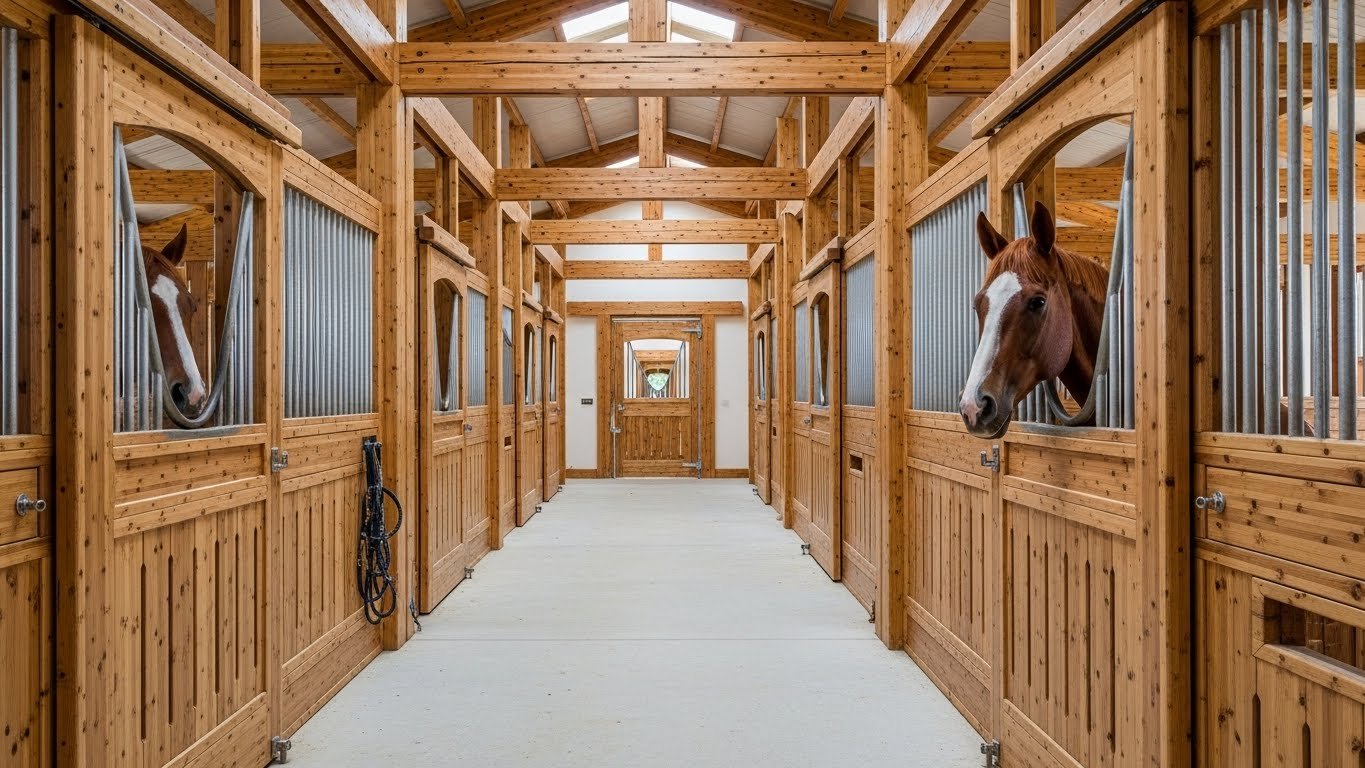
Smooth Door Systems: Ease of use is critical for staff and volunteers. Our hidden track systems for sliding doors are enclosed, which prevents hay, dust, and debris from jamming the mechanism. This design ensures doors slide smoothly and reliably for years, an important feature in a busy therapeutic center where handlers need one-handed operation.
Durable Hardware: Every component contributes to the system’s longevity. Our hardware kits include anchor bolts, connectors, and screws made exclusively from 304 stainless steel. This material choice prevents rust and failure at critical connection points, securing the structure for the long term.
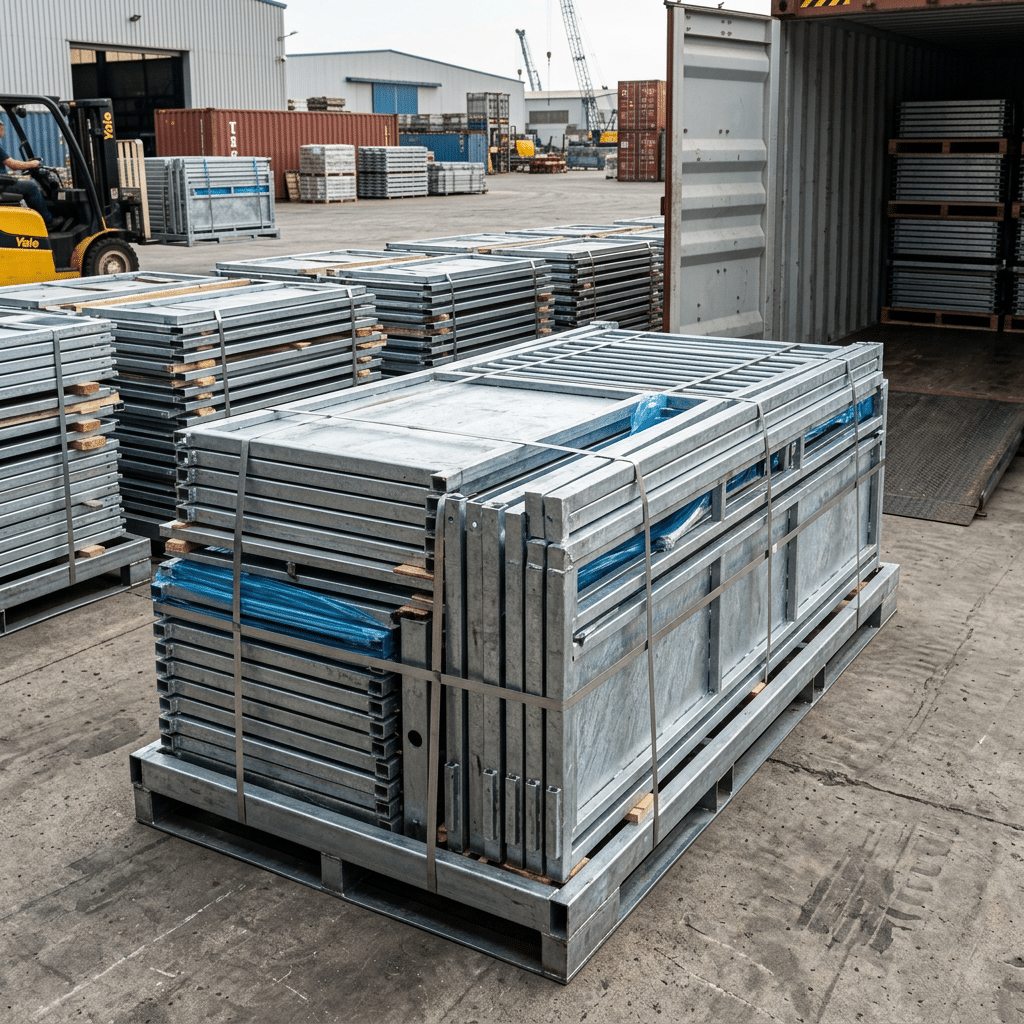
Modular and Repairable: Accidents happen, and repairs should be simple. Our systems ship in a flat-pack format on steel pallets. This modularity not only simplifies the initial installation but also allows for a single plank or panel to be replaced if damaged, without needing to dismantle the entire stable structure.
Ventilation Support: Air quality impacts equine health. The open-grill design common in our stable fronts and partitions promotes natural airflow. This “stack effect ventilation” helps cycle out ammonia and dust, supporting better respiratory health for horses who spend significant time indoors.
| الميزة | Our Engineering Standard | Benefit for Therapeutic Centers |
|---|---|---|
| Steel Strength | فولاذ Q345B منخفض السبائك عالي القوة | Prevents brittle fractures from kicks, ensuring animal safety. |
| Corrosion Protection | Hot-Dip Galvanization (after fabrication) to ISO 1461 | Guarantees long-term structural integrity, eliminating rust on welds. |
| مواد الحشو | بولي إيثيلين عالي الكثافة (HDPE) | Absorbs impact, reduces noise, and is zero-maintenance. |
| تصميم السلامة | Cast-Proof Gaps (approx. 50mm) | Prevents horses from trapping their legs when rolling. |
| نظام الأبواب | Hidden Track Sliding Doors | Ensures smooth, reliable operation and saves aisle space. |
| الأجهزة | 304 Stainless Steel Connectors & Bolts | Resists rust and wear, reducing long-term repair costs. |
| التهوية | Open-Grill Tops | Promotes stack effect ventilation for better respiratory health. |
Globally Compliant Stables Engineered to Last
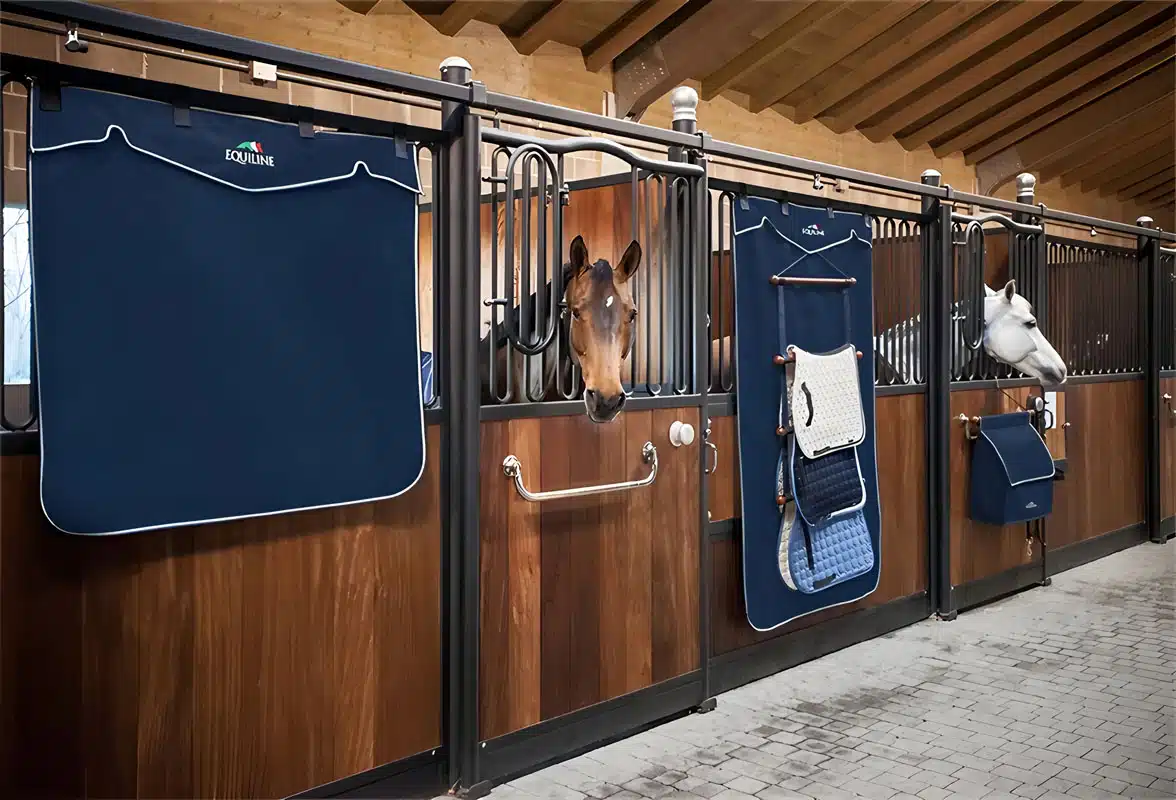
تصميم الإسطبلات لتناسب الكراسي المتحركة (ADA)
Creating an accessible equestrian facility involves key design choices for safety and independence. This includes ensuring doorways have at least a 36-inch clear opening, using space-efficient sliding doors with easy-to-operate hardware, and engineering wide aisles with firm, zero-threshold flooring to remove barriers for wheelchair users.
Doorway and Hardware Specifications for Unrestricted Access
To meet foundational accessibility principles, all doorways—from the main barn entrance to individual stalls—must provide a minimum clear opening of 36 inches. This ensures unrestricted passage for most wheelchair users.
sliding stall doors for accessible designs. They operate without a wide swing arc, preserving valuable aisle space and preventing obstructions. The hidden track system featured in our Professional Series ensures smooth, low-effort operation, which is critical in a therapeutic environment.
Hardware selection is equally important. Latches and handles should be operable with a closed fist or a single push/pull motion, avoiding any designs that require tight pinching, grasping, or twisting to accommodate users with limited hand strength or dexterity.
Aisle Widths and Zero-Threshold Flooring
Main barn aisles should be engineered to be much wider than the 36-inch minimum. A generous width safely accommodates a horse, a handler, and a wheelchair user simultaneously, preventing crowding and ensuring safe movement for everyone.
The flooring surface must be stable, firm, and slip-resistant. Loose materials like deep bedding or sand in common areas can impede wheelchair navigation and should be avoided in favor of solid, dependable surfaces.
All entries into stalls, tack rooms, and other areas should feature a zero-threshold design. A smooth, level transition eliminates raised lips that can catch wheelchair casters or create a trip hazard, promoting seamless and safe movement throughout the facility.
تجربة الممر: الأبواب المنزلقة العريضة مقابل الأبواب المتأرجحة
Sliding doors are the preferred choice for professional equestrian facilities due to their superior safety and space efficiency. They operate without obstructing busy aisles, making them ideal for high-traffic environments. Swing doors offer a traditional look but require significant clearance and perfectly level ground, suiting them for private barns where operational flow is less critical.
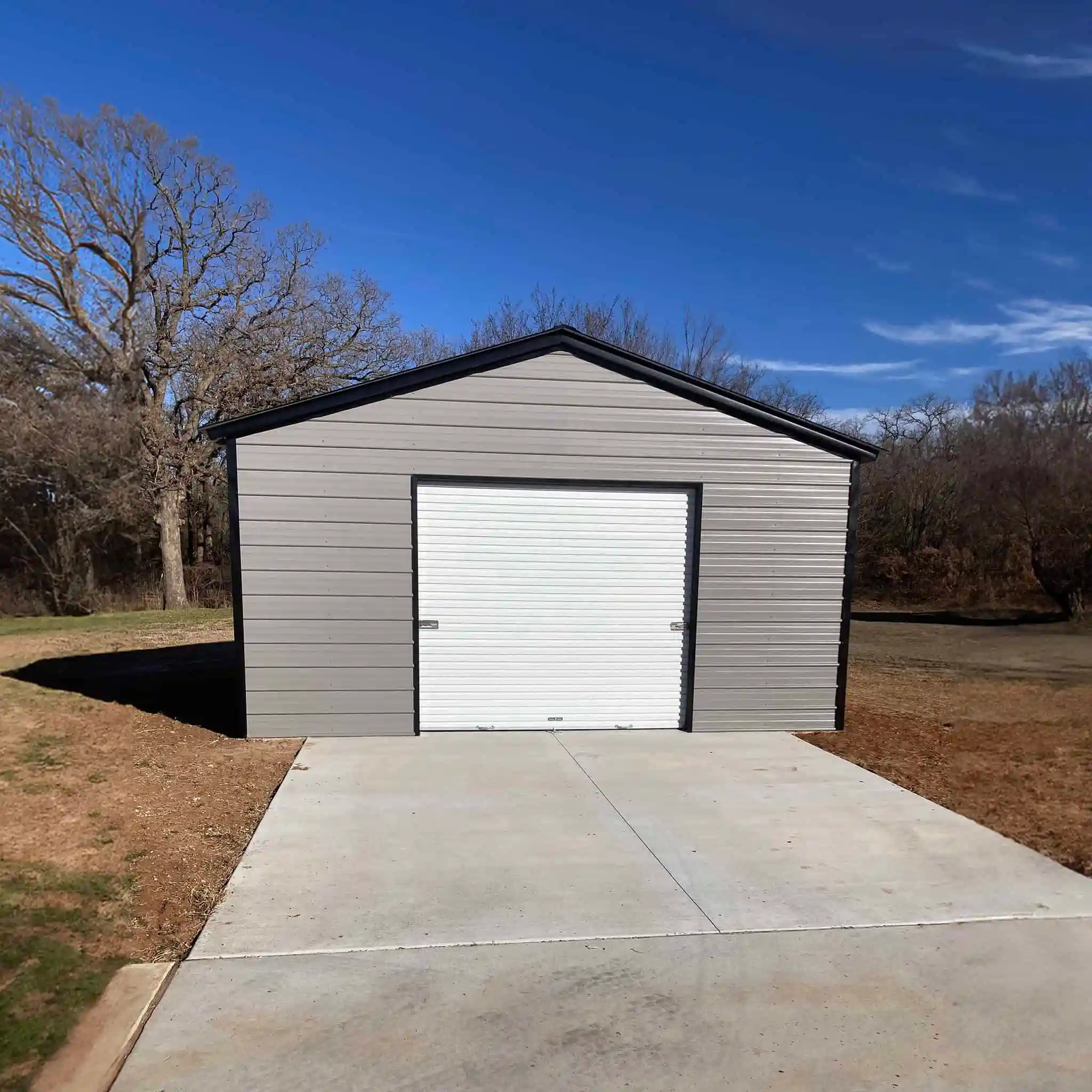
Safety and Space Efficiency
Sliding doors are the standard in professional equestrian settings because they eliminate the risk of wind catching a door and startling a horse. They require no swing radius, making them ideal for busy aisles or facilities where space is a premium. This design directly contributes to a calmer and more predictable environment for both horses and handlers.
A key operational benefit is the ability to open or close a sliding door with one hand while leading a horse. This improves safety and efficiency, especially in high-traffic training and boarding environments where smooth, uninterrupted movement is essential for daily operations.
Operational Flow and Aesthetics
Swing doors offer a traditional, classic aesthetic but require a wide, completely level aisle to function without sticking or creating a barrier. They are best suited for private barns where traffic flow is less of a concern and the visual style is a primary goal.
By contrast, our sliding doors do not obstruct the aisle, creating a safer and more fluid environment for moving horses, riders, and equipment. Their reliable performance, enhanced by features like our hidden track systems, is essential in therapeutic riding centers and commercial stables where predictable operation is paramount to safety and workflow.
الأرضيات ذات العتبة الصفرية: القضاء على مخاطر التعثر
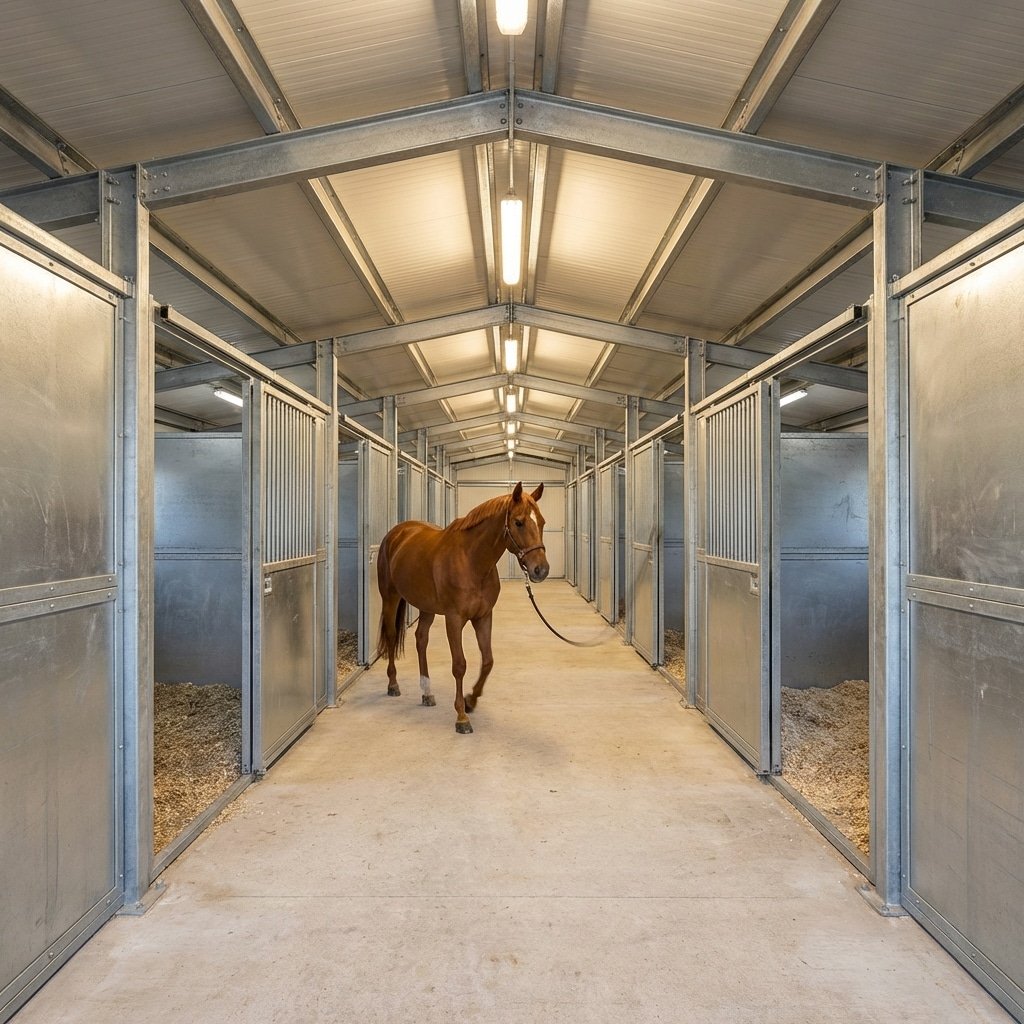
In facilities serving participants with mobility challenges, a zero-threshold floor design is fundamental. By eliminating raised edges between stalls and aisleways, we create a barrier-free environment that prevents dangerous trip hazards, ensures safe passage for wheelchairs, and allows everyone to move with confidence.
Why Level Surfaces Are a Safety Imperative
For therapeutic riding centers, uninterrupted floors are a non-negotiable safety feature. Participants often use wheelchairs, walkers, or have other mobility limitations that make raised edges a significant risk. Removing these barriers between stalls, aisleways, and tack rooms prevents trips and falls, fostering an environment where participants can move confidently and focus on building skills, not navigating obstacles.
Best Practices for Flooring Materials and Transitions
The right materials are key to a successful zero-threshold design. We recommend durable, non-slip surfaces like concrete or rubber brick pavers for high-traffic aisleways, as they provide stable footing for both people and wheelchairs. Where a perfectly level transition is not possible, small fixed ramps can ensure smooth passage. The integrity of the flooring is critical for a secure installation; our systems are designed with stainl
ess steel anchor bolts suited for concrete, ensuring a solid fit on a properly prepared, level foundation.
نظام الجنزير المغلق السلس الانزلاقي السلس من DB
Our enclosed track system, a key feature of the Professional Series, protects the door’s rolling hardware from barn debris like dust and hay. This design prevents jamming and safeguards the hot-dip galvanized coating, ensuring long-term, quiet, and reliable operation for high-traffic equestrian facilities.
Why an Enclosed Track Design Enhances Durability
A standard barn is a high-particulate environment. Dust, hay, and moisture can clog exposed roller systems, leading to jamming and operational failure. Our enclosed track shields these critical components completely. By sealing the hardware, we prevent contamination and protect the integrity of the hot-dip galvanized coating, which meets the BS EN ISO 1461 standard. This eliminates the friction and wear that degrades exposed systems, extending the door’s service life and reducing maintenance demands for facility managers.
Engineering for Effortless and Quiet Operation
We engineer the track and roller assembly for extremely low-friction movement. This allows even our heavy-duty stable doors, built with Q235B or Q345B steel frames, to glide open and closed with minimal effort. The benefit is twofold. First, it improves staff efficiency in busy training centers and equestrian clubs. Second, the quiet operation is a critical safety feature. The silent glide helps create a calm, predictable environment, reducing the risk of startling a horse, which is vital for the safety of both animals and handlers.
الأفكار النهائية
Pre-galvanized barns offer a lower initial price, but exposed welds will rust and lead to structural failure. Our Hot-Dip Galvanization After Fabrication (ISO 1461) seals every connection, safeguarding your facility and the safety of its participants. This engineering standard is non-negotiable for a long-term, low-maintenance investment.
Your project’s success depends on proven materials. Contact our team to review your ADA-compliant layouts and receive a factory-direct project quote. We can also arrange a trial order to validate our system’s fit and finish firsthand.
الأسئلة المتداولة
كيف تصمم حظيرة خيول متوافقة مع معايير ADA؟
Designing for ADA compliance involves creating unobstructed pathways. This means wide aisles (12ft+), zero-threshold entries into stalls, and firm, slip-resistant flooring. We always advise consulting with accessibility experts and PATH Intl. guidelines to ensure your facility meets all requirements for safety and ease of use.
الحد الأدنى لعرض الباب للوصول إلى الكراسي المتحركة في الحظائر؟
While the standard ADA minimum clear width is 32 inches, we recommend at least a 48-inch (4ft) clear opening for stall doors. This wider space comfortably accommodates a wheelchair alongside a handler and horse, which is critical for safety and maneuverability in an equestrian environment.
أفضل أبواب الإسطبلات لمراكز ركوب الخيل العلاجية؟
Sliding doors with a fully enclosed track system are the superior choice. Our Professional Series doors use a smooth-glide, hidden track system that requires very little force to open and close. The enclosed design also prevents dirt and debris buildup and removes potential pinch points, enhancing safety for all participants and volunteers.
هل أبواب الأكشاك المنزلقة أسهل في الفتح؟
Yes, our engineered sliding doors are significantly easier to operate. They don’t require swinging out into a busy aisle, which saves space and prevents collisions. We use high-quality roller systems that ensure a smooth, quiet glide, allowing for one-handed operation—a key accessibility feature.
معايير السلامة في حظيرة "باث" الدولية؟
PATH Intl. safety standards focus on eliminating environmental hazards. For stalls, this translates to designs with no sharp edges, secure latches, and good ventilation. We engineer our products with these core safety principles in mind, including our ‘cast-proof design’ which features minimal bottom gaps to prevent a horse’s leg from getting stuck.

 Arabic
  English
  Spanish
  French
  German
0 تعليق