



If horses chewing wood stalls is a persistent problem at your facility, you know the frustration of constant repairs and compromised safety.
This guide reviews materials that stand up to constant equine pressure, from comparing softwood and hardwood durability based on Janka hardness ratings—where hardwoods like Red Oak offer around 1,290 lbf compared to softwoods like Douglas-fir at only 620 lbf—to evaluating metal chew guards and the robust properties of strand woven bamboo.

Why Horses Crib and Chew
Horses crib and chew due to a complex interplay of environmental, physiological, and neurological factors, often stemming from management practices that deviate from natural grazing patterns. Cribbing is an oral stereotypy involving specific muscle contractions and air expulsion, while wood chewing is generally a boredom-driven nibbling behavior, both leading to dental and health issues.
Understanding Cribbing: Behavior and Distinction
Cribbing is a distinct oral stereotypy in horses. It involves a horse grasping a solid object with its upper incisors, arching its neck, contracting the ventral neck muscles, and producing a grunting sound. This sound comes from expelling air, not swallowing it, as is sometimes mistakenly thought.
Horses that crib often spend a significant portion of their day engaged in this behavior. They can crib for up to 16 hours daily on various objects available at chest level, including fence boards, stall doors, or buckets. This constant activity can cause substantial damage to wooden structures through incisor clamping.
Wood chewing differs from cribbing. In wood chewing, horses use both their upper and lower teeth for nibbling on objects, typically driven by boredom. This behavior does not involve the characteristic neck arching or air expulsion seen in cribbing. While both behaviors can damage teeth and property, their mechanisms and underlying motivations are distinct.
Physiological and Management Roots of Stereotypies
Neurological factors play a role in cribbing behavior. Studies show altered D1/D2 dopamine receptors in the nucleus accumbens and caudate nucleus of cribbing horses. These alterations can promote habit formation and reduce learning capacity, contributing to the persistence of the stereotypy.
Cribbing has several physiological consequences. Affected horses often have higher gastrin levels, which can trigger stomach acid production. They face an increased risk of specific types of colic, such as epiploic foramen entrapment and colonic obstruction, alongside a higher incidence of gastric ulcers. These risks are present even without anatomical stomach differences, suggesting a stress-related or behavioral link.
Management practices significantly influence the development of these behaviors. Domesticated horses frequently receive two large meals daily, which contrasts sharply with the natural grazing patterns of feral horses, who graze up to 16 hours a day as trickle feeders. This intermittent feeding creates long periods without forage, increasing stress and leading to oral fixation as a coping mechanism. Horses may prioritize cribbing over eating, which can lead to weight loss and poor condition.
A common physical impact of cribbing is excessive wear on the upper incisors. This wear can reduce a horse’s ability to graze effectively, particularly as they age. Veterinary and equine research sources highlight stable design that limits chest-level edges and promotes continuous hay access as ways to reduce these behaviors.
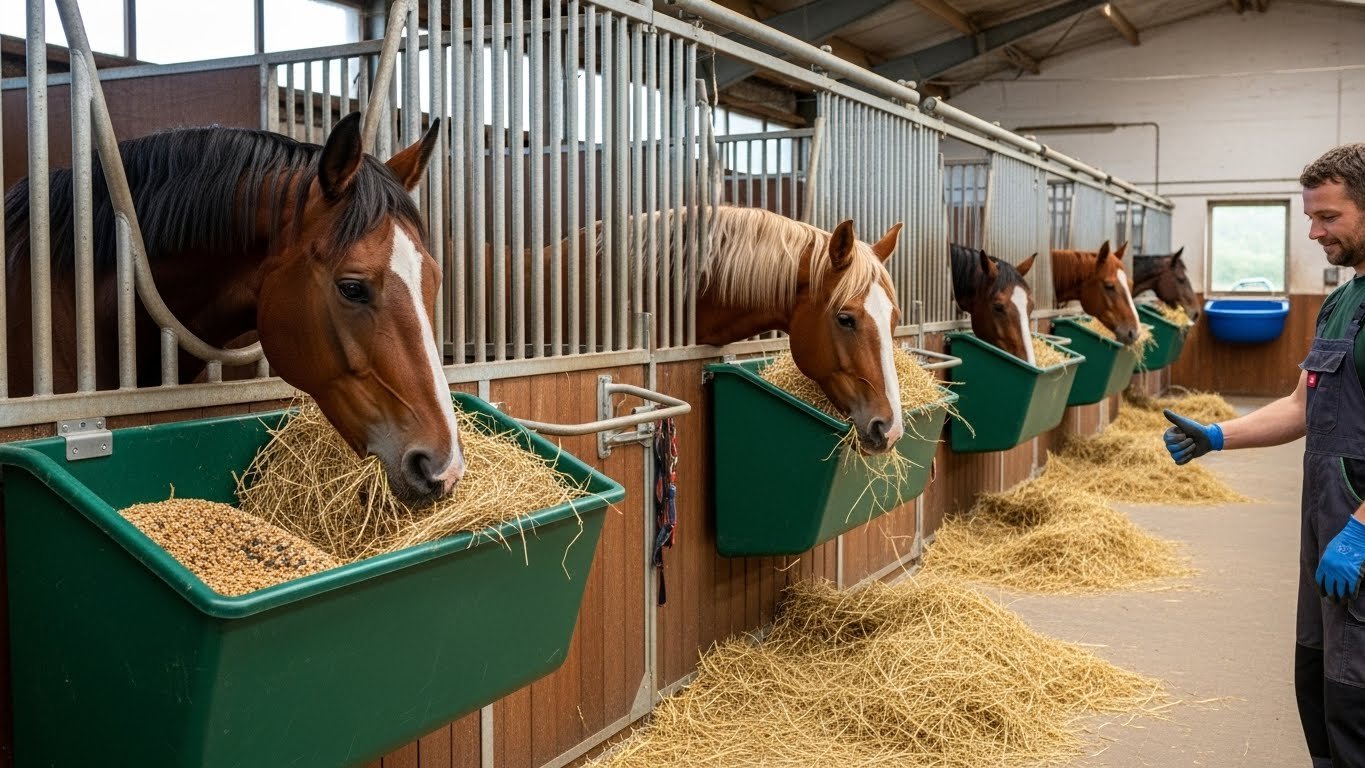
Material Ranking: Softwood (Fail) vs Hardwood (Pass)
For horse-facing surfaces in stalls, softwoods fail due to low Janka hardness, making them prone to denting and splintering from chewing. Hardwoods, with significantly higher Janka ratings (e.g., over 1,200 lbf), pass as they offer superior resistance to impact and wear, crucial for durability and safety.
| Wood Type | Species | Janka Hardness (lbf) |
|---|---|---|
| Softwood | Eastern White Pine | ~380 |
| Softwood | Western Red Cedar | ~350 |
| Softwood | Douglas-fir | ~620 |
| Hardwood | Red Oak | ~1,290 |
| Hardwood | White Oak | ~1,360 |
| Hardwood | Hard Maple | ~1,450 |
Janka Hardness: The Key Differentiator for Chew Resistance
Janka hardness measures wood’s resistance to denting and wear, expressed in pounds-force (lbf).
A practical chew-resistant threshold for horse stalls is ≥ 1,000–1,200 lbf Janka, aligning with ‘high-traffic’ flooring standards.
Softwoods like Eastern white pine (~380 lbf), Western red cedar (~350 lbf), and Douglas-fir (~620 lbf) fall well below this threshold, classifying them as ‘soft and easily dented’.
Using softwoods for horse-reachable surfaces risks rapid damage, splintering, and increased maintenance costs due to their low hardness.
Selecting Hardwoods: Superior Durability and Safety for Stalls
Recommended hardwoods for chew-resistant surfaces include Red oak (1,290 lbf), White oak (1,360 lbf), and Hard maple (1,450 lbf).
These hardwoods are 2–4 times harder than common softwoods, offering robust resistance to chewing and impacts.
For optimal durability and safety, select hardwoods with higher appearance/quality grades, such as FAS (Firsts and Seconds) or No. 1 Common, to minimize knots and defects.
Industry standards for high-wear applications, like sports floors, consistently specify hardwoods in the 1,300–1,500 lbf Janka range, confirming their suitability for challenging environments like horse stalls.
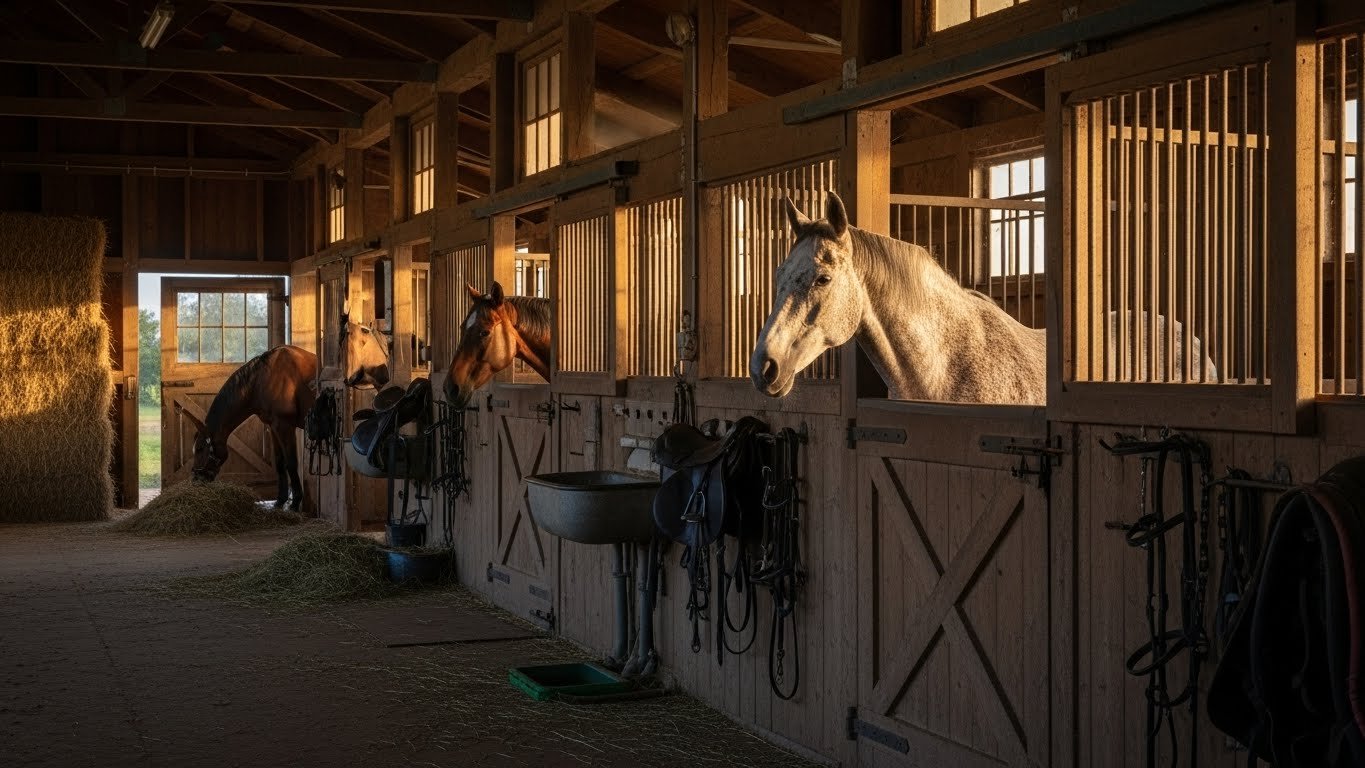
Metal Chew Guards: Are They Enough?
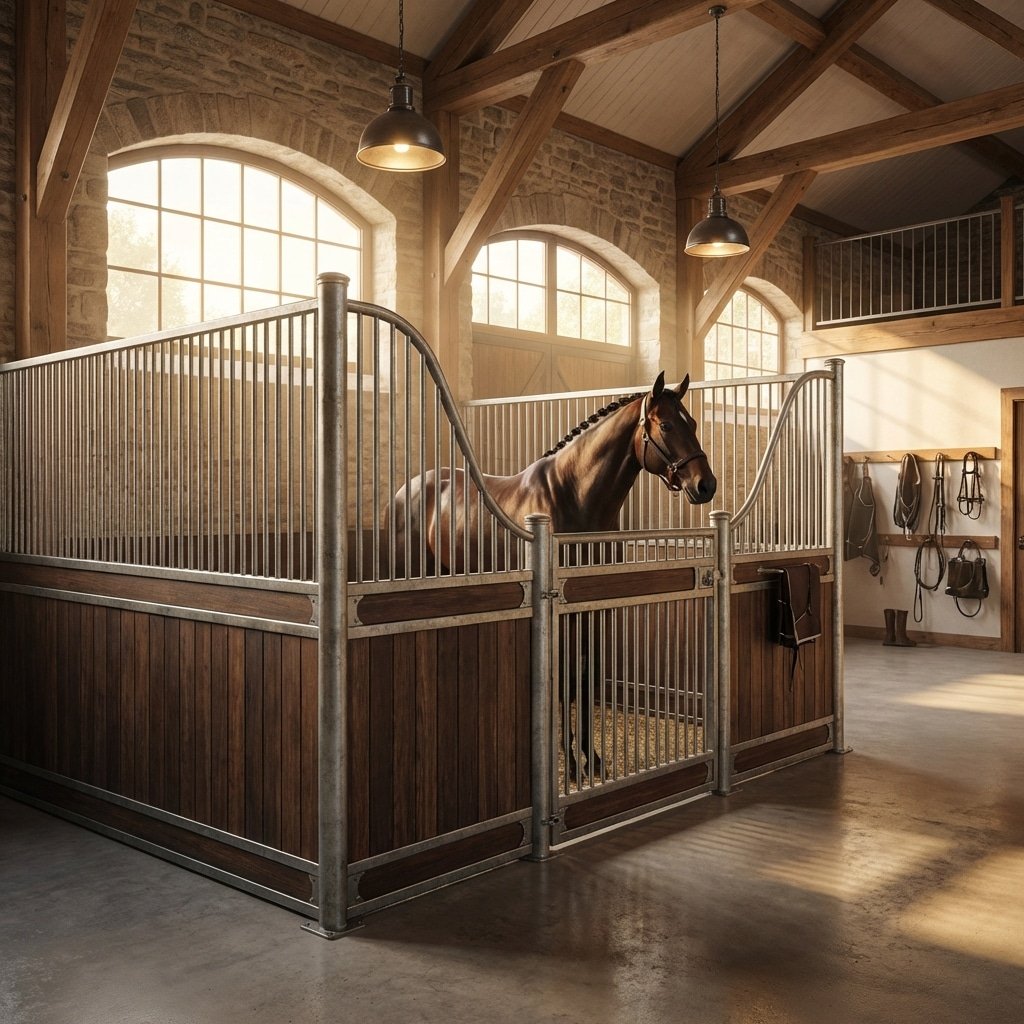
Metal chew guards offer a robust solution by capping wooden edges with durable materials like galvanized steel or aluminum. Their effectiveness depends on proper gauge, full coverage, and secure installation, acting as a physical deterrent against equine chewing.
Understanding Metal Chew Guard Design
Metal chew guards are engineered as angle or edging profiles to cap wooden stall edges, effectively deterring horse chewing and cribbing behaviors.
Common materials include galvanized steel, aluminum, and powder-coated variants, chosen for durability and resistance to stable environments.
Their primary role is to protect wood from destruction, with effectiveness largely dependent on comprehensive coverage and material integrity to withstand equine force.
Key Specifications and Performance Metrics
Standard dimensions for chew guards typically feature leg widths of `3/4\” to 1.5\”` and lengths ranging from `36\” to 93.5\”`.
Material thickness, often `18- to 20-gauge` steel or `1.2mm` equivalents, is crucial for resisting bending and equine force.
Galvanization provides essential corrosion resistance, extending product life in humid stable conditions, while aluminum offers a lightweight alternative.
Installation is facilitated by pre-drilled holes and included fasteners (e.g., `100 screws` per pack for some products), designed to fit over `2″` stall walls.
Metal chew guards for horse stalls use angle or edging profiles in galvanized steel, aluminum, or powder-coated variants to cap wooden stall edges and deter chewing or cribbing. Common dimensions include `3/4″` to `1.5″` leg widths for edge coverage, with lengths standardized at `36″` to `93.5″` to match stall components like walls or posts. Gauges range from `18-` to `20-gauge` steel or `1.2mm` equivalents for durability against equine force without excessive weight. Galvanization provides corrosion resistance in humid stable environments, while aluminum offers lighter weight and decorative appeal. Pre-drilled holes and included fasteners (e.g., `100 screws` per pack) allow straightforward installation over `2″` walls or cribbed areas.
These products protect against wood destruction, but their effectiveness depends on full coverage and material integrity. `18-20 gauge` materials resist bending based on vendor specifications. However, no ASTM/ISO standards or failure rate data are widely available, suggesting reliance on practical equine-proofing rather than codified engineering benchmarks. Powder coating improves longevity and appearance, with product packs priced at `$89-$250`, making them suitable for stable retrofits. Direct comparative physics data (e.g., PSI resistance) is not readily found, which limits validation to dimensional consistency across suppliers.
Precision-Engineered Horse Stables for Every Climate & Compliance.
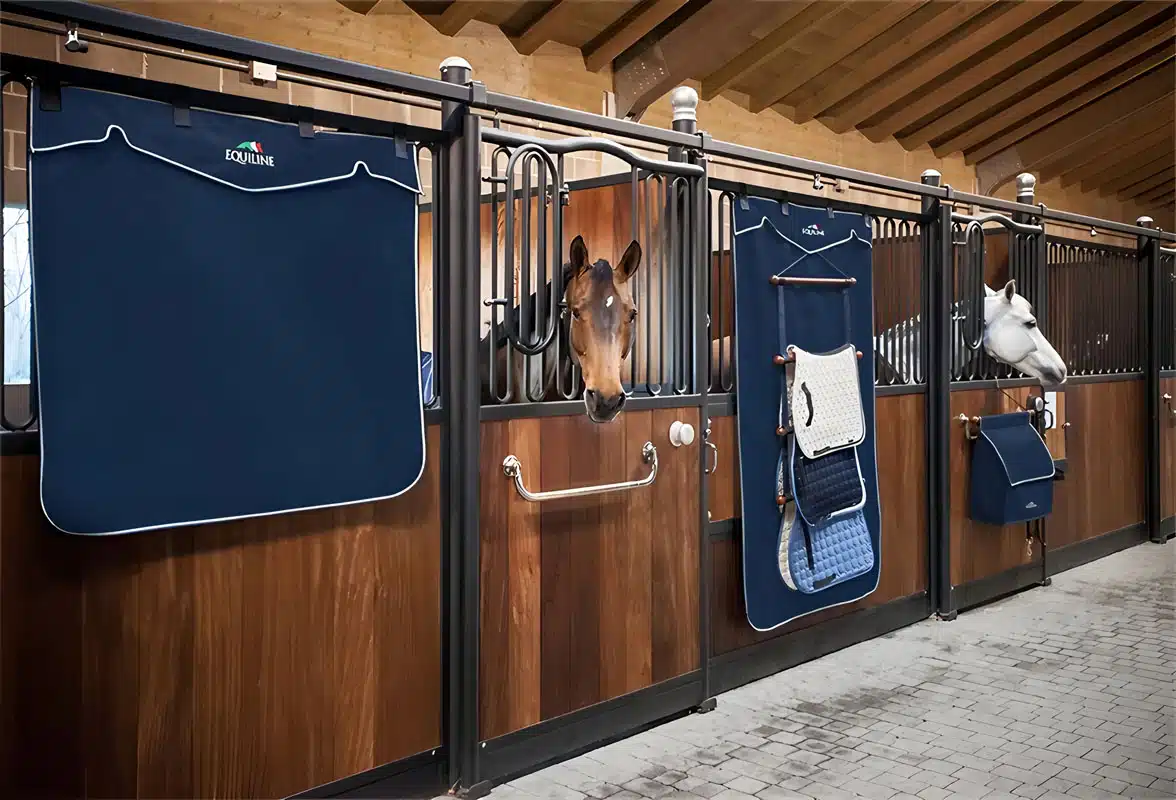
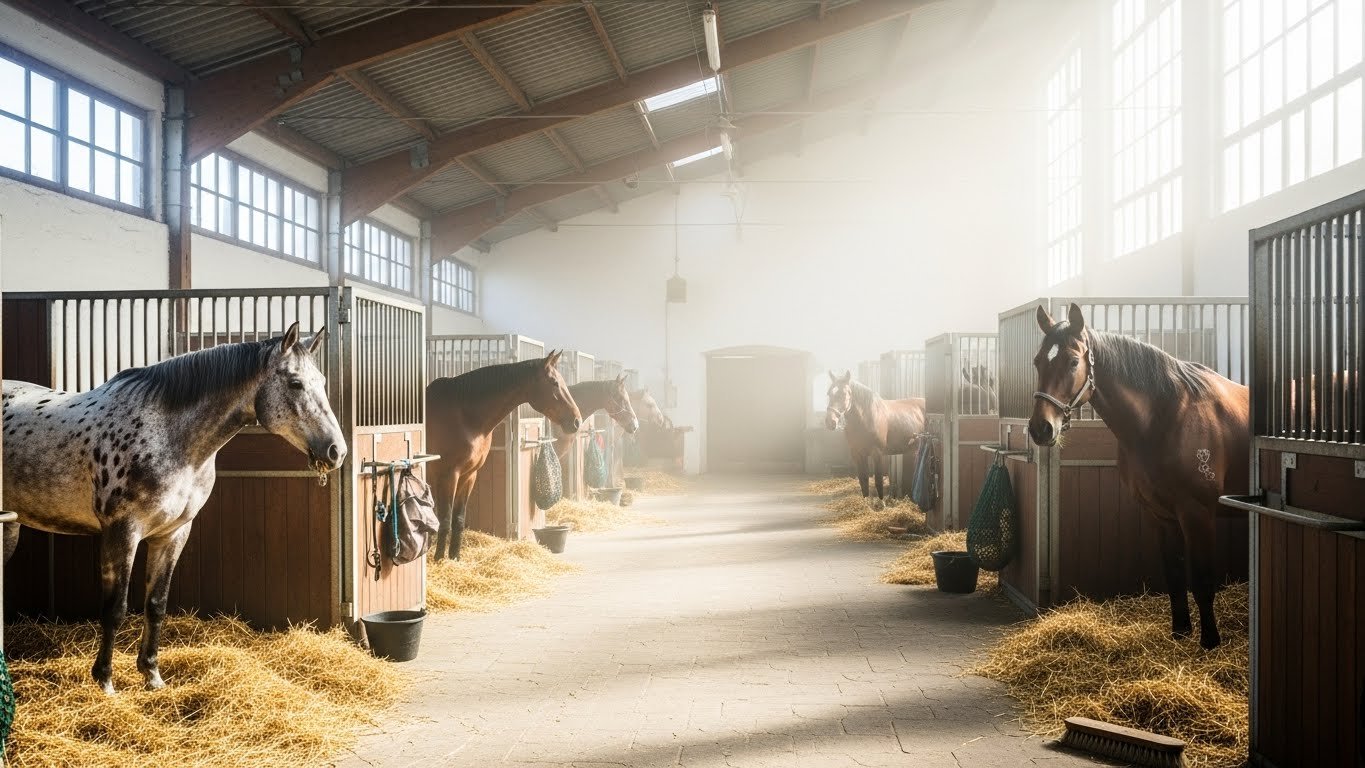
The Bamboo “Tooth-Proof” Advantage
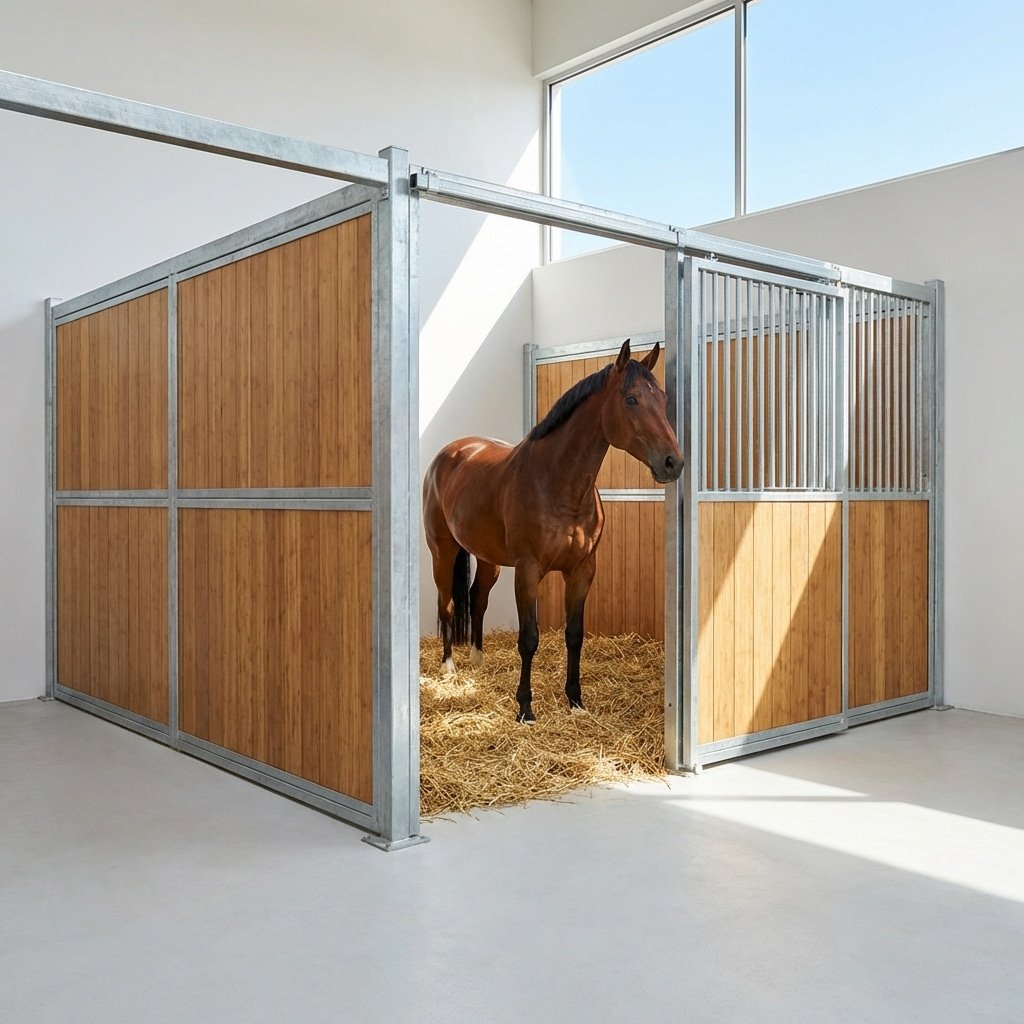
Strand woven bamboo offers a “tooth-proof” advantage for horse stalls due to its extreme density and mechanical strength. This material is highly resistant to chewing, kicking, and splintering, ensuring a safe, durable, and long-lasting environment for horses, outperforming traditional wood options.
| Property | Value | Reference |
|---|---|---|
| Density | >1200 kg/m³ | [5], up to 1150 kg/m³ [6] |
| Hardness | 104 MPa | [5] |
| Impact Toughness | 114.7 kJ/m³ | [5] |
| Horizontal Shearing Strength | ≥12 MPa | [8] |
| Panel Thickness Options | 20mm, 25mm, 30mm, 32mm, 38mm | [1][3][5][7] |
| Temperature Resistance | -30°C to 65°C | [1] |
| Formaldehyde Emission | E1 European standard, E0 (0.2 mg/L) | [5][8] |
| Moisture Content | 8%-10% | [5] |
| Warranty | 10 years | [5] |
Engineered Durability: High-Density Bamboo’s Resistance
Strand woven bamboo achieves its “tooth-proof” advantages through high-density compression of its natural fibers. This process creates a material with superior mechanical properties compared to traditional woods like oak, pine, or Douglas fir. These properties allow it to resist common equine damage such as chewing, kicking, and splintering.
The construction ensures non-toxic, non-splintering surfaces. This design prevents equine injuries and eliminates the risk of chemical ingestion, contributing to a safer environment for horses. Its inherent moisture resistance also makes it suitable for humid, wash-down stable environments, further enhancing its durability.
Performance Metrics for Equine Environments
The specific performance metrics of strand woven bamboo demonstrate its suitability for demanding equine environments. Its density, exceeding 1200 kg/m³, provides exceptional material resistance to impact and wear. A hardness rating of 104 MPa ensures robust protection against physical impact from hooves or teeth.
With an impact toughness of 114.7 kJ/m³, the material effectively withstands forceful actions without structural breakdown. The horizontal shearing strength of ≥12 MPa further prevents structural compromise under stress. This material also maintains stability across a wide temperature range, from -30°C to 65°C, making it reliable in various climates. A 10-year warranty supports its long-term performance commitment.

Final Thoughts
Horses crib and chew because of a mix of behavioral and management factors. Picking the right materials for stalls and fencing helps stop damage. Softwoods offer little resistance and quickly show wear from chewing. Hardwoods with high Janka ratings, well-installed metal chew guards, and dense strand woven bamboo prove far more durable.
Protecting property from equine oral vices means a two-part strategy: making management adjustments and selecting tough materials. Horse owners can reduce chewing by ensuring horses get enough forage and reducing stress. Pairing these behavioral strategies with robust materials, like high-Janka hardwoods, strong metal guards, or high-density bamboo, creates a safer and more lasting stable environment.
Frequently Asked Questions
How to stop horses chewing wood?
To deter horses from chewing wood, consider installing metal chew guards on vulnerable edges and surfaces like posts and walls. Topical deterrents such as Farnam Quitt, Chew Stop, or Cribox can also be applied. For fencing or stall tops, running one to two strands of electric wire can be effective. Covering posts with corrugated drain pipe offers another physical barrier. Additionally, ensuring horses receive adequate forage, such as feeding 2% of their body weight in hay daily (e.g., 20 lbs for a 1000-lb horse), can significantly reduce wood chewing by satisfying their natural grazing instincts.
Is bamboo crib-proof?
No, there is no industry standard or technical specification that confirms bamboo as “crib-proof” against horse chewing. Existing research on “crib-proof” materials primarily pertains to human baby crib safety standards, focusing on aspects like slat spacing (maximum 2 3/8 inches or 60 mm) and structural integrity, with no mention of bamboo, horses, or resistance to animal cribbing.
Do metal chew guards work?
Yes, metal chew guards are effective in protecting wood stall edges from horse chewing. They typically use durable galvanized or coated steel, often in 16 to 20 gauge thickness (approximately 1.5-1.6mm for 16 gauge), which horses are unable to damage.
Why do horses eat pine boards?
Horses chew and sometimes ingest pine boards primarily due to management and dietary factors, such as low forage diets, high concentrate intake, stall confinement, boredom, or stress. Softwoods like pine are also mechanically easier to bite, shave, and splinter compared to hardwoods, making them more susceptible to damage. Pine itself isn’t uniquely tasty, but its lower density (e.g., Scots pine at 470–520 kg/m³) allows horses to break off pieces more easily than from denser woods like oak. Studies have shown that under restricted diets, horses can consume up to 1 kg (2.2 lb) of pine wood shavings daily from their bedding, confirming their willingness to eat pine materials when forage is limited.
Best stall material for cribbers?
For horse stalls designed to resist cribbers, the industry standard is 14-gauge galvaneal steel with U-channel wall caps. These designs typically feature 1″ tubing spaced 4″ on center and incorporate hidden welds to eliminate exposed edges that horses might chew on.
Does creosote stop chewing?
Yes, creosote effectively deters horses from chewing wood stalls and fencing. Its preservative properties and taste prevent animals from biting, nibbling, or scrubbing the treated wood. Creosote-treated wood posts can offer a service life of 25-30 years in equestrian applications.


 English
  Spanish
  French
  Arabic
  German
0 Comments