


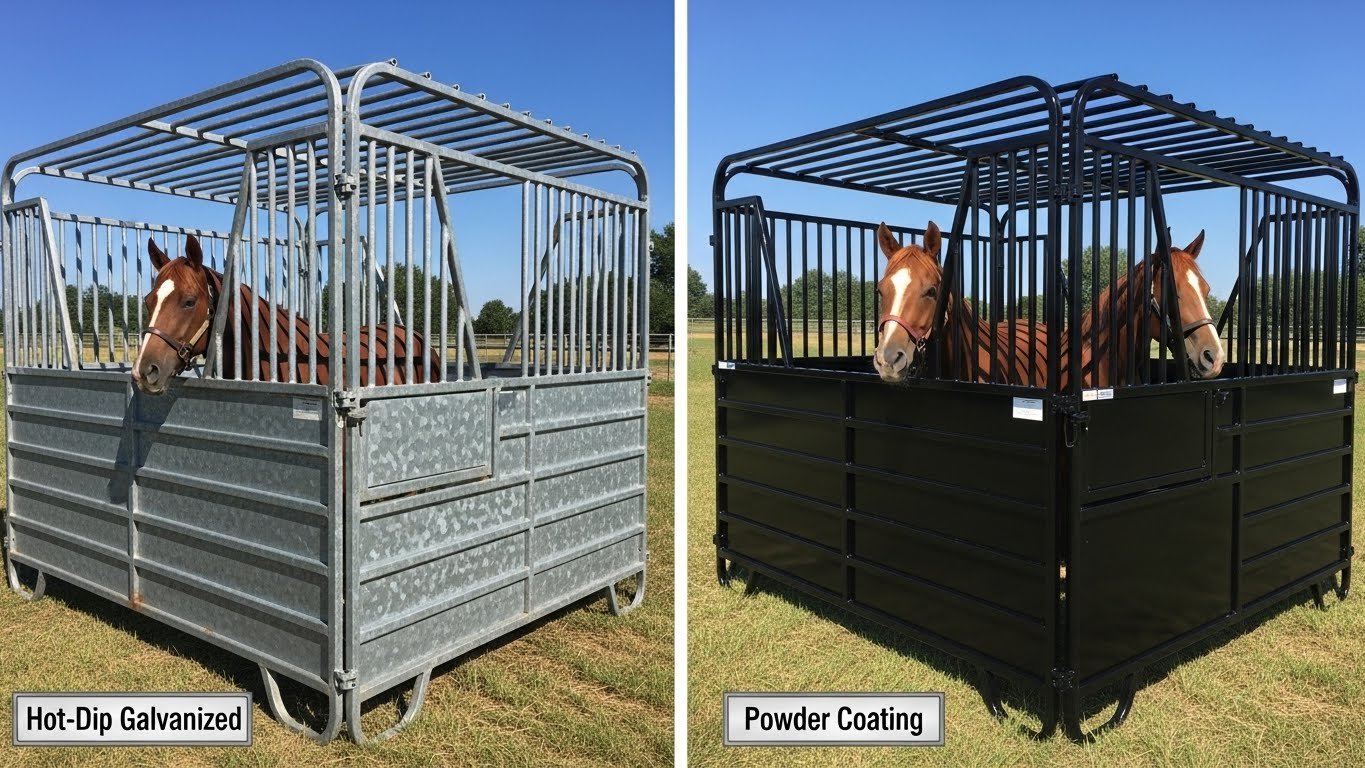
Choosing the right rust protection for steel components, especially in demanding environments like horse stalls, significantly affects durability, safety, and long-term maintenance budgets. Reliable steel finishes prevent corrosion and ensure products last for years.
This article explains hot-dip galvanization, which creates a protective zinc coating often over 42 microns thick on frame tubes, and compares it to powder coating, valued for its durable, VOC-free finish and superior aesthetics. We will also explore how combining these methods into a duplex system can extend maintenance-free life by 1.5 to 2.5 times, providing robust and lasting protection for your steel structures.
Introduction
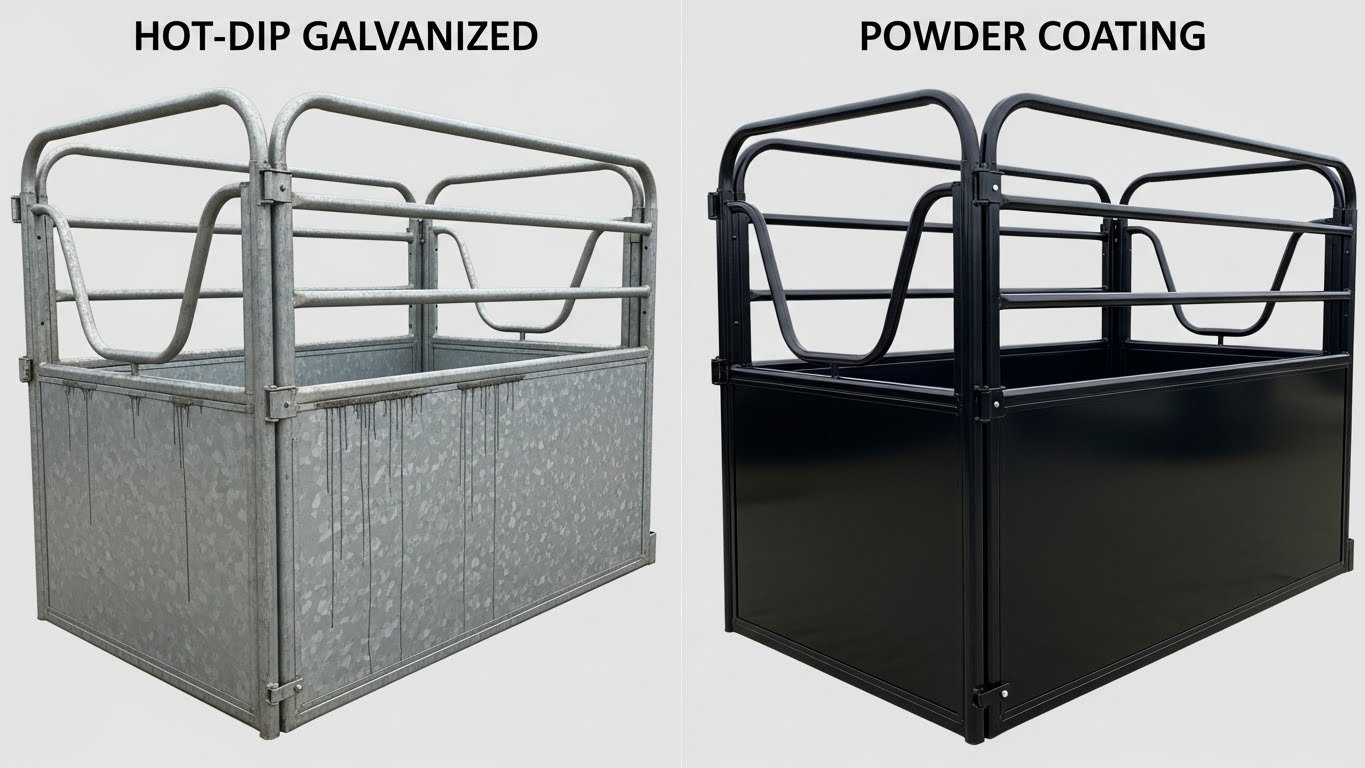
Portable galvanized horse stalls offer a durable, corrosion-resistant, and flexible housing solution for horses. They utilize high-quality steel protected by hot-dip galvanization and often incorporate UV-resistant infill panels, ensuring long-term performance and safety in demanding barn environments.
Defining Portable Galvanized Horse Stalls
Portable stable systems are designed for flexibility and ease of relocation.
These stalls use hot-dip galvanized steel for superior corrosion resistance and an extended lifespan.
They are engineered to withstand demanding conditions in equine facilities, prioritizing durability and horse safety.
The goal is to offer quality and value in equine housing solutions for international markets.
Core Materials and Protection Standards
Hot-dip galvanization follows standards like ASTM A123 or EN ISO 1461, providing a minimum 98% pure zinc coating.
Structural components often feature carbon steels such as ASTM A36 or materials with 50,000 psi yield strength.
Common steel gauges include 12-14 gauge for frames, 16 gauge for grills, and 29 gauge for roof/wall panels.
Infill panels use 10mm thick HDPE boards with UV resistance, built for durability and minimal thermal expansion.
Frame tubes get hot-dip galvanization, which gives a coating over 42 microns for lasting protection.
Many manufacturers offer 20-25 year rust-through or rust-free warranties, which shows the product’s longevity.
The Chemistry of Corrosion in Barns
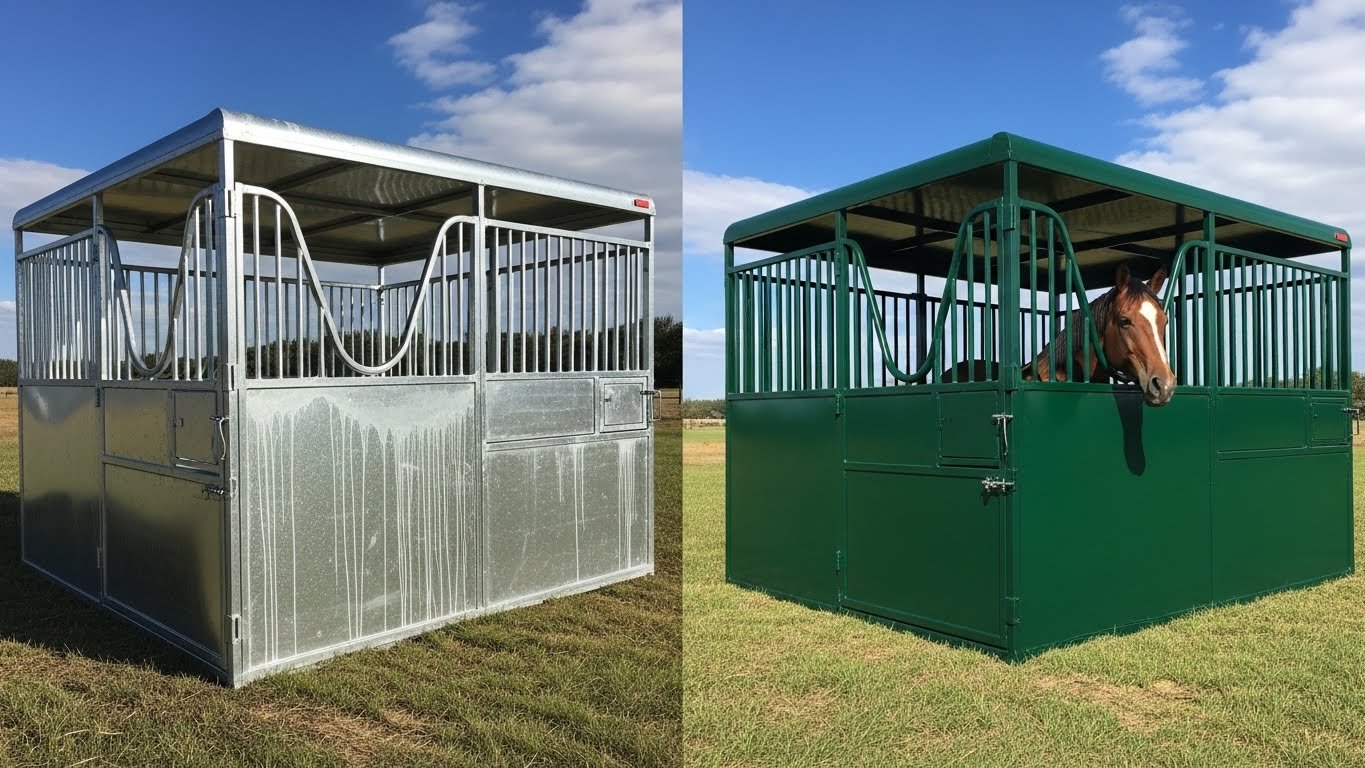
Steel in barns corrodes via electrochemical reactions with moisture and electrolytes like animal waste. Hot-dip galvanization combats this by providing barrier, cathodic, and self-forming patina protection, chemically safeguarding the steel.
Understanding Corrosion in Agricultural Environments
Steel corrosion is an electrochemical process where iron oxidizes in the presence of moisture and electrolytes.
Common barn environments, like animal waste (e.g., ammonia-rich urine with pH 7-9), high humidity, and varying soil pH, act as potent electrolytes that accelerate this process.
This reaction produces rust (Fe₂O₃·nH₂O), which expands and weakens the steel structure, leading to delamination.
Zinc’s Triple-Layered Chemical Defense
Hot-dip galvanizing (HDG) employs three chemical defense mechanisms: barrier, cathodic, and patina protection.
Barrier Protection: A robust zinc layer, with a minimum thickness of 3.9 mils (99 µm) for steel ≥¼-inch thick per ASTM A123, physically isolates the steel from corrosive elements.
Cathodic Protection: Zinc, being more anodic (E°=-0.76V) than iron (E°=-0.44V), sacrificially corrodes, protecting the underlying steel even if the coating is scratched.
Patina Formation: A self-forming, stable zinc carbonate hydroxide (Zn₅(OH)₈Cl₂·H₂O) patina further slows degradation and forms an additional protective layer.
The immersion in a 840°F (449°C) zinc bath creates metallurgically bonded zinc-iron alloy layers (e.g., γ, δ, ζ phases), ensuring durable adhesion and enhanced corrosion resistance.
What is Hot-Dip Galvanization? (The Shield)
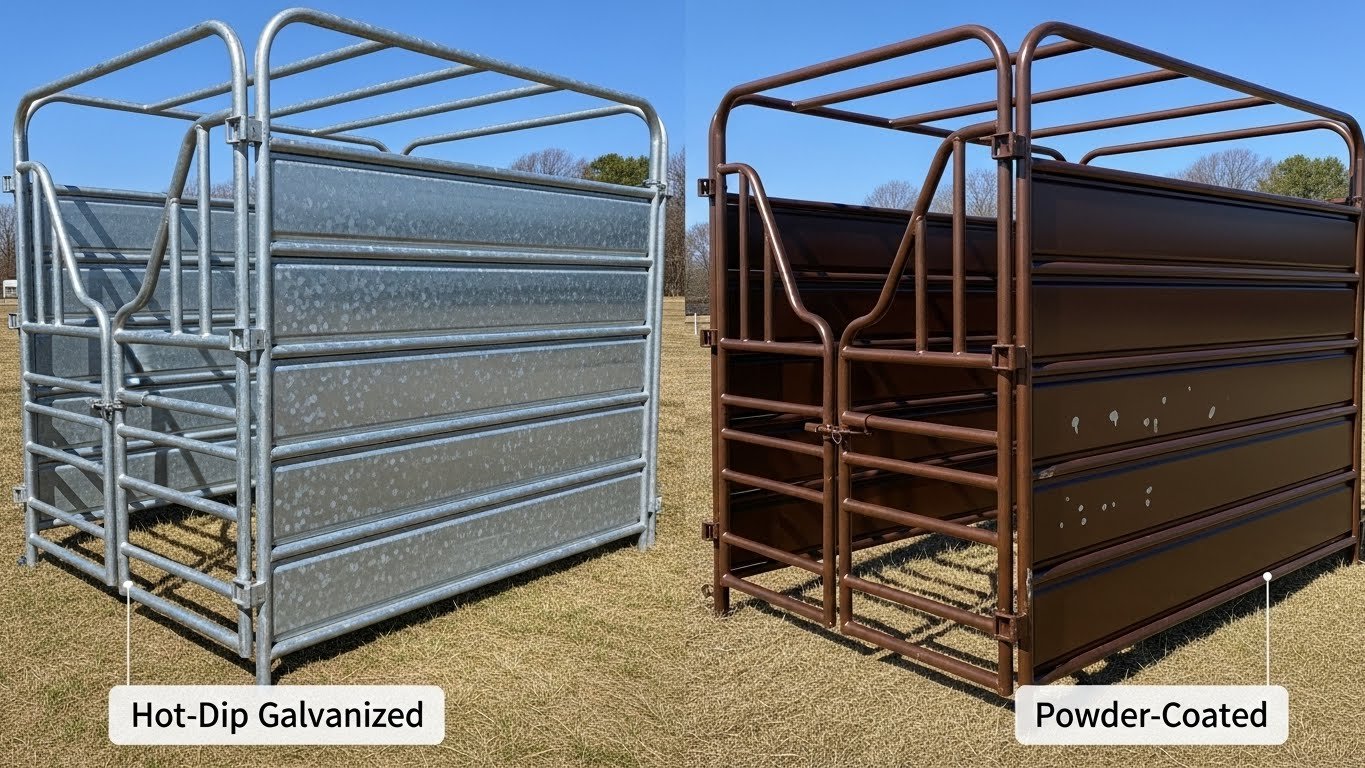
Hot-dip galvanization is a metallurgical process where steel is immersed in molten zinc, forming durable zinc-iron alloy layers. Governed by standards like ASTM A123 and ISO 1461, it provides a robust, impact-resistant corrosion shield for steel components, essential for lasting protection in challenging environments like horse stables.
| Standard | Scope | Key Function |
|---|---|---|
| ASTM A123/A123M | Zinc coatings on general iron and steel products (structural shapes, plates, bars). | Defines requirements for main structural components like stall frames, grill bars. |
| ASTM A153/A153M | Zinc coatings on iron and steel hardware (bolts, hinges, small parts) by centrifuging/spinning. | Covers small, high-wear hardware like hinges, latches, bolts. |
| ISO 1461 / EN ISO 1461 | Hot-dip galvanized coatings on fabricated iron and steel articles; international spec. | Sets international specifications and test methods, minimum coating thicknesses. |
| EN ISO 14713-2 | Design and corrosion-protection guidance for hot-dip galvanizing systems. | Provides guidance for optimal application and corrosion protection design. |
| ASTM A384/A384M | Practices for safeguarding against warpage and distortion during galvanizing. | Ensures optimal application for complex assemblies and prevents distortion. |
Understanding the Hot-Dip Galvanization Process
It is a controlled metallurgical coating process where steel articles undergo chemical cleaning.
Articles are immersed in a bath of molten zinc, which must contain at least 98.0% zinc by weight.
A metallurgical reaction occurs between the liquid zinc and the iron in the steel, forming diffusion-bonded zinc-iron alloy layers.
This process results in a durable coating that is mechanically tied to the steel, offering superior impact resistance compared to sprayed or electroplated zinc films.
Key Standards and Performance Specifications
ASTM A123/A123M specifies zinc coatings for general iron and steel products, including structural shapes, plates, and bars.
ASTM A153/A153M covers hot-dip zinc coatings for iron and steel hardware such as bolts, hinges, and small parts.
ISO 1461 / EN ISO 1461 defines international specifications and test methods for hot-dip galvanized coatings on fabricated articles.
Standards like ASTM A123 and ISO 1461 mandate minimum average coating thicknesses based on steel category and material thickness.
The coatings comprise multiple intermetallic layers plus an outer pure zinc layer, providing mechanical abrasion resistance critical for stable systems.
Design guidance, including EN ISO 14713-2 and ASTM A384/A384M for warpage control, ensures optimal application for complex assemblies in 2026.
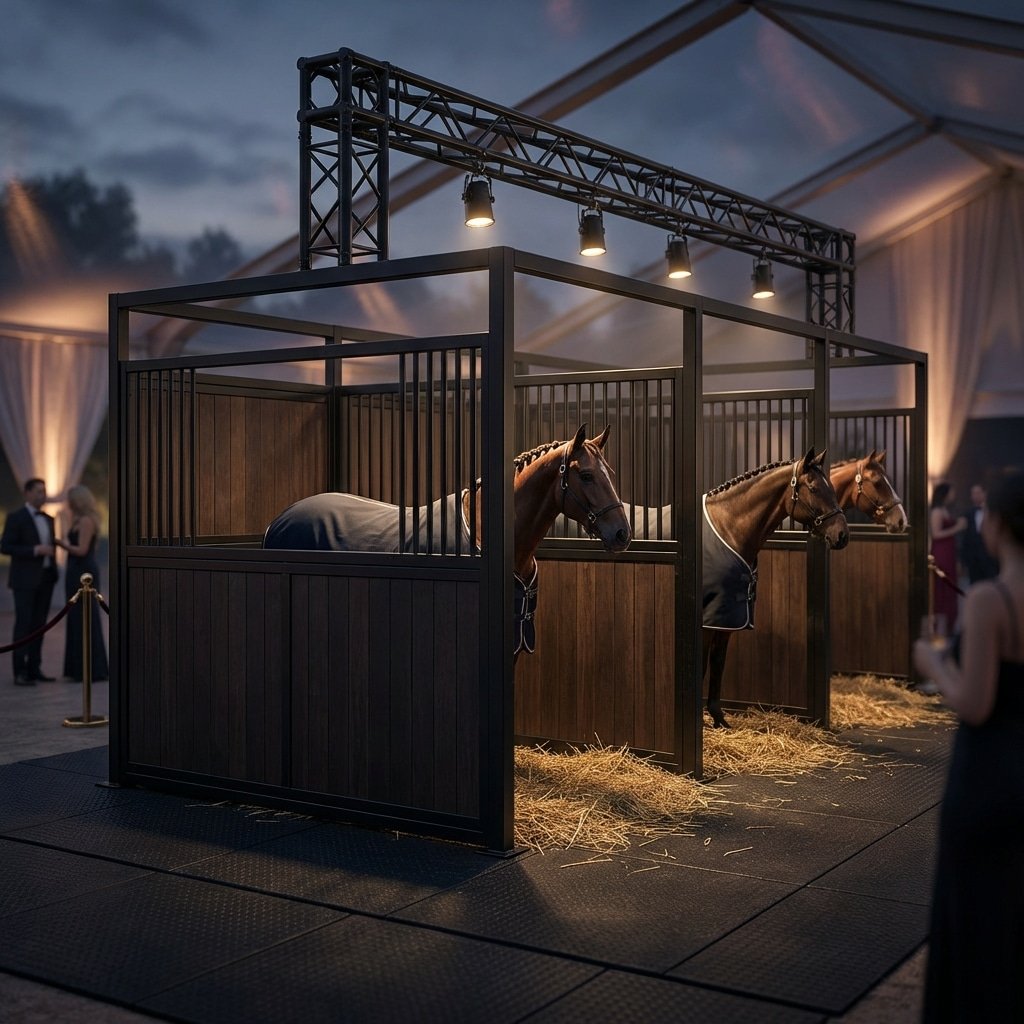
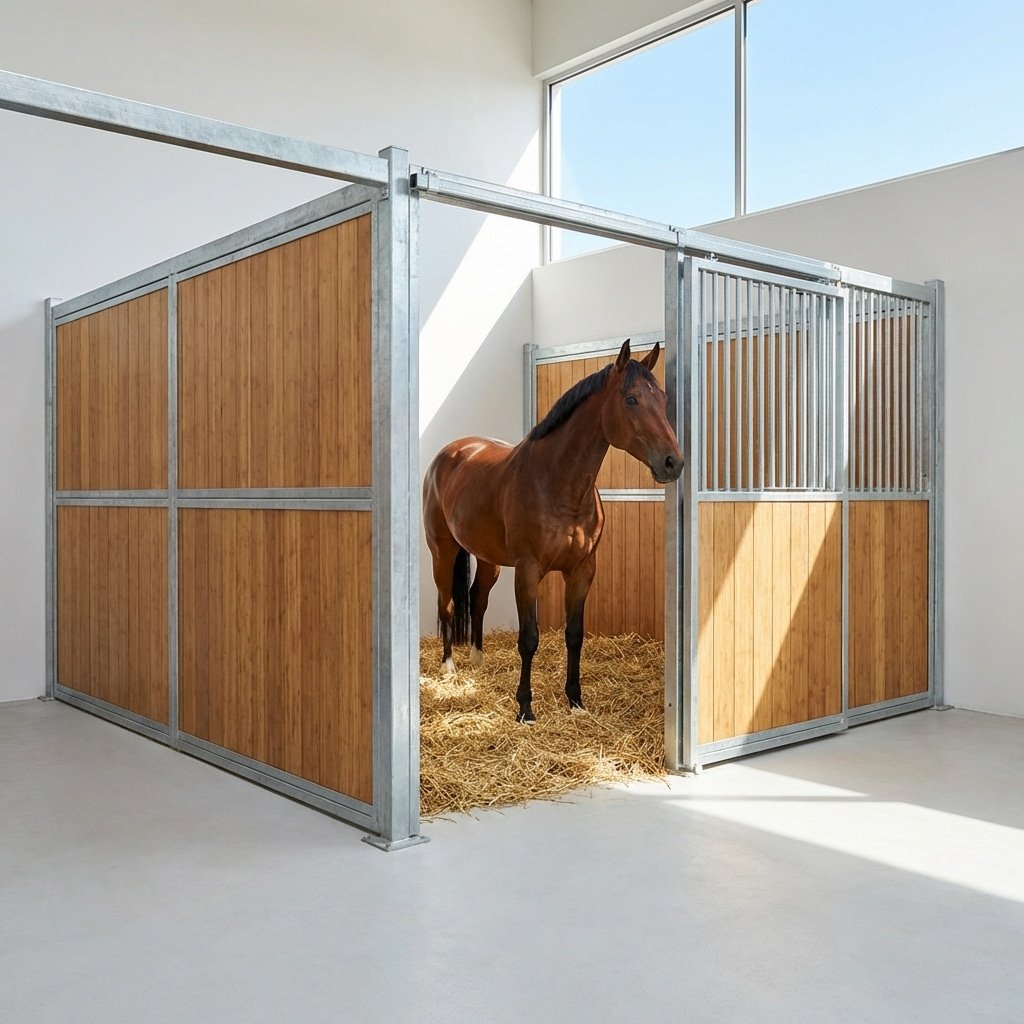
Global Horse Stables: Precision-Engineered for Any Climate


What is Powder Coating? (The Beauty)
Powder coating applies charged dry pigment particles electrostatically to surfaces, then cures them with heat. This creates a durable, VOC-free finish that enhances aesthetics and protects steel structures from corrosion and adhesion failure. It outperforms traditional liquid paints, offering superior color retention and long-term beauty, especially when applied to galvanized surfaces.
| Standard | Purpose / Description | Key Performance Requirements |
|---|---|---|
| ASTM D7803 | Prepares hot-dip galvanized surfaces for powder coating. | Ensures optimal adhesion through surface preparation and thermal pretreatment. |
| AAMA 2603 | Entry-level specification for powder coatings. | 1000 hrs salt spray (≤1-2mm creepage), 1500 hrs humidity, chemical resistance. Suitable for interiors/low-exposure exteriors. |
| AAMA 2604 | Mid-tier specification for improved durability. | 1500 hrs salt spray (≤1-2mm creepage), 3000 hrs humidity (blister size 8 max), 5x weathering of 2603. |
| AAMA 2605 | Premium specification for extreme exterior durability. | 2000 hrs salt spray (≤1-2mm creepage), 4000 hrs humidity (blister size 8 max), double weathering of 2604, uses FEVE fluoropolymer powders. |
| ASTM Test Metrics | General mechanical and film integrity performance. | Impact resistance ≥80 in/lb (ASTM D2794), pencil hardness ≥2H (ASTM D3363), nondestructive dry film thickness (ASTM D1186-93). |
Understanding Powder Coating: A Durable Finish
Powder coating applies electrostatically charged dry pigment and resin particles to a surface.
Heat curing transforms these particles into a uniform, durable, and aesthetically pleasing finish.
This process is VOC-free, offering an environmentally friendly finishing solution.
Powder coating provides long-term aesthetics and superior color retention on steel structures.
It prevents adhesion failure, crucial for surfaces like galvanized steel, enhancing corrosion protection.
Performance Standards and Practical Application
ASTM D7803 specifies preparing hot-dip galvanized surfaces for optimal powder coating adhesion.
AAMA 2603, 2604, and 2605 define increasing tiers of performance, from interior to extreme exterior durability.
Premium AAMA 2605 coatings utilize FEVE fluoropolymer powders for exceptional weather resistance.
Critical tests include impact resistance (≥80 in/lb via ASTM D2794) and pencil hardness (≥2H via ASTM D3363).
Corrosion resistance is evaluated through salt spray tests (e.g., 2000 hours for AAMA 2605 with ≤1-2mm creepage).
Humidity resistance is assessed for up to 4000 hours, checking for blistering (ASTM D2247).
Film thickness, measured non-destructively by ASTM D1186-93, directly impacts the coating’s lifespan.
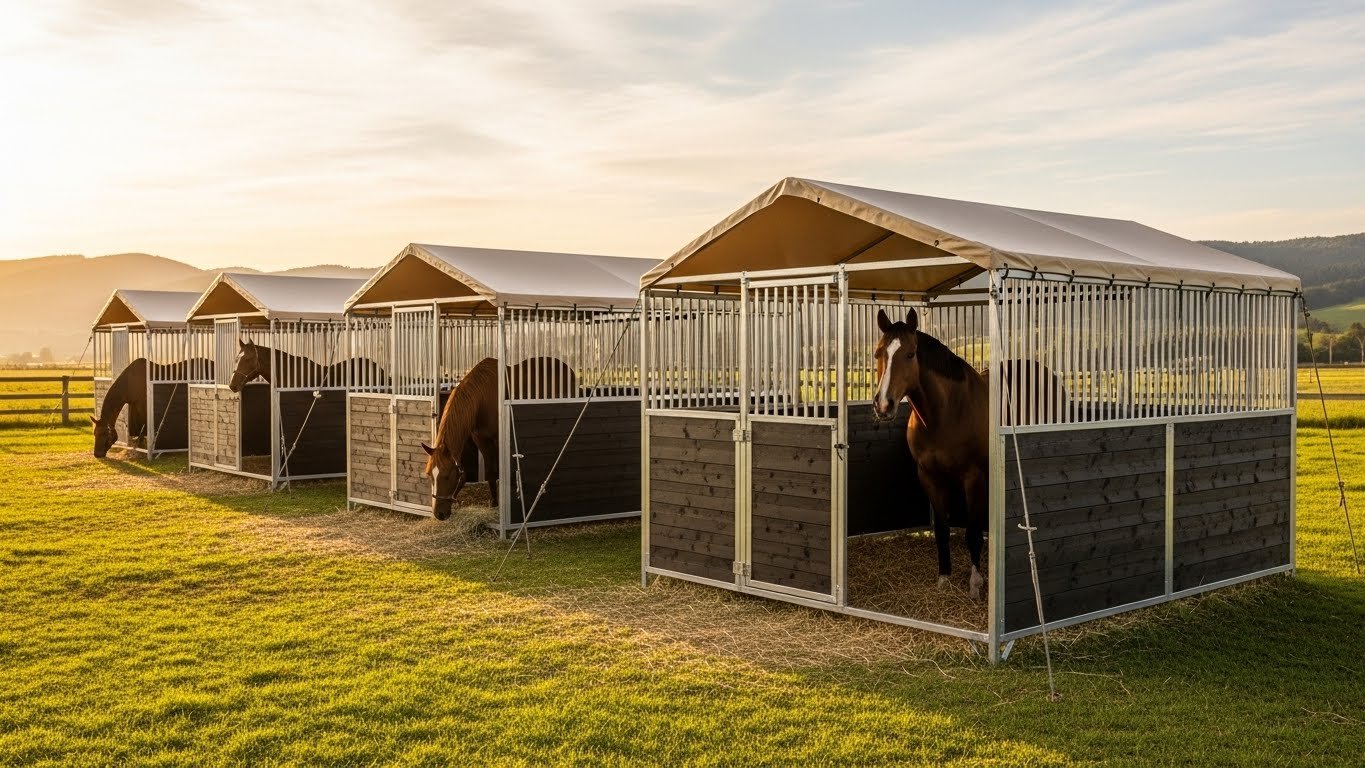
Can You Have Both? (Duplex System)
Yes, a duplex system combines hot-dip galvanized steel with a paint or powder coating, creating a highly synergistic corrosion protection system. This approach offers significantly extended maintenance-free life compared to either finish alone, providing both robust protection and aesthetic flexibility for applications like horse stalls.
What is a Duplex System?
A duplex system integrates hot-dip galvanized steel, typically manufactured to ISO 1461 or ASTM A123 standards, with an organic coating such as paint or powder.
This combination merges the cathodic and barrier protection of the zinc layer with the aesthetic appeal and added barrier properties of the topcoat.
The organic layer shields the zinc from environmental exposure, and if damaged, the underlying zinc continues to protect the steel sacrificially, preventing underfilm corrosion.
Enhanced Longevity and Technical Specifications
Duplex systems offer synergistic corrosion resistance, extending the maintenance-free life by 1.5 to 2.5 times the combined individual lifetimes of galvanizing and the topcoat.
For example, if galvanizing alone provides 50 years and paint 10 years, a duplex system can deliver an estimated 90 to 150 years of protection beyond 2026.
Common hot-dip galvanized layers are 85-140 µm (3.4-5.5 mils) thick, and organic topcoats can add a total dry film thickness of 165-254 µm (6.5-10 mils) for robust applications.
Optimal surface preparation involves painting within 48 hours of galvanizing or after controlled weathering for 6 months to 2 years, allowing for proper zinc patina formation.
Specialized gauges, like the PosiTector 6000 FNDS, precisely measure individual layer thicknesses using combined magnetic and eddy current principles.
Final Thoughts
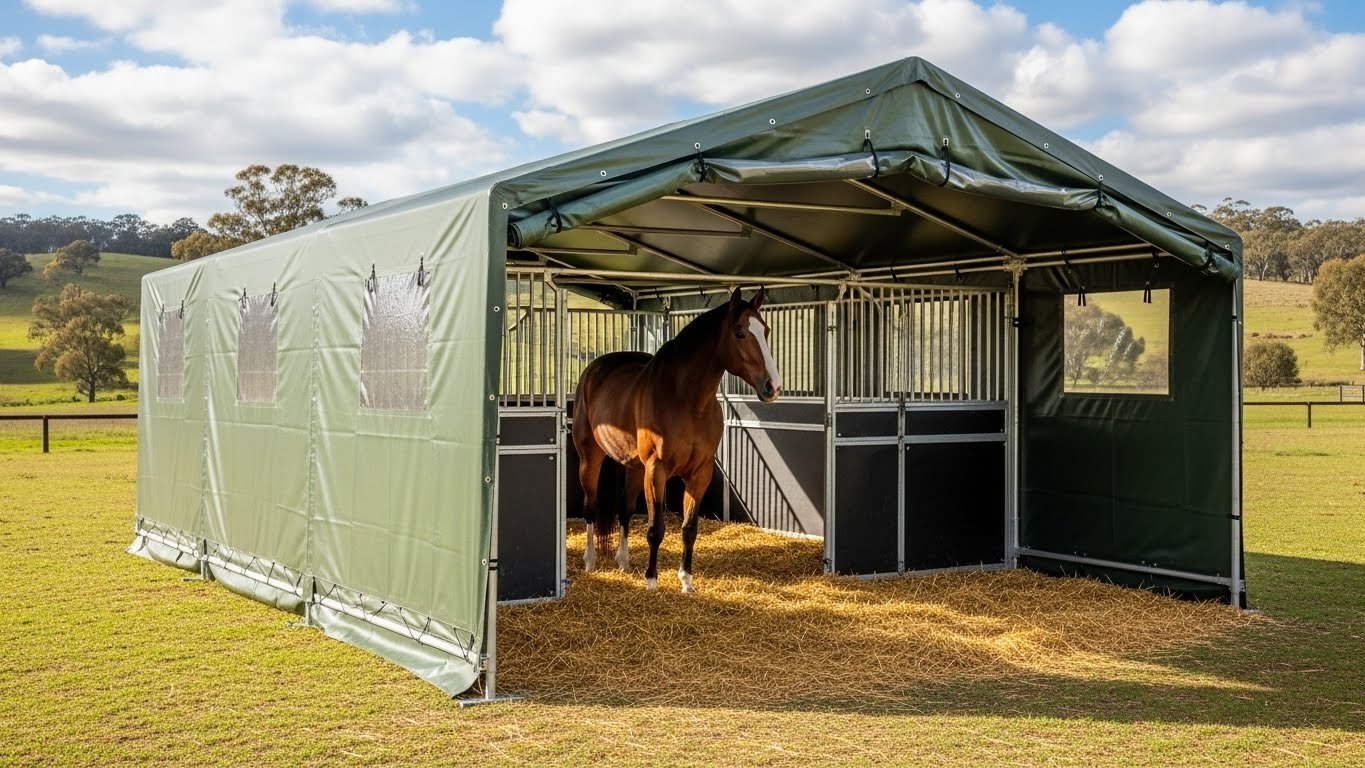
For horse stalls, hot-dip galvanizing provides a foundational, long-term rust shield, proven durable in tough environments. Powder coating, on the other hand, adds a vibrant, protective layer that keeps steel looking good while boosting its defenses. When combined in a duplex system, these two methods work together, delivering exceptional longevity and an attractive finish for ultimate protection.
Choosing the right protection for horse stalls means balancing lasting durability with how they look. Hot-dip galvanizing offers robust rust resistance, perfect for areas needing long-term performance and low maintenance. If visual appeal matters, applying powder coating over galvanized steel creates a powerful duplex system. This combination offers excellent protection and a wide range of colors, ensuring your stalls stay strong and look great for a very long time.
Frequently Asked Questions
Do galvanized horse stalls rust?
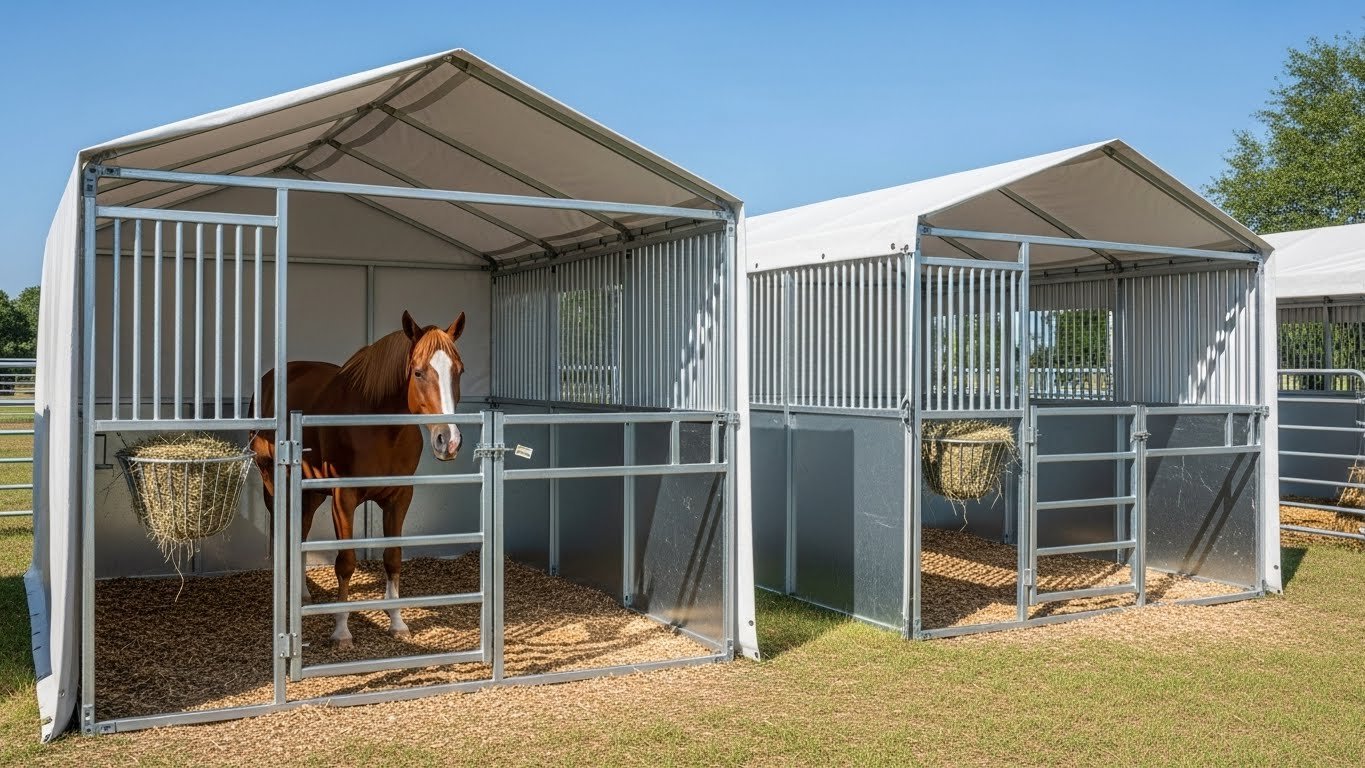
Yes, galvanized horse stalls can eventually rust, but a correctly applied hot-dip galvanized zinc coating (per standards like ISO 1461 or ASTM A123) is designed to keep stall steel rust-free for 15–50+ years in typical barn environments, with many manufacturers offering 20–30-year “rust-free” warranties. Hot-dip galvanizing involves immersing steel in molten zinc at about 840°F (≈449°C), creating a metallurgically bonded, thick, and scratch-resistant coating that is highly corrosion-resistant. Properly galvanized horse stalls usually last 15–20+ years with minimal upkeep, significantly outperforming unprotected steel that might last only 3–5 years in barn conditions. Even pre-galvanized steel offers excellent corrosion resistance, with any minor surface rust or powdery oxidation typically indicating the zinc coating’s sacrificial action, not structural steel failure.
How long does powder coating last on stalls?
For powder-coated horse stalls, a high-quality finish typically lasts 3 to 7 years with proper care, according to equine industry sources. For general indoor steel applications, powder coatings can extend to 15-20 years, and under optimal conditions, they might even last 20-40 years.
Is galvanized steel safe for horses?
Yes, galvanized steel is safe for horses when properly finished, adhering to standards like NEN-EN-ISO 1461, ensuring no sharp edges or burrs. It effectively prevents rust and provides a degree of flex upon impact, helping to avoid injury. This material is widely adopted in horse stalls, fences, and panels, often featuring safety-conscious designs like 3.25-inch bar spacing.
Can you paint over galvanized steel?
Yes, painting over galvanized steel is possible to create a duplex system, enhancing both aesthetics and protection. However, this process necessitates thorough surface preparation, following guidelines such as ASTM D6386 or EN ISO 1461. This includes precise cleaning, profiling (e.g., sweep blasting to 200-500 microns particle size), and selecting compatible paints like acrylic primers or epoxy systems. Skipping proper preparation often leads to adhesion failure. It is also important to verify the zinc coating thickness, typically 50-250µm, before applying paint, as specified by EN ISO 1461.
What is the best stall finish for humid climates?
Hot-dip galvanized steel stands as the industry benchmark for stall finishes in humid climates. It develops a robust zinc coating that offers extensive corrosion resistance against high humidity, moisture, and extreme weather, requiring minimal frequent maintenance. This type of finish reliably keeps steel rust-free for decades.
What is the difference between hot-dip and cold galvanized?
Hot-dip galvanizing creates a metallurgically bonded zinc-iron alloy layer by immersing steel in molten zinc, resulting in a much thicker coating, typically around 30–60 μm (or 300–600 g/m²). This method provides significantly higher and longer-lasting corrosion resistance compared to “cold” galvanizing (electro-galvanizing or zinc-rich paint), which usually deposits only about 10–50 g/m² of zinc that is mechanically attached and more prone to damage. For demanding, high-moisture applications like horse stalls, established engineering practices and national specifications (e.g., GB/T 13912 for hot-dip coatings of 460–610 g/m² depending on steel thickness) strongly favor hot-dip galvanizing for its superior durability.

 English
  Spanish
  French
  Arabic
  German
0 Comments