


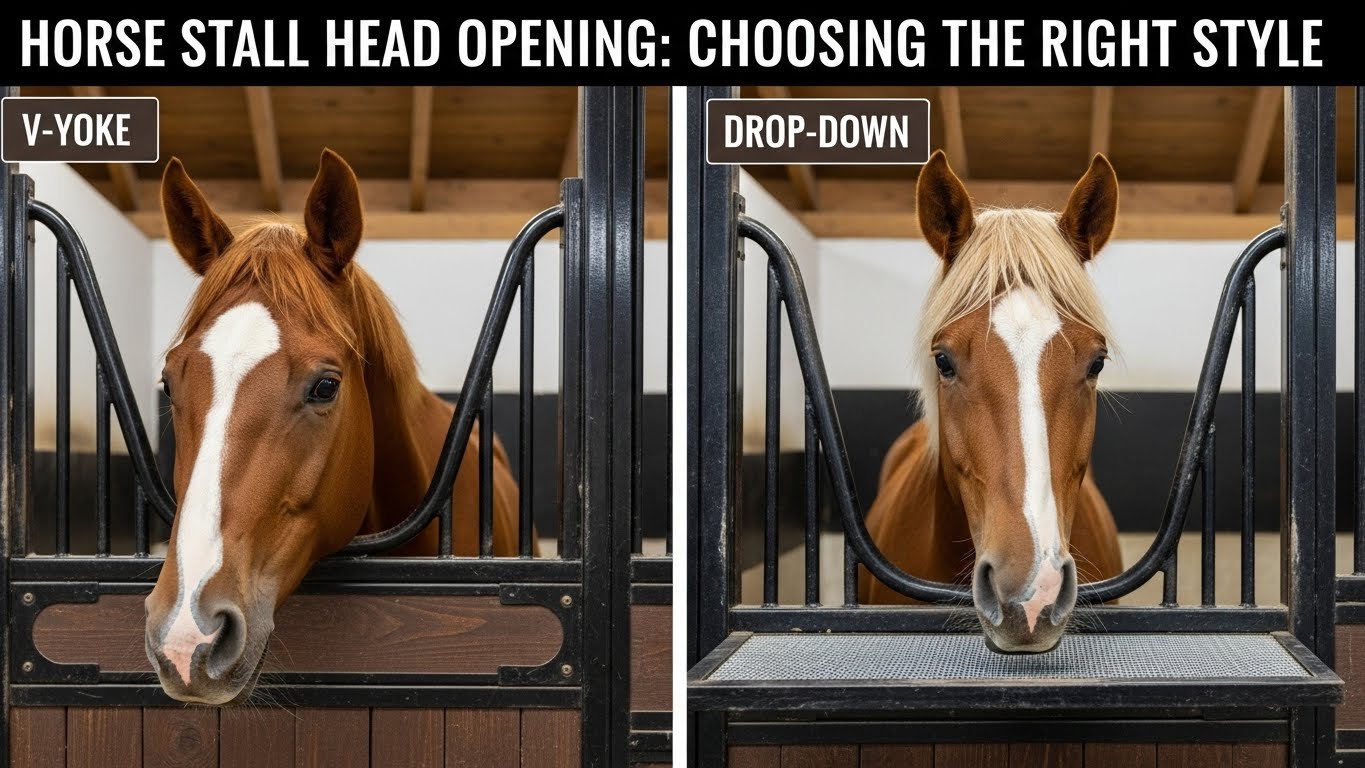
Choosing the right head opening for your horse stalls is a decision that affects daily workflow, animal welfare, and long-term maintenance costs. The choice between a removable V-yoke and a hinged drop-down front involves more than just aesthetics; it’s a functional choice with significant operational differences.
This guide breaks down the core differences in construction, safety, and durability between these two popular horse stall yoke options. We’ll examine the engineering details, from the 450°C hot-dip galvanization process that prevents corrosion to the safety specifications that limit spindle gaps to 53 mm, so you can make an informed investment for your facility.
The Removable V-Yoke (Simple)
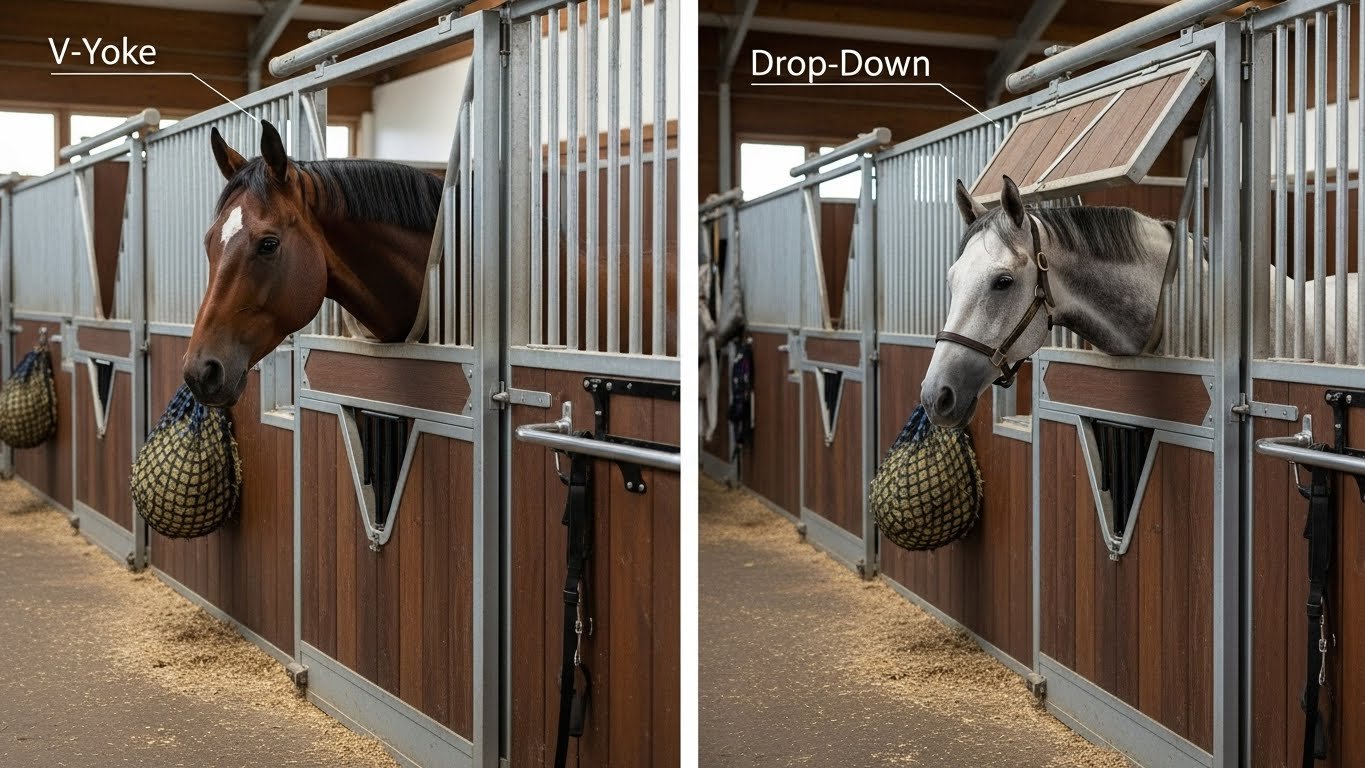
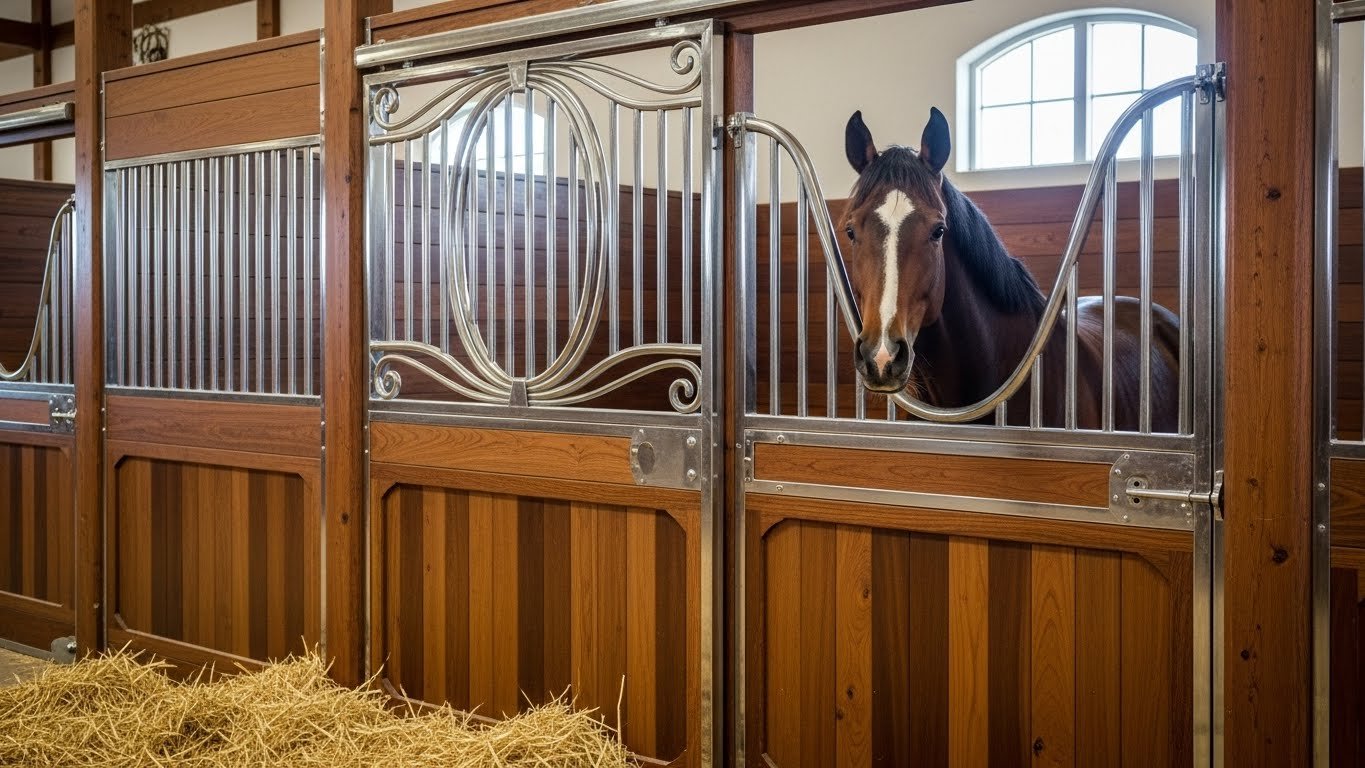
The simple removable V-yoke is a modular stall door component that allows a horse to comfortably extend its head for socialization. It is designed to be easily detached using pins or bolts, offering flexibility for cleaning and ventilation without altering the stall’s main structure, balancing animal welfare with operational convenience.
Modular Design and Core Function
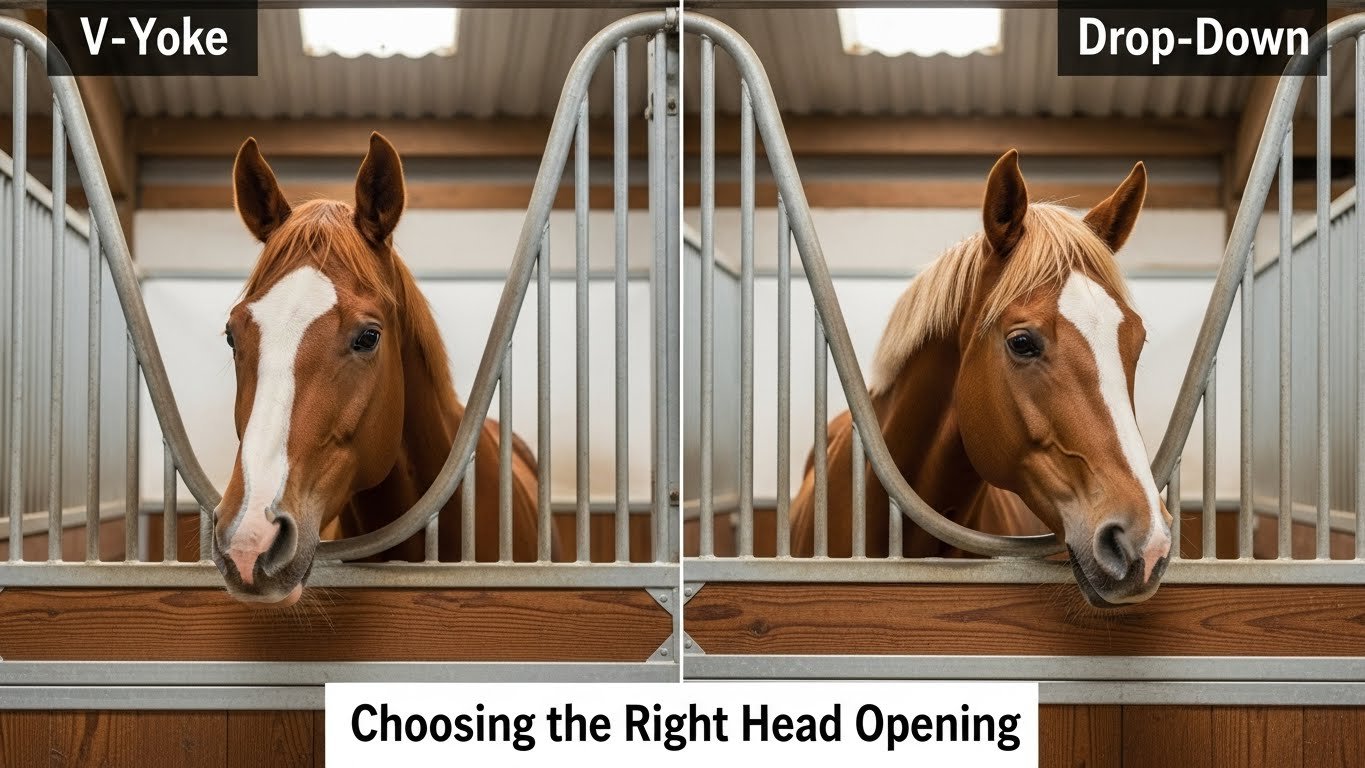
The primary feature of a removable V-yoke is its V-shaped opening, which allows a horse to extend its head for socialization and environmental engagement. It is engineered for quick installation and removal using simple components like pins, bolts, or pre-drilled slots integrated into the stall door frame. This modular design offers excellent operational flexibility, enabling handlers to detach the yoke for thorough stall cleaning, improved ventilation, or maintenance without modifying the permanent stall structure.
Materials and Construction Specifications
These yokes are constructed for durability using pre-galvanized steel pipes with a powder-coated finish for dual-layer corrosion resistance. If the design includes a mesh section, it typically uses solid 5/16-inch diameter cold-rolled steel rods that are welded at every intersection to guarantee strength. Hardware components like latches and bolts are commonly made from 304 stainless steel to prevent rust. Infill panels can be customized with materials such as durable bamboo (in 20mm, 28mm, 32mm, or 38mm thicknesses) or pine wood (30mm or 40mm thick).

The Hinged Drop-Down (Complex)
A hinged drop-down stall front is a ‘complex’ design featuring a reinforced, double-walled C-profile frame with solid lower boards and upper steel spindles. This structure is hot-dip galvanized for durability and includes wide, outward-swinging doors for handler safety and easy horse access.
Multi-Element Construction for Safety and Access
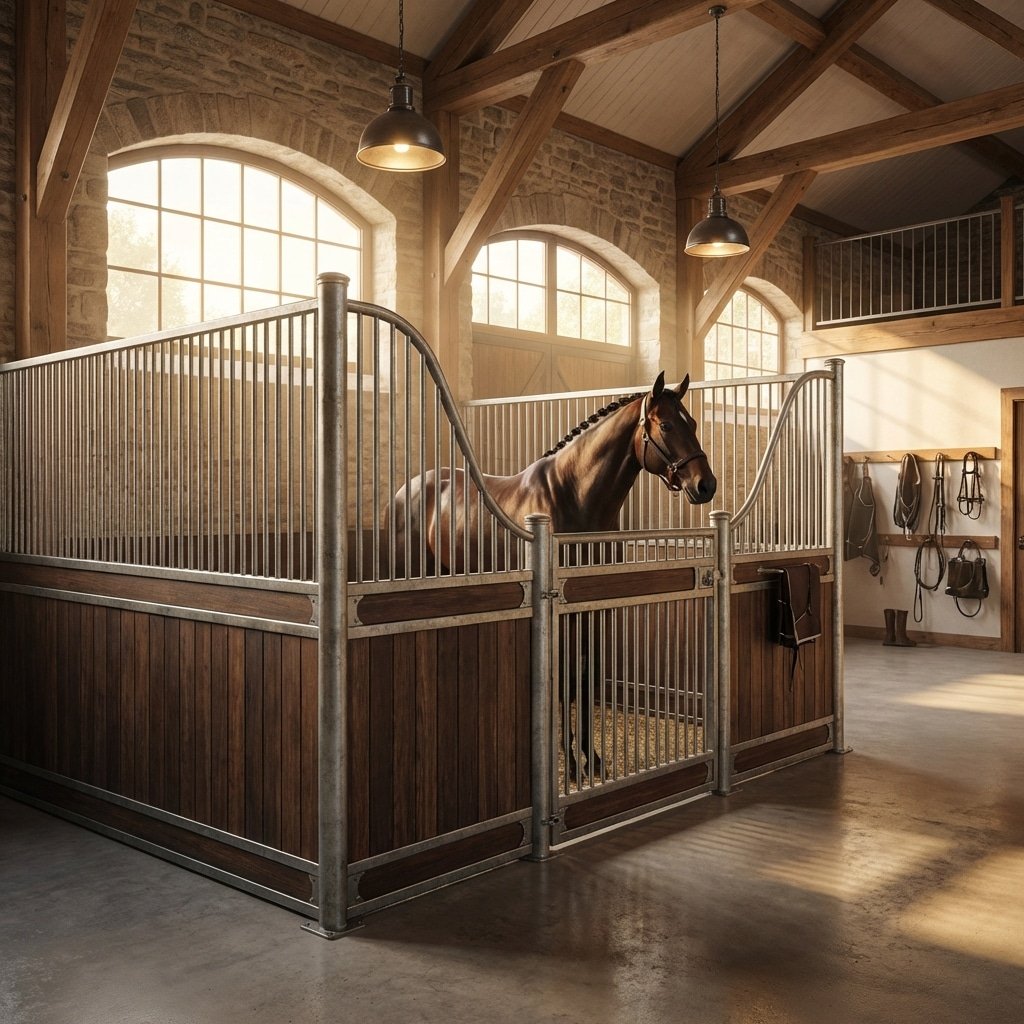
The complexity of this design comes from its multi-part construction, engineered for durability and safety. It features a reinforced, double-walled C-profile frame that provides significant structural integrity to withstand impacts. The lower section uses solid boards for security, while the upper section incorporates steel spindles. This combination balances a secure enclosure with essential ventilation and visibility into the stall. The hinged door mechanism allows for wide openings, which is especially useful for foaling or giving veterinarians unobstructed access. For handler safety, these doors are designed to swing outward into the aisle, preventing a person from being trapped inside by a horse.
Material Specifications and Dimensions
The steel frame undergoes hot-dip galvanization according to the NEN-EN-ISO 1461 standard. This process involves submerging the steel in a 450°C zinc bath to create a durable, corrosion-resistant coating inside and out. Stall fronts typically offer lower board height options of 1,240 mm or 1,285 mm. To prevent hooves from getting caught, the gaps between the upper spindles are limited to a maximum of 53 mm. A standard hinged door is 48 inches (1,219 mm) wide and requires a 1-inch clearance from the floor to swing freely, which makes wide, level barn aisles a necessity for proper operation.
Wear & Tear on Hinges
Hinge wear is caused by corrosion, repeated use, and horse impact. Manufacturers combat this with robust materials like hot-dip galvanized steel (to ISO 1461) and stainless steel, protective powder-coating, and designs that shield hardware from damage.
| Stress Factor | Description | Engineering Solution |
|---|---|---|
| Corrosion | Rust and degradation from moisture and ammonium-rich barn atmospheres. | Hot-dip galvanizing (ISO 1461), stainless steel hardware, and zinc-rich powder coating. |
| Cyclic Loading | High-frequency opening and closing of stall doors and yokes. | Heavy-duty hinge assemblies and robust framing (1-3/4″ to 2″ steel tubing). |
| Impact & Abuse | Force from horses leaning, kicking, or rubbing on doors. | Guarded or fully concealed hinge designs that prevent direct horse contact. |
Sources of Mechanical and Environmental Stress
Horse stall hinges face constant stress from both the environment and physical use. Corrosion is a primary concern, as the moisture and ammonium-rich atmosphere in a barn attacks steel welds and joints, leading to rust that can seize the hinge. Stall doors and yokes are high-wear components that undergo thousands of opening and closing cycles, creating mechanical wear on hinge pins and barrels. Horses also transfer significant force to hinge assemblies by leaning, kicking, or rubbing against doors. For portable stalls, this wear is accelerated by frequent setup and teardown, which puts extra strain on mounting points and hinge pins.
Material and Design Specifications for Longevity
Engineers use specific materials and designs to build durable hinges that can withstand these forces. To fight corrosion, steel components are often hot-dip galvanized to NEN-EN-ISO 1461, a process where the steel is immersed in molten zinc at 450°C for complete coverage. Some manufacturers use premium stainless steel for hinges on high-wear doors. The door and panel frames themselves are built with heavy-duty 1-3/4″ to 2″ steel tubing to support panel weights of 80–100+ lbs. A two-step powder-coating system with a zinc-rich primer adds another layer of protection. Finally, some designs use guarded or no-exposed hinge systems, shielding the hardware from direct horse contact and preventing damage from kicks or rubbing.
Durable Horse Stables, Engineered for Your Climate

Final Thoughts
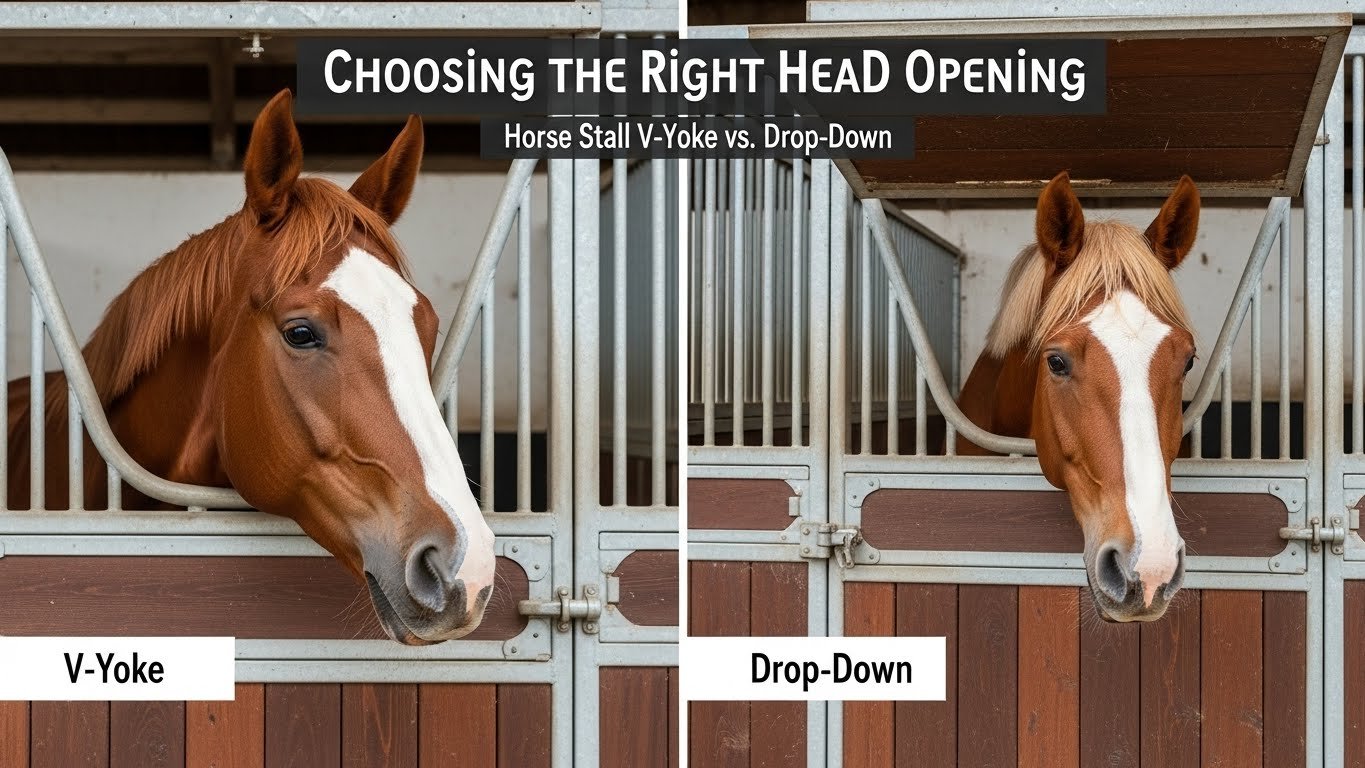
Choosing between a V-yoke and a drop-down comes down to your barn’s specific needs. The removable V-yoke is a straightforward, durable choice that gives social horses constant access to the aisle. It’s a simple system with fewer parts to break. The hinged drop-down provides more control, letting you decide when to open the stall for interaction. This flexibility makes it a strong option for foaling stalls, veterinary access, or managing horses that need occasional containment.
Ultimately, the choice of a head opening is just one part of the equation. Both V-yokes and drop-downs depend on high-quality engineering to perform safely over time. Pay close attention to material specifications like hot-dip galvanization, the use of stainless steel hardware, and the strength of the frame and welds. A well-constructed stall front protects your horse and endures the daily demands of a barn, making it a sound long-term investment.
Frequently Asked Questions
What is the difference between a V-yoke and a drop-down yoke?
V-yokes are fixed, open cut-outs that always allow a horse to extend its head. Drop-down yokes are hinged panels that you can open for socialization or close for containment and safety.
Do horses benefit from head openings in their stalls?
Yes, head openings are considered a welfare-positive option for social horses. These openings let horses look into the aisle, interact with others, and reduce boredom. You can close most openings for horses that are anxious or need restricted movement.
What makes a stall front design safe for a horse?
A safe stall front combines a solid lower section with an open upper grille for good ventilation. Partitions should reach at least 8 feet high, and bar openings should be no more than 3 inches wide to keep a horse’s head or hooves from getting stuck. All surfaces need to be smooth and free of sharp projections.
How do you repair a broken yoke hinge?
You should not attempt to repair a broken yoke hinge yourself. For safety, the entire hinge hardware set needs to be replaced with a new kit matching the stall’s original specifications. Bending or welding damaged parts is not recommended, as it can weaken the door structure.
How can stalls be designed for safe socialization between horses?
To allow safe interaction, stall partitions should be solid up to a height of 4 to 5 feet to protect horses’ legs. The section above this should be an open grille or mesh, letting horses see and smell each other without making risky physical contact.
What is the best type of yoke for a horse that weaves?
A taller, open-style yoke often works well for horses that weave. This design allows the horse to put its head out for stimulation, but the height of the opening helps prevent the full-body weaving motion.

 English
  Spanish
  French
  Arabic
  German
0 Comments