


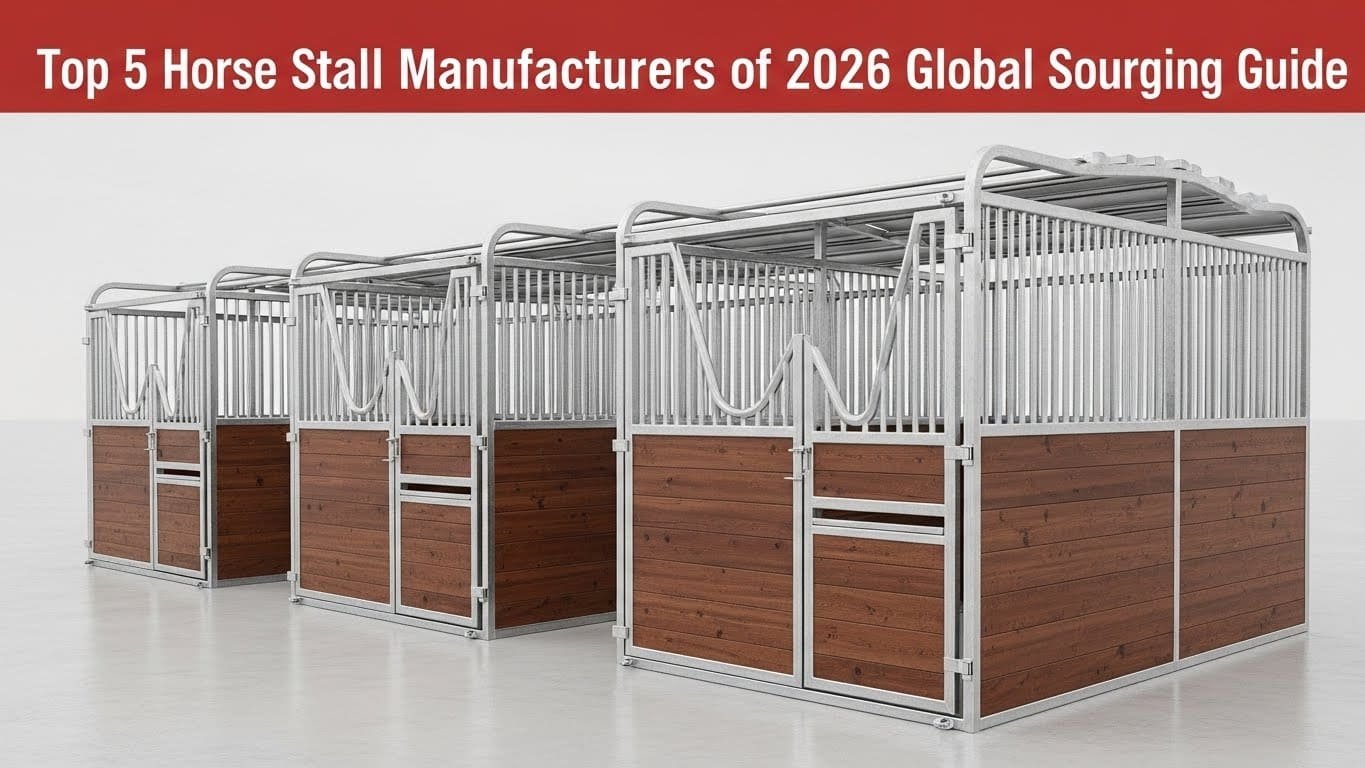
Sourcing horse stall panels from the wrong manufacturer is a direct threat to distributor margins. Bulky, fully-welded stalls are inefficient to ship, often loading only 12 sets per container and inflating per-unit freight costs. This logistical oversight can erase profitability before a single sale is made.
This analysis benchmarks top factories not just on product quality, such as ISO 1461 galvanizing standards, but on the critical factor of logistical design. We evaluate which suppliers use efficient flat-pack systems that can load 30-45 sets per container, directly protecting your margins from shipping volatility.
What Should You Look for in a Global Manufacturer?
Prioritize manufacturers with verified certifications like ISO 9001. Their product design must also protect your profit margins by reducing freight costs with efficient flat-pack systems.
Verified Quality and Material Standards
Don’t rely on marketing claims. Verifiable, third-party certifications are the baseline for quality. Any serious manufacturer should provide documentation for their quality management, material sourcing, and coating processes. If they can’t, it’s a major red flag.
- Factory Certifications: A valid ISO 9001 certificate proves the factory follows a consistent quality management system.
- Galvanizing Standards: The factory must conform to BS EN ISO 1461 for hot-dip galvanization. This means an average zinc coating of over 70-85 microns, depending on steel thickness. Anything less won’t last.
- Steel Grades: Ask for material specifics. Q235B steel is a common standard, but for cold climates, Q345B is necessary for its superior low-temperature toughness to prevent cracks from kicks in the winter.
Logistical Efficiency and Profit Protection
The product’s physical design directly impacts your shipping costs. Traditional, fully-welded stalls are bulky and expensive to ship, often loading only 12-15 sets into a 40HQ container. This eats into distributor margins before the product even arrives.
A smart manufacturer engineers for logistics. A flat-pack system can load 30-45 sets into the same container, saving distributors over 60% on freight. This isn’t a minor detail; it’s a critical factor for profitability. Also, insist on secure packaging like steel pallets. Loose loading is cheaper for the factory but risks product damage and creates major unloading headaches at the destination.
Who Are the Leading US and Australian Brands?
Australian stall brands often focus on hot-dip galvanized local steel. US manufacturers lean towards diverse styles and modular systems to meet a versatile market.
| Feature | Australian Market | US Market |
|---|---|---|
| Market Focus | Durability against high UV and salt spray. | Aesthetic versatility and modular systems. |
| Common Materials | Hot-dip galvanized Australian steel, recycled plastics. | Galvalume, aluminum, and specialized PVC panels. |
| Key Players | DoWell Equine, Anvil Enterprises, AusBuilt Rural. | Cashmans, System Equine, Duramax PVC Panels. |
Key Manufacturers in the Australian Market
Australian suppliers prioritize resilience, with many emphasizing robust, locally-sourced materials built to handle the climate. Hot-dip galvanizing is a common feature to protect against corrosion in coastal areas.
- DoWell Equine: A Sydney-based manufacturer that uses Australian steel with hot-dip galvanizing and offers recycled plastic board infill options.
- Anvil Enterprises: Based in Goulburn NSW, this distributor focuses on customizable designs and provides a range of material choices for different needs.
- AusBuilt Rural: Offers a selection of standard panels, including mesh fronts, pipe fronts, and solid dividing walls for various barn layouts.
Notable Brands in the US Market
The US market values versatility and aesthetics, leading to a wide array of materials and highly configurable stall systems. Modular designs that allow for easy expansion or reconfiguration are popular.
- Cashmans: A supplier offering stall systems made from aluminum, galvalume, and various modular components for custom setups.
- System Equine: Known for its Freedom Stall Series, which provides highly customizable options to fit specific barn dimensions and styles.
- Duramax PVC Panels: A specialized provider focusing on PVC-based panels that are engineered for high moisture and mold resistance, an alternative to traditional wood or steel.
Why Choose a Factory-Direct OEM Like DB Stable?
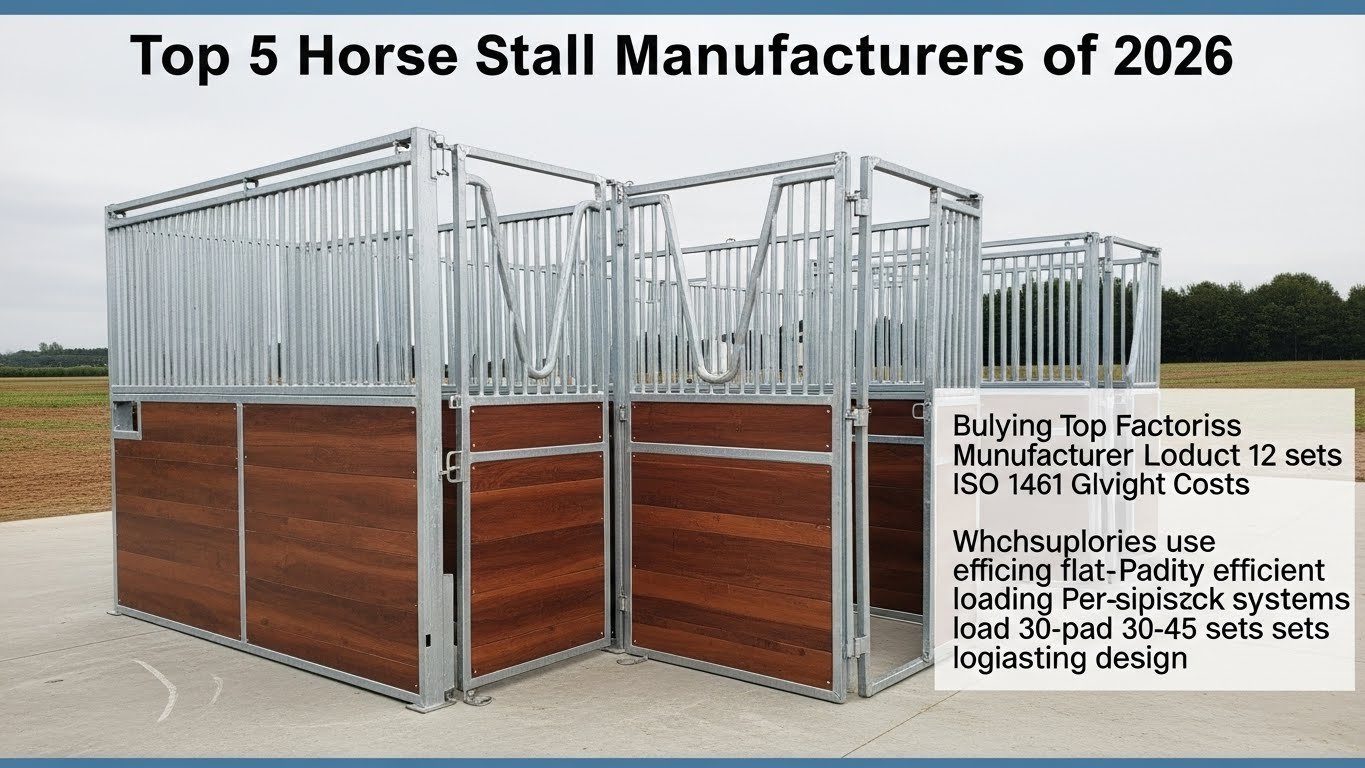
Sourcing factory-direct provides ISO 9001 quality control and a flat-pack system that loads 60%+ more stables per container, directly protecting distributor profit margins.
Direct Sourcing for Quality Control and Value
Working directly with an OEM/ODM manufacturer bypasses trading company markups, giving you better value. You get direct access to the source factory and its engineering team, ensuring your project specifications are met precisely. Verifiable certifications like ISO 9001 provide a tangible layer of production oversight, not just a promise.
Protecting Distributor Profits with Smart Logistics
Shipping costs can destroy margins. Fully-welded stables are bulky, and you can only fit about 12-15 sets in a 40HQ container. Our Steel Pallet Flat-Pack system solves this problem. We can load 30 to 45 stable sets into the same container, a 60%+ increase in loading efficiency that directly cuts your per-unit freight costs. This is the core of our ‘Profit Protection’ strategy for B2B partners.
Invest in Stables Engineered to Last Decades
Does Your Supplier Meet ISO 1461 Galvanizing Standards?
ISO 1461 specifies the minimum zinc coating thickness required for rust prevention on steel. For horse stables, this standard is the baseline for frame durability.
Understanding Minimum Zinc Coating Thickness
ISO 1461 isn’t a vague quality promise; it’s a specific, measurable standard for rust prevention. The required thickness of the protective zinc layer is directly tied to the thickness of the steel being coated.
- Steel >6mm thick: Requires an average coating of 85 microns (μm).
- Steel 3mm to 6mm thick: Requires an average coating of 70 microns (μm).
Meeting these minimums is non-negotiable for creating a continuous zinc barrier that stops corrosion for decades, not just a few seasons.
Verifying the ‘Hot-Dip After Fabrication’ Process
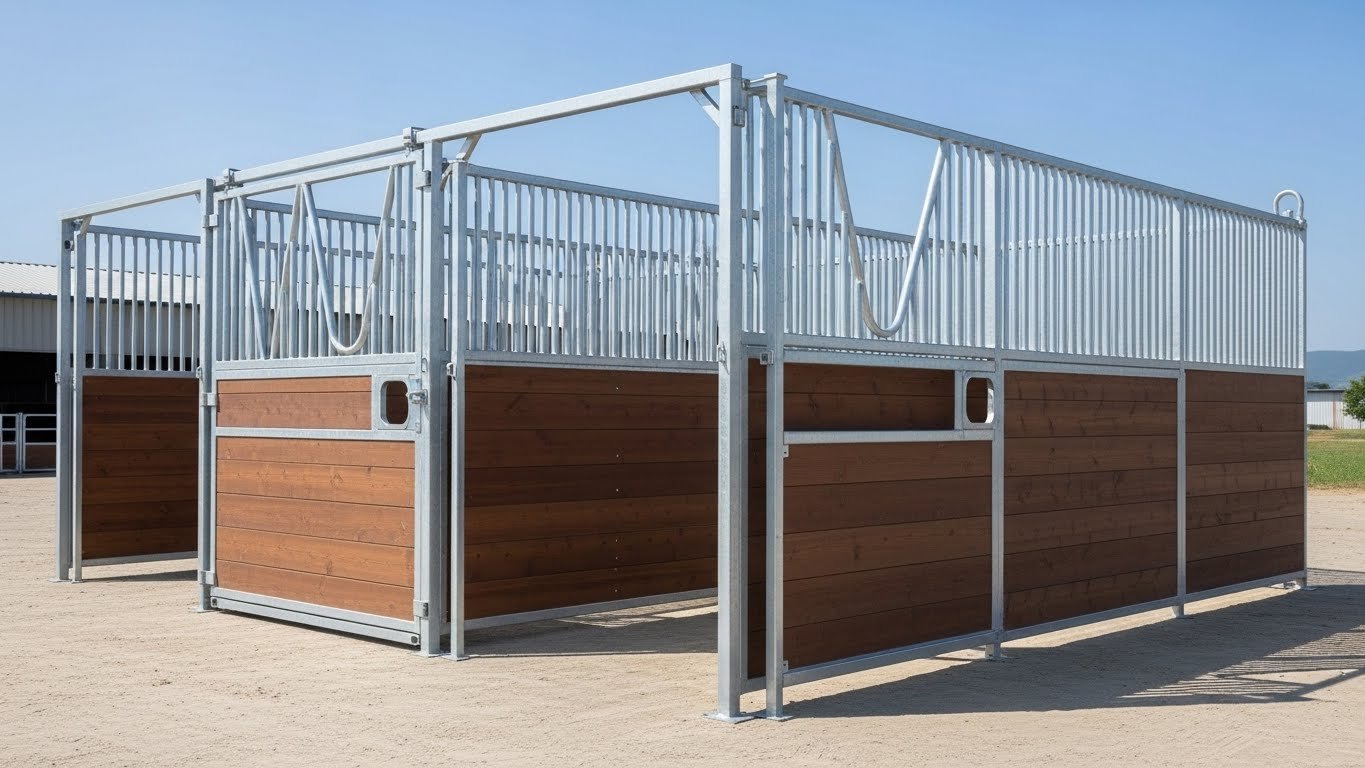
The standard alone isn’t enough. The process matters. We use Hot-Dip Galvanization After Fabrication, which means we weld the entire stable panel first and then dip it into molten zinc. This fully coats every weld, corner, and cut edge—the exact spots where rust typically starts.
Our galvanizing specifications directly meet the ISO 1461 requirements:
- Tubing (3-6mm steel): Receives an average coating over 70 microns.
- Heavier structural parts (>6mm steel): Receive an average coating over 85 microns.
This ensures that every component of our stables meets the correct tier of the standard for long-term structural integrity.
How Do You Choose the Right Partner?
A partner’s logistics are as important as their product. An efficient flat-pack system loads 30-45 stable sets per container, cutting freight costs by over 60%.
| Evaluation Factor | Typical Welded Design | Smart Flat-Pack System |
|---|---|---|
| Container Capacity (40HQ) | 12–15 Sets | 30–45 Sets |
| Freight Cost Per Unit | High | Reduced by 60%+ |
| Impact on Distributor Profit | Margin Erosion | Margin Protection |
Assessing Production Capacity and Lead Times
Beyond the product specs, you need to verify a manufacturer’s operational reliability. Can they scale with your business? A credible factory should be transparent about their production schedule and order flexibility.
- Production Lead Time: Expect a 35-45 day lead time. This isn’t a delay; it’s the necessary time to properly schedule and execute hot-dip galvanizing after fabrication for maximum rust protection.
- Minimum Order Quantities (MOQ): A good partner offers tiered options, from a 3-5 stable trial order (LCL) up to a full 40HQ container for established distributors.
- Quality Systems: Ask for their ISO 9001 certification. It’s the baseline indicator of a stable, documented quality management process.
Analyzing the Efficiency of Flat-Pack Systems
How a manufacturer packs your order directly impacts your profitability. Bulky, fully welded stables are a logistical nightmare and a waste of money. The most critical factor for any overseas distributor is loading density. A partner that has engineered a smart flat-pack system on steel pallets is thinking about your bottom line, not just their production line. This high-density loading is what protects your profit margin from unpredictable shipping costs.
Final Thoughts
While pre-galvanized stalls seem cheaper, the savings disappear after the first rust claim. Insisting on Hot-Dip Galvanization After Fabrication (to ISO 1461) is the only way to protect your brand’s reputation. Smart logistics with a flat-pack system directly protects your profit margin before the product even lands.
The next step is to verify the engineering yourself. We recommend a small trial order to test the material quality and assembly fitment firsthand. Contact our B2B team to get a quote and discuss your private label requirements.
Frequently Asked Questions
What are the quality and material standards for top horse stall brands?
The baseline for quality frames is 14-gauge (2.0mm) structural steel. The critical difference is the rust protection. Leading B2B manufacturers use hot-dip galvanization *after fabrication* to the ISO 1461 standard, achieving a zinc coating over 70-85 microns. This provides a 15-20 year lifespan. While some brands still use wood, modern infill options like high-density polyethylene (HDPE) or strand-woven bamboo offer zero maintenance and higher durability.
How can our business verify a manufacturer’s ISO certification?
First, check that the issuing organization is accredited by a global authority like the International Accreditation Forum (IAF). Review the certificate for a unique number and expiration date. Then, contact the issuing body directly using that certificate number to confirm it is current and valid for the claimed scope of work, such as “Quality Management” for ISO 9001.
What is the typical Minimum Order Quantity (MOQ) when buying factory-direct?
MOQ is structured by logistics. For B2B source factories, a typical trial order is 3-5 stable sets, which can ship via LCL (Less than Container Load). A standard project order is a full 20GP container holding about 10-15 sets. Full-scale distributor orders usually require a 40HQ container, which can fit 30-45 sets depending on the packaging design.
Can a factory produce our company’s private label or custom stall design?
Yes, true source factories operate on a B2B OEM/ODM model, meaning they specialize in manufacturing custom or private label designs. You need to provide the factory with technical drawings and specifications. Their engineering team will then confirm if the design meets their production capabilities and safety standards before providing a quote.
Do horse stall manufacturers offer regional exclusivity for distributors?
Exclusivity is a core part of B2B partnership negotiations and is never public information. To secure an exclusive territory for a product line, you must negotiate directly with the manufacturer’s sales or distribution management team. These agreements are based on sales volume commitments, marketing investment, and market potential.

 English
  Spanish
  French
  Arabic
  German
0 Comments