


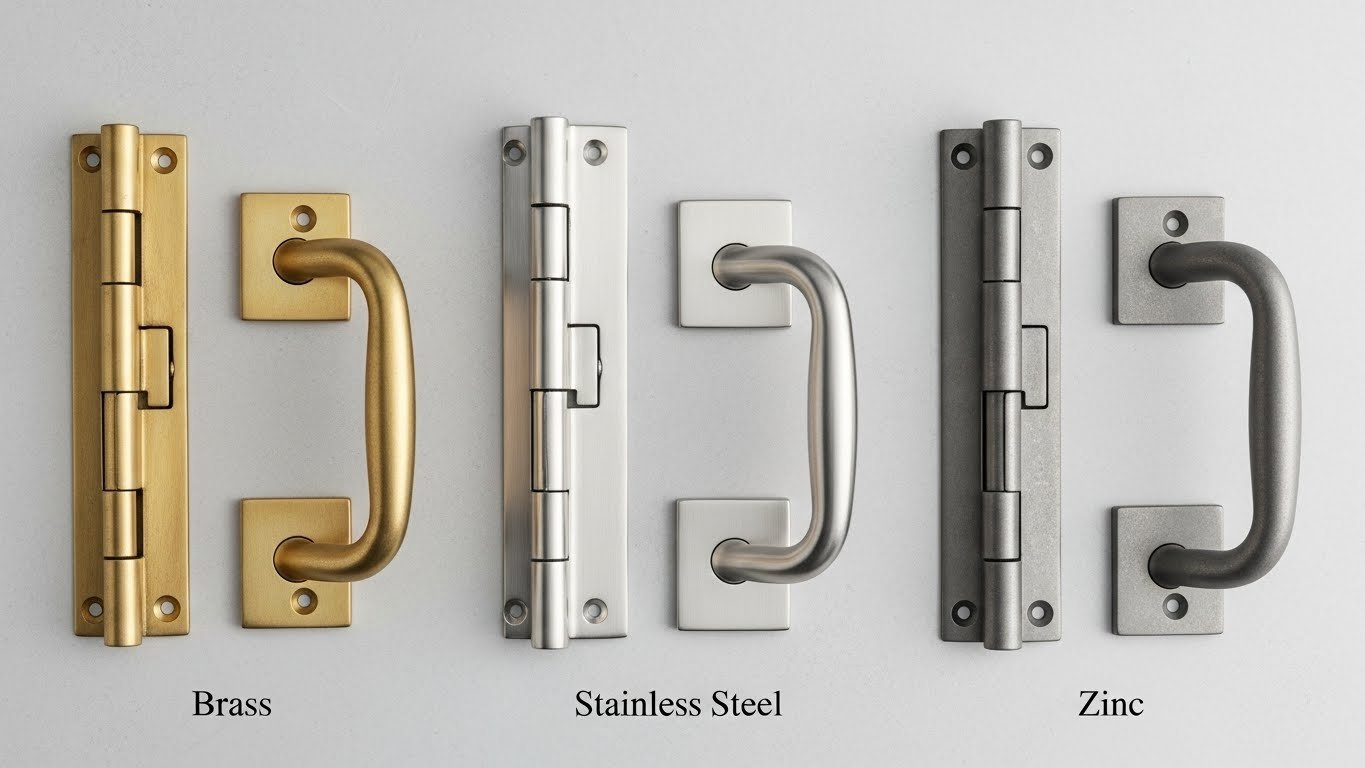
Choosing the right hardware for horse stalls goes beyond initial aesthetics; it shapes the long-term performance and overall value of your equestrian facility.
This guide offers a clear look at brass, stainless steel, and zinc-plated options for horse stall hardware. We examine why solid brass develops a unique, evolving patina valued in luxury settings, how grades like 304 stainless steel with its 18% chromium and 8% nickel deliver robust performance, and where zinc plating provides a cost-effective solution despite its potential to dull in humid barn conditions.
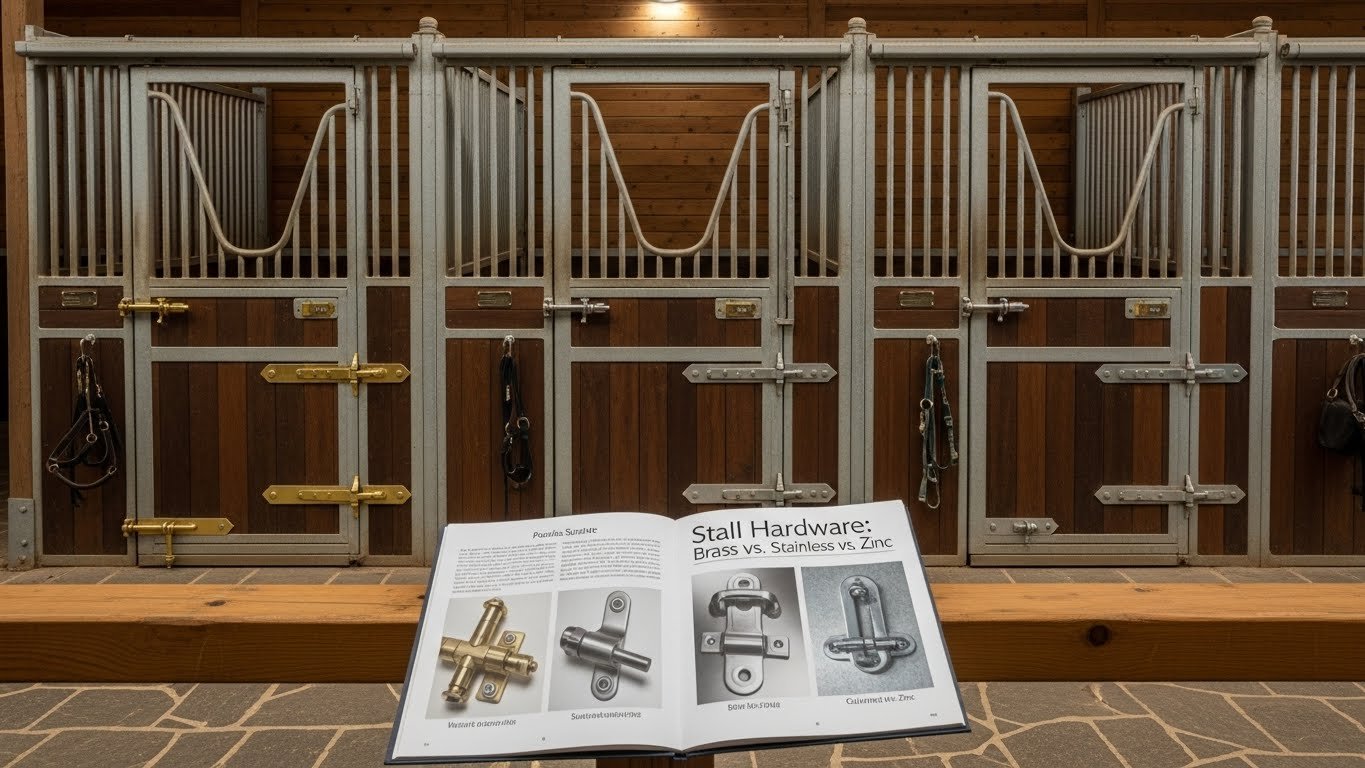
Industry Manufacturers List
Quick Comparison: Top Picks
| Manufacturer | Location | Core Strength | Verdict |
|---|---|---|---|
| Brass Finials and Post Caps | Industry Wide | Decorative brass post caps and ball/urn finials sized to fit stall posts and grill uprights, often paired with matching brass strikers and pulls to create a unified trim package. | Brass finials and post caps act as visual anchors on stall fronts, finishing the tops of grillwork and posts with a polished, high-end look. |
| Brass Pulls, Strikers, and Latches | Industry Wide | Brass pull knobs, strikers, latch covers, and faceplates designed for sliding and hinged stall doors, coordinated with existing hinge and plunger hardware. | Brass pull knobs and strikers transform basic stall doors into jewelry-like focal points by replacing plain galvanized components with warm, polished metal. |
| Decorative Brass and Equestrian-Themed Handles | Industry Wide | Cast decorative handles with horse heads, horseshoes, and buckle motifs in brass and other metals, often supplied with matching mounting plates and color-matched screws for clean installation. | Ornamental handles such as luxury horse-head pulls act as statement pieces on stall doors, Dutch doors, and tack rooms, functioning both as hardware and sculpture. |
| Brass Bridle Hooks and Stable Accessories | Industry Wide | Solid brass bridle hooks with curved profiles, wall organizers, bucket holders, and tie points designed to complement premium stall systems and hardware lines. | Solid brass bridle hooks and stable accessories refine stall fronts and adjacent tack walls, turning necessary storage points into coordinated design details. |
| Brass Stall and Name Plates | Industry Wide | Engravable brass plates in bridle, saddle, and stall sizes with options for brass rivets, screws, or nails and custom fonts and layouts. | Engraved brass stall plates function like engraved jewelry tags for each horse, providing identification while adding a refined metallic highlight on doors or front partitions. |
| Coordinated Decorative Barn Hardware Collections | Industry Wide | Decorative hooks, cross-tie rings, brackets, handles, and strap hooks in coordinated finishes including brass, chrome, and patina metals, often sold as stable accessory lines. | Curated lines of decorative barn hardware allow hooks, brackets, cross-tie rings, and handles to share finish and motif, so every visible fastener becomes part of the stall’s visual language. |
Brass Finials and Post Caps
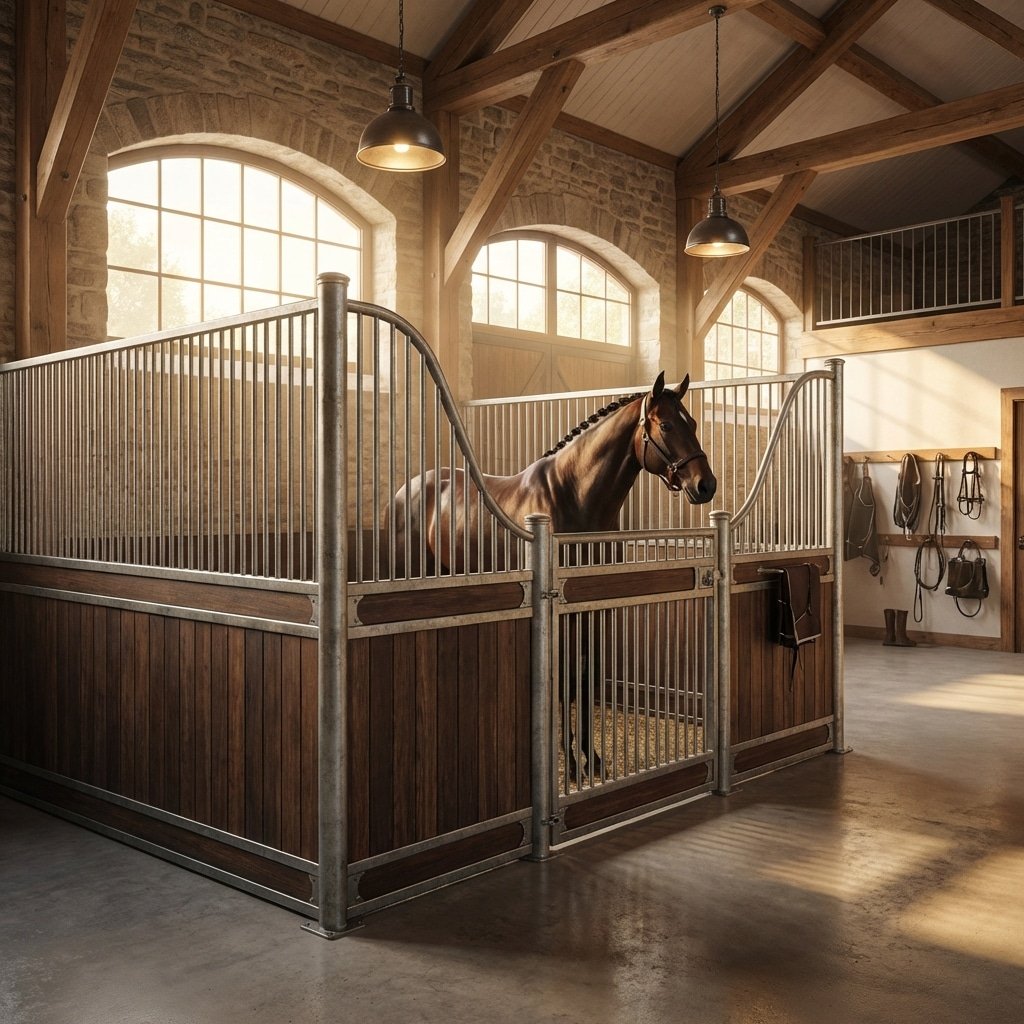
Brass finials and post caps serve as visual anchors for stall fronts, providing a polished, high-end finish to the tops of grillwork and posts. These elements are designed to highlight the stall’s geometry, effectively catch light along the aisle, and create a cohesive look by tying together doors, partitions, and various front systems that incorporate brass details.
Specializing in decorative brass post caps and ball/urn finials, these products are precisely sized to fit standard stall posts and grill uprights. Often, they are combined with matching brass strikers and pulls to form a unified trim package. These sophisticated solutions are primarily sought after by premium horse barns, European-style show facilities, and custom private stables aiming for a cohesive, luxury appearance in their stall fronts.
At a Glance:
- 📍 Location: Industry Wide
- 🏭 Core Strength: Decorative brass post caps and ball/urn finials sized to fit stall posts and grill uprights, often paired with matching brass strikers and pulls to create a unified trim package.
- 🌍 Key Markets: Premium horse barns, European-style show facilities, and custom private stables seeking a cohesive, luxury stall front appearance.
Why We Picked Them:
| ✅ The Wins | ⚠️ Trade-offs |
|---|---|
|
|
Brass Pulls, Strikers, and Latches
Brass pull knobs and strikers transform basic stall doors into jewelry-like focal points by replacing plain galvanized components with warm, polished metal.
These brass components are designed for both sliding and hinged stall doors, often coordinated with existing hinge and plunger hardware. On European-style fronts, these pieces frame the movement of the door, allowing the visual hardware to remain elegant while working parts stay robust.
At a Glance:
- 📍 Location: Industry Wide
- 🏭 Core Strength: Brass pull knobs, strikers, latch covers, and faceplates designed for sliding and hinged stall doors, coordinated with existing hinge and plunger hardware.
- 🌍 Key Markets: Custom stall manufacturers, retrofit upgrades in existing barns, and designers focused on elevating otherwise standard stall fronts.
Why We Picked Them:
| ✅ The Wins | ⚠️ Trade-offs |
|---|---|
|
|
Decorative Brass and Equestrian-Themed Handles
These ornamental handles, featuring luxury horse-head pulls, serve as statement pieces for stall doors, Dutch doors, and tack rooms. They function as both essential hardware and sculptural art. With finishes like antique brass, polished gold, and dark chrome, these pieces bring a personalized, equestrian motif that stands out like jewelry against wood or steel.
The main offerings include cast decorative handles with horse heads, horseshoes, and buckle motifs. These are available in brass and other metals. They often come with matching mounting plates and color-matched screws, ensuring a clean and cohesive installation.
At a Glance:
- 📍 Location: Industry Wide
- 🏭 Core Strength: Cast decorative handles with horse heads, horseshoes, and buckle motifs in brass and other metals, often supplied with matching mounting plates and color-matched screws for clean installation.
- 🌍 Key Markets: Boutique barns, architect-designed equestrian homes, and tack rooms where hardware is used as a focal design element.
Why We Picked Them:
| ✅ The Wins | ⚠️ Trade-offs |
|---|---|
|
|
Brass Bridle Hooks and Stable Accessories
Solid brass bridle hooks and stable accessories refine stall fronts and adjacent tack walls, turning necessary storage points into coordinated design details. With hand-polished finishes and clean lines, they echo the stall’s brass trim and read as a continuous band of metal accents along the aisle and tack corridor.
The production of these brass accessories prioritizes meticulous craftsmanship, ensuring each piece—from curved bridle hooks to wall organizers—meets the aesthetic and functional demands of high-end equestrian facilities. Products are designed to integrate seamlessly with existing premium stall systems, reflecting a dedication to detail and lasting quality.
At a Glance:
- 📍 Location: Industry Wide
- 🏭 Core Strength: Solid brass bridle hooks with curved profiles, wall organizers, bucket holders, and tie points designed to complement premium stall systems and hardware lines.
- 🌍 Key Markets: High-end tack rooms, training barns, and show facilities that prioritize both disciplined organization and a cohesive brass-accented aesthetic.
Why We Picked Them:
| ✅ The Wins | ⚠️ Trade-offs |
|---|---|
|
|
Brass Stall and Name Plates
Brass Stall and Name Plates offers engraved brass plates that serve as elegant identification tags for horses. These polished metallic highlights are designed for doors or front partitions, creating a sophisticated contrast with common materials like wood or powder-coated steel. Their presence helps draw attention to individual stall bays and reinforces a custom, high-end impression.
The production capacity is geared towards customization, offering engravable brass plates in various sizes, including bridle, saddle, and stall dimensions. Customers can choose from multiple mounting options such as brass rivets, screws, or nails, and personalize their orders with custom fonts and layouts to match specific branding or aesthetic requirements.
At a Glance:
- 📍 Location: Industry Wide
- 🏭 Core Strength: Engravable brass plates in bridle, saddle, and stall sizes with options for brass rivets, screws, or nails and custom fonts and layouts.
- 🌍 Key Markets: Custom private barns, show barns, and boarding facilities that brand individual stalls and equipment with coordinated engraved hardware.
Why We Picked Them:
| ✅ The Wins | ⚠️ Trade-offs |
|---|---|
|
|
Coordinated Decorative Barn Hardware Collections
Coordinated Decorative Barn Hardware Collections provide a cohesive approach to equestrian facility aesthetics. These curated lines ensure that functional elements like hooks, brackets, cross-tie rings, and handles share a consistent finish and motif. This design philosophy integrates every visible fastener into the overall visual language of the stall, transforming utility into an artistic detail.
These collections feature hardware in materials such as brass, chrome, cast iron, and patina metals. They frequently incorporate specific equestrian icons, like horse heads, shoes, and buckles, allowing for their repetition throughout a stall row. This approach helps create a gallery-like aisle, elevating the overall design of the space through unified, jewelry-like component suites.
At a Glance:
- 📍 Location: Industry Wide
- 🏭 Core Strength: Decorative hooks, cross-tie rings, brackets, handles, and strap hooks in coordinated finishes including brass, chrome, and patina metals, often sold as stable accessory lines.
- 🌍 Key Markets: Design-led equestrian facilities and barn renovations seeking to replace mismatched legacy hardware with unified, jewelry-like component suites.
Why We Picked Them:
| ✅ The Wins | ⚠️ Trade-offs |
|---|---|
|
|
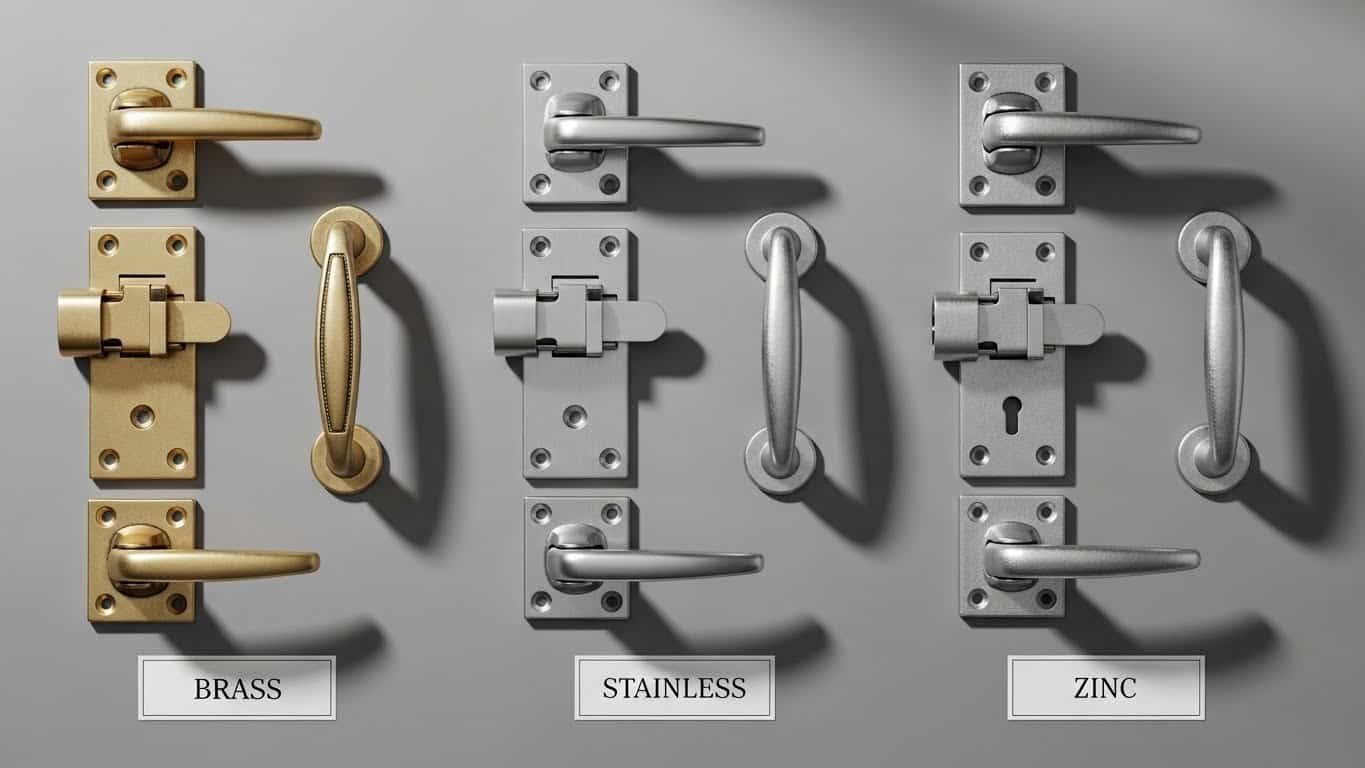
Solid Brass (The Premium Patina)
Solid brass develops a unique, evolving patina over time, making it a premium material for high-end hardware. This ‘living finish’ records daily use and environmental interactions, creating a bespoke, aged look valued in luxury residential and equestrian settings. Finishes like living unlacquered brass, sealed graphite/blackened brass, antique/brown brass, and satin aged brass sheets offer distinct aesthetic properties, ranging from natural oxidation to chemically applied, stabilized surfaces.
Understanding Solid Brass Patina: The Premium Aesthetic
By 2026, the inherent ability of solid brass to naturally oxidize, developing a unique and evolving patina over time, distinguishes it as a premium material in high-end hardware design.
This ‘living finish’ records environmental interactions and daily use, creating a bespoke, timeworn aesthetic highly valued in luxury residential and equestrian facility applications.
Unlike static finishes, premium brass patinas offer nuanced color shifts from warm gold to deeper, earthy tones, reflecting authenticity and character that cannot be replicated by manufactured surfaces.
Exploring Key Premium Brass Patina Finishes
Living Unlacquered Brass: This finish is left unlacquered, allowing for natural oxidation, yielding a soft darkening and rich tonal variations from warm gold to deep brown, ideal for a genuine heritage look in 2026.
Sealed Graphite / Blackened Brass: A modern finish delivering a deep charcoal-to-black tone with subtle metallic undertones, typically sealed for durability while still hinting at the underlying brass, suitable for industrial or minimalist designs.
Antique / Brown Brass: Often chemically applied and sealed, this patina achieves an instantly aged, warm brown appearance, offering a classic aesthetic without the wait for natural oxidation, perfect for traditional barn styles.
Satin Aged Brass Sheet: Designed for architectural applications by 2026, this finish combines controlled patination with a diffused sheen, stabilized with protective topcoats for consistent, low-maintenance aged surfaces in larger formats.
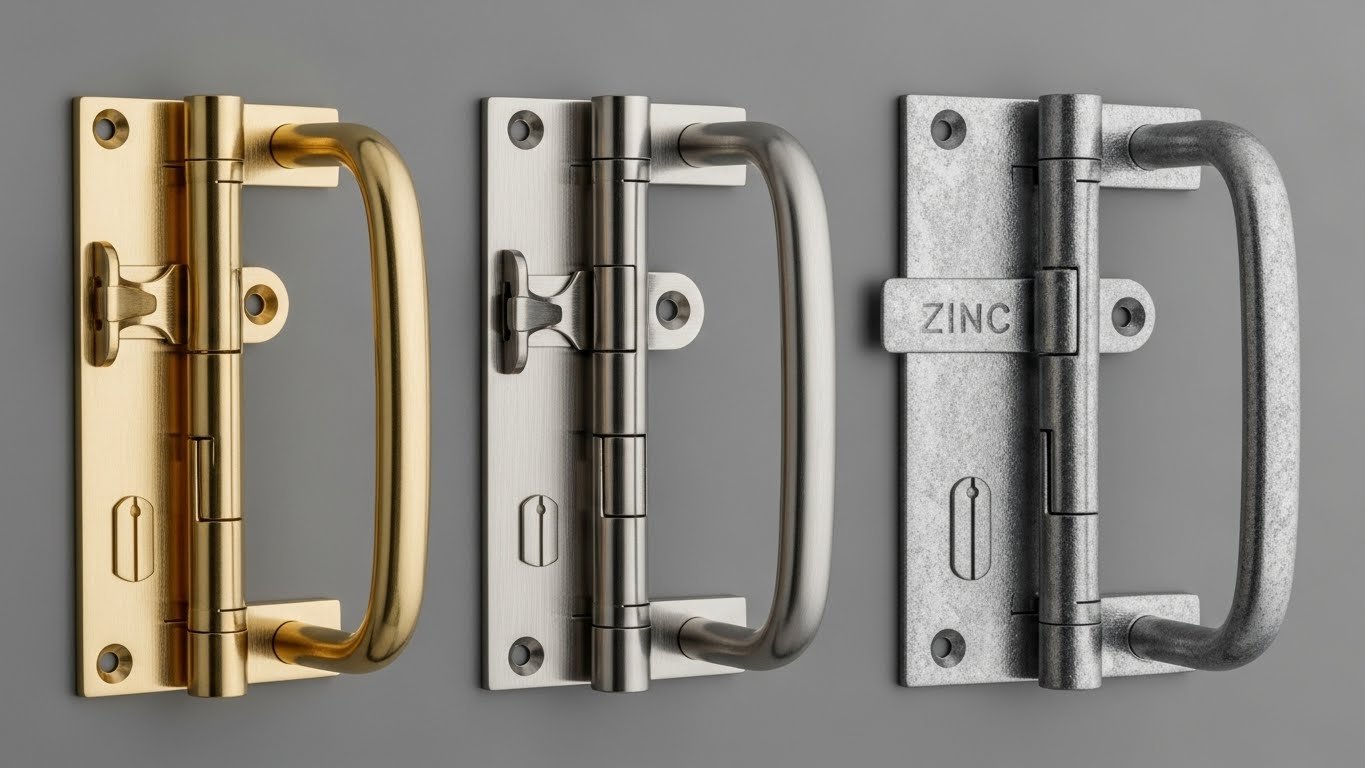
Stainless Steel (The Modern Workhorse)
Stainless steel, particularly grades 304 and 316, offers a durable, corrosion-resistant option for horse stall hardware. Grade 304 works well for general barn use, providing a bright finish and remaining cost-effective. Grade 316 delivers superior resistance for tougher conditions, like coastal areas or wash bays. Manufacturers frequently use stainless steel for high-wear mechanical parts, such as plungers and hinges, even in systems with decorative brass accents. This ensures long-term functionality and smooth operation.
Essential Grades: 304 and 316 Stainless
304 stainless steel is a primary grade for horse stall hardware like hinges, bolts, and latches, due to its corrosion resistance, formability, and weldability in barn environments.
This grade contains about 18% chromium and 8% nickel, offering a durable, bright finish that complements brass while remaining cost‑effective for large hardware sets.
316 stainless steel, a molybdenum‑alloyed grade, suits harsher conditions such as coastal barns or wash bays requiring frequent chemical cleaning.
It provides superior pitting and crevice‑corrosion resistance compared to 304, preventing tea‑staining and rust streaks on high‑end brass-accented hardware.
Strategic Integration in Stall Hardware
European‑style stall systems frequently pair visible brass pulls and strikers with a stainless steel plunger mechanism, using stainless for repeated impact and sliding contact.
Stainless plungers resist galling, deformation, and corrosion within the latch body, ensuring smooth action and preserving the appearance of visible brass hardware.
High‑end stall systems often use powder‑coated structural steel frames, integrating stainless steel for moving or high‑wear parts like hinges, tracks, and fasteners.
This hybrid approach allows for decorative brass accents while relying on stainless steel for durable, unseen mechanical interfaces.
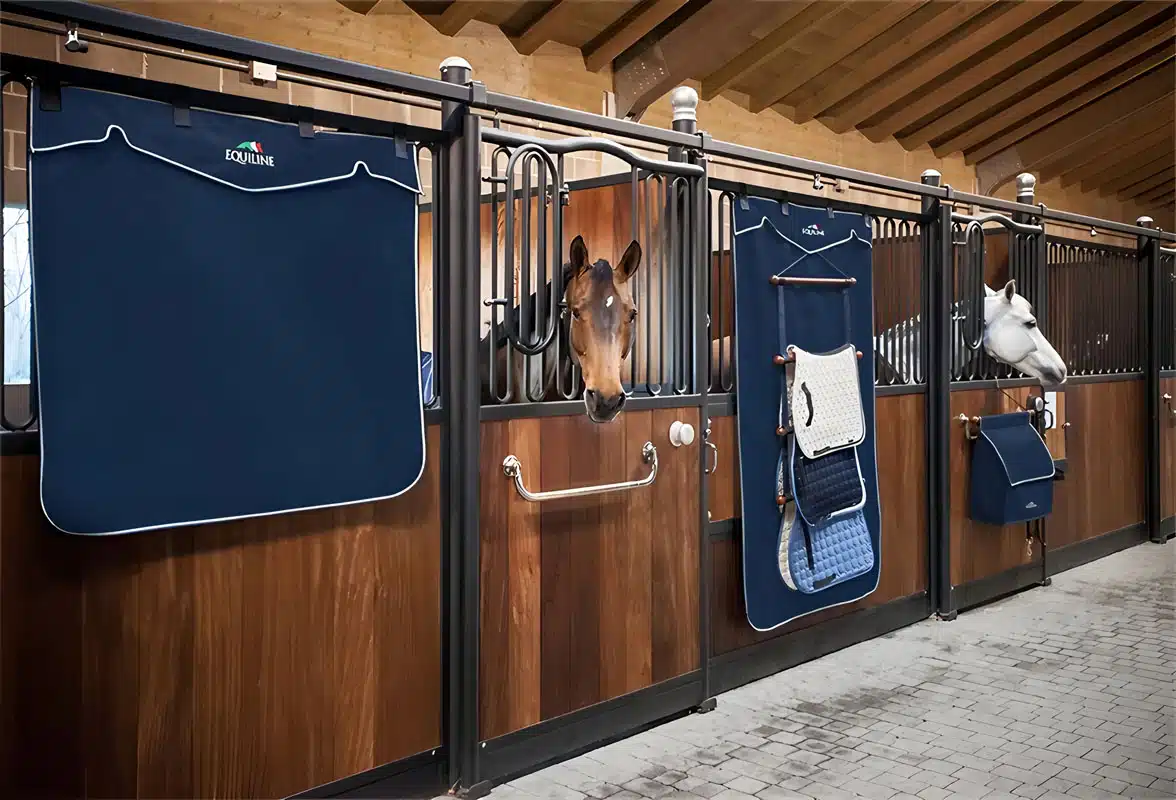
Global Horse Stables: Tailored for Every Climate & Compliance
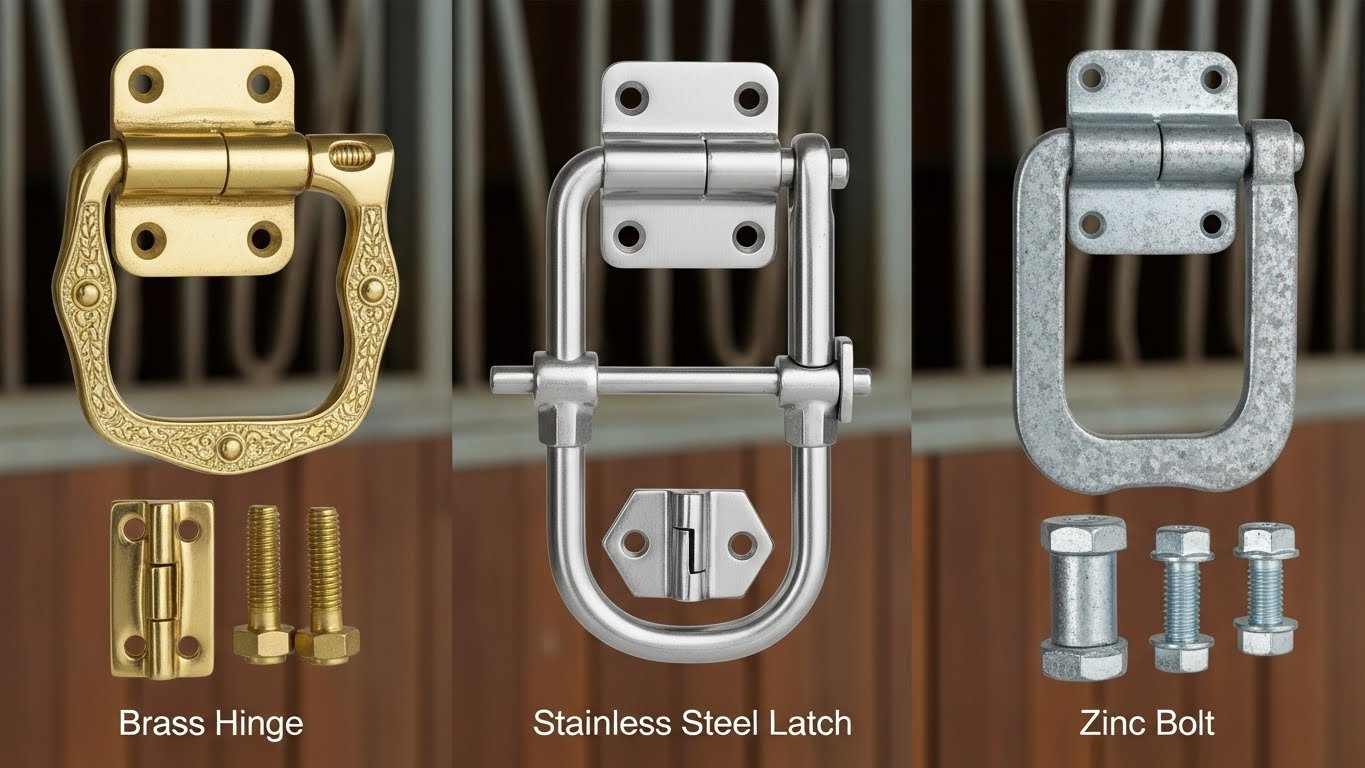
Zinc Plated (The Budget Choice)
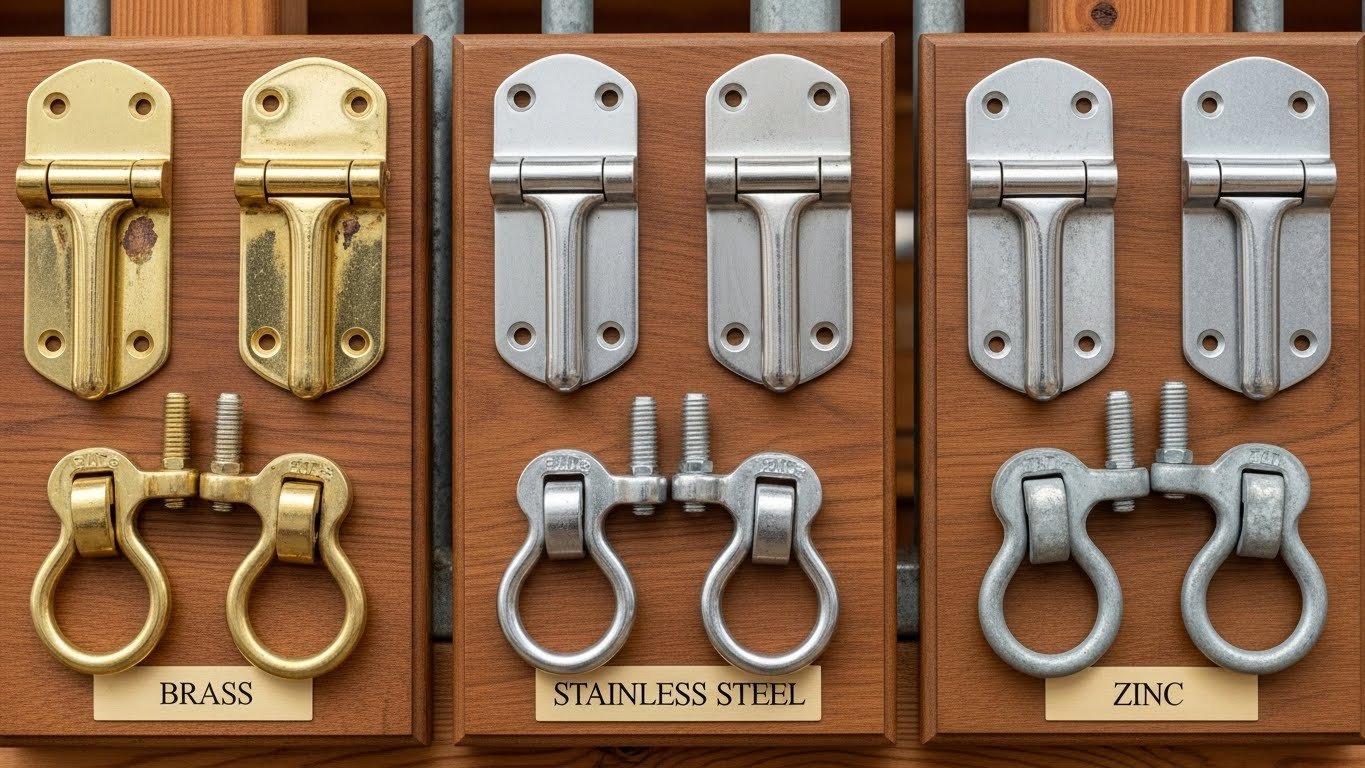
Zinc plating applies a thin layer of zinc onto low-carbon steel, providing sacrificial corrosion protection at a low cost, making it a budget-friendly option for horse stall hardware. It offers basic protection for temporary setups or interior use. However, its bright silver finish can dull to a gray, chalky appearance over time, especially in humid or ammonia-rich equine environments, and it is less durable than hot-dip galvanizing or solid brass for high-wear areas. It is best used for light- to medium-duty components or in non-visible applications to prevent aesthetic clashes and galvanic corrosion with other metals.
Understanding Zinc Plating: Cost and Basic Protection
Zinc plating applies a thin electroplated zinc layer over low-carbon steel, offering sacrificial corrosion protection at an economical price point.
It ranks among the lowest-cost protective finishes for stall hardware, generally more affordable than hot-dip galvanizing, powder coating, or solid brass components.
This choice is primarily for budget-driven horse barn projects, temporary setups, or interior partitions where minimizing initial material cost is key.
Performance, Aesthetics, and Use Cases
Fresh zinc plating displays a bright, cool-silver look, but it can dull to a gray, chalky finish over time, especially in humid or high-ammonia equine environments.
Its durability is considerably less than hot-dip galvanizing or solid brass when exposed to typical horse stall conditions, making it less ideal for high-wear or wet areas.
Zinc plated hardware is typically found in light- to medium-duty applications, such as basic hinges, brackets, and fasteners, relying on the underlying steel for strength.
For aesthetic consistency and longevity, best practice limits zinc plated items to non-visible or secondary roles, particularly when used near premium brass accents to prevent visual mismatch and galvanic corrosion.
ROI of Premium Hardware
No hard numeric data on return on investment (ROI), such as payback periods or cost savings percentages, for premium brass horse stall hardware was identified in 2026 research. Available information emphasizes qualitative benefits like durability, aesthetic appeal, and longevity.
| Benefit Category | Description | Implied Value |
|---|---|---|
| Durability & Longevity | Premium brass hardware, including post caps, striker plates, pull knobs, bridle hooks, and finials, offers superior durability and a long lifespan. | Reduced replacement needs, long-term cost savings. |
| Aesthetic Appeal | Solid brass components, often with hand-polished finishes or antique patinas, create visual sophistication and enhance facility appearance. | Elevated professional appearance, increased appeal to detail-oriented clients. |
| Ease of Maintenance | Resistance to wear and ease of cleaning are key advantages. | Operational efficiency, sustained facility attractiveness. |
| Non-Financial Returns | Research in 2026 found no hard numeric ROI data (payback periods, cost savings percentages) for premium brass hardware. | Focus on product specifications, perceived quality, and durability; precise ROI needs dedicated industry reports beyond current vendor data. |
Qualitative Advantages of Premium Hardware
Premium brass hardware, including post caps, striker plates, pull knobs, bridle hooks, and finials, offers durability, aesthetic appeal, and longevity for horse stalls. Solid brass components, often with hand-polished finishes or antique patinas, enhance visual sophistication and facility appearance.
Suppliers frequently emphasize benefits like elevated professional appearance, ease of cleaning, and resistance to wear. These advantages imply long-term value through reduced replacement needs and increased facility appeal to detail-oriented clients.
Understanding Non-Financial Returns
Research conducted in 2026 identified no hard numeric data on ROI, such as payback periods or cost savings percentages, specifically for premium brass horse stall hardware. Available sources concentrate on product specifications, testimonials regarding perceived quality, and overall durability, rather than quantified financial metrics.
To obtain precise ROI calculations, dedicated industry reports on equine construction or comprehensive barn investment analyses would be necessary. Such detailed financial analyses were beyond the scope of the vendor data currently available.
Frequently Asked Questions
Does brass hardware rust?
No, brass hardware does not rust, as rust specifically affects iron or steel. Brass, an alloy of copper and zinc, can instead corrode or tarnish, forming a protective gray-green patina when exposed to salt or pollutants. This tarnish does not cause pitting and generally keeps threads and recesses functional. Common brasses like C360 free-cutting brass offer good corrosion resistance, especially in humid, ammonia-rich stable environments. While high-zinc brasses (over 30% Zn) carry a risk of dezincification in acidic or chloride-rich conditions, brass generally outperforms plated steel in longevity for horse stall hardware, maintaining both function and appearance.
How to clean brass stall fittings?
To clean brass stall fittings, use gentle, natural methods to remove tarnish without scratching. Always test any method on an inconspicuous area first, especially if the brass is lacquered (lacquered brass only needs warm soapy water). Recommended natural cleaning methods include: applying ketchup for 15-20 minutes, using a vinegar and salt paste, or gently rubbing with a lemon sprinkled with baking soda. For polishing, apply brass polish in circular motions with a microfiber cloth and buff to a shine, using a toothbrush for crevices. To prevent future tarnish, seal the brass with clear lacquer or wax. Regularly dusting also helps maintain its appearance. If possible, disassemble removable parts of the hardware for a thorough cleaning.
Stainless steel vs zinc hardware?
Stainless steel hardware, an iron alloy with at least 10.5% chromium, forms a passive chromium-oxide film, offering very high corrosion resistance and a modern metallic look. It excels in wet, humid, and marine environments, resisting rust far better than zinc coatings. It is used for high-corrosion-resistance fasteners and fittings where long-term appearance and durability are critical, such as in architectural hardware, marine fixtures, and premium stall hardware. Zinc-plated or zinc alloy hardware typically involves carbon steel coated with zinc. It provides good, but lower, corrosion resistance than stainless steel at a significantly lower cost. Zinc coatings protect steel from rust for moderate outdoor or indoor use, but they can wear or corrode faster in persistent moisture, leading to quicker degradation of appearance and protection compared to stainless steel. It is commonly used for cost-efficient screws, bolts, and brackets in general construction and non-prestige hardware where medium corrosion resistance is acceptable.
Is brass stronger than steel?
No, brass is not stronger than steel. Steel consistently outperforms brass in key strength metrics. For example, stainless steel’s tensile strength ranges from 500–1550 MPa, while brass is typically 338–469 MPa. Steel also has higher yield strength (210–820 MPa vs. 35–310 MPa for brass) and hardness. This is because steel alloys incorporate elements like chromium, nickel, and carbon for enhanced durability, whereas brass prioritizes machinability and corrosion resistance. While steel is better for high-load applications, brass excels in aesthetics and low-friction uses. Even mild steel generally exceeds brass in tensile strength.
Why is stall hardware so expensive?
Horse stall hardware, especially brass, is expensive due to premium material costs, specialized manufacturing labor, and custom design features that prioritize luxury durability and aesthetics. Key cost drivers include: materials like brass, which are costlier than aluminum or steel; specialized labor and fabrication techniques such as extensive welding and custom CAD engineering; and design customizations like varying heights, drop-down yokes, and aesthetic details. Individual doors with heavy-duty brass/stainless hardware can cost $300+, and while decorative brass hooks might start around $10, the cost scales substantially for full stall installations. These factors ensure longevity in demanding barn environments, appealing to buyers who prioritize aesthetics and quality over budget options.
Best latch for horse stalls?
The best latch for horse stalls depends on the door type and specific needs. For traditional swinging doors, an Offset Stall Latch is widely recommended as its design resists accidental opening and can be secured with a padlock. For sliding stall fronts, Pin Lock Latches, often in 304 stainless steel or galvanized steel, offer durable, corrosion-resistant security with a simple, visible design. Alternatively, Flip Latches for sliding doors, typically galvanized steel with a powder coat, provide quick one-handed operation and strong mechanical engagement. On premium hinged European stall fronts, Plunger Latches made of stainless steel offer a flush, refined aesthetic and reliable security. Lastly, Slidebolt and Gravity Latches are robust, mechanically simple, and easy-to-understand solutions widely used for various stall and barn doors.

Final Thoughts
Stall hardware selection balances material strengths with project goals. Solid brass delivers a premium, evolving aesthetic and lasting quality, fitting well in luxury settings valuing visual appeal. Stainless steel provides robust corrosion resistance and mechanical strength, making it right for high-wear parts and tough environments. Zinc-plated steel serves as an economical choice for basic protection in less critical or temporary uses, but offers less durability and aesthetic staying power.
No hard numeric ROI data for premium brass exists, but qualitative benefits are clear. Opting for quality materials like brass or stainless steel reduces replacement needs and elevates a facility’s overall look and perceived value. Owners strategically combine materials, using brass for visible aesthetic touches and stainless steel for unseen functional parts. This approach achieves both beauty and long-term performance, making sure the barn hardware supports the equestrian facility’s integrity and prestige for many years.

 English
  Spanish
  French
  Arabic
  German
0 Comments