


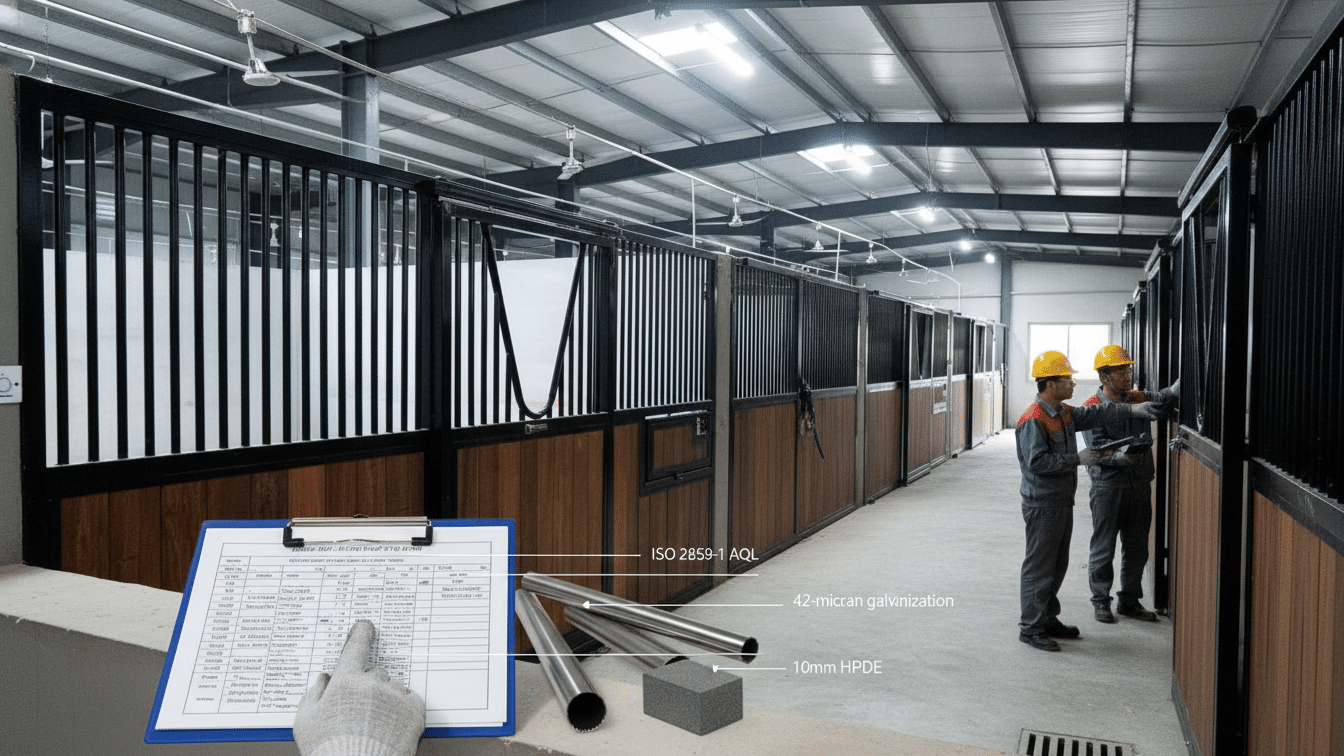
Clearing customs for horse stables requires more than a standard packing list. A single error in the 17-digit GS1 BOL number or failing ISPM 15 phytosanitary standards for wooden packaging can indefinitely strand cargo at the port.
This guide breaks down the validation of essential documents, from verifying strict GS1 codes to securing Methyl Bromide fumigation certificates. It also details how 42-micron galvanization specifications support accurate tariff classification, ensuring a seamless clearance process.
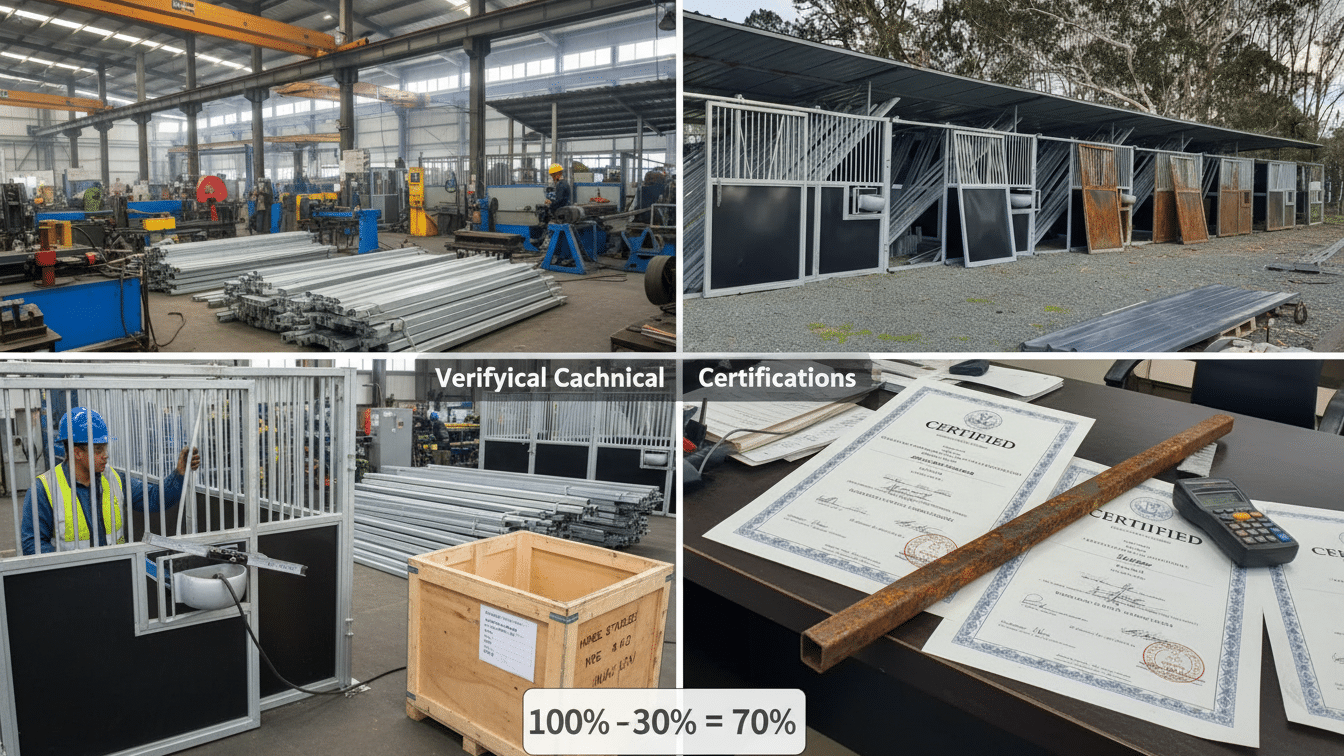
What Documents Are Essential for Horse Stable Clearance?
Unlike customs or legal permitting, clearance in stable construction refers to safety engineering dimensions rather than specific forms. Essential safety standards dictate a 10–12 ft ceiling height, 8 ft partitions to contain kicks, and a minimum 7 ft doorway height. These specifications, derived from agricultural extension guidelines, prevent head strikes and hoof entrapment.
Defining ‘Clearance’: Physical Safety vs. Documentation
When builders and engineers discuss stable clearance, they are rarely talking about government paperwork or ISO certifications. Instead, they are referring to the physical space required to keep an animal safe. Research from institutions like Penn State Extension and the University of Florida defines clearance as the spatial buffer needed to prevent accidents. The essential documents in this context are your architectural plans and design checklists, which must prove that the structure meets specific safety norms.
Failing to meet these physical clearance standards creates immediate risks. A ceiling that is too low can cause severe head trauma if a horse rears up, while narrow doorways often lead to hip injuries. Poor clearance also restricts airflow, which can damage a horse’s respiratory system over time. Therefore, the compliance documentation you actually need is a verified floor plan that adheres to safety engineering standards.
Critical Engineering Specifications for Stable Clearance
To ensure your stable plans are compliant with safety best practices, you must verify specific measurements. Think of these numbers as the non-negotiable safety bubble surrounding the animal. These specifications are designed to account for the unpredictable nature of horses, such as kicking or rearing.
- Vertical Clearance: Ceiling heights must range between 10 and 12 feet. This ensures there is at least 2 feet (61 cm) of empty space above the horse’s head even when it raises its head fully.
- Partition Height: Standard dividing walls must be 8 feet high, with a minimum of 7.5 feet. This height is necessary because an average horse can kick as high as 7 feet, and a shorter wall would not contain the legs.
- Ingress and Egress: Doorways require a height slightly over 7 feet and a width of 42 to 45 inches. This width prevents the horse from banging its hips on the frame when entering or exiting.
- Safety Gaps: The clearance at the bottom of a door must be less than 3 inches. This small gap is crucial to strictly prevent a hoof from sliding underneath and getting trapped.
How DB Stable Ensures Design Compliance
DB Stable simplifies this technical compliance by pre-engineering portable units that meet these strict dimensions. The design team, consisting of five experts, builds these stables specifically for the Australian and New Zealand markets, ensuring that every unit aligns with standard safety clearances right out of the factory.
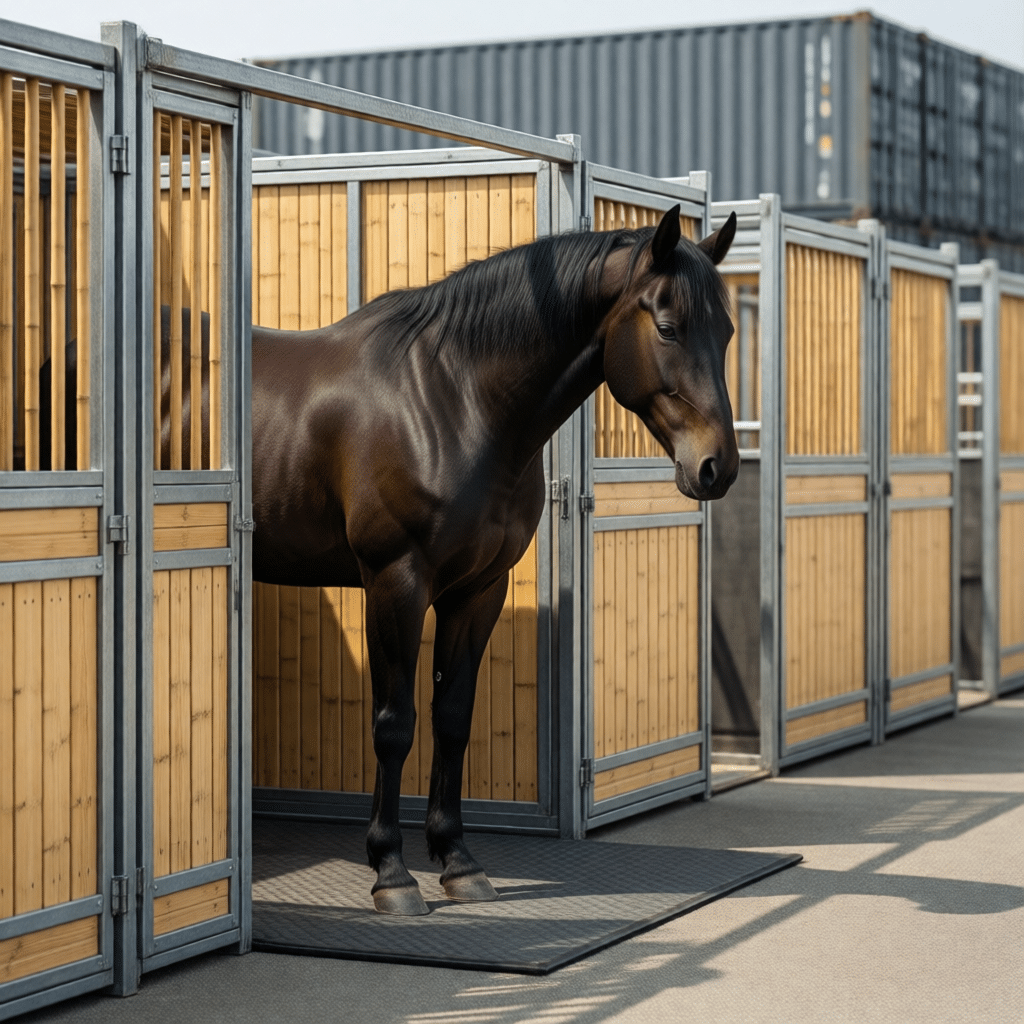
We utilize hot-dip galvanized steel for the structural framing. Think of hot-dip galvanization as dipping the metal into a bath of molten zinc to create a permanent shield against rust. This process, applied at a thickness of 42 microns, ensures the steel remains rigid and does not sag. This structural integrity guarantees that the critical 7-foot door clearance is maintained for years, unlike weaker frames that might warp and lower the clearance over time. Additionally, the portable nature of our stables allows owners to install them within existing barns, giving you the flexibility to control the overall vertical clearance relative to the host structure.
Step 1: How to Verify the Bill of Lading and Invoice?
Verification involves a multi-layered validation framework using OCR and AI-driven Intelligent Process Automation (IPA). This process extracts data with over 95% accuracy, cross-referencing fields like the 17-digit GS1 BOL number against purchase orders and shipping regulations to ensure compliance before finalization.
The Role of AI and OCR in Document Verification
Modern logistics relies on Optical Character Recognition (OCR) to handle the heavy lifting of document review. Think of OCR as a digital speed-reader that instantly converts scanned images of paper documents into editable, searchable text. When combined with Intelligent Process Automation (IPA), these systems reach accuracy levels above 95%, ensuring that critical data remains intact during transfer.
Speed is a major advantage of this technology. Cloud-based models typically process a document in 2 to 3 seconds, while on-device models can complete the task in under 200 milliseconds. By handing these repetitive tasks over to AI, companies reduce the time spent on manual Bill of Lading (BOL) processing by up to 80%, allowing teams to focus on resolving complex shipping exceptions rather than data entry.
Critical Data Standards: GS1 and Field Validation
Validation systems primarily check for the Standard 17-digit BOL Number, which acts like a unique passport for every shipment. This number follows a strict GS1 structure: a 7-digit Company Prefix, a 7-digit serial number, and a single Modulo 10 check digit at the end. Systems also recognize alternative formats, such as the “04” format which uses a 14-digit shipper-assigned number followed by a check digit.
Beyond just the ID numbers, the software extracts and matches specific line items against the original Purchase Order. For high-value imports like portable horse stables, the system verifies that the cargo description matches the invoice exactly. It checks that the “hot-dip galvanized steel” specifications or “10mm HDPE UV-resistant boards” listed on the BOL align with the supplier’s contract. This step ensures that the port of entry, consignee details, and hazardous material designations are correct, preventing costly delays at customs.
The Verification Workflow and Human-in-the-Loop Review
The verification process moves through a specific three-step sequence. First, the system collects and uploads the documents. Second, it automatically extracts cargo descriptions and financial charges. Third, it validates this data against established business rules. The software cross-references extracted figures against carrier agreements to spot billing errors or duplicate charges that a human eye might miss.
Even with advanced automation, human oversight remains essential. This is known as a “human-in-the-loop” mechanism. If the system detects a data point that falls below a set accuracy threshold—for example, if the weight of the steel board roof components appears inconsistent with the expected 0.4mm or 0.8mm thickness—it flags the item. A human specialist then reviews just that specific discrepancy. This approach combines the speed of AI with the judgment of an expert, ensuring that the final audit is both fast and precise.

Step 2: When Do You Need Specialized Certs (Fumigation)?
Specialized fumigation certification is required in two primary scenarios: commercially applying Restricted-Use Pesticides under EPA regulations and shipping wooden packaging internationally under ISPM 15 standards. Compliance involves tiered state licensing, mandatory fumigant management plans, and strict adherence to treatment methods like Methyl Bromide or Heat Treatment.
Domestic Requirements: EPA & State Licensing Structure
State agencies manage certification as a tiered framework under EPA guidelines rather than issuing a single universal credential. Federal regulations, specifically 40 CFR § 171.105, separate soil fumigation and non-soil fumigation into distinct categories. This means a professional licensed to treat agricultural fields cannot automatically treat structural cargo.
Only certified applicators who complete EPA-approved soil fumigant training may purchase or apply Restricted-Use Pesticides. Think of this like a prescription for powerful medicine; you cannot buy it off the shelf without authorized credentials. A licensed applicator must remain physically present during the application to ensure safety and adherence to manufacturer labels.
International Trade: ISPM 15 & Cargo Compliance
International shipping mandates adherence to ISPM 15, or the International Standards for Phytosanitary Measures. Established in 2002, this standard acts like a vaccination record for wooden packaging, proving it carries no pests that could harm foreign ecosystems. While domestic pest control follows state laws, export cargo follows these strict international sanitary protocols.
To clear customs, wooden packaging must undergo approved treatments:
- Heat Treatment (HT): Raising the wood core temperature to specific levels to neutralize pests.
- Methyl Bromide (MB): Using a gas fumigant to treat the material.
- Documentation: paperwork must verify the treatment type, duration, and temperature ranges for high-risk regions.
Operational Compliance: Plans & Safety Protocols
Applicators must create detailed Fumigant Management Plans (FMPs) before they begin any job. These plans map out the entire operation, including safety measures and emergency procedures. After the job, operators must file post-application summaries for regulatory review.
Safety protocols rely heavily on buffer zones. A buffer zone functions as a safety perimeter around the treatment area where unprotected people cannot enter. Training curriculums cover these critical domains, focusing on pest identification, equipment calibration, and mitigating environmental impact.
How DB Stable Navigates Export Compliance
DB Stable targets exports to Australia and New Zealand, markets with some of the strictest biosecurity requirements in the world. While the stables themselves use hot-dip galvanized steel and HDPE boards that naturally resist pests, the shipping pallets and crates must meet ISPM 15 standards. Failing to treat wooden packaging can cause significant customs delays.
The company maintains strict control over this process through its direct factory operations. Since 2013, DB Stable has integrated these compliance checks into the manufacturing workflow, ensuring that every shipment clears port authorities smoothly.
Custom Horse Stables Engineered for Global Safety Standards
Build your ideal equestrian facility with hot-dipped galvanized steel frames and climate-resilient infill panels. Our modular designs ensure rapid installation while meeting strict BHS and ISO safety compliance across all weather conditions.
Troubleshooting: Common Documentation Errors to Avoid?
Effective documentation avoids seven major error categories, including vague specificity and inconsistent terminology. Research recommends a three-tier resolution structure: Quick Fix (5 minutes), Standard Resolution (15 minutes), and Root Cause Fix (30+ minutes), validated through syntax and comprehension testing to ensure user success.
Identifying High-Impact Documentation Failures
Research identifies seven major error categories that range from simple syntax mistakes to fundamental structural deficiencies. A common pitfall in technical writing is the heavy use of jargon without definitions. This is similar to speaking a local dialect to a foreign tourist; they might catch a few words, but the critical instructions are lost. Operational environments often face issues like illegible handwriting or missing timestamps, which breaks the chain of accountability.
In software contexts, such as R Programming, errors often manifest as object type mismatches or issues with deprecated APIs. These technical specifics must be addressed clearly to prevent user frustration.
- Terminology Consistency: Using different words for the same concept, such as switching between “application” and “app,” creates unnecessary cognitive load for the reader.
- Visual Deficiencies: Text-heavy guides without images fail to provide context. Research warns against insufficient visuals, noting that users process diagrams faster than dense paragraphs.
- Operational Gaps: In clinical or field settings, failing to document edge cases or “chief complaints” leads to incomplete records that hinder future troubleshooting.
The Three-Tier Resolution Framework
To create effective troubleshooting guides, writers should implement a structured approach that categorizes solutions by time and complexity. This helps the user assess the situation quickly and choose the right path.
- Tier 1 (Quick Fix): Target a resolution time of 5 minutes. This tier addresses simple syntax errors or configuration switches that resolve the immediate symptom.
- Tier 2 (Standard Resolution): Target a resolution time of 15 minutes. This involves more complex steps requiring verification of prerequisites and expected outputs.
- Tier 3 (Root Cause Fix): Requires 30 minutes or more. This addresses the underlying systemic issue rather than just the symptoms.
Validation is critical for these frameworks. You must conduct syntax testing in clean environments and comprehension testing to measure how long a real user takes to finish the task. Edge case testing is also vital. Think of this like test-driving a car in rain and snow, not just on a sunny day. It verifies behavior under different configurations to prevent silent failures where the documentation appears correct but yields unintended results.
Ensuring Consistency in Technical Specifications
Maintaining accuracy in technical manuals is essential for product-heavy industries. Style guides must prescribe preferred vocabulary to prevent confusion. For example, deciding strictly between “FPS” and “fps” ensures the reader knows exactly what is being referenced.
Visual verification is another pillar of consistency. Effective guides require images that match the physical product exactly. This is particularly relevant for assembly instructions. For instance, DB Stable ensures high-quality documentation so customers can easily set up prefabricated units. Their process mirrors the positive feedback regarding how the team “helped us how to set them up,” transforming a complex assembly of hot-dip galvanized frames into a straightforward task.
- Standardized Vocabulary: Enforce a strict style guide to keep terms uniform across all documents.
- Version Control: Maintain change logs that document justifications for modifications. This acts like a flight recorder for your documentation, ensuring users are not following outdated instructions.
- Visual Context: Use diagrams to bridge the gap between abstract text and physical reality, ensuring components like connection pins are identified correctly.
Frequently Asked Questions
Is a specific ‘fumigation certificate’ required for bamboo stable infills?
You typically need Phytosanitary Compliance documentation rather than a standalone stability certificate for organic materials. Bamboo must generally follow ISPM 15 standards, which require heat treatment to 56°C for 30 minutes or methyl bromide fumigation. Choosing synthetic options like HDPE infills often simplifies this process by removing the need for organic treatment certificates.
Exports usually require a Certificate of Compliance with a producer ID number to prove the treatment happened. For shipments to the U.S. or EU, you might also need FSC certification to verify responsible sourcing alongside the treatment proofs.
What does a ‘Telex Release’ entail for stable equipment shipments?
A Telex Release is a maritime logistics procedure rather than a term related to stable mechanics. It allows you to pick up your containerized barn components at the destination port without needing the original paper Bill of Lading. Think of it as an electronic message that replaces the need to mail physical ownership documents.
The carrier verifies your identity by matching the manifest details like container number and cargo type with your information. This system speeds up the release of cargo and helps avoid delays associated with courier delivery of physical documents.
Who is responsible for handling stable customs clearance?
Customs brokers typically handle the clearance process, including technical write-ups and tariff classifications to keep goods moving. Regulatory bodies like U.S. Customs and Border Protection manage the actual examinations and bonded warehouses. It is best to rely on a broker to navigate the specific codes required for steel and agricultural equipment.
If your question refers to physical load stability, engineering standards like EUMOS 40509 govern how cargo is secured. This ensures that the stable panels and frames remain safe inside the container during ocean transit.
Is ‘Form E’ a required document for horse stalls?
No industry standard specifically lists Form E as a technical requirement for horse stall mechanics. This term likely refers to the ASEAN-China Certificate of Origin used for preferential tariffs or a specific local building permit code. Standard stall specifications focus on physical traits like 12×12 foot dimensions and steel grades rather than this form.
You should verify if your local authority requires specific permit forms for agricultural structures. Most technical compliance relies on material descriptions and structural drawings rather than a Form E certificate.
What items are essential on a barn packing list?
A functional barn list must include manure management tools capable of handling long-term waste storage, often calculated for 270 days. You need high-impact plastic manure forks and weatherproof muck carts to handle daily cleaning efficiently.
For bedding, plan for an initial depth of 6 to 12 inches, with enough overhead space for accumulation. Infrastructure planning should also list dimensions for scrape alleys, typically 12 feet wide, and feed drive alleys of at least 15 feet for indoor setups.
How does DB Stable support import documentation?
We provide the detailed material specifications that customs agents need to classify goods correctly. This includes documentation stating our steel is hot-dip galvanized with a 42-micron coating, which proves durability and helps determine the correct tariff code.
Our team also assists with HDPE board specifications to satisfy material declarations. For clients in Australia and New Zealand, we supply accurate packing lists and descriptions to help navigate the specific biosecurity and import clearance rules of those regions.
Final Thoughts
Accurate import documentation acts as the difference between a seamless delivery and a costly indefinite hold at customs. Verifying your Bill of Lading and ensuring ISPM 15 compliance for wooden packaging stops bureaucratic friction before it starts.
Partnering with a supplier that integrates these standards into their manufacturing process eliminates guesswork. This approach secures immediate port clearance and guarantees that your infrastructure meets rigorous safety engineering standards from day one.


 English
  Spanish
  French
  Arabic
  German
0 Comments