


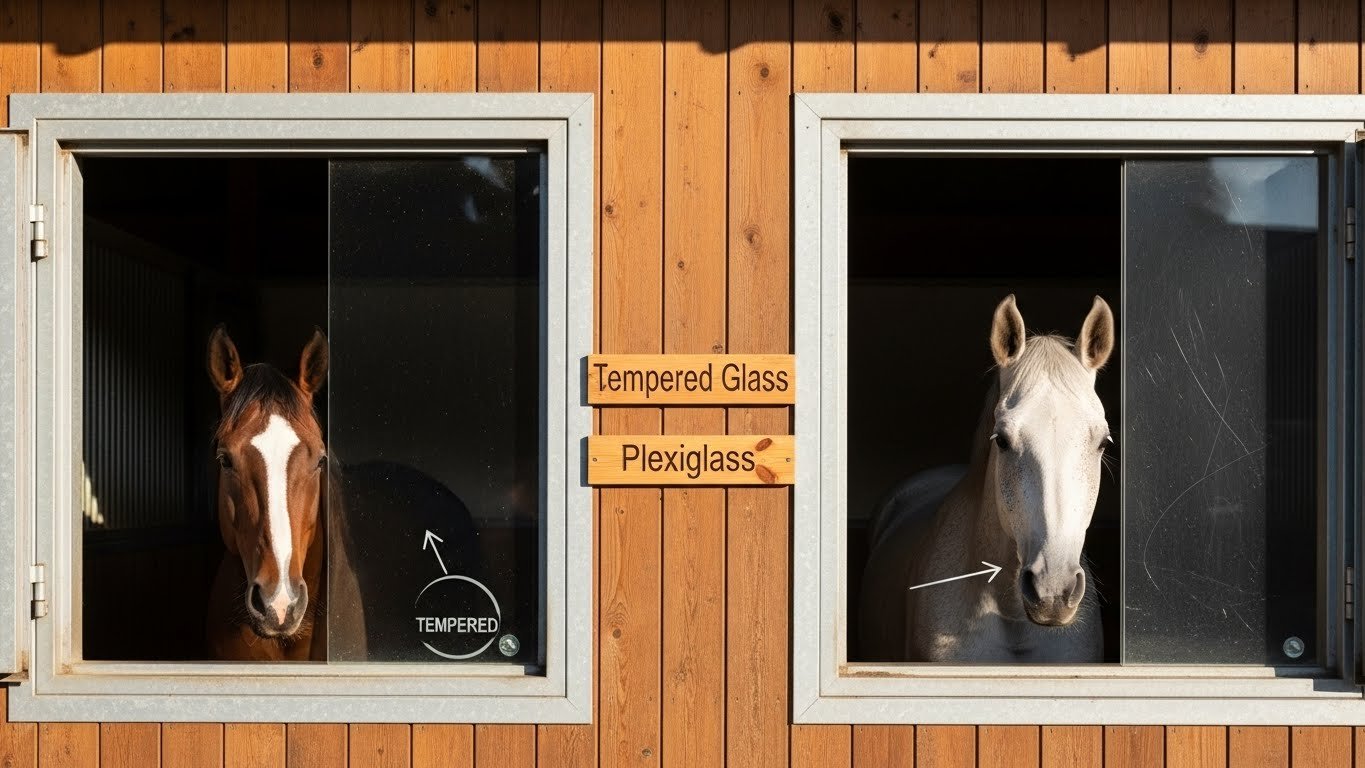
When outfitting a horse barn, window selection is a critical safety decision. A standard glass pane can turn into dangerous shards from a single kick, but even specialized safety options have important trade-offs. The choice between tempered glass and plexiglass impacts not only animal safety but also long-term maintenance and budget.
This guide breaks down the key differences between the two leading glass options for horse barns. We’ll compare the shatter-safe break pattern of tempered glass with the high-impact resistance of polycarbonate, which is rated to be 250 times stronger than standard glass. You’ll also learn about scratch resistance—where glass has a clear advantage with a Mohs hardness of 5-6—along with frame durability and typical costs for a complete, horse-safe window assembly.
Tempered Glass (The Safe Break)
Tempered glass is a type of safety glazing that, when broken, shatters into small, dull-edged, pebble-like pieces instead of large, sharp shards. This ‘safe break’ dramatically reduces the risk of serious injury to horses, making it the standard for windows and doors in barns.
| Glass Type | Common Thickness | Typical Use |
|---|---|---|
| Single-Pane Tempered | 0.25 in (≈6 mm) to 10 mm | Standard barn windows, Dutch doors, arena windows |
| Double-Pane Insulated Unit (IGU) | 5/8 in to 1 in (overall unit) | Windows and doors needing improved insulation |
Crumbling on Impact for Safety
When tempered glass receives a significant impact, it shatters into small, pebble-like pieces with dull edges. This break pattern is a deliberate safety feature that contrasts sharply with standard annealed glass, which fractures into large, sharp, and extremely dangerous shards. The primary reason for using it in barns is to protect horses and handlers from severe cuts if a window is kicked or otherwise broken.
Typical Thickness and System Integration
For single-pane applications in barn windows, the common thickness is 0.25 inches (approximately 6 mm). Some heavy-duty, steel-framed systems may use thicker 8 mm or 10 mm glass for added durability. For better thermal performance in colder climates or conditioned spaces, barn builders use double-pane insulated glass units (IGUs). These units, often called Thermopane glass, typically have an overall thickness of 5/8 inch to 1 inch.
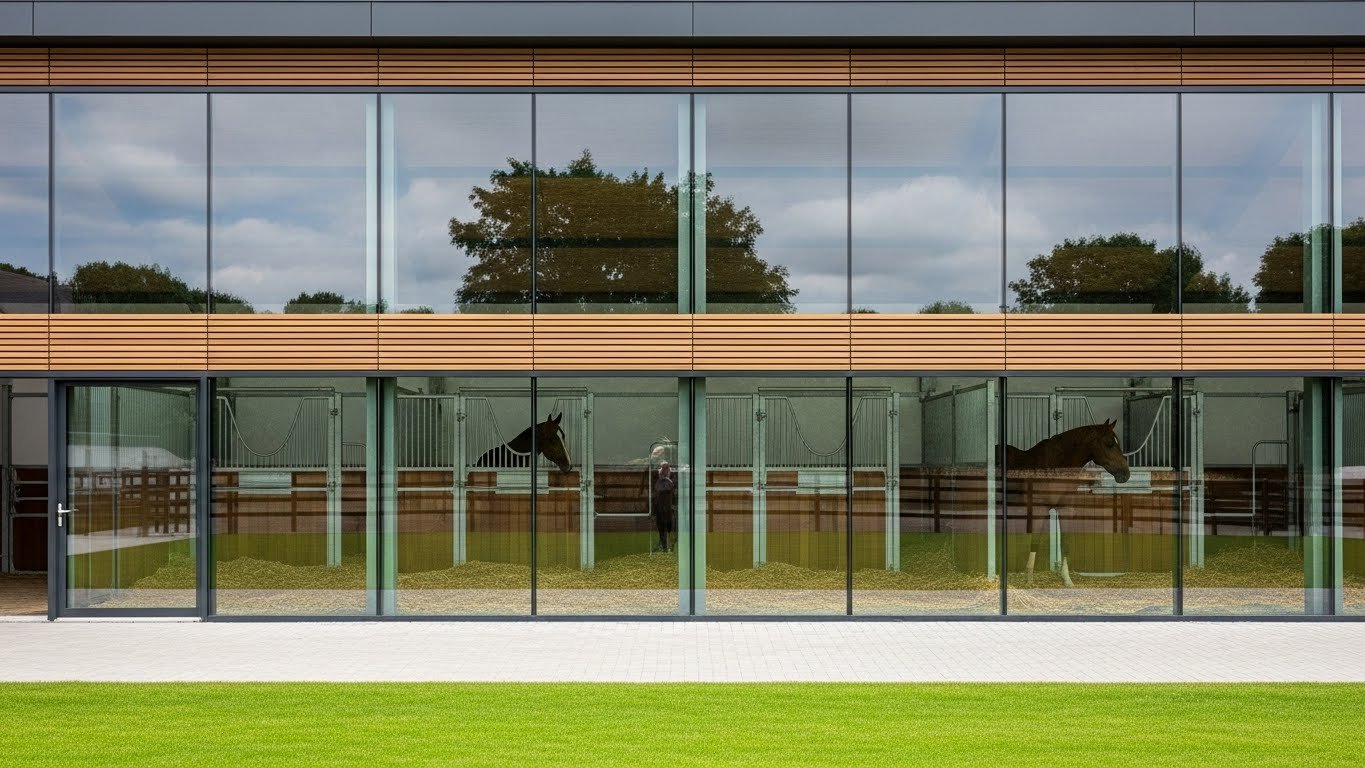
Tempered glass is almost always installed as part of a complete window system, not as a standalone pane. These systems feature robust steel or aluminum frames and include a protective grill. The grill prevents horses from making direct contact with the glass, adding an essential layer of protection and ensuring the entire assembly can withstand the rigors of an equine environment.

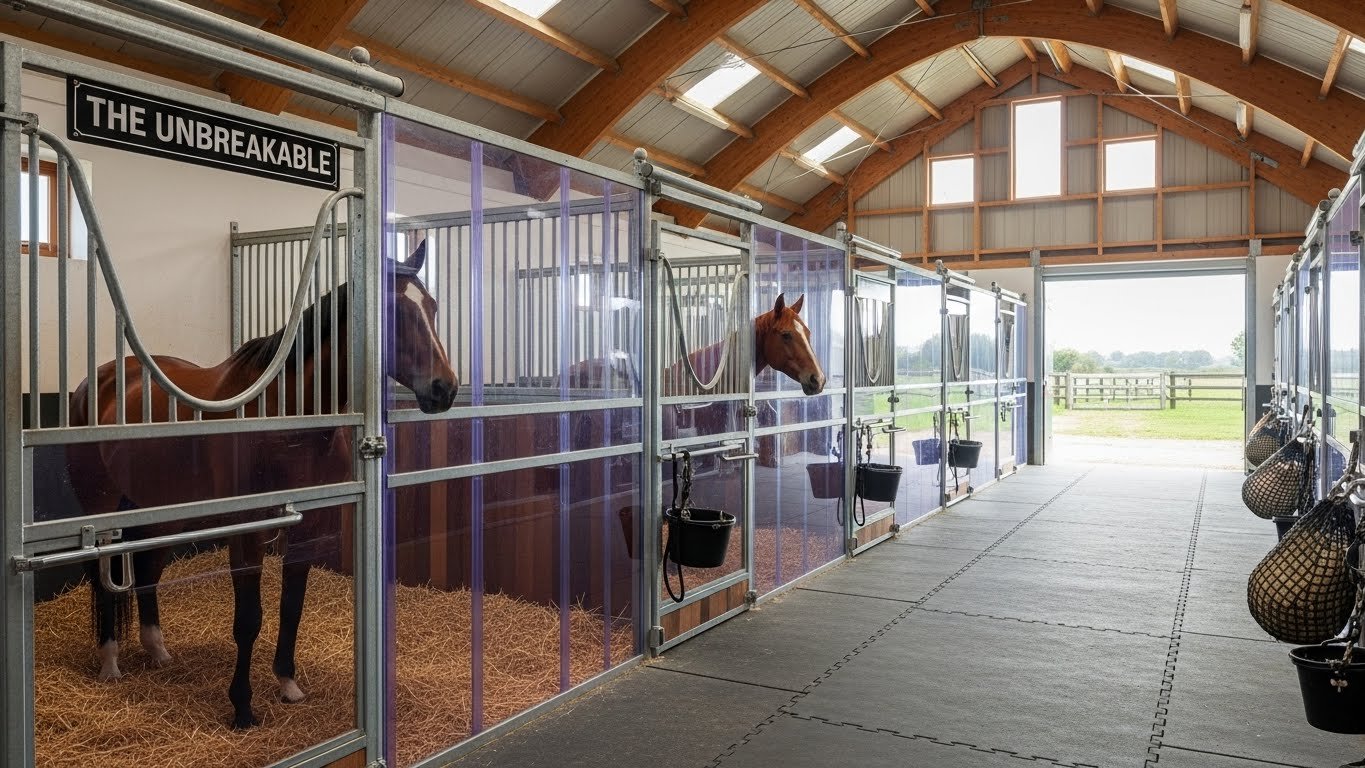
Plexiglass/Polycarbonate (The Unbreakable)
Polycarbonate is an extremely durable, high-impact, and shatterproof material used for horse barn windows. Unlike tempered glass, it can withstand powerful kicks without breaking, preventing serious injury to the horse. It is the standard choice for ensuring maximum safety and durability in equine environments.
| Feature | Polycarbonate | Tempered Glass |
|---|---|---|
| Impact Resistance | High-impact and virtually unbreakable from kicks | Shatter-resistant but can break under sufficient force |
| Safety Profile | Does not produce sharp shards upon failure | Breaks into small, granular pieces, not large splinters |
| Typical Thickness | Specified by impact performance, not thickness | 8mm – 10mm |
High-Impact Resistance for Equine Safety
Polycarbonate is engineered for high-impact durability, making it almost impossible for a horse to break with a kick. This material is a much safer alternative to shatter-resistant tempered glass, which can still fracture under extreme force. Using polycarbonate for windows ensures ventilation and visibility without the risk of catastrophic failure or the creation of dangerous sharp shards, which is a primary hazard associated with any type of glass in a barn.
Material Properties and Frame Integration
Modern polycarbonate sheets include inherent UV and scratch-resistant properties, helping them maintain clarity and structural integrity when exposed to outdoor elements. These panels are commonly installed in robust, corrosion-resistant steel frames, such as 50x50mm RHS (Rectangular Hollow Section) steel finished with hot-dip galvanization or a powder coating. This system can be integrated into various window designs, including hinged, sliding, or fixed panels, and is frequently paired with a protective steel grill for added security.
Scratch Resistance Comparison
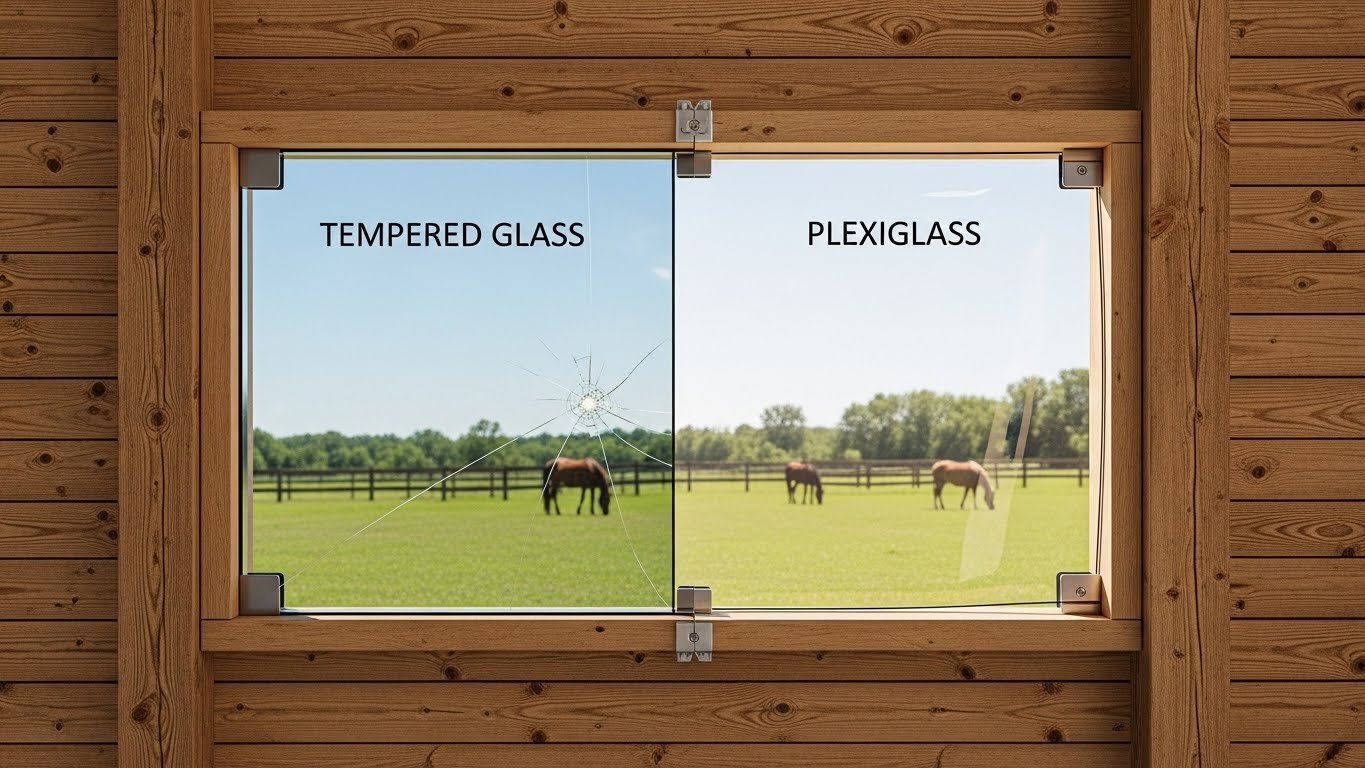
Mineral glass, with a Mohs hardness of 5–6, is significantly more scratch-resistant than plastic alternatives like acrylic or polycarbonate, which score around 3. For frames and grills, hot-dip galvanized and powder-coated steel finishes offer superior durability and abrasion resistance compared to standard paint.
Glazing Surface Hardness: Glass vs. Plastic
The surface hardness of glazing material directly impacts its long-term clarity. Standard soda-lime safety glass, used in horse barn windows, has a Mohs hardness rating of 5–6. In contrast, plastic alternatives like acrylic (PMMA) and polycarbonate, often called plexiglass, have a much lower Mohs hardness of around 3. This difference means glass is far better at resisting the fine scratches caused by dust, sand, and routine cleaning, which helps it maintain its transparency over many years.
Frame and Grill Coating Durability
The metal frames and protective grills on barn windows endure significant wear, and the finish applied to the steel determines its durability. Hot-dip galvanization bonds a thick zinc-iron alloy layer to the steel, creating a surface that is highly resistant to both abrasion and impact. Another durable option is a powder-coated finish applied over pre-galvanized steel. This process creates a tough, uniform surface that resists chipping and scratching much more effectively than standard liquid paint, preserving both the appearance and corrosion resistance of the window components.
Horse Stables Engineered for Any Climate
Final Thoughts
When choosing between these materials, your main consideration is the type of safety you need. Polycarbonate offers the highest level of impact protection and is practically unbreakable, making it the ideal choice for areas where a horse might kick. Tempered glass provides a different kind of safety; it will break under enough force, but it shatters into small, dull pieces to prevent serious injury. The trade-off is that glass offers superior scratch resistance and long-term clarity.
Ultimately, the glazing material is just one component of a safe barn window. Both tempered glass and polycarbonate require a robust system to be effective. A strong steel frame provides structural support, and a protective grill is essential to prevent horses from making direct contact with the pane. A complete, purpose-built window assembly is what truly ensures a safe environment.
Frequently Asked Questions
Is glass safe to use in a horse barn?
Standard glass is not safe. To be used in a barn, glass must be tempered safety glass at least 1/4-inch thick, installed high up (sills 4–5 feet from the floor), and protected by metal grills or bars to prevent any contact with horses.
Should I use tempered or laminated glass for horse stalls?
Laminated glass is the industry standard for safety. If it breaks, an internal layer holds the shards in place. Tempered glass shatters into small granules that can fall out and create a risk for cuts.
Does plexiglass turn yellow over time?
No, quality plexiglass does not visibly yellow. It is guaranteed to maintain its clarity, showing only a negligible color change even after 30 years of exposure to the elements.
Are there any truly unbreakable barn windows?
No window is completely unbreakable, but polycarbonate panels are the industry’s choice for maximum impact resistance. It is rated to be 250 times stronger than standard glass and can withstand significant force without shattering.
What kind of glass is needed for stall doors?
Stall doors require a minimum of 1/4-inch thick tempered or laminated safety glass. For safety, the glass must be protected by bars or a grill on the side facing the horse.
How much do horse barn windows cost?
A window built specifically for a horse barn typically costs between $150 and $750 per unit, not including installation. Adding a separate protective steel grill often costs another $450 per window.

 English
  Spanish
  French
  Arabic
  German
0 Comments