


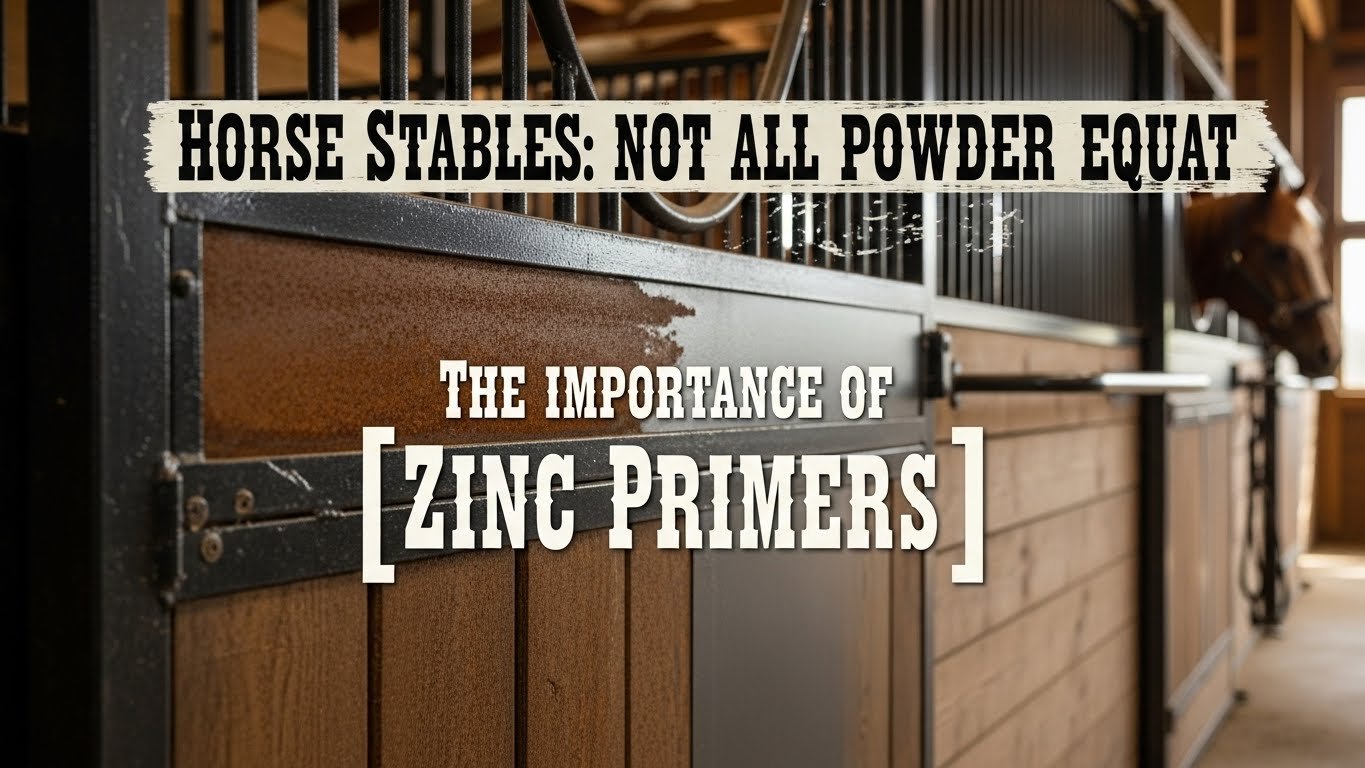
powder coated stall durability is the first checkpoint buyers should lock before they approve a supplier, budget, or production slot. The first thing every supplier tells you is to compare upfront price. That advice cost one buyer $50,000 when the pre-production sample of a powder coated stall looked flawless, but the mass production run started chipping within a year. The sample approval process had passed visual inspection, but no one asked for a quality tolerance on coating thickness or a salt spray report. That’s the gap between a pretty sample and a durable stall.
For any portable stall that will be moved, exposed to moisture, or used in a rental fleet, the real durability metric isn’t the color swatch or the FOB pricing line. It’s the ASTM B117 salt spray test. Powder coat fails at 500 hours. Hot-dip galvanizing passes 3,000+ hours with no red rust. That’s not a minor difference — it’s the difference between refinishing every 5 years and not thinking about corrosion for 20.
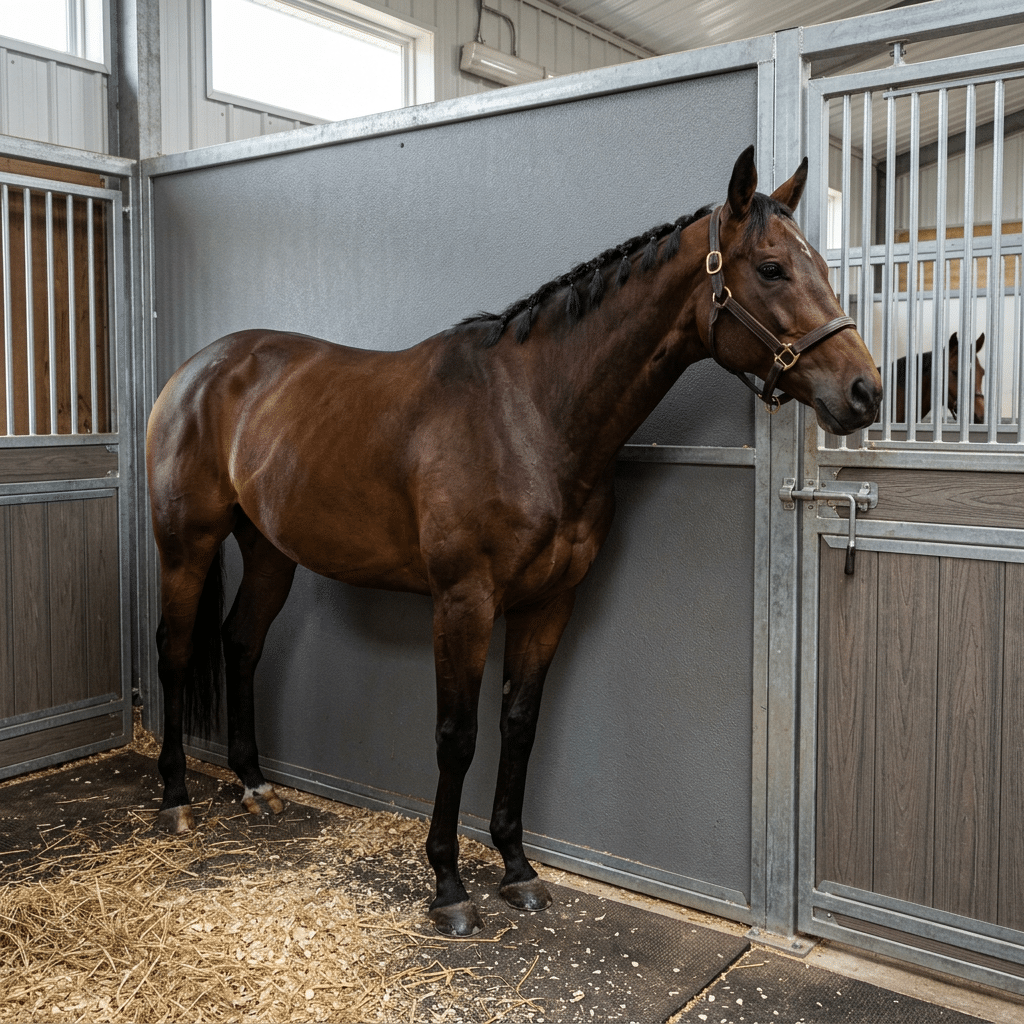
How Each Finish Is Applied and What It Does
Powder coat only protects the surface; galvanizing protects the steel itself.
Revêtement en poudre is applied as a dry powder via electrostatic spray, then oven-cured at high heat to form a continuous film. The coating thickness typically lands between 2 and 4 mils. It creates a uniform, decorative finish with color flexibility, but that’s where the good news ends. The protection is purely a surface barrier. Once that barrier is breached — from a horse kick, stacking during transport, or a rock kick-up — moisture seeps underneath. The corrosion that follows is hidden because the paint stays intact on top. Our Texas rental fleet documented this: powder-coated stalls looked fine for the first year, but by year three red rust had spread across multiple panels under the intact coating. The damage was already advanced before it became visible.
Hot-dip galvanizing works differently. The fabricated steel is cleaned with acid, fluxed, then immersed in a bath of molten zinc at roughly 850°F. The iron in the steel reacts with the zinc to form a series of zinc-iron alloy layers — a metallurgical bond, not a glue-on coating. Thickness ranges from 3 to 8 mils, nearly double the typical powder coat layer. The real advantage is cathodic protection: if a scratch goes through the zinc, the surrounding zinc sacrifices itself to protect the exposed steel. Even cut edges and drill holes stay rust-free. In the same Texas rental fleet, the galvanized stalls showed zero red rust after 5 years of the same handling.
- Épaisseur du revêtement : Powder coat: 2–4 mils. Galvanized: 3–8 mils.
- Corrosion resistance (ASTM B117 salt spray): Powder coat fails at 500 hours. Galvanized passes 3,000+ hours with no red rust.
- Protection mechanism: Powder coat: barrier only. Galvanized: barrier + cathodic protection.
- Maintenance cost per stall: Powder coat requires stripping and recoating every 5 years at ~$200 per stall. Galvanized: zero scheduled refinishing.
- Consequence of damage: Powder coat chips hide ongoing corrosion. Galvanized scratches show white zinc corrosion first — a warning, not a failure.
Here’s the hard truth for anyone buying 50 or 100 stalls. The initial price for powder coat is roughly 10% lower per unit. For a 100-stall fleet, that’s about $6,000 saved up front. But that saving evaporates by year 5 when the first refinishing bill arrives. Over a 10-year window, the total cost of ownership for that powder-coated fleet reaches $80,000 versus $60,000 for galvanized. And you never have to pull a galvanized stall out of service for refinishing — lost rental income is simply not a line item.
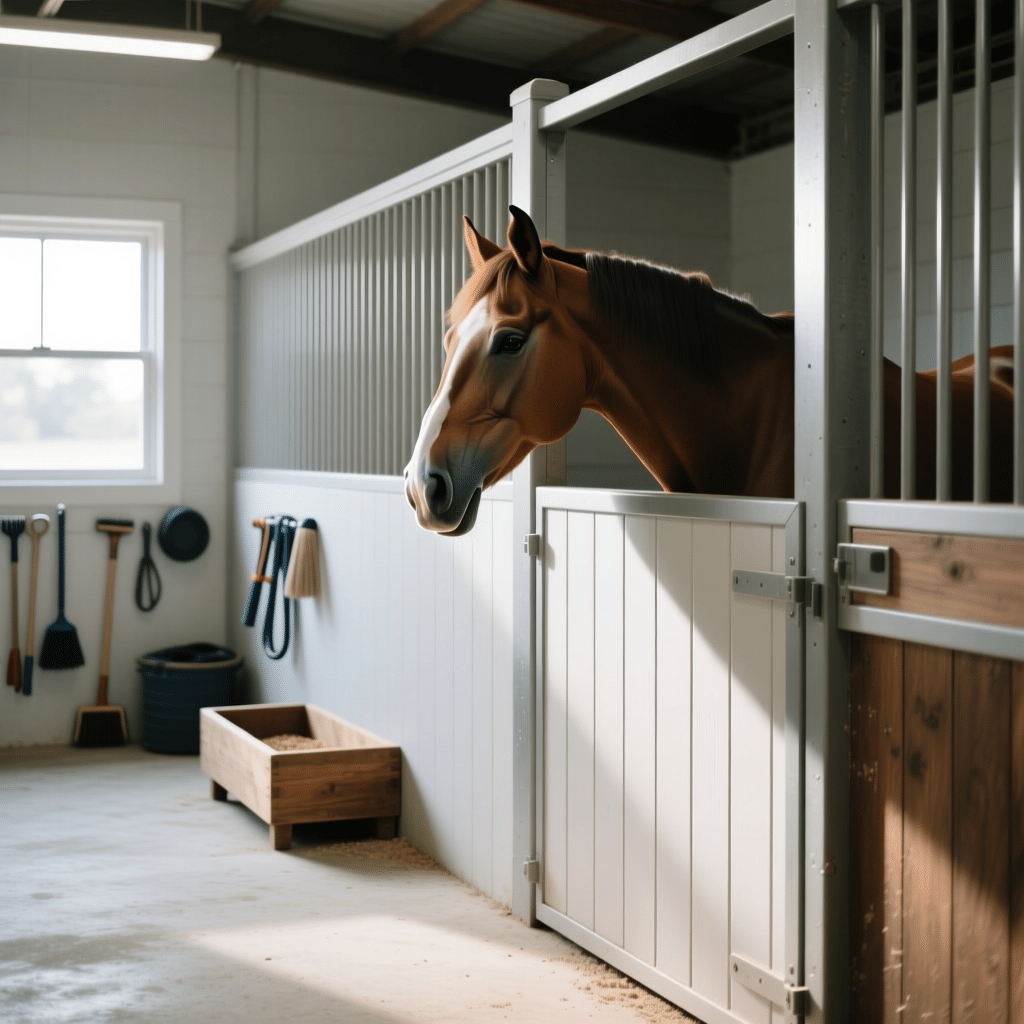
Real-World Performance in Rental Fleets
A Texas rental fleet proved powder coat fails in 5 years; galvanized lasts 20+.
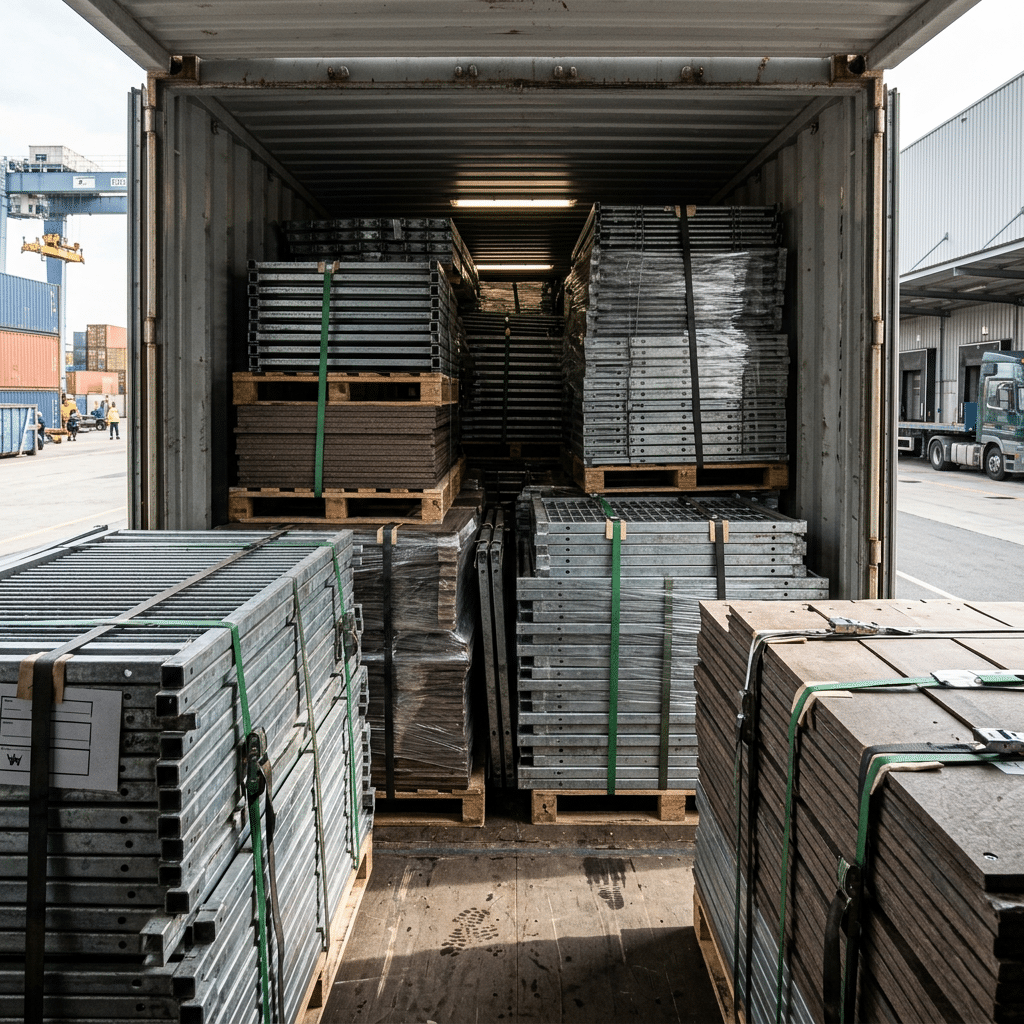
One of our clients operates a rental fleet of portable stalls in central Texas — 120 units moved between event grounds, fair circuits, and temporary training facilities. They started with powder coated stalls. After two years, chipping appeared on corner edges and where panels stacked during transport. By year five, visible rust had formed on roughly 40% of the units. The coating was hiding corrosion underneath, and the repair cost ate into their margin.
That same client switched to hot-dip galvanized stalls for the next batch. After five years of identical use — same roads, same weather, same handling — those units showed zero red rust. A few areas had white zinc corrosion (the sacrificial layer), but no structural damage and no need to pull stalls from service.
- Powder Coat: 500 hours to failure under ASTM B117 salt spray. Chips on contact points within 2 years in rental use.
- Hot-Dip Galvanized: 3,000+ hours with no red rust per ASTM B117. Rental fleets report zero maintenance after 5+ years.
Cost Comparison Over 10 Years
Powder coat saves upfront but costs $20k more over 10 years for 100 stalls.
Initial purchase cost: powder coated stalls run about 10% less per unit than hot-dip galvanized. On a 100-stall fleet, that’s roughly $6,000 saved at the point of sale. But that’s the only time powder coat is cheaper.
Refinishing cost: powder coat starts chipping after 5-7 years in rental or outdoor use. Each stall needs stripping and recoating at $200 per stall. Over 10 years, you pay for that twice — adding $40,000 to the total for 100 stalls. Galvanized stalls require zero refinishing over the same period.
Hidden downtime cost: refinishing takes stalls out of service for days or weeks. If you’re running a commercial rental operation, that’s lost revenue you can’t recover. Galvanized stalls never need that downtime. Run the full 10-year numbers: powder coat at $80,000 total cost of ownership vs. galvanized at $60,000. The upfront saving disappears the moment you schedule the first refinishing.
| Cost Item | Powder Coat (100 stalls) | Galvanized (100 stalls) | Note |
|---|---|---|---|
| Initial Purchase Cost | $36,000 | $60,000 | Powder coat is 10% less upfront but requires refinishing |
| Refinishing Cost (every 5 yrs, 2 times) | $40,000 | $0 | Each refinishing costs $200/stall; galvanized needs none |
| Total 10-Year Cost | $80,000 | $60,000 | Galvanized saves $20,000 over 10 years |
| Lost Rental Income (downtime) | ~$5,000 (est.) | $0 | Refinishing removes stalls from service; galvanized avoids lost revenue |
Conclusion
The decision between powder coat and hot-dip galvanizing comes down to a single number: $20,000. That’s the difference in total cost of ownership for a 100-stall fleet over ten years. The salt spray test confirms what our Texas rental fleet data shows — powder coat fails at 500 hours, galvanized passes 3,000. That 6x margin isn’t academic. It means your stalls stay in service, not in the refinishing shop. If you’re running a commercial operation where every stall generates weekly revenue, the downtime from powder coat chipping alone costs more than the upfront price gap.
Check your own application against the two criteria that matter most: moisture exposure and frequency of movement. Outdoor or rental fleets? Galvanisé à chaud, no second thought. Indoor, low-abuse barns where color matters? Powder coat works fine — just budget for recoating at year five. Review the quality tolerance specs on any quote you receive. If the supplier can’t provide ASTM B117 results or a coating thickness guarantee of 3–8 mils, you’re buying a liability. Request a quote for your exact stall count and see the difference in lifecycle cost for yourself.
Questions fréquemment posées
Which is better for outdoor horse stalls: powder coat or galvanized?
Hot-dip galvanized is better for outdoor stalls because it provides cathodic protection that lasts 20+ years against rust. Powder coat fails in 5–7 years due to chipping from weather and transport. Always specify hot-dip galvanized for any outdoor or rental stall fleet.
How long does powder coating last on horse stalls?
Powder coating typically lasts 5–7 years on horse stalls before chipping and rust become visible, based on real rental fleet data. After 5 years, rust spreads from corners and. Budget for recoating or replacement within 5 to 7 years in outdoor use.
Can I repaint a galvanized stall?
Yes, you can repaint a galvanized stall if you properly clean and etch the zinc surface first, but it is rarely necessary. The galvanized coating is self-maintaining through. Only repaint if appearance is critical; otherwise let the zinc layer do its job.
Are powder coated stalls safe for horses?
Powder coated stalls are safe when new, but chipped coating creates sharp edges and exposed rust that can injure horses. The hidden corrosion under chips is not visible, so regular. Inspect stalls monthly and repair any chips immediately to keep them safe.
Does powder coating hide corrosion once it chips?
Yes, powder coating hides corrosion because the intact coating can cover rust underneath, making it hard to spot. This is a key risk: visual checks often miss the problem. Do not rely on visual inspection alone; use galvanized for guaranteed corrosion visibility.

 French
  English
  Spanish
  Arabic
  German
0 commentaires