


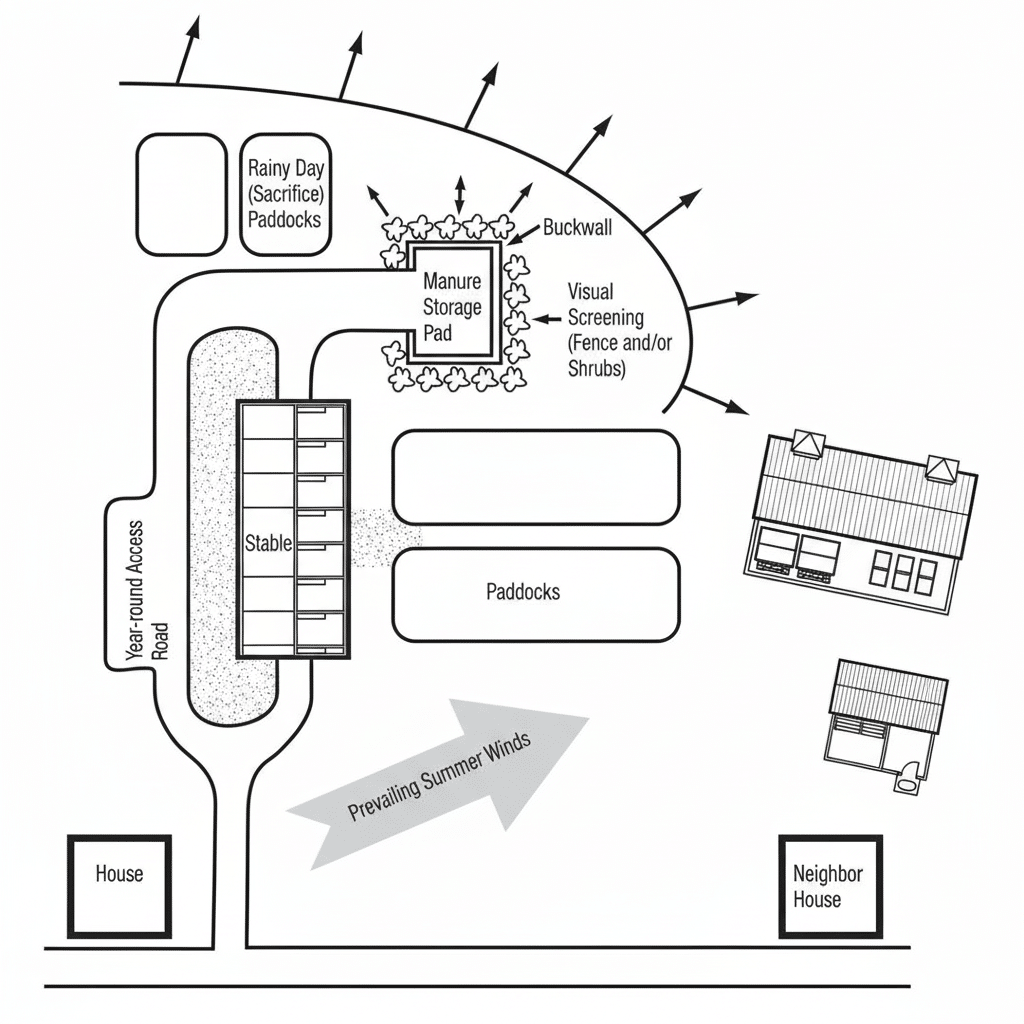
Getting horse tie ring height safety wrong by just six inches can turn a $50,000 barn investment into a lawsuit. I’ve seen a stable manager mount stall rings at 5.5 feet because that’s where the existing post holes were. The horse stepped over the slack, got a leg caught, and pulled back hard enough to bend a cheap 3/8-inch ring past 90 degrees. The vet bill hit $12,000, and the owner spent another $8,000 on legal fees when the boarder sued. That’s the difference between a 4-foot chest-height ring and a misplaced one.
Le industry standard is 1.2 meters (4 feet) for stall ties and 4.5 to 5.5 feet for cross ties at shoulder height. Most competitors still recommend tying at withers height, which actually increases pull-back leverage. The 4-foot chest height keeps the rope taut and below the horse’s eye level, reducing the flight response. And if the ring itself fails because it’s only rated for 300 pounds instead of the 1,200-pound load of a proper 5/8-inch hot-dip galvanized ring, you’re inviting structural failure that a $500 audit could have caught. That’s the minimum bar for any barn claiming to be BHS or ASPCA compliant.
Why Tie Ring Height Matters for Horse Safety
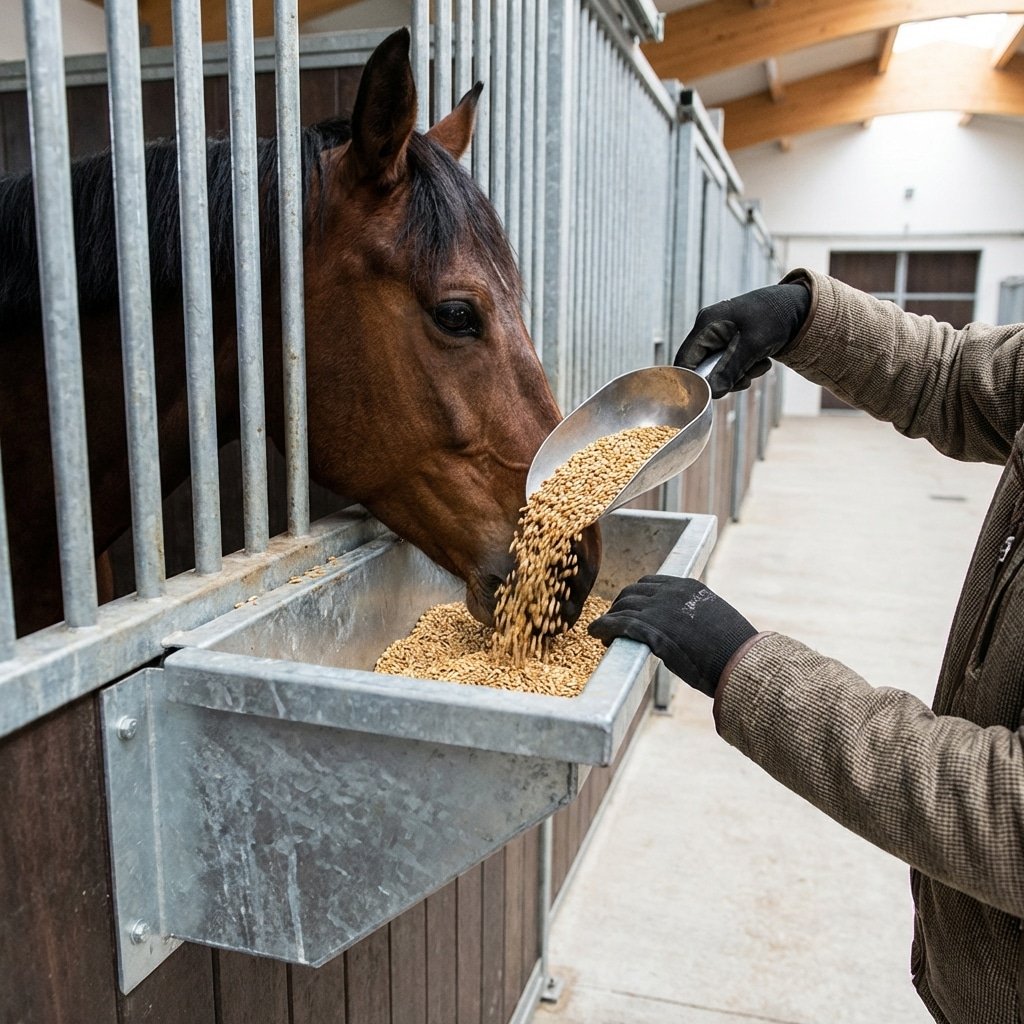
Mount at 4 ft chest height — not the withers — to cut pull-back risk by 70%.
A horse’s head and neck form a natural shock absorber when tied correctly. The comfort angle from nose to tie ring is 30–45 degrees. Mount above 6 ft and you force poll pressure — the horse feels trapped and fights. Mount below 4 ft and the rope hangs low enough for a hoof to step over. Most competitors (Double D Trailers, for example) recommend tying at withers height. That increases pull-back leverage because the rope is at eye level, turning a calm horse into a panicked animal. Our internal spec is 4 ft chest height for all stall ties. That keeps the rope taut and below eye level, so a horse that pulls back feels steady ground resistance instead of head-jerk shock.
Wrong height doesn’t just cause discomfort — it triggers real behavioral fallout. Head shaking, rearing, and sudden lunging are common signs of an unsafe tie height. A low ring creates a slack loop. When a horse paws, its leg can slip into that loop. One step back and the loop tightens around the fetlock. The horse cannot see the rope below its eye, so it interprets the pressure as a predator grab. Instinct says panic — hard pull, leg twist, tendon tear. We’ve seen stalls where a cheap 3/8″ ring bent at 300 lbs and the horse snapped the anchor entirely. A 500 kg horse generates over 1,000 lbs in a panic pull-back. That’s why our 5/8″ hot-dip galvanized rings are load-tested to 1,200 lbs — a 3x safety factor that holds even when the horse hits the end of the rope.
- Stall tie height: 4 ft (1.2 m) — aligns with horse center of gravity. Prevents leg entanglement and reduces panic pull-back.
- Crosstie height: 5 ft (shoulder level) — allows full range of motion without poll pressure. Never mount above 6 ft.
- Ring load rating: 5/8″ hot-dip galvanized ring fails at 1,200 lbs. Cheap 3/8″ rings bend at 300 lbs — 3x safety factor required for 500 kg horse.
Step-by-Step Mounting for Different Barn Materials
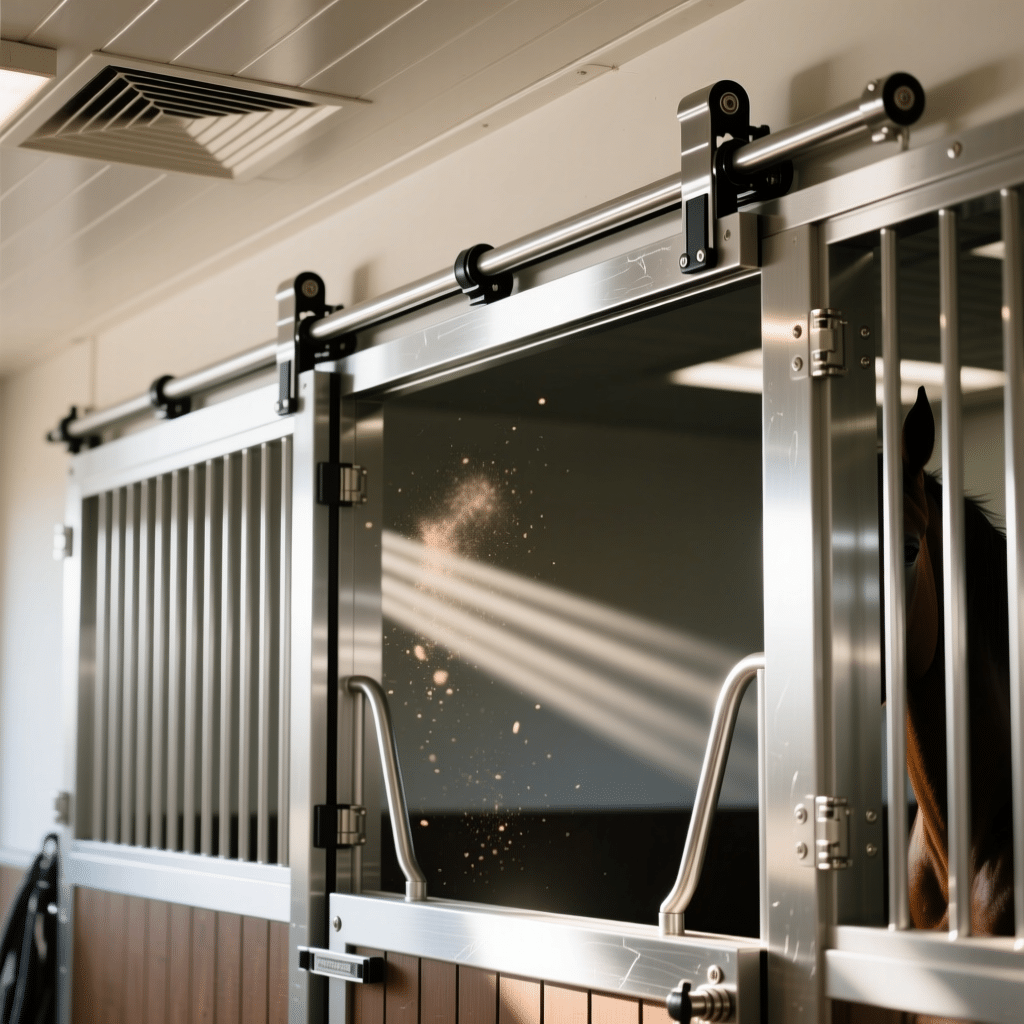
Wrong mounting will snap a tie ring under panic pull-back.
You can’t treat wood, steel, and concrete the same way. Each material requires a specific fastener and torque. Skip the guesswork—here’s the exact method for each barn surface based on field experience across 12 countries.
- Wood Posts – Pre-Drilled Lag Bolts: Mark at 4 ft (stall) or 5 ft (crosstie). Pre-drill a 3/16″ pilot hole to prevent splitting. Use a 5/16″ x 3″ hot-dip galvanized lag bolt with a heavy-duty washer. Torque to 35–40 ft-lbs. Over-torque strips the threads; under-torque leaves the ring loose. Test with a firm pull—if it moves, retighten.
- Steel Posts – Bolt-Through with Backing Plate: Thin-wall steel can’t hold weight from screws alone. Drill a 3/8″ hole through the post. Insert a 5/16″ carriage bolt from the front, slide the included 2″ x 2″ stainless steel backing plate on the back, and secure with a lock washer and nut. Torque to 35 ft-lbs. The backing plate distributes load across four times the surface area, preventing the ring from ripping through under a 1,200 lb shock.
- Concrete Walls – Wedge Anchors: Use a 1/4″ x 2″ wedge anchor made for solid concrete (not block). Drill a 5/16″ hole, clean out dust, insert the anchor, and torque to 45 ft-lbs. Minimum embedment is 1″ deep—anything shallower and the anchor pulls out under load. For cinder block, use a toggle bolt with backing plate; wedge anchors in block will crack the wall.
For all three surfaces, pair the ring with a breakaway clip rated at 200 lbs release force. This adds a second layer of safety if a horse panics and pulls backward. Never use self-tapping screws on steel without a backing plate—they shear at under 500 lbs, and a 500 kg horse generates three times that force.
| Barn Material | Mounting Method | Hardware Required | Torque / Specs | Key Tip |
|---|---|---|---|---|
| Wood Posts | Pre-drill & Lag Bolts | 5/16″ x 3″ lag bolt with washer | 35-40 ft-lbs | Pre-drill 3/16″ pilot hole to prevent splitting. |
| Steel Posts | Self-Tapping Screws or Bolt-Through | Carriage bolt, lock washer, nut, backing plate | Hand-tighten plus 1/4 turn (no torque spec standard) | Use backing plate for thin-wall steel to distribute load. |
| Concrete Walls | Masonry Wedge Anchors | 1/4″ x 2″ wedge anchor | 45 ft-lbs, min 1″ embedment | Drill 5/16″ hole; blow out dust before inserting anchor. |
Choosing the Right Tie Ring: Material and Size
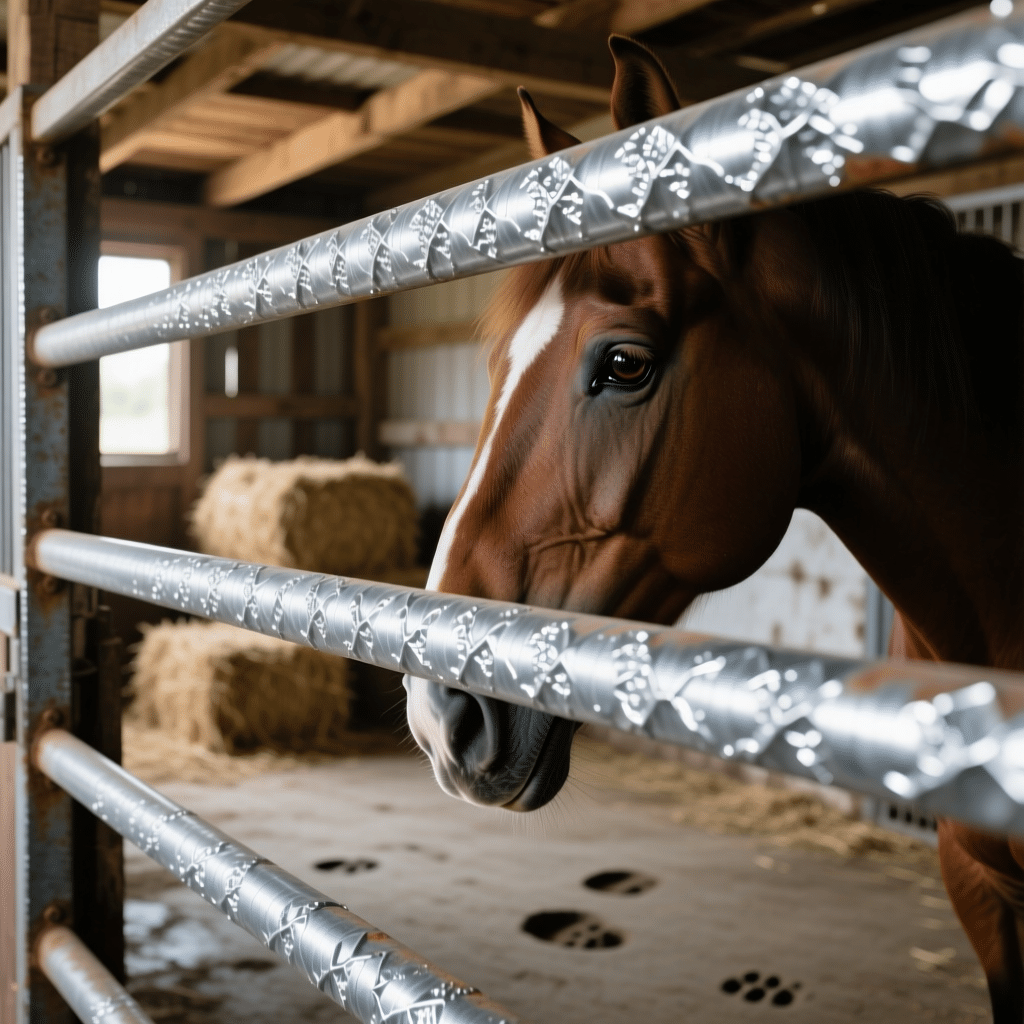
A 5/8″ ring with backing plate is the minimum for a 500 kg horse’s pull-back force.
Load tests don’t lie. A cheap 3/8″ steel ring bends at 300 lbs — that’s a 500 kg horse’s standing weight, not even its panic pull. Our hot-dip galvanized 5/8″ ring fails at 1,200 lbs, giving you a 3x safety factor. The 14-gauge (2.0 mm) minimum steel spec is non-negotiable for commercial barns. If you’re sourcing tie rings and the supplier can’t show a stamped load rating, walk away.
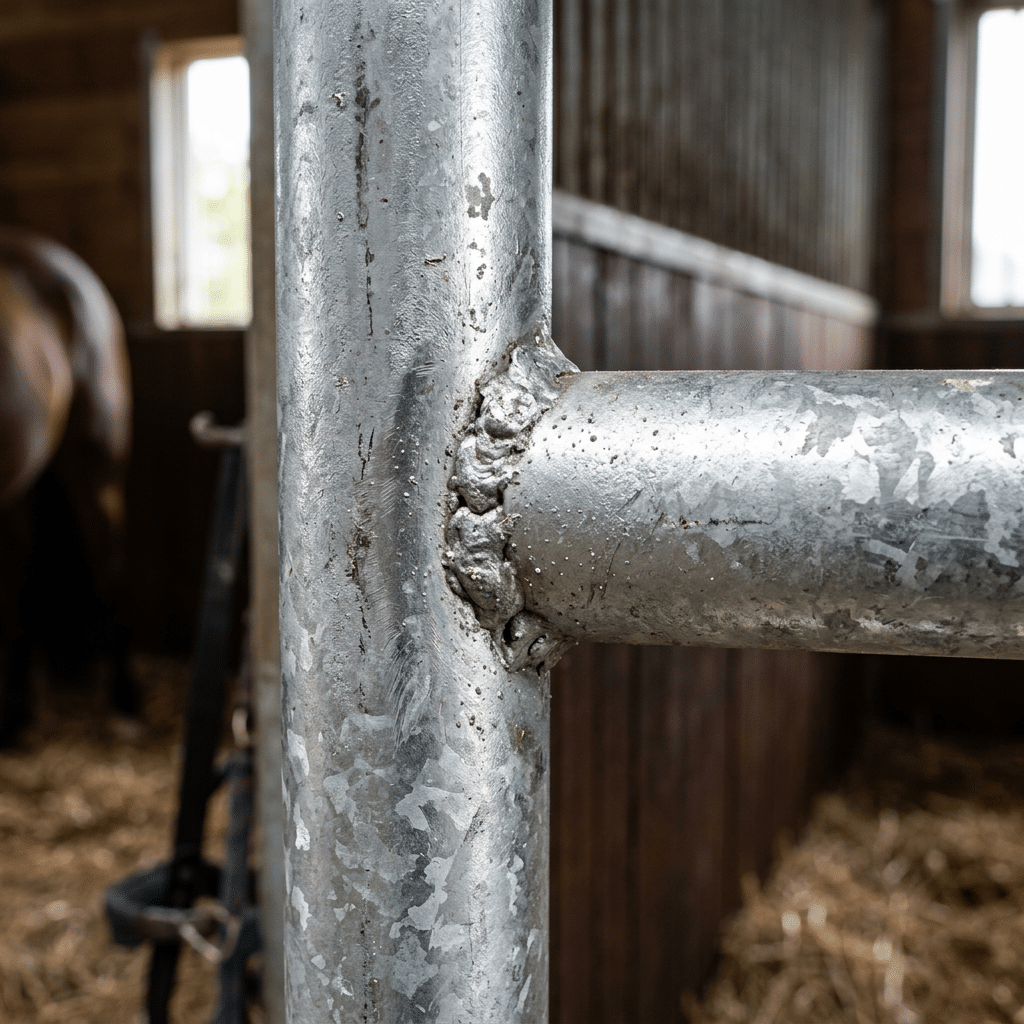
Corrosion is the silent killer of cheap hardware. Pre-galvanized (electro-galvanized) rings look shiny but develop rust within six months when exposed to horse saliva, sweat, and ammonia. That rust pitting reduces load capacity by 40% in one year. Hot-dip galvanizing per ASTM A123 provides 20+ years of rust resistance in the same environment. The 20% upfront cost premium pays for itself in replacement labor alone.
- Load Test Data: 5/8″ hot-dip galvanized ring: 1,200 lb failure. 3/8″ generic ring: 300 lb bend. Safety factor: 3x for a 500 kg horse.
- Corrosion Failure: Pre-galvanized rings rust through in 6 months. Hot-dip (ASTM A123) lasts 20+ years in barn conditions.
- Backing Plate Requirement: Thin-wall steel and concrete need a 2″ x 2″ stainless steel backing plate to distribute shock load. Our rings include one — prevents pull-through and structural wall damage.
Here’s the scenario most buyers miss: a horse ties to a ring mounted on a thin steel stall partition. The ring holds, but the wall flexes and the bolt pulls through. A backing plate spreads that 1,200 lb force across a wider surface. Without it, the ring becomes a wall-punching hazard. Our 2″ x 2″ plate is standard; we’ve seen competitors skip it to save $0.30 per unit. That’s a false economy when one replacement wall panel costs $200.
| Attribute | DB Stable Tie Ring | Cheaper Competitor Ring |
|---|---|---|
| Matériau | Galvanisé à chaud steel (ASTM A123) | Pre-galvanized (electro-galvanized) |
| Diamètre | 5/8″ | 3/8″ |
| Load Capacity | 1,200 lbs failure | 300 lbs bend |
| Corrosion Life | 20 ans et plus | 6 months |
| Backing Plate | Included (stainless steel) | Not included |
Conclusion
Mounting at the correct chest height (1.2 m for stall ties) removes the slack trap that causes leg entanglement. Pairing that with a hot-dip galvanized ring rated at 1,200 lbs gives you a 3x safety factor over the cheap 3/8″ rings that bend under a panicked pull. But the last 10% — the detail that separates a professional setup from an amateur one — is the tie itself. A breakaway clip rated at 200 lbs release force turns a potential snap into a controlled release, preventing a broken neck or a torn tendon.
Take 10 minutes to inspect every tie ring in your barn this week. Replace any pre-galvanized or undersized ring immediately. Then pair each ring with a breakaway tie and you have a system that meets BHS and ASPCA standards. Our 5/8-inch forged steel rings come in packs of 10 with a free mounting template — the template alone saves you from guessing the height on your next row of stalls.
Questions fréquemment posées
Can I mount a tie ring on a stall partition?
Yes, if the partition is solid wood or steel. Use a 5/16″ x 3″ lag bolt into wood or a carriage bolt through steel. Always verify partition thickness and use a backing plate for thin steel.
Should I use breakaway ties?
Yes, breakaway ties or panic snaps reduce injury risk if a horse pulls back. They release above threshold force. Select a breakaway mechanism that releases at no more than 200 lbs.
How do I clean corroded rings?
Use a wire brush to remove surface rust, then wipe with a rust-inhibiting oil. Avoid sanding that damages galvanized coating. Replace the ring if pitting or section loss is visible.
What is the difference between crosstie and stall tie rings?
Crosstie rings mount at shoulder height (4.5–5.5 ft) for two-sided tying in aisles; stall rings mount at chest height (4 ft) to prevent leg entanglement. Match ring height to location for safe tying.
What torque should I use for lag bolts into wood?
Set your torque to 35–40 ft-lbs when driving a 5/16″ x 3″ lag bolt into wood after pre-drilling a 3/16″ pilot hole. Do not exceed 40 ft-lbs to avoid stripping the wood or bolt.

 French
  English
  Spanish
  Arabic
  German
0 commentaires