


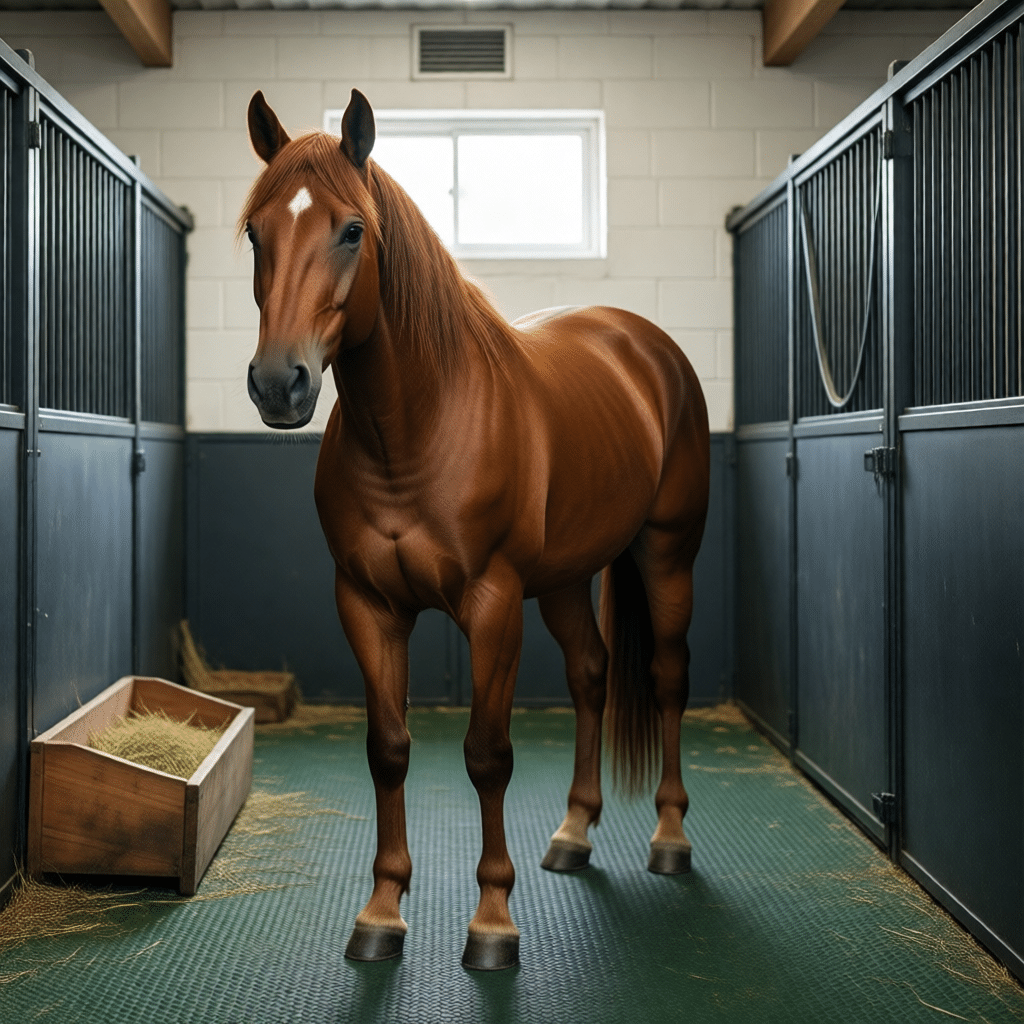
horse stall height safety is the first checkpoint buyers should lock before they approve a supplier, budget, or production slot. The manufacturing facility in Anping, China, has built equestrian infrastructure since 2013, shipping to nine countries including the UK, Australia, and Allemagne. Over those years, the most common retrofit request hasn’t been for taller ceilings—it’s been for stall fronts that let a horse’s head pass through without striking a rail. The industry standard solid panel creates a guaranteed neck-injury zone, yet almost no commercial specification calls out that risk. That gap is worth examining, because ignoring it costs far more than the $300–$600 per stall to fix.
Why Most Stall Height Standards Miss the Real Danger
A 7 ft door header is a guaranteed concussion zone for a 16-hand horse — yet most barns still use them.
The industry fixates on the 8 ft partition height recommended by PSU Extension, but the real danger lives where the horse enters and where it spends its time: the stall front and door opening. Most stall door manufacturers supply openings slightly over 7 ft. A 16-hand horse’s head reaches 8 ft when fully elevated. That 7 ft header becomes a guaranteed impact zone during rearing or spooking. The result isn’t theoretical — barns with 7 ft openings routinely see concussions, skull fractures, and veterinary bills averaging $5,000 to $15,000 per incident.
- Competitor standard: Solid top rails at 5–6 ft create a neck injury zone when a horse rears. Combined with door headers just over 7 ft, these two features form a head-trauma trap.
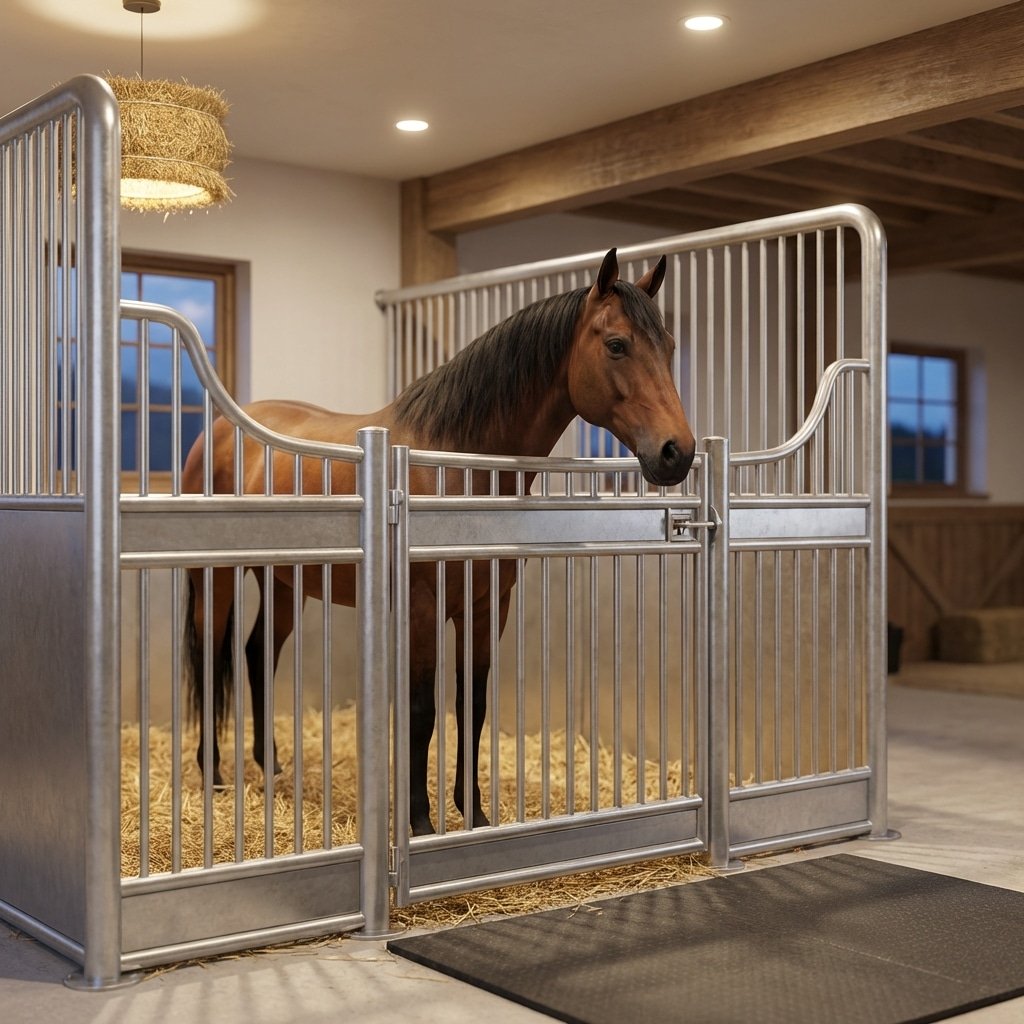
- Our half‑mesh stall front: Extends safe mesh area to 8 ft — solid lower 3 ft for containment, full-height mesh above. No solid rail at neck height. Horse can rear without striking its head.
- Competitor door header: Fixed at ~7 ft. Cannot be adjusted without structural ceiling work costing $1,500+ per stall.
- Our trackless sliding door: Adjustable header from 8 ft to 10 ft. Retrofits existing openings for $350–$600 per stall — 60–80% less than raising the ceiling. No bottom track to trap hooves.
Regional horse sizes and climate also influence safe height. Warmbloods common in Australia and Germany often exceed 16 hands, requiring 10 ft clearance. Our UK, Australia, and Germany solution pages map specific stall heights to local breeds and compliance rules like BHS and FEI — something no competitor’s standard spec sheet addresses.
Real Cost Breakdown of Stall Height Compliance in 2026
Retrofitting a low header cuts compliance cost by 60% vs.
Building a 100‑stall facility to safe height is cheaper than covering one skull‑fracture lawsuit. The PSU Extension notes most manufacturers ship door openings just over 7 ft — a guaranteed head‑strike zone for any horse over 15 hands. Fixing that gap requires a decision: replace panels, raise the ceiling, or retrofit the door header alone. Each option carries a different price tag and a different liability outcome.
- New 8‑ft standard panels: $1,200–$1,800 per stall, with 5–15% bulk discount for 50+ units. Includes hot‑dip galvanized frame and half‑mesh front — the only way to guarantee 8 ft of safe head clearance from floor to top rail.
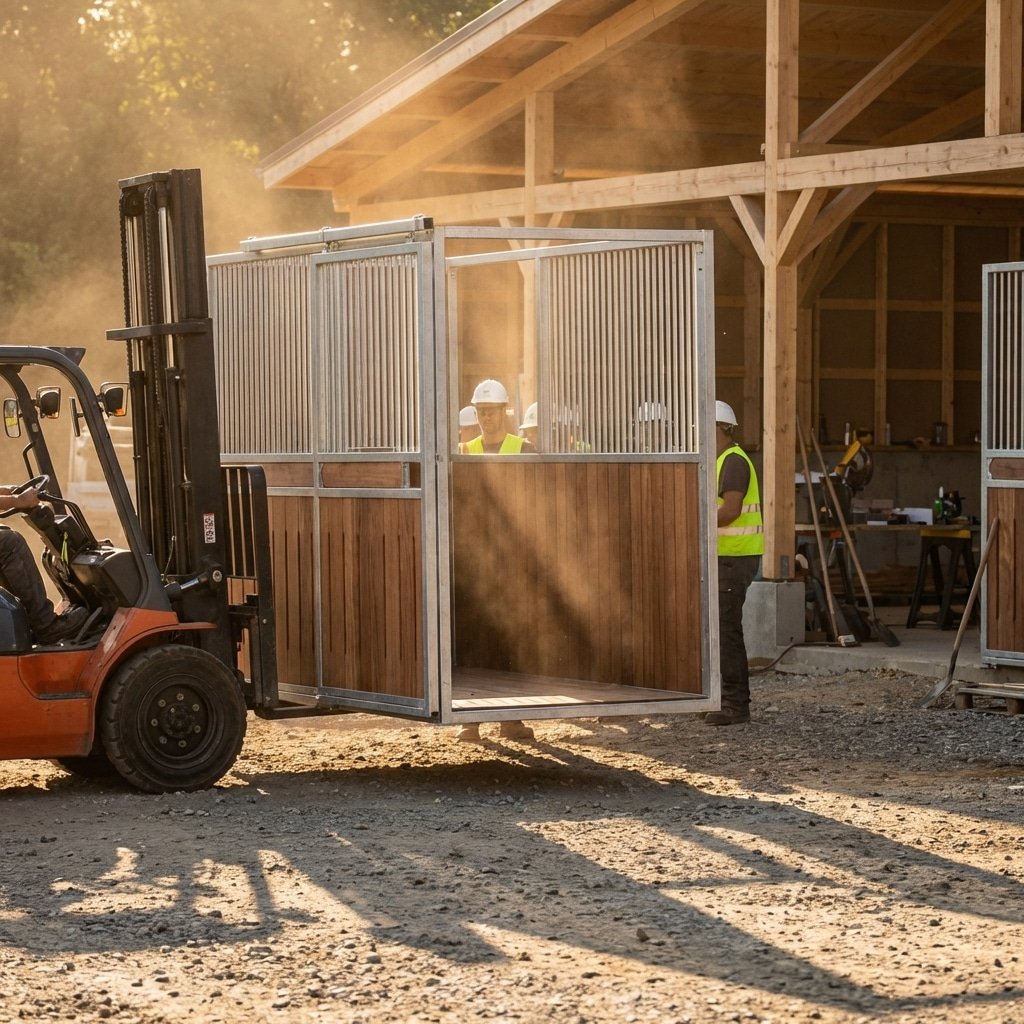
- Retrofit existing 7‑ft door header: $350–$600 per stall using our adjustable trackless door kit. No structural engineering, no ceiling modification. Install takes 2–3 hours with two workers. This is the cost‑effective fix that no competitor guide mentions.
- Raise ceiling from 9 ft to 12 ft: $15–$25 per square foot in structural cost. For a 12×12 stall that adds $2,160–$3,600 per stall — plus engineering fees and downtime. Only necessary if you also need overhead clearance for arena lights or hay storage.
- Veterinary cost per head‑trauma incident: $5,000–$15,000 for a fractured skull, not counting facility downtime, insurance premium hikes, or reputational damage. One incident wipes out the savings from buying cheap 7‑ft stalls.
Our MOQ is 10 stables, and tiered pricing kicks in at 50 panels. Expedited 1–2 week delivery from regional hubs in Sydney and Warsaw keeps projects on schedule. Every order over 20 units comes with a dedicated account manager who reviews your barn layout and flags door‑header risks before fabrication — a service no other manufacturer offers.
| Solution | Cost per Stall | Safety Benefit | Risk / ROI Note | Total for 100 Stalls |
|---|---|---|---|---|
| Adjustable 8 ft Half-Mesh Panels (DB Stable) | $1,200 – $1,800 | Eliminates 5 ft solid rail neck injury zone; 8 ft head clearance | Bulk discount 5–15%; 20‑year rust warranty; FEI/BHS compliant | $120,000 – $180,000 |
| Retrofit Door Header (Trackless Sliding Kit) | $350 – $600 | Adjustable header 7.5–10 ft; prevents head strikes at door | 60–80% savings vs. ceiling raise; 2‑hour install per stall | $35,000 – $60,000 |
| Structural Ceiling Raise (9 → 12 ft) | $2,160 – $3,600 | Full overhead clearance for rearing | Requires engineering; $15–$25/sq ft; 4–6 week retrofit | $216,000 – $360,000 |
| Competitor Solid Stall Front (5 ft Rail) | $600 – $900 | Low initial cost but creates neck injury zone | Highest head trauma risk; vet costs $5k–$15k per incident | $60,000 – $90,000 |
Horse Stall Height vs. Alternative Safety Measures
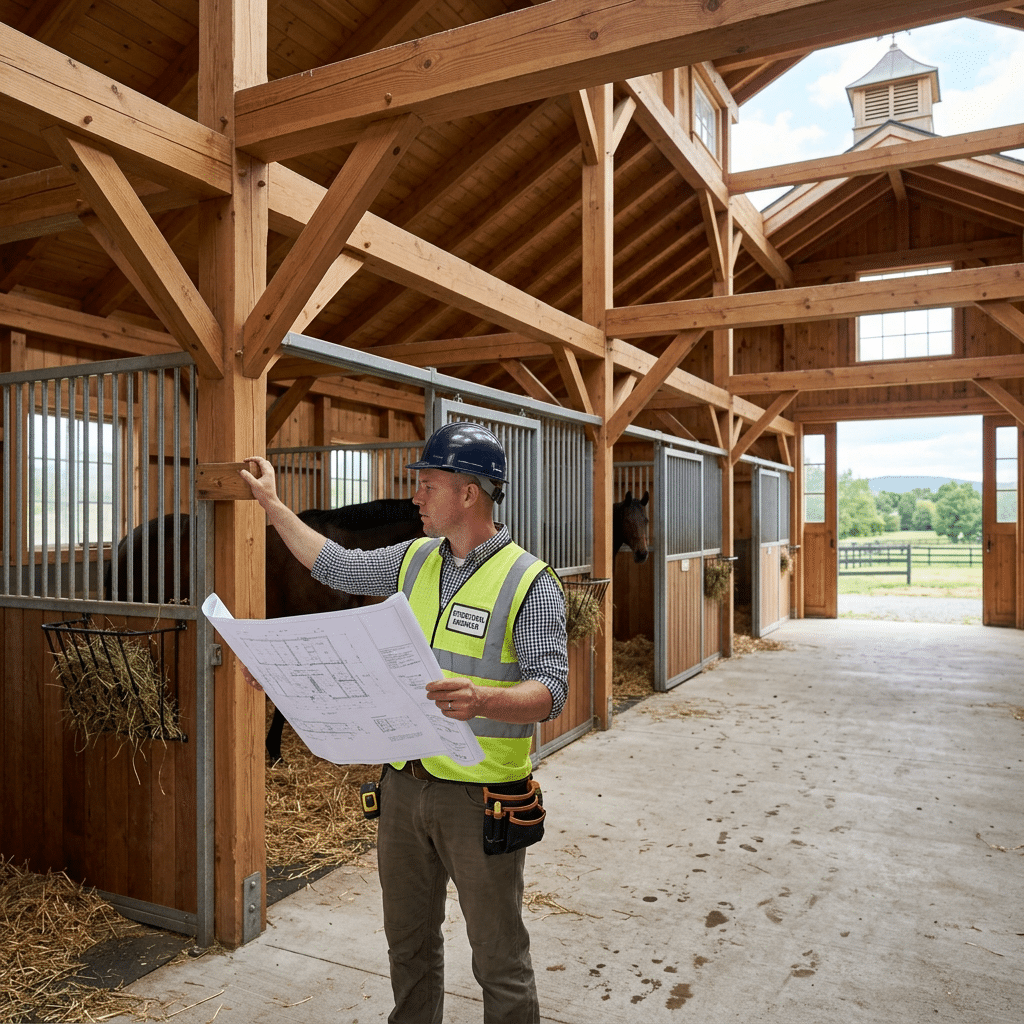
The obvious stall height fix — a ceiling raise — is also the most expensive.
Most competitor guides stop at recommending an 8 ft partition. They never warn you that a solid top rail at 5 ft creates a guaranteed neck injury zone when a horse rears. That’s the blind spot. The alternative measures below show the real trade-offs.
- Adjustable-height half-mesh partition (a solution):Cost $1,200–$1,800 per stall. Allows 8–12 ft head clearance without any roof work. The half-mesh extends to the full 8 ft, eliminating the 5 ft solid rail danger. Comes with 20-year rust warranty on hot-dip galvanized steel frame.
- Dutch door with half-mesh: Cost $800–$1,200. Prevents head striking on the door, but still has a 3 ft solid lower panel. If the upper half is not mesh, the horse can catch its neck on the top rail. Partial safety.
- Ceiling raise: Cost $15–$25 per sq ft, plus structural engineering fees. Provides full overhead clearance but often exceeds $1,500 per stall. Not cost-effective for large facilities.
- Solid stall front (competitor standard): Cost $600–$900. Cheap upfront, but the 5 ft solid rail creates a neck injury zone. Horses striking their head on solid wood or metal rails risk skull fractures and concussions. Highest liability.
- Best value: Adjustable-height half-mesh panels. Balance cost, safety, and flexibility for different horse sizes. For existing stalls, retrofitting a low header with our trackless door system costs $300–$600 per stall — 60% less than raising the ceiling.
How to Source Safe Horse Stalls Without Getting Scammed
Four non-negotiable checks before you sign any bulk stall order.
Every year, facility developers burn capital on stalls that look safe on paper but fail under real horse behavior. The industry has a clear pattern: suppliers skip certifications, use pre-galvanized steel that rusts in 5 years, install 5-foot solid rails that catch a rearing horse’s neck, and cap door headers at 7 feet — a guaranteed head-strike zone for any 16-hand horse. You can eliminate all four traps with a standard checklist.
- 1. DemandISO 9001and CE certificates with the quote.:Not ‘they can provide them after ordering.’ISO 9001ensures consistent production processes; CE certifies compliance withEU safety directives (98/58/EC). Any factory that balks at attaching these to a bulk order is either unregistered or using third-party shops.
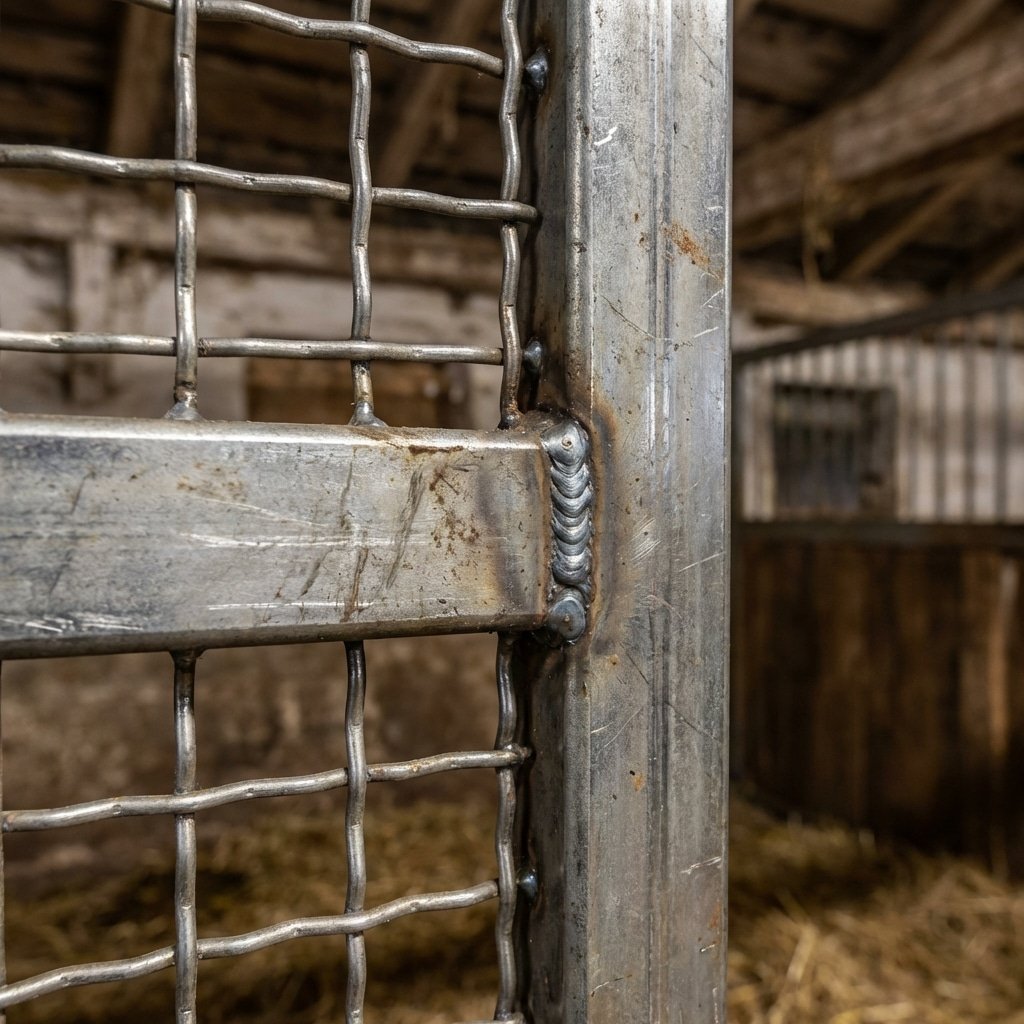
- 2. Reject any quote that omits steel gauge and galvanization method.: If the spec sheet says only ‘galvanized steel,’ ask: hot-dip or pre-galvanized? Pre-galvanized steel (often 1–2 mm sheet) fails in 5 years. Hot-dip galvanized steel (2″ x 1.5″ frame) carries a 20-year rust warranty. Our internal production standard specifies hot-dip with minimum 85 µm coating — CNC-punched holes to maintain finish integrity.
- 3. Require full-height mesh on stall fronts — no solid top rails above 3 ft.: Most competitors sell stall fronts with a solid lower 3 ft and a solid top rail at 5–6 ft. That top rail creates a neck injury zone when a horse rears. Our half-mesh panels extend wire mesh from 3 ft to 8 ft, giving the horse unobstructed head clearance. This specification is standard in our modular systems.
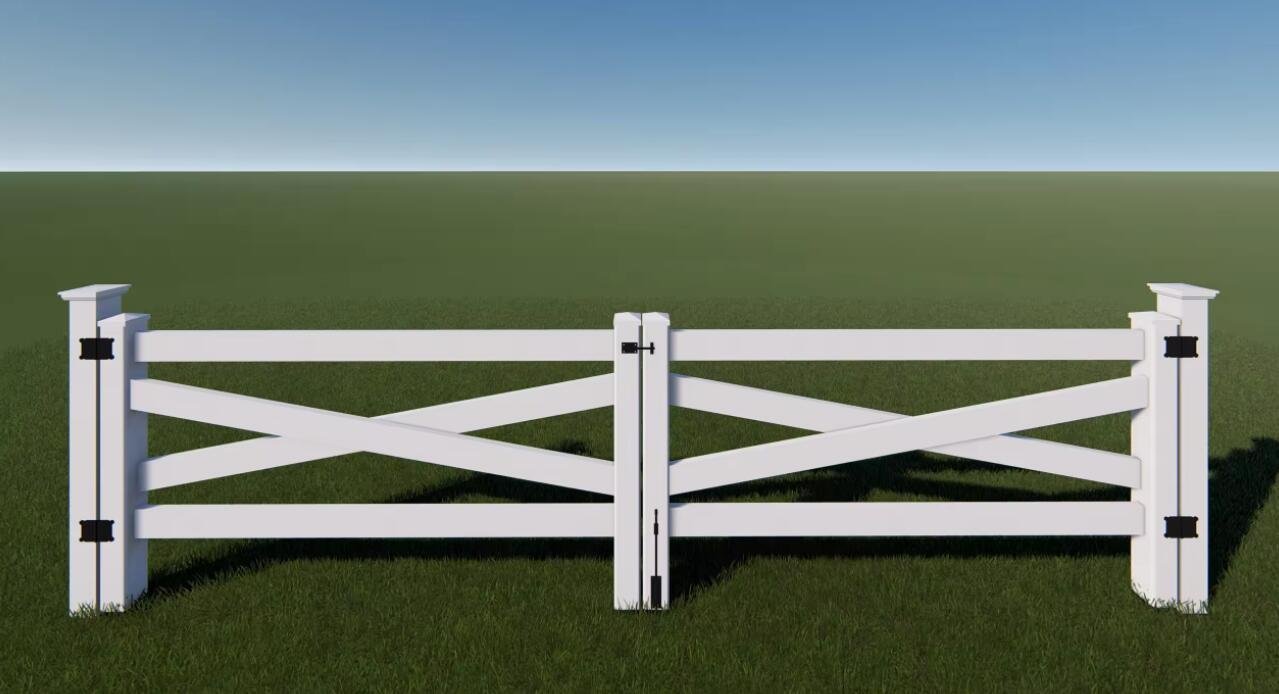
- 4. Verify door header clearance — it must be adjustable from 7.5 ft to 10 ft.: A fixed 7 ft header is a skull fracture waiting to happen. Our trackless sliding doors have an adjustable header that can be set from 7.5 ft to 10 ft. No bottom track means no hooves get caught. This retrofit kit costs $300–$600 per stall vs. $1,500+ to raise a ceiling — a 60–80% savings that also eliminates future liability.
Measuring and Adjusting Your Existing Stalls for Safety
A 2-hour retrofit can prevent a $15,000 skull fracture claim.
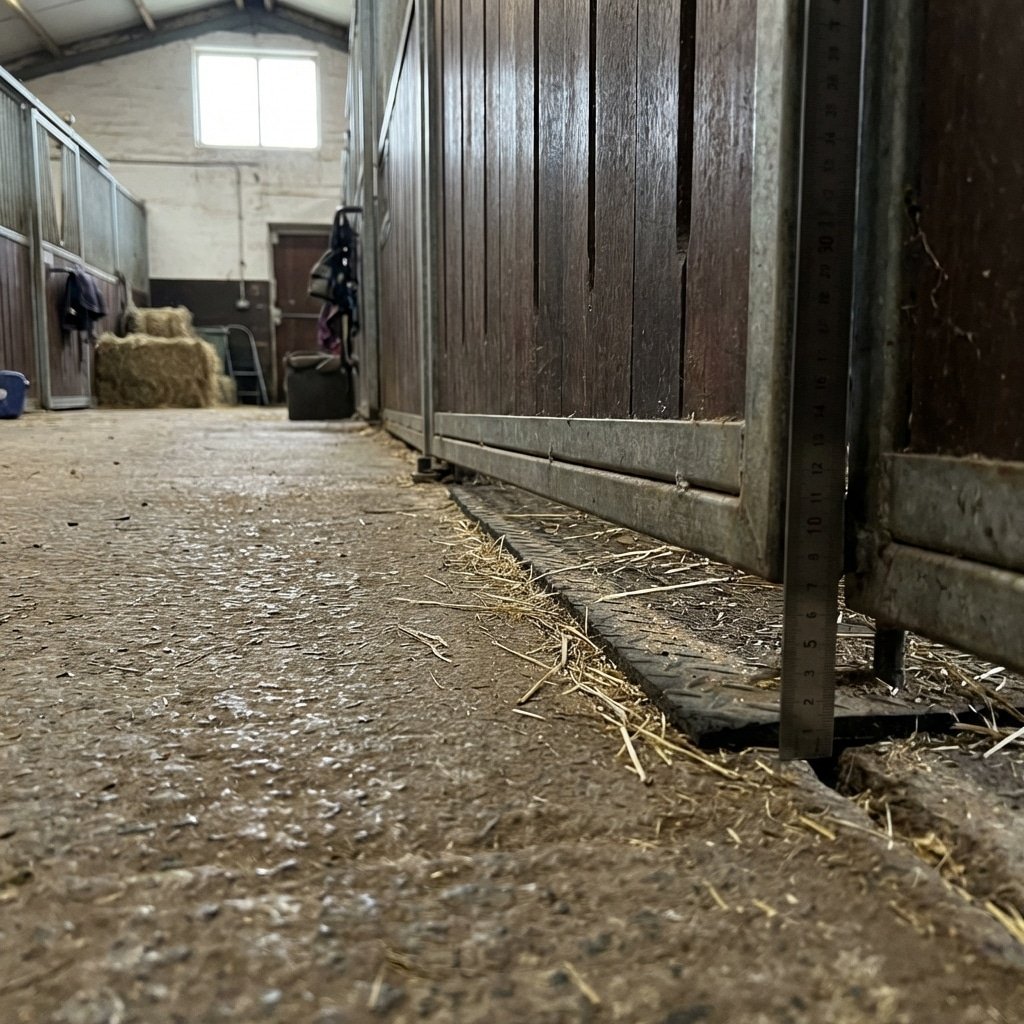
Most existing stall hazards are hidden in plain sight — a door header at 7 ft or a solid top rail at 5.5 ft. Measure both dimensions before ordering any retrofit. The real danger isn’t the partition height (which is usually adequate) but the head-clearance zone where a rearing horse strikes the header or catches its neck on a solid rail. PSU Extension confirms most door openings are supplied at just over 7 ft — that is a guaranteed impact zone for a 16-hand horse that can raise its head to 8 ft.
- Step 1 – Measure: From floor finish to the lowest point of the door header and to the bottom edge of the solid top rail on the stall front. Use a rigid tape — record both dimensions.
- Step 2 – Decide: If the header is under 8 ft or the solid rail is above 5 ft, the stall is non-compliant and high-risk. Order adjustable U-channel caps and a trackless door retrofit kit — both hot-dip galvanized with a 20-year rust warranty. The kit costs 60% less than raising the ceiling.
- Step 3 – Install: Follow the included manual — no welding required. Most stalls are completed in 2–3 hours with two workers using basic tools. Orders over 20 units include a dedicated regional account manager for virtual support.
- Step 4 – Verify: Walk a 16-hand horse (64 inches at the withers) into the stall. If the horse’s ears touch the header when standing naturally, raise the header another 6 inches. Repeat until there is at least 8 ft of clearance at the highest natural head position.
Conclusion
The critical takeaway from this guide is that safe stall height goes beyond the standard 8 ft partition — the real risk is the solid top rail at 5-6 ft and low door headers that turn a rearing horse into a head trauma case. Retrofitting with an adjustable trackless door system resolves this for 60% less than raising the ceiling, while half-mesh panels eliminate the neck injury zone entirely. These measures ensure compliance with BHS, FEI, and ASPCA standards while protecting your investment.
Questions fréquemment posées
What is the 1 2 3 rule for horses?
The 1-2-3 rule is a feeding guideline: no more than 1% body weight in grain, 2% in hay, and 3% total daily intake. This is a general maintenance recommendation—adjust for workload, breed, and individual metabolism. Adjust for workload and individual horse condition.
What smell calms horses?
Lavender is widely used to calm horses, often applied via diffusers or sprays in stables. Effectiveness varies by individual animal—always test in a small area before full use. Test a small amount first in a controlled environment.
Which state in the USA has the most horses?
Texas is consistently cited as the state with the highest horse population. Actual numbers fluctuate—verify current totals through state agriculture or equine industry reports. Confirm current numbers with state agriculture departments.
Which color can horses not see?
Horses cannot see the color red—they perceive it as a shade of brown or gray due to dichromatic vision. This affects facility design: avoid using red alone for jump rails or fence markers. Use yellow or blue for high-contrast visibility in stables.
What is the #1 killer of horses?
Colic is the leading cause of death in horses, often linked to diet, hydration, and dental health. While stall height safety prevents head trauma, colic remains the top mortality threat overall. Prioritize diet, hydration, and regular veterinary checkups.

 French
  English
  Spanish
  Arabic
  German
0 commentaires