


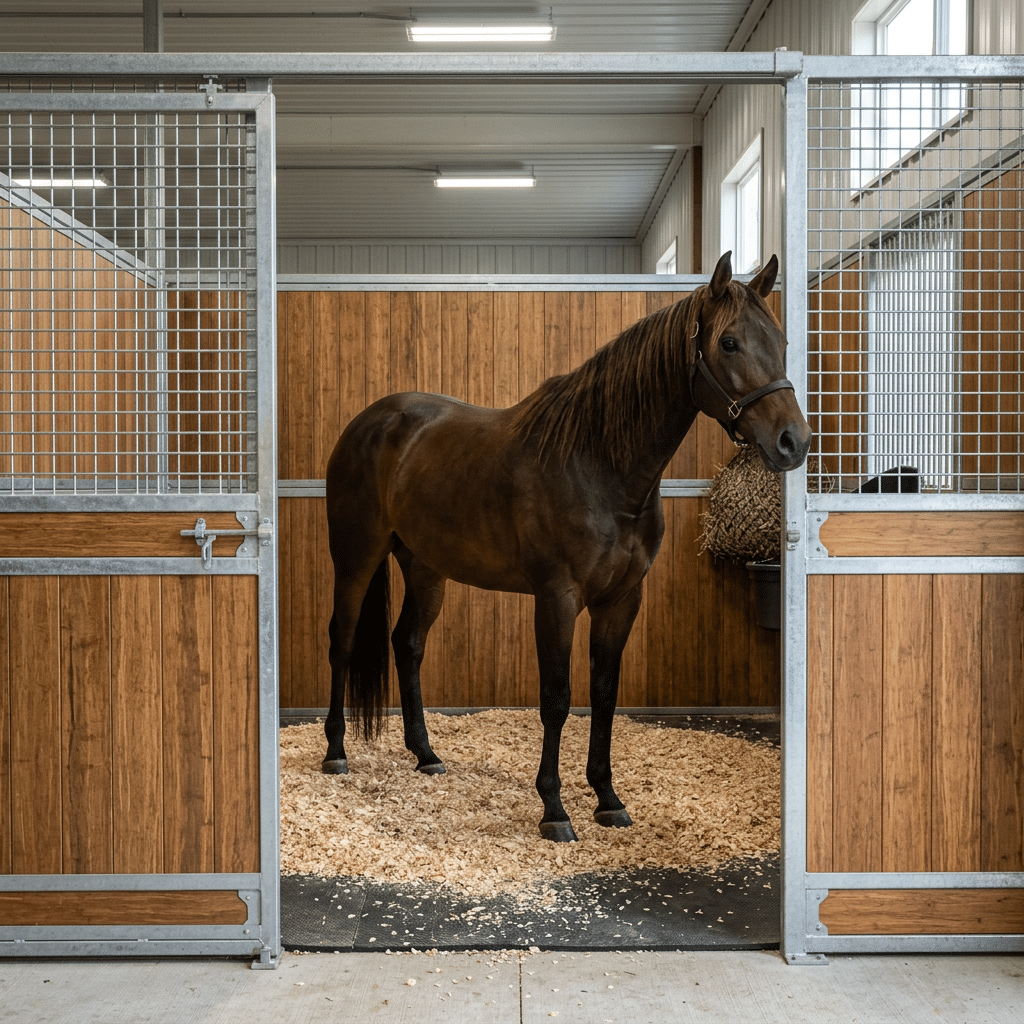
A complete Stable TCO Analysis exposes how low-cost pine barns bleed operational budgets dry. That initial “cheap” quote ignores the recurring costs of replacing chewed boards and repainting rusted welds, turning a capital asset into a permanent maintenance liability that erodes profitability year after year.
This analysis compares standard pine against maintenance-free materials. We measure the financial impact of using UV-stabilized HDPE infill and steel that is Hot-Dip Galvanized After Fabrication to the ISO 1461 standard, providing a clear financial model for long-term ownership.
The Illusion of the “Cheap” Initial Quote
A ‘cheap’ stable quote hides future costs like rust repair and board replacement. The true Total Cost of Ownership often makes a higher-quality stable the more economical long-term choice.
Beyond the Sticker Price: Uncovering Hidden Ownership Costs
The number on an initial quote is just the entry ticket. It covers the acquisition cost and nothing more. The real expense, the Total Cost of Ownership (TCO), builds up over years through maintenance and repairs you weren’t told about.
This is where hidden costs live. Think about the labor and materials for repainting rusted welds, replacing chewed or broken infill boards, or fixing bent steel tubes. These aren’t hypothetical problems; they are standard operating expenses for low-quality stables. That initial quote might only represent 40-60% of what you will actually spend over the stable’s service life.

How ‘Hot-Dip After Fabrication’ Prevents Future Expenses
Many cheap stables are built from pre-galvanized tubes. This means the manufacturer welds tubes that are already coated, burning off the protective zinc at every joint. These welds are left exposed and start rusting almost immediately, creating a constant maintenance headache.
We eliminate this problem by using a strict Trempage à chaud après fabrication process. We build the entire stable panel from raw steel first, then submerge the completed panel in molten zinc. This process, which conforms to the BS EN ISO 1461 standard, coats every surface, edge, and weld with a protective layer over 70 microns thick. This removes the need for costly repainting and rust repair down the line.
Year 3: The Cost of Replacing Chewed Pine Boards
By year three, the initial savings from cheap pine boards are gone. Chewing, moisture, and rot create a cycle of replacement costs that engineered infills like HDPE are built to prevent.
The Cycle of Pine Board Failure and Replacement
The appeal of pine boards is their low upfront cost. But that initial price tag is deceptive and ignores the total cost of ownership. Pine is a softwood, which makes it an easy target for bored or anxious horses. They chew it, splinter it, and create immediate safety hazards that require replacement.
The damage isn’t just from chewing. Pine acts like a sponge for moisture and urine, which leads directly to rot, mold, and warping within just a few years. This isn’t a one-time fix. The expense becomes a recurring line item in the budget, covering not just the cost of new lumber but also the labor to rip out the failed boards and install new ones.
HDPE Infill: The ‘Zero Maintenance’ Solution
This is precisely the problem our engineered infills solve. We use a 28mm-32mm thick, UV-stabilized HDPE (High-Density Polyethylene). It’s an impact-absorbing material that horses find completely unappealing to chew. It doesn’t splinter, so the safety hazard is eliminated from day one.
Unlike wood, HDPE is non-porous. It won’t absorb water, urine, or anything else. This means it cannot rot, warp, or grow mold, making it a true ‘Zero Maintenance’ infill. Yes, the initial material cost is higher than pine. But it completely avoids the recurring cycle of replacement, delivering a far lower total cost of ownership and ending the budget drain for your clients.
Invest in Horse Stables Engineered to Last

Year 5: Repainting Rusted “Pre-Galv” Welds
Stables built with pre-galvanized tubing rust at the welds because the protective zinc is burned off during fabrication. Around year five, these joints require extensive repair to restore protection.
The Failure Point of Pre-Galvanized Steel
The fundamental flaw with “pre-galv” construction is simple: welding destroys the protection. When pre-coated tubes are welded together, the intense heat vaporizes the zinc layer at every joint. This leaves the raw steel exposed to moisture and air, creating a guaranteed point of failure for rust.
Fixing this isn’t a simple paint job. The repair is a labor-intensive, multi-step process. You first have to grind away the rust, clean the surface, and then apply a specialized zinc-rich primer to try and replicate the original protection. This becomes a recurring maintenance cycle, adding significant labor and material costs that weren’t in the initial quote.
Our Standard: Hot-Dip Galvanizing After Fabrication
We eliminate this problem entirely by changing the manufacturing sequence. First, we build the complete stable panel from raw Q235B structural steel. All welding, cutting, and drilling is completed on the uncoated steel, ensuring every joint is clean and strong.
Only after the panel is fully assembled is it submerged in a bath of molten zinc. This process, which conforms to the BS EN ISO 1461 standard, coats every surface, edge, and weld with a thick layer of zinc (over 70 microns). This method creates a seamless protective barrier that provides decades of maintenance-free performance because the welds are protected, not exposed.
Year 10: The Zero-Maintenance Reality of HDPE + HDG
After a decade, stables built with UV-stabilized HDPE and hot-dip galvanized steel require virtually no maintenance, saving significant labor and replacement costs over their lifespan.
Inherent Resilience vs. Sacrificial Coatings
Some materials are maintenance-free because of what they are. High-Density Polyethylene (HDPE) is one of them. It is inherently resistant to moisture, ammonia, and impact, so it never needs painting, sealing, or surface treatments to prevent rot or cracking. Its durabil
ity comes from its core composition.
Hot-dip galvanization (HDG) works differently. It creates a protective, sacrificial zinc coating over the steel. This metallurgical bond is designed to corrode extremely slowly over many decades, protecting the steel underneath. The initial thickness of this coating is what determines its service life.
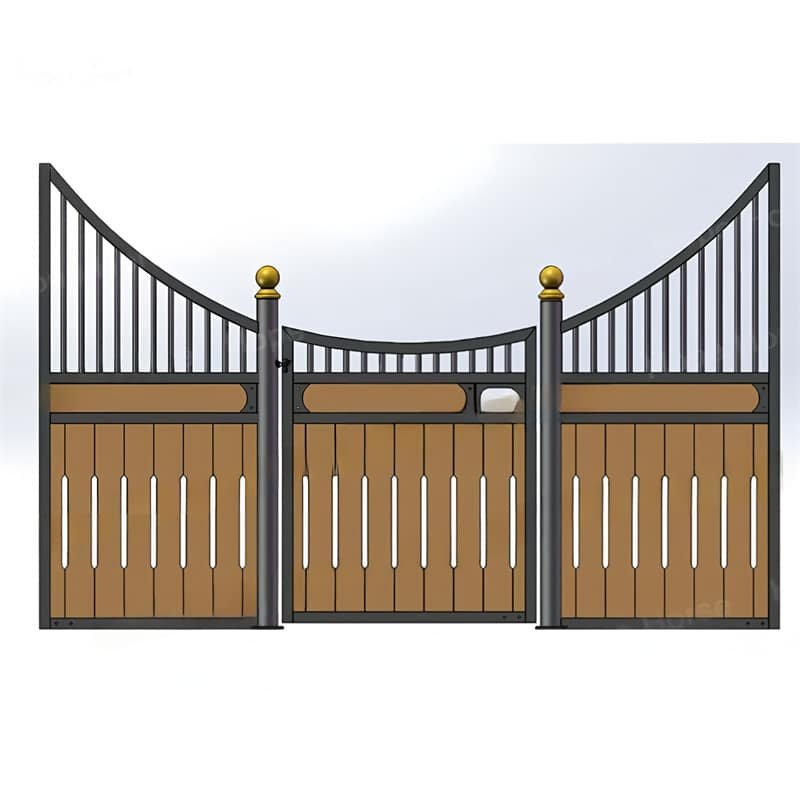
The Specs Behind a Decade of Durability
Long-term performance isn’t an accident; it’s the result of strict material specifications.
- HDPE stabilisé aux UV : Our 28mm-32mm HDPE boards are manufactured with UV inhibitors. This prevents sun exposure from making the material brittle, ensuring it retains its impact-absorbing properties year after year.
- Galvanization Standard: The steel framework undergoes Hot-Dip Galvanization After Fabrication, meeting ISO 1461 standards. This process creates a zinc coating over 70 microns thick, fully protecting all welds and cut edges from rust.
The 20-Year ROI Calculation
Annualized ROI considers the total cost of ownership, proving the financial benefit of durable materials like hot-dip galvanized steel and HDPE over cheaper, high-maintenance alternatives.
| Élément de coût | Low-Cost Stable (Pre-Galv & Pine) | Initial Purchase Price | Lower | Plus élevé |
|---|---|---|---|---|
| Recurring Steel Maintenance | Annual grinding and repainting of rusted welds | None (Hot-Dip Galvanized After Fabrication) | ||
| Recurring Infill Maintenance | Replacement of chewed, warped, or rotted boards every 3-5 years | None (Zero-Maintenance HDPE boards) | ||
| 20-Year Labor & Material Costs | High and cumulative | Minimal to zero | ||
| 20-Year Total Cost of Ownership | Significantly exceeds initial price | Closely reflects initial price |
Calculating Long-Term Value with Annualized ROI
Focusing only on the initial quote is a classic mistake. The real cost of an asset emerges over its entire service life. A true comparison requires calculating the annualized return on investment, which accounts for every dollar spent on maintenance, repairs, and replacements over decades. This method strips away the illusion of the “cheap” upfront price tag.
The formula for annualized ROI is: [(Ending Value / Beginning Value)^(1 / Number of Years)] – 1. For infrastructure like stables, the “Beginning Value” must be the total cost of ownership, not just the purchase price. This provides a clear, apples-to-apples comparison between a high initial investment with zero upkeep and a cheaper option that drains cash through constant repairs.
How Material Specs Drive a Higher Return
A higher ROI isn’t an accident; it’s engineered. Specific material choices directly eliminate future costs, making the initial investment more profitable over time. Each specification is a decision to prevent a future expense.
- Hot-Dip Galvanization After Fabrication: We weld the entire stable panel first, then dip it in molten zinc according to ISO 1461. This process completely seals the welds, which are the primary failure points on cheaper, pre-galvanized stables. It removes the recurring cost of grinding and repainting rust every year.
- Zero-Maintenance HDPE Infill: Unlike pine or plywood that rots, warps, and splinters, HDPE is inert. It doesn’t absorb moisture or break down from UV exposure. This eliminates the expense of replacing entire walls of infill boards every few years.
- 304 Stainless Steel Hardware: Using stainless steel for all connectors, bolts, and fasteners prevents corrosion at critical load-bearing points. This avoids the cost and downtime associated with repairing or replacing failed hinges, latches, or panel connectors.
Questions fréquemment posées
How long does a 2026 steel horse stable last?
A quality steel stable built with hot-dip galvanized frames is engineered to last 40 to 70 years. The galvanization process provides decades of corrosion resistance, unlike timber structures that are vulnerable to rot, insects, and warping. This makes steel a more cost-effective and durable long-term investment.
Is hot-dip galvanizing worth the initial cost?
Absolutely. While the initial investment for hot-dip galvanizing might be higher than for a painted finish, its life-cycle cost is significantly lower. It provides maintenance-free protection for decades, eliminating the recurring expense and labor of repainting rusted welds every few years.
What is the maintenance difference between wood and HDPE infill?
The difference is substantial. Wood infill often requires replacement due to chewing, kicking, and rot, along with regular sealing to protect it. Our UV-stabilized HDPE infill is a zero-maintenance solution. It’s impact-absorbing, cannot be chewed, and never needs painting or sealing.
Why is Q345B steel offered for colder climates?
Q345B steel has superior low-temperature impact toughness. In freezing conditions, standard steel can become brittle and may fracture from a powerful kick. Q345B remains resilient in the cold, preventing brittle fractures and adding a critical layer of safety for horses in winter.
En quoi votre système de livraison en kit présente-t-il des avantages pour les distributeurs ?
Our flat-pack design allows up to 45 stable sets to fit in a single 40HQ container, compared to only 12-15 sets for traditional fully-welded stables. This high-density loading cuts per-unit shipping costs by over 60%, directly protecting our distributors’ profit margins.
Réflexions finales
While pre-galvanized stables have a lower initial price, our Hot-Dip After Fabrication standard (ISO 1461) protects your brand from constant rust complaints. Investing in zero-maintenance inventory is how you secure client loyalty. This choice prevents the warranty claims that destroy OPEX and dealer reputation.
The data shows the long-term value. Now, verify the engineering for yourself. Contact our team to configure a trial order and see firsthand how our high-density flat-pack system protects your shipping margins.

 French
  English
  Spanish
  Arabic
  German
0 commentaires