


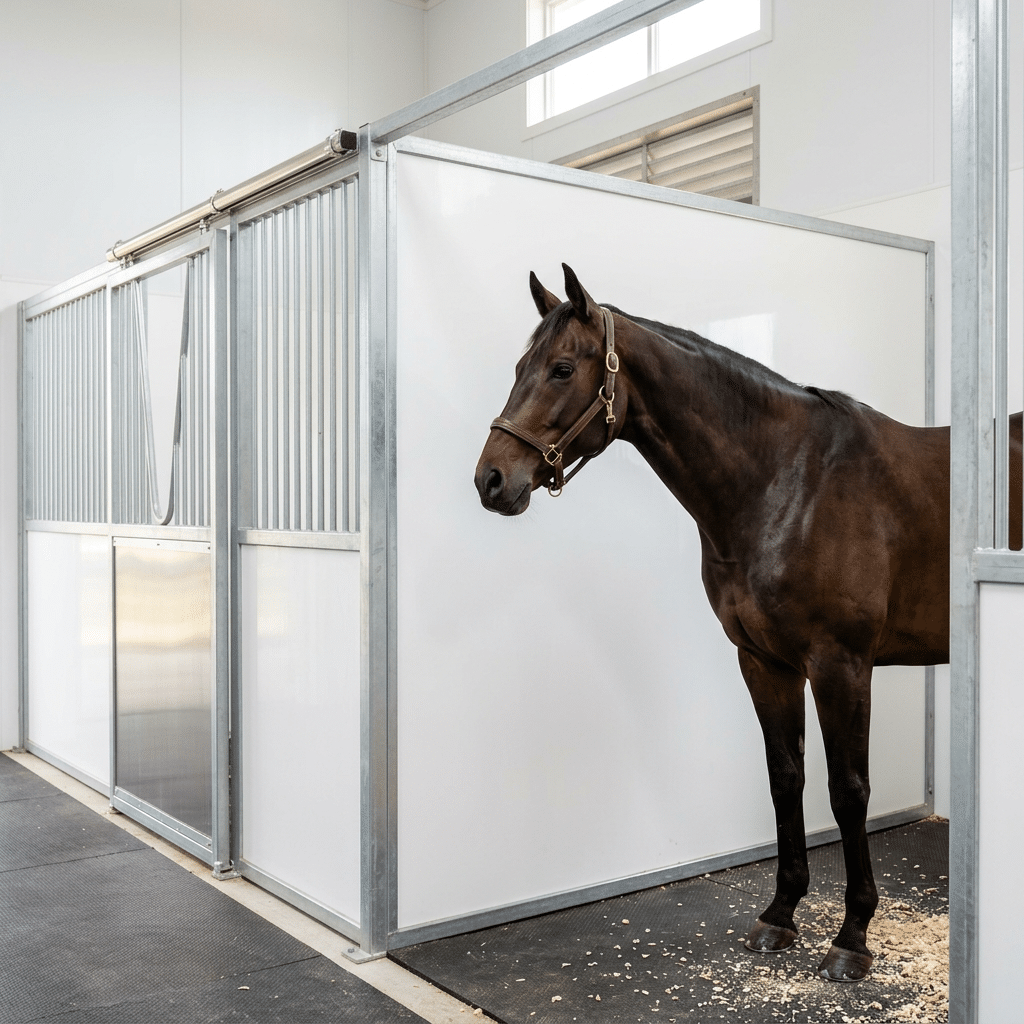
A small barn doesn’t fail because of the layout. It fails because of permit delays and contractor markups. Go with a conventional build instead of a modular system, and complex foundations plus red tape can double your project cost. What should have been an affordable stable turns into a real money pit.
Pre-engineered systems are designed to fit under “accessory structure” codes. That’s the loophole that simplifies approvals. We’re comparing flat-pack logistics against traditional builds here, and breaking down why hot-dip galvanization *after* fabrication delivers rust protection that standard welded stalls just can’t match.
Zoning Laws: Flying Under the Radar with “Sheds”
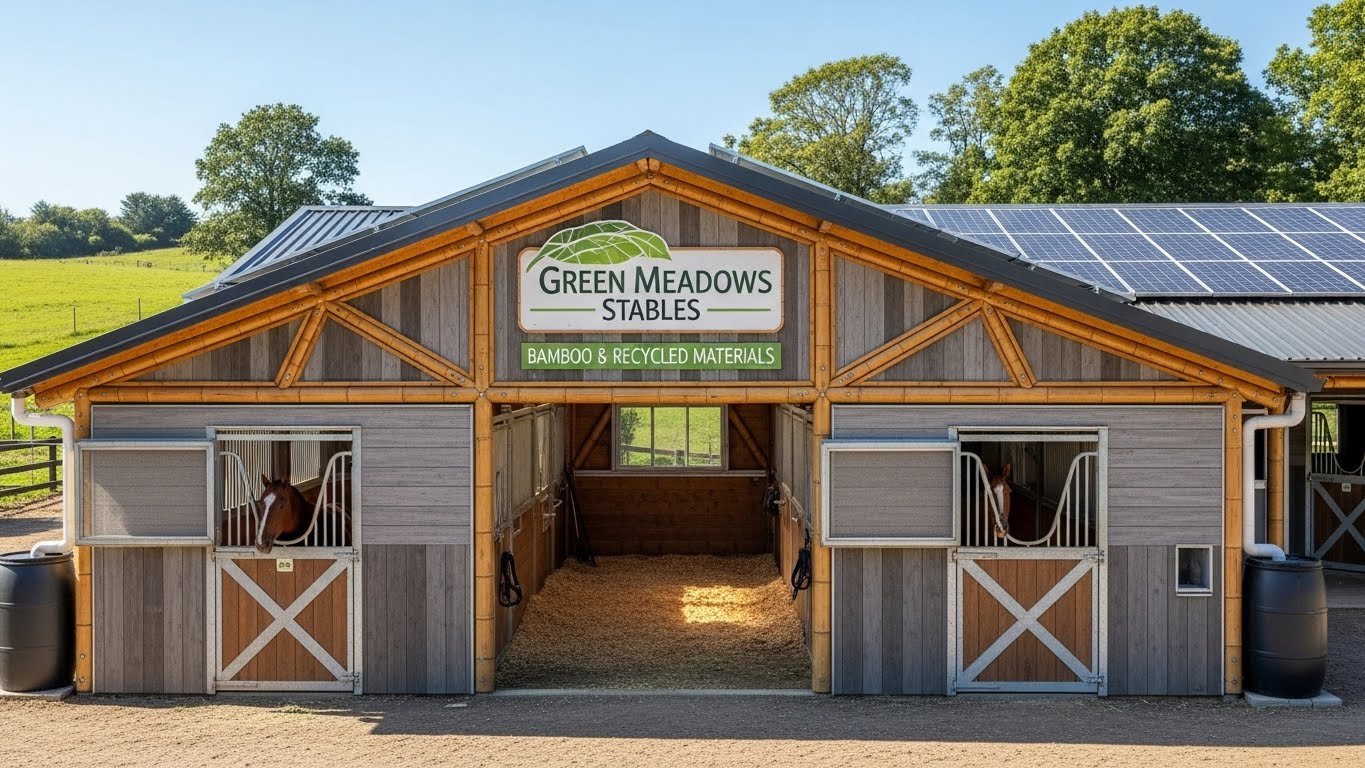
Many jurisdictions classify small structures without permanent foundations or utilities as ‘sheds.’ This can dramatically simplify the permit process for basic horse shelters.
Understanding Local Thresholds for Permit Exemptions
The building permit is the biggest headache for any new structure. But most local codes have a simpler path for what they call “accessory structures” or “sheds.” If your horse shelter qualifies under that definition, you can often skip the full permit process entirely. It saves time and cash. This isn’t about gaming the system—it’s about knowing the rules.
The rules for what counts as a simple shed are pretty specific. They boil down to three things:
- **Size Limits:** Most codes exempt structures under a certain footprint—usually 120 to 200 square feet. A standard 12’x12’ stall fits that window perfectly.
- **Foundation & Utilities:** The exemption almost always requires no permanent foundation. It also can’t have permanent electrical or plumbing hooked up.
- Building codes aren’t national laws. They change every five miles. A permit approved in County A might get rejected in County B. Check your local jurisdiction before you order.

How a Modular Design Aligns with Accessory Structure Rules
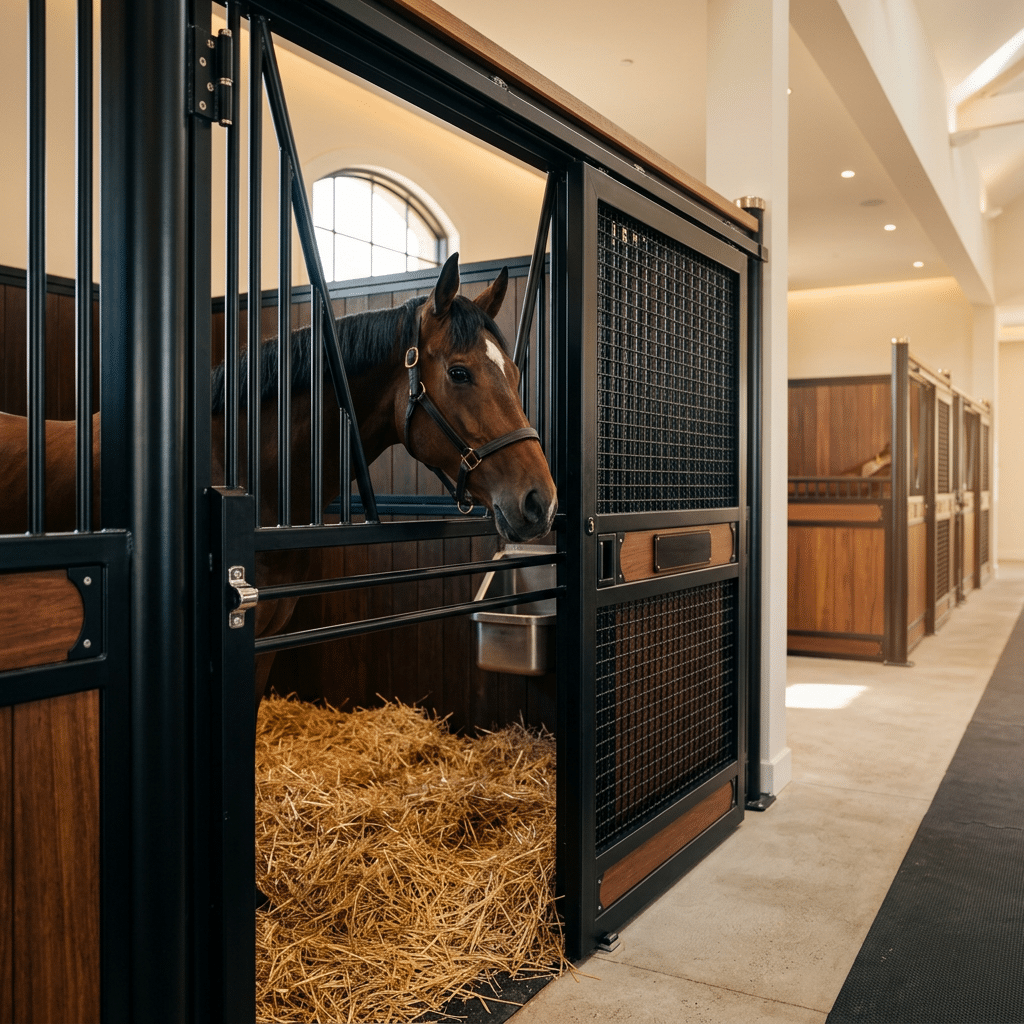
We engineered these stables to bypass strict zoning by classifying them as temporary structures. They are bolt-together modules, not permanent buildings. This distinction simplifies the approval process significantly for farm owners.
We ship under HS Code 7308.90, which categorizes our products as steel structures rather than prefabricated buildings. This classification avoids the higher tariffs and complex compliance checks associated with residential-style imports. It’s hardware, not housing.
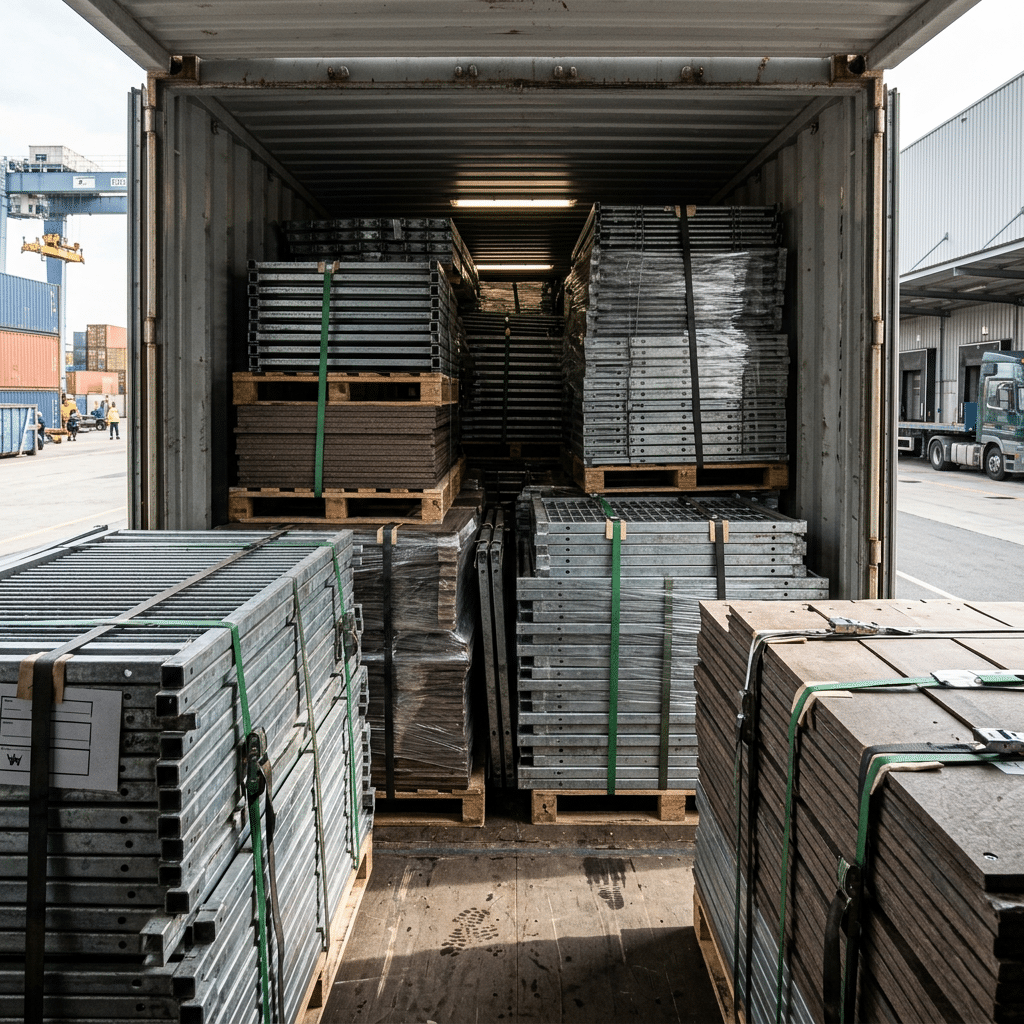
The entire system arrives flat-packed on a steel pallet. This confirms its non-permanent status. You can assemble it on compacted gravel or simple footings without pouring expensive concrete foundations. That modularity is what keeps permits simple.
The “Shed Row” Layout: Perfect for Tight Spaces
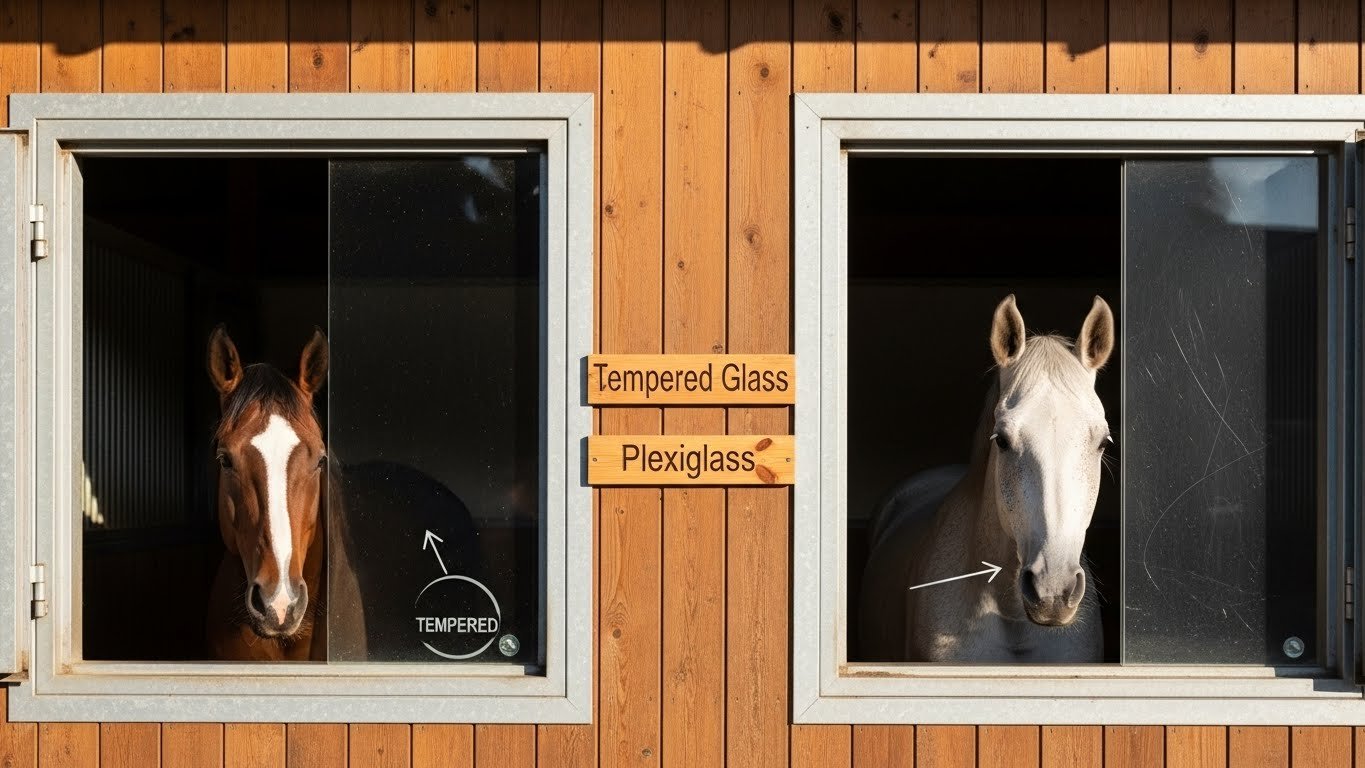
Shed row barns arrange stalls in a line, L-shape, or U-shape, opening to an outdoor aisle. This linear design minimizes the footprint and site work, ideal for properties with limited space.
This layout saves land, but it also slashes logistics costs. When the product design matches efficient shipping methods, you pay less for freight. The result is a more cost-effective project overall.
Key Configurations: Single-Line, L-Shaped, and Courtyard
Le shed row adapts to your site’s specific constraints. Whether you need more ventilation or easier access for equipment, the modular design allows you to rearrange components without structural changes.
- Straight lines are the cheapest way to go. If you have a tight plot or just need a few stalls along a fence, this is the move.
- L-shapes actually work. The corner blocks wind, and that empty space is perfect for a tack room or grooming area.
- Back-to-back layouts squeeze the most out of your land. Centralizing the work area makes security tighter and keeps all eyes on the herd.
Flat-Pack Shipping: The Key to Cost-Effective Modular Barns
Modular design is a logistical lifesaver for big projects. Bulky, fully welded stalls destroy margins before they even hit the port. The math doesn’t lie.
| Logistics Metric | Typical Welded Stalls | DB Stable Flat-Pack System |
|---|---|---|
| Container Capacity (40HQ) | 12–15 sets | 30–45 sets |
| Ocean Freight Cost | High (Low Density) | Reduced by over 60% |
| On-Site Handling | Loose, difficult to inventory | Organized on steel pallets |
High-density packing protects your bottom line. Kits arrive on steel pallets with every part accounted for. This stops guesswork and waste on-site, making the build as efficient as the barn layout.
Source Climate-Proof Stables Built to Last
Multi-Purpose Tack & Feed Rooms
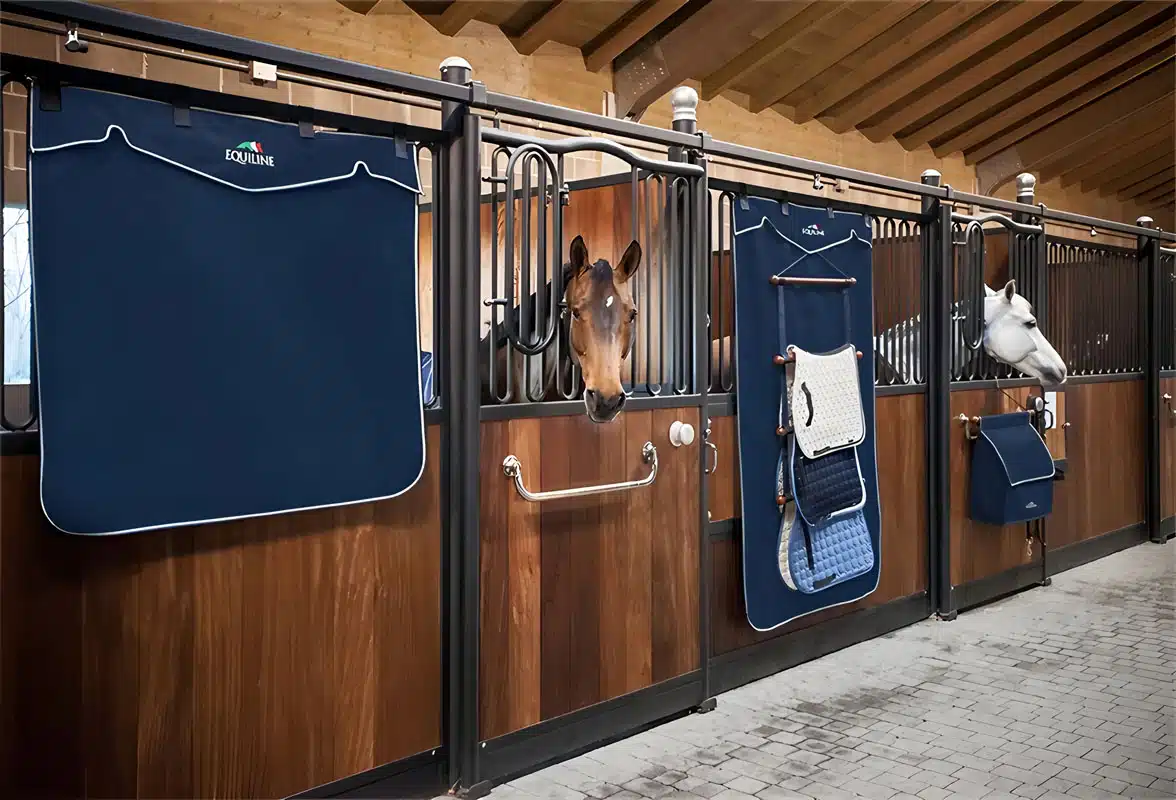
A multi-purpose room saves space by integrating tack and feed storage. The key is zoning: use sealed, pest-proof containers for feed and vertical systems for tack.
Designing for Separation and Efficiency
Small barns often combine tack and feed rooms out of necessity. The real risk is contamination. You must create separate zones, keeping feed away from leather gear. Use sealed, rodent-proof containers. It’s non-negotiable for protecting expensive equipment and feed quality.
Wall space is prime real estate in a compact stable. Use it. Wall-mounted saddle racks, bridle hooks, and blanket bars keep everything off the floor. A clear floor makes the room feel bigger, improves safety, and speeds up cleaning. The goal is an organized workspace, not a cluttered closet.
Integrating Swivel Feeders for Aisle-Safe Access
A stable designed around the feed room changes how work flows. Our Professional Series stables use Swivel Feeders for exactly this reason. Staff fill feed and water from the aisle—no need to step inside a stall. Simple feature, massive efficiency gain.
Feeding from outside also removes the risk of getting pinned by an impatient horse at feeding time. The horse gets a calmer, more predictable routine. This hardware belongs in any well-planned barn layout.
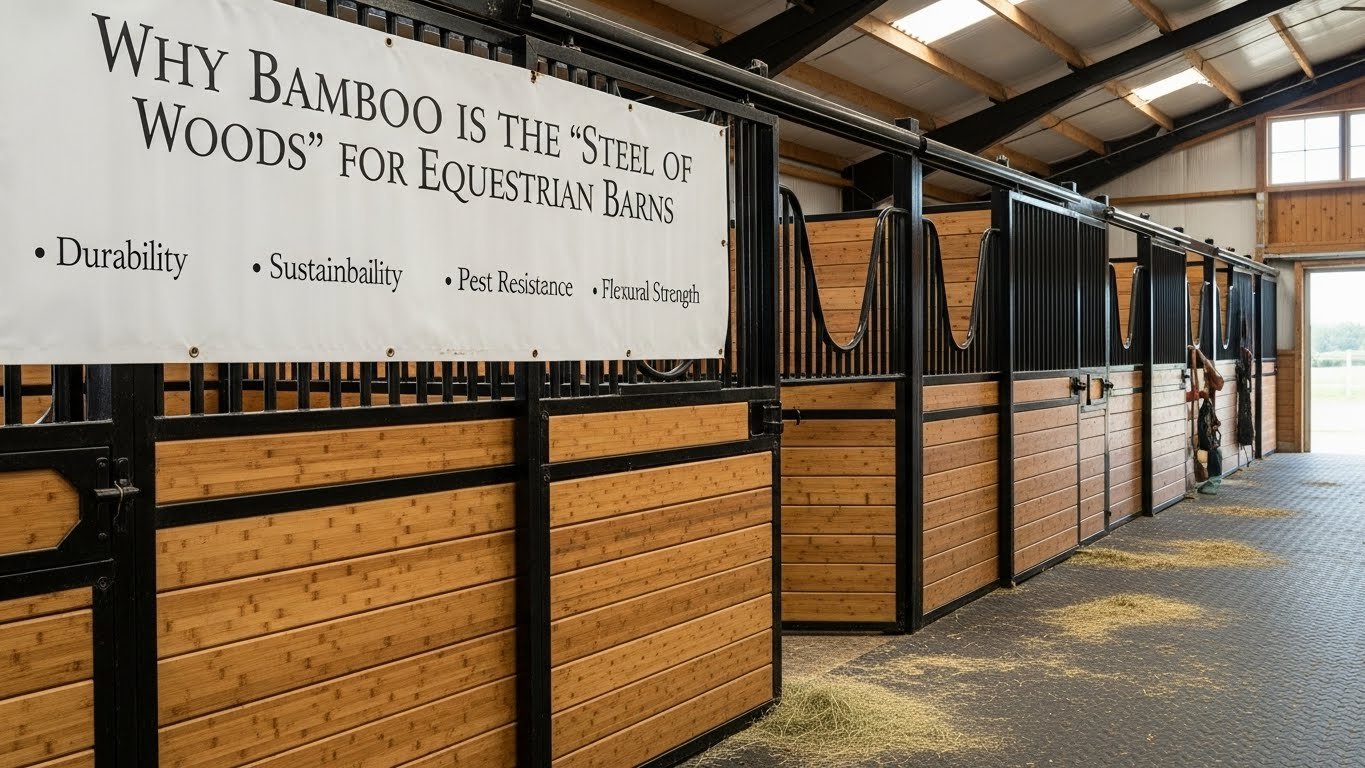
Overhangs: Creating Cheap Wash Bays
A barn overhang provides a ready-made roof, making it a cost-effective spot for a wash bay. The structure’s longevity depends entirely on superior rust protection from galvanisation à chaud.
Using Sim
ple Structures for All-Weather Use
The cheapest wash bay is an extended barn roof. Use what you already have. That simple shelter blocks direct sun and rain without the cost of a fully enclosed structure. No complex footers, no separate foundation—less site prep, lower cost.
Hot-Dip Galvanization for Wet Environments
Water and soap kill standard paint and pre-galvanized tubing fast. The only thing that holds up is galvanisation à chaud after fabrication. The steel frame gets welded first, then fully submerged in molten zinc. The process, conforming to ISO 1461, creates a thick protective coating that covers every surface—inside and out. The zinc bonds metallurgically to the steel, giving you rust protection no surface-level coating can match.
The DIY Assembly: Saving on Contractors
Choosing a DIY assembly for a pre-engineered stable kit cuts construction costs by 10-20% simply by removing contractor labor and overhead fees.
How Pre-Engineered Kits Reduce Labor Costs
Drop your stable budget by cutting out the general contractor. Assemble a pre-engineered kit yourself and save 10-20% of the total project cost. That saving comes straight from the labor fees and contractor overhead you no longer pay.
Let’s be honest—you don’t need a construction crew to build these. Every kit ships with step-by-step instructions and all panels arrive pre-cut. One person with basic DIY skills can handle the assembly. No specialized labor required.
Our Flat-Pack System: Designed for Self-Assembly
We built this system for the guy who wants to do it himself. The entire stable ships on a steel pallet flat-pack. Nothing gets lost, nothing gets bent. You open the crate and every part is exactly where it needs to be.
Forget hunting down extra hardware at the last minute. Each kit includes a complete fastener set—304 stainless steel anchor bolts, connectors, and screws. Everything you need to finish the job is in the box.
Questions fréquemment posées
What is the minimum land needed for 2 horses?
You generally need 2 to 4 acres for two horses. A common rule is 2 acres for the first horse and 1 additional acre for the next. This can change based on your pasture’s quality, your location, and whether you provide supplemental feed.
What is the best layout for a 4-stall barn?
The most cost-effective layout is a shed row design, where stalls open directly to the outside. For better weather protection and a central workspace, a center aisle barn is a better choice. A standard stall is 12×12 feet, and the aisle should be at least 12 feet wide.
Can you build a small barn yourself?
Yes, building a small barn is a manageable DIY project if you have some construction skills, the right tools, and help from others. It’s physically demanding but can save significant money. The roof framing is often the most challenging part.
Do I need a concrete slab for a 2-stall barn?
A concrete slab is not always required. While durable and easy to clean, many owners prefer rubber mats over a compacted gravel or clay base, which is more comfortable for the horses. If you do use concrete, it should be at least 4 inches thick and covered with deep bedding or mats.
How much does a 4-stall prefab barn cost?
A 4-stall prefab barn kit typically costs between $32,000 and $43,000 for the basic materials. This price usually does not include the foundation, delivery, or interior finishing. A simpler shed row design will be less expensive than a full center aisle barn.
Réflexions finales
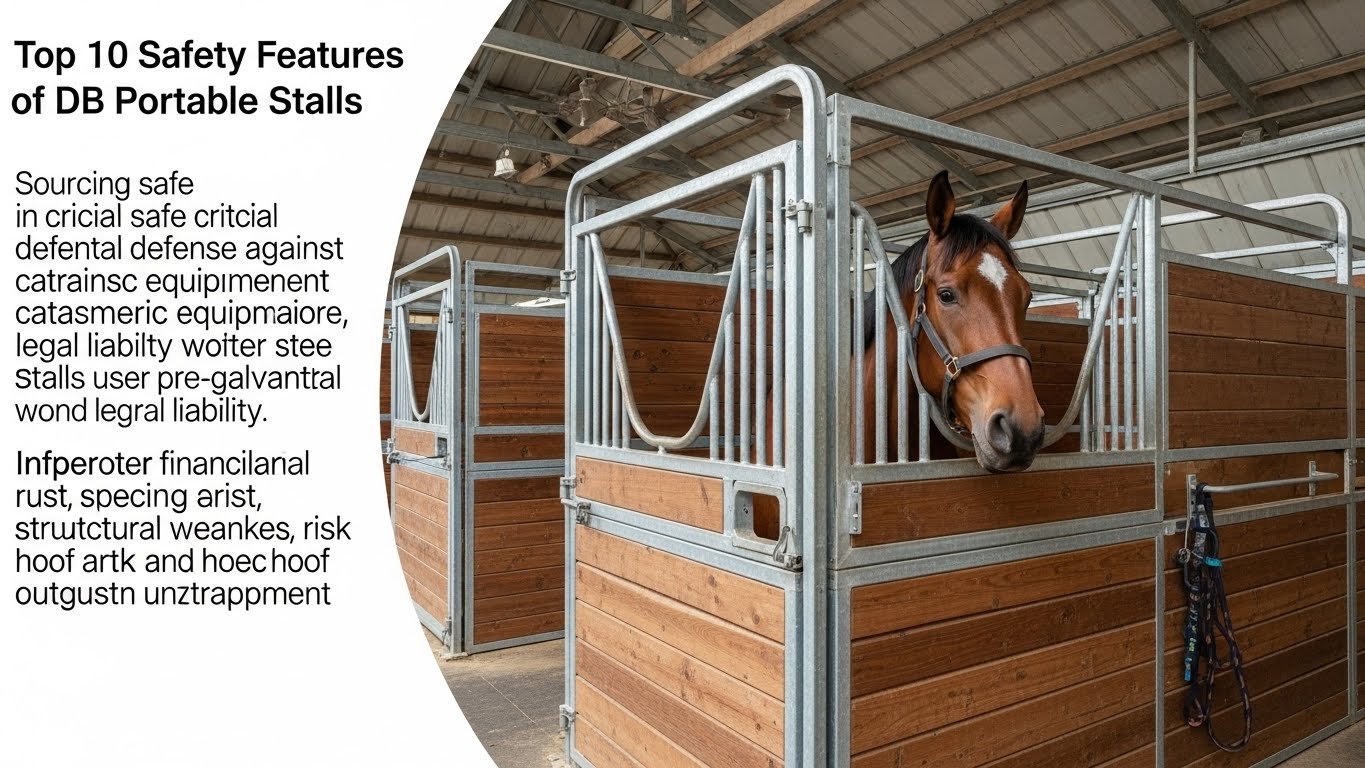
Here’s the trap most dealers fall into: cheap welded stalls look good on paper, then freight costs eat your margin and rust claims eat the rest. Our flat-pack system changes that math. Post-fab galvanizing to ISO 1461 means twenty years without a rust complaint. That’s how you protect your profit—and your reputation.
Stop guessing about build quality. Order a trial kit and test the fitment, finish, and assembly speed yourself. Contact us to configure your first sets and discuss private labeling terms.

 French
  English
  Spanish
  Arabic
  German
0 commentaires