


Mismanaged Import Tariffs & Duties on steel products create significant financial risk. Classifying structural components as ‘prefabricated buildings’ is a common trap, triggering volatile tariffs that can erase an entire container’s profit margin. This single customs error turns a profitable shipment into a liability.
This analysis demonstrates how to correctly use HS Code 7308.90 for ‘Structures of Iron/Steel’. We explain how our Steel Pallet Flat-Pack method provides the physical evidence to support this classification, protecting your landed costs and ensuring predictable customs clearance for every order.
The “Tariff Trap”: Prefabricated Buildings vs. Steel Structures
Classifying imports as “prefabricated buildings” triggers high steel tariffs. We use HS Code 7308.90, “steel structures,” to protect our partners from these costly duties.
Why ‘Prefabricated Building’ Is a High-Risk Category
When customs authorities classify imported goods as complete or near-complete buildings, they become vulnerable to fluctuating steel tariffs. This is the core of the tariff trap. A sudden duty hike can completely erase the expected savings on labor and construction time, creating a serious financial liability for project planners and distributors.
This classification also tends to attract more regulatory scrutiny than importing individual components. The increased paperwork and potential for delays add another layer of risk to your supply chain.
Strategic Classification Under HS Code 7308.90
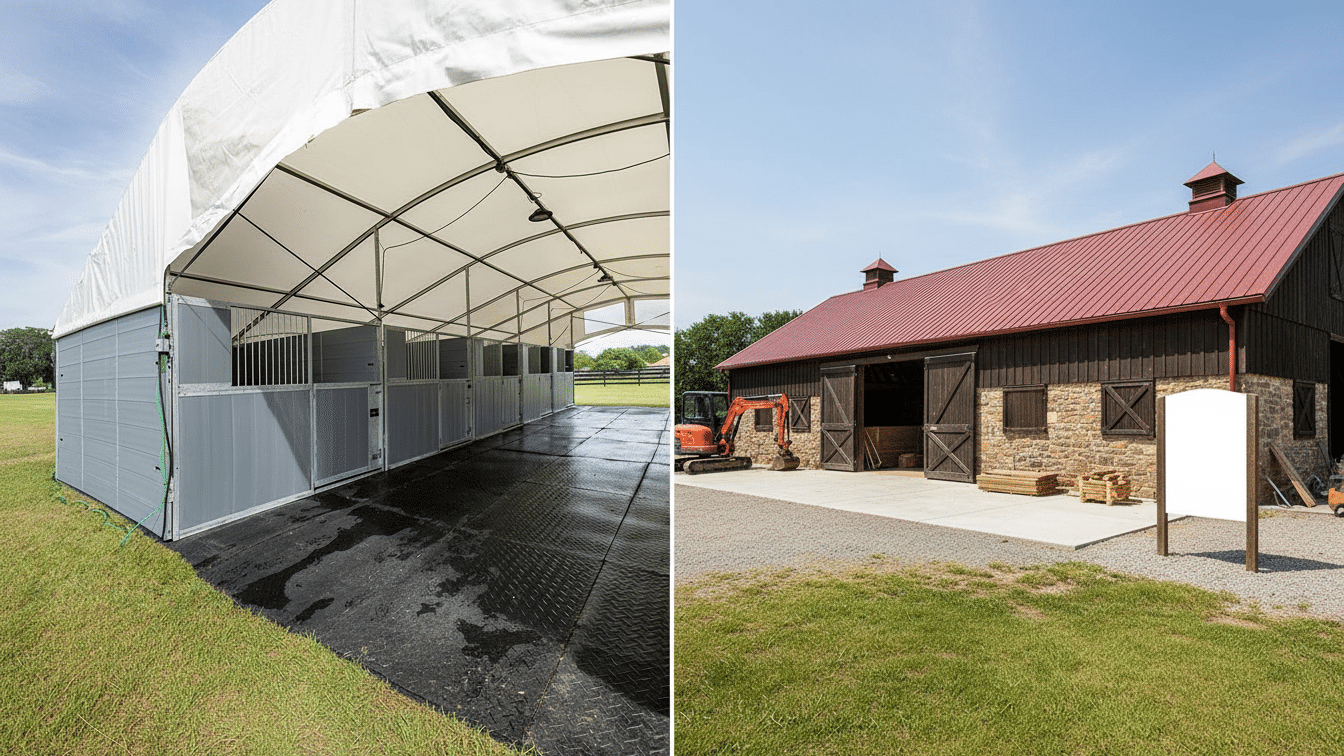
We deliberately classify our stable systems under HS Code 7308.90, which designates them as “Structures of Iron/Steel.” This is not a loophole; it’s the correct classification. It identifies the product as structural components intended for on-site assembly, not a finished building. This approach is the most effective way to mitigate tariff risks.
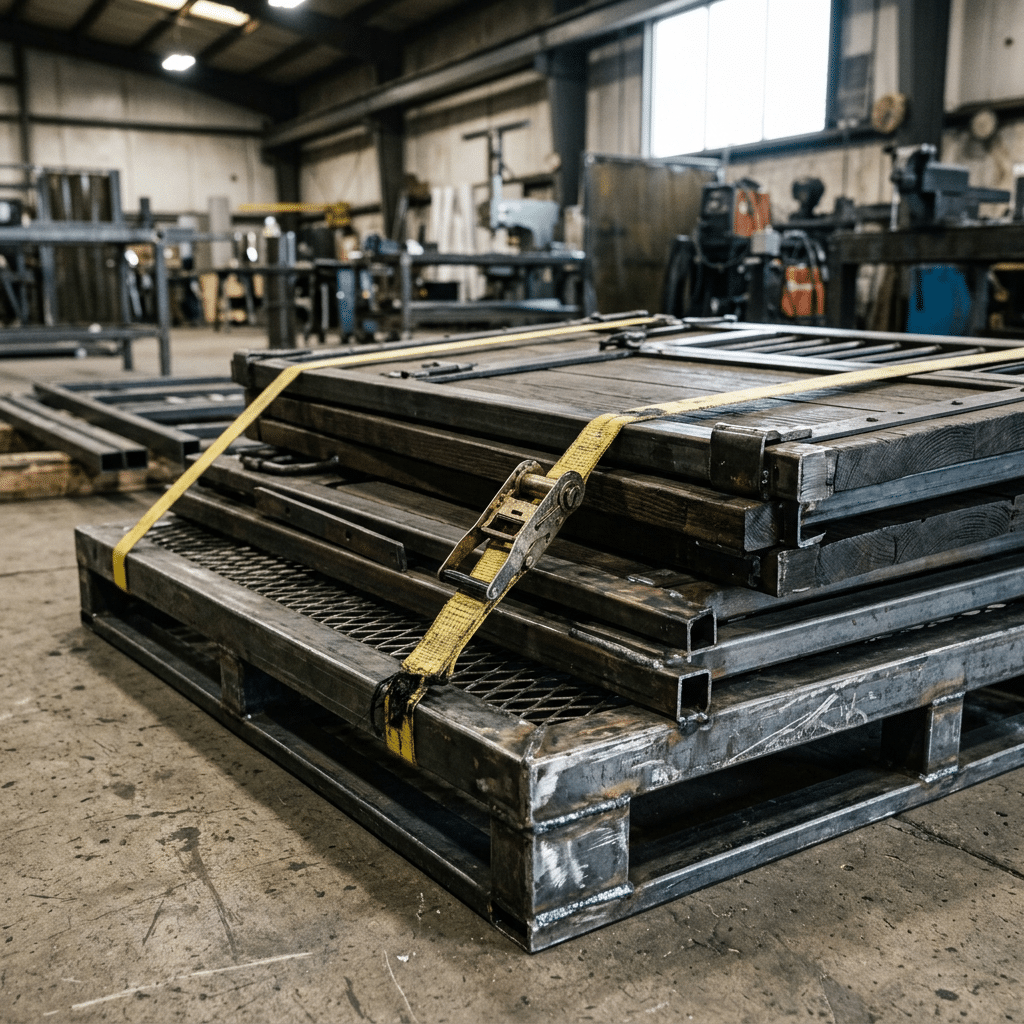
Our Steel Pallet Flat-Pack shipping method physically supports this classification. By shipping components instead of fully assembled structures, we ensure the goods align with the “parts of structures” definition, protecting our partners’ import costs and profit margins.
The Golden Code: Why We Use HS Code 7308.90
We use HS Code 7308.90 to classify our stable panels as ‘Structures of Iron/Steel,’ not ‘Prefabricated Buildings.’ This avoids high tariffs and simplifies customs, protecting our distributors’ profit margins.
| Classification Approach | Distributor Impact |
|---|---|
| Code HS 7308.90 (Notre méthode) Structures & Parts of Iron/Steel | Often duty-free, leading to predictable landed costs and smooth customs clearance. |
| HS Code 9406 (The Trap) Prefabricated Buildings | Carries high, volatile tariffs and complex regulations that can erase profit margins. |
Defining Code 7308.90: Structural Parts vs. Whole Buildings
The Harmonized System (HS) code is a global standard for classifying traded products. Getting it right is critical. Getting it wrong is expensive. The code 7308.90 is specifically for structural components, not finished buildings that can be immediately assembled and occupied.
- Correct Scope: This code covers structures and parts of structures made from iron or steel. Think frames, columns, partitions, and trusses.
- Critical Exclusion: It explicitly excludes “Prefabricated Buildings” (HS Code 9406). This other category often carries much higher tariffs and stricter import regulations.
- Customs Measurement: Imports under 7308.90 are declared by weight (kilograms), and in many key markets like the United States, they benefit from duty-free status.
Our Strategy: Classifying Stables for Smooth Customs Clearance
We don’t ship buildings; we ship engineered components. Every DB Stable system is shipped as a flat-pack kit containing fronts, partitions, posts, and infill boards. This allows us to correctly and legally classify the goods under HS Code 7308.90.
This is the safest method to avoid customs authorities reclassifying a shipment as a “Prefabricated Building.” That kind of reclassification is a common trap that results in unexpected and significant tariff bills for the importer. Our approach removes that risk from the equation.
This classification strategy is a core part of our ‘Profit Protection’ model. It ensures predictable logistics costs and eliminates customs headaches, allowing our distributors to focus on their business, not on fighting surprise import duties.
Equip Your Facility With 20-Year Stables

Free Trade Agreements: ChAFTA (AU) and Beyond
The China-Australia Free Trade Agreement (ChAFTA) eliminates import tariffs. By using HS Code 7308.90, our Australian partners can import our steel stables with minimal to zero duty.
How ChAFTA Reduces Tariffs for Australian Importers
The China-Australia Free Trade Agreement is a bilateral deal designed to eliminate tariffs on the vast majority of goods traded between our countries. For Australian distributors, this provides a direct financial advantage when sourcing products from a Chinese factory like ours.
It means that steel structures, including our horse stable systems, can often be imported with a 0% duty rate. This isn’t a small discount; it directly reduces the landed cost of the goods, giving our partners a significant competitive edge in the market.
Securing Tariff Benefits with HS Code 7308.90
The tariff reductions under ChAFTA are not automatic. They depend entirely on the product’s Harmonized System (HS) Code. Getting this classification right is critical for compliance and cost savings.
We classify our horse stable systems under **HS Code 7308.90**. This code correctly identifies them as ‘Structures of Iron/Steel’. It is a strategic choice that ensures our products are eligible for preferential tariff treatment and avoids the higher duties often associated with “prefabricated buildings.” This classification gives our distributors a clear and predictable path to securing the full benefits of the trade agreement.
Fumigation Rules: Why HDPE/Bamboo Skips Quarantine Delays
Organic materials like bamboo often require fumigation, causing delays. Synthetic HDPE infill is exempt, protecting your import timeline and budget from unexpected quarantine costs.
Why Organic Materials Trigger Quarantine Inspections
International quarantine agencies inspect any imported organic materials to stop the spread of invasive species and wood-boring pests. Natural products, especially untreated timber and bamboo, can harbor insects or fungi
that pose a threat to local ecosystems.
Because of this risk, these materials often face mandatory fumigation treatments to meet import standards. This isn’t just a simple check; it’s a time-consuming process that can add significant costs and unpredictable delays to your shipping schedule.
The HDPE Advantage: A Quarantine-Friendly Infill
Our HDPE infill is a synthetic polymer, not a plant-based product. It is completely immune to pests and rot, so it’s exempt from the wood and plant fumigation rules that affect organic materials. There’s nothing for quarantine inspectors to find.
Choosing our 28mm-32mm, UV-stabilized HDPE infill provides a ‘Zero Maintenance’ solution that also protects your logistics. You eliminate the risk of customs holding your shipment for treatment, which protects both your delivery timeline and your budget from surprise quarantine expenses.
Working with Your Customs Broker
Your customs broker is your agent for getting horse stables through customs. The single most important job you have is giving them the correct HS Code: 7308.90.
The Broker’s Core Functions: From Paperwork to Payments
A good customs broker handles the complex administrative side of importing. Their job is to make sure your shipment clears without getting flagged, fined, or stuck in port. They take care of the critical tasks that protect your bottom line.
- Manages all required import documents, including commercial invoices and bills of lading.
- Calculates the exact duties, tariffs, and taxes owed based on the shipment’s value and classification.
- Ensures the shipment complies with all international trade rules, preventing expensive fines or delays.
Providing Clear Data: Why HS Code 7308.90 Matters
The most valuable piece of information you can give your broker is the correct Harmonized System (HS) code. For all DB Stable systems, that code is 7308.90. This classifies the stable kits as ‘Structures of Iron/Steel’. Using this specific code prevents them from being miscategorized as ‘Prefabricated Buildings’, which often face higher tariffs and more complex regulations. Getting this wrong from the start is the fastest way to add unexpected costs and delays to your project.
Questions fréquemment posées
What is the correct HS Code for your horse stables?
We classify our galvanized steel stable systems under HS Code 7308.90. This code for ‘Structures of Iron/Steel’ is standard for components and helps avoid the higher tariffs and regulations often associated with fully ‘Prefabricated Buildings.’ We always recommend confirming this with your customs broker.
Do your bamboo and HDPE infill panels require fumigation?
No, they do not. Both our high-density strand-woven bamboo and our UV-stabilized HDPE panels are fully processed, finished materials. This exempts them from fumigation, which helps prevent quarantine delays and additional costs at the port of entry.
What import duties should I expect for steel stables in 2026?
Import duties on steel products vary greatly by country and can change. For example, tariffs for imports into the U.S. can be substantial. Your customs broker is the best resource for providing the exact duty rates for HS Code 7308.90 in your specific market.
How does your flat-pack system help with logistics?
Our steel pallet flat-pack system allows us to load 30-45 stable sets into a single 40HQ container. This is more than double the capacity of traditional fully-welded stables, which significantly reduces the ocean freight cost per unit for our distributors.
Are your stables suitable for cold climates?
Yes. We offer an upgrade to Q345B steel for our frames. This low-alloy steel has superior low-temperature impact toughness, which prevents the steel from becoming brittle from horse kicks during harsh winters, ensuring safety and longevity.

Réflexions finales
Choosing the right HS code is a business decision, not just a customs formality. A misclassification exposes your profit margins to unpredictable tariffs and port delays. Our classification under 7308.90 is a core strategy to protect your landed costs and ensure predictable inventory flow.
The next step is to see how this strategy impacts your bottom line. Request a detailed quote for a trial order to see the landed cost calculations for yourself. Our team is ready to map out the logistics for your first container shipment.

 French
  English
  Spanish
  Arabic
  German
0 commentaires